• DE
  • EN
  • Photo journal Daily impressions from the GDNÄ Conference 2024

    Photo journal

    Daily impressions from the GDNÄ Conference 2024

    The Young GDNÄ on the podium, a Nobel Prize winner during his lecture lecture, discussions during the coffee break, the ambience on the Griebnitzsee Griebnitzsee university campus: impressions of the 133rd meeting can be found on this page. A picture and a short text – here you will find brief and succinctly about highlights and nice side events. A detailed photo documentation will soon be available on this homepage.

    Thursday, 12 September 2024

    Science-Slam auf der 133 Versammlung in Potsdam

    © MIKA-fotografie | Berlin

    In GDNÄ hands for four days: Lecture theatre building at the University of Potsdam in Griebnitzsee.

    Paul Mühlenhoff, der Leiter des GDNÄ-Schülerprogramms, grüßt vom Versammlungsort 2024 auf dem Campus Griebnitzsee der Universität Potsdam.

    © MIKA-fotografie | Berlin

    A crowd-puller: the GDNÄ Science Slam.

    Paul Mühlenhoff, der Leiter des GDNÄ-Schülerprogramms, grüßt vom Versammlungsort 2024 auf dem Campus Griebnitzsee der Universität Potsdam.

    © GDNÄ

    Paul Mühlenhoff, head of the GDNÄ student programme, greets from the 2024 meeting venue on the Griebnitzsee campus of the University of Potsdam. Here, more than a hundred students prepare their performances at the conference.

    Science-Slam auf der 133 Versammlung in Potsdam

    © MIKA-fotografie | Berlin

    Science is fun: A look into the audience at the ‘Science in 5 minutes’ competition

    Science-Slam auf der 133 Versammlung in Potsdam

    © MIKA-fotografie | Berlin

    Science in 5 minutes: In a packed lecture theatre at the University of Potsdam, ten pupils and students gave their presentations to be judged by the audience. The topics ranged from innovative wind turbines and laboratory meat to the neglect of diversity in medicine. GDNÄ President Heribert Hofer (on the podium) moderated the evening event.

    Science-Slam auf der 133 Versammlung in Potsdam

    © MIKA-fotografie | Berlin

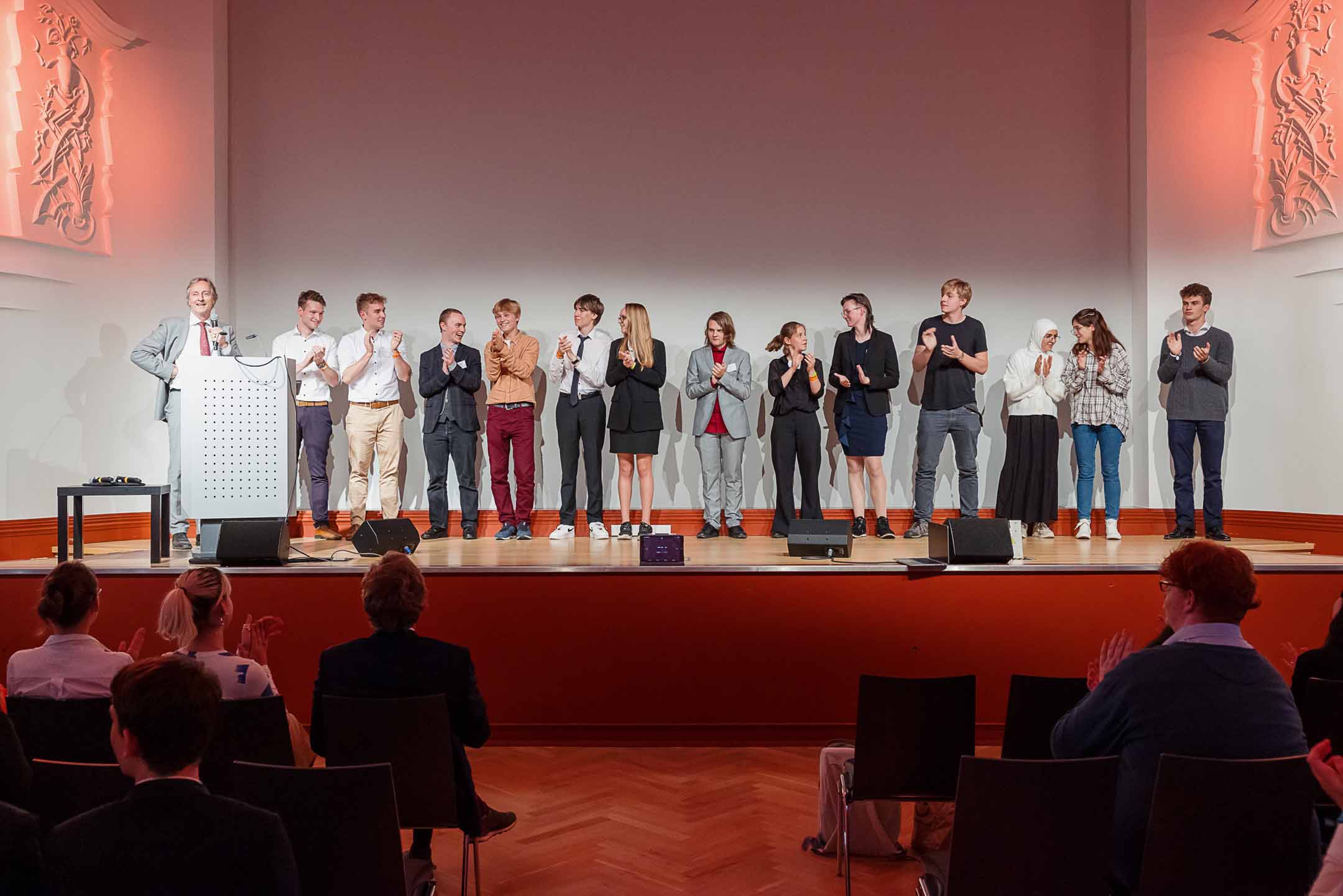
    GDNÄ President Heribert Hofer with the acoustically determined winners of the ‘Science in 5 Minutes’ competition. The decisive factor was the intensity of the applause from the audience, which was also measured by app for the first time. In the centre, first-placed Anne Marie Bobes (18), who presented her project ‘Wind2Light’, to the left of medical students Sebastian Paschen and Moritz Roloff (‘Sick Systems – In Search of Fair Healthcare’, 3rd place). 17-year-old Bielefeld student Felix Gross (right) came second with his contribution on pattern recognition using artificial intelligence.

    Science-Slam auf der 133 Versammlung in Potsdam

    © MIKA-fotografie | Berlin

    Science is fun: A look into the audience at the ‘Science in 5 minutes’ competition

    Science-Slam auf der 133 Versammlung in Potsdam

    © MIKA-fotografie | Berlin

    Michael Dröscher, Treasurer and Secretary General of the GDNÄ, with participants of the student programme.

    Science-Slam auf der 133 Versammlung in Potsdam

    © GDNÄ

    Anne Marie Bobes wowed the audience with her development of a wind turbine for street lamps.

    Science-Slam auf der 133 Versammlung in Potsdam

    © MIKA-fotografie | Berlin

    Deep-sea biologist Dr Stefanie Kaiser was connected via video and captivated the audience with a report on the ‘Aleut Bio’ expedition to the Northwest Pacific.

    Friday, 13 September 2024

    © GDNÄ

    Sought-after discussion partner: Nobel Prize winner Ben L. Feringa – during the coffee break, surrounded by young people .

    © MIKA-fotografie | Berlin

    Professor Eva-Maria Neher from Göttingen is being honored with the Alexander von Humboldt Medal for her great services to the GDNÄ. To her left is the speaker, Professor Michael Dröscher, and to her right Professor Heribert Hofer.

    © MIKA-fotografie | Berlin

    Lively and entertaining: Professor André Bardow from ETH Zurich in his plea for a sustainability strategy to transform the industry.

    © MIKA-fotografie | Berlin

    Nobel Prize winner Ben Feringa during his lecture “The art of building small”, in which he explains the structure and function of molecular machines.

    © MIKA-fotografie | Berlin

    Professor Katharina Kohse-Höinghaus with Junge-GDNÄ members.

    © MIKA-fotografie | Berlin

    The birth of the Young GDNÄ: On the morning of September 13, 2024, GDNÄ President Heribert Hofer announces the founding of a youth organization of his research society.

    © MIKA-fotografie | Berlin

    The working group on computer science of the Junge GDNÄ discusses cyber-physical systems and large generative language models such as ChatGPT with the speakers. The round table is being moderated by Professor Peter Liggesmeyer.

    © MIKA-fotografie | Berlin

    Members of the Young GDNÄ discuss with the speakers of the technology session under the moderation of Professor Katharina Kohse-Höinghaus.

    Saturday, 14 September 2024

    © MIKA-fotografie | Berlin

    Fully booked Science & Technology Café on the topic of “Storage of renewable energies: What solutions does chemistry offer?”

    © MIKA-fotografie | Berlin

    Professor Caroline Gutjahr discusses her lecture “Secret helpers underground: How plants work together with mycorrhizal fungi” with conference participants.

    © MIKA-fotografie | Berlin

    Questions upon questions about the astonishing placebo effect: Toxicology Professor Bernd Kaina from the Mainz University Medical Center (with microphone) pointed out the possible limits of placebo drugs.

    GDNÄ-Tagung 2024 in Potsdam: Ben Feringa © GDNÄ

    © GDNÄ

    Relaxing after a long day at the conference: Ben Feringa in one of Potsdam’s excellent Italian restaurants.

    © MIKA-fotografie | Berlin

    Exciting, but also challenging: young audience in the biology session.

    © MIKA-fotografie | Berlin

    Professor Wolfgang Lubitz during his introduction to the chemistry session he organised on Saturday morning.

    © MIKA-fotografie | Berlin

    Professor Holger Puchta presents the CRISP7Cas gene scissors and discusses current political developments.

    © MIKA-fotografie | Berlin

    The public Leopoldina lecture will be given by GDNÄ Vice President and pharmacology professor Martin Lohse on the topic of “Placebo or therapy with nothing”. Martin Lohse stepped in at short notice because the originally planned lecture by Professor Liane Benning on the results of current Arctic research could not take place.

    © MIKA-fotografie | Berlin

    Great enthusiasm for discussion: Young conference participants surround Martin Lohse after his presentation.

    Sunday, 15 September 2024

    © GDNÄ

    Sunny last day of the meeting: the Griebnitzsee campus is still firmly in GDNÄ hands.

    © GDNÄ

    Light impression from the lecture hall where lectures and discussions of the GDNÄ meetings took place.

    © MIKA-fotografie | Berlin

    Quantum computers: state of the art – this was the topic of the lecture by Professor Frank Wilhelm-Mauch from Forschungszentrum Jülich.

    © GDNÄ

    Magnetic navigation, quantum computers, new materials: the physics lectures offer plenty to discuss.

    © GDNÄ

    Sunny last day of the meeting: the Griebnitzsee campus is still firmly in GDNÄ hands.

    © MIKA-fotografie | Berlin

    Self-healing concrete, biological robot drives, drug depots that replenish themselves independently: Professor Wilfried Weber (left, back) was bombarded with questions after his lecture on living materials.

    © MIKA-fotografie | Berlin

    The fascinating magnetic navigation system of animals provided plenty to talk about after the lecture by Professor Michael Winklhofer (left).

    © GDNÄ

    Charité Professor Ursula Müller-Werdan talks about facts and myths about healthy living and ageing.

    Media response GDNÄ meeting in Potsdam makes headlines

    Media response

    In dialogue: Potsdam 2024

    Whether on the radio or in newspapers, on websites or in social media: the 133rd GDNÄ Assembly at the University of Potsdam arouses the interest of communicators in the Berlin/Brandenburg region and far beyond. On this page we inform you about previous contributions.

    In September 2024

    Acatech – National Academy of Science and Engineering

    Illustrated summary by Marc-Denis Weitze, acatech, initiator and moderator of the Science & Technology Cafés at the GDNÄ assembly in Potsdam

    >> learn more on acatech.de

    rbb24 Brandenburg aktuell 

    News report and interview with Professor Michael Dröscher

    ChemistryViews

    The organ of the scientific network organisation “Chemistry Europe” reports on the award of the Liebig Medal to Professor Katharina Landfester-

    >> learn more on chemistryviews.org

    :Wissenschaftsregion Bonn

    Report on the 133rd meeting focussing on the foundation of the Young GDNÄ.

    >> learn more on wissenschaftsregion-bonn.de

    LinkedIN

    Professor Anke Kaysser-Pyzalla, DLR Director and designated GDNÄ President, on the meeting in Potsdam and plans for her 2025-2026 term of office.

    >> learn more on LinkedIN

    Max-Planck-Institut für Kohlenforschung

    Press release on the election of Professor Ferdi Schüth as GDNÄ Vice President.

    >> learn more on www.kofo.mpg.de

    Bochumer Zeitung

    Detailed presentation of the planned Leopoldina lecture .

    >> learn more in Bochumer Zeitung

    acatech

    “How AI moves us”: Invitation to the Science & Technology Café on 15 September.

    >> learn more on acatech.de

    University of Potsdam

    Detailed news about the GDNÄ meeting.

    >> learn more on www.uni-potsdam.de

    Leopoldina

    Detailed presentation of the planned Leopoldina lecture .

    >> learn more on leopoldina.org

    Helmholtz Centre Potsdam – GFZ German Research Centre for Geosciences

    Detailed presentation of the planned Leopoldina lecture .

    >> learn more on idw-online.de

    In August 2024

    Helmholtz-Gymnasium Bielefeld

    This is about the GDNÄ interview with Paul Scholand, student scholarship holder from the Helmholtz-Gymnasium.

    >> learn more on helmholtz-bi.de

    Aktivoli – FreiwilligenAkademie

    Reference to the 133rd meeting and announcement of an oral report on 24 September 2024 in Hamburg.

    >> learn more on aktivoli-kurse.hamburg

    :Wissenschaftsregion Bonn

    Detailed announcement of the 133rd meeting.

    >> learn more on wissenschaftsregion-bonn.de

    :Wissenschaftsregion Bonn

    Preliminary report on the GDNÄ Conference 2024, focussing on the Young GDNÄ and the lecture “Healthy living and ageing: Facts and myths”.

    >> learn more on wissenschaftsregion-bonn.de

    Meetingpoint Potsdam

    Announcement of the GDNÄ Conference 2024 with details of the lecture “Healthy living and ageing: Facts and myths”.

    >> learn more on meetingpoint-potsdam.de

    Before Summer 2024

    Fraunhofer IAP + Potsdam Science Park

    Report on the appointment of Professor Alexander Böker, Director of the Fraunhofer Institute for Applied Polymer Research IAP in the Potsdam Science Park, as GDNÄ Managing Director for the Business Division.

    >> learn more on www.iap.fraunhofer.de

    >> learn more on potsdam-sciencepark.de

    Impressionen vom Vorbereitungstreffen des Schülerprogramms im Juni 2022 in Leipzig.

    © MIKA-fotografie | Berlin

    Of public interest: high-calibre lectures such as the one given by Nobel Prize winner in Chemistry Ben Feringa at the GDNÄ Assembly 2024 in Potsdam.

    Experience the livestream Conference in Potsdam in real time

    Livestream

    Experience the 2024 Conference in real time

    The Nobel lecture is about tiny molecular machines, the Leopoldina lecture shows how microbes in the Arctic ice are fuelling climate change and the opening ceremony attracts with exciting contributions, music and the awarding of the Alexander von Humboldt Medal. The Young GDNÄ is officially launched in Potsdam and many young people contribute to the success of the conference. Those who attend the 133rd GDNÄ Assembly in Potsdam in person will experience a celebration of science with many highlights.

    But even those who cannot be there are invited to participate in real time, as was the case at the 200th anniversary celebrations in Leipzig in 2022. All lectures in lecture hall H5 at the University of Potsdam, Griebnitzsee campus, will be livestreamed, as will the opening with welcoming speeches on 13 September and the public lectures by Nobel Prize winner in Physics Professor Ben L. Feringa “The art of building small” (Friday, 13 September, 18:00 to 19:30) and Professor Liane G. Benning “The Great Melting – Small Cells, Big Consequences” (Saturday, 14 September, 17:30-19:00).

    The livestream is free of charge; no special technical requirements are necessary. A digital device and a good internet connection are all you need to watch live:

    Note: The video recordings of presentations and other contributions, which will be posted on the GDNÄ’s own video channel after the 133rd Assembly and will also be available free of charge, can be used permanently.

    Campus Griebnitzsee der Universität Potsdam © K. Fritze

    © K. Fritze

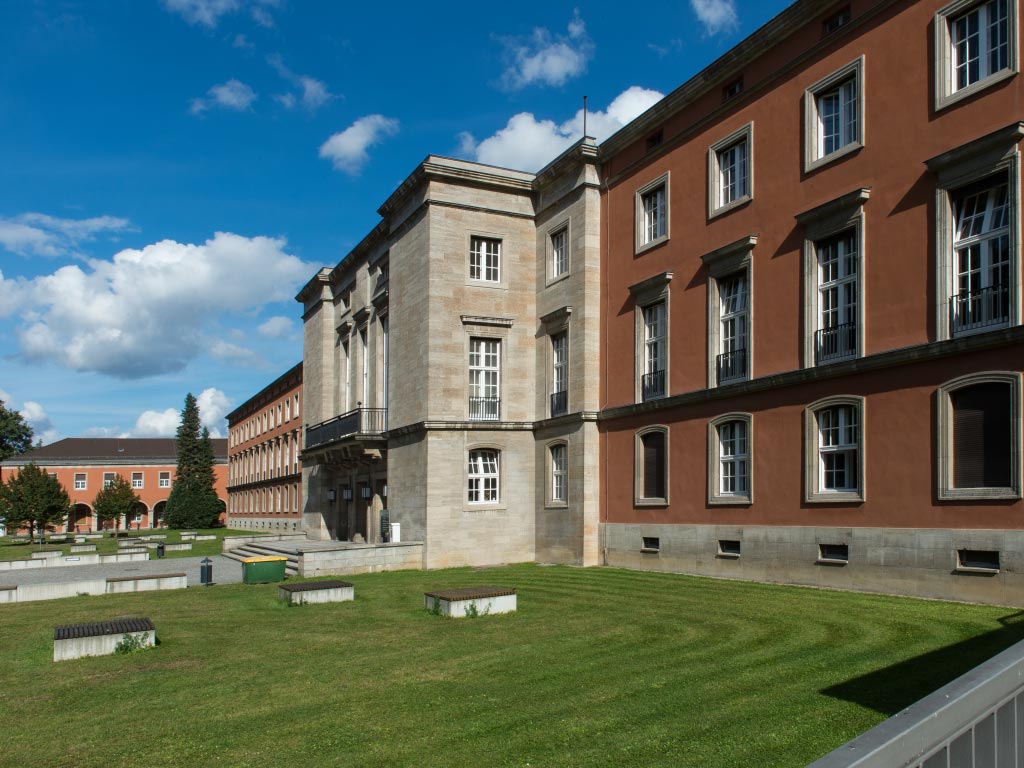
    The 133rd GDNÄ Assembly will take place in the main building of the Griebnitzsee campus of the University of Potsdam.

    Further information:

    Heribert Hofer: „Guests yesterday, partners today“

    „Guests yesterday, partners today“

    GDNÄ President Heribert Hofer on the highlights of the 2024 Assembly, the responsibility of science and a breath of fresh air from the Young GDNÄ.

    Professor Hofer, the 133rd GDNÄ Assembly begins in Potsdam in a few days’ time. As President, you are responsible for the scientific programme – it’s your meeting, so to speak. Are you looking forward to it?
    Absolutely. I am very excited about the presentations, the discussions with the audience and the contributions from the many young people we have invited to the conference. 

     “Science for our lives of tomorrow” is the title of the conference. How did this title come about?
    We, and by that I mean the GDNÄ Executive Board and Board Council, want to show in Potsdam what future developments are already emerging in science today. We are talking about inventions and discoveries that will have an impact on society as a whole – and much faster than was previously the case. 

    What revolutionary changes are these?
    Take gene editing in plants, for example. New molecular genetic methods can be used to introduce desired traits into crops quickly and precisely. For example, resistance to widespread pests. This saves on pesticides and protects the environment. In the past, this was only possible, if at all, through years of breeding. Another example is artificial intelligence. New AI developments are reported practically every day and more and more new applications are coming onto the market. 

    For many people, AI is currently just a glimmer on the horizon, so their everyday lives have not yet changed much. Is that different at your institute in Berlin?
    Yes, we are increasingly utilising the new methods. I don’t know of any research institute in the field of biology that isn’t working or at least experimenting with artificial intelligence. In my field, behavioural ecology, for example, we are trying to improve the observation of wild animals with the help of AI. We are currently validating a pattern recognition programme that should reliably tell us whether individual cheetahs are roaming in Namibia at that moment, whether they are eating or whether they are sleeping. To do this, we have previously equipped the big cats with acceleration sensors and tiny radio antennas. The aim is to automatically classify behaviour around the clock, which would ideally complement on-site observations by researchers. We are very confident that AI will provide us with unimagined insights into the lives of animals in the wild. 

    You have mentioned the advantages of new inventions. There are also downsides. Will these also be discussed in Potsdam?
    Yes, and that is a major concern of mine. If you want to do science responsibly, you have to look at both sides. In Potsdam, we will be presenting the pros and cons of new technologies and weighing them up in dialogue with the audience. The methods of research, i.e. the question of how scientists arrive at their results, will also be discussed.

    Eröffnung der Büros Postplatz 1 © Paul Glaser

    © MIKA-fotografie | Berlin

    Well attended as always: The Science Slam “Science in 5 minutes” at the GDNÄ Assembly 2022 in Leipzig. Heribert Hofer (left) supervised the participating students.

    The GDNÄ has had a well-functioning student programme for many years. Now a Young GDNÄ is to be founded. What is the difference?
    The student programme has been running on the side, it was a nice additional programme item. The Young GDNÄ will be our youth organisation, a core element of the GDNÄ – with a wider age range than we know from the student programme. With the Young GDNÄ, we want to accompany selected Students on their way to university and foster dialogue with them. These are great young personalities and we want to say to them: you are welcome here and we look forward to your contribution. To put it in a nutshell: Students used to be our guests, today they are partners. 

    Will this already be visible in Potsdam?
    Yes, there will be a panel discussion after each lecture block, usually with three presentations, in which the speakers, together with two or three representatives of the Young GDNÄ, will debate with each other and with the audience. The young people will take part in two workshops before the meeting to familiarise themselves with the content. The highlighted discussion format is completely new, there has never been anything like it before. The young people will also be given a special stage at the start of the Assembly on Thursday evening, 12 September, when a number of them will compete against each other with short, snappy presentations in the traditional “Science in 5 Minutes” competition.   

    Young people are being courted in many places today. What can the GDNÄ offer them?
    Scientific expertise at a high level, but without technical jargon, and a direct exchange with renowned researchers, among them also Nobel Prize winners. All in German, which generally makes communication easier. Most of the students are wide-eyed and can hardly believe that the luminaries are available to them in person – I have experienced this time and time again for many years. The study counselling provided by experienced scientists at our conferences is also highly appreciated.

    The GDNÄ only meets every two years. What happens to the Young GDNÄ in the meantime?
    We want to talk to the young people about this and we will start in Potsdam. Internally, there is the idea of regional networking with regular meetings and events. A mentoring programme is also being discussed.

    What do you have in mind?
    A nationwide programme with academics who accompany young people on their way through school and university, right up to the first career stages. I hope that we in the GDNÄ can inspire numerous outstanding members for this task.

    Your time as GDNÄ President ends this year. What will happen next with the Young GDNÄ?
    It will remain a core element of the GDNÄ. My successor, mechanical engineering professor and head of the German Aerospace Centre Anke Kaysser-Pyzalla, sees it the same way. We have already worked out our future plans for the GDNÄ over the past two years and will continue to develop them at a strategy meeting in November. The Young GDNÄ will play an important role in this. I am happy to be involved in the implementation of our ideas – also as First Vice President of the GDNÄ, which I will be from 2025 to 2026.

    Finally, a quick question: Who should make the journey to Potsdam in September?
    For anyone who wants to take a look into the future, who wants to talk to impressive scientists, physicians and young talents and who wants to understand current topics from an interdisciplinary perspective. Last but not least: Potsdam is a great conference venue with a still young university that has developed excellently and is a wonderful host.

    Heribert Hofer © MIKA-fotografie | Berlin

    © MIKA-fotografie | Berlin

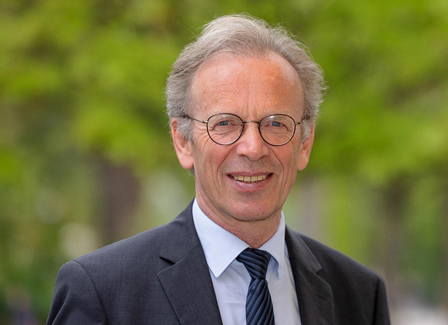
    Prof Dr Heribert Hofer, President of the GDNÄ (2023-2024) and Director of the Leibniz-Institute for Zoo and Wildlife Research in Berlin.

    All are welcome

    On Friday evening, 13 September, Nobel Prize winner in Physics Ben L. Feringa will present his research on tiny molecular machines. (This is the only lecture at the conference in English.) On Saturday evening, 14 September, Liane G. Benning from the German Research Centre for Geosciences will give the renowned Leopoldina Lecture on her research in the Arctic ice. The interested public is cordially invited to both events. Admission is free.

    Click here fort he complete program of the meeting in Potsdam (PDF)


    About the person

    Professor Heribert Hofer, Director of the Leibniz Institute for Zoo and Wildlife Research (IZW) in Berlin, was elected President by the General Assembly for the two years 2023 and 2024 and is therefore responsible for the scientific organisation of the 133rd Assembly in Potsdam in 2024.

    The internationally renowned zoologist (64) has headed the Leibniz-IZW in Berlin-Friedrichsfelde since 2000 and since then has also been Professor of Interdisciplinary Wildlife Research at the Free University of Berlin. Prior to his time in Berlin, he conducted research at the Max Planck Institute of Behavioural Physiology in Seewiesen, Bavaria, from 1986 to 1999, initially as a postdoctoral researcher and later as an independent scientist. In 1997, he completed his habilitation at the Ludwig Maximilian University of Munich with a thesis on the behaviour of spotted hyenas in the Serengeti savannah. Heribert Hofer began his studies in zoology at Saarland University and graduated with a DPhil from Oxford University.

    Professor Hofer has been closely associated with the GDNÄ for many years. He has been involved in a variety of ways: as an elected subject representative and group chairman for the subject of biology, with speeches at meetings, as Vice President in the preparation of the 200th anniversary celebrations in Leipzig – and since the beginning of 2023 as President of the GDNÄ.


    Weitere Informationen

    200 Years of the GDNÄ Review of the Anniversary Assembly 2022

    200 Years of the GDNÄ

    Review of the Anniversary Assembly 2022

    Now it is over, the glittering festival of science that we were able to celebrate in the splendid atmosphere of the Leipzig Congress Hall at the Zoo. It was four days full of stimulating encounters and events. After a Corona break of more than two years, we were finally able to get together again in person, in keeping with the spirit of our society’s founders.

    Prominent speakers and panellists interpreted the theme “Images in science” from their own perspective. It became apparent how interdisciplinary science is and must be today: All sciences strive to create images, and they use artificial as well as natural intelligence, the large toolbox of computer science, sophisticated methods of physics and specially designed building blocks of chemistry to do so. One example: in order to depict the molecules of life ever more precisely, new dyes and labelling strategies, complex light and electron microscopes, efficient algorithms and plausible visualisations are needed.

    On the journey through scientific image worlds, we were allowed to participate in technological and content-related breakthroughs, for example in the search for exoplanets, dark matter and black holes, in blazingly fast NMR imaging and light microscopy on the nanometre scale, or in research on individual molecules and atoms.

    All the speakers were well prepared, with lectures that were challenging, understandable and often entertaining. And not only for the eight hundred guests in the hall, but also via livestream, Instagram and website diary for many others, as the impressive user numbers show. As soon as the films are edited, you can watch the presentations again on our Youtube channel.

    The discussions on the podium were invigorating, opening up other interesting perspectives in addition to the views of individual speakers. For example, during the festive afternoon on the images of Humboldt’s expeditions and research journeys into the deep sea and the universe; then on Sunday on the incipient revolution in RNA medicine.

    Around two hundred participants in our student programme brought freshness and new impulses to the discussion. The gratitude of the young people for this unique programme is overwhelming! The guest book also bears witness to happy-go-lucky feedback: “were able to meet great people”, “inspiring insights into cutting-edge research”, “new images – new world view”, “reveling in enthusiasm”, “let the spark fly”, “best conference ever”, “will gladly come again” – these are just a few examples from many handwritten thank-you notes.

    Once again, we would like to thank all those who contributed to the success of this celebration: our guests who travelled from near and far, members and non-members, younger and older, all speakers and panellists, all those who helped with the preparation and implementation in the office and board and in the local team of Zoo and Congress Hall around Jörg Junhold, the city of Leipzig and the state of Saxony for their hospitality, the Nikolaikirche with Sebastian Feydt, who reminded us of the peaceful revolution of 1989, and the musicians who took us on an intensive foray through Leipzig’s musical history, the students around Paul Mühlenhoff, the Instagram team from Stuttgart around Alexander Mäder, the archive of the GDNÄ around Matthias Röschner and all exhibitors at the Expo, the authors and the team of the commemorative publication around Lilo Berg and Thomas Liebscher, all sponsors, donors and benefactors.

    After the meeting is before the meeting: The next meeting of the GDNÄ will take place in Potsdam in September 2024, then under the leadership of Heribert Hofer. Anke Kaysser-Pyzalla was elected for the presidency in 2025 and 2026, the first female engineer to chair the GDNÄ. So the planning already reaches quite far into the future.

    The festive assembly showed that the GDNÄ is needed and has a model for the future that it can further develop and expand: for an intensive dialogue between disciplines, for an invigorating student programme, and for science communication in the best sense!

    Martin Lohse, President of the GDNÄ (2019-2022). 


    Martin Lohse 2022 © MIKA-fotografie | Berlin

    © MIKA-fotografie | Berlin

    Prof. Dr. Martin Lohse

    About the person

    He has been President of the German Society of Natural Scientists and Physicians since 2019: Martin Lohse, Professor of Pharmacology and Toxicology at the University of Würzburg and Managing Director of the Bavarian research company ISAR Bioscience in Martinsried. Martin Lohse made his mark on the 132nd Assembly of the GDNÄ in Leipzig through the conference theme “Science in Pictures”, which originated with him, through his contacts with excellent scientists and, last but not least, through speeches and moderations on the podium. For his research on G-protein coupled receptors he received the highest German science award, the Leibniz Prize of the German Research Foundation. Only recently, the University of Glasgow made him its honorary doctor. Martin Lohse is the editor of the commemorative publication for the 200th anniversary of the GDNÄ, “Wenn der Spark überspringt”.

    Detailed curriculum vitae on “Exciting times for science”

    Day 4 of the Festival Assembly in Leipzig: Sunday, September 11, 2022

    Day 4: Sunday, 11 September 2022

    Images from the body, RNA medicine and hands-on science

    Last day of the meeting, grand finale and the hour of medicine: In the morning, Professor Jens Frahm from the Max Planck Institute for Multidisciplinary Natural Sciences in Göttingen reported on a paradigm shift in medical imaging: real-time magnetic resonance tomography to image the beating heart, blood flow, swallowing and speaking in full dynamics. In the panel on RNA medicine of the future, Professor Stefanie Dimmeler from the University of Frankfurt and Professors Jörg Vogel and Lorenz Meinel from the University of Würzburg presented the fascinating possibilities of ribonucleic acid medicine and discussed what is already feasible today and what is on the horizon for the future. (Report follows)

    © GDNÄ

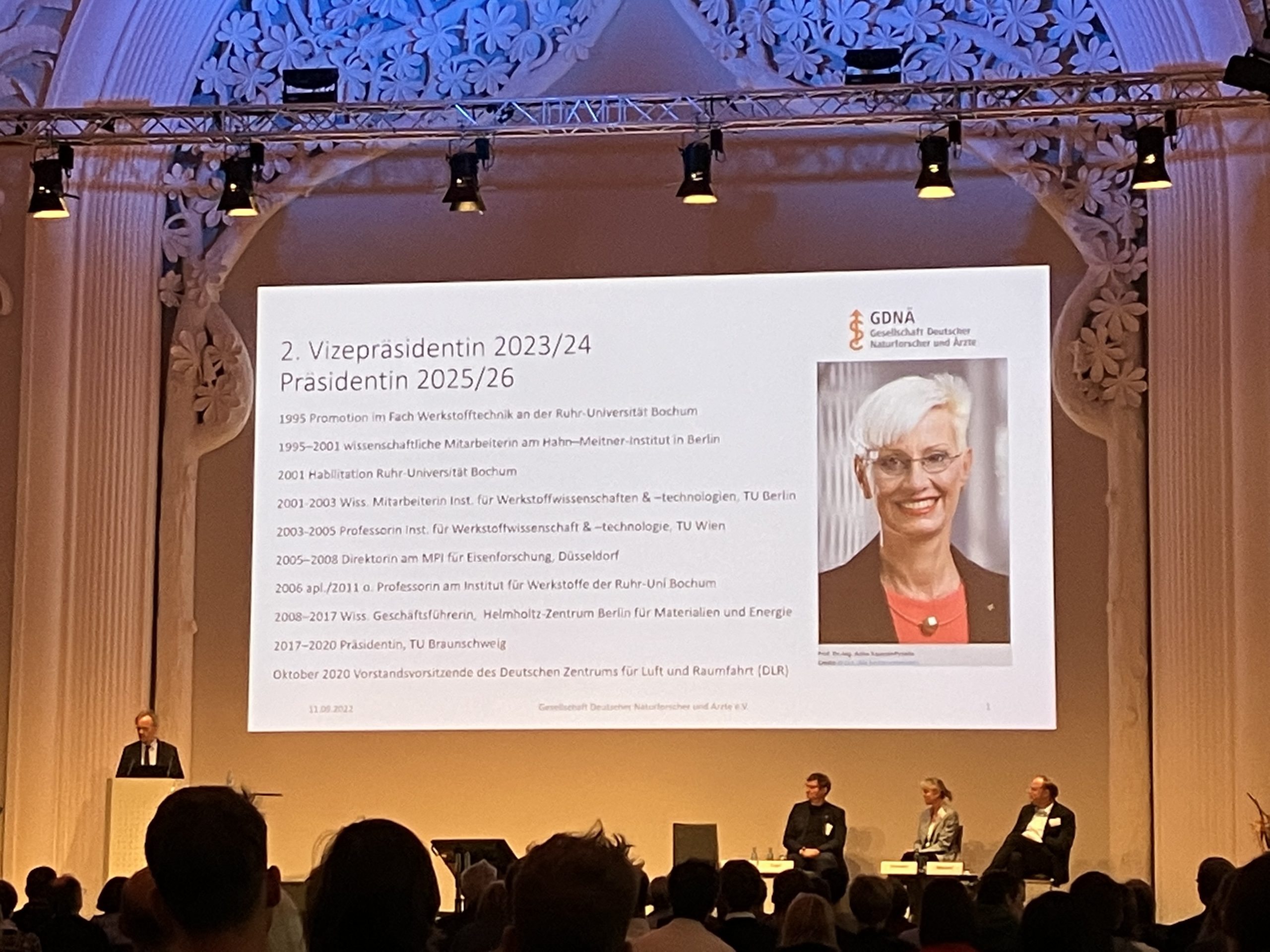
    Anke Kaysser-Pyzalla, an engineering scientist, was elected 2nd Vice-President for the years 2023 to 2024 – and thus GDNÄ President 2025 to 2026.

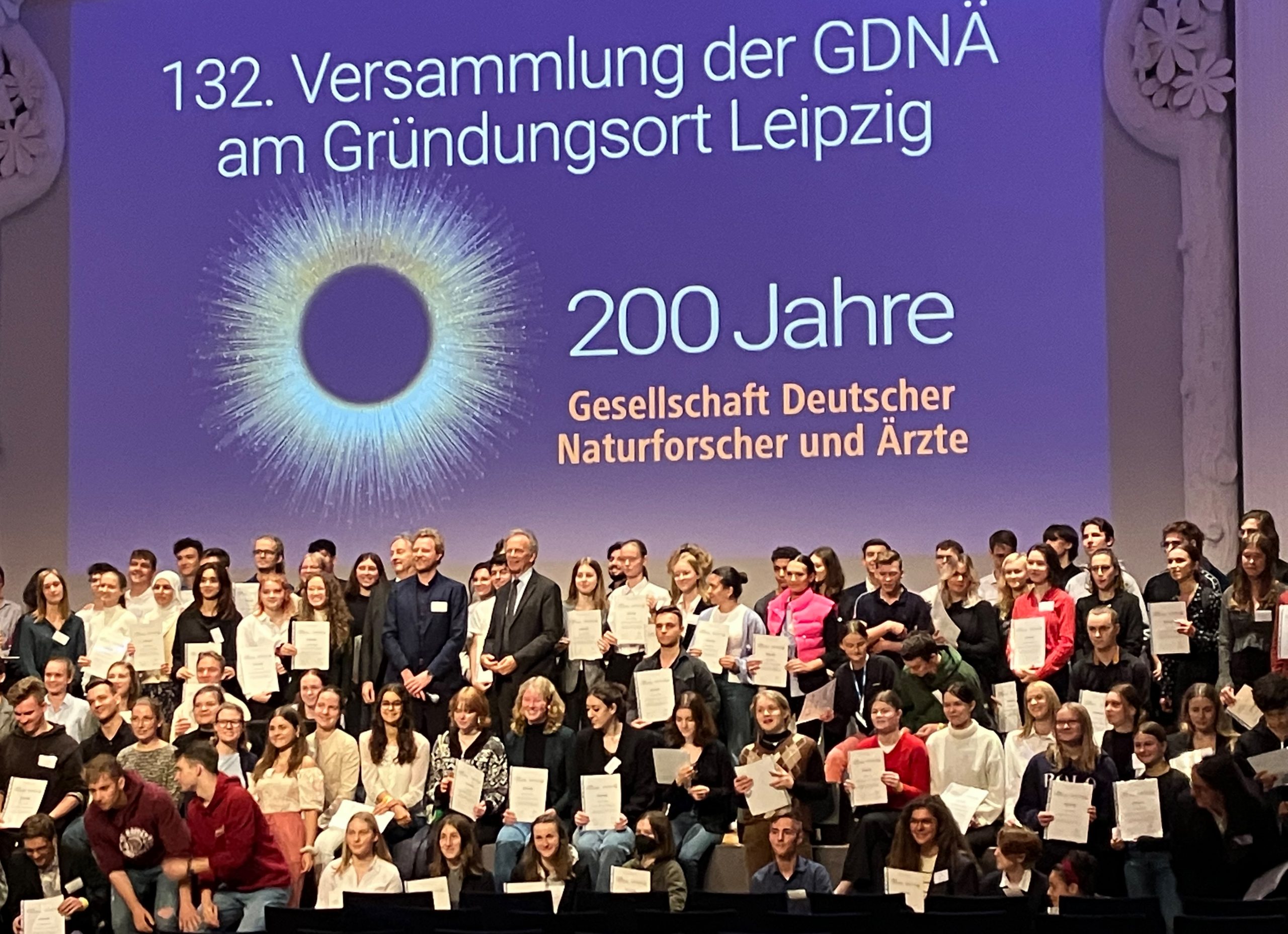
    The anniversary conference showed how much physics and technology, biology and medicine are intertwined today, emphasised GDNÄ President Professor Martin Lohse in his farewell speech. He himself was thanked by the next President, Professor Heribert Hofer, for the “outstanding leadership” of the Natural Sciences Society – a task that lasted four years instead of the usual two due to the corona. There was also hearty applause for Katja Diete and Sylvia Landeck from the GDNÄ office for the demanding organisation of the conference. Then a look into the day after tomorrow: Anke Kaysser-Pyzalla, an engineering scientist, accepted the election of the General Assembly and will become GDNÄ President for the years 2025 to 2026. Heribert Hofer invited all friends to the next meeting, which is planned for the second weekend in September 2024 in Potsdam. The crowning conclusion of the meeting was the presentation of the participation certificates to the almost 200 scholarship holders of the student programme. Final realisation of the anniversary days in Leipzig: contrary to some fears, the stage in the beautiful Art Deco congress hall withstood the strain!

    © GDNÄ

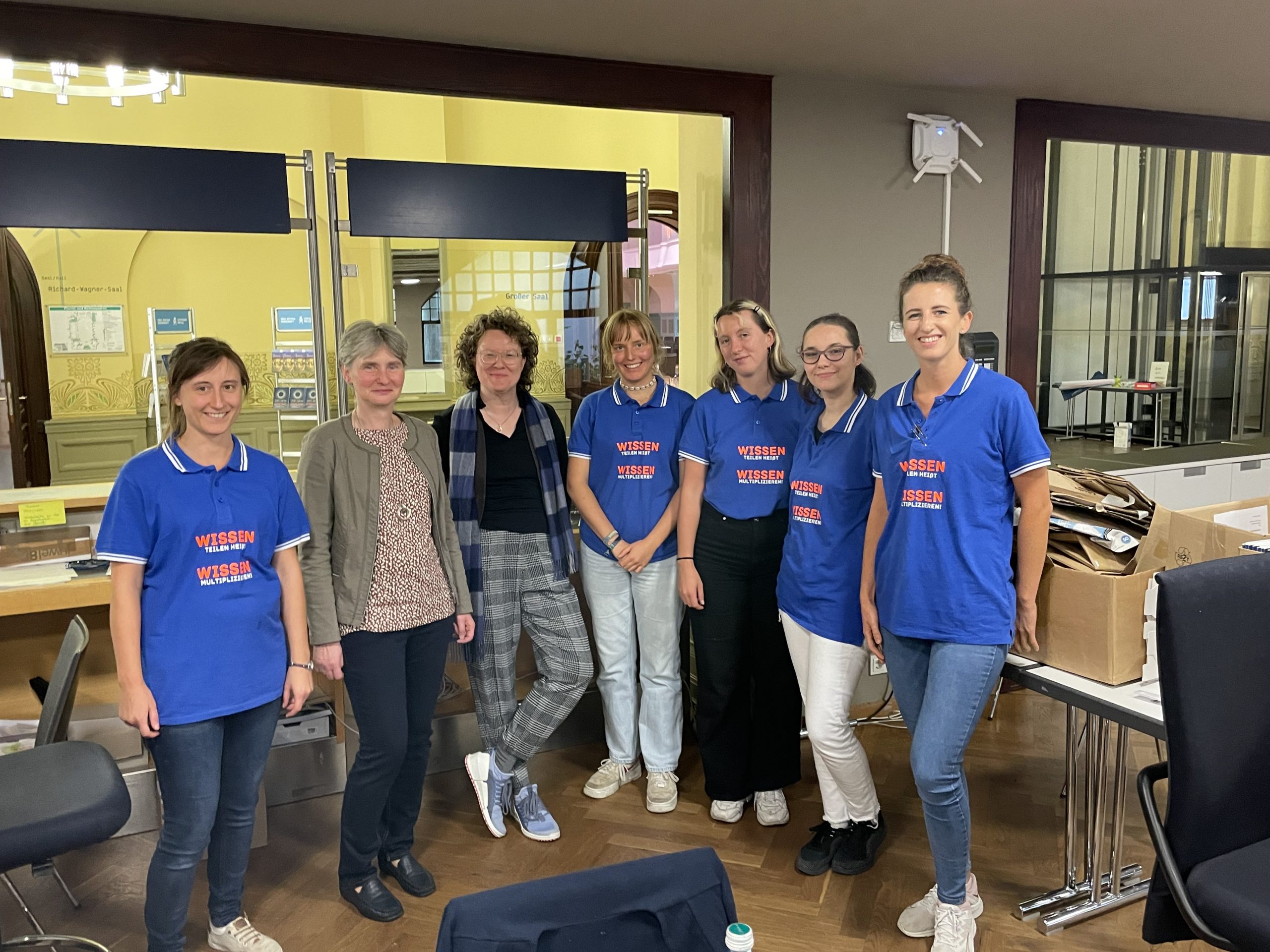
    Excellent organisation and support: The conference team with Katja Diete (second from left) and Sylvia Landeck (third from left).

    Matthias Röschner © Deutsches Museum

    © GDNÄ

    The stage in the Congress Hall at Leipzig Zoo withstood the crowds of students.

    Assembly hashtag: #gdnae200

    Further information:

    Matthias Röschner © Deutsches Museum

    © GDNÄ

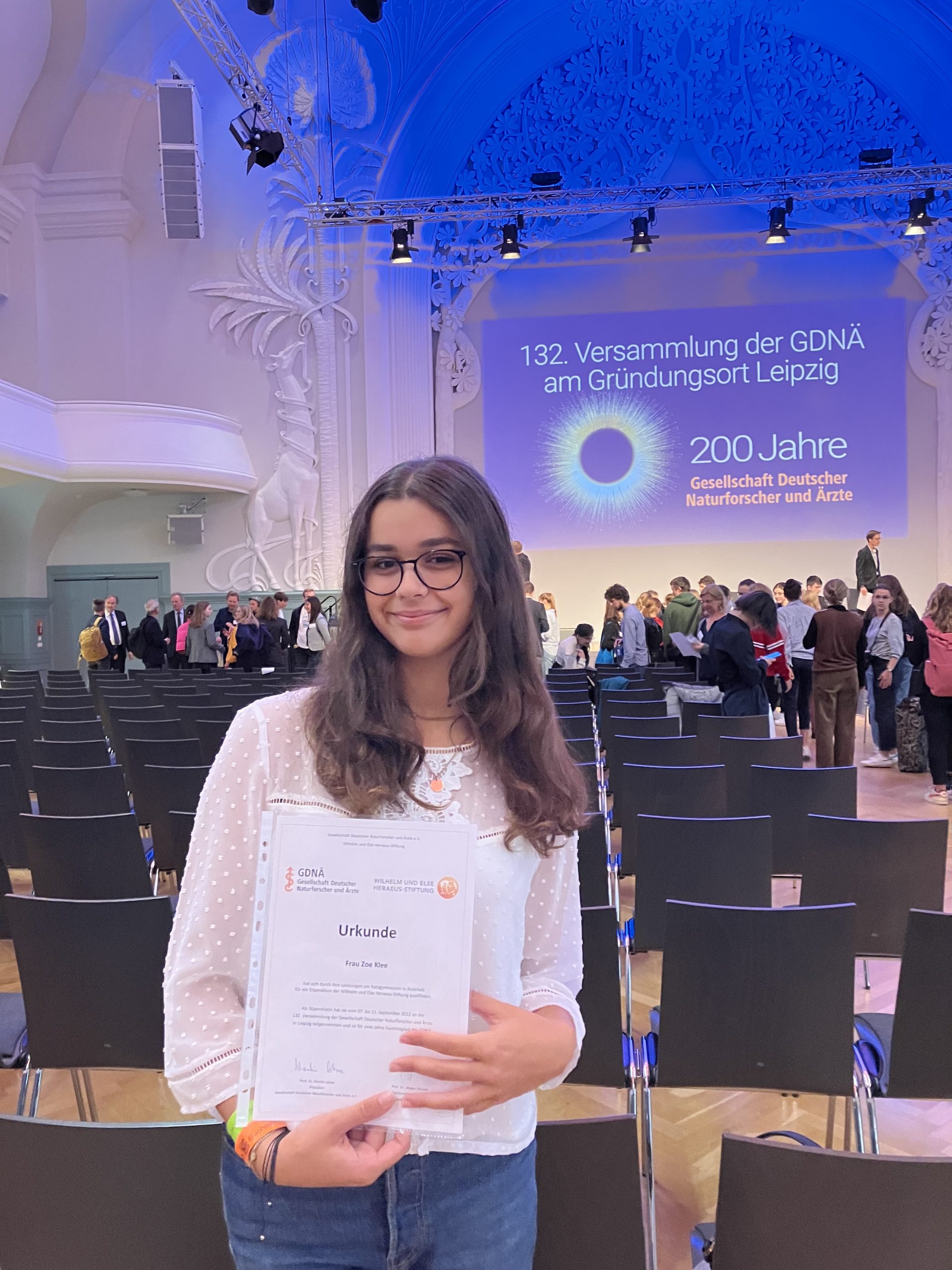
    Zoe Klee from Bielefeld Ratsgymnasium with her GDNÄ certificate.

    Matthias Röschner © Deutsches Museum

    © GDNÄ pedometer

    Conference marathon: During the week of the meeting, Sylvia Landeck from the GDNÄ office ran more than sixty kilometers through the congress hall and helped to ensure that everything ran like clockwork.