x xc

Heribert Hofer: „Guests yesterday, partners today“

„Guests yesterday, partners today“

GDNÄ President Heribert Hofer on the highlights of the 2024 Assembly, the responsibility of science and a breath of fresh air from the Young GDNÄ.

Professor Hofer, the 133rd GDNÄ Assembly begins in Potsdam in a few days' time. As President, you are responsible for the scientific programme – it's your meeting, so to speak. Are you looking forward to it?
Absolutely. I am very excited about the presentations, the discussions with the audience and the contributions from the many young people we have invited to the conference. 

 "Science for our lives of tomorrow" is the title of the conference. How did this title come about?
We, and by that I mean the GDNÄ Executive Board and Board Council, want to show in Potsdam what future developments are already emerging in science today. We are talking about inventions and discoveries that will have an impact on society as a whole – and much faster than was previously the case. 

What revolutionary changes are these?
Take gene editing in plants, for example. New molecular genetic methods can be used to introduce desired traits into crops quickly and precisely. For example, resistance to widespread pests. This saves on pesticides and protects the environment. In the past, this was only possible, if at all, through years of breeding. Another example is artificial intelligence. New AI developments are reported practically every day and more and more new applications are coming onto the market. 

For many people, AI is currently just a glimmer on the horizon, so their everyday lives have not yet changed much. Is that different at your institute in Berlin?
Yes, we are increasingly utilising the new methods. I don't know of any research institute in the field of biology that isn't working or at least experimenting with artificial intelligence. In my field, behavioural ecology, for example, we are trying to improve the observation of wild animals with the help of AI. We are currently validating a pattern recognition programme that should reliably tell us whether individual cheetahs are roaming in Namibia at that moment, whether they are eating or whether they are sleeping. To do this, we have previously equipped the big cats with acceleration sensors and tiny radio antennas. The aim is to automatically classify behaviour around the clock, which would ideally complement on-site observations by researchers. We are very confident that AI will provide us with unimagined insights into the lives of animals in the wild. 

You have mentioned the advantages of new inventions. There are also downsides. Will these also be discussed in Potsdam?
Yes, and that is a major concern of mine. If you want to do science responsibly, you have to look at both sides. In Potsdam, we will be presenting the pros and cons of new technologies and weighing them up in dialogue with the audience. The methods of research, i.e. the question of how scientists arrive at their results, will also be discussed.

Eröffnung der Büros Postplatz 1 © Paul Glaser

© MIKA-fotografie | Berlin

Well attended as always: The Science Slam "Science in 5 minutes" at the GDNÄ Assembly 2022 in Leipzig. Heribert Hofer (left) supervised the participating students.

The GDNÄ has had a well-functioning student programme for many years. Now a Young GDNÄ is to be founded. What is the difference?
The student programme has been running on the side, it was a nice additional programme item. The Young GDNÄ will be our youth organisation, a core element of the GDNÄ – with a wider age range than we know from the student programme. With the Young GDNÄ, we want to accompany selected Students on their way to university and foster dialogue with them. These are great young personalities and we want to say to them: you are welcome here and we look forward to your contribution. To put it in a nutshell: Students used to be our guests, today they are partners. 

Will this already be visible in Potsdam?
Yes, there will be a panel discussion after each lecture block, usually with three presentations, in which the speakers, together with two or three representatives of the Young GDNÄ, will debate with each other and with the audience. The young people will take part in two workshops before the meeting to familiarise themselves with the content. The highlighted discussion format is completely new, there has never been anything like it before. The young people will also be given a special stage at the start of the Assembly on Thursday evening, 12 September, when a number of them will compete against each other with short, snappy presentations in the traditional "Science in 5 Minutes" competition.   

Young people are being courted in many places today. What can the GDNÄ offer them?
Scientific expertise at a high level, but without technical jargon, and a direct exchange with renowned researchers, among them also Nobel Prize winners. All in German, which generally makes communication easier. Most of the students are wide-eyed and can hardly believe that the luminaries are available to them in person – I have experienced this time and time again for many years. The study counselling provided by experienced scientists at our conferences is also highly appreciated.

The GDNÄ only meets every two years. What happens to the Young GDNÄ in the meantime?
We want to talk to the young people about this and we will start in Potsdam. Internally, there is the idea of regional networking with regular meetings and events. A mentoring programme is also being discussed.

What do you have in mind?
A nationwide programme with academics who accompany young people on their way through school and university, right up to the first career stages. I hope that we in the GDNÄ can inspire numerous outstanding members for this task.

Your time as GDNÄ President ends this year. What will happen next with the Young GDNÄ?
It will remain a core element of the GDNÄ. My successor, mechanical engineering professor and head of the German Aerospace Centre Anke Kaysser-Pyzalla, sees it the same way. We have already worked out our future plans for the GDNÄ over the past two years and will continue to develop them at a strategy meeting in November. The Young GDNÄ will play an important role in this. I am happy to be involved in the implementation of our ideas – also as First Vice President of the GDNÄ, which I will be from 2025 to 2026.

Finally, a quick question: Who should make the journey to Potsdam in September?
For anyone who wants to take a look into the future, who wants to talk to impressive scientists, physicians and young talents and who wants to understand current topics from an interdisciplinary perspective. Last but not least: Potsdam is a great conference venue with a still young university that has developed excellently and is a wonderful host.

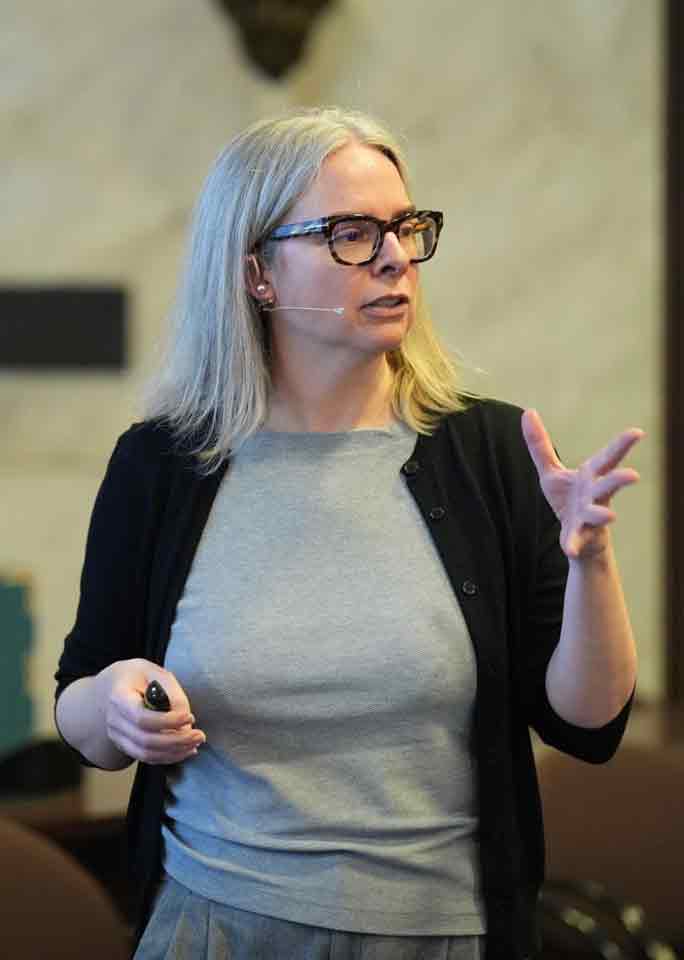
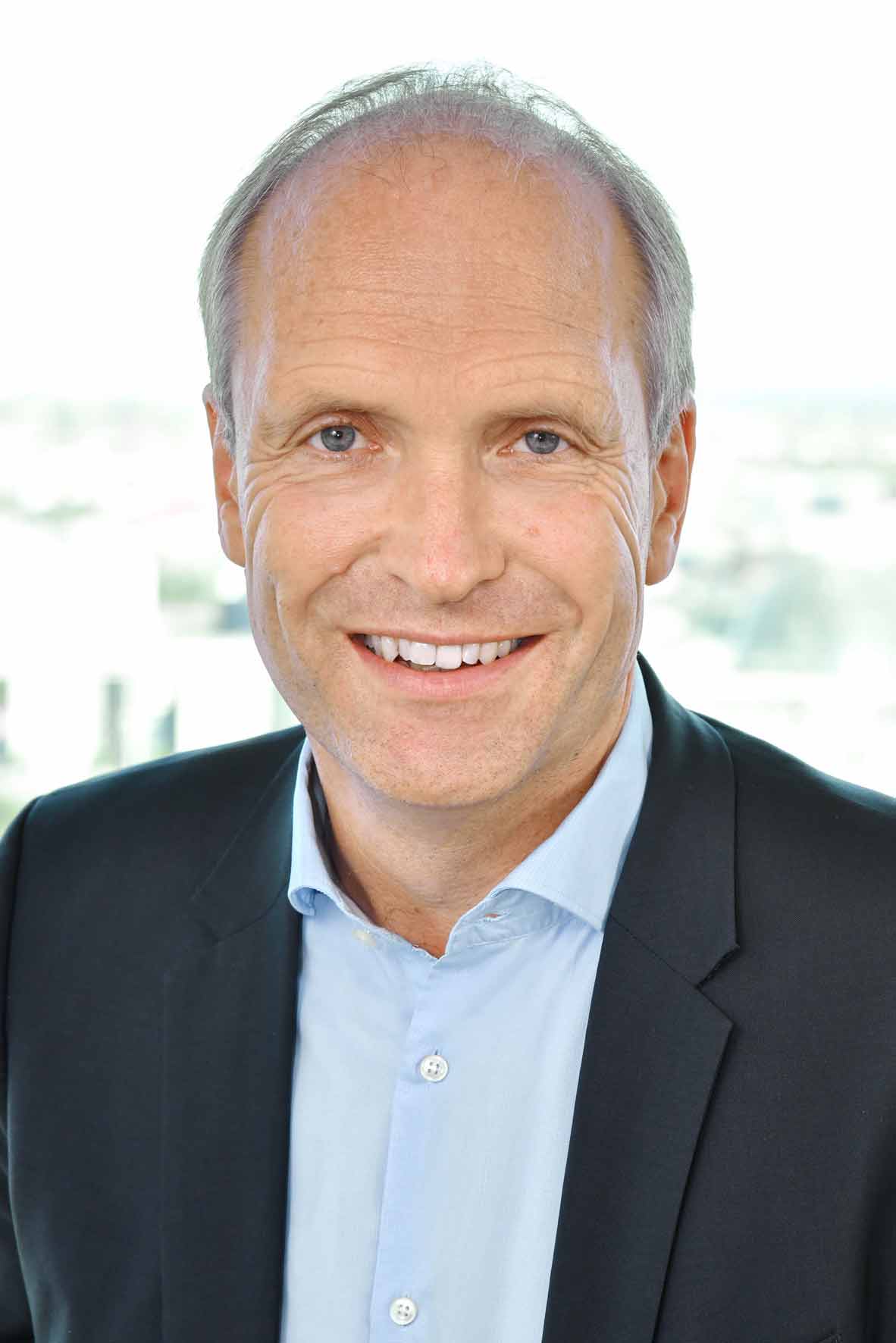
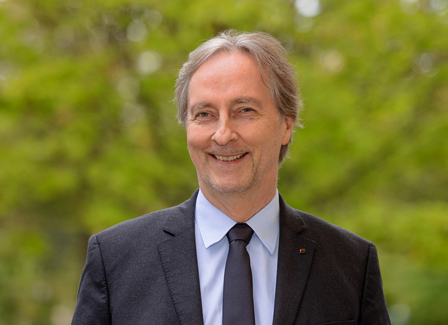
Heribert Hofer © MIKA-fotografie | Berlin

© MIKA-fotografie | Berlin

Prof Dr Heribert Hofer, President of the GDNÄ (2023-2024) and Director of the Leibniz-Institute for Zoo and Wildlife Research in Berlin.

All are welcome

On Friday evening, 13 September, Nobel Prize winner in Physics Ben L. Feringa will present his research on tiny molecular machines. (This is the only lecture at the conference in English.) On Saturday evening, 14 September, Liane G. Benning from the German Research Centre for Geosciences will give the renowned Leopoldina Lecture on her research in the Arctic ice. The interested public is cordially invited to both events. Admission is free.

Click here fort he complete program of the meeting in Potsdam (PDF)


About the person

Professor Heribert Hofer, Director of the Leibniz Institute for Zoo and Wildlife Research (IZW) in Berlin, was elected President by the General Assembly for the two years 2023 and 2024 and is therefore responsible for the scientific organisation of the 133rd Assembly in Potsdam in 2024.

The internationally renowned zoologist (64) has headed the Leibniz-IZW in Berlin-Friedrichsfelde since 2000 and since then has also been Professor of Interdisciplinary Wildlife Research at the Free University of Berlin. Prior to his time in Berlin, he conducted research at the Max Planck Institute of Behavioural Physiology in Seewiesen, Bavaria, from 1986 to 1999, initially as a postdoctoral researcher and later as an independent scientist. In 1997, he completed his habilitation at the Ludwig Maximilian University of Munich with a thesis on the behaviour of spotted hyenas in the Serengeti savannah. Heribert Hofer began his studies in zoology at Saarland University and graduated with a DPhil from Oxford University.

Professor Hofer has been closely associated with the GDNÄ for many years. He has been involved in a variety of ways: as an elected subject representative and group chairman for the subject of biology, with speeches at meetings, as Vice President in the preparation of the 200th anniversary celebrations in Leipzig – and since the beginning of 2023 as President of the GDNÄ.


Weitere Informationen

200 Years of the GDNÄ Review of the Anniversary Assembly 2022

200 Years of the GDNÄ

Review of the Anniversary Assembly 2022

Now it is over, the glittering festival of science that we were able to celebrate in the splendid atmosphere of the Leipzig Congress Hall at the Zoo. It was four days full of stimulating encounters and events. After a Corona break of more than two years, we were finally able to get together again in person, in keeping with the spirit of our society's founders.

Prominent speakers and panellists interpreted the theme "Images in science" from their own perspective. It became apparent how interdisciplinary science is and must be today: All sciences strive to create images, and they use artificial as well as natural intelligence, the large toolbox of computer science, sophisticated methods of physics and specially designed building blocks of chemistry to do so. One example: in order to depict the molecules of life ever more precisely, new dyes and labelling strategies, complex light and electron microscopes, efficient algorithms and plausible visualisations are needed.

On the journey through scientific image worlds, we were allowed to participate in technological and content-related breakthroughs, for example in the search for exoplanets, dark matter and black holes, in blazingly fast NMR imaging and light microscopy on the nanometre scale, or in research on individual molecules and atoms.

All the speakers were well prepared, with lectures that were challenging, understandable and often entertaining. And not only for the eight hundred guests in the hall, but also via livestream, Instagram and website diary for many others, as the impressive user numbers show. As soon as the films are edited, you can watch the presentations again on our Youtube channel.

The discussions on the podium were invigorating, opening up other interesting perspectives in addition to the views of individual speakers. For example, during the festive afternoon on the images of Humboldt's expeditions and research journeys into the deep sea and the universe; then on Sunday on the incipient revolution in RNA medicine.

Around two hundred participants in our student programme brought freshness and new impulses to the discussion. The gratitude of the young people for this unique programme is overwhelming! The guest book also bears witness to happy-go-lucky feedback: "were able to meet great people", "inspiring insights into cutting-edge research", "new images - new world view", "reveling in enthusiasm", "let the spark fly", "best conference ever", "will gladly come again" – these are just a few examples from many handwritten thank-you notes.

Once again, we would like to thank all those who contributed to the success of this celebration: our guests who travelled from near and far, members and non-members, younger and older, all speakers and panellists, all those who helped with the preparation and implementation in the office and board and in the local team of Zoo and Congress Hall around Jörg Junhold, the city of Leipzig and the state of Saxony for their hospitality, the Nikolaikirche with Sebastian Feydt, who reminded us of the peaceful revolution of 1989, and the musicians who took us on an intensive foray through Leipzig's musical history, the students around Paul Mühlenhoff, the Instagram team from Stuttgart around Alexander Mäder, the archive of the GDNÄ around Matthias Röschner and all exhibitors at the Expo, the authors and the team of the commemorative publication around Lilo Berg and Thomas Liebscher, all sponsors, donors and benefactors.

After the meeting is before the meeting: The next meeting of the GDNÄ will take place in Potsdam in September 2024, then under the leadership of Heribert Hofer. Anke Kaysser-Pyzalla was elected for the presidency in 2025 and 2026, the first female engineer to chair the GDNÄ. So the planning already reaches quite far into the future.

The festive assembly showed that the GDNÄ is needed and has a model for the future that it can further develop and expand: for an intensive dialogue between disciplines, for an invigorating student programme, and for science communication in the best sense!

Martin Lohse, President of the GDNÄ (2019-2022). 


Martin Lohse 2022 © MIKA-fotografie | Berlin

© MIKA-fotografie | Berlin

Prof. Dr. Martin Lohse

About the person

He has been President of the German Society of Natural Scientists and Physicians since 2019: Martin Lohse, Professor of Pharmacology and Toxicology at the University of Würzburg and Managing Director of the Bavarian research company ISAR Bioscience in Martinsried. Martin Lohse made his mark on the 132nd Assembly of the GDNÄ in Leipzig through the conference theme "Science in Pictures", which originated with him, through his contacts with excellent scientists and, last but not least, through speeches and moderations on the podium. For his research on G-protein coupled receptors he received the highest German science award, the Leibniz Prize of the German Research Foundation. Only recently, the University of Glasgow made him its honorary doctor. Martin Lohse is the editor of the commemorative publication for the 200th anniversary of the GDNÄ, "Wenn der Spark überspringt".

Detailed curriculum vitae on “Exciting times for science”

Day 4 of the Festival Assembly in Leipzig: Sunday, September 11, 2022

Day 4: Sunday, 11 September 2022

Images from the body, RNA medicine and hands-on science

Last day of the meeting, grand finale and the hour of medicine: In the morning, Professor Jens Frahm from the Max Planck Institute for Multidisciplinary Natural Sciences in Göttingen reported on a paradigm shift in medical imaging: real-time magnetic resonance tomography to image the beating heart, blood flow, swallowing and speaking in full dynamics. In the panel on RNA medicine of the future, Professor Stefanie Dimmeler from the University of Frankfurt and Professors Jörg Vogel and Lorenz Meinel from the University of Würzburg presented the fascinating possibilities of ribonucleic acid medicine and discussed what is already feasible today and what is on the horizon for the future. (Report follows)

© GDNÄ

Anke Kaysser-Pyzalla, an engineering scientist, was elected 2nd Vice-President for the years 2023 to 2024 – and thus GDNÄ President 2025 to 2026.

The anniversary conference showed how much physics and technology, biology and medicine are intertwined today, emphasised GDNÄ President Professor Martin Lohse in his farewell speech. He himself was thanked by the next President, Professor Heribert Hofer, for the "outstanding leadership" of the Natural Sciences Society – a task that lasted four years instead of the usual two due to the corona. There was also hearty applause for Katja Diete and Sylvia Landeck from the GDNÄ office for the demanding organisation of the conference. Then a look into the day after tomorrow: Anke Kaysser-Pyzalla, an engineering scientist, accepted the election of the General Assembly and will become GDNÄ President for the years 2025 to 2026. Heribert Hofer invited all friends to the next meeting, which is planned for the second weekend in September 2024 in Potsdam. The crowning conclusion of the meeting was the presentation of the participation certificates to the almost 200 scholarship holders of the student programme. Final realisation of the anniversary days in Leipzig: contrary to some fears, the stage in the beautiful Art Deco congress hall withstood the strain!

© GDNÄ

Excellent organisation and support: The conference team with Katja Diete (second from left) and Sylvia Landeck (third from left).

Matthias Röschner © Deutsches Museum

© GDNÄ

The stage in the Congress Hall at Leipzig Zoo withstood the crowds of students.

Assembly hashtag: #gdnae200

Further information:

Matthias Röschner © Deutsches Museum

© GDNÄ

Zoe Klee from Bielefeld Ratsgymnasium with her GDNÄ certificate.

Matthias Röschner © Deutsches Museum

© GDNÄ pedometer

Conference marathon: During the week of the meeting, Sylvia Landeck from the GDNÄ office ran more than sixty kilometers through the congress hall and helped to ensure that everything ran like clockwork.

Day 3 of the Festive Assembly in Leipzig: Saturday, September 10, 2022

Day 3: Saturday, 10 September 2022

Of extrasolar planets, luminaries in the making and images from Hollywood

The third day of the conference is dedicated to images from physics, technology and computer science, and in the morning, for example, leads straight into galactic expanses. Professor Heike Rauer, Director of the Institute of Planetary Research at the German Aerospace Centre (DLR), is a convincing and knowledgeable tour guide. Not only does she have a fascinating lecture topic – the diversity of extrasolar planets - she can also convey it in an understandable and inspiring way.

The journey leads beyond the known solar system with its eight planets into extrasolar dimensions, the exploration of which began with the American Voyager probes launched in the 1970s. In 1995, the first extrasolar planet, "51 Pegasus b", was discovered at the French Haute Provence Observatory. The discovery made headlines worldwide and earned the two researchers, Michel Mayor and Didier Queloz, the Nobel Prize in Physics in 2019. 

More than five thousand planets around stars beyond our solar system are now known, says Heike Rauer. "We are the first generation of people to be able to see planets around another star - you have to roll with the punches, that's just fantastic." However, she says, this is also accompanied by the realisation that our solar system is perhaps not as unique as was long believed. Rauer: "Of course, it also raises the old human question: Is there life out there? Are we not alone in this world?" 

But how do you manage to take pictures of planets? After all, their stars are millions of times brighter than the satellites. In order to still see something, the light is blocked with blinds, reports Heike Rauer – similar to a person who holds his hand in front of his eyes in bright light. "With the method of coronography we can actually get an image of planets outside the solar system, even if they are only visible as dots due to the great distance. Unfortunately, this is only possible for very few planets so far." The most successful method at the moment is the so-called photometric transit method: With this method, planets can be discovered as soon as the orbiting planet passes in front of the star as seen from Earth, thereby obscuring it according to its size. 

Satellites serve as observation platforms. The first artificial satellite was launched into space by the French-European CoRoT mission, followed by NASA's Kepler/K2 and TESS missions and ESA's CHEOPS and, in the future, PLATO missions.  "The Kepler and TESS missions also have Citizen Science projects," says Heike Rauer. Fresh data would be put on the web immediately to enable anyone interested, including amateurs, to search for planets. Her colleague discovered "GJ367b" in this data – "an extremely fast, very close to the star and unfortunately uninhabitable planet for humans, which seems to consist mainly of iron." 

The big goal of their guild, he said, is to find habitable rocky planets. "We discover small planets all the time, but so far, unfortunately, no second Earth – even if that is often suggested in the media." In order to perhaps one day make a find in the planetary diversity, the time has now come for a large inventory. This is the goal of the ESA space telescope PLATO, whose instrument consortium is headed by Heike Rauer. From the end of 2026, PLATO will search the Milky Way for Earth-like planets, using 26 cameras that can measure the smallest fluctuations in stellar brightness with high precision. Rauer: "This is the largest area of light-sensitive sensors ever built." Subsequent missions, the plan goes, will study the atmospheres of the Earth-like planets found to find out more about their habitability. 

"What we know today is: the solar system is not the norm, rather we have a lot of diversity out there," says the astrophysicist. In her discipline, she says, it's a bit like botany right now, when the first researchers went out into nature to collect and sort plants. Heike Rauer: "We are like children who are amazed and have questions upon questions."

Matthias Röschner © Deutsches Museum

© ESA - C. Carreau

The world of extrasolar planets as an artistic impression.

Assembly hashtag: #gdnae200

Further information:

Matthias Röschner © Deutsches Museum

© GDNÄ

Heike Rauer during her lecture on the diversity of extrasolar planets.

Five questions for Liv and Finn Hille

At the age of 20, Finn Hille is already an old collegiate. The fifth-semester medical student took part in the student programme in Saarbrücken for the first time in 2018 and, because he enjoyed it so much then, is taking part for the second time in Leipzig. A good twenty other alumni have travelled with him. "Many have come a long way to be here again – that speaks for great enthusiasm," says the Bonn student.  His sister Liv Hille, 16, is standing next to him. She is a student at the Clara-Schumann-Gymnasium in Bonn and, after her brother had reported so animatedly about his Saarbrücken experience at home, applied directly to the GDNÄ office for a place in this year's student programme. Liv already has quite clear ideas about her future: "I want to study human medicine, maybe chemistry," says the young woman. "In any case, I want to become a scientist." 

How do you like it here at the conference?

Liv: I am very impressed and have great respect for everyone who is presenting here. That's a feeling you can quickly get as a young person, but here I don't have to be shy and I can talk to famous scientists. It gives me the courage to become a luminary in a subject myself. Most of the fellow fellows already have their subject specialisations, but everyone is very open and we have lots of good discussions.

Finn: I'm completely blown away by the interdisciplinarity at this meeting. In medicine, many fundamental insights come from the border areas and here I get so many impulses from other fields that I can think about for a long time. What I also particularly like here is the great joy of discourse – among the speakers, the visitors and in the student programme. The GDNÄ is a model for the future, an ideal: this is how science should be. 

The lectures should, according to the goal, be demanding and understandable. Do you succeed in this and what do you do if you don't understand something directly?

Liv: In some lectures, a great deal of basic knowledge is assumed, which I don't yet have. When difficulties arise, I try to understand the lecture at least to some extent using the examples that are presented. If that doesn't work, I concentrate on what I do understand and can often make sense of a lot of other things. I think it's normal not to understand everything immediately. I then dig in and learn more.

Finn: Of course I come up against limits of understanding in some lectures. Then I do what I do at the university: I take a step back and work my way back along the thread of the lecture to a point where I can pick up again. This is usually possible because the GDNÄ lectures are excellently structured. If the first strategy doesn't help me, I try to focus on aspects that I can relate to and then look for references to my own subject. 

German is spoken at this conference. What do you think of that?

Liv: For my generation, it makes it easier to access. We all speak English quite well, but in German you get into conversation faster and better.

Finn: I think it's appropriate for a large scientific nation to hold conferences in the mother tongue and I like to keep up this tradition. It's a different story for conferences. There it is important that experts from many countries exchange information in one language, which is conveniently English. 

Many generations are represented at the GDNÄ Assembly. What is that like for you?

Liv: It is impressive that many older people come from far away. I find the dialogue between the generations here very successful and enjoy discussing with experienced scientists. For example, I had an interesting conversation about science communication with a geologist in the lecture hall.

Finn: Not only the speakers here have an exciting life story. During the breakfast break, for example, an elderly couple sat down with us. They both come from near Stuttgart, he is a chemist – we were talking about the lecture on biodiversity we all just came from. 

How will the GDNÄ remain attractive in the future?

Finn: I would like the GDNÄ to get more involved in public debates. It has a great responsibility there. I am thinking, for example, of initiatives to prevent infectious diseases that pose a global risk.

Liv: The GDNÄ has so much to say. I'm sure many young people at universities would be enthusiastic to join in. But perhaps the direct invitation is still lacking.

Matthias Röschner © Deutsches Museum

© GDNÄ

Liv Hille, 16 years

Matthias Röschner © Deutsches Museum

© GDNÄ

Finn Hille, 20 years

Aladin © The Walt Disney Company

© The Walt Disney Company

Scene from the Disney film "Aladdin" (2019).

Pictures from Hollywood

At the end of the third day of the conference, Professor Markus Gross from ETH Zurich invites the audience to follow him behind the scenes of the film business. He receives enthusiastic applause for his lecture on "Computer Science for Hollywood Pictures". (report follows)

Matthias Röschner © Deutsches Museum

© GDNÄ

Markus Gross during his lecture in Leipzig.

Day 2 of the Festive Assembly in Leipzig Friday, 9 September 2022

Day 2: Friday, 9 September 2022

Of mini-deer, camera traps and new materials

So many exciting lectures in one day, so many nice encounters in the hallway, plus the Market of Science with great exhibits – not so easy to pack everything into one day. That's why at this point, as yesterday, there are only a few impressions, with a much richer programme in the background. Nut chocolate chips, so to speak, to paraphrase the beautiful concrete comparison made by Jan Wörner yesterday afternoon.

Long preface, here we go: Friday began with a lecture by Dr Andreas Wilting on "Tracking down hidden wildlife of tropical rainforests". Andreas Wilting is a tropical biologist and researcher at the Leibniz Institute for Zoo and Wildlife Research in Berlin-Friedrichsfelde. With a view to the conference theme "Science in Pictures", he first presented his work with camera traps in Leipzig, which allows him completely new insights into the living world of tropical rainforests. "For example, we thought we knew everything about orangutans and were very sure that the animals mainly stay in the treetops." The camera traps on Borneo, however, showed the researchers led by Andreas Wilting that orangutans often stay on the ground and, as you can see, feel very comfortable there. "Our previous view of the world was not correct," the 43-year-old admits.

Museumsinsel Ansicht Herbst © Deutsches Museum

© IZW / Re:wild / SIE / NCNP

Caught on camera: a Vietnamese cantchile.

A few years ago, camera traps also enabled the spectacular rediscovery of a species, the Vietnamese Kanchil. The amazingly small deer species had been thought to be extinct (see interview in the margin column) – the re-encounter made headlines worldwide. 

In a further step, the Berlin researchers combine camera trap data with high-resolution satellite data to create functional maps of species distribution. For example, they were able to show that climate change is already having dire consequences for biodiversity even in the tropics. On Borneo, the method was used to map certain areas that need special protection. 

In addition to climate change, the loss of mammals is fuelled by forest clearing and illegal hunting, especially with the help of wire snares, reported Andreas Wilting. Although rangers on behalf of conservation organisations remove wire snares again and again, the fight is rather hopeless in view of the estimated 13 million of these animal traps in Vietnam, Cambodia and Laos alone. The great hunger for wild animal meat, especially in Asian cities, continues unabated and illegal hunting is still considered a trivial offence.

Museumsinsel Ansicht Herbst © Deutsches Museum

© Green Viet

Setting up a camera trap in Vietnam.

Recently, Wilting's team has combined data from camera traps with genetic data obtained from leeches caught in the vicinity of photo traps. "Our leech samples contain DNA from several mammals and also viruses from these animals. We can use the leeches to find possible new, as yet unknown viruses," says the Berlin researcher.

What else are the wildlife researchers planning? Andreas Wilting reports that an increasingly large-scale survey is one thing, but more speed is another: "We have to become faster. It often takes years from sampling to analysis. We need near-real-time recording of wildlife to be able to protect it better."

Matthias Röschner © Deutsches Museum

© GDNÄ

Dr. Andreas Wilting

Three questions for Andreas Wilting 

How did you come to do this research?
Decisive for my special orientation was a year abroad during my studies in Nepal and Malaysia. In Nepal, I was able to get a taste of various species protection and nature conservation projects, for example to protect tigers. We did this together with the local population, which I think is important. In Malaysia, there was good cooperation with local experts from the forestry sector. To this day, the close relationship with the users of my research is important to me. 

What was your most fascinating discovery?
If I may not refer to myself alone, but to my working group: the most impressive thing was the rediscovery of the Vietnam Kanchil. One hundred years ago, this rabbit-sized deer species was described for the first time, and thirty years ago it was sighted again at an Asian wildlife market. My research group published the find in a Nature journal in 2019. With the help of camera traps, we have since discovered three populations in three provinces of Vietnam. We are now looking for further Kantschil populations and, together with Vietnamese colleagues, are doing everything we can to protect this rare species. I think it is unlikely that we will succeed in making similar rediscoveries of other lost species. 

Biodiversity: Where will we be in ten years?
I fear that we will not be able to stop the loss of species in this period, despite new methods for recording populations. The pressures are simply too great, especially from illegal hunting, forest loss and climate change. It will take at least thirty or forty years for populations to recover – if a lot changes on many levels. 

Matthias Röschner © Deutsches Museum

© WWF Viet Nam

A ranger with collected wire snares.

Museumsinsel Ansicht Herbst © Deutsches Museum

Liebig Medal for Claudia Felser

Traditionally, the German Chemical Society awards its Liebig Memorial Medal for outstanding achievements in the entire field of chemistry at the GDNÄ meetings. This year it went to Professor Claudia Felser, Director at the Max Planck Institute for the Chemical Physics of Solids in Dresden. The chemist was honoured, among other things, for the design, synthesis and physical investigation of new quantum materials.

Three questions for Claudia Felser 

You are the first woman to receive the Liebig Medal alone. This award has existed for 117 years. What does that mean to you?
We need more women in the natural sciences and in academic leadership overall. It would be great to see more female colleagues as award winners soon. I am in favour of the American-style tenure track, which makes it possible to plan one's career for the long term. My daughter, for example, is an engineer and is currently doing her doctorate in Germany. She's not aiming for an academic career because she doesn't want to move around so often. 

How did you get on your path?
I wasn't actually supposed to go to Grammar School, my mother sent me to Realschule. But I was very good at maths and physics and then a teacher made sure I went to the Grammar School after all – in the eighth grade. At the new school there was a chemistry teacher who inspired me. He encouraged me to study chemistry and physics. But I didn't think I could do that at the time, so I took a typical women's detour and studied special education. What later helped me a lot was the great freedom I had in my research, my scientific focus on the border between physics and chemistry – and above all my fabulous mentors, to whom I am very grateful. 

What excites you about your research?
The fundamental and the applied, both. We do experiments with inorganic materials to discover completely new properties that could be useful, for example, to turn waste heat into electricity. Waste heat from cars, from houses or from power plants. We are also doing experiments that we expect to provide information about the origin of life and the universe.

Assembly hashtag: #gdnae200

Further information:

Matthias Röschner © Deutsches Museum

© GDNÄ

Prof. Dr. Claudia Felser

Museumsinsel Ansicht Herbst © Deutsches Museum

© Paul Mühlenhoff

Physics Nobel laureate Professor Reinhard Genzel after his lecture at the GDNÄ, surrounded by students.

Day 1 of the Festive Assembly in Leipzig: Thursday, September 8, 2022

Day 1: Thursday, 8 September 2022

Student programme: Science is challenged

Preparatory meetings since early summer ,intense discussions and finally agreement on three core topics: On the afternoon of the first day of the Assembly, participants of the Students' Programme presented their questions to science, challenging three renowned scientists on the podium: biologist and Director of the Alfred Wegener Institute for Polar and Marine Research, Professor Antje Boetius, structural biologist and President-designate of the Max Planck Society, Patrick Cramer, and civil engineer, science manager and acatech President Jan Wörner.

Tag 1 der Festversammlung in Leipzig: Donnerstag, 8. September 2022

© GDNÄ

Student presentation at the festive assembly with questions the team of scientists (in the picture on the right: Antje Boetius, Patrick Cramer and Jan Wörner).

Zoe Klee and Julius May, representing the Biology Team, kicked off the day. They wanted to know whether algae can be used to break down atmospheric CO2 and other greenhouse gases such as methane dissolved in seawater – and what methods might be used to optimise algae for this task. A lot of research is being done on this, said Antje Boetius, for example in Munich-Martinsried. However, the enzyme needed for this is not easy to use. "The chances that we can get plants to absorb more of our CO2 are not very high. It would be much better if we emitted less." Patrick Cramer didn't want to raise hopes for quick solutions either: "It's not that simple with algae and their optimisation." After all, he said, biomass is the great unknown in the climate system: "How much carbon is sequestered and where? We still can't predict that in our models."

Museumsinsel Ansicht Herbst © Deutsches Museum

© GDNÄ

Concert by the Albero Quartet at the evening buffet on the first day of the meeting.

The question posed by the medicine team – Yara Mshinsh and Elias Pantzier – was: "What do you think is necessary to be able to realise individualised medicine for every person in a timely manner?" There is still no truly individualised medicine, said Patrick Cramer: "So far, patients are divided into treatment groups, for example with the active substance Herceptin, which only benefits certain breast cancer patients." The student followed up: "What can Max Planck Institutes contribute to advancing individualised medicine?" "We do basic research," Patrick Cramer answered, "but if we have a technology with benefits for humanity, we like to develop that further, for example within the framework of Max Planck Innovation, a platform for spin-offs from research." One example of success, he says, is a kinase inhibitor for cancer therapy. Cramer: "We are moving forward rapidly and are always discovering new principles that sometimes only benefit patients decades later."

Museumsinsel Ansicht Herbst © Deutsches Museum

© GDNÄ

Astrophysicist Günther Hasinger explains his theory on the origin of dark matter.

Patricia Städtler and Janis Hofmann from the Urban Development team made a combative appearance: For the perfect city of tomorrow, they called for price-optimised housing, smooth and emission-free traffic, and an "absolute circular economy" that recycles scarce resources such as sand and concrete. "I warn against looking for the perfect city," said Jan Wörner, recalling the many urban visions that were never realised. Instead of chasing a cloud cuckoo land, the engineer advised enabling the best possible city - "that should be our goal". The city of the future, he said, must be flexible, cost-effective and, last but not least, safe. "The probability of the ceiling falling down here in the congress hall is not zero," Wörner said, earning a laugh. Wood is not the universal solution for climate-friendly building, he stressed, and concrete is by no means dead. "Concrete has many faces, and one of them is nut chocolate: it, too, consists of a filler, chocolate, and an aggregate, nuts." So cement is by no means the only concrete option, Wörner said, adding, "In the future, we'll also be able to build structures from algae." It is important to keep many technologies in mind, he said – "we have to keep an open mind." 

At the end of the lively discussion, entertainingly moderated by GDNÄ President Professor Martin Lohse, Patrick Cramer wooed participants in the student programme: "In science, we need young people like you." – On Friday, 9 September, research will be challenged again: through questions in the Biology session, moderated by the next GDNÄ President, Professor Heribert Hofer.

Matthias Röschner © Deutsches Museum

© GDNAE

The Albero Quartet from Leipzig.

Greetings

With a view to the current shortage of skilled workers, Federal Research Minister Bettina Stark-Watzinger encouraged the young people at the conference: "Get involved – Germany needs you." Dr Matthias Rößler, President of the Saxon State Parliament, picked up on this thought and thanked the GDNÄ for its commitment to young people. He recalled that the Natural History Society had returned to Saxony time and again throughout its history. Professor Thomas Fabian, Mayor of Leipzig, pointed out the exceptionally dynamic development of his city – with a population increase of one hundred thousand people in just ten years: "Word has spread about our high quality of life, especially among young people."

Matthias Röschner © Deutsches Museum

© GDNÄ

Honours

The Alexander von Humboldt Medal for his special services to the GDNÄ was awarded to the Society's former president (1995-1996), physics professor Joachim Treusch. In her laudatory speech, Professor Eva-Maria Neher said he was one of the "far-sighted people" who had always promoted communication with the Society. "Joachim Treusch is a great reformer of German science, his advice and wisdom are in demand as ever." In his short acceptance speech, Treusch recalled an astonishingly correct prediction on climate change made by the German Physical Society in 1985, which did not lead to the necessary consequences: "My hope is that the youth will learn from our mistakes."

The Lorenz Oken Medal 2022 goes to Dr Mai Thi Nguyen-Kim. The chemist and journalist was in Leipzig via video; she will be presented with the award for her public science communication at the Forum Wissenschaftskommunikation in Hanover in early October. Mai Thi picked up on the motto of the student programme "We only have one world" and encouraged the young people in the hall to fight for a tomorrow worth living: "You are the future of our species and that makes me hopeful."

Matthias Röschner © Deutsches Museum

© GDNAE

At the evening science slam, young people presented their research results in short form.

Assembly hashtag: #gdnae200

Further information: