• DE
  • EN
  • Berlin zoologist is new GDNÄ vice president

    Berlin zoologist is new GDNÄ vice president

    With the internationally renowned wildlife researcher Heribert Hofer, a committed supporter of young talents is taking on more responsibility in our scientific society.

    On November 24, the general meeting of the German Society of Natural Scientists and Physicians (GDNÄ) appointed Prof. Dr. Heribert Hofer, Director of the Leibniz Institute for Zoo and Wildlife Research (IZW) in Berlin, as its new Vice-President. The renowned zoologist will take over the honorary function at the beginning of 2021. As newly elected vice president, Hofer is also the designated president of the GDNÄ. He will take up this office in 2023.

    Heribert Hofer (60) has been head of the Leibniz Institute for Zoo and Wildlife Research in Berlin-Friedrichsfelde since 2000 and was also head of the Department of Evolutionary Ecology at his institute until 2017. Since 2000 Hofer has held a professorship for Interdisciplinary Zoo and Wildlife Research at the Free University of Berlin. Prior to his time in Berlin, he worked at the Max Planck Institute for Behavioral Physiology in Seewiesen, Bavaria, from 1986 to 1999 – first as a postdoctoral fellow, later as an independent scientist. In 1997 he habilitated at the University of Munich with a thesis on the behavior of spotted hyenas in the Serengeti Savannah.  Heribert Hofer began his studies of zoology at the University of Saarland and completed it at the University of Oxford with the doctoral degree "DPhil".

    The internationally renowned scientist has been closely associated with the GDNÄ for years. Heribert Hofer is involved in many ways: as an elected representative and group chairman for the subject of biology as well as with speeches at meetings, for example in 2016 in Greifswald and 2018 in Saarbrücken. In addition to science communication with the public, he is particularly interested in the promotion of young talents within the GDNÄ student program.

    An interview with Professor Hofer about his wildlife research in Africa, his commitment to science-based nature conservation and his future plans for the GDNÄ is available here.

    Saarbrücken 2018 © Robertus Koppies

    Prof. Dr. Heribert Hofer, Director of the Leibniz-Instituts für Zoo- und Wildtierforschung

    Further links:

    “Developing creativity, learning with pleasure”.

    "Developing creativity, learning with pleasure"

    Ekkehard Winter, Managing Director of the Telekom Foundation, on the weaknesses of today's schools, a novel educational ecosystem and his extraordinary start in the GDNÄ

    Dr. Winter, the corona crisis is spreading, some schools are closing down and temporarily switching to home schooling. Do we actually know what effect this has on students?
    In April, i.e. during the nationwide school closures, we interviewed a good thousand 10- to 16-year-olds and their parents. As a result, most of them have coped well with learning at home. However, it also became apparent that the children and youths very much lack contact with fellow students and teachers. Most students have their own room at home and can work there in peace and quiet. The technical equipment with computers, laptops and smartphones is also mostly good.

    So the conditions for school at home are good?
    Unfortunately not. Apart from the fact that a smaller, but not insignificant group of students completely lack the above-mentioned prerequisites, there are weaknesses, especially among schools and teachers. The children, youths and parents interviewed would like to see significantly more support from them. Only half of the students received feedback on submitted work and many of them complained that the teachers were not available for questions. In addition, there was hardly any creative knowledge transfer via real distance learning, explanatory videos or digital group work. Instead, the teachers sent assignments and worksheets by e-mail and let their students read and write texts.

    What consequences does this have, for example, for mathematics and science lessons, which is the primary focus of your foundation's work?
    In the so-called MINT subjects, i.e. mathematics, computer science, natural sciences and technology, the 10- to 16-year-olds have the greatest need for support. This is because tasks are often not understood as well as in the social sciences or foreign languages. Moreover, as our study shows, such important experimental work is almost completely neglected in online teaching. Yet many things would be possible today. Sad conclusion: the deficits in home schooling are heavily at the expense of the MINT area.

    More than half a year has passed since your survey. A lot of time for the changeover.  Has it been used?
    I do not have the impression that much happened in the schools during the summer. For example, only a few places have developed hybrid learning formats with presence and online components. At the universities, things are completely different: in the past few months, the majority of the courses on offer have been prepared for digital teaching.

    Why can this not also be done in schools?
    Most teachers simply lack the know-how for modern online teaching. Another reason is the rampant education bureaucracy which makes fundamental changes difficult. And school administrators have to deal with too many other things besides their actual tasks – for example, ventilation systems.

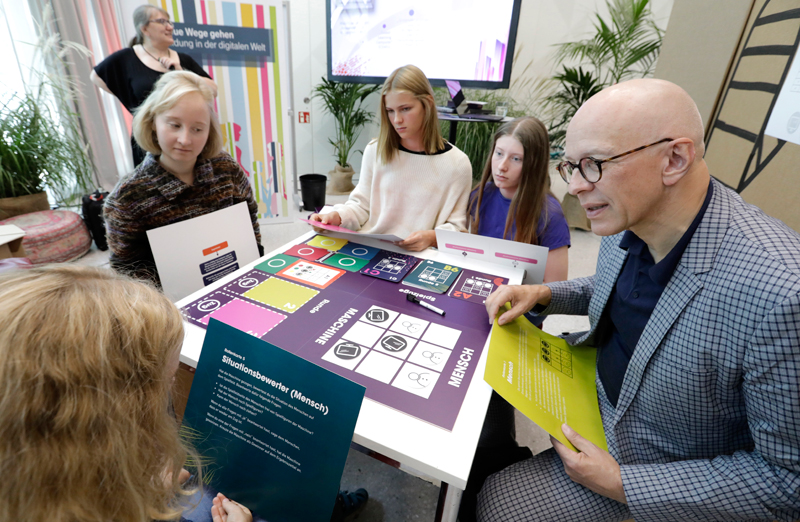
    At the opening of the Berlin science centre "Futurium": Ekkehard Winter plays a board game on artificial intelligence with children.

    Many challenges, then. Can they be overcome?
    We have no other choice. The Corona crisis is a merciless reminder of the weaknesses of the school system – it is no longer possible to simply look away and hide. The deficits have been known for years. They became apparent, for example, in the international comparative study ICILS 2018, which dealt with media competence. Germany's students came in at the bottom of the league in a comparison of countries. The technical equipment of the schools and the digital competence of teachers also scored badly. Germany is now upgrading its technical equipment, and a lot of money is currently flowing into it. However, pedagogical competence is still inadequate.

    Does this apply to all schools or are there not some laudable exceptions?
    Fortunately, there are even many good examples of how teachers use digital media productively and with a high pedagogical-didactic added value. We and other foundations and associations such as the Forum Education Digitisation are trying to make these best practice examples known and use them as models. However, this is difficult, also because many teachers who are now working at the schools have neither become acquainted with the new possibilities during their training nor have been able to practise them in suitable further training courses. Incidentally, this applies to older and younger teachers alike.

    What does it take to bring about real change?
    We need nothing less than a cultural change in the education system. A positive attitude towards the new and a desire to learn throughout one's working life. It is important to have strong school administrators and colleagues who see themselves as a team and carry this spirit into the classroom. The lone warrior mentality among teachers that still prevails today has survived. For the world of tomorrow we need young people who can develop their creativity and enjoy learning together.

    Your foundation focuses on the 10 to 16 year olds. It is precisely in this age group that the desire to learn seems to have dried up.
    That is true.  But the flame is still there. You only have to blow on it, then young people do the most amazing things, as we know from many projects.  They really bite down hard when something really interests them and when it seems important to them for their lives. That's the way they want to go to school, as we have seen in our new study "How do children and young people learn today?”. School is currently seen as the central place of learning, but it is not the place where young people like to learn. This is why our foundation is increasingly focusing on extracurricular learning, whether in modern libraries and museums, youth centres or project workshops such as Makerspaces. We propagate an educational ecosystem in which the school is part of a large network.

    In which science also has a role to play?
    A very large one, especially in the MINT area. I have seldom experienced such enthusiasm for physics as when a school and scientists at Geneva's CERN discussed via direct video connection. At CERN, physicists use gigantic particle accelerators to investigate the structure of matter. So what is fun about MINT is not labelled MINT, but instead CERN – or GDNÄ. The fact that the GDNÄ invites students and teachers to its meetings and offers special programmes in the field of education is exemplary for the education system of the future.

    Before your involvement in the education sector, you promoted the dialogue between science and society at the Stifterverband. A field in which the GDNÄ is also active...
    ...and already played an important role in the 1990s, especially in the shape of its former presidents Joachim Treusch and Detlev Ganten. German journalists and scientists made their annual pilgrimage to the conferences of the American Association for the Advancement of Science, or Triple AS for short. Detlev Ganten had the idea of creating a European counterpart. That was a time of great hopes for the future. Together with colleagues, I was able to contribute to the establishment of the pan-European science conference EuroScience Open Forum. In the meantime, ESOF has become an institution – the next conference is to be held in Leiden in 2022.

    How did you come to DGNÄ?
    I was working in Konstanz and wanted to take the opportunity to ask then GDNÄ President Hubert Markl for advice. So we met in his institute and I presented my request. "I can give you this advice", said Markl, "but on condition that you become a member of the DGNÄ". He handed me a form, I signed it and left with a few good tips. Well, that's how membership recruitment used to work back then.

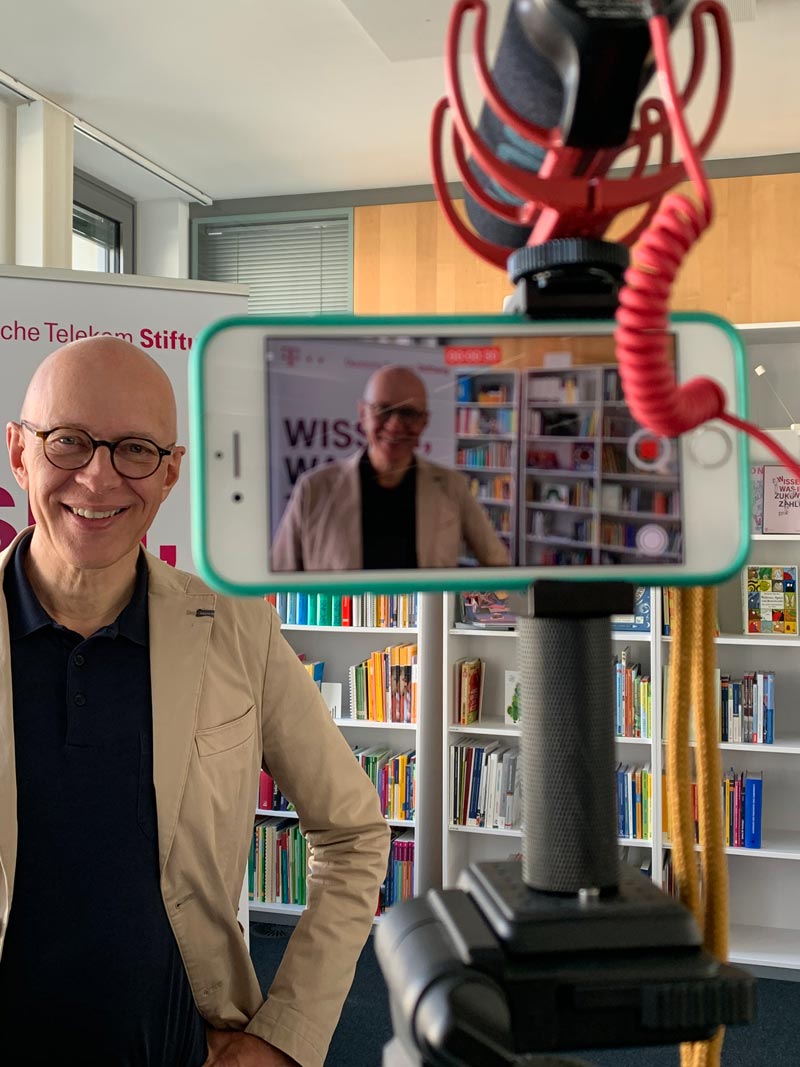
    Ekkehard Winter in front of the camera: scene of an interview for a social media channel of the Telekom Foundation.

    Fascination 3D printer: Impression of a school project of the Telekom Foundation in Bonn.

    About the person
    Dr. Ekkehard Winter (62) has been Managing Director of the Deutsche Telekom Foundation since 2005. After studying biology and completing his doctorate at the Institute of Genetics at the University of Cologne, Winter joined the then newly founded Academy of Sciences in Berlin as a scientific advisor. Two years later, he moved to the Stifterverband in Essen. There he was responsible for programmes on higher education reform and supervised a number of foundations in the field of natural and life sciences. In 1999, Winter worked at the Engineering and Physical Sciences Research Council (EPSRC), the largest British research funding body. A year later he took over as head of the "Programme and Funding" department at the Stifterverband and became Deputy Secretary General of the Stifterverband in 2003. Since 2017 he has been co-spokesman of the National MINT Forum. Ekkehard Winter is co-founder of the nationwide initiative "Wissenschaft im Dialog" (WiD), which was founded in 2000 by all German science organisations, and of the Euro Science Open Forum (ESOF). Until February 2020, he headed the "Education and Training" working group of the Association of German Foundations and is a member of numerous other committees in the fields of education, science and foundations.

    German Telecom Foundation
    Launched in 2003 by Deutsche Telekom, the Telekom Foundation is now one of the largest educational foundations in Germany with a capital of 150 million euros. The Telekom Foundation is committed to a sustainable education system in a digital world and focuses on the subjects of mathematics, computer science, natural sciences and technology (the so-called MINT subjects). It provides around ten million euros annually for projects in this area. The foundation is based in Bonn and employs 20 people. Since 2018, former Federal Minister, Dr. Thomas de Maizière, has been Chairman of the Board of Directors.

    Weiterführende Links:

    “Young people are my hope”

    "Young people are my hope"

    Hardly anyone knows the German science landscape as well as she does: Why microbiologist Bärbel Friedrich's balance sheet is mixed thirty years after reunification, what she thinks about European genetic engineering law and how Corona has determined her summer.

    Professor Friedrich, this year we are celebrating thirty years of German unity. Have East and West really come together in science?
    In Berlin there are no longer any major differences. I see many good universities and non-university research institutions in the East and the West. Outside Berlin, however, in the eastern German states, there is a lot of catching up to do. 

    You were professor of microbiology at the Free University of Berlin at the time of reunification. How did you experience these years? At the FU, fear began to spread soon after the Wall came down. There was no longer any need for a Free University as a bulwark of the free world. Before the Wall came down, subsidies had flowed abundantly, but that ended abruptly. Many colleagues speculated that the FU would soon be integrated into the Humboldt University (HU). I moved to the HU in 1994 to establish a new subject there, scientific microbiology.

    The FU still exists and in 2007 it even received the Seal of Excellence – years ahead of the other Berlin universities.
    Yes, that was a huge surprise, but also a powerful incentive for the HU. The federal and state Excellence Programme has changed the mood, which was previously characterised by competition and even hostility. Now it was a matter of cooperation, and that was the key to success. Joint Collaborative Research Centres and Clusters of Excellence were created – in my field, for example, the UniCat Catalysis Cluster, which Berlin and Brandenburg universities have been operating together since 2012. The highlight of this development is certainly the successful performance of the Berlin University Alliance in the 2019 Excellence Competition.

    Things look different beyond the capital. What about academic unity in the east German regions?
    The picture is very mixed. There are some outstanding institutions, but university research in eastern Germany still lags somewhat behind in terms of breadth. In the funding ranking of the German Research Foundation, for example, West German universities do much better. If we look at the last Excellence Competition in 2019, we see that in East Germany, apart from Berlin, only the TU Dresden is at the top of the list. However, some universities have developed particular strengths. Let me illustrate this with an example. When I first came to Greifswald in 1996 with a delegation from the Science Council, I had the impression that the Chemistry Institute had to be closed down immediately. The equipment was completely outdated, the scientific quality was at rock bottom.  But over the years, the standard has improved considerably and today the university is doing excellent work, especially in medical research. I was able to observe this at close quarters because as director of the Alfried Krupp Wissenschaftskolleg in Greifswald, I worked closely with the university for many years.

    How do you experience personal contact with each other in everyday life?
    In Greifswald and especially at the university, you meet each other impartially.  But in the countryside, as a Westerner I am still viewed critically. Everyone knows that you can't do without tourists, but actually, you'd rather stay among yourself. To my mind, that expresses the frustration of a generation of losers. It's different with the young people, they no longer see themselves as Ossis, but as Germans. The youth is my hope – with them the German division could grow.

    You have been emeritus for a while now, but you are still very active in science policy. Together with some colleagues, you recently took a stand against a ruling of the European Court of Justice on genome edited plants. Why?
    Many scientists were immensely disappointed with the ruling. Because it means that a pioneering genetic engineering method is practically not used in Europe in the crop sector. With CRISPR-Cas, as the technique is called, individual building blocks in the genome can be altered very easily, precisely and inexpensively – we scientists speak of editing. The method is a real quantum leap. It has very quickly conquered the laboratories of the world and has recently been awarded the Nobel Prize in Chemistry.  Not only could CRISPR-Cas be used to achieve larger harvests, the technique could also significantly reduce the use of fertilisers and pesticides. It is also suitable to breed plants that are more resistant to climate change. 

    What does the European Court of Justice have against the method?
    It is considered a risk and is subject to the complex and impractical requirements for genetically modified organisms, or GMOs for short. The restrictions have led to a virtual absence of research in this field in Europe. Anyone who wants to work in the field and test plants in the field has to move, for example to Canada. There are now many genetically modified plants produced using older techniques and more than a hundred genome-modified plants. These include soybeans with healthier fatty acids, gluten-reduced wheat and potato tubers with longer storage life. The changes in the genetic make-up of the new varieties could also have been caused by chance or conventional breeding methods -– their origin is usually no longer clearly identifiable. Harmful effects of GMOs, a very important point, have never been reported.

    What needs to be done?
    European genetic engineering legislation is outdated and should be revised. We came to this conclusion in a joint statement by the National Academy Leopoldina and the Union of German Academies. As a short-term measure, we propose that genome edited plants should only be classified as GMOs if genetic information foreign to the species is introduced – i.e. only in exceptional cases. In the longer term, we are advocating a completely new legal framework which does not define the risks to human health and the environment in terms of the process used, but in terms of the characteristics of the product produced. 

    What are the chances of your initiative?
    In politics, the FDP is completely on our side. The Greens are gradually becoming more open-minded. We have many advocates in the media, and we are receiving additional support from farmers. Even organic farmers who are pleased with the prospect of pesticide-free agriculture on the probably drier soils of the future, start to hesitantly support us.

    You have contributed to numerous scientific policy papers. This year there were particularly many. How did this come about?
    It all started on March 12 – I was just returning to Berlin from a microbiologists' conference in Leipzig. I got a call from the Leopoldina's capital office telling me to come right over, it was urgent. In an interdisciplinary team, we then immediately started work on the first policy paper on how to deal with the corona pandemic, which was published just ten days later. In spring and summer I worked on four other statements – from the home office, practically never in attendance. All in all, it was an enormous effort, partly because we knew that we had a huge responsibility. What was good was the close cooperation with politicians, which I had never experienced before in such intensity. 

    Was your team able to maintain its scientific independence?
    We always tried to make recommendations for action on the basis of the latest scientific findings, knowing well that politicians ultimately have to decide according to their own criteria. There is a clear line of demarcation here, which preserves our independence.  

    You have known and shaped the German science landscape for many years. What place does the GDNÄ have in this?
    It has particular strengths that cannot be found elsewhere in this combination. At its meetings and, increasingly, on its website, the GDNÄ conveys up-to-date knowledge at a high level, from an interdisciplinary perspective and in an easily understandable way. A big plus point are the student programmes and the cooperation with teachers. The older population is often frightened when it comes to future topics. In order to make progress here, we need to bring scientists into the public eye, especially in schools, and win over the next generation. This is where I see great potential for the GDNÄ .
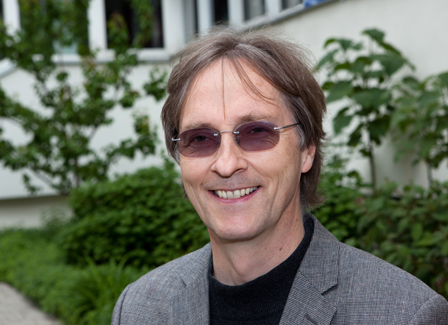
     

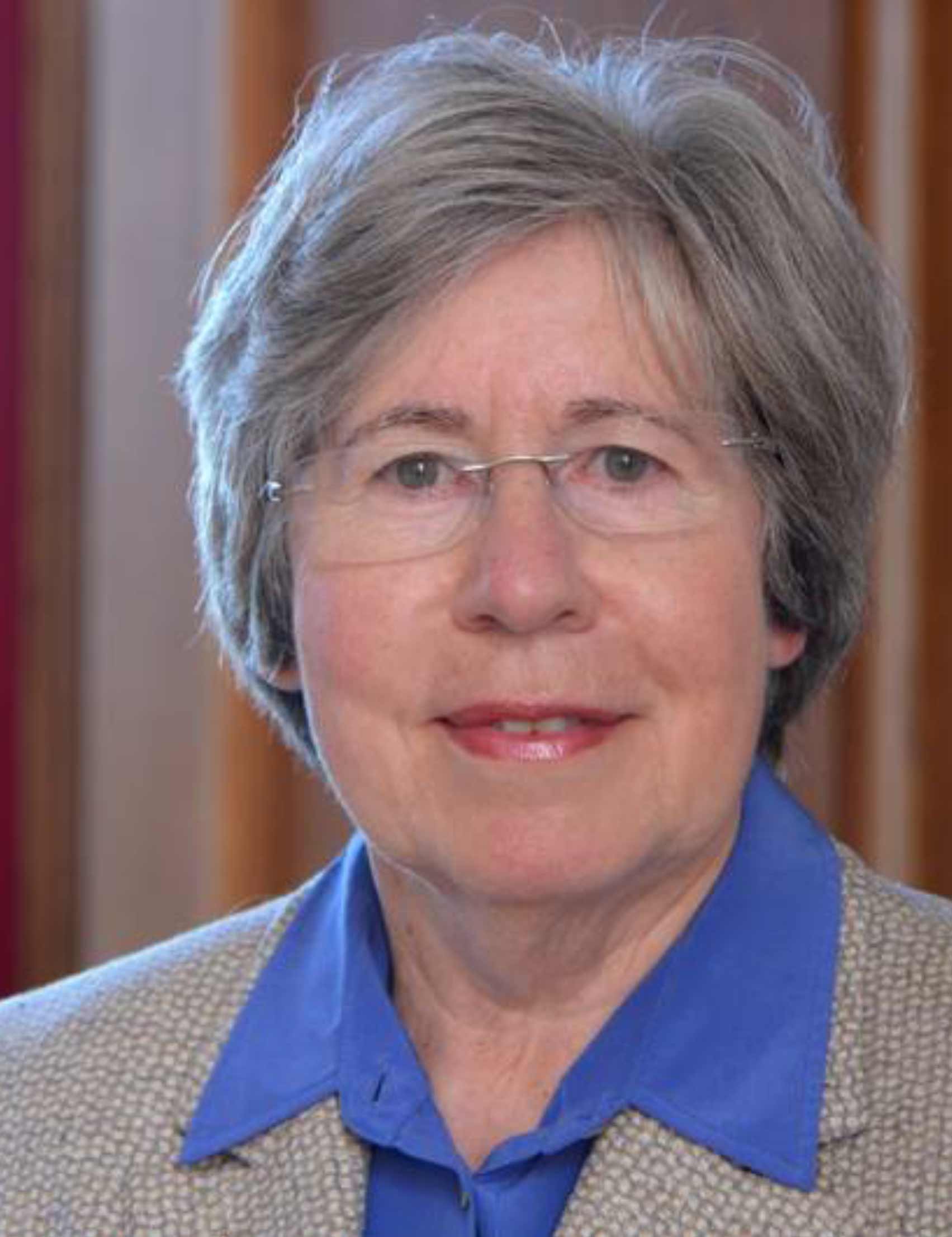
    Prof. Dr. Bärbel Friedrich

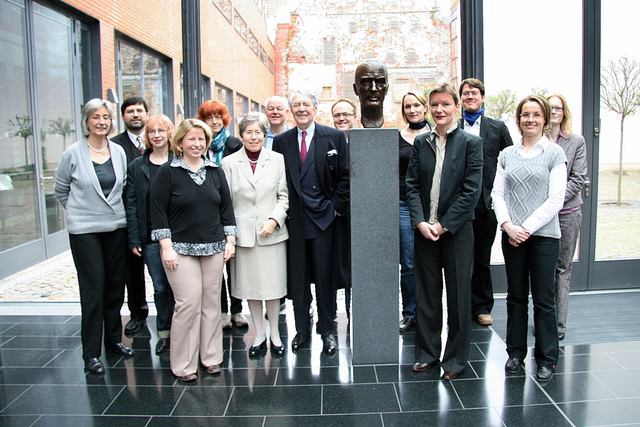
    2008 at the Wissenschaftskolleg Greifswald: Bärbel Friedrich, surrounded by Fellows and staff and, to her right, Berthold Beitz, then Chairman of the Board of Trustees of the Alfried Krupp von Bohlen und Halbach Foundation.

    Biographical information
    Bärbel Friedrich was born in Göttingen in 1945. After completing her doctorate in microbiology at the university there, she went to the Massachusetts Institute of Technology (MIT) for two years as a postdoctoral researcher and then habilitated in Göttingen. In 1985, she became Professor of Microbiology at the Free University of Berlin; in 1994, she moved to Humboldt University. From 2008 to 2018 she was Scientific Director of the Alfried Krupp Wissenschaftskolleg, which promotes Greifwald University and the entire science location. Bärbel Friedrich was involved in many academic institutions and committees. Among others, she was Vice-President of the Leopoldina (2005 to 2015), member of the Bundestag Commission of Inquiry "Ethics and Law of Modern Medicine" (2003 to 2005), Vice-President of the German Research Foundation (1997 to 2003) and member of the German Science Council (1997 to 2003). She has received numerous awards, including the Federal Cross of Merit for her scientific commitment in the new federal states and the Leopoldina Medal of Merit.

    The scientist
    In her research, Bärbel Friedrich investigates, among other things, how bacteria can be used to produce and convert hydrogen. In the excellence cluster Unifying Concepts in Catalysis (UniCat), her team succeeded in genetically modifying cyanobacteria to synthesise hydrogen from water. The process is too complex for the mass production of hydrogen as part of the energy revolution, says the microbiologist, and electrolysis is the more suitable method here. "In the context of green chemistry, however, biologically or electrolytically produced hydrogen is very valuable, for example for the production of basic chemicals". Biocatalysts, such as those Friedrich and her research group are investigating – so-called oxygen-tolerant hydrogenases ­­­– play a promising role in this.

    Further links:

    Bärbel Friedrich also contributed to this ad hoc statement on the Corona pandemic.

    Bees keep Picasso and Monet apart

    „Bees keep Picasso and Monet apart“

    Jürgen Tautz has been with the GDNÄ since his doctoral thesis, he only came to bee research much later. To this day, the zoologist, beekeeper and well-known non-fiction author is fascinated by the way these insects communicate with each other.

    Professor Tautz, how are the bees doing?
    Not so bad, at least not in Germany. In this country there are about one million bee colonies and around one hundred thousand beekeepers. The beekeepers are growing from year to year and they are becoming younger, more feminine and more urban. In the last ten years bees have become extremely popular animals and now they have a strong lobby worldwide – much stronger than other insects.

    But surely this has a lot to do with the death of bees?
    There is no such thing as a generalised bee mortality. We have to deal with threats that vary greatly from region to region, for example from parasites like the Varroa mite, diseases or a lack of flowering plants. This threatens above all the numerous lesser-known wild bee species, which do not form states but live predominantly solitary lives. The western honeybee, which is widespread in our country, is not endangered as long as it is cared for by a committed beekeeper.

    What is the effect of herbicides such as glyphosate on bees?
    The negative impact of glyphosate and other herbicides is mostly indirect. Glyphosate, for example, damages the bees' bacterial gut flora, which can ultimately weaken their immune system. In addition, this herbicide reduces the food supply for many insects, since all plants except genetically modified crops are killed.

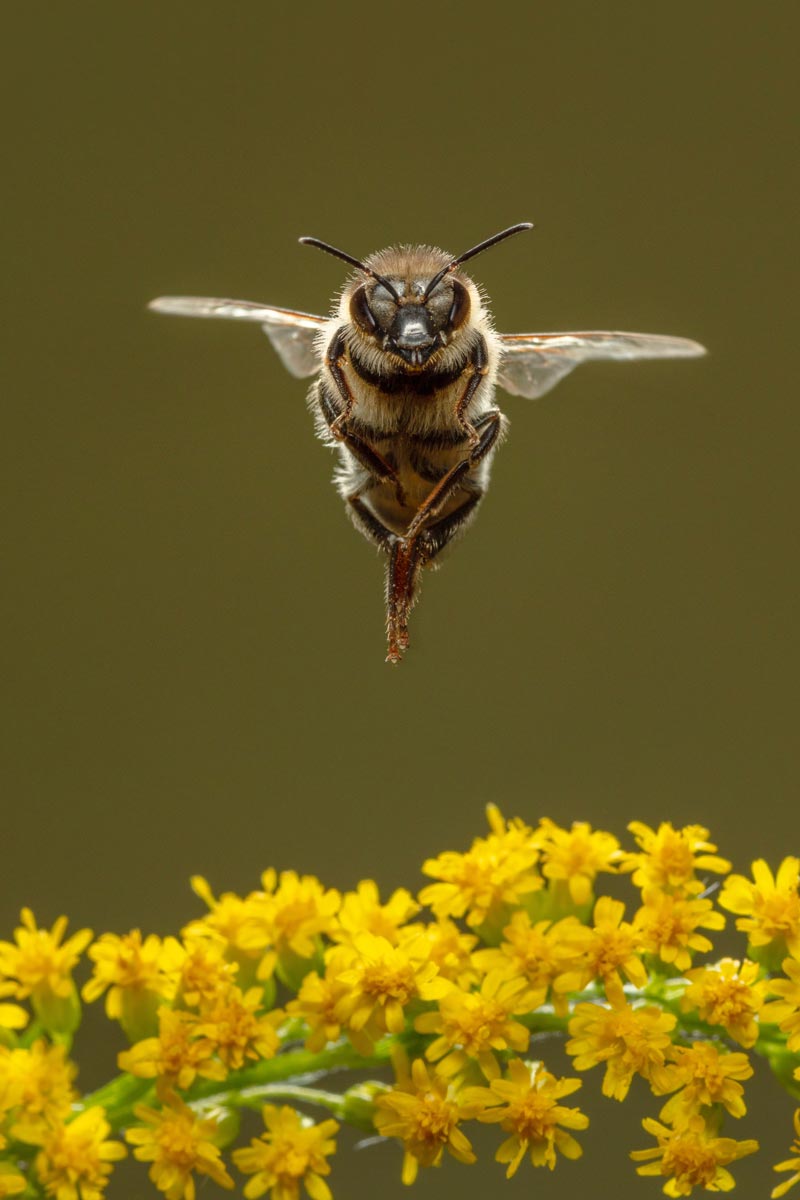
    Sammelbiene im Anflug auf eine Goldrautenblüte.

    If beetles, ants or hornets suffer as a result, few people are interested. Why is it different for bees?
    At first sight this is indeed astonishing. After all, a beehive contains around fifty thousand poisonous stings. But this does not diminish our love for bees. There are historical reasons for this, I think. In all cultures honey is a food of the gods, just think of ambrosia in Greek mythology. For our ancestors it was always a feast when they found a bees' nest with honey. However, it was not until the end of the 18th century that we realised how important bees are for the natural balance and agriculture. At that time, the Berlin theologian Christian Konrad Sprengel observed that bees pollinate and thus fertilise plants. One can therefore say that bees are a key organism and a wonderful bridge builder between the environment and man. 

    You are a zoologist. What exactly brought you to bee research?
    I only started specialising in this field when I was 45 years old. Before that, my research involved butterfly caterpillars, crabs, frogs, fish and other organisms. But after first insights into the communication biology of bees I was absolutely fascinated and couldn't get away from it.

    What impresses you so much about the bee?
    Bees are incredibly resilient and have amazing abilities. The honeybee, for example, can count to four, has an idea of the concept of the number zero and can tell the painting styles of Picasso and Monet apart. This has all been experimentally proven. The cultural history is also fascinating: it was only in the 18th century that it was discovered that a colony of bees was led by a queen and not, as was claimed for thousands of years, by a king. We are actually dealing with a women's state that functions excellently, not least because of the sophisticated communication between them.

    What significance does the dancing language of bees have in this?
    It plays an important role, as the research work of Nobel Prize winner Karl von Frisch has already shown. He had observed how worker bees showed their fellow bees the way to food through dance-like movements in the beehive, the so-called tail dance. However, the information provided in this case only provides a rough orientation, as we know today. In order to find the exact feeding place, the honeybee needs further information which it receives during the flight – among other things through constant communication with other bees.

    "The importance of the bee dance is overestimated" - You were quoted with this sentence in a daily newspaper years ago, which caused a fierce controversy in the professional world. What do you think about this today?
    The controversy would not have been necessary in this form. My view of things has not changed since then: In the bees' tail wagging dance I see the beginning of a seamless that accurately guides worker bees from the beehive to the food source, supplemented by additional information. This view is supported by many international research results.

    You have done a lot for the dialogue with the public and have been awarded the renowned Communicator Prize of the German Research Foundation and the Stifterverband for your excellent communication with the public in 2012. What does this honour mean to you?
    It is wonderful to be able to interest and inspire your fellow human beings in things that you yourself consider important. But it also costs resources that are lost in the actual research work. So the Communicator Award is a very motivating recognition.

    As a retired professor, you are now primarily involved in educational work in schools. What drives you in this area?
    My team and I want to bring young and older people together personally and not just digitally with a modern project. With us, Fridays for Future supporters can do something concrete for the environment and climate. After the positive experience with an online project at the University of Würzburg called Honeybee Online Studies, HOBOS for short, we recently launched a new project with we4bee. The focus here is on high-tech hives for independent environmental research.

    How can we imagine school research?
    Currently, more than one hundred schools throughout Germany have borrowed such beehives from us. Thanks to a generous sponsor, the Audi Foundation for the Environment, this is free of charge for schools. Each hive houses a colony of bees, whose condition and behaviour is recorded around the clock with cameras and sensors installed in the nest and can be observed via app. In addition, temperature, humidity, weather conditions and other parameters in the surrounding area are documented. The pupils collect all the data and send it to our team at the University of Würzburg for evaluation. What does a bee colony need to stay healthy? And does the new 5G mobile phone network harm the bees? These are some of the questions that we hope to be able to answer better soon using the data. But we don't just want to discuss the results with young people, we want to bring all generations together in a conversation about bees. Beekeepers should also benefit from this, so that they can create the best possible living conditions for their colonies.

    How are your own bees doing and what hopes for the future do you have as a beekeeper?
    My own five bee colonies are doing well. For the future, I hope for environmental conditions that are beneficial to the bees as a whole. Then a huge network in nature will be doing well, and ultimately we humans will also be doing well.

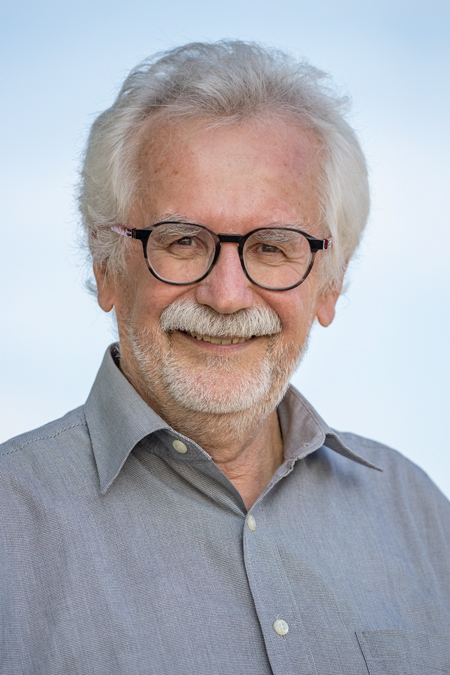
    The zoologist and bee researcher Professor Jürgen Tautz.

    About the person
    Jürgen Tautz is a behavioural scientist, bee researcher and beekeeper. Professor emeritus at the Biozentrum of the University of Würzburg in 2015, he now heads we4bee, a network for environmental research and environmental education in schools. We4bee follows on from HOBOS (Honeybee Online Studies), an internet-based teaching and learning platform on the honeybee, which Tautz founded in 2006. Born in Heppenheim in 1949, the zoologist studied biology, geography and physics at Darmstadt Technical University. After completing his dissertation in Konstanz under Hubert Markl, he came to the University of Würzburg in 1990, following stations in Canberra/Australia and Stanford, California. In addition to some 400 scientific publications Jürgen Tautz has published several non-fiction books, including bestsellers such as "The Buzz about Bees – Biology of a Superorganism". The work, which was first published in 2007 in German, has been translated into twenty languages. Tautz is currently working on a popular science book that looks at the language of bees from a new perspective, to be published in spring 2021.

    Further information:

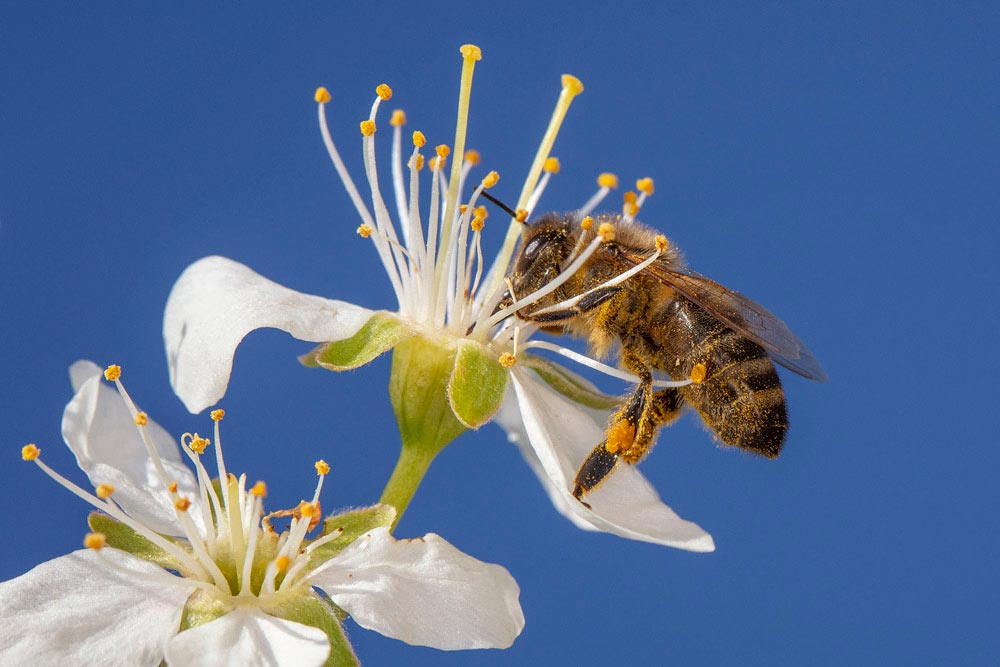
    Pollen collecting honeybee on a cherry blossom.

    Research at the feeding site: These collecting bees were tagged after birth with an RFID chip that records their flight activity.

    These wild honeybees have found a home in an old black woodpecker cave. Unlike honeybees kept by beekeepers, wild bees are exposed to natural selection. One consequence is that they can adapt flexibly to changing living conditions. 

    The digital beehive of the St. Ursula School Würzburg: the entrance to the beehive is permanently monitored by a mini video camera. The green box on which the bees stand is a scale. The weather station attached to a mast records temperature, humidity, rain, sunshine, wind and exposure to fine dust. All data (including those from inside the beehive, whose measuring systems are not shown here) are continuously collected at the Institute for Computer Science at the University of Würzburg. There they are analysed, processed and made available on the Internet for all interested parties to access.   

    Corona crisis: confidence in science is growing

    Corona crisis: confidence in science is growing

    In the corona pandemic, assessments from the scientific community are in great demand. Representative surveys show that the German public trusts the statements to a high degree and would like to receive even more information.

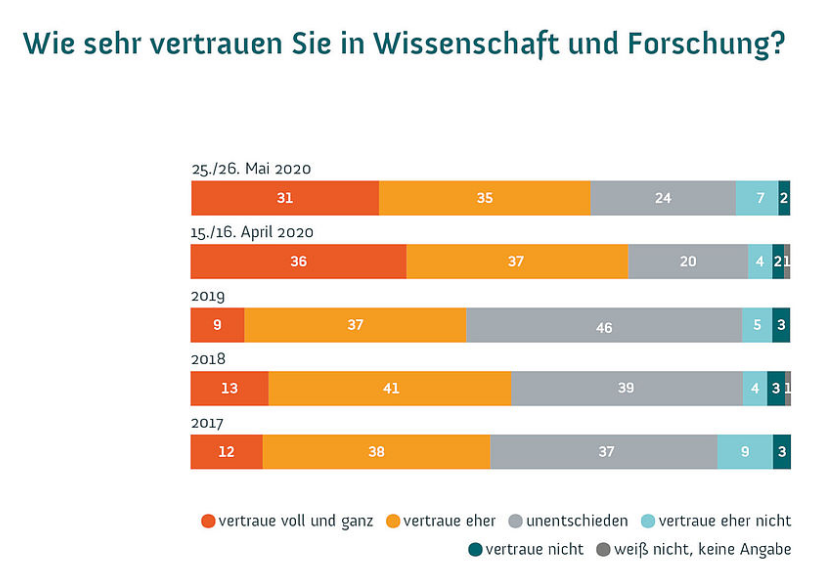
    In the corona crisis, the credibility of science has increased significantly in Germany. In a representative survey for the Science Barometer 2020, 66 percent of respondents said they trusted science and research. In similar surveys conducted by the "Science in Dialogue" initiative in the years 2017 to 2019, only around 50 percent had this attitude.

    The Allensbach Institute for Public Opinion Research also identified a clear increase in trust in research in 2020. According to this, 43 percent of those surveyed rely on scientists to tell the truth. In 2015, the corresponding figure was only 30 percent. This puts the professional group of researchers in third place in terms of credibility. Only the long-standing front-runners, doctors and judges, perform better.

    For a constructive dialogue

    Researchers are not only valued for their contributions to advising politicians and the public. According to the Allensbach study, every second German (54 percent) also perceives the natural sciences as an important source of inspiration for the future. According to the study, the reputation of parties and politicians as creative forces has risen from 25 to 31 percent. In contrast, the perceived influence of journalists (from 26 to 19 percent) and citizens' movements (from 42 to 29 percent) has declined.

    "The figures show that the majority of the population trusts science, especially in critical times", says Martin Lohse, President of the German Society of Natural Scientists and Physicians (GDNÄ). But science should not take this trust for granted. Lohse adds that the GDNÄ therefore feels a responsibility to promote constructive dialogue between research and society.

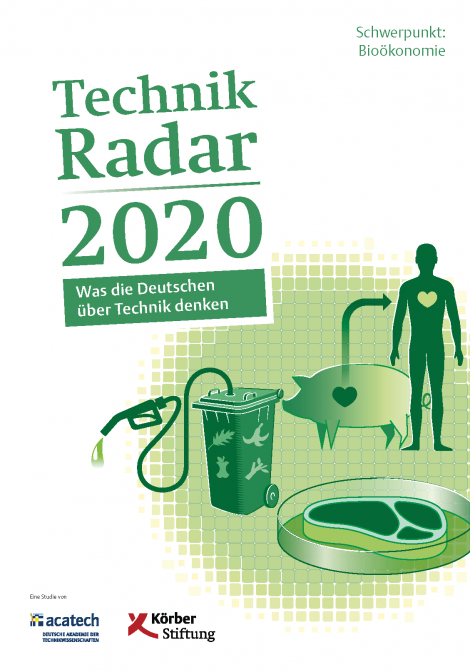
    There is a lot of catching up to do when it comes to communicating science. This is confirmed by other representative surveys, such as the Technikradar (Technology Radar) 2020. In this survey conducted by the German Academy of Science and Engineering (acatech) and the Körber Foundation, only 15 percent of the approximately two thousand respondents were satisfied with the way in which politics informs about the consequences of technology. As many as 70 percent demand greater involvement of citizens in the introduction of new technologies.

    Criticism of fossil fuels

    The focus of Technikradar 2020 is on bioeconomy. The term refers to new products, processes and services that contribute to a more sustainable and future-proof economic system. "Conventional solutions for energy generation, mobility and industrial production based on fossil fuels are coming under increasing pressure from the public to justify themselves", says the Technikradar report. For example, more than half of the Germans in the survey are in favour of politicians pushing through measures for climate protection, even if the economy suffers as a result.

    The evaluation of individual subject areas of bioeconomy varies. 88 percent of those surveyed are in favour of replacing plastics with organic products. Three-quarters think gene therapies for adults are good. 60 percent plead for more research funding to develop biofuels. But only one in four can get along with eating meat from the laboratory. The approval rate for genetically modified plants is even lower.

    Many of these developments hold great potential in a world facing pressing issues: How do we manage global crises? How do we stay healthy? How will we live, move and communicate with each other? "These questions cannot be answered by climate researchers, doctors, social and natural scientists alone", says Martin Lohse. "This is another reason why platforms like the GDNÄ are becoming increasingly important for a rational and interdisciplinary dialogue between science and society and for the exchange between the younger and older generations.”

    Technology is seen positively

    The conditions for dialogue appear to be good. The Technikradar 2020 reports broad public support for science and technical progress. 48.7 percent of those surveyed believe that technological development will provide a higher quality of life for future generations. Only 16 percent do not agree with this statement. .

    The general level of technology friendliness is strong or very strong in 52 percent of those surveyed, and low or very low only in 11 percent. According to the evaluation, it makes no difference whether the respondents live in East or West Germany, in a large city or in the countryside. On average, men are still more technology-oriented than women. And the higher the level of education, the greater the interest in technology.

    What the Technology Radar 2020 also shows: a better understanding of scientific results does not necessarily increase the willingness to change one's own behaviour. Admittedly, the statements of scientists in the corona pandemic contribute decisively to the fact that restrictions of daily life are widely accepted. But this does not apply to environmental and climate protection. Most of those surveyed reject additional financial burdens for themselves, and only a third are in favour of governmental pressure on individuals to act in an environmentally sound manner.

    Figure from the "Science Barometer 2020”

    Title page of “Technikradar 2020”, a representative survey of attitudes towards science and technology

    Further information: