x xc

“Young people are my hope”

"Young people are my hope"

Hardly anyone knows the German science landscape as well as she does: Why microbiologist Bärbel Friedrich's balance sheet is mixed thirty years after reunification, what she thinks about European genetic engineering law and how Corona has determined her summer.

Professor Friedrich, this year we are celebrating thirty years of German unity. Have East and West really come together in science?
In Berlin there are no longer any major differences. I see many good universities and non-university research institutions in the East and the West. Outside Berlin, however, in the eastern German states, there is a lot of catching up to do. 

You were professor of microbiology at the Free University of Berlin at the time of reunification. How did you experience these years? At the FU, fear began to spread soon after the Wall came down. There was no longer any need for a Free University as a bulwark of the free world. Before the Wall came down, subsidies had flowed abundantly, but that ended abruptly. Many colleagues speculated that the FU would soon be integrated into the Humboldt University (HU). I moved to the HU in 1994 to establish a new subject there, scientific microbiology.

The FU still exists and in 2007 it even received the Seal of Excellence – years ahead of the other Berlin universities.
Yes, that was a huge surprise, but also a powerful incentive for the HU. The federal and state Excellence Programme has changed the mood, which was previously characterised by competition and even hostility. Now it was a matter of cooperation, and that was the key to success. Joint Collaborative Research Centres and Clusters of Excellence were created – in my field, for example, the UniCat Catalysis Cluster, which Berlin and Brandenburg universities have been operating together since 2012. The highlight of this development is certainly the successful performance of the Berlin University Alliance in the 2019 Excellence Competition.

Things look different beyond the capital. What about academic unity in the east German regions?
The picture is very mixed. There are some outstanding institutions, but university research in eastern Germany still lags somewhat behind in terms of breadth. In the funding ranking of the German Research Foundation, for example, West German universities do much better. If we look at the last Excellence Competition in 2019, we see that in East Germany, apart from Berlin, only the TU Dresden is at the top of the list. However, some universities have developed particular strengths. Let me illustrate this with an example. When I first came to Greifswald in 1996 with a delegation from the Science Council, I had the impression that the Chemistry Institute had to be closed down immediately. The equipment was completely outdated, the scientific quality was at rock bottom.  But over the years, the standard has improved considerably and today the university is doing excellent work, especially in medical research. I was able to observe this at close quarters because as director of the Alfried Krupp Wissenschaftskolleg in Greifswald, I worked closely with the university for many years.

How do you experience personal contact with each other in everyday life?
In Greifswald and especially at the university, you meet each other impartially.  But in the countryside, as a Westerner I am still viewed critically. Everyone knows that you can't do without tourists, but actually, you'd rather stay among yourself. To my mind, that expresses the frustration of a generation of losers. It's different with the young people, they no longer see themselves as Ossis, but as Germans. The youth is my hope – with them the German division could grow.

You have been emeritus for a while now, but you are still very active in science policy. Together with some colleagues, you recently took a stand against a ruling of the European Court of Justice on genome edited plants. Why?
Many scientists were immensely disappointed with the ruling. Because it means that a pioneering genetic engineering method is practically not used in Europe in the crop sector. With CRISPR-Cas, as the technique is called, individual building blocks in the genome can be altered very easily, precisely and inexpensively – we scientists speak of editing. The method is a real quantum leap. It has very quickly conquered the laboratories of the world and has recently been awarded the Nobel Prize in Chemistry.  Not only could CRISPR-Cas be used to achieve larger harvests, the technique could also significantly reduce the use of fertilisers and pesticides. It is also suitable to breed plants that are more resistant to climate change. 

What does the European Court of Justice have against the method?
It is considered a risk and is subject to the complex and impractical requirements for genetically modified organisms, or GMOs for short. The restrictions have led to a virtual absence of research in this field in Europe. Anyone who wants to work in the field and test plants in the field has to move, for example to Canada. There are now many genetically modified plants produced using older techniques and more than a hundred genome-modified plants. These include soybeans with healthier fatty acids, gluten-reduced wheat and potato tubers with longer storage life. The changes in the genetic make-up of the new varieties could also have been caused by chance or conventional breeding methods -– their origin is usually no longer clearly identifiable. Harmful effects of GMOs, a very important point, have never been reported.

What needs to be done?
European genetic engineering legislation is outdated and should be revised. We came to this conclusion in a joint statement by the National Academy Leopoldina and the Union of German Academies. As a short-term measure, we propose that genome edited plants should only be classified as GMOs if genetic information foreign to the species is introduced – i.e. only in exceptional cases. In the longer term, we are advocating a completely new legal framework which does not define the risks to human health and the environment in terms of the process used, but in terms of the characteristics of the product produced. 

What are the chances of your initiative?
In politics, the FDP is completely on our side. The Greens are gradually becoming more open-minded. We have many advocates in the media, and we are receiving additional support from farmers. Even organic farmers who are pleased with the prospect of pesticide-free agriculture on the probably drier soils of the future, start to hesitantly support us.

You have contributed to numerous scientific policy papers. This year there were particularly many. How did this come about?
It all started on March 12 – I was just returning to Berlin from a microbiologists' conference in Leipzig. I got a call from the Leopoldina's capital office telling me to come right over, it was urgent. In an interdisciplinary team, we then immediately started work on the first policy paper on how to deal with the corona pandemic, which was published just ten days later. In spring and summer I worked on four other statements – from the home office, practically never in attendance. All in all, it was an enormous effort, partly because we knew that we had a huge responsibility. What was good was the close cooperation with politicians, which I had never experienced before in such intensity. 

Was your team able to maintain its scientific independence?
We always tried to make recommendations for action on the basis of the latest scientific findings, knowing well that politicians ultimately have to decide according to their own criteria. There is a clear line of demarcation here, which preserves our independence.  

You have known and shaped the German science landscape for many years. What place does the GDNÄ have in this?
It has particular strengths that cannot be found elsewhere in this combination. At its meetings and, increasingly, on its website, the GDNÄ conveys up-to-date knowledge at a high level, from an interdisciplinary perspective and in an easily understandable way. A big plus point are the student programmes and the cooperation with teachers. The older population is often frightened when it comes to future topics. In order to make progress here, we need to bring scientists into the public eye, especially in schools, and win over the next generation. This is where I see great potential for the GDNÄ .
 

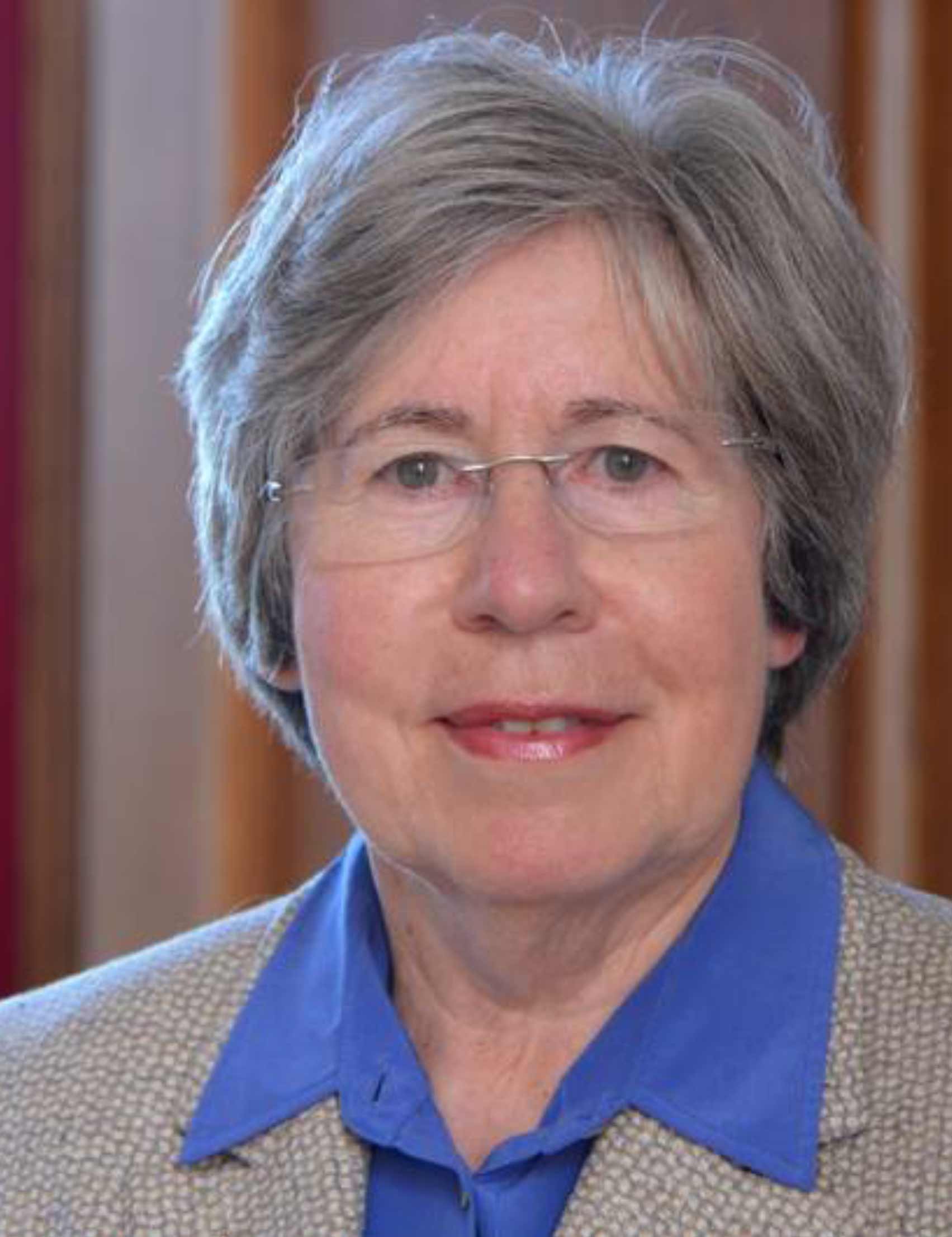
Prof. Dr. Bärbel Friedrich

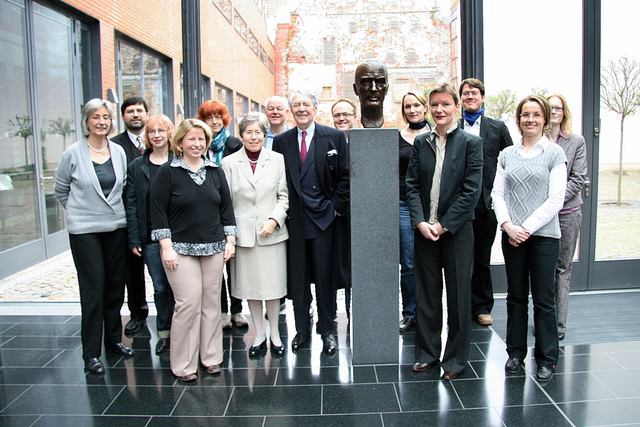
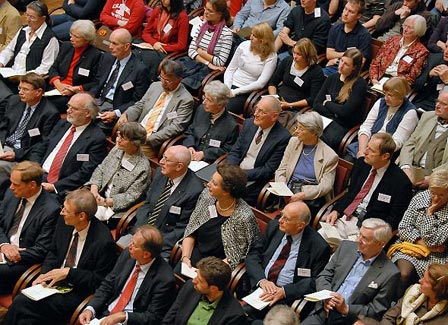
2008 at the Wissenschaftskolleg Greifswald: Bärbel Friedrich, surrounded by Fellows and staff and, to her right, Berthold Beitz, then Chairman of the Board of Trustees of the Alfried Krupp von Bohlen und Halbach Foundation.

Biographical information
Bärbel Friedrich was born in Göttingen in 1945. After completing her doctorate in microbiology at the university there, she went to the Massachusetts Institute of Technology (MIT) for two years as a postdoctoral researcher and then habilitated in Göttingen. In 1985, she became Professor of Microbiology at the Free University of Berlin; in 1994, she moved to Humboldt University. From 2008 to 2018 she was Scientific Director of the Alfried Krupp Wissenschaftskolleg, which promotes Greifwald University and the entire science location. Bärbel Friedrich was involved in many academic institutions and committees. Among others, she was Vice-President of the Leopoldina (2005 to 2015), member of the Bundestag Commission of Inquiry "Ethics and Law of Modern Medicine" (2003 to 2005), Vice-President of the German Research Foundation (1997 to 2003) and member of the German Science Council (1997 to 2003). She has received numerous awards, including the Federal Cross of Merit for her scientific commitment in the new federal states and the Leopoldina Medal of Merit.

The scientist
In her research, Bärbel Friedrich investigates, among other things, how bacteria can be used to produce and convert hydrogen. In the excellence cluster Unifying Concepts in Catalysis (UniCat), her team succeeded in genetically modifying cyanobacteria to synthesise hydrogen from water. The process is too complex for the mass production of hydrogen as part of the energy revolution, says the microbiologist, and electrolysis is the more suitable method here. "In the context of green chemistry, however, biologically or electrolytically produced hydrogen is very valuable, for example for the production of basic chemicals". Biocatalysts, such as those Friedrich and her research group are investigating – so-called oxygen-tolerant hydrogenases ­­­– play a promising role in this.

Further links:

Bärbel Friedrich also contributed to this ad hoc statement on the Corona pandemic.

Bees keep Picasso and Monet apart

„Bees keep Picasso and Monet apart“

Jürgen Tautz has been with the GDNÄ since his doctoral thesis, he only came to bee research much later. To this day, the zoologist, beekeeper and well-known non-fiction author is fascinated by the way these insects communicate with each other.

Professor Tautz, how are the bees doing?
Not so bad, at least not in Germany. In this country there are about one million bee colonies and around one hundred thousand beekeepers. The beekeepers are growing from year to year and they are becoming younger, more feminine and more urban. In the last ten years bees have become extremely popular animals and now they have a strong lobby worldwide – much stronger than other insects.

But surely this has a lot to do with the death of bees?
There is no such thing as a generalised bee mortality. We have to deal with threats that vary greatly from region to region, for example from parasites like the Varroa mite, diseases or a lack of flowering plants. This threatens above all the numerous lesser-known wild bee species, which do not form states but live predominantly solitary lives. The western honeybee, which is widespread in our country, is not endangered as long as it is cared for by a committed beekeeper.

What is the effect of herbicides such as glyphosate on bees?
The negative impact of glyphosate and other herbicides is mostly indirect. Glyphosate, for example, damages the bees' bacterial gut flora, which can ultimately weaken their immune system. In addition, this herbicide reduces the food supply for many insects, since all plants except genetically modified crops are killed.

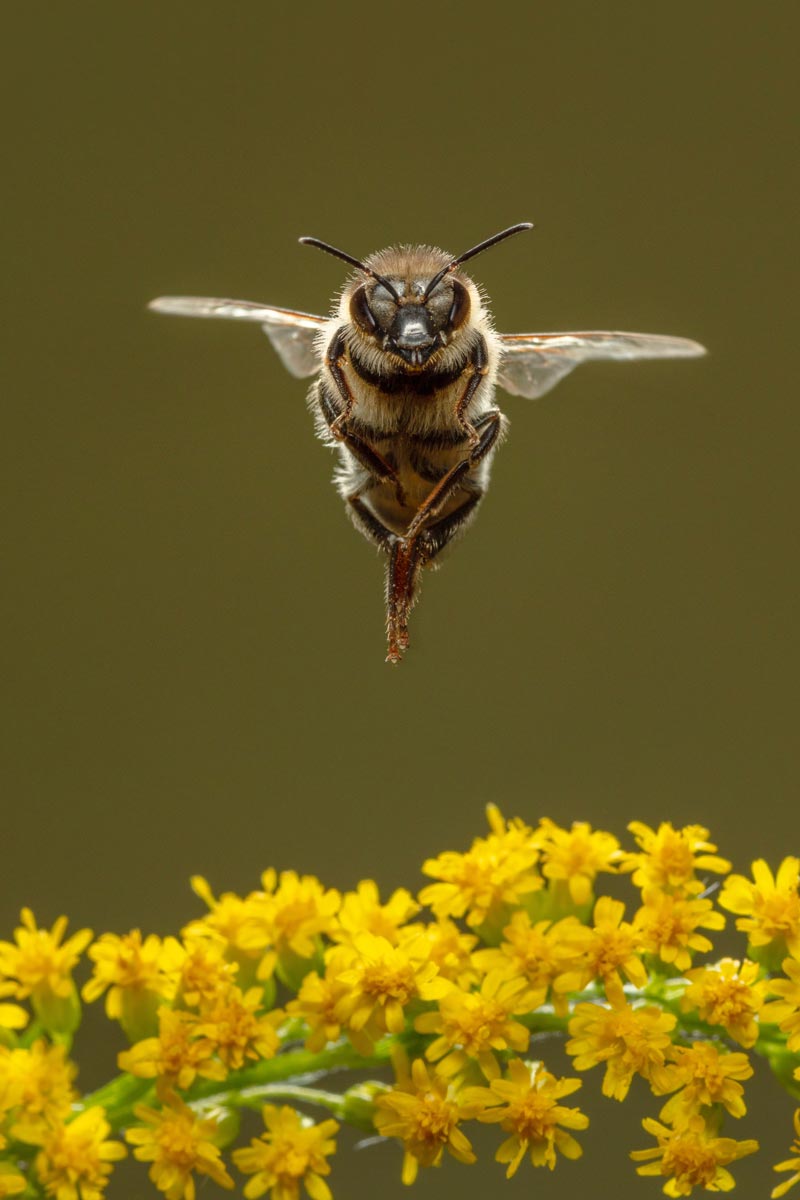
Sammelbiene im Anflug auf eine Goldrautenblüte.

If beetles, ants or hornets suffer as a result, few people are interested. Why is it different for bees?
At first sight this is indeed astonishing. After all, a beehive contains around fifty thousand poisonous stings. But this does not diminish our love for bees. There are historical reasons for this, I think. In all cultures honey is a food of the gods, just think of ambrosia in Greek mythology. For our ancestors it was always a feast when they found a bees' nest with honey. However, it was not until the end of the 18th century that we realised how important bees are for the natural balance and agriculture. At that time, the Berlin theologian Christian Konrad Sprengel observed that bees pollinate and thus fertilise plants. One can therefore say that bees are a key organism and a wonderful bridge builder between the environment and man. 

You are a zoologist. What exactly brought you to bee research?
I only started specialising in this field when I was 45 years old. Before that, my research involved butterfly caterpillars, crabs, frogs, fish and other organisms. But after first insights into the communication biology of bees I was absolutely fascinated and couldn't get away from it.

What impresses you so much about the bee?
Bees are incredibly resilient and have amazing abilities. The honeybee, for example, can count to four, has an idea of the concept of the number zero and can tell the painting styles of Picasso and Monet apart. This has all been experimentally proven. The cultural history is also fascinating: it was only in the 18th century that it was discovered that a colony of bees was led by a queen and not, as was claimed for thousands of years, by a king. We are actually dealing with a women's state that functions excellently, not least because of the sophisticated communication between them.

What significance does the dancing language of bees have in this?
It plays an important role, as the research work of Nobel Prize winner Karl von Frisch has already shown. He had observed how worker bees showed their fellow bees the way to food through dance-like movements in the beehive, the so-called tail dance. However, the information provided in this case only provides a rough orientation, as we know today. In order to find the exact feeding place, the honeybee needs further information which it receives during the flight – among other things through constant communication with other bees.

"The importance of the bee dance is overestimated" - You were quoted with this sentence in a daily newspaper years ago, which caused a fierce controversy in the professional world. What do you think about this today?
The controversy would not have been necessary in this form. My view of things has not changed since then: In the bees' tail wagging dance I see the beginning of a seamless that accurately guides worker bees from the beehive to the food source, supplemented by additional information. This view is supported by many international research results.

You have done a lot for the dialogue with the public and have been awarded the renowned Communicator Prize of the German Research Foundation and the Stifterverband for your excellent communication with the public in 2012. What does this honour mean to you?
It is wonderful to be able to interest and inspire your fellow human beings in things that you yourself consider important. But it also costs resources that are lost in the actual research work. So the Communicator Award is a very motivating recognition.

As a retired professor, you are now primarily involved in educational work in schools. What drives you in this area?
My team and I want to bring young and older people together personally and not just digitally with a modern project. With us, Fridays for Future supporters can do something concrete for the environment and climate. After the positive experience with an online project at the University of Würzburg called Honeybee Online Studies, HOBOS for short, we recently launched a new project with we4bee. The focus here is on high-tech hives for independent environmental research.

How can we imagine school research?
Currently, more than one hundred schools throughout Germany have borrowed such beehives from us. Thanks to a generous sponsor, the Audi Foundation for the Environment, this is free of charge for schools. Each hive houses a colony of bees, whose condition and behaviour is recorded around the clock with cameras and sensors installed in the nest and can be observed via app. In addition, temperature, humidity, weather conditions and other parameters in the surrounding area are documented. The pupils collect all the data and send it to our team at the University of Würzburg for evaluation. What does a bee colony need to stay healthy? And does the new 5G mobile phone network harm the bees? These are some of the questions that we hope to be able to answer better soon using the data. But we don't just want to discuss the results with young people, we want to bring all generations together in a conversation about bees. Beekeepers should also benefit from this, so that they can create the best possible living conditions for their colonies.

How are your own bees doing and what hopes for the future do you have as a beekeeper?
My own five bee colonies are doing well. For the future, I hope for environmental conditions that are beneficial to the bees as a whole. Then a huge network in nature will be doing well, and ultimately we humans will also be doing well.

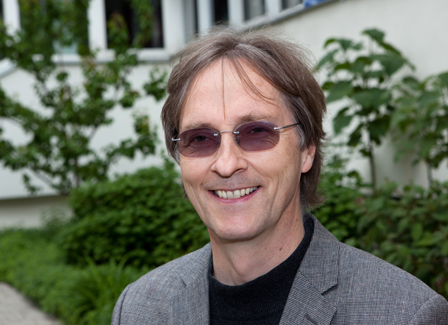
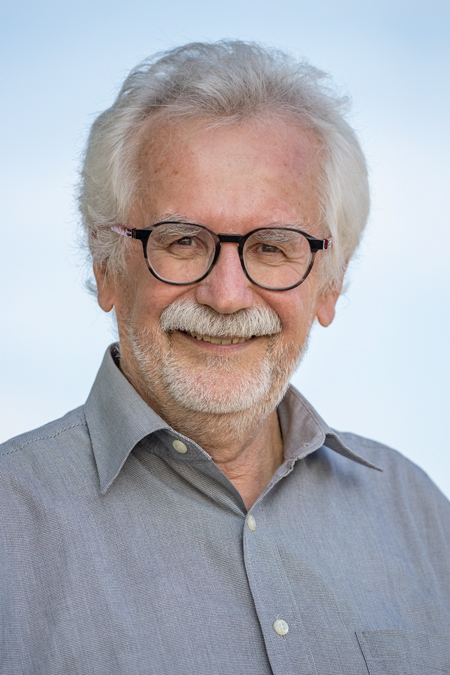
The zoologist and bee researcher Professor Jürgen Tautz.

About the person
Jürgen Tautz is a behavioural scientist, bee researcher and beekeeper. Professor emeritus at the Biozentrum of the University of Würzburg in 2015, he now heads we4bee, a network for environmental research and environmental education in schools. We4bee follows on from HOBOS (Honeybee Online Studies), an internet-based teaching and learning platform on the honeybee, which Tautz founded in 2006. Born in Heppenheim in 1949, the zoologist studied biology, geography and physics at Darmstadt Technical University. After completing his dissertation in Konstanz under Hubert Markl, he came to the University of Würzburg in 1990, following stations in Canberra/Australia and Stanford, California. In addition to some 400 scientific publications Jürgen Tautz has published several non-fiction books, including bestsellers such as "The Buzz about Bees – Biology of a Superorganism". The work, which was first published in 2007 in German, has been translated into twenty languages. Tautz is currently working on a popular science book that looks at the language of bees from a new perspective, to be published in spring 2021.

Further information:

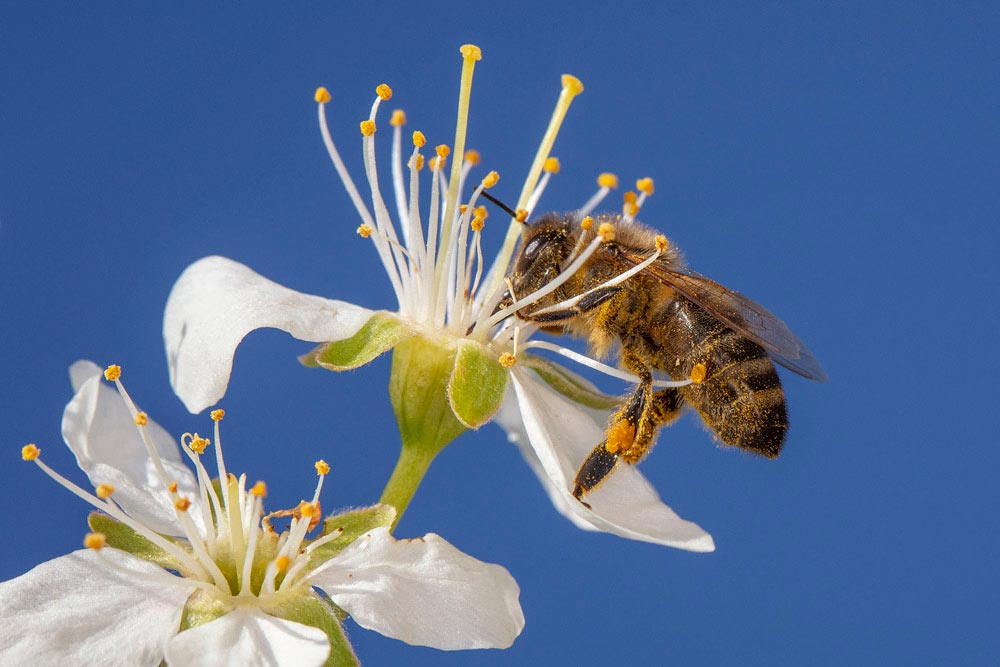
Pollen collecting honeybee on a cherry blossom.

Research at the feeding site: These collecting bees were tagged after birth with an RFID chip that records their flight activity.

These wild honeybees have found a home in an old black woodpecker cave. Unlike honeybees kept by beekeepers, wild bees are exposed to natural selection. One consequence is that they can adapt flexibly to changing living conditions. 

The digital beehive of the St. Ursula School Würzburg: the entrance to the beehive is permanently monitored by a mini video camera. The green box on which the bees stand is a scale. The weather station attached to a mast records temperature, humidity, rain, sunshine, wind and exposure to fine dust. All data (including those from inside the beehive, whose measuring systems are not shown here) are continuously collected at the Institute for Computer Science at the University of Würzburg. There they are analysed, processed and made available on the Internet for all interested parties to access.   

Corona crisis: confidence in science is growing

Corona crisis: confidence in science is growing

In the corona pandemic, assessments from the scientific community are in great demand. Representative surveys show that the German public trusts the statements to a high degree and would like to receive even more information.

In the corona crisis, the credibility of science has increased significantly in Germany. In a representative survey for the Science Barometer 2020, 66 percent of respondents said they trusted science and research. In similar surveys conducted by the "Science in Dialogue" initiative in the years 2017 to 2019, only around 50 percent had this attitude.

The Allensbach Institute for Public Opinion Research also identified a clear increase in trust in research in 2020. According to this, 43 percent of those surveyed rely on scientists to tell the truth. In 2015, the corresponding figure was only 30 percent. This puts the professional group of researchers in third place in terms of credibility. Only the long-standing front-runners, doctors and judges, perform better.

For a constructive dialogue

Researchers are not only valued for their contributions to advising politicians and the public. According to the Allensbach study, every second German (54 percent) also perceives the natural sciences as an important source of inspiration for the future. According to the study, the reputation of parties and politicians as creative forces has risen from 25 to 31 percent. In contrast, the perceived influence of journalists (from 26 to 19 percent) and citizens' movements (from 42 to 29 percent) has declined.

"The figures show that the majority of the population trusts science, especially in critical times", says Martin Lohse, President of the German Society of Natural Scientists and Physicians (GDNÄ). But science should not take this trust for granted. Lohse adds that the GDNÄ therefore feels a responsibility to promote constructive dialogue between research and society.

There is a lot of catching up to do when it comes to communicating science. This is confirmed by other representative surveys, such as the Technikradar (Technology Radar) 2020. In this survey conducted by the German Academy of Science and Engineering (acatech) and the Körber Foundation, only 15 percent of the approximately two thousand respondents were satisfied with the way in which politics informs about the consequences of technology. As many as 70 percent demand greater involvement of citizens in the introduction of new technologies.

Criticism of fossil fuels

The focus of Technikradar 2020 is on bioeconomy. The term refers to new products, processes and services that contribute to a more sustainable and future-proof economic system. "Conventional solutions for energy generation, mobility and industrial production based on fossil fuels are coming under increasing pressure from the public to justify themselves", says the Technikradar report. For example, more than half of the Germans in the survey are in favour of politicians pushing through measures for climate protection, even if the economy suffers as a result.

The evaluation of individual subject areas of bioeconomy varies. 88 percent of those surveyed are in favour of replacing plastics with organic products. Three-quarters think gene therapies for adults are good. 60 percent plead for more research funding to develop biofuels. But only one in four can get along with eating meat from the laboratory. The approval rate for genetically modified plants is even lower.

Many of these developments hold great potential in a world facing pressing issues: How do we manage global crises? How do we stay healthy? How will we live, move and communicate with each other? "These questions cannot be answered by climate researchers, doctors, social and natural scientists alone", says Martin Lohse. "This is another reason why platforms like the GDNÄ are becoming increasingly important for a rational and interdisciplinary dialogue between science and society and for the exchange between the younger and older generations.”

Technology is seen positively

The conditions for dialogue appear to be good. The Technikradar 2020 reports broad public support for science and technical progress. 48.7 percent of those surveyed believe that technological development will provide a higher quality of life for future generations. Only 16 percent do not agree with this statement. .

The general level of technology friendliness is strong or very strong in 52 percent of those surveyed, and low or very low only in 11 percent. According to the evaluation, it makes no difference whether the respondents live in East or West Germany, in a large city or in the countryside. On average, men are still more technology-oriented than women. And the higher the level of education, the greater the interest in technology.

What the Technology Radar 2020 also shows: a better understanding of scientific results does not necessarily increase the willingness to change one's own behaviour. Admittedly, the statements of scientists in the corona pandemic contribute decisively to the fact that restrictions of daily life are widely accepted. But this does not apply to environmental and climate protection. Most of those surveyed reject additional financial burdens for themselves, and only a third are in favour of governmental pressure on individuals to act in an environmentally sound manner.

Figure from the "Science Barometer 2020”

Title page of “Technikradar 2020”, a representative survey of attitudes towards science and technology

Further information:

Reinhard Hüttl: Climate change remains to be the real crisis

“Climate change remains to be the real crisis”

The geoscientist Reinhard Hüttl on research in corona times, tomorrow's energy supply and the value of good science communication

Professor Hüttl, your Helmholtz Centre employs almost 1300 staff. How does the Corona crisis affect your Centre?
To a considerable extent our work still takes place in the home office. Only about half of the employees work on the mountain, as we say -–in our offices and laboratories on the Potsdam Telegrafenberg. Travelling abroad is only possible to a limited extent, domestic journeys only under strict consideration of infection protection.

How much does this affect research?
So far, no project has failed because of the pandemic, but there are certainly considerable delays. Certain measurements, which we can only carry out in spring, had to be cancelled this year. This was the case with our project in Lusatia, for example. There we study the effects of climate change on soils and forests and test new ways of land use. The corona restrictions are a particular problem for our young scientists. Internships had to be cancelled and the doctoral students now lack data for their work. The meetings that are so important for their professional development have been postponed or cancelled altogether.

How do you deal with the problem?
In any case, we want to prevent scientific careers from being damaged by the crisis. This is why, for example, the deadlines for final papers have been extended. The most important thing now is to continue to ramp up research. Our crisis management team has developed a concept for a limited presence operation. It regulates how laboratory and field work can be started while taking into account the protection against infection. This makes seasonal measurements possible again, but also maintenance work on instruments.

Is it already possible to foresee a return to normal operation?
Unfortunately not, it's too early for that. We assume that the pandemic will affect our work long-term and that we will have to establish ourselves in limited presence. But it is going to work out. The main problem is a different one.

Which one?
The real crisis is still climate change. Heat waves, droughts, heavy rainfall and other extreme events are making this increasingly clear to us. We will only be able to meet the challenge with a dual strategy. On the one hand, we must drastically reduce emissions of carbon dioxide and other greenhouse gases. On the other hand, we as a society and as an industrial nation cannot avoid adapting to the consequences of the region-specific effects of climate change. For example, through the conversion of our forests, more resilient agriculture, countermeasures against floods and a climate-neutral energy supply. Here the GFZ can make a significant contribution with its knowledge and innovative technologies.

Do you have an example?
Take the issue of reliable energy storage. The Corona crisis has shown us just how quickly supply chains can be broken and how important our own reserves are. But the solution is obvious, especially in Germany. Indeed, we have large underground gas storage facilities – the fourth largest in the world and the largest in the EU. There we can hold useful gas for a long time and withdraw it if necessary. The storage facilities have been operated safely for decades. Their reliability has also been proven in numerous studies conducted by the GFZ.

The main greenhouse gas stored underground today is methane. Where does that leave climate protection?
It won't stay on methane alone. Hydrogen as a completely carbon-free energy carrier can also be stored in salt caverns as well as in porous rock formations. These rocks are also suitable for storing synthetic, climate-neutral natural gas, which, as a reliable energy source, can help to compensate for the fluctuating yields of wind and solar power. Storage is still a weak point in the energy system transformation that we so urgently need for a climate-friendly future. A further advantage of underground storage: Carbon dioxide can also be safely deposited there, as we were able to demonstrate convincingly at the GFZ. The gas does not enter the atmosphere, but can be extracted for industrial applications as required.

How do you assess the National Hydrogen Strategy, which the Federal Government has now adopted?
I expressly welcome the strategy. It combines climate protection and technological innovation and also takes into account the necessary imports. Hydrogen will be the new oil and the new gas – other technology nations such as Japan, Australia and China have long recognized this. Germany can still achieve a leading role and we will do everything in our power within the Helmholtz Association to achieve this.

Currently, the public discussion is more about electric cars and charging stations. How does this fit in with the hydrogen strategy?
I regret that we in Germany still rely so heavily on e-mobility and electrochemical energy storage in batteries. With these technologies the enormous consumption of resources, even in comparison to conventional engines, is often not taken into account. One example: Taking into account all environmental impacts, an e-vehicle will only reach the level of a comparable modern diesel vehicle after several years. For industry, aircraft and ships, the potential of purely electrical solutions is not sufficient anyway. We need climate-neutral hydrogen for an environmentally friendly recycling economy and a secure supply at the same time. It is by far the better alternative and must be produced primarily where favourable conditions for renewable energies exist.

Professor Hüttl, thank you very much for the interview.

The interview took place in May 2020.

Prof. Dr. Reinhard Hüttl

Reinhard Hüttl
Prof. Dr. Reinhard Hüttl (63) has been Scientific Director at the Helmholtz Centre Potsdam - German Research Centre for Geosciences (GFZ) from 2007 to 2021. After his habilitation at the University of Freiburg, the forestry and soil scientist from Regensburg taught and researched in Hawaii for one year before he was appointed the chair of soil protection and recultivation at the Brandenburg Technical University in Cottbus in 1993. Reinhard Hüttl is involved in many scientific committees and institutions. He is a member of various national and international academies, bearer of the Federal Cross of Merit and honorary doctorate of the University of Natural Resources and Applied Life Sciences in Vienna. From 2008 to 2017 he was president of acatech – German Academy of Science and Engineering.

Research at GFZ
The GFZ is the national research Centre for geosciences in Germany. Basic research on the dynamics of the solid earth is a central concern at the GFZ; developing solutions for major challenges facing society is another. Research is organized in a matrix structure with four disciplinary departments and five interdisciplinary research units. This includes the interactions between the earth's surface and the climate, but also the holistic use of georesources and geoenergy. The GFZ also participates in the GEOFON network for worldwide earthquake observation, records the sun's particle radiation and provides satellite services on which, among other things, the functioning of navigation systems depends. The GFZ employs almost 1300 people, including a good 900 scientists. The Centre is financed to 90 percent by the federal government and 10 percent by the state of Brandenburg. In 2020 the budget is 110 million €.

First-hand knowledge

First-hand knowledge

From quantum computers and artificial intelligence to personalized therapies in medicine and the digital transformation of the chemical industry: Groundbreaking, attractively prepared presentations from the 2018 Assembly on the topic of "Digitization of the Sciences" have been published in the scientific magazine “Naturwissenschaftliche Rundschau” and are available here exclusively for download (in German only). The articles are richly illustrated and supplemented by portraits of the speakers.

The “Naturwissenschaftliche Rundschau” is the official publication medium of the Society of German Natural Scientists and Physicians. Here the so-called negotiation volumes appear as special issues – always in the year between the meetings. The issues contain the lectures and short presentations of the last meeting. The texts are written in such a way that they can be understood by interested laypersons and at the same time meet high scientific standards.

The “Naturwissenschaftliche Rundschau” was founded in 1948 and appears monthly. It publishes review articles by renowned scientists and short reports from the natural sciences and medicine. The journal, like the GDNÄ, sees itself as a mediator between the disciplines.