• DE
  • EN
  • Thomas Elsässer – Snapshots of twitching molecules

    Snapshots of twitching molecules

    Berlin-based experimental physicist Thomas Elsässer uses ultrashort light pulses to make tiny movements of matter visible. What he and his team are investigating is of great practical use for the development of new materials, for medicine and biology – and for a fast, stable Internet. 

    Professor Elsässer, you head the Max Born Institute for Nonlinear Optics and Short Pulse Spectroscopy.  That sounds pretty complicated. Can you explain it simply?
    We generate ultra-short and ultra-intense light pulses and study their interaction with matter. In this way, we can image and precisely study extremely fast processes in atoms and molecules.

    So you are doing speed imaging in a world that is normally hidden from the human eye?
    Yes, you could put it that way. In fact, it is now possible to follow electron movements in solids, molecular movements in liquids or the processes of chemical reactions in real time. First, the process under investigation is triggered by an ultrashort light pulse, and then, in the next step, a second light pulse is used to determine the current value of an optical measurand, for example the instantaneous reflectance of a molecular sample. Repeated measurements result in a sequence of snapshots that show a sequence of movements, similar to a motion picture film. But it's not just about observing and imaging: Tailored ultrashort light pulses can also be used to specifically control processes, for example to optimize chemical reactions.

    Ultrashort pulses are obviously the linchpin: What exactly is meant by this?
    We're talking about light flashes lasting just a few femtoseconds. A femtosecond is one billionth of a millionth of a second. Such unimaginably short light pulses, in which a power of several million megawatts is concentrated for a very short time, are generated in special lasers. This is the only way to study ultrashort processes in matter.
    Das deutsche Tiefsee-Forschungsschiff „Sonne" © Thomas Walter

    © Max-Born-Institut

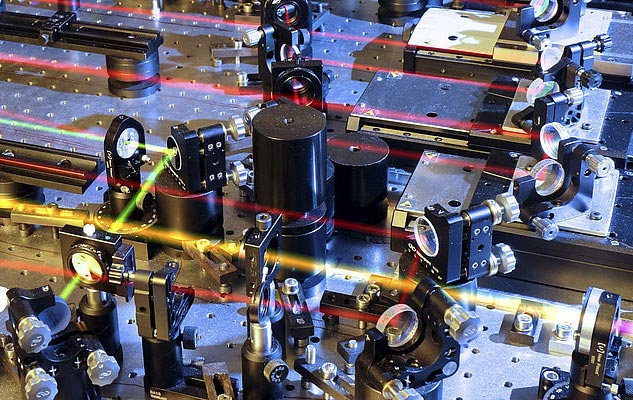
    An experimental setup for generating intense femtosecond pulses in the infrared range at a wavelength of five micrometers. At the Max Born Institute, the system is used to generate ultrashort hard X-ray pulses.

    Can the findings also be applied in practice?
    Yes, there are already a large number of applications in the technical and medical fields, and new ones are being added all the time. One example is the Internet, whose main strand today consists of fiber optic cables. There, huge amounts of data are transmitted with light pulses in the picosecond range – a picosecond is one millionth of a millionth of a second. Another example comes from materials science: If materials are processed with a femtosecond laser, high-precision holes can be produced without fraying the edges. Very good experience has been made with this in the production of injection nozzles. Or let's take medicine: Here, research in my field is contributing to ever more precise imaging processes and precisely fitting laser therapies, for example for retinal welding in ophthalmology.

    What are the major trends in your field?
    Currently, there is massive international investment in large-scale machines to detect ultrafast structural changes in matter with ultrashort X-ray pulses. Applications range from physics, chemistry and materials research to biology. Such large-scale machines already exist in Stanford, Hamburg, Rüschlikon and some Asian countries, and further machines are under construction elsewhere. It is already clear that the determination of instantaneous atomic structures together with results from ultrafast spectroscopy can capture the dynamics of matter down to the smallest detail.

    What are the current focal points at your institute?
    In my research group, the main focus is currently on the BIOVIB project, for which I have received a second ERC grant in 2019, associated with funding of 2.5 million euros. With BIOVIB, we are trying to elucidate dynamic electrical interactions in biological macromolecules. The current focus is on transfer RNA, or tRNA for short, which reads information from messenger RNA (mRNA) in the cell like a read head and enables the synthesis of proteins from amino acids. The structure of tRNA is stabilized by electrical interactions with its environment, which we would like to understand in detail. If we find the right starting points here, targeted modifications in the sense of molecular engineering are also conceivable. Other groups at the institute are working, for example, on the dynamics of electrons in the sub-femtosecond time range and ultrafast magnetic processes.

    Today, the Max Born Institute is a vital, renowned research institution. Was this foreseeable in 1993 when you came to the southeast of Berlin?
    I hoped so, of course, but it was not yet apparent at the time. At the beginning of the 1990s, the Adlershof research site was not yet competitive and at times looked like a sandy desert with rather dilapidated buildings. Our institute had emerged from parts of the Central Institute for Optics and Spectroscopy of the Academy of Sciences of the GDR and over the years transformed itself into an internationally competitive research facility. We have received much support along the way, including excellent cooperation with other research institutions in the region. Our basic funding from the federal and state governments, and here primarily from the state of Berlin, is good. As a scientist, I have every freedom. I really can't complain.

    So you are fully satisfied?
    Not entirely. We are critical of the planned new Higher Education Act for Berlin, which will give the Senate significantly more influence, for example in appointing professors. In general, we have problems with the increasing density of regulations in research and administration. This often takes on Kafkaesque features, delays the allocation of research funds, and thus damages our competitiveness. The shortage of funds at Berlin's universities is also a major problem for non-university research, because the universities are very important partners for us. Unfortunately, there is a pronounced culture of mistrust in some places in the Berlin administration, quite unlike in other federal states. This is not good for science at all.

    You are committed to science and research far beyond your institute. What drives you?
    I simply enjoy thinking outside the box and contributing my own experience. For example, at the Berlin-Brandenburg Academy of Sciences and Humanities, where I am currently involved in several projects. For example, we are looking at scientific freedom and cancel culture in academia, i.e., the trend toward excluding scientists with dissenting opinions. I also often give school talks in Brandenburg and talk to young people about my research, life as a scientist, and their ideas for the future.

    You have been a member of the GDNÄ for many years and are involved as a representative of the subject of physics. Is there anything you would like to achieve in this role?
    It would be wonderful if we could involve the public and especially young people even more – I would very much like to contribute to that. I was able to experience that the GDNÄ has an excellent image in the scientific community when we invited professional colleagues to give lectures at the 200th anniversary celebration in Leipzig: There were only acceptances. A good idea to strengthen the cohesion of the members between meetings are regional meetings. And we can certainly expand the programs for schoolchildren, which are already excellent. For example, with free Zoom lectures for young people – I would get involved in that right away. For adults, we could put info flyers on the web on relevant, current issues, such as electricity transport from the coasts to the south, climate change, or topics related to the Internet. The GDNÄ has a great deal of expertise in this area.
    Saarbrücken 2018 © Robertus Koppies

    © Max-Born-Institut / Ralf Günther

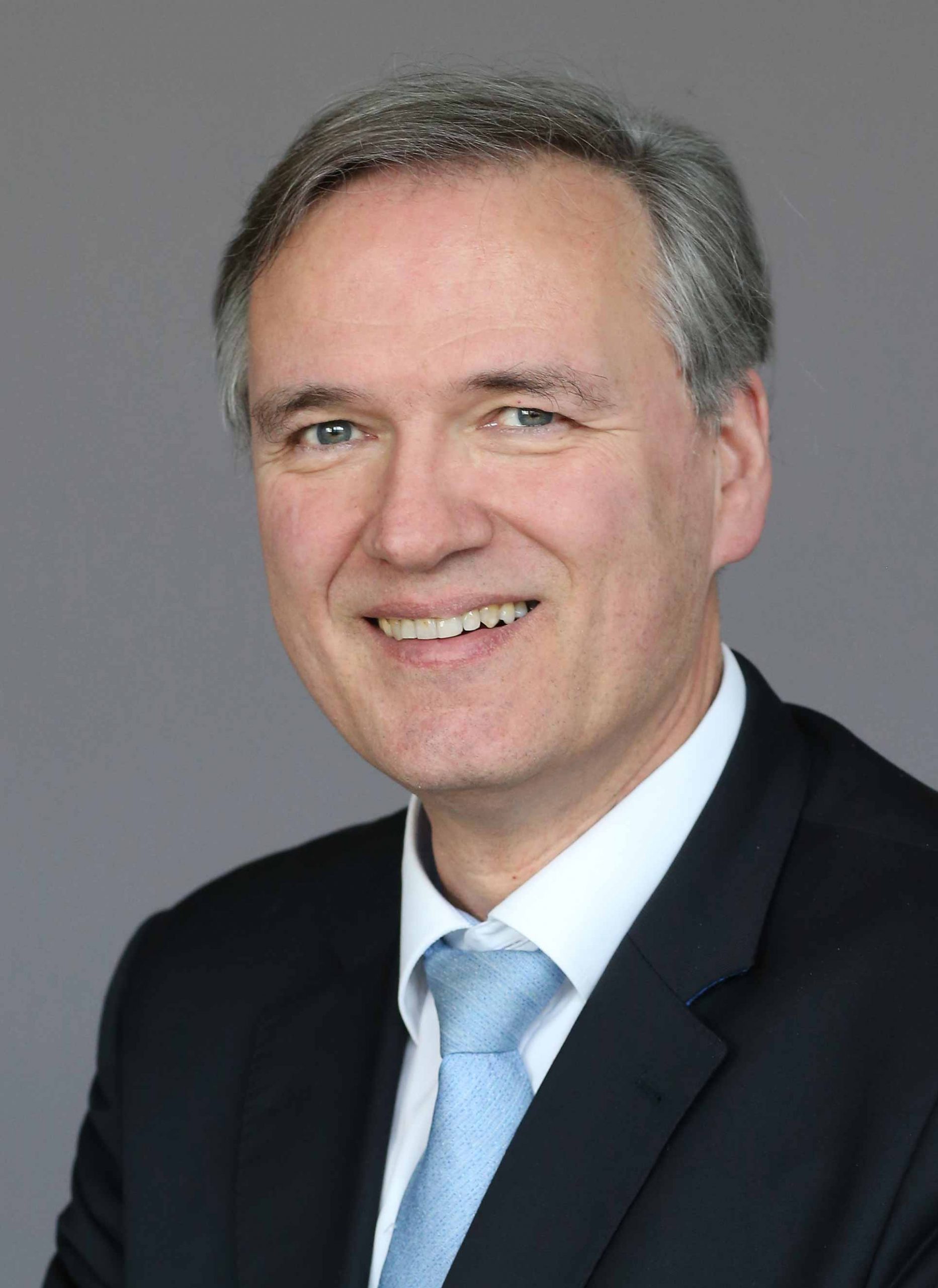
    Prof. Dr. Thomas Elsässer

    About the person
    Prof. Dr. Thomas Elsässer is Director at the Max Born Institute for Nonlinear Optics and Short Pulse Spectroscopy in Berlin-Adlershof and Professor of Experimental Physics at the Humboldt University (HU). He came to Berlin in 1993, when Adlershof still “looked like a sandy desert with GDR buildings”, reports the native of Tübingen in our interview. He had made a conscious decision to do pioneering work in the southeast of Berlin and turned down calls to the universities of Zurich and Stuttgart.

    In 1991, Thomas Elsässer had habilitated – at the Technical University of Munich, where he had earned his doctorate after completing his physics degree with a thesis in the field of picosecond spectroscopy and had spent several years conducting research. In 1990, he spent time as a postdoc at the famous Bell Labs in New Jersey.

    Now 63, he has received many prizes and awards, including two European Research Council (ERC) Advanced Grants in 2009 and 2019. In 2013, Thomas Elsässer turned down an offer from Stanford.

    He is a member of the Berlin-Brandenburg Academy. He has been involved in the GDNÄ as a physics subject representative since 2014.

    © Max-Born-Institut

    An important institution on the Adlershof science campus in southeast Berlin: the Max Born Institute, which is housed in several buildings with its offices, laboratories, seminar rooms and a lecture hall.

    The Institut

    The Max Born Institute for Nonlinear Optics and Short Pulse Spectroscopy (MBI) is a scientifically independent research institution. It is part of the Forschungsverbund Berlin e.V. and a member of the Leibniz Association and is institutionally funded in equal parts by the Federal Government and the Länder, in particular by Berlin.

    The MBI maintains close scientific ties with Berlin's universities. Its directors have each been appointed jointly with one of the Berlin universities. Marc Vrakking is a professor at FU Berlin, Stefan Eisebitt at TU Berlin, and Thomas Elsässer at HU Berlin.

    The institute was founded in late 1991 and has nearly 200 employees, almost half of whom are scientists. The annual budget is about 23 million euros.

    Max Born, the institute's namesake, is one of the most important pioneers of modern physics. Born (together with Walther Bothe) received the Nobel Prize in Physics in 1954 for his fundamental research in quantum mechanics.
    Wolfgang T. Donner: The GDNÄ bids farewell to its former Secretary General.

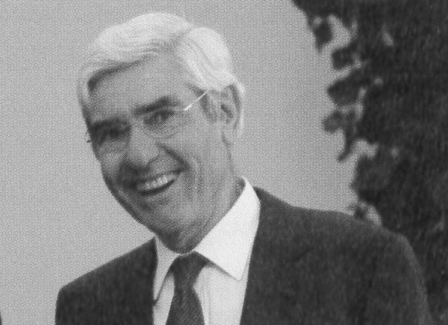
    Wolfgang T. Donner

    The GDNÄ bids farewell to its former Secretary General.

    From 1999 to 2004, Dr. Wolfgang Donner was Secretary General of the Society of German Natural Scientists and Physicians (GDNÄ). In this function, the former member of the Executive Board of Bayer AG was responsible for the organisational preparation and implementation of important GDNÄ meetings. On 5 May 2021, Wolfgang Donner died in the circle of his immediate family in Cologne at the age of 86.  

    The President of the GDNÄ, Professor Martin Lohse, says: "Wolfgang Donner led the GDNÄ with great commitment and reliability as Secretary General. The successful meetings of our society in Berlin, Bonn, Halle/Saale and Passau bore his signature. Later, he assisted our Board as  adviser and put his experience and networks at the service of the GDNÄ. We remain bound to him and his family in gratitude and sympathy." 

    Born in Breslau, Wolfgang Donner came to Hamburg after the war to study physics, where he passed his diploma examination in 1962. He then moved to the University of Frankfurt. There he earned his doctorate and did research for several years as an assistant at the Institute for Theoretical Physics. In 1967, together with his wife, he left for Australia by cargo ship. As a visiting scientist at the University of Perth, Donner began work on the two-volume textbook "Theory of Nuclear Spectra" and expanded his computer science know-how. He was to find his professional home at Bayer AG in Leverkusen, where he joined in 1968 and remained until his retirement in 1997. His field of work shifted more and more towards chemistry during this time, and he was very committed to the digitisation of research. In 1987, he was honoured for this with the Otto Bayer Medal; this was followed in 1990 by his admission to the Bayer Board of Directors. 

    The GDNÄ will honour Wolfgang T. Donner's memory.

    Nobelpreisträger Paul J. Crutzen

    Wolfgang T. Donner

    Angelika Brandt: “Five weeks without internet is not so bad”

    "Five weeks without internet is not so bad"

    The deep sea is dark and bitterly cold - and yet it is full of life. Marine biologist Angelika Brandt explores this mysterious world and makes fascinating discoveries time and again.

    Professor Brandt, your research is based on journeys to distant ocean regions. Where have you already been on expeditions?
    Many of my research trips were to the Polar Regions. I have been to Antarctica ten times and to the European Northern Seas and the Northwest Pacific eight times – always for several weeks.

    Are such research trips also possible in Corona times?
    They are not impossible. A current example is: After a long back and forth with permits, logistics, visas and all the health precautions, we finally got the green light for a German-Russian expedition to the Bering Sea a few weeks ago. The application has been done in 2016, and the expedition was supposed to start on 4 June in Petropavlovsk Kamchatsky on the Kamchatka Peninsula and last until 12 July. There are now technical problems at short notice. It would be a miracle for us to be able to leave after all. Research expeditions are enormously complex undertakings, something can always come up – and the susceptibility to breakdowns naturally increases in times of pandemic.

    Das deutsche Tiefsee-Forschungsschiff „Sonne" © Thomas Walter

    © Thomas Walter

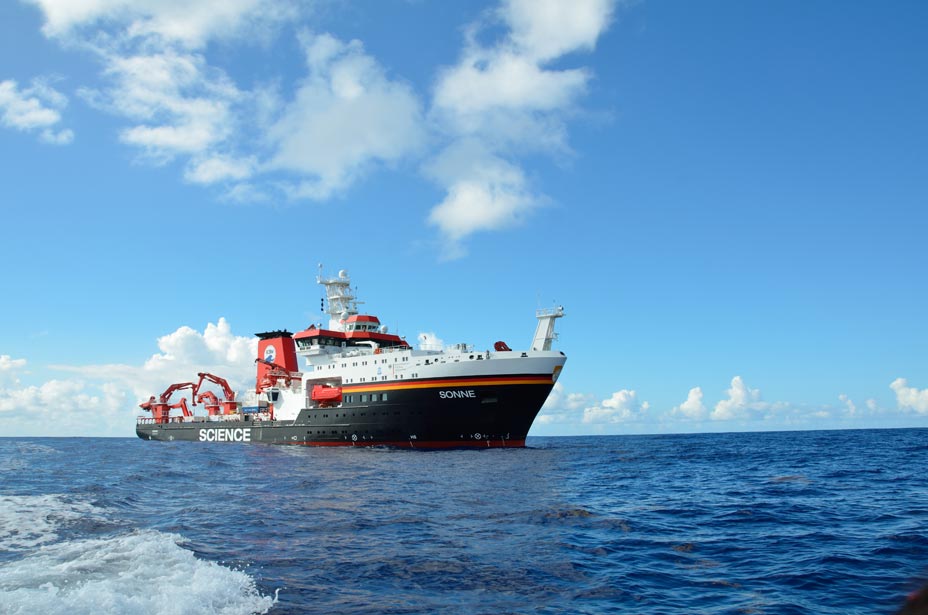
    The German deep-sea research vessel "Sonne": equipped by scientists with state-of-the-art marine technology, including autonomous and remote-controlled underwater vehicles, trawled gear and corers.

    And if the expedition remains cancelled?
    Then the German-Russian research expedition will be postponed for an uncertain period of time. For the time being, we can only hope for the next expedition. It will take place in 2022 with the German deep-sea research vessel Sonne under my command in the North Pacific Aleutian Trench.

    What significance do the expeditions have for your work?
    They provide the basis for our research work. We usually bring home very extensive animal material and initial data from an expedition that lasts several weeks. In our laboratories, we then subject the samples to elaborate morphological, anatomical and genetic analyses. This has already resulted in many doctoral theses and publications with widely respected discoveries and findings.

    Do you have an example for us?
    In the Northwest Pacific, we were able to identify hundreds of previously unknown species in the deep sea. At a depth of 8700 metres, for example, we discovered a shell crab that had previously only been known from depths of around 4000 metres. The discovery was also so surprising because it had been assumed that these animals could not exist under the enormous water pressure in the hadal – as we call the sphere from 6000 metres below sea level. A mistake, as our expeditions show.

    What is the overall environment like for living creatures at these depths?
    Below 1000 metres it is pretty dark, the temperature is usually one to two degrees Celsius, there is a pressure of more than a ton on every square centimetre and the food supply is meagre. And yet, rich biotic communities can be found in the deep sea. Species numbers usually increase down to depths of 4000 metres, and decrease again in deep-sea trenches from 6000 metres. The species present at great depths are often gigantic. We were able to observe this trend towards gigantism with increasing depth in the Northwest Pacific Kuril-Kamchatka Trench as well as in the Southern Ocean.

    © Nils Brenke

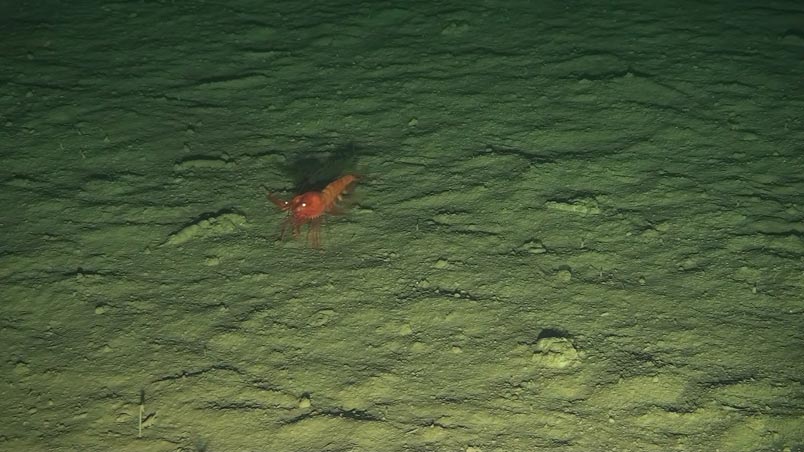
    Deep-sea shrimp in the Northwest Pacific Ocean at a depth of 5378 metres.

    You already mentioned ostracods: what other species are there down there?
    Bristle worms, hooked weevils, furrowed feet, sea cucumbers – and always marine isopods. They are my favourite species and they are even still found in the deepest ocean trenches, more than ten kilometres below sea level. One of our particularly interesting finds in the Northwest Pacific was a living fossil. I published a first inventory of biodiversity in the Northwest Pacific in 2020 together with colleagues from around forty countries. In our online Deep Sea Atlas, we describe more than 500 deep-sea species that we found during four expeditions in this region.

    What makes the Northwest Pacific so interesting for your research?
    It is one of the most fertile, nutrient-rich and species-rich oceans in the world. It has sea basins of varying depths and interconnected or isolated habitats such as the Sea of Japan and the Sea of Okhotsk. Moreover, there are excellent comparative data for these regions, which we owe to eleven Russian expeditions with the research vessel Vityas between 1950 and 1977. Against this background, we can identify changes in biodiversity over the decades and explore connections: for example, with climate change or certain human activities.

    What changes are you observing and how can they be explained?
    We recently compiled our findings on the fauna of the Northwest Pacific and published them in a scientific journal in 2020. They confirm what research has been showing for years: In the oceans, climate change in particular is causing major upheavals: The water is getting warmer, ice shelves are melting, sea levels are rising and ocean currents are changing. All this has consequences for the food web and the living environment in the ocean. We are seeing rapid changes in the Arctic Ocean. Many species are migrating there from more southerly regions, for example crustaceans and molluscs. Conversely, numerous species are also migrating southwards from the Arctic Ocean. In the Southern Ocean, too, great changes have begun. The melting of huge ice shelves is freeing up habitat for new species. For other species, food is becoming scarce. This has to do with the algae that grow under the ice and on which krill, for example, feed. These are tiny crustaceans found in huge quantities, which in turn serve as the main food for whales, seals, penguins and many other species. So less sea ice means less algae, less krill and less large fauna. Antarctic wildlife will soon be different, we are convinced.

    And what will happen then?
    That is one of the big research questions that our expeditions are about.

    How do you get the samples you need for your observations?
    With trawls, for example with the so-called Agassiztrawl, or with epibenthic sleds. These are collection devices that are pulled over the bottom to pick up the organisms in the deep-sea mud. We also often use grab systems that punch out pieces from the seabed. With the help of a large box grab, for example, we can bring a quarter of a square metre of sediment from the ocean floor with the organisms in it onto the deck. By the way, even in the most remote ocean regions there is always a lot of plastic waste: drift nets, bags, shoe soles, pillboxes and a lot of microplastic that accumulates even at depths of more than 9000 metres.

    © Thomas Walter

    Ready for scientific examination: sediment cores from the seabed.

    How can we imagine everyday life on board a research vessel?
    (Angelika Brandt laughs): You work all the time and fall into bed leaden at night. At most, I only have enough energy for a few pages of my favourite crime novel. While one shift is sleeping, the other is on deck taking rehearsals – that goes on around the clock and is quite exhausting. Most of the time we have no or very poor internet connection. Consequently, there are no video conferences and the like. For a few weeks, that's not so bad. The seclusion, the concentrated research always do me good personally. Together with the crew, usually around seventy of us, I make sure that samples are taken from the sea, sorted, preserved and carefully prepared for later analysis. Back in the harbour, the material is then packed into refrigerated containers and taken to the local laboratories.

    How do international crews manage to work together in a small space?
    Everyone has their own research questions, but they all pull together and pursue a common overarching goal. For example, it's about changes in the fauna of a marine region against the background of global change. This can be researched on different groups of animals and with a wide variety of methods. Ideally, experts are on board for as many as possible, but especially for the most common groups of organisms such as nematodes, crustaceans, molluscs and echinoderms. We try to recruit the best from all over the world and communicate with each other in English.

    © Thomas Walter

    Deep-sea expeditions work in shifts – every weekend and also at night.

    The UN Decade of Ocean Exploration 2021-2030 has just begun. What are your hopes for it?
    That we will gain a better understanding of the ecosystem functions of marine biodiversity, including its importance for humans.  This is the only way we can avert the dangers to marine biodiversity. I see a major risk in deep-sea mining, which can probably hardly be prevented. Along with the sediment in which valuable raw materials are stored, many species are also removed in large quantities and biotic communities are being destroyed. It would be better not to allow much of what is currently being considered in the first place. If it does take place, very careful biological monitoring is essential. 

    You have been in the GDNÄ for about thirty years. What does it mean to you?
    Even as a doctoral student, I was fascinated by the great tradition of the GDNÄ and its scientific diversity. So far I have not been very involved, but that is changing. As group chair of biology, and specifically as a representative of marine research, I will help shape the 2022 anniversary conference. 

    What is important to you?
    Sophisticated, up-to-date, easy-to-understand lectures and lively discussions. And an exciting programme for schoolchildren. I think it's great that the GDNÄ is so broadly positioned, does a lot for young people and is not elitist at all.

    Finally, please take a look into the crystal ball: How do you see the future of the GDNÄ?
    In my field of research, we think in large time frames. Due to its scientific breadth and topicality, I would say: the GDNÄ will still exist in 500 years!

    Saarbrücken 2018 © Robertus Koppies

    © Privat

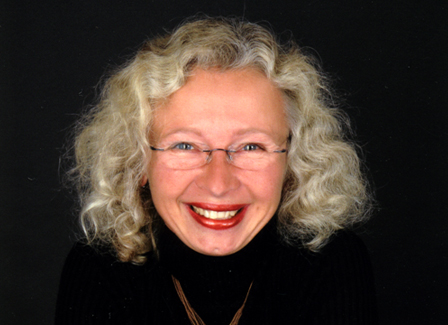
    Marine biologist Angelika Brandt.

    About the person
    Marine biologist Prof. Dr. Angelika Brandt heads the Department of Marine Zoology at the Senckenberg Research Institute and Natural History Museum in Frankfurt. Her research focuses on the macrofauna of the deep sea and polar regions. Born in Minden in 1961, the scientist came to marine research via studies in biology and education. In 1991, she received her doctorate from the University of Kiel with a thesis on the colonisation history of the Antarctic shelf and was appointed to a professorship for special zoology at the University of Hamburg in 1995. From 2004 to 2009, she was director of the Zoological Museum at the University of Hamburg. In 2017, she moved to the Senckenberg Museum in Frankfurt am Main. There she simultaneously holds a professorship in marine zoology at the Goethe University.

    Angelika Brandt organised and led numerous expeditions with research ships. She reported on her discoveries and findings on deep-sea biology in renowned journals. A Nature publication on biodiversity in the Southern Ocean was named one of the most important scientific discoveries of 2007 by Time Magazine. Brandt received the National Geographic Society's Adventurer of the Year 2007 Award and the SCAR Medal for Excellence in Polar Science.

    © Thomas Walter

    An epibenthic sledge is hoisted on board. The collection device had been trawled over the sea floor and brings organisms and a lot of deep-sea mud on deck for scientific research.

    © Senckenberg

    Book cover „Tiefsee – Vielfalt in der Dunkelheit“.

    Further links:

    © Thomas Walter

    Authority without a uniform: expedition leader Angelika Brandt.

    © Torben Riehl

    The predatory isopod Glyptonotus antarcticus grows up to 17 centimetres.

    Wilhelm Füßl: “Once again, Mr Privy Councillor prefers not to come”

    "Once again, Mr Privy Councillor prefers not to come"

    He looked after the GDNÄ's heritage for three decades, now he is retiring: Head of Archives Wilhelm Füßl on precious documents, pitfalls of copyright law and his long struggle to get historical originals returned.

    Dr Füßl, the Deutsches Museum looks after numerous archives of scientific institutions, including the archive of the GDNÄ. What is its significance?
    It is of great national importance. The GDNÄ is not only the oldest interdisciplinary scientific society in Germany, it is also the mother of many specialist societies such as the German Physical Society. Another peculiarity: many archives of scientific institutions were completely destroyed during the Second World War, but at least some historical holdings of the GDNÄ have been preserved.

    What are the oldest documents?
    These are the reports and negotiations of the GDNÄ meetings. However, some only exist as copies in our archives.

    Do you have a favourite item in there?
    I find the account book from 1911 particularly interesting, for example, according to which an archivist was paid a meagre 72 Reichsmarks; today that would correspond to a purchasing power of around 300 euros. What I also like to look at is the diary of 15-year-old Ulrike Schwartzkopff, who accompanied her father to the assembly in Weimar in 1964 and recorded her impressions and thoughts in a very lively, differentiated and pleasant way. Or a microfilm on the organisation of the Berlin Assembly, where there is a marginal note by Alexander von Humboldt on a letter from 1828: "Herr Geheimrat pflegt wieder nicht zu kommen" (approx.: “Once again, Mr Privy Councillor prefers not to come.”). Goethe was meant.

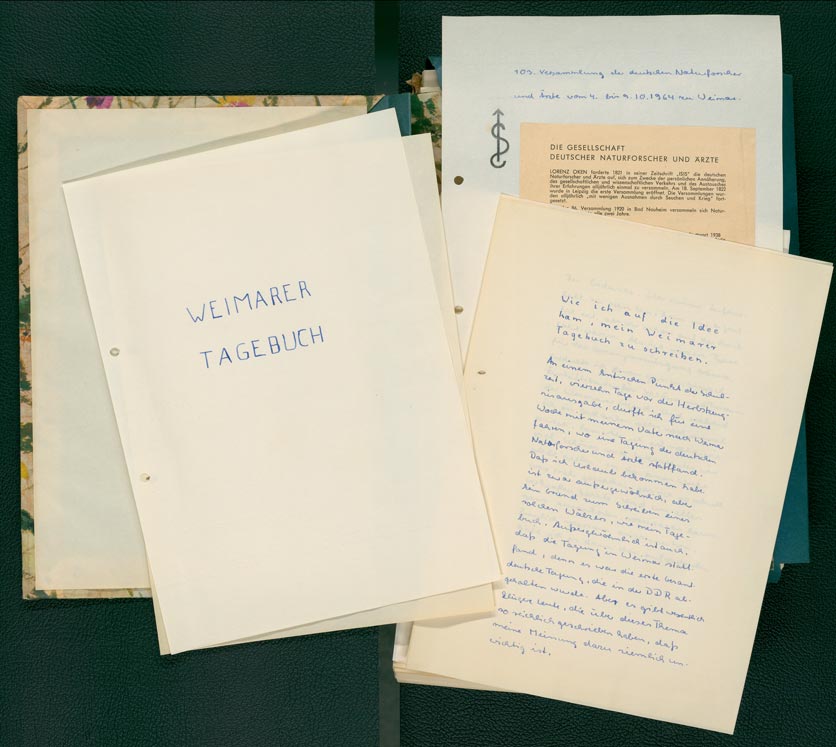
    Diary of the 15-year-old schoolgirl Ulrike Schwartzkopff from the meeting of the 103rd Assembly of the GDNÄ in Weimar 1964.

    How can we imagine the GDNÄ archive as a whole?
    They are mainly conference proceedings with reports of meetings, lecture manuscripts, annual reports of the board, files of the office and several hundred photographs. Most of the archive material dates from the period after 1945, with density increasing strongly from 1960 onwards. Older holdings were confiscated by Soviet troops at the end of the war and transported to Moscow. They have been lost to this day. The remaining old files from the 19th and early 20th centuries were privately owned by board members or were acquired by us. The majority of these documents date from the years 1893 to 1921.

    Where can you find the archive in the Deutsches Museum?
    It is housed on the top floor of the library building. The GDNÄ archive now covers an impressive 23 shelf metres, making it one of our largest institutional archives. The reading room is only a few metres away from the stacks, and ordered documents are brought in quickly. So it's worth the trip even for visitors in a hurry.

    How great is the interest in the GDNÄ archives?
    In the last twenty years, more than 500 files have been borrowed. That is a considerable number, also compared to the use of similar archives in the Deutsches Museum.

    Do you know more about the users?
    I know from conversations that many of them are academics. But that is by no means a prerequisite. Anyone interested is welcome and can read the holdings free of charge or take pictures with their digital camera for private purposes.

    Saarbrücken 2018 © Robertus Koppies

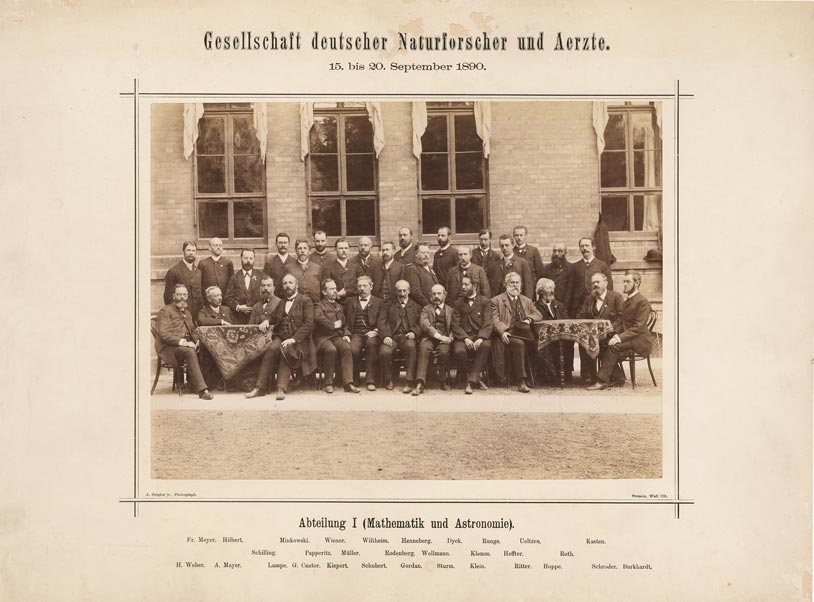
    Mathematicians in a group picture on the occasion of the GDNÄ meeting in 1890.

    That sounds a bit cumbersome. Aren't the documents also available online?
    We would like to get there, but copyright law is the main obstacle. Without the express permission of the author – a speaker at a GDNÄ meeting, for example, or his or her descendants – the work may not be freely used until seventy years after his or her death. For us, this means that unless there is a declaration of consent, and this is rarely the case with older documents, we may only publish lectures, letters or reports if they date from before 1885. Looking to the future, this could mean the following for a lecture given by a 40-year-old female researcher at the 2022 anniversary conference in Leipzig: If the researcher turns 90, her beautiful speech may not be distributed without conditions until 2142 at the earliest. That is, of course, a joke.

    Is there a pragmatic solution?
    Hardly in the case of more recent documents. Older publications could be used via the online services of other libraries. As soon as a document is on the internet, you can refer to it. So it would be conceivable to put a list of links to such sources on the net – and that is exactly what is being considered at the moment.

    So your work clearly goes beyond the quick retrieval of documents. What does it all involve?
    Oh, there's a lot that goes into it. Let's take the GDNÄ archive as an example. It arrived here in 1989, three years before I took up my post, and comprised 13 shelf metres at that time. In 2001, another ten shelf metres were added. Such a collection first has to be professionally organised and systematically linked with other collections. One result are finding aid books with an extensive table of contents and many keywords that lead to potentially relevant information in the entire archive material. Then there is material on the GNDÄ in many other holdings of our archive. For example, anyone researching the physicist Walther Gerlach and going through his estate will find references to lectures given by GDNÄ member Gerlach in the 1950s – not only in the finding aid book, but also in conversation with us. In addition, we maintain contact with institutes of the history of science throughout Germany and encourage research on our holdings. In this way, for example, a dissertation on the work of the GDNÄ between 1822 and 1913 was written at the University of Würzburg. And, very importantly, we regularly browse through scholarly antiquarian bookshops and auction catalogues in order to be able to fill gaps in our holdings.

    The packed GDNÄ archive before it was transported to the Soviet Union (around 1945)

    How far have you got with the GDNÄ archive?
    Some things could be bought, but we could not compensate for the great loss of historical files. We know that the GDNÄ archive was at its original location in the Karl Sudhoff Institute in Leipzig until shortly before the end of the war, when it was moved to nearby Mutzschen Castle for protection. But that was of no use: in 1945 the Soviets confiscated a total of 53 boxes and one roll with archive numbers 34 to 86 and took them out of the country. I have been on the case since 1992 and have tried everything possible through political, academic and personal channels. The hope was to at least get microfilms of the GDNÄ holdings. At first there was no response. Later, Moscow cunningly said that the archive had been returned to the German Society for Naturopathy. It went on like that for decades. I am sure that the archives of the GDNÄ were not destroyed – they are probably stored in a Russian museum somewhere. I guess we'll have to wait for a political thaw to make any progress on the matter.

    Does the lost archive also contain documents from the Nazi era?
    I assume so. In any case, we don't have a single original document from those years.

    You mentioned the 1964 meeting in Weimar – the first and only GDNÄ event in the GDR. Do you know more about it?
    Normally we do not include mass files in our archives, for example business correspondence with members or lists of participants at meetings. We made an exception for the GDR period at the GDNÄ.  We know that the conference proceedings were distributed via the Leopoldina in East Germany and were in great demand until the fall of the Wall, even though many East German members had left the GDNÄ in 1949. To work through all this would be a highly interesting contribution to research.

    Saarbrücken 2018 © Robertus Koppies

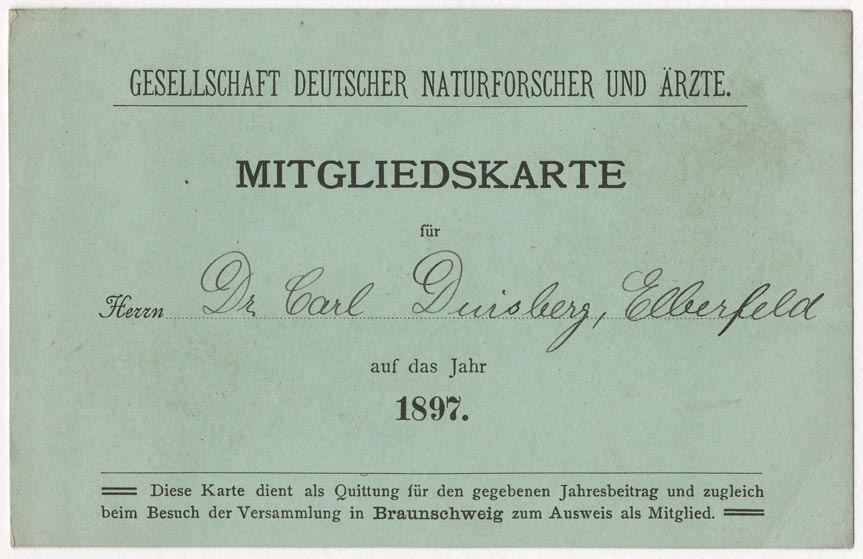
    Membership card of the GDNÄ for the important chemist and industrialist Carl Duisberg.

    You will have more time soon...
    That's right. I retire at the end of May and hand over the reins to my deputy, the historian Dr. Matthias Röschner. But the scientific history of the GDR is not my metier; others are called upon to do that. I will remain true to my themes and already have a few book projects in mind.

    For example?
    A biography of the engineer Arthur Schönberg. He was the first employee of the founder of the Deutsches Museum, Oskar von Miller. I published a biography about von Miller in 2005. Arthur Schönberg, who died in the Theresienstadt concentration camp in 1943, is commemorated today by a plaque in the Deutsches Museum.

    Is a visit to the 2022 GDNÄ Assembly in Leipzig also on your agenda?
    I have been to most of the meetings since 1992 and have heard very exciting lectures. One in particular stuck in my mind, it was about the expansion of the universe. What I also enjoyed were the meetings with great scientists. So, yes, I think I will be there in Leipzig.

    Meagre pay in 1912: two archivists earn 71.85 marks.

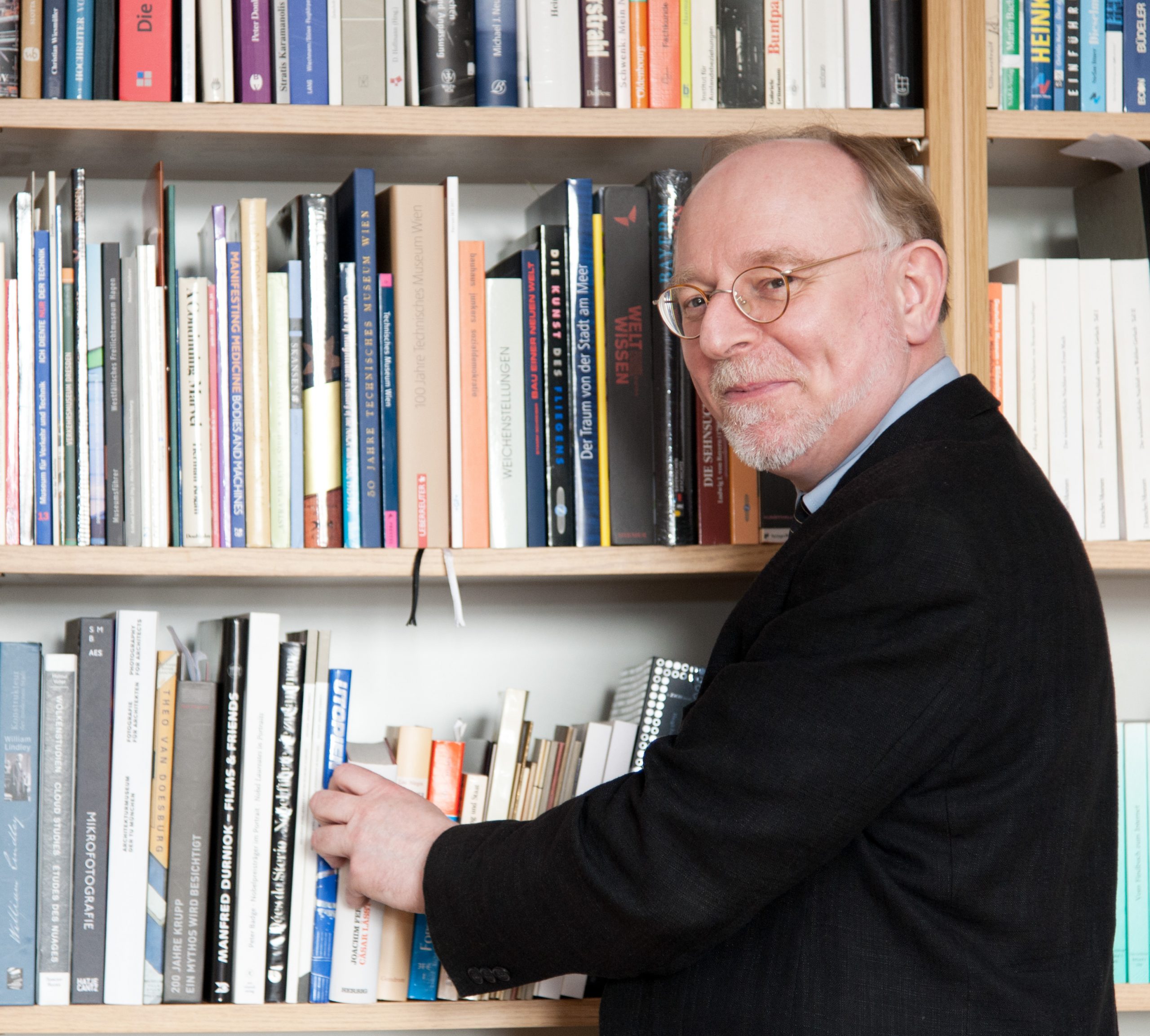
    Dr. Wilhelm Füßl
    Dr. Wilhelm Füßl

    About the person

    Dr. Wilhelm Füßl was born in 1955 in the Upper Palatinate. He studied history, German language and literature and social sciences at the Ludwig-Maximilians-Universität in Munich and received his doctorate there in 1986 with a thesis on the legal philosopher Friedrich Julius Stahl. After working in Germany and abroad, he moved to the Deutsches Museum in Munich in 1991. In 1992 he took over as head of the archive. In this capacity, Wilhelm Füßl is a co-opted member of the Board of the GDNÄ until his retirement in May 2021 – a post that Dr Matthias Röschner will take over as the new Head of the Archives.

    Dr Füßl's research interests include the history of technical collections and the interactions between biographies and the history of science and technology. His most important works include the books "Geschichte des Deutschen Museums. Actors, Artefacts, Exhibitions" (2003) and, published in 2005, "Oskar von Miller (1855-1934). A Biography". Some of his books have been awarded prizes. Wilhelm Füßl conceived several exhibitions, including a show on the history of the Deutsches Museum, which is on permanent display.

    Saarbrücken 2018 © Robertus Koppies

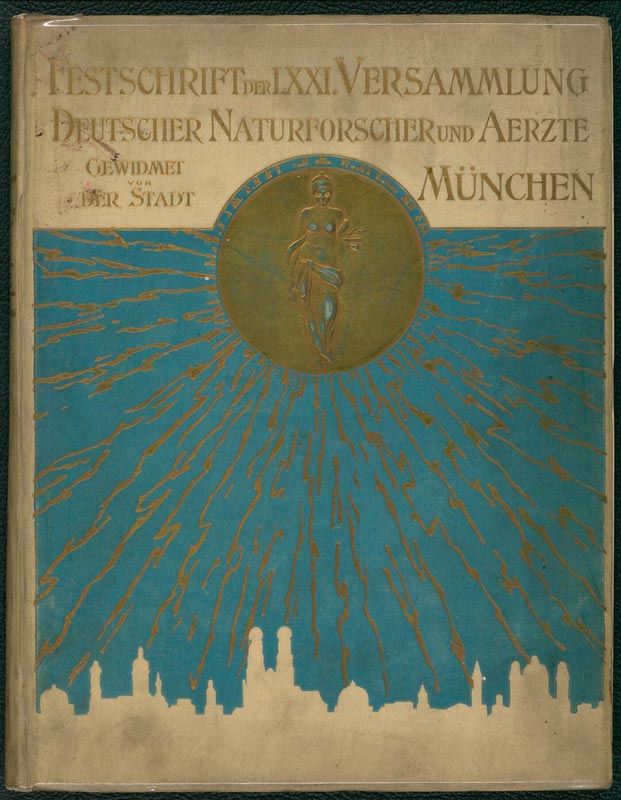
    Cover of the Festschrift on the occasion of the Assembly in Munich in 1899.

    The Archive of the Deutsches Museum

    The archive of the Deutsches Museum is one of the world's leading special archives on the history of science and technology. On 4.7 shelf kilometres in the library building on Munich's Museum Island, bequests of important scientists and researchers, manuscripts and documents, plans and technical drawings, extensive archives of companies and scientific institutions as well as more than one million photographs are stored and prepared for research. The archive is open to anyone interested in the history of technology and science. Use is free of charge.

    View into a storage room of the archive of the Deutsches Museum.

    Further information:

    Saarbrücken 2018 © Robertus Koppies

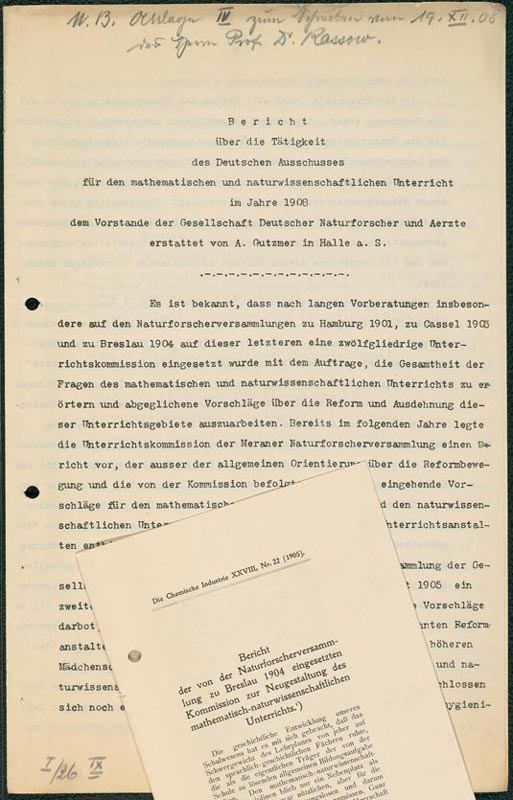
    As early as 1900, the GDNÄ was committed to school youth. Here is a document on the subject of "teaching reform".

    Saarbrücken 2018 © Robertus Koppies

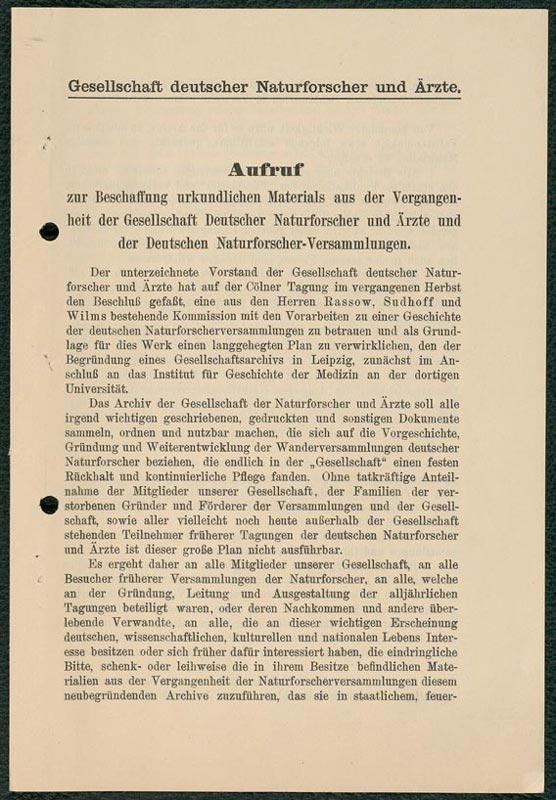
    Call for the collection of historical documents on the GDNÄ, ca. 1921.

    Saarbrücken 2018 © Robertus Koppies

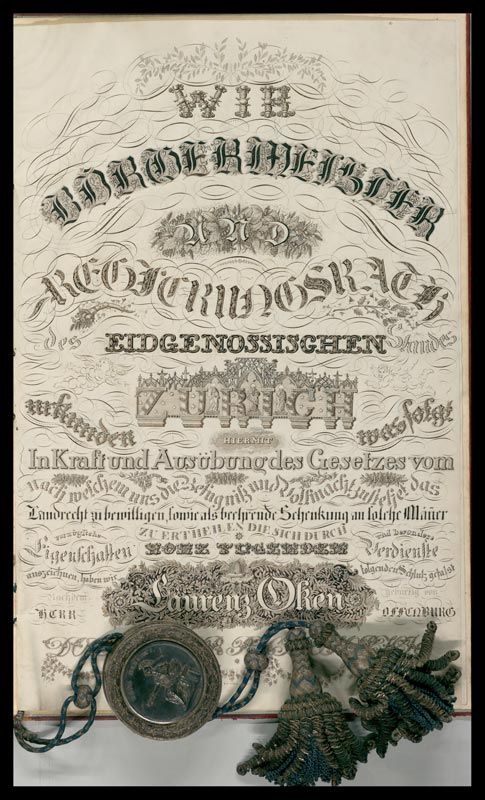
    Citizenship certificate for the founder of the GDNÄ, Lorenz Oken, from 1835.

    Global success with “Industry 4.0”

    Global success with "Industry 4.0"

    Former president Wahlster on the fourth industrial revolution.

    Ten years ago they summarised their ideas on the industry of the future for the first time under the term "Industry 4.0", now professors Wolfgang Wahlster and Henning are celebrating the global success of their concept. The word mark "Industrie 4.0" went viral and with their vision of the digital factory of the future, the two pioneers inspired innovative projects worldwide. In a full-page article in the Frankfurter Allgemeinen Zeitung, former GDNÄ president and computer scientist Wahlster and former SAP board spokesman Kagermann trace the career of their concept and outline a new vision for its second half. The potential of Industry 4.0 is far from exhausted, the two experts write. They advocate the increased use of artificial intelligence (AI) in the industrial sector to meet the challenges of an economy that is both sustainable and competitive. At the Hanover Fair from 12 to 16 April, the success of this innovative concept from Germany will be celebrated, says Wolfgang Wahlster. In May, he will present the plans for the industrial AI phase at government level and discuss them with Chancellor Angela Merkel and Economics Minister Peter Altmeier.

    Saarbrücken 2018 © Robertus Koppies
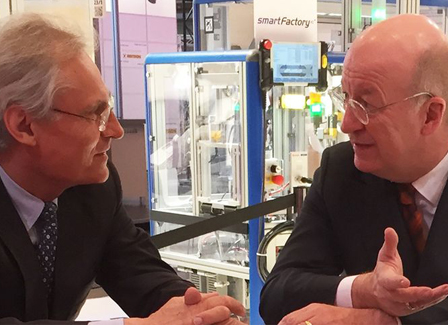
    In conversation at the Hannover Fair: Henning Kagermann and Wolfgang Wahlster (right).

    Further links: