x xc

Michael Dröscher: “Bringing people together, developing ideas”

"Bringing people together, developing ideas"

He was an innovation manager in the chemical industry and now keeps the Society of German Natural Scientists and Physicians on its toes: Michael Dröscher on his plans for the GDNÄ of the future. 

Professor Dröscher, you have been Secretary General since 2015 and a member of the Board and Treasurer of the Society of German Natural Scientists and Physicians since 2017. What is its greatest treasure?
Clearly the people who are close to our society. I include our members and all those who take an interest in us and contribute to our activities, for example by giving talks at our meetings. A great treasure is also the student programme, which gives us wonderful access to young people. Of course, we hope to attract even more people from science, society, and schools to become members. This is not easy these days. 

Why is that?
Most associations are losing members and don't have enough new blood. The GDNÄ, which is also organised as an association, is no exception. Fortunately, we are very generously supported by foundations, so our existence does not depend solely on membership fees. We do not simply accept the decline but do our utmost to fight it. 

How can we do that?
First, we involve young people more than in the past, for example with our own formats at our meetings. For example, at the start of the 200th anniversary celebrations in Leipzig, schoolchildren will organise a part of the programme under the motto "We only have one Earth". Second, we want to activate our members more strongly, we still see a lot of potential there. As soon as the Corona situation allows, there will also be regional presence meetings again. We introduced this new format before the pandemic and hope to be able to invite our members again soon to exchange ideas with them across disciplines. 

Is the interdisciplinary approach of the GDNÄ still up to date in view of ever greater specialisation in the natural sciences?
Both are important, but the importance of the interdisciplinarity is growing. Let us take my field, chemistry. There is still the classical synthesis of molecules and the development and optimisation of processes. But the great advances occur where chemists work together with biologists and computer scientists. In the GDNÄ we want to inspire this, at our meetings and in between at the regional meetings. I see an enormous need here that is not met by any other scientific society. The personal exchange about new findings in biology, chemistry, physics, computer science, engineering, and medicine without direct pressure to exploit them and with leading experts - that is a great opportunity for the GDNÄ.
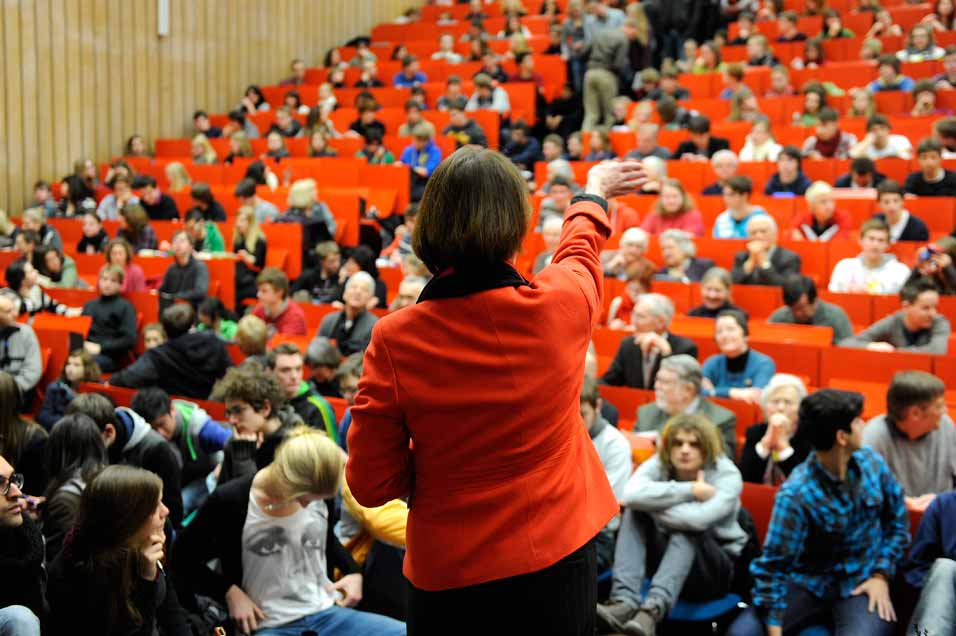
Saarbrücken 2018 © Robertus Koppies

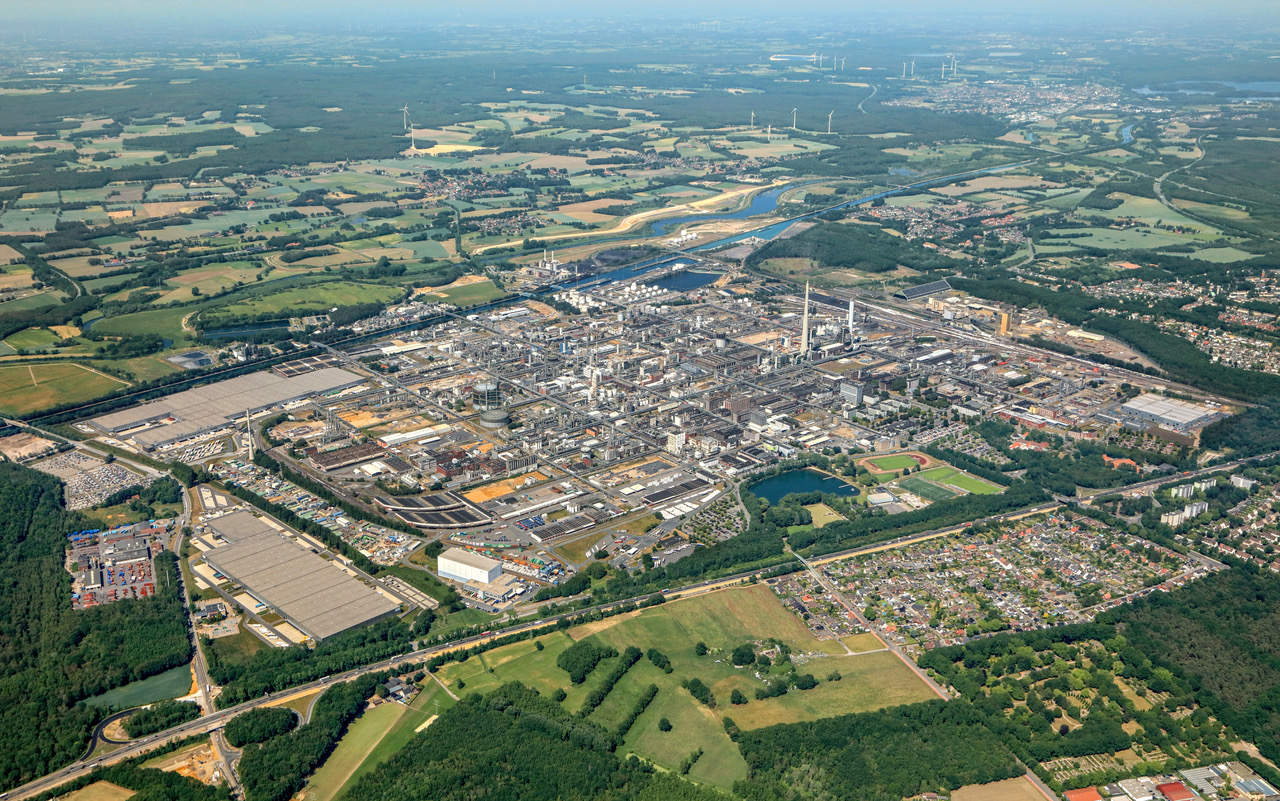
Aerial view of the Marl Industrial Park in the Ruhr region: with an area of more than six square kilometres, the site is one of the largest industrial parks in Germany.  What was once the address of Chemische Werke Hüls AG is now Evonik's largest site. A total of more than ten thousand people work in the Marl Industrial Park – in almost twenty companies. © Evonik Industries AG

Is this only about basic research or also about applied knowledge?
Both should play a role. However, applied research is often neglected in public discourse as well as within the GDNÄ. It deserves more attention.  

You know both worlds and, after professional beginnings in academia, you moved to industry. In 1982 you started your industrial career at Chemische Werke Hüls AG, a company that no longer exists. How did you experience the structural change in the German chemical industry?
This change began soon after I joined Hüls AG in the early 1980s with more and more company mergers and start-ups. When you are in the middle of it, it is not always easy. Overall, however, this development was inevitable in order to survive in an increasingly globalised world. Ultimately, the many mergers have made the German chemical industry stronger and more innovative.  One example: the Marl Chemical Park, where I started, is now Evonik's largest site and is also home to about 25 other chemical companies. 

You worked as an innovation manager for many years. There is a continuous need for creative and at the same time practicable solutions. Do you have a recipe?
Unfortunately, there is no patent remedy. What worked for me was this approach: bring together good people from different company divisions, let them develop their ideas in protected start-up-like structures, so-called project houses, and feed the solutions, as soon as they are close to the market, into the divisions of the parent company. This approach proved successful, for example, with the Hüls subsidiary Creavis, which then became part of Degussa, both of which have since been merged into the Evonik Group.  

Have successful innovations come from this approach?
I think so. At Creavis, for example, we developed biochemical processes for the production of amino acids, in which Evonik is now the world market leader. Very early on, work was done there on functional nanoparticles, which are indispensable in many areas today - just think of the production of microchips and the application in paints and cosmetics.
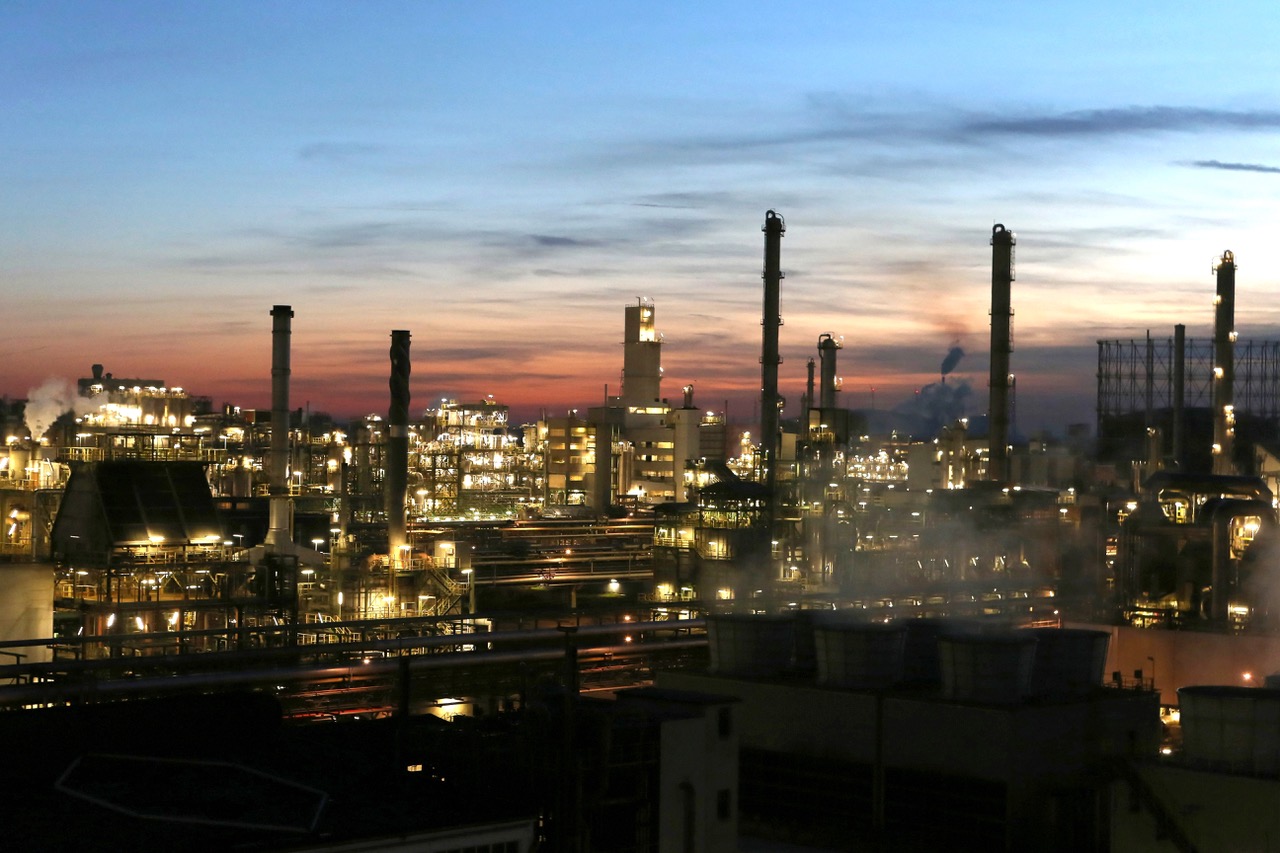
Production facilities in the evening light: The Marl Industrial Park is connected in many ways to the European road, rail and waterway network. © Evonik Industries AG

How do you see the future of Germany as an industrial location?
We are in the middle of a major transformation towards more climate-friendly energy sources and raw materials. The fossil age is coming to an end, and it is clear to industry that it must completely reposition itself. The investments for the next 15 to 30 years are already geared to this. The transformation can succeed if we have enough hydrogen and can reliably obtain it from sun-rich countries. Some countries, such as Saudi Arabia, are preparing for this. As a member of the Enquete Commission on the Future of the Chemical Industry in North Rhine-Westphalia, I have dealt extensively with this topic and continue to advise companies on these issues.  

Much of the public debate is currently about gas as a transitional solution. What is your opinion?
In order to meet the growing energy demand in our country and to replace the coal and nuclear power plants that we have shut down and will shut down in the near future, we cannot do without gas in the foreseeable future. In the future, the chemical industry alone will need as much electricity as all private households together today, and electromobility will need as much again. Gas-fired power plants will probably be needed as a bridging technology for another 15 to 20 years. We also need to build new plants. Evonik is currently building two new gas-fired power plants in the Marl Chemical Park to replace two coal-fired units. In any case, we have to ensure that we can obtain as much gas as we need, whether it comes as liquefied gas by tanker or via the pipelines. If Nord Stream 2 does not come for political reasons, we will need other supply routes.  

Finally, let's take another look at the GDNÄ, which will soon be 200 years old. How far are you with the preparations for the celebration?
We are right on schedule. With the Leipzig Congress Hall we have found a wonderful venue for the festive assembly in September, the lecture programme with renowned scientists is set and the students will come together in early summer to design their part of the programme. There will be an attractive, generally understandable commemorative publication in book form. We are increasingly addressing the public this time: with media reports, via Twitter and other social media, and with lectures to which all Leipzigers are invited. We attach great importance to the exchange with society - entirely in the spirit of the Year of Science 2022, which aims to strengthen citizen participation in science and research under the motto "Nachgefragt!” – which means both, “Inquired” and “in demand!".
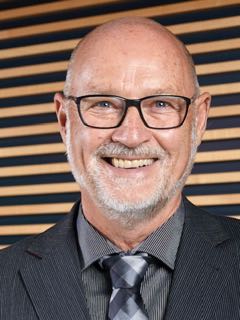
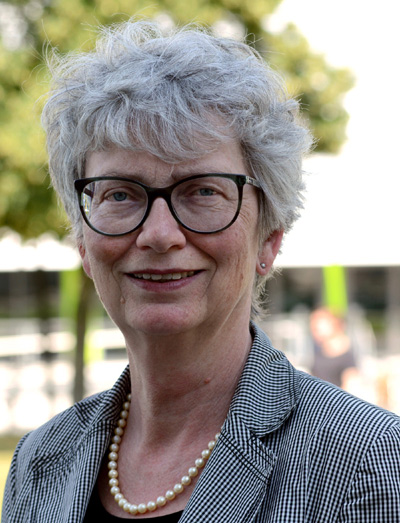
Prof. Dr. Michael Dröscher Dorsten © GDNÄ

Prof. Dr. Michael Dröscher © GDNÄ

About the person

Prof. Dr Michael Dröscher has been Treasurer and Board Member of the GDNÄ since 2017 and its Secretary General since 2015. He comes from Kirn on the Nahe, where he was born in 1949. He studied chemistry in Mainz, where he also completed his doctorate.  He then took a position as a scientific assistant at the University of Freiburg and habilitated in macromolecular chemistry at the age of only 31. He continued his academic career first as a Privatdozent and from 1988 as an adjunct professor at the University of Münster.

Even more than basic research, Michael Dröscher is interested in the application of scientific results - and so his path led him to industry. He started in 1982 as a laboratory manager and in 1984 as a department head at Hüls AG in Marl, North Rhine-Westphalia. He was to remain with the chemical company, or rather the successor companies Degussa-Hüls, neue Degussa and Evonik-Industries AG, for 27 years - in changing functions. In 1997, the experienced chemist was appointed managing director of the newly founded Hüls subsidiary Creavis Gesellschaft für Technologie und Innovation mbH; today the company operates under the umbrella of Evonik Industries AG as Evonik Creavis GmbH. Five years later, in 2002, Michael Dröscher became Innovation Manager at Degussa AG, which later became part of Evonik.

Michael Dröscher was also involved in professional societies and professional politics, including as chairman of the German Bunsen Society (2005 to 2006) and from 2020 to 2011 as president of the German Chemical Society and as manager of the CHEMIE.NRW cluster. He holds an honorary doctorate from Kazan National Research Technological University (Russia).

In addition to his duties in the GDNÄ, Michael Dröscher is active in many honorary capacities: as Chairman of the Board of Directors of the Max Planck Institute for Coal Research in Mülheim and as a member of several boards of trustees and advisory boards of institutes of the Max Planck Society, the Leibniz Association and university institutes. He is also a member of the supervisory board of bValue AG, which promotes and co-finances start-ups.

How innovation can revitalise the chemical industry: This is described in a practical way by renowned experts in this book co-edited by Michael Dröscher. Here is a reading sample from the English-language title (ISBN 3-00-012425-X.) © Festel Capital

Weitere Informationen:
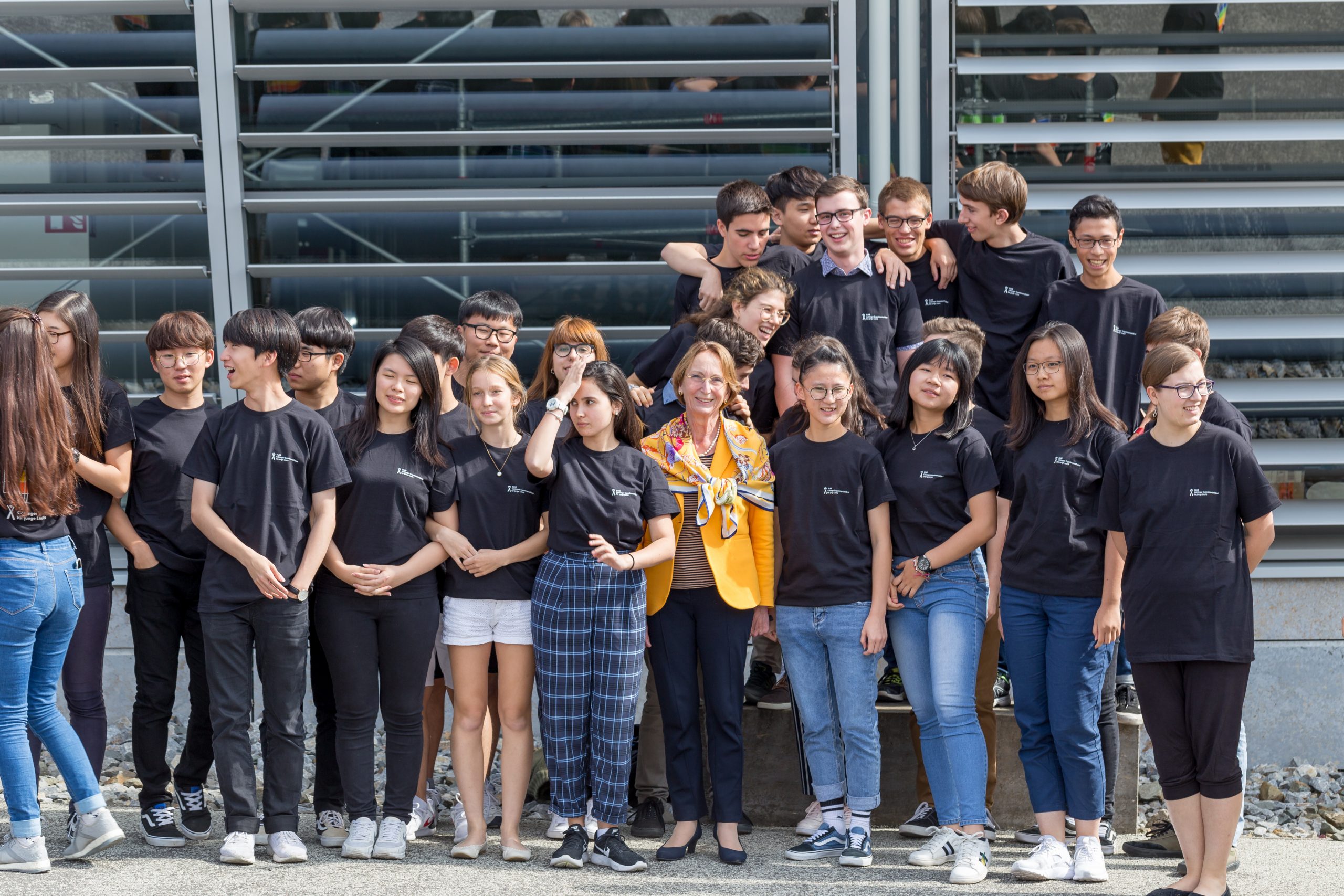
Eva-Maria Neher: “Ambitious research, presented from a qualified source”.

"Ambitious research, presented from a qualified source"

Promoting young research talent is particularly close to the heart of biochemist Eva-Maria Neher. She founded the Göttingen Experimental Laboratory for Young People (XLAB) and gave decisive impetus to the GDNÄ's student programme. 

Professor Neher, you have been involved with the GDNÄ for many years: for the student programme, in committee work and, a few years ago, as president. What drives you?
Clearly my love of science, especially the natural sciences. I am interested in many fields, but today it is almost impossible to keep up to date everywhere. That's where the GDNÄ comes in handy: at its conferences, it brings together top-class scientists from different disciplines who present the latest research as if on a silver platter – you just have to grab it. 

When was the first time you had this silver platter experience?
It was, I can still remember it well, at the 2004 meeting in Passau. It was under the motto "Space, Time, Matter". I was thrilled by the lectures, by the stimulating atmosphere and became a member shortly afterwards.

Saarbrücken 2018 © Robertus Koppies

The XLAB attracts young talent from all over the world.  © Sven Dräger

That was the time when you also set up and ran the experimental laboratory for young people XLAB in Göttingen – a very active time.
For me it was a period of big changes. After a scientific career that had just begun, I had to take a long family break with five children – nine years in total. After that, I really wanted to return to science. But in the 1990s there was practically no chance of returning to research. So I looked for other ways and developed plans for a laboratory where students in grades 11 and 13 could experiment together with scientists. We were able to hold the first courses in the laboratories of the Faculty of Chemistry at Göttingen University in 1999; the XLAB opened a year later. 

At that time, there was much public discussion about the human genome, stem cells and green genetic engineering. At the same time, science was opening up more and more to exchange with society. So the conditions were good for the XLAB?
Yes, it came at exactly the right time. Public interest in research topics was great, but many people lacked basic scientific knowledge. I am convinced that this is best acquired by experimenting in well-equipped laboratories and in personal contact with scientists. Fortunately, we were able to convince not only many great researchers at Göttingen University of this, but also the state government of Lower Saxony, which has been supporting us ever since. Soon we had our own building, and highly motivated, hand-picked students flocked in from all over the world for courses lasting several days in chemistry, physics, biology and computer science. Over time, I was able to establish two XLAB experimental labs abroad: one in Argentina at the Max Planck Research Centre in Rosario and another in China, in Shenzhen. Both projects are very actively run by highly appreciated researchers. However, interest in Göttingen as a location continues unabated, although in Corona times, online courses naturally dominate. Currently, the XLAB is being expanded to include a meeting centre with overnight accommodation in order to be prepared for the anticipated post-pandemic onslaught.

Science calls, Göttingeners come: Eva-Maria Neher in front of a packed auditorium at the Science Festival 2012. © Theodoro Da Silva

You retired from the XLAB in 2018 but remain involved with the GDNÄ's student programme. How has it developed from your perspective?
The programme is on a good course, I would say, and a win-win situation. The GDNÄ needs the young people to give it a new shine in the long term. And the students are enthusiastic about the challenging programme, as the feedback shows. Some are meeting peers for the first time who tick just like them and are passionate about science – so the joy is naturally great. When I was elected to the GDNÄ board in 2012, I immediately took care of the student programme and brought Paul Mühlenhoff, an excellent member of staff from the XLAB, on board. He dug deep into the new task and made the programme what it is now.

Distinguished group: After receiving the Lower Saxony State Medal, the recipients gather around Prime Minister Stephan Weil (from left to right: Martin Kind, Managing Director of the Kind Group and President of Hannover 96; Gudrun Schröfel, Director of the Hannover Girls' Choir; MP Weil; Professor Eva-Maria Neher and entrepreneur Dirk Roßmann). © Nds. Staatskanzlei

Where does the student programme stand today?
The young people are taking an increasingly active role in the meetings. For example, at the 2016 meeting, which fell during my presidency, we relaunched the "Science in 5 Minutes" format. It is a kind of science slam by students for students with the aim of presenting a research topic in five minutes in an understandable and entertaining way. The participants are always very enthusiastic and can practise presenting and discussing along the way. We are planning exciting new programme formats for the 200th anniversary celebrations in Leipzig – I am already looking forward to it. 

The student programme is undoubtedly an important task of the GDNÄ. What else?
Above all, sophisticated science communication. There are many people who want to learn more about high-level research – not from books and not from the media, but from scientists themselves. At its meetings, the GDNÄ is already moving in this direction. But I would like to see more of this happening between meetings in the future.

The CEO of Sartorius AG , Dr Joachim Kreuzburg, hands over a 3D printer as a gift to the XLAB in 2016. © Sven Dräger, XLAB

If I may ask something personal: You are married to a famous scientist, the Nobel laureate in medicine Erwin Neher. One always hears that the Nobel Prize upsets the lives of laureates. Was that also the case in your family?
My husband actively prevented his life from being disrupted – and our lives didn't change too much either. We are both very down-to-earth, live in a small community near Göttingen and have tried to raise our children as modestly as possible. They have all completed their studies according to their interests and are now confidently following their respective professional careers. 

Coming from the Ruhr area, you yourself took a completely different path. How do you look back on it?
I was born in 1950 in Mülheim an der Ruhr as the daughter of a gardener. The most I was expected to achieve was a secondary school leaving certificate, because girls, as they said at the time, would marry later and stay at home. I was only allowed to take the Abitur on the condition that I didn't have to repeat a year. I applied for admission to the natural science grammar school, which today bears the name of the Nobel Prize winner Karl Ziegler from Mülheim – and I was successful. At that time, the school was attended by about 800 boys and only four other girls. It was a good school for life. I learned to go my way even without special privileges.

Saarbrücken 2018 © Robertus Koppies

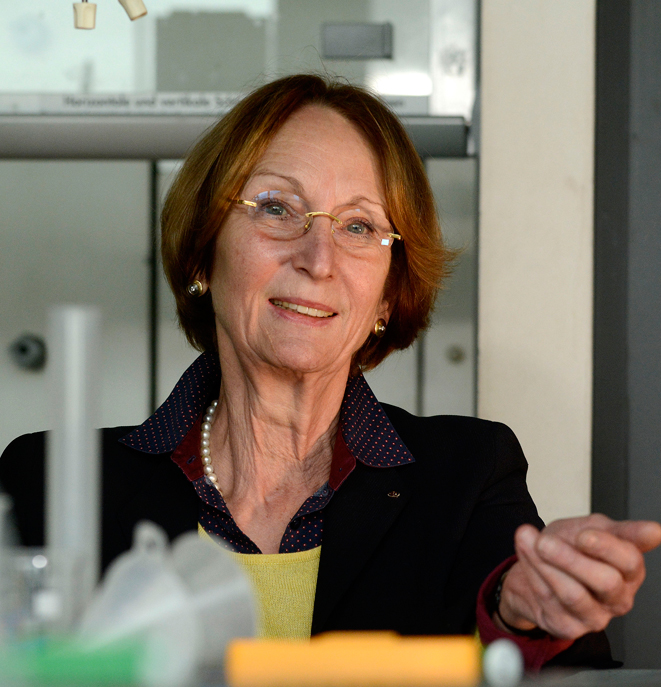
Prof. Dr. Eva-Maria Neher © Nds. Staatskanzlei

About the person

As GDNÄ President in 2015 and 2016, Professor Eva-Maria Neher organised the Assembly in Greifswald on the theme of "Natural Sciences and Medicine". She is currently involved in the preparation of the 200th anniversary assembly in Leipzig. The biochemist from Mülheim an der Ruhr became internationally known as the founder of the XLAB, the Göttingen experimental laboratory for young people. She directed the XLAB, which opened in 2000, until 2018.

From 1969 to 1973, Neher studied biochemistry, organic chemistry and microbiology at the Georg-August University in Göttingen. She graduated in 1974 and received her doctorate in 1977 with a thesis on the regulation of the biosynthesis of poly-β-hydroxybutyric acid in Alcaligenes eutrophus H16. She then worked as a scientific assistant in renowned Göttingen research institutes. Following a family break, Eva-Maria Neher taught experimental courses in chemistry and biology at the Freie Waldorfschule Göttingen in the 1990s and developed the first concepts for the XLAB. Eva-Maria Neher has been married to Nobel Prize winner Erwin Neher since 1978. She is the mother of five children.

For her social commitment, the scientist was awarded the Lower Saxony Order of Merit in 2002 and the Lower Saxony State Prize in 2007. In recognition of her scientific career and her services to science education, the Faculty of Chemistry at Göttingen University awarded Eva-Maria Neher an honorary professorship in 2009. In 2013, she was awarded the Cross of Merit 1st Class of the Federal Republic of Germany. In 2018 she received the Lower Saxony State Medal and in 2019 the Initiative Award of the Susanne and Gerd Litfin Foundation. From 2014 to 2021, Neher was Chair of the University Council of the European University of Flensburg. She has been a member of the University Council of the University of Applied Sciences and Arts (HAWK) in Lower Saxony since 2008; she has held the chair since 2012. Eva-Maria Neher is the chairwoman of the XLAB Foundation for the Promotion of Natural Sciences, which she founded, and works on the design of the XLAB Encounter Centre.

The XLAB building on the campus of Göttingen University. © Architects Bez+Kock

Weitere Informationen:

Martin Lohse Exciting times for science

"Exciting times for science"

Martin Lohse, President of the GDNÄ, invites to the celebration of the 200th anniversary celebration in Leipzig.

Professor Lohse, the GDNÄ will be 200 years old in September 2022. How will this anniversary be celebrated?
200 years: this is really a significant and wonderful anniversary. During these 200 years science has developed in an incredible way, all over the world, but particularly in Germany – and often from within the GDNÄ. We want to celebrate this special anniversary with a very special four-day anniversary conference in September: in the city where the GDNÄ was founded, Leipzig, and in the beautifully modernised Art Deco Congress Hall at the Leipzig Zoo.

Who is invited to this celebratory conference?
All members are cordially invited, plus participants in the student programme and former scholarship holders, as well as the general public for some of the events. We hope that the Federal President, the Prime Minister of Saxony, and the Mayor of Leipzig will honour us with their presence. Leading scientists from Germany and abroad, including Nobel Prize winners, will give lectures and celebrate with us. And aspiring students of science journalism as well as regional and national media will cover the conference.

As the President, you were able to choose the topic of the conference. Why did you choose "Images in Science"?
This topic has a general, but also a very personal component. You will find both aspects in the conference. Images have always conveyed central messages in and from science. Let us think, for example, of the many drawings Alexander von Humboldt made on his travels, of the spectacular photos of the North Pole MOSAiC expedition, or of the fantastic images of the space telescopes. In my own research, fascinating detailed images can be produced with new types of microscopes: images of individual biomolecules and from the innermost parts of cells and organisms. The anniversary conference will bring us up to date in this very broad spectrum of images.

Saarbrücken 2018 © Robertus Koppies
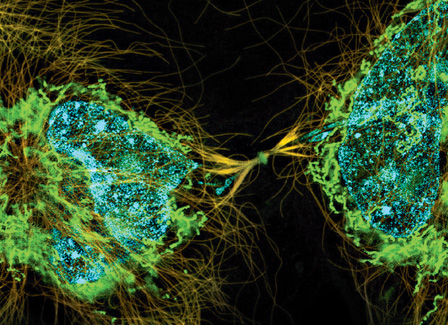
Last kiss: The picture shows a cell that is dividing into two daughter cells. The cell nuclei are in blue, the mitochondria in green and the microtubules in orange. Image taken with optical ultra-high resolution microscopy (Structured Illumination Microscopy). © Markus Sauer, University of Würzburg
Preparations for the big anniversary are in full swing. Let us take a look behind the scenes!
Preparations for GDNÄ conferences always take well over a year: topics and speakers are discussed and found, conference logistics are planned, a social programme is organised. We started planning for the anniversary conference a good two years ago, because this meeting should be even more beautiful than usual. We have attracted many excellent speakers from all over the world. The conference rooms in the Congress Hall provide a magnificent setting for the meeting, the cooperation with the zoo is very close and committed and offers many highlights, and the social programme will make the meeting particularly delightful.

Let us turn our gaze back once more. 1822 to 2022, that is a long time: how has the GDNÄ managed to last over so many years?
The two centuries of its existence are without doubt the most exciting times science has ever experienced. Never before have the developments in science, but also those that science brought to society, been so great – and this is true for the entire spectrum of the GDNÄ. Many disciplines were actually born during this time, and they have all evolved into their own specific worlds. The GDNÄ has always been at the centre of these developments, and many specialist societies have sprung from the GDNÄ, and have often become much larger than the GDNÄ itself. However, during all these years, the GDNÄ has retained some unique features.

What are these special features?
Three aspects characterise the GDNÄ and make it unique: First, the GDNÄ cultivates interdisciplinary discussions across a broad spectrum of subjects – in a way that cannot take place in specialist societies. Second, the GDNÄ runs a student programme with great potential for the future. And third, the GDNÄ addresses the general public: with its activities in science communication, via its homepage, and invites citizens of the city and its region to its meetings. We will highlight all three aspects in Leipzig.

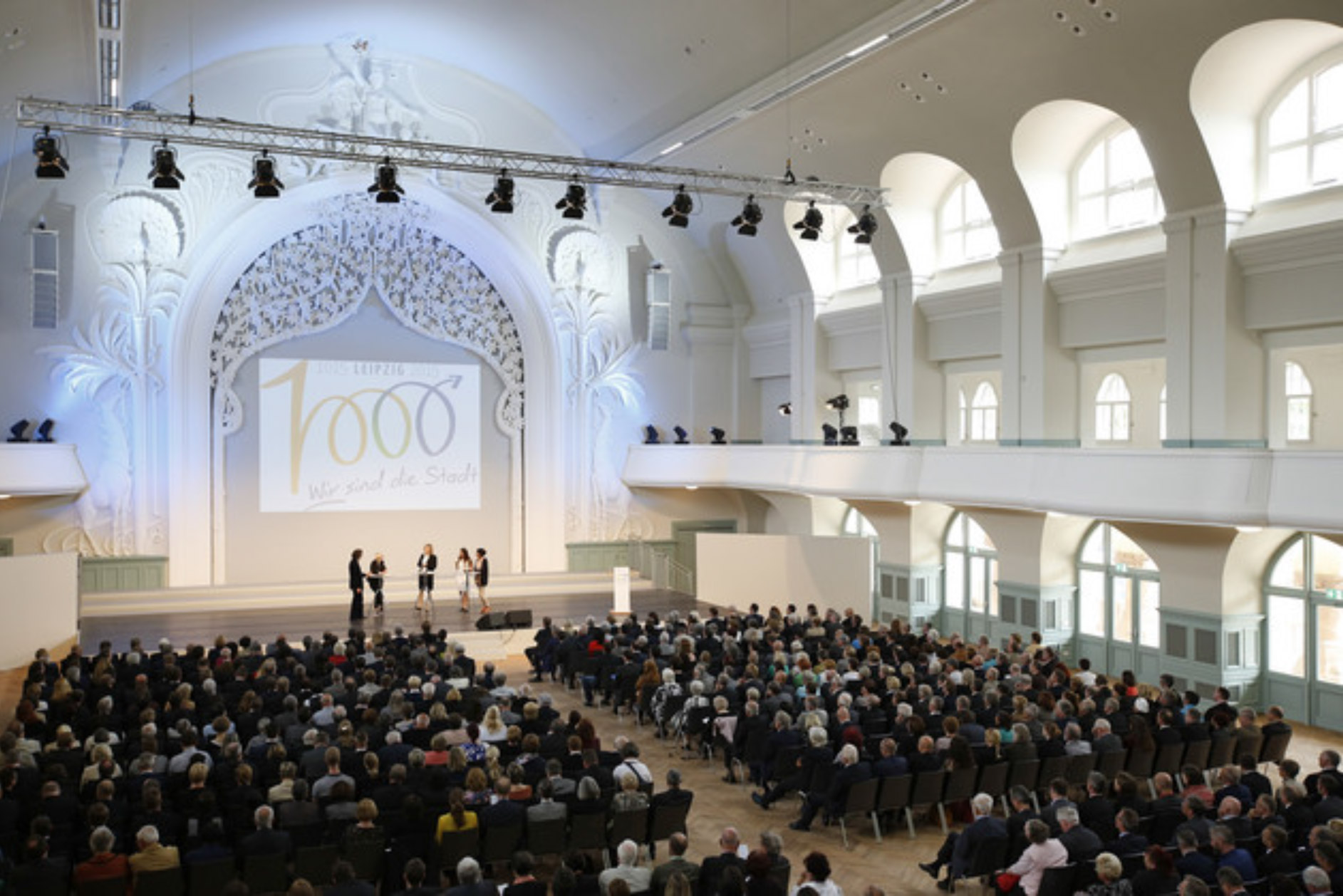
View into the Great Hall of the lavishly renovated Gründerzeit building from 1900. The building has a total of 15 halls and rooms as well as foyers and lounges. © Leipzig Trade Fair

What will be the role of young people at the Leipzig conference?
We invite more than two hundred young people: Selected high school students from the region, former programme participants, winners of the "Jugend forscht" and "Jugend präsentiert" competitions. There will be preparatory workshops and a presentation of the results at the opening ceremony. The aim will be to define and express young people's expectations of science. With this programme, which has been organized by Mr Mühlenhoff for many years, we want to address young people and open up paths to science for them. And, of course, also into the GDNÄ. 

The Corona pandemic has shown the importance of the dialogue between science and the public. How has the GDNÄ been involved in this issue?
The Corona pandemic has highlighted both strengths but also weaknesses of our society. The strengths include an incredible number of rapidly produced research results, including, above all, the development of vaccines in less than a year. However, it has also become clear how difficult it is to connect to the entire population, to convey research knowledge. And it has also become clear how much basic knowledge is needed for conversations about the disease and meaningful countermeasures. The GDNÄ aims to provide information about this topic on its homepage, it participated in the discussion about risk-adapted measures at an early stage and, together with science academies and research institutions, aimed to inform politicians. Some of its members participated, for example, in a symposium of the Hamburg Academy of Science on “infections and society”. Together with German science academies, we now want to increasingly devote ourselves to the follow-up and ask address two big questions: How did we as a society and how did science fare in this crisis? And what can we learn from this for the future – for future pandemics and other crises, but also for science communication? 

What role will the Corona pandemic play in the anniversary meeting?
Corona will not be the focus at the Leipzig meeting. So much has already been said about it that it did not seem to make sense to us. But RNA medicine, which has brought us the best vaccines so far and opens up completely new opportunities for innovative therapies, will be a central topic of the "Medicine" session on Sunday morning in Leipzig. 

What are your wishes for the GDNÄ in the coming years?
Of all the wishes I have for the GDNÄ, one is central: that it may continue to play an important role in the dialogue between the sciences, with the public and especially with young people. And that for 200 more years!

Saarbrücken 2018 © Robertus Koppies

Prof. Dr. Martin Lohse © Bettina Flitner

About the person

Prof. Dr Martin Lohse has been President of the German Society of Natural Scientists and Physicians (GDNÄ) since 2019. In this honorary office, he is responsible for the programme of the assembly celebrating the 200th anniversary. In his main profession, the renowned pharmacologist has been a professor at the University of Würzburg since 1993, and Chairman of the incubator ISAR Bioscience Institute in Planegg/Munich since 2020. His research focuses on receptors and their signals; they represent the most important targets for drugs.

Martin Lohse studied medicine and philosophy at the universities of Göttingen, London and Paris and did his doctorate in Göttingen at the Department of Neurobiology of the Max Planck Institute for Biophysical Chemistry. After working with Ulrich Schwabe in pharmacology in Bonn and Heidelberg, he joined the laboratory of Bob Lefkowitz, who later won the Nobel Prize, at Duke University, where he became an assistant professor. From 1990 to 1993 he was head of a research group at the Gene Centre in Martinsried/Munich, established by Ernst-Ludwig Winnacker. In Würzburg, he founded the Rudolf Virchow Centre, one of the first three DFG research centres, as well as the university's graduate schools in 2001. After six years as Vice President for Research at the University of Würzburg from 2009 to 2015, he was Chairman of the Max Delbrück Center in the Helmholtz Association in Berlin from 2016 to 2019. He has received numerous awards, including the DFG's Leibniz Prize, the Ernst Jung Prize for Medicine and two grants from the European Research Council. He has co-founded four biotechnology companies. Martin Lohse has held numerous honorary positions in science in Germany and abroad; amongst these, he was Vice President of the National Academy of Sciences Leopoldina from 2009 to 2019.

Congress Hall Leipzig exteriorThe Congress Hall at Leipzig Zoo is a modern conference centre in a historical ambience. © Leipzig Trade Fair

Weitere Informationen:

High Award from China for Katharina Kohse-Höinghaus

High Award from China for Katharina Kohse-Höinghaus

Chinese Academy of Sciences admits chemist and GDNÄ board member as foreign member 

Katharina Kohse-Höinghaus is Senior Professor of Physical Chemistry at Bielefeld University and former President of the Combustion Institute. She represents the field of engineering sciences on the Board of Directors of the GDNÄ. On 18 November 2021, the Chinese Academy of Sciences (CAS) announced that Katharina Kohse-Höinghaus had been elected as a new foreign member. The long-standing list of foreign members comprises only about 100 people in total. These include the physicist Klaus von Klitzing, the biochemist Hartmut Michel and the mathematician Martin Grötschel. The biologist Herbert Jäckle was elected at the same time as Kohse-Höinghaus.

Prof. Dr. Katharina Kohse-Höinghaus. © Foto Norma Langohr, Universität Bielefeld

Wolfgang Wahlster is a new foreign member of the Czech Academy of Engineering Sciences

Wolfgang Wahlster is a new foreign member of the Czech Academy of Engineering Sciences

On 23 November 2021, the former president of the GDNÄ, Professor Dr. Dr. h.c. mult. Wolfgang Wahlster was accepted as a foreign member of the Czech Academy of Engineering Sciences (Cena Inženýrské akademie České republiky, EACR) in Prague.  

Professor Wolfgang Wahlster from the German Research Center for Artificial Intelligence (DFKI) is known in the Czech Republic as a scientific pioneer in the field of Industry 4.0 and artificial intelligence. Industrial production is of great economic importance for both the Czech Republic and Germany. In both countries, industrial artificial intelligence is perceived as an innovation driver. 

For many years, Wahlster has been cooperating with Professor Vladimír Mařík in Prague, the founder of the Czech Institute of Informatics, Robotics and Cybernetics (CIIRC) at the Czech Technical University in Prague (CTU). Together, the two scientists have launched the Research and Innovation Centre on Advanced Industrial Production (RICAIP), which is funded with 50 million euros. 

The Czech Academy of Science and Engineering EACR is a partner organisation of the German Academy of Science and Engineering (acatech) and represents the Czech Republic in Euro-CASE, the European association of all academies of science and engineering.

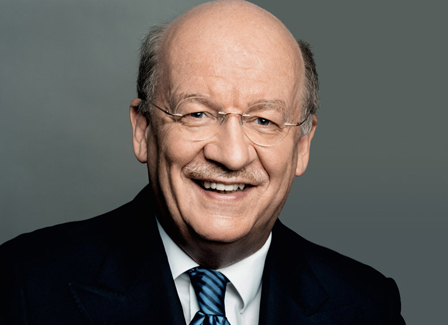
Wahlster © GDNÄE

Former president of the GDNÄ, Professor Dr. Dr. h.c. mult. Wolfgang Wahlster. © DFKI