How can we imagine researcher life there?
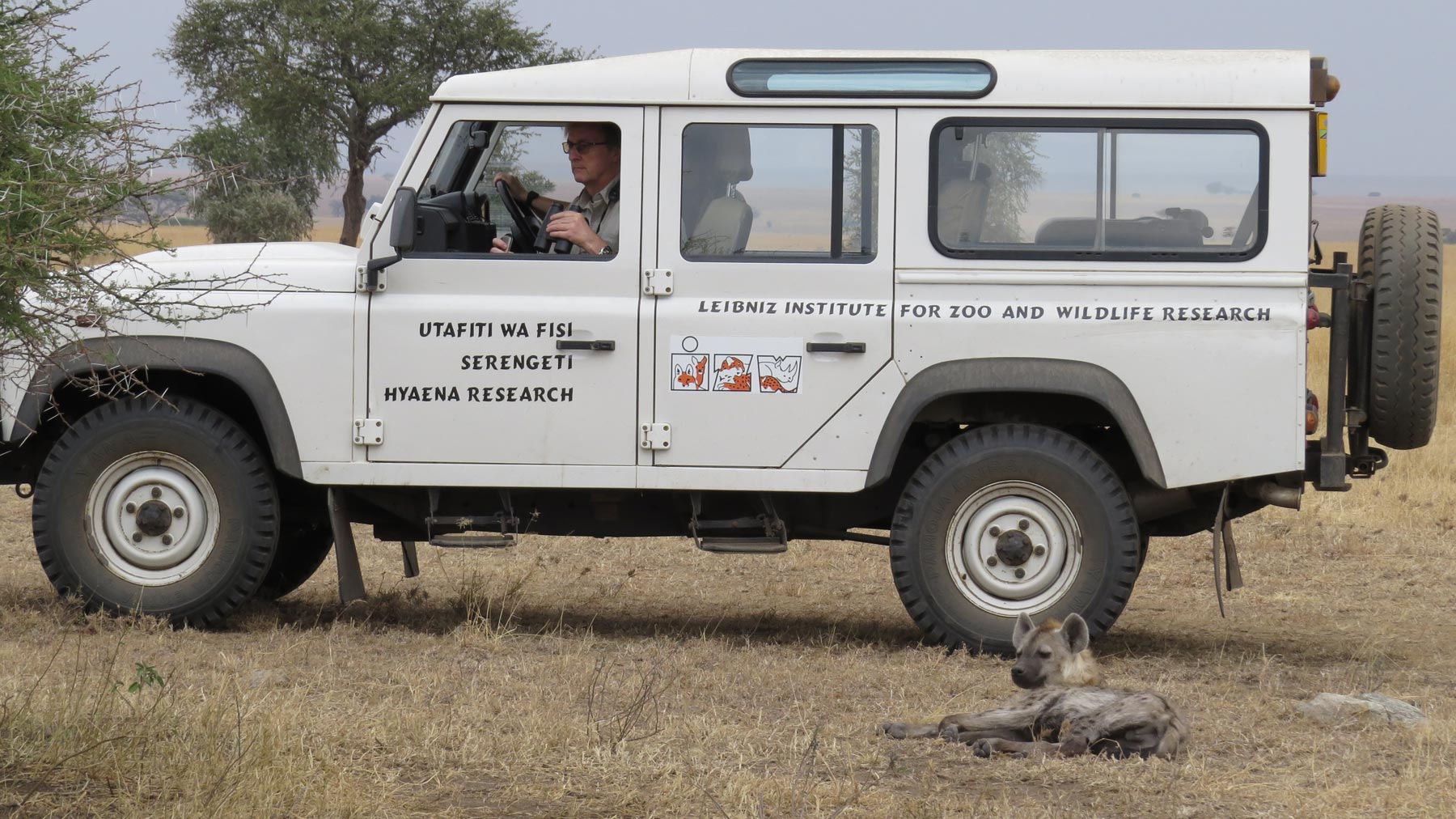
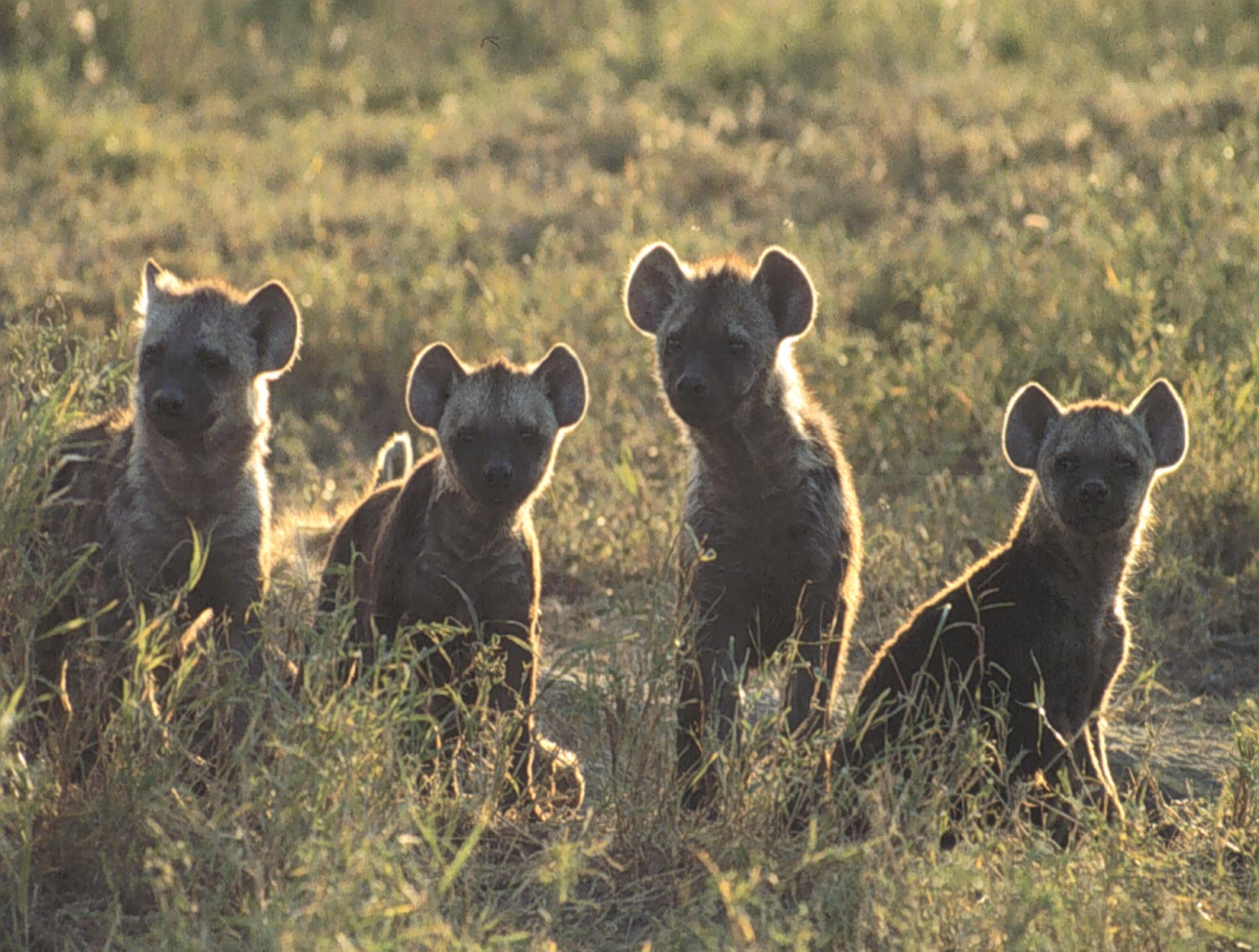
It is a simple life. We live in quite simple huts scattered around the institute. We get our electricity from photovoltaic systems, and the water comes from large tanks that collect rainwater from the roof. Those with manual skills are at an advantage: there is always something to repair – in the hut, on the scientific equipment or on the Landrover. Scientists from all over the world live in the research institute, three quarters of them are women. There is little socialising, because everyone is fully occupied with their own projects. We, for example, always leave our quarters very early and stay out late to watch the hyenas in the centre of the Serengeti. The best times for this are between half past six and half past nine in the morning and between half past four and eight in the evening – so around sunrise and sunset.
These are long-term projects: How big is your data treasure in the meantime?
We now know the complete individual life histories of a good 2500 hyenas over several generations. For this we can stay in our study area, because the group territories are passed on from the mother’s generation to the daughter’s generation. Our staff also study hyenas in the Ngorongoro Crater, a second study area located in the south-west of the Serengeti – and they have been doing so for almost twenty-five years.
What have you found out so far about the social behaviour of spotted hyenas?
A central question from the beginning was how the pronounced female dominance comes about, what advantage it has and how it could have arisen. At the top of the pack is an alpha female, followed by other females in a strict hierarchy, and all male clan members are below the lowest-ranking female. This is not due to hormonal differences, as is still erroneously claimed in textbooks today. Rather, we were able to show that female dominance in spotted hyenas is a learned behaviour and ultimately based on a pseudo-voluntary self-submission of the males. They have no other choice because females regularly dominate them due to female coalitions. Also, males only stand a chance in mating if they have succeeded in establishing a friendly relationship with a female.
So social competence is a real advantage?
That is definitely the case. In addition, young females in particular are mainly interested in males of their own clan that have recently joined the pack or were born later than they were. Therefore, clever males choose the group in the environment that has the most young females and migrate. This also very successfully avoids incest incest, which could be a problem in a group structure where the young females neither know their older brothers nor their father. We were able to find convincing evidence for this in our long-term study in the Ngorongoro Crater.
You have been the director of the Leibniz Institute for Zoo and Wildlife Research in East Berlin since 2000. It’s probably not that easy to do your own research there.
That’s true, but doing my own research was always important to me. Unfortunately, I can no longer spend months in the Serengeti as I did at the beginning of my career. But I still manage three or four weeks of field studies a year.
Science-based conservation plays a major role at your institute. What exactly do you mean by this?
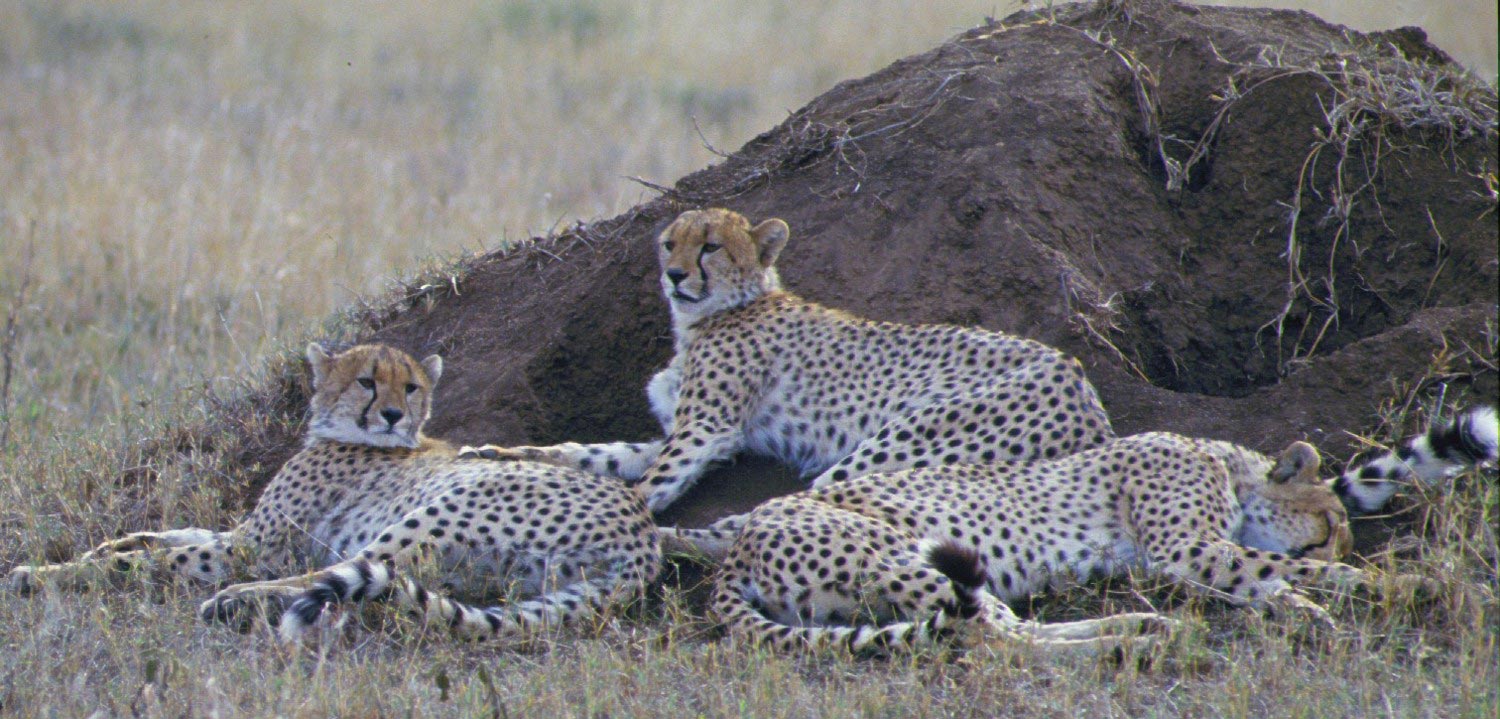
A good example is the solution a team from my institute found for the conflict between cattle farmers and cheetahs in Namibia. In December 2020 we reported on it in the scientific journal PNAS. In central Namibia, several hundred individuals of the rare big cat species live freely on the lands of cattle farmers. Occasionally, the cheetahs kill cattle calves, which has led to considerable conflict. We then sat down with the cattle farmers, took on board their suggestions and questions, and together devised a research strategy. Together we then managed to fit 250 cheetahs with radio transmitters to record their movement behaviour and use of space. It turned out that there are particularly dangerous places for calves – namely where cheetahs from the region regularly meet to exchange information or find mating partners.