• DE
  • EN
  • Ferdi Schüth is the new Vice-President of the Leopoldina

    Ferdi Schüth is the new Vice-President of the Leopoldina

    Award for the chemist, catalysis researcher and future President of the GDNÄ

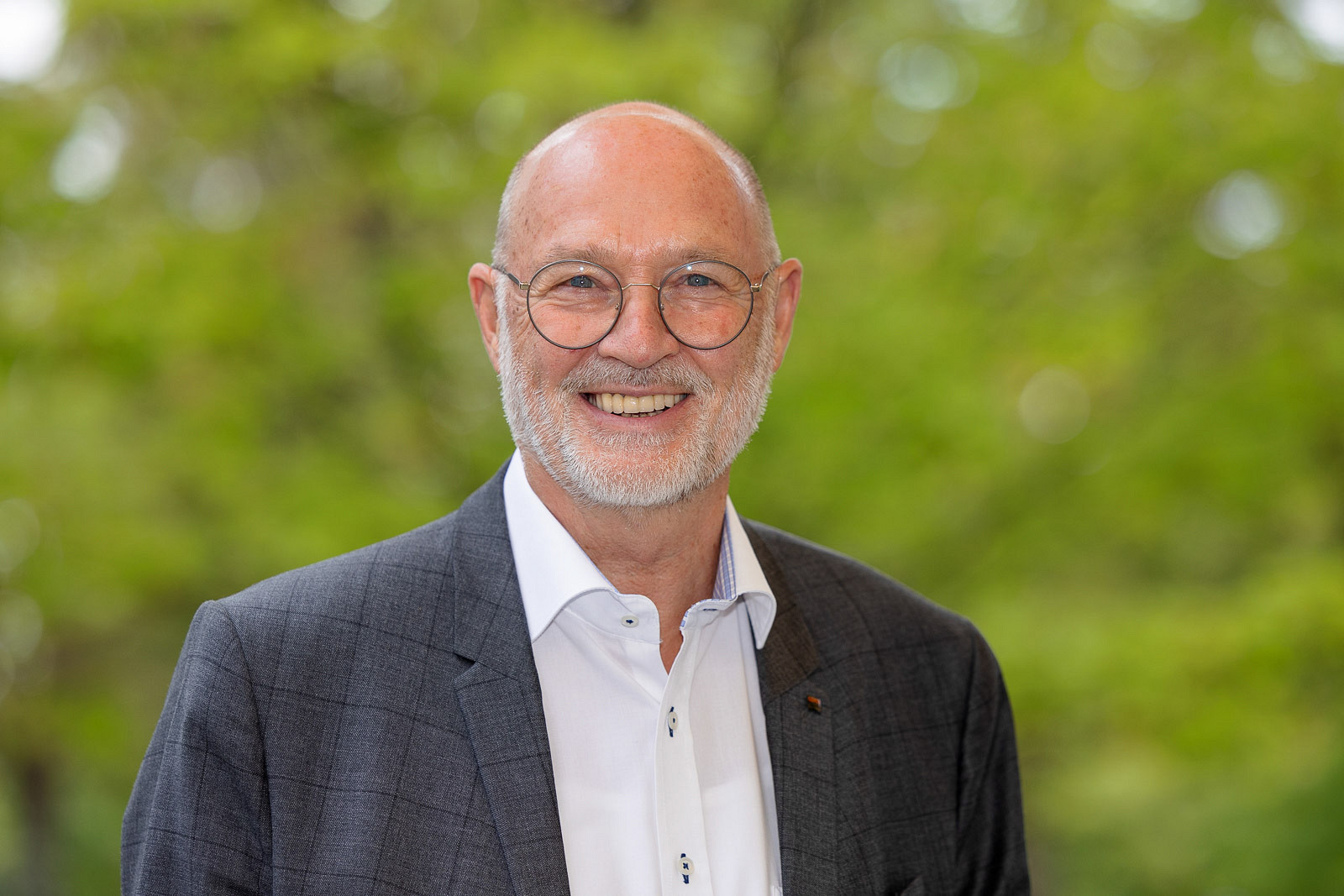
    At the annual meeting of the National Academy of Sciences Leopoldina in Halle, Professor Ferdi Schüth was newly elected to the Academy’s Presidium. The chemist and catalysis researcher is Director at the Max Planck Institute for Coal Research in Mülheim. As the current Vice-President of the Society of German Natural Scientists and Physicians, he will take over the presidency of the GDNÄ in January 2027. The thematic focus of the Leopoldina Annual Meeting 2025 was artificial intelligence. 

    In addition to Ferdi Schüth, Professors Thomas Lengauer and immunobiologist Thomas Boehm were also elected Vice-Presidents at the Leopoldina Annual Meeting on 25 and 26 September. Mathematician and computer scientist Lengauer gave the Leopoldina Lecture at the GDNÄ Annual Meeting 2018 in Saarbrücken on the topic of statistical data analysis in the age of big data. 

    Ferdi Schüth’s research focuses on hydrogen storage, among other topics. He has developed innovative storage solutions and materials that enable the safe and efficient storage of hydrogen, thereby supporting the use of fuel cells and renewable energies. 

    The Leopoldina is managed by an Executive Board and a Presidium. The Presidium meets at least four times a year and prepares all important decisions of the Academy. The members of the Presidium are elected by the Senate and serve a five-year term. They may be re-elected once. The Executive Board consists of the President and the Vice-Presidents. They are elected for a term of five years. They may be re-elected once. 

    DLR_Anke_Kaysser-Pyzalla

    © Frank Vinken für MPI für Kohlenforschung

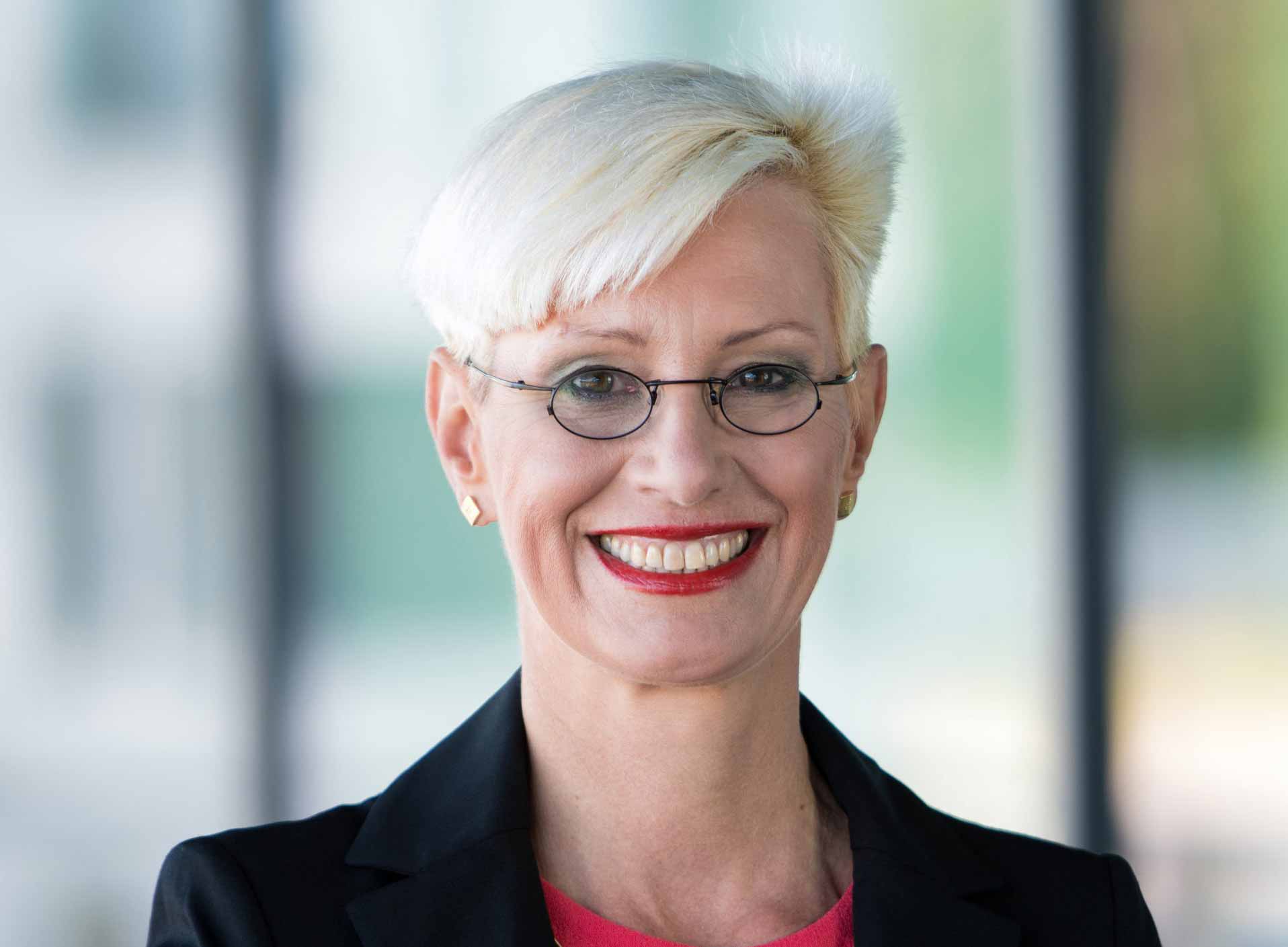
    Professor Dr. Ferdi Schüth
    Further reading:

    Anke Kaysser-Pyzalla: ‘Recruiting young talent is the top priority’

    ‘Recruiting young talent is the top priority’

    The President of the Society of German Natural Scientists and Physicians (GDNÄ), Professor Anke Kaysser-Pyzalla, talks about new opportunities for young people and the value of interdisciplinary thinking and action.

    Professor Kaysser-Pyzalla, the motto of the 133rd GDNÄ meeting was ‘Science for our lives tomorrow’. In which areas do you see the greatest challenges and opportunities for science?
    Our lives tomorrow will be determined by social developments. The greatest challenge for science is to present its own relevance to society in a comprehensible way. We at the GDNÄ must also show the role that research plays in the future of society and its economic and technological foundations. The greatest opportunity for science lies in communicating its results and methods, but also its limitations. To say: ‘We are here for society’. Our task is to make science recognisable in what it produces. Research is thus one of the foundations for decision-making in our democracy. 

    Not all of these areas of responsibility are equally attractive to young scientists. Are there any areas that concern you?
    I am concerned about the low number of students in technical subjects. But Potsdam has shown that the next generation understands the new challenges. They are addressing issues that deal with current developments or historical missteps and are highly relevant to society. As the GDNÄ, we must convey to our young scientists the significance and interdisciplinarity of research for their development. The ability to work in a team and clear analytical and evaluative skills are also good prerequisites for careers in research that lead into business and back again.

    © Dima-Juschkow

    Young Members of the GDNÄ at the 2024 meeting in Potsdam, together with Nobel Prize winner Professor Ben Feringa (front row, centre).

    The Young Network of the GDNÄ was founded to introduce young people to scientific thinking and working at an early age. How important is youth work within the GDNÄ as a whole?
    Recruiting young talent must be our top priority. Without capable, committed and motivated young people, Germany will not be competitive. There are many young people who are inspired by excellent teachers to take an interest in the natural sciences. However, the field of technology is often neglected. We as the GDNÄ must be role models – representing scientific values, rethinking them and explaining their benefits to society. How can we succeed in introducing young people to scientific thinking and working through attractive offers? The GDNÄ gives young talent the opportunity to build networks and get to know new people, but above all to learn about new topics. 

    There does not seem to be any gender disparity in young people’s interest in science, as can also be seen in the jGDNÄ. However, in advanced academic and industrial careers, the proportion of women often drops dramatically. Is this a ‘legacy issue’ that can be resolved by better support for young talent, or do you see structural problems that need to be solved?
    I still see structural problems here, i.e. a legacy issue. The proportion of female students is steadily increasing. Many successfully complete their studies and some choose a scientific career. But what about the compatibility of family and career? This compatibility, which applies to both women and men, must be incorporated into everyday scientific life so that it produces the expected results. Everyone has the same opportunities. And it is clear that this can work. Increasingly, women are establishing themselves in areas where they were previously underrepresented. At the GDNÄ, too, it is noticeable that young female colleagues are heavily involved in our work and are very committed. 

    Science in the 21st century is highly specialised in most cases, with researchers often focusing on very narrow areas of interest. But the challenges for ‘our life tomorrow’ are complex. What role do you see for the GDNÄ in stimulating exchange between disciplines and promoting interdisciplinary thinking?
    The role of the GDNÄ must increasingly be that of a pacemaker in the German scientific landscape. We must succeed in strengthening interdisciplinary thinking. Let’s put ourselves in the shoes of a space engineer, for example. Taking orbital mechanics from her area of expertise, she is forced to consider many aspects of a complex mission. She can only succeed in this if she is prepared to think and act beyond the boundaries of her field. She must pool and expand collective knowledge, promote new ideas and also improve cooperation. This requires a high degree of interdisciplinarity in the context of complex systems. Then she, then we, will be successful. 

    As important as dialogue within the sciences is, dialogue between science and society is at least as important. However, issues such as climate change and pandemic control have shown that this dialogue does not always work. The current example in the USA, where anti-scientific and pseudo-scientific positions seem to dominate politics, shows in a dramatic way how this can jeopardise not only scientific progress, but even the scientific status quo, i.e. what has already been achieved. How can and must science in general and the GDNÄ in particular respond to this?
    The GDNÄ is the sum of its members. Every member should take a clear stand for science in conversations and discussions. Unfortunately, we see in the media how even prominent figures are involved in promoting pseudoscientific theories. We can counteract this through our public appearances. The GDNÄ stands for explainability. This includes translating existing knowledge in a way that is understandable and comprehensible to everyone. This is what the most recent winner of the Lorenz Oken Medal, Armin Maiwald, has been doing successfully for many decades. In this way, the GDNÄ strengthens the acceptance of scientific findings, such as those on man-made climate change. We explain the uncertainties of scientific findings and explain what science is good for. Because science, like the GDNÄ, is constantly evolving.

    DLR_Anke_Kaysser-Pyzalla

    © DLR

    Prof. Dr.-Ing. Anke Kaysser-Pyzalla, GDNÄ President 2025/2026 and Chair of the Executive Board of the German Aerospace Center (DLR).

    Recommended reading

    This article reflects an interview with Professor Anke Kaysser-Pyzalla conducted by Jürgen Schönstein, editor-in-chief of Naturwissenschaftliche Rundschau, for issue 9/10 (2025). Naturwissenschaftliche Rundschau has been the organ of the Society of German Natural Scientists and Physicians for many years. The current October issue documents the specialist presentations given at the 133rd GDNÄ meeting in Potsdam in 2024:

    >> Naturwissenschaftlichen Rundschau, Issue 9/10 (2025)

    About

    Prof. Dr.-Ing. Anke Kaysser-Pyzalla studied mechanical engineering and mechanics in Bochum and Darmstadt. She received her doctorate and habilitation from the Ruhr University Bochum. After conducting research at the Hahn-Meitner-Institut (HMI) and the Technical University of Berlin, she researched and taught at the Vienna University of Technology from 2003 to 2005. In 2005, she joined the management of the Max Planck Institute for Iron Research GmbH in Düsseldorf as a scientific member, director and managing director. In 2008, she was appointed Scientific Managing Director of the Helmholtz Centre Berlin for Materials and Energy GmbH, which was formed under her leadership from the merger of HMI and the Berlin Electron Storage Ring Society for Synchrotron Radiation (BESSY). In 2017, Anke Kaysser-Pyzalla became President of the Technical University of Braunschweig; since 2020, she has been Chair of the Executive Board of the German Aerospace Centre (DLR). She was elected President of the GDNÄ for the 2025 and 2026 terms of office.

    Anke Kaysser-Pyzalla: “Intergenerational dialogue is important to me”

    “Intergenerational dialogue is important to me”

    On 1 January 2025, Professor Anke Kaysser-Pyzalla, an engineer and Chair of the Executive Board of the German Aerospace Center (DLR), took over the presidency of the GDNÄ.

    Kaysser-Pyzalla was elected to the office by the members of the GDNÄ for a period of two years. In the more than two-hundred-year history of the Society for Natural Sciences, the engineering scientist is the third woman to hold this office. Her predecessor, the Berlin zoologist Professor Heribert Hofer, will remain associated with the Society for Natural Sciences as First Vice President until the end of 2026.

    As GDNÄ president, Anke Kaysser-Pyzalla is responsible for the scientific programme of the society’s 134th assembly. It will take place in September 2026 in Bremen under the title ‘Knowledge creates benefits – utilising science’. ‘The city offers an outstanding congress infrastructure and, together with Bremerhaven, a wealth of renowned science and research institutions,’ says the new president.

    The GDNÄ conferences have always been forums for personal exchange between scientists and science enthusiasts. ‘In Bremen, we will create even more space for interaction,’ Kaysser-Pyzalla announces. The recently founded youth organisation of the society, initiated by Heribert Hofer, will contribute fresh ideas to the programme. In recent years, new formats for discussion between established scientists and young talents have been developed, which benefit everyone involved, says the trained mechanical engineer: ‘The generations can learn a lot from each other and I will promote this process in the interest of the GDNÄ.’

    With its interdisciplinary orientation, the GDNÄ is ideally suited to discuss the complex challenges of the time in an interdisciplinary way. She believes it is important to show how research leads to innovations and technologies with the aim of benefiting society, says the new president. Kaysser-Pyzalla has been committed to this goal for years, and she will continue to pursue it in her new role.

    In the new president’s view, the GDNÄ should offer as many opportunities as possible to enable citizens to participate in science: ‘This is another way in which we can contribute to the stability of our democracy.’

    ‘I am looking forward to the new task, to working with great colleagues on the board and with the highly efficient staff at the office,’ says Anke Kaysser-Pyzalla.

    DLR_Anke_Kaysser-Pyzalla

    © DLR

    Prof. Dr.-Ing. Anke Kaysser-Pyzalla

    About the Person

    Prof. Dr Anke Kaysser-Pyzalla studied mechanical engineering and mechanics in Bochum and Darmstadt. She completed her doctorate and habilitation at the Ruhr University Bochum. After research activities at the Hahn-Meitner-Institut (HMI) and at the Technical University Berlin, she researched and taught at the Technical University Vienna from 2003 to 2005. In 2005, she joined the management of the Max-Planck-Institut für Eisenforschung GmbH in Düsseldorf as a scientific member, director and managing director. In 2008, she was appointed scientific managing director of the Helmholtz-Zentrum Berlin für Materialien und Energie GmbH, which was formed from the merger of the HMI and the Berliner Elektronenspeicherring-Gesellschaft für Synchrotronstrahlung (BESSY) under her leadership. In 2017, Anke Kaysser-Pyzalla was elected President of the Technical University of Braunschweig. Since 2020, she has been Chair of the Executive Board of the German Aerospace Center (DLR). She has been President of the GDNÄ since 1 January 2025.

    Further information:

    Change in the Board

    Change in the Board

    Heribert Hofer is the new President of the GDNÄ

    With the internationally renowned wildlife researcher, a committed promoter of young talent takes over the presidency..

    Professor Heribert Hofer, Director of the Leibniz Institute for Zoo and Wildlife Research (IZW) in Berlin, has been at the helm of the German Society of Naturalists and Doctors (GDNÄ) since 1 January 2023. The renowned zoologist was elected to the office of President by the General Assembly and The renowned zoologist was elected to the office of President by the General Assembly for the two years 2023 and 2024 and is thus responsible for the scientific organisation of the 133rd GDNÄ Assembly in 2024 in Potsdam. As President, he replaces pharmacologist Professor Martin Lohse, who moves into the office of 1st Vice President for two years. 

    Heribert Hofer (62) has headed the Leibniz Institute for Zoo and Wildlife Research in Berlin-Friedrichsfelde since 2000. Until 2017, he was also head of the Department of Evolutionary Ecology at his institute. Since 2000, Hofer has also been Professor of Interdisciplinary Wildlife Research at the Free University of Berlin. Before his time in Berlin, he conducted research at the Max Planck Institute for Behavioural Physiology in Seewiesen, Bavaria, from 1986 to 1999, initially as a postdoctoral researcher and later as an independent scientist. In 1997, he habilitated at the Ludwig Maximilians University in Munich with a thesis on the behaviour of spotted hyenas in the Serengeti savannah. Heribert Hofer began his studies in zoology at Saarland University and completed them at Oxford University with a doctorate in “DPhil”. 

    The internationally renowned scientist has been closely associated with the GDNÄ for many years. He has been involved in many ways: as an elected subject representative and group chair for the subject of biology, with speeches at meetings and as 2nd vice-president in the preparation of the 200th anniversary celebration in Leipzig. In addition to the dialogue with the public, Heribert Hofer attaches particular importance to the promotion of young talents within the framework of the GDNÄ student programme.

    Change in the presidency

    Change in the presidency

    Looking back, looking forward

    Dear members of the GDNÄ,

    This year marks the end of my term as President of the GDNÄ. The corona pandemic has forced us to move the meeting originally planned for 2020 in Würzburg first to the following year and finally to merge it with the Leipzig jubilee meeting in September 2022. This has also extended my presidency to an unusual four years.

    The first of these years, 2019, served to prepare the conference on the theme of “Images in Science”, to recruit speakers, to design a framework programme. The second year, 2020, took place practically only online after the federal government decided on the lockdown in March. Even after that, meetings in groups were at times forbidden or inadvisable. In March, an expert group consisting of GDNÄ members, state academies and the Ifo Institute produced a statement on how to deal with the Corona pandemic, which differed from the restrictive course of the Leopoldina. Against the background of our now almost two-year pandemic experience, the proposals for a gradual opening are still interesting and up-to-date.

    With this statement, we opened our new website www.gdnae.de at the beginning of April 2020, which became the essential tool for communication for a long time with the help of news, reports, portraits and interviews. Thanks to all who contributed to this, especially to our editor Lilo Berg.

    In the third year, 2021, vaccines against the SaRS-CoV2 virus became available – surprisingly quickly. Even if some in the population (and also in the GDNÄ) were sceptical about the injections, looking back as well as looking at China today shows that they played a central role in overcoming the pandemic. But progress was too slow to hold a large meeting, and so the Würzburg meeting planned for September had to be cancelled altogether.

    This year, 2022, was marked on the one hand by very high covid case numbers with decreasing disease severity and declining death rates. On the other hand, the crisis of the pandemic was replaced by the crisis caused by the attack on Ukraine. It became clear that we personally and as a society are only partially crisis-proof and resilient – an observation that should concern us. Despite this situation, we have optimistically pursued the production of the commemorative publication “Wenn der Funke überspringt” and the planning of the anniversary conference and have been amply rewarded in both! Take another look back: “Commemorative Publication for the GDNÄ Anniversary” and “200 Years of the GDNÄ – Review of the Anniversary Assembly 2022” .

    I am very grateful for the opportunity to run both and I thank everyone who made it all possible: the many excellent speakers who gave insights into their research, the lecturers who set the student programme on a good path, the board council and the staff of the office as well as the team around our local partner Jörg Junhold from Leipzig Zoo. I would also like to thank everyone who contributed to the commemorative publication, the authors, Lilo Berg for editing and Thomas Liebscher from Passage-Verlag for the design. Without financial support, the conference, the student programme and the commemorative publication would not have been possible: I would like to thank the Wilhelm and Else Heraeus Foundation, the Bayer Foundation, the AKB Foundation and the Klaus Tschira Foundation.

    Martin Lohse 2022 © MIKA-fotografie | Berlin

    © MIKA-fotografie | Berlin

    Pharmacologist Professor Martin Lohse was GDNÄ President from 2019 to 2022. He moves to the office of 1st Vice President on 1 January 2023.

    Now the focus is on the future. At the General Assembly in Leipzig, Anke Kaysser-Pyzalla, Chairwoman of the Executive Board of the German Aerospace Center (DLR), was elected to the office of 2nd Vice-President; she will assume the Presidency in 2025. In accordance with the statutes, Heribert Hofer, Director of the Leibniz Institute for Zoo and Wildlife Research (IZW) in Berlin, will take over as President in 2023/24. I would like to welcome both of them in their new roles and wish them all the best for their tasks. Michael Dröscher will continue as Treasurer and Secretary General; I myself will take on the role of 1st Vice President.

    This year, for the first time, we held the election of the professional representatives electronically. Marion Merklein (Erlangen-Nuremberg) was elected for the engineering sciences, Uwe Hartmann (Saarbrücken) for physics/geology and Peter Liggesmeyer (Kaiserslautern) for mathematics/computer science. I warmly welcome all those who will be newly involved in the GDNÄ.

    There is much to do to prepare the next assembly in 2024 in Potsdam and to make the GDNÄ fit for the future. The involvement of young people has proven its worth, especially within the framework of the student programme. And as announced most recently at the award of the Lorenz Oken Medal to Mai Thi Nguyen-Kim in October, we want to further expand the dialogue with society.

    I have experienced the GDNÄ as a vital society with many energetic members and am grateful for having been able to accompany it on its way into its third century. It has been a rich time!

    I send you my warmest greetings and wish you and yours all the best for the New Year.

    Yours

    Lennart Resch

    Martin Lohse, Präsident der GDNÄ

    Nobelpreisträger Paul J. Crutzen

    © MIKA-fotografie | Berlin

    Zoologist Professor Heribert Hofer was Vice President from 2021 to 2022. He took over the GDNÄ Presidency on 1 January 2023.

    Prof. Dr. Anke Kaysser-Pyzalla © DLR

    © DLR

    The engineer Professorin Anke Kaysser-Pyzalla will take office as 2nd Vice-President of the GDNÄ on 1 January 2023.

    200th anniversary of the GDNÄ: a glittering celebration of the sciences

    200th anniversary of the GDNÄ: a glittering celebration of the sciences

    by Prof. Dr. Michael Dröscher, Treasurer and Secretary General

    Just how vital and sustainable the interdisciplinary research society remains today was demonstrated at its 200th anniversary celebration at its founding site in Leipzig. It was a magnificent celebration of science that the Society of German Natural Scientists and Physicians (GDNÄ) hosted from September 8 to 11, 2022, in the beautiful atmosphere of the Leipzig Congress Hall at the Zoo under the patronage of German President Frank-Walter Steinmeier. Around 800 GDNÄ members and guests, including more than 200 high school and university students, came to celebrate the Society’s birthday with a high-caliber program on the theme of “Images in Science”. 

    Founded in 1822 by free-minded thinkers in Leipzig at the invitation of Lorenz Oken, the GDNÄ has evolved over the course of its 132 meetings from a gathering of Europe’s scientific and medical elite to an exchange of high-ranking scientists with people interested in the natural sciences. The generally understandable lectures from chemistry, physics, biology, computer science and medicine showed how interdisciplinary science is and must be today.

    © MIKA-fotografie | Berlin

    At the festive evening after the first day of the meeting: Michael Dröscher welcomes the guests with humorous words (behind him from left to right: Ronald Werner, Jörg Junhold, Martin Lohse).

    For the special anniversary celebration, the program was not only extended to four days, but also offered participants a science exhibition with hands-on activities and a significant expansion of the student program. The students not only participated in the full scientific program. They contributed to the program with their questions to science, created an enthusiastically received science slam, took advantage of the opportunity to get advice on their studies, and freely exchanged ideas with speakers and guests.

    The opening day was marked by the festive session, attuned and framed by the Albero String Quartet with music by Felix Mendelssohn-Bartholdy, Maurice Ravel and Ludwig van Beethoven.

    GDNÄ President Professor Martin Lohse and local CEO and host Zoo Director Professor Jörg Junhold opened the festive session in the Congress Hall. With the words “The GDNÄ stands for exchange and openness”, the Federal Minister for Education and Research, Bettina Stark-Watzinger, welcomed the festive society in her video message. In his greeting, the President of the State Parliament, Dr. Matthias Rößler, pointed out Saxony’s close connection with the GDNÄ, which was meeting in the Free State for the ninth time, and emphasized the promotion of dialogue between science and the public. Mayor Professor Thomas Fabian pointed out the great importance of Leipzig as a science location.

    The GDNÄ thrives on the commitment of its members. Therefore, it awards the Alexander von Humboldt Medal every two years for special contributions to the development of society. During the festive meeting, it honored Professor Joachim Treusch for his services as a board member, president and long-time companion of the board. In her laudatory speech, Professor Eva-Maria Neher said, “Our laureate today, Joachim Treusch, belongs with Alexander von Humboldt to the ‘far-sighted people’ who not only shaped the GDNÄ, but with and as part of it, shaped the sciences, advanced communication to society, and significantly convinced politics to promote innovation and change.” In particular, the medal recognizes the awardee’s contribution to the implementation of the student program and his linking of society with the networks of science. As the founding president of the Helmholtz Association, a member of the Senate of the Leopoldina, and a member of the German Academy of Science and Engineering, Professor Treusch has helped shape many connections to the GDNÄ.

    © MIKA-fotografie | Berlin

    Students surround physics Nobel laureate Reinhard Genzel after his lecture, “A 40-year Journey to the Center of the Milky Way.”

    The focus of the celebration session was the exchange of students with science. Around 200 participants in the scholarship-funded student program, which was once again under the competent leadership of student advisor Paul Mühlenhoff, had agreed in preparatory meetings on key questions to science on the topic of “We have only one world”. Three of the six subject area groups presented their questions on the podium at the opening ceremony. The topic was introduced by a video message from Dr. Mai Thi Nguyen-Kim: She will receive the Lorenz Oken Medal of the GDNÄ on October 5, 2022, at the Forum on Science Communication in Hannover, Germany, to honor her contributions to communicating science to society.

    In the Biology Department, young people discussed the question “How would an alga have to be modified and used to convert greenhouse gases, such as atmospheric CO2 and CO2 dissolved in seawater, into usable organic material as quickly, practically, reliably and risk-free as possible, and how could this be technically realized?” with Professor Antje Boetius, director of the Alfred Wegener Institute for Polar and Marine Research. “What do you think is necessary to be able to realize individual medicine for every person in a timely manner?” – was the question posed by the medical team to Professor Patrick Cramer, President of the Max Planck Society from 2023. “How does science realize the perfect city of tomorrow?” was the question posed by Professor Johann-Dietrich Wörner, President of the German Academy of Engineering Sciences, to the Technology/Engineering Group. The conversation, moderated by Martin Lohse, can be found, along with all the presentations, on the Society’s video channel.

    © MIKA-fotografie | Berlin

    The lecture by physics Nobel Prize winner Professor Reinhard Genzel attracted many Leipzigers to the Congress Hall at the Zoo.

    Also on the big stage, three other student groups presented their questions the next day during the biology session. Vice President Professor Heribert Hofer moderated the second round. “Does chemistry have to reinvent plastic to get the benefits as well as eliminate the known drawbacks, and can science eliminate plastic waste that already exists and make this economically attractive?” asked Professor Michael Buchmeiser, director of the Institute of Polymer Chemistry at the University of Stuttgart. The question posed by the mathematics/computer science group, “How can computer science minimize the energy and resource consumption of data storage and communication despite advancing digitalization?” was addressed to Professor Wolfgang Wahlster, German Research Center for Artificial Intelligence. Professor Katharina Kohse-Höinghaus, Bielefeld University, responded to the question on science communication posed by the physics group, “How can science succeed in communicating the most urgent problems in such a comprehensible way that it leads to direct action?”

    Back to the celebration session: images and journeys was the topic of the panel in the second part. President Lohse introduced the conference theme. “All sciences strive to produce accurate images. To do so, they use artificial as well as natural intelligence, the large toolbox of computer science, sophisticated methods of physics and specially designed building blocks of chemistry. Optimized dyes and labeling strategies, complex light and electron microscopes, efficient algorithms and clear visualizations are needed to depict the molecules of life with ever greater precision. Impetus for the panel discussion was provided by Professor Oliver Lubrich, University of Bern, on “Alexander von Humboldt’s Images of Science”, Professor Antje Boetius with a report on the MOSAiC expedition, which was additionally documented by images in the exhibition, and Professor Günther Hasinger, European Space Agency, with his view on black holes and the fate of the universe.

    With a glass of champagne in hand, Professor Jörg Junhold and Dr. Ronald Werner, the representative of the Saxon state government, opened the festive evening in the zoo’s concert garden. With music from the Alberto Quartet and a flying buffet, the party was duly celebrated.

    But not only that. At 7:30 p.m., “Science in 5 Minutes” was scheduled in the White Hall. This format took place for the third time, always moderated by Vice President Professor Heribert Hofer. In front of a full hall, 13 young people, individually or in teams, competed. With their topics “Alkylpolyglucosides and preservatives in a different way,” “Gender in medicine,” “Use of clay in commercial construction – a significant contribution to ways out of the climate crisis,” “Fullerenes and medical use,” “Will AI take over our world?”, “Why can the number Pi be calculated from two colliding blocks? “, “Voltage or current, which is the killer?”, “How can machines weighing tons fly?”, “The periodic table of the elements – deadlier than you think” and “Interstellar travel”, the young speakers were able to inspire the audience and provoke storms of applause to such an extent that in the end there were 5 first and 5 second places, each rewarded with 200 and 100 euros respectively.

    © MIKA-fotografie | Berlin

    Well attended, gladly used: The study counselling by proven experts on Saturday, 10 October.

    The second day began with the biology session led by Professor Tina Romeis. Dr. Andreas Wilting was on the trail of hidden wild animals of tropical rainforests, while Professor Markus Sauer introduced the “Latest developments in super-resolution microscopy”.

    The science market was open from 10 a.m. to 4 p.m. on Friday and Saturday. It offered not only interesting insights, for example into the MOSAiC exhibition “Into the Ice” and the exhibition “Fascination of Science” by photographer Herlinde Koelbl, but also hands-on activities. Represented were the Max Planck Institute for Evolutionary Anthropology (research site of Professor Svante Pääbo, 2022 Nobel Laureate in Medicine), the Leibniz Institutes for Photonic Technologies, Jena, Tropospheric Research and Regional Geography, both from Leipzig, and the Leipzig Max Planck Institute for Mathematics in the Sciences. The Society’s archivist, Dr. Matthias Röschner, had brought along some particularly interesting items from the GDNÄ archive at the Deutsches Museum.

    In the acatech “Science and Technology Café”, private lecturer Marc-Denis Weitze invited participants to discuss the topic “In which world do we want to live/Science for tomorrow” during the lunch break. In parallel, Lilo Berg moderated a discussion on the history of the GDNÄ with Professor Dietrich von Engelhardt and archivist Dr. Matthias Röschner.

    The afternoon began in the context of the chemistry session chaired by Professor Wolfgang Lubitz with the award of the Liebig Memorial Medal of the German Chemical Society by GDCh President Dr. Karsten Danielmeier to Professor Claudia Felser, Max Planck Institute for Chemical Physics of Solids. The laudator, Professor Barbara Albert, Rector of the University of Duisburg-Essen, praised the award winner as a visionary in solid materials. In her talk, Claudia Felser reported on “Chirality and Topology. Contributions on NMR-assisted structural biology by Professor Bernd Reif, insights into the molecular architecture of cells by Professor Wolfgang Baumeister, and encounters with nanomachines at work, mediated by Professor Helmut Grubmüller, completed the chemistry session.

    The public evening lecture by Nobel Prize winner in physics Reinhard Genzel about his 40-year journey to the center of the Milky Way attracted not only conference participants but also many citizens of Leipzig. Professor Genzel took plenty of time after the lecture to talk to the students. Afterwards, conference participants flocked to St. Nicholas Church to hear works by Georg Phillip Telemann, Johann Sebastian Bach, Max Reger and Richard Wagner. Music was performed by Viktorija Kaminskaite (vocals), Alexander Bernhard (trumpet) and Reiko Brockelt (alto saxophone) under the direction of University Music Director David Timm (organ). Between the musical pieces, Superintendent Sebastian Feydt explained the significance of St. Nicholas Church to the Peaceful Revolution of 1989.

    After the early GDNÄ general meeting, Saturday morning began with the physics session led by Professor Thomas Elsässer. With images from the nanoworld, time-resolved X-ray crystallography and the diversity of extrasolar planets, Professor Roland Wiesendanger, Professor Petra Fromme and Professor Heike Rauer impressed the audience.

    The topic of the well-attended acatech “Science and Technology Café” during the lunch break was the digitalization of medicine. At the same time, large numbers of students sought advice from members of the GDNÄ’s Board of Directors about study opportunities in the natural sciences, computer science, medicine and veterinary medicine.

    The afternoon was devoted to topics in technology and computer science and was led by Professor Johannes Buchmann. Professor Stefan Roth reported on image analysis and understanding for autonomous driving and Professor Christian Theobalt on machine learning in computer graphics and image recognition. Professor Philipp Slusallek concluded the computer science section with the topic of real-time ray tracing for photorealistic visualization.

    For the following public Leopoldina lecture by Markus Gross, computer science professor at ETH Zurich and director of Disney Research, on computer-generated Hollywood movies with impressive images and technologies, many citizens of Leipzig again flocked to the Congress Hall at the Zoo.

    After the lecture, the speakers were invited by the mayor and the zoo director to the zoo’s Gondwanaland for an evening in tropical surroundings.

    © MIKA-fotografie | Berlin

    Magnetic resonance tomography in real time: Professor Jens Frahm showed fascinating images, including interior views of a horn player.

    Sunday was dedicated to medicine, introduced by Professor Jürgen Floege. Professor Jens Frahm kicked things off with impressive images of real-time magnetic resonance tomography. To be able to watch artists playing the trumpet and singing from the inside was impressive.

    Afterwards, the focus was on the new RNA medicine. Professor Jörg Vogel, Professor Lorenz Meinel and Professor Stefanie Dimmler introduced the field and discussed future developments together with GDNÄ President Professor Martin Lohse.

    The President concluded by thanking the participants who had traveled from near and far, the speakers and panel guests, the members of the Executive Board and the Board Council, and the local Zoo and Congress Hall teams led by Professor Jörg Junhold. He highlighted the tremendous efforts of those who helped prepare and host this meeting. In particular, he thanked the office staff, Ms. Landeck and Ms. Diete, who received great applause from the participants.

    The president also thanked the city of Leipzig and the state of Saxony for their hospitality, the superintendent of the Nikolaikirche, Sebastian Feydt, as well as the musicians of the anniversary concert, the students around Studienrat Paul Mühlenhoff, the Instagram team from Stuttgart around Professor Alexander Mäder, the archive of the GDNÄ around Matthias Röschner and all exhibitors in the conference-accompanying “Market of Sciences”, the team of authors of the commemorative publication around Lilo Berg and Thomas Liebscher as well as all sponsors, donors and donors.

    The next meeting of the GDNÄ will take place in Potsdam in September 2024, then under the leadership of the Berlin zoologist Professor Heribert Hofer.

    All lectures were livestreamed and are available as video via www.gdnae.de. A photo gallery, the meeting diary and many other contributions on the website commemorate the festive 200th anniversary of the German Society of Natural Scientists and Physicians in Leipzig in September 2022.

    Matthias Röschner © Deutsches Museum

    © MIKA-fotografie | Berlin

    The anniversary concert in the Nikolai Church – an unforgettable experience at the end of the second day of the meeting.

    Further information: