• DE
  • EN
  • Ursula Müller-Werdan: “Healthy ageing is within reach for many of us”

    “Healthy ageing is within reach for many of us”

    Ursula Müller-Werdan, Professor of Geriatrics and Director at Charité, on the best ways to stay younger, active substances against disease-causing zombie cells and very old people in the US election campaign.

    Professor Müller-Werdan, we are conducting this interview in the summer before the presidential elections in the USA. One candidate is 81 years old, the other 78. Is that too old for such a responsible office?
    Not necessarily. Before the last presidential election four years ago, a US study asked the same question and confirmed that Joe Biden would have a statistical life expectancy of a good nine years after his inauguration in 2021 and Donald Trump a good eleven years. After analysing representative data sets, this corresponded to the survival probability of white, academically educated people of their age. At the time, Biden’s healthy lifespan was estimated at 87 years and Trump’s at just over 85 years. These are not individual predictions, but average values, and life expectancy would probably be even better today due to the higher age reached. 

    Life expectancy is one thing, physical and mental fitness is another. How do you rate the candidates in this respect?
    I have to pass. Even if I knew more about their state of health, I wouldn’t allow myself to make a remote diagnosis. But high professional performance is possible even in old age, and there are a number of examples of this. Just think of Konrad Adenauer, who took office as the first Chancellor of the Federal Republic of Germany at the age of 73 and only retired at the age of 87. 

    When someone is so productive in old age, this is often attributed to a particularly good genetic make-up. Is that true?
    Only in part. Around a third of the ageing process is genetically determined, two thirds have to do with personal lifestyle – this is how the scientific studies can be roughly summarised. We are therefore by no means at the mercy of our inherited dispositions but have a great deal of room for manoeuvre. 

    If you want to grow old as healthily as possible, you will receive a lot of advice. Which are the most important?
    The eight recommendations of the American Heart Association are a good guideline. If you follow them, you will be on average about six years younger biologically than your chronological age. The recommendations will sound familiar to many: a healthy diet, sufficient exercise and sleep, no tobacco consumption, no severe obesity and normal values for blood pressure, blood sugar and cholesterol. 

    We have heard all this many times before, but what exactly does it mean?
    Here are three examples: The US Heart Association defines adequate exercise as 150 minutes of moderate physical activity per week, such as walking, or 75 minutes of increased activity, such as jogging. The daily sleeping time should be between seven and nine hours and the body weight should be below the body mass index value of 30. 

    At the GDNÄ meeting in Potsdam, you will be talking about facts and myths on the subject of healthy ageing. Which myth is particularly persistent?
    The one about a healthy glass of red wine. Alcohol is a neurotoxin, even in small quantities – there’s no way around it. However, there is evidence that alcohol is more harmful to us in the first half of life, i.e. up to around forty, than later. Another myth has to do with frailty in old age, which many believe is inevitable. In my presentation, I will explain how it can be prevented and, in some cases, reversed. 

    Unfortunately, it is not yet possible to reverse dementia, another disease of old age.
    But a lot can be done to prevent it. More than a third of cases can be prevented or delayed, as large-scale international studies have shown in recent years. It is particularly important to avoid depression and hearing loss and to acquire education as early as possible. Alcohol, concussions and air pollution have been shown to increase the risk of dementia.

    Eröffnung der Büros Postplatz 1 © Paul Glaser

    © Charité – Universitätsmedizin Berlin

    In the Clinic for Geriatrics and Geriatric Medicine on the Benjamin Franklin Campus of the Charité, patients with acute internal, neurological and orthopaedic diseases are treated in the sense of early geriatric rehabilitation.

    A lot of research is being carried out worldwide on the subject of ageing. Which approaches are particularly promising?
    I find a field of research called geroscience very exciting. It sees ageing as the main risk factor for diseases that are not purely genetically determined, such as cardiovascular diseases and most types of cancer. The idea is to prevent these diseases by slowing down the ageing process at an early stage. So-called senescent cells offer a starting point. These are body cells that have stopped dividing at some point. They no longer function properly but are not completely dead and can damage surrounding cells. The consequences are diseases and frailty. The older the person, the more such zombie cells there are in the tissue. 

    Do we stand a chance against the zombies?
    We can drive them to suicide and thus halt their age-related decline. This is possible with certain active substances, so-called senolytics, as animal experiments have shown. The first clinical trials have now been carried out on patients with diseases such as pulmonary fibrosis, kidney dysfunction or diabetes. The results so far are very encouraging. 

    When will the first drugs be available?
    That depends entirely on the further course of the clinical trials. If nothing comes up, we may have the first drugs in fifteen or twenty years. 

    Is your institute at the Charité involved in this research?
    Yes, one of our research groups is working on this topic as part of translational bio-gerontology. 

    What are the other research groups at the Institute working on?
    We have a lot of interesting topics, but let me pick out two examples. One is the question of the extent to which diet promotes or inhibits inflammation in the body. This is important to know because many diseases and the ageing process itself are associated with inflammation. In collaboration with the German Institute of Human Nutrition in Potsdam-Rehbrücke, employees are currently developing an inflammatory index that can be used to determine the inflammatory potential of food. Another working group is looking at smart home solutions for older people to help them live longer at home. 

    Finally, a myth-or-fact question: can we all live to be 150 years old or older, as is often claimed recently?
    No, I don’t think so. The maximum lifespan of every species is genetically determined. In humans, it is around the age reached by the French woman Jeanne Calment, who died in 1997 at the age of 122. 122 years for women, 118 years for men – we won’t be able to break these records in the future either. But what good are such records if you are ill? I think ageing in good health is something worth striving for.

    Günther Hasinger © Paul Glaser

    © Charité – Universitätsmedizin Berlin

    Prof. Dr. Ursula Müller-Werdan

    About the person

    Prof. Dr Ursula Müller-Werdan has been Director of the Medical Clinic for Geriatrics and Geriatric Medicine at Charité Berlin and Medical Director of the Protestant Geriatric Centre Berlin since 2016. Prior to this, the cardiologist and geriatrician worked at the University Hospital of RWTH Aachen and from 1996 to 2014 at the University Hospital Halle-Wittenberg. Born in Allgäu in 1961, she completed her medical studies and specialist training at Ludwig-Maximilians-Universität München – with scholarships from the Studienstiftung, the Maximilianeum Foundation and the Bayerische Begabtenförderung. Her research focuses on heart disease in old age, sepsis and multi-organ failure as well as multimorbidity in old age. Ursula Müller-Werdan is one of the deputy chairs of the German Society for Internal Medicine and was president of the German Society for Gerontology and Geriatrics.

    Further information
    Studies on initial therapeutic strategies against zombie cells:

    Paul Scholand: “Direct contact with scientists is important to me”

    “Direct contact with scientists is important to me”

    Bielefeld high school graduate Paul Scholand will be attending the GDNÄ Assembly in Potsdam as a student scholarship holder. In the first media interview of his life, he describes his expectations, how he looks back on his time at school and looks ahead.

    Mr Scholand, first of all, congratulations on recently passing your Abitur. Are you happy with the result?
    Yes, very happy. The written and oral exams went well and with the grades I achieved, I can study my favourite subject, medicine. 

    When do you want to start?
    In autumn 2025, but before that I’m doing an FSJ, a voluntary social year, to get a taste of new areas between school and university. 

    The GDNÄ student programme, which you are taking part in September, is also about new experiences. How did you get involved in the programme?
    My biology teacher, Mr Mühlenhoff, approached me in the spring and gave me a programme flyer. I immediately discovered a few lectures in the programme that I was particularly interested in. For example, on the use of artificial intelligence in medicine, the design of biology with light or living materials in the field of physics. 

    What does participating in the student programme mean to you?
    Very much. I see the invitation as an honour and appreciation of my academic achievements and I am full of anticipation when I think about the days in Potsdam. It’s all about current research, which we will hopefully be able to grasp well with the basics that school has given us. 

    What wishes and expectations do you have as a student scholarship holder?
    I want to learn as much as possible and will attend lectures from all subject areas. It is important for me to have direct contact with the scientists, for example at the study counselling, in the Science & Technology Cafés or during the breaks. I’ve never had an opportunity like this before and I’m looking forward to it. 

    You have just completed twelve years at secondary school. What was the most important thing for you during this time?
    We learned to acquire knowledge, to organise ourselves and to persevere when things didn’t go so smoothly. My friends were very important to me: we prepared for exams together and motivated each other. 

    Did that also work during the pandemic?
    It definitely did. At first, we did a lot over the phone, but later we met up in small groups to study together. Not only did we survive the pandemic, we also learnt to discipline ourselves and keep going.

    Eröffnung der Büros Postplatz 1 © Paul Glaser

    © Timo Voss, Studio of Thoughts | Helmholtz-Gymnasium Bielefeld

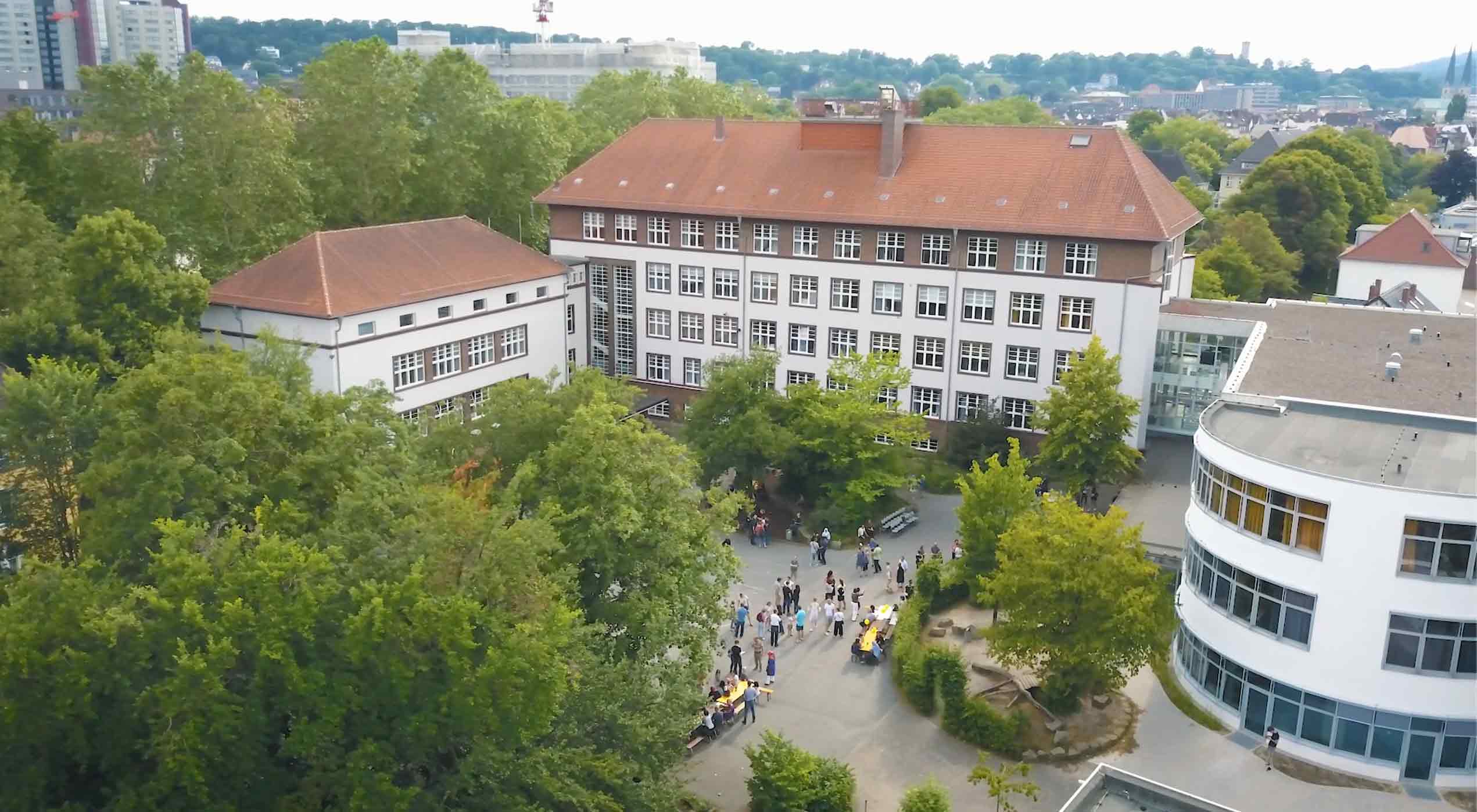
    Bielefeld’s Helmholtz High School, shown here in an aerial photo, was founded in 1896. Under the motto “A modern high school with tradition”, around 100 teachers now teach around 1000 students.

    With your grades, you can choose the subject you want to study. Why did you choose medicine?
    It was an obvious choice for me because my father and mother are doctors, and biology was one of my favourite subjects at school. What I like is the wide range of careers I have with a medical degree: I can practise as a doctor or go into research, maybe even into business. It’s good that I still have a few years to make my decision. 

    Medicine, information, natural sciences, technology: it is often said that interest in STEM subjects is waning among young people. Can you confirm this?
    It’s different in my environment – science subjects were particularly popular at school. Many opted for advanced courses in maths, physics and computer science. The decisive factor is personal preference: People who enjoy computer games are often also interested in computer science. 

    How would you describe your generation’s attitude to life?
    My generation is very free, it has many options and wants to have fun in life. My friends and I are aware of the problems in the world, we have the climate crisis and the wars on our radar, but that doesn’t paralyse us. Some of us are involved in politics to have more influence on the future course. But most of us have enough to do with ourselves and our future plans after leaving school. 

    You are young, the GDNÄ is a good 200 years old. Can that go together?
    They go together very well. When I look at the GDNÄ website, I see great scientists such as Alexander von Humboldt, Albert Einstein and Max Planck on the homepage. I see this as an incentive for me and my generation. Perhaps we too can change the world with new, revolutionary ideas.

    Günther Hasinger © Paul Glaser

    © Privat

    Paul Scholand, GDNÄ student scholarship holder, will attend the meeting in Potsdam 2024.

    About the person

    Paul Scholand was born in Bielefeld in 2006. He initially attended a bilingual primary school there (English and German). He later went to the Helmholtz-Gymnasium, where he enthusiastically completed a basic biology course with Paul Mühlenhoff, the head of the GDNÄ student programme. In the upper school level, Paul Scholand took advanced courses in history and maths; other exam subjects in the Abitur were Latin and biology. In August 2024, he will begin a voluntary social year at the Bielefeld golf club and will support the staff with youth training, in the office and with course maintenance until July 2025. The 19-year-old then wants to start his medical studies – preferably in a medium-sized German city such as Münster, Tübingen or Freiburg.

    Further information

    Günther Hasinger “You only get a chance like this once in a lifetime”

    “You only get a chance like this once in a lifetime”

    Günther Hasinger, founding director of the German Centre for Astrophysics, on his Herculean task in Lusatia in Saxony, dealing with sceptical citizens and the musical side of the GDNÄ.

    Professor Hasinger, a year ago you were appointed founding director of the German Centre for Astrophysics (DZA) in Lusatia, Saxony. How can we imagine your day-to-day work?
    We can’t talk about everyday life in the usual sense yet, we haven’t been around long enough for that. The political decision for our centre was only made in autumn 2022. That was our big bang, so to speak: there was nothing before that, now everything is being created step by step. 

    What are the next stages?
    We will be organising three major international conferences here as early as 2025. The official founding of the DZA is planned for early 2026 – we are currently still in the set-up phase. In the winter semester of 2026/2027, the new Master’s degree programme in Astrophysics will start with five professorships at the Technische Universität Dresden. We hope to be able to move into our new central buildings on the outskirts of Görlitz around 2030. In around ten years’ time, around a thousand people will be working at the DZA. 

    That’s an ambitious schedule. Where are you currently?
    We are pretty well on schedule. In the first year, we took on a good 20 people, mainly in the administrative area, and this year we plan to take on just as many more. We are currently setting up temporary accommodation for five years in the historic post office in Görlitz. Planning for the future centre is in full swing. Now it’s all about creating sustainable structures for a globally unique large-scale research centre. 

    Who is supporting you in this Herculean task?
    A large team of great colleagues from ten renowned research institutions throughout Germany, including the German Electron Synchrotron DESY in Zeuthen and the TU Dresden. We submitted the application to establish the DZA together and are now sharing the work. A lot of support also comes from business and politics, directly on site in Görlitz, and of course at federal and state level.

    Eröffnung der Büros Postplatz 1 © Paul Glaser

    © Paul Glaser

    Handing over the keys with prominent visitors (from left): Saxony’s Science Minister Sebastian Gemkow, TU Dresden Rector Ursula Staudinger, Minister President Michael Kretschmer, Federal Research Minister Bettina Stark-Watzinger, DZA Director Günther Hasinger and Görlitz Mayor Octavian Ursu met in February 2024 to inaugurate the DZA’s transitional offices in the centre of Görlitz.

    The DZA is made possible by funding from the structural change fund for lignite mining regions. How high is the budget?
    A total of 1.2 billion euros is available from the state until 2038. The money comes 90 per cent from the federal government and ten per cent from the state of Saxony and will flow in annual instalments. We also want to attract third-party funding from national and international sources. Our budget is generous, but that alone is not enough. 

    What more do you need?
    We also need to think about housing, schools and daycare centres for our employees, the quality of life on site, roads and railway lines. We are currently holding many discussions on such topics. A new ICE railway line from Berlin to Wroclaw via Dresden and Görlitz would be fantastic. The region is currently left behind in terms of transport, but fast train connections would open up completely new opportunities also for scientific contacts, such as those we are currently establishing in Poland and the Czech Republic, specifically with universities in Wroclaw and Prague.

    Veranstaltung im Rahmen der SPIN2023 Kampagne in Crostwitz © Paul Glaser

    © Paul Glaser

    At a discussion event on the prospects for Saxony as a centre of science in January 2024 in Crostwitz


    Keyword science: What is the focus of the DZA?
    There are three main areas. Firstly, basic astrophysical research to help us understand the development of the universe. This involves receiving and analysing signals from the early days of the cosmos. This is possible with modern telescopes that are spread all over the world, in the Chilean highlands as well as in the Antarctic ice. New, huge radio observatories are currently being built in Australia and Africa. Europe is planning another gigantic research instrument in the form of the Einstein Telescope. In future, the measurement results from all of these facilities will converge in Saxony, where the world’s largest civilian data set will be created, much larger than today’s internet. This treasure is to be analysed in a cost-effective and energy-saving manner, and this is where our second focus comes into play: the DZA will develop new technologies and algorithms for resource-saving digitalisation that will benefit society as a whole. Focus number three is a technology centre in which we develop innovative solutions for observatories – I am thinking, for example, of new semiconductor sensors, silicon optics or control technologies. Modern companies with around two thousand high-quality jobs are to be created through spin-offs and other effects. 

    That sounds fascinating. But how does all this fit in with Görlitz, the easternmost city in Germany with only 57,000 inhabitants, right on the Polish border?
    If you look at Europe as a whole, beautiful Görlitz lies at the centre. There is a great deal of scientific and technical expertise in the area: with the Zittau-Görlitz University of Applied Sciences, the renowned Dresden University of Technology and a long company tradition in precision mechanics and microelectronics. The particularly good granite in Lusatia is of great importance to us. Near Görlitz, in the district of Bautzen, we are planning a globally unique laboratory for the development of astrophysical and commercial technology. It will be located two hundred metres underground and will be about the size of an underground station. It owes its name Low Seismic Lab to the Lusatian granite rock. This dampens the seismic waves that constantly pass through the ground, meaning that a special geological calm prevails here, with almost no seismic disturbance factors. This is an invaluable advantage for sensitive measurements, such as gravitational waves. The laboratory is also suitable for the development of quantum computers and other high-tech applications. If we are lucky, we will soon be able to participate in the billion-dollar Einstein Telescope, the most sensitive gravitational wave observatory of all time. 

    What do local people say about the DZA and its big plans?
    We are now getting a lot of encouragement. But there was also headwind at the very beginning. A citizens’ initiative in Lusatia feared that the construction work would lower the groundwater level and create a repository for radioactive waste. We then organised a barbecue for everyone in the summer of 2022, i.e. before our project was awarded the contract, to get people talking. As it turned out, the opposition came from a small but loud minority; everyone else was rather curious and open-minded. When I later picked up the guitar and joined them on a musical journey through life from Oberammergau to Munich, Potsdam, Hawaii, Madrid and Görlitz, the ice was broken. We now organise the barbecue every year. I have promised to sing a song in Sorbian this summer. I still have a lot of practising to do.

    Grill und Infoabend in Cunnewitz © Paul Glaser

    © Paul Glaser

    The guitar solo by the head of the DZA, here in Cunnewitz in August 2023, is a fixed item on the programme of the barbecue and information evenings for the public.


    An astrophysicist who gets up on stage with a guitar and sings–- you don’t see that every day. How come?
    In my youth, I was a member of the Munich rock band “Saffran”, which released a record and even made it onto the cover of Bravo magazine. Later, I wanted to become a sound engineer, but then decided to study physics. I owe the fact that I caught fire for astrophysics to two gifted academic teachers, Joachim Trümper and Rudolf Kippenhahn. Both were Max Planck directors, which is what I wanted to become. That worked out and everything else developed from there. 

    You took on the founding mission for the DZA at an age when others had long since retired. What appealed to you?
    The huge opportunity – you only get something like this once in a lifetime. I’ve managed large institutes with up to a thousand employees before, but taking a centre from zero to one hundred is new and really appeals to me. What we as a specialist community have been calling for in our memoranda for decades is finally coming true: a national centre for astrophysics. 

    You recently turned 70 – is retirement even an option for you?
    First of all, I want to get the DZA up and running and help organise my successor. That will certainly take a few more years. After that, I want to retire, but I don’t want to be idle. My non-fiction book “The Fate of the Universe”, published in 2005, urgently needs a sequel. I want to write it and develop my musical skills – I might like to learn the double bass. 

    You gave a lecture on black holes and the fate of the universe at the GDNÄ’s 200th anniversary celebrations in Leipzig. How do you remember the anniversary?
    As a science festival in an elegant setting and with a rich programme. It was a showcase for research in front of an impressive audience. 

    If we imagine the scientific system as an orchestra: What part does the GDNÄ play?
    I imagine the GDNÄ perhaps as the viola. Its warm, dark sound forms a kind of bridge from the first and second violins to the low string instruments cello and double bass. Some of the greatest composers were violists, for example Bach, Beethoven and Mozart.

    Günther Hasinger © Paul Glaser

    © Paul Glaser

    Prof. Dr Günther Hasinger, founding director of the German Centre for Astrophysics.

    About the person

    Günther Hasinger was born on 28 April 1954 in Oberammergau. He studied physics at the Ludwig Maximilian University of Munich, where he also conducted research for his doctorate (1984) and his habilitation (1995). From 1994 to 2001, he was director at the Astrophysical Institute in Potsdam and professor at the university there. In 2001, he was appointed Director at the Max Planck Institute (MPI) for Extraterrestrial Physics in Garching; in 2008, he became Scientific Director of the MPI for Plasma Physics.  In 2011, he became Director of the Institute for Astronomy at the University of Hawaii at Manoa and moved to Madrid in 2018 to work there as Science Director of the European Space Agency (ESA) until the beginning of 2023. He then returned to Germany. Since April 2023, he has been the designated founding director of the German Centre for Astrophysics, a professor of excellence at TU Dresden and a senior scientist at DESY.

    Hasinger’s research focuses on the evolution of distant active galaxies and the role of black holes in their formation. He is recognised as one of the leading scientists in the field of X-ray astronomy.

    Günther Hasinger has received several prizes, including the DFG Leibniz Prize in 2005. He is a member of the Leopoldina and other scientific academies. His non-fiction book “The Fate of the Universe” was voted Science Book of the Year in 2008.

    DZA Außenraumperspektive © Paul Glaser

    © Paul Glaser

    Architectural vision: This is what the Görlitz campus should look like in a few years’ time.

    Further information

    Thomas Mettenleiter: “Nothing could scare me after that”

    “Nothing could scare me after that”

    BSE, bird flu, coronavirus: how the renowned virologist Thomas Mettenleiter has contributed to overcoming major epidemics, what has kept him on the Baltic Sea island of Riems for 27 years and what his audience can expect at the GDNÄ Assembly 2024.

    Professor Mettenleiter, as President of the Friedrich Loeffler Institute, Federal Research Institute for Animal Health, for many years, you had to deal with world-shattering epidemics, just think of the BSE crisis, bird flu and the coronavirus pandemic. Which was the biggest challenge?
    For me personally, it was definitely the BSE crisis. After that, nothing could scare me. I was still relatively new in office when the first cattle born and raised in Germany tested positive at the end of November 2000. The excitement was huge. At the time, we knew very little about the prions that caused the disease, but we were expected to provide competent information as soon as possible. Some time earlier, an informal expert commission had been set up under my chairmanship. In April 2000, we recommended that the Federal Government should prepare for the first case of indigenous BSE. Unfortunately, this did not happen. 

    Nevertheless, the BSE crisis was ended quickly. How did this succeed?
    The decisive factors were the ban imposed at EU level on the feeding of animal meal, for example, the removal of risk material from the food chain and the extensive testing of slaughtered cattle depending on their age. The number of cases then fell rapidly. As far as we know, only two animals born in March and May 2001 were still infected in Germany. It was an extremely turbulent time, during which two federal ministers, Andrea Fischer and Karl-Heinz Funke, resigned. During these years, I learnt how important communication between science, politics and the media is. Fortunately, the measures proposed by the scientific community were quickly implemented and proved successful. In this respect, the BSE crisis is a successful example of science-based disease control

    Instituts für Fertigungstechnologie an der Universität Erlangen-Nürnberg. © FAU

    © Friedrich-Loeffler-Institut

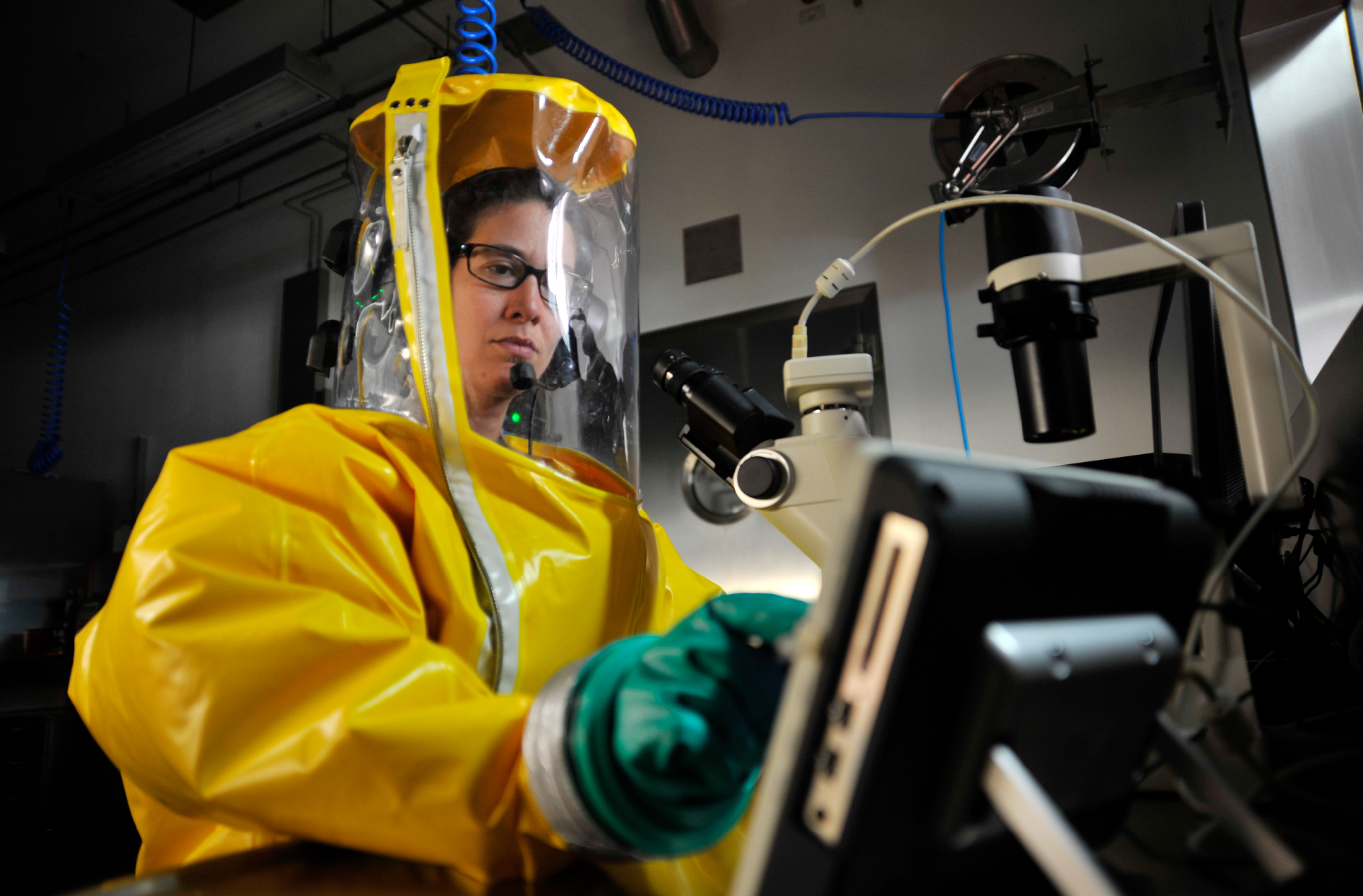
    A scientist works in a full protective suit in the laboratory of the highest biosafety level 4 zoonoses. This is where research is conducted into pathogens such as Ebola and Nipah viruses. The suit is connected to the air supply via a valve, which constantly supplies air. This also inflates the suit so that even if there was a small hole, nothing would get inside via the escaping air flow. The scientist checks cell cultures on a screen.

    How much was your expertise in demand during the coronavirus pandemic?
    During the three COVID-19 years, other institutes were at the centre of political and media attention. However, we at the FLI were asked essential questions right at the beginning of the pandemic: Are farm animals in Germany susceptible to SARS-CoV-2? Does this jeopardise our food supply and do they represent a potential reservoir? Thanks to our modern research infrastructure on the island of Riems with high-security isolation stables, we were able to immediately test whether cattle, pigs and chickens, for example, are susceptible to the pathogen. We also investigated the interaction of the pathogen with other animals such as mice, golden hamsters, fruit bats, ferrets and raccoon dogs in order to find and characterise possible reservoirs or models for human infection.

    What did you find out?
    Cattle, pigs and chickens were not or only very slightly infectious and did not pass on the pathogen. In this respect, there was neither a risk in terms of food supply nor with regard to the creation of a new reservoir. Fruit bats, ferrets and raccoon dogs, on the other hand, proved to be susceptible to the pathogen, but did not fall ill and were still able to pass on the pathogen efficiently. This fits in with what we know about reservoir animals and bridge hosts. Hamsters and special genetically modified mice became severely ill. Ferrets, in particular, reproduced the largely mild human infection affecting only the upper respiratory tract, while golden hamsters and these mice showed the clinical picture of severe COVID-19.

    There is currently much discussion about the need to come to terms with the coronavirus crisis. What do you think?
    We should definitely analyse what happened objectively in order to learn from it for the future. Many decisions had to be made quickly and under uncertain conditions, especially during the hot phase – this should always be taken into account. A uniform policy for the whole country is important for the future; we should avoid a federal patchwork quilt in situations like this. However, the coronavirus years have also shown how immensely important basic research and modern research infrastructures are. We have them to thank for the highly effective mRNA vaccines, which had been researched for a long time, as well as numerous findings that helped us to survive the crisis. In order for this to continue in the future, sufficient funding is needed – not only for the establishment, but also for the maintenance of research facilities, personnel and training.

    It is often said that the next pandemic is sure to come. What are the new threats?
    We are currently in an inter-pandemic phase, that much is clear. But no one can say exactly where the dangers are coming from. What we do know is that three quarters of new human infections come from the animal kingdom and that pathogens such as the coronavirus continue to jump back and forth between animals and humans. We must never lose sight of influenza viruses: they are highly variable and adapt quickly to new circumstances. Fortunately, there is a global monitoring system for influenza viruses under the aegis of the World Health Organisation (WHO). We also need something similar to monitor animal populations in order to detect pandemic risks quickly. An international agreement on pandemic prevention, preparedness and response could help here. This is currently being negotiated under the leadership of the WHO and I am still cautiously optimistic that the member states will be able to agree on this. This would also be very much in line with the One Health concept, which is becoming increasingly popular and which sees humans as part of the animal kingdom in a shared environment.

    The type of animal husbandry, which is also the focus of the Friedrich Loeffler Institute, plays an important role here. What trends do you see in this area?
    The view is changing and animal welfare is becoming more important. In livestock farming, quality is becoming more important than quantity. To what extent and over what period of time this happens is also a question of funding and ultimately a political decision. This also applies to another issue: the silent pandemic of antibiotic resistance. It is favoured by the excessive use of antibiotics in all areas. In Germany, their use to promote growth in animal husbandry is banned, but this practice is still common in many countries. However, it is not just about animals; the use of antibiotics in humans must also be more targeted and more restrained.

    Institut für Quantenoptik und Quanteninformation (IQOQI). © IQOQI/M.R.Knabl

    © Friedrich-Loeffler-Institut

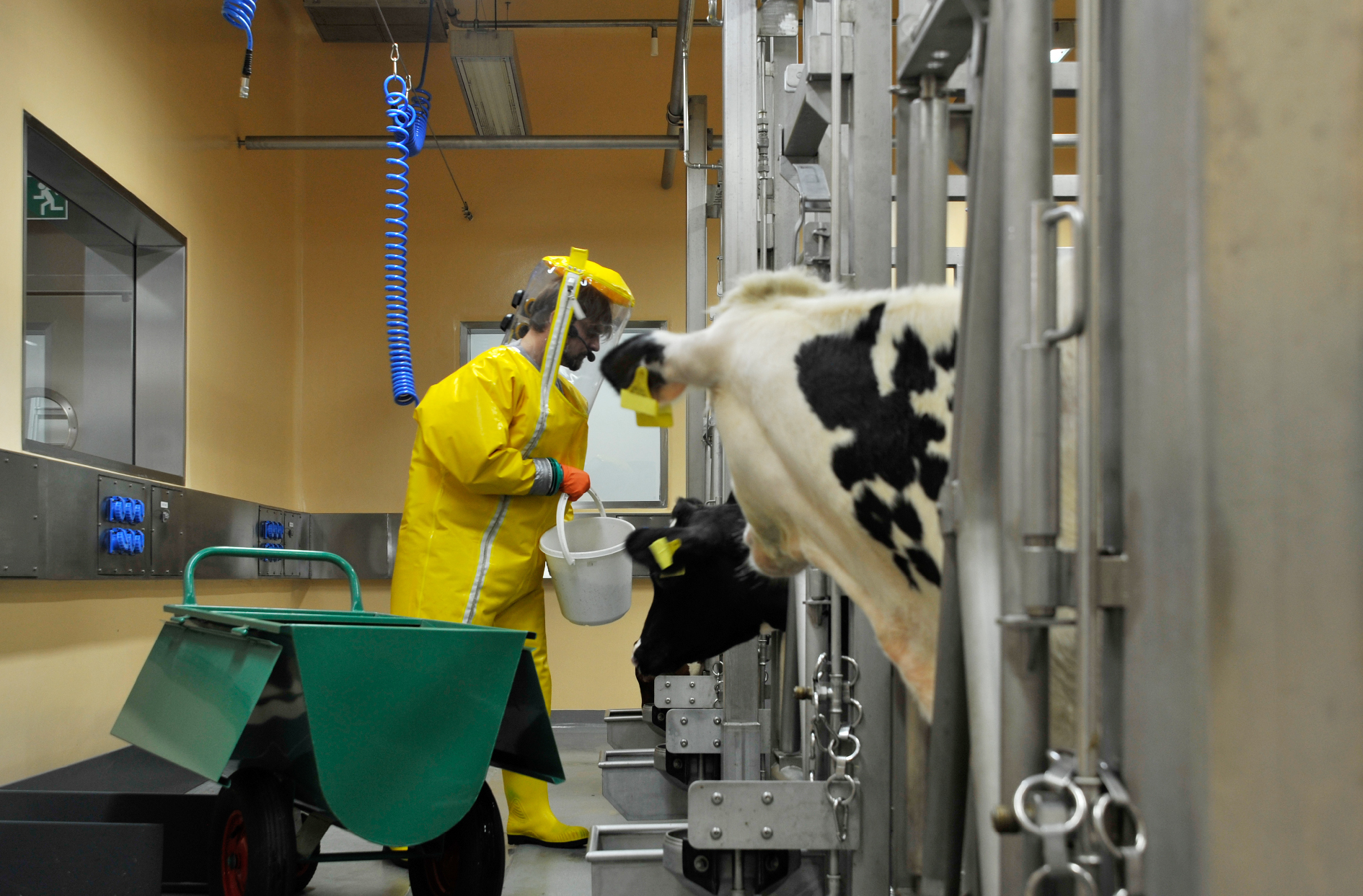
    The Friedrich Loeffler Institute (FLI) has two animal barn units with biosafety level 4 zoonoses, where full protective suits are also mandatory. In Europe, only the FLI currently has such animal houses; there are a handful worldwide, for example in Canada and Australia.


    You went to East Germany as a West German professor during the reunification period – and stayed there. What experiences did you have?
    Initially, I was met with an interested distance, but also with curiosity and high expectations. The distance had to do with the fact that, unlike the institute directors before me, I am not a veterinarian, but a biologist. In addition, I was still quite young when I came to the island of Riems with my Tübingen working group in 1994. In the wake of reunification, the institutes had shrunk from 850 to 162 employees. The infrastructure was dilapidated. In my perhaps somewhat youthful recklessness, this did not deter me, but rather challenged me. What helped me a lot were the many motivated colleagues at all levels of the institute, who had a lot of expertise and experience. It has been a long journey, but today the Institute plays in the Champions League of the field, both academically and in terms of infrastructure. Its development is certainly one of the East German success stories, as described by my Greifswald colleagues Michael Hecker and Bärbel Friedrich in their book and in the interview on this website. For me, the Institute is a life’s work and I am happy to have been given the privilege of continuing the tradition of the co-discoverer of the virus, Friedrich Loeffler.

    Your major research topic, animal viruses, has occupied you for a long time. How did you come across the topic?
    The trigger was Hoimar v. Ditfurth’s history of evolution “In the beginning was hydrogen”. My parents gave me the book as a present in 1972 and I read it with great enthusiasm. I was particularly fascinated by an illustration depicting bacteriophages, i.e. viruses that infect bacteria. That was the seed for my career – and I am still an enthusiastic virologist.

    That doesn’t sound like retirement, which you have officially been in for almost a year.
    That’s right, I’m still very busy, even if I no longer spend up to 14 hours a week at the institute. But all in all, I have almost a full-time job again and sometimes I wonder how I used to do it on the side, so to speak. A new experience for me is giving talks to students about virology and One Health, for example last year in Göttingen and in the next few weeks in Greifswald and in Sigmaringen in Upper Swabia, my old home. I chair a working group on One Health at the Hamburg Academy of Sciences and Humanities and I chair the veterinary medicine section of the German National Academy of Sciences Leopoldina. As a scientific advisor, I support several UN organisations and the World Organisation for Animal Health in the One Health High-Level Expert Panel. I also continue to teach at universities and give lectures on my core topics.

    At the GDNÄ Assembly 2024 in Potsdam, you will be giving a lecture on climate change and infectious diseases. Can you give us a few details?
    I will be presenting the One Health concept in more detail, including its history, because it is by no means brand new. It will also be about pathogens, especially viruses, which are spreading as a result of climate change. We will be talking about so-called vectors, i.e. carriers of infections such as mosquitoes and ticks, which are influenced by climatic changes. The whole development has an uncanny dynamic and I try to visualise this.

    Marion Merklein © FAU

    © Friedrich-Loeffler-Institut

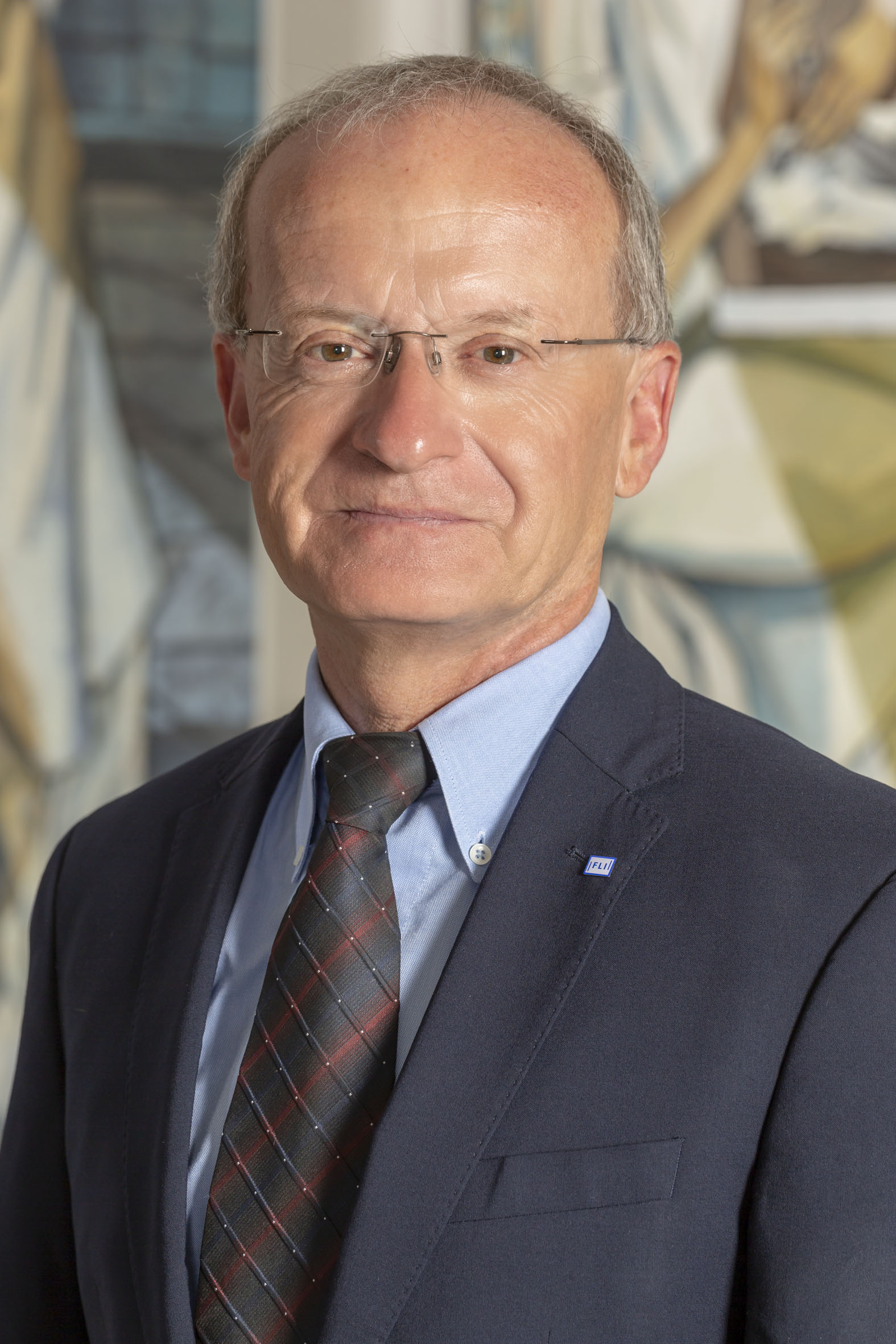
    Prof. Dr Dr h.c. mult. Thomas Mettenleiter was President of the Friedrich Loeffler Institute for Animal Health until 2023.

    About the person

    Thomas Christoph Mettenleiter is a virologist and molecular biologist. He studied biology in Tübingen from 1977 to 1982 and wrote his doctoral thesis on herpes viruses in pigs. After a research stay in Nashville, USA, he habilitated in virology at the University of Tübingen. After reunification, he went to the Friedrich Loeffler Institute, Federal Research Institute for Animal Health (FLI) on the island of Riems. There he headed the Institute of Molecular Virology and Cell Biology from 1994 to 2019. In 1996, he took over the management of the entire FLI. In 1997, he was appointed adjunct professor at the University of Greifswald and in 2019 honorary professor at the University of Rostock. After 27 years as President, he retired in June 2023.

    Mettenleiter’s field of research is viral infections in livestock. His work contributed significantly to the first development of genetically modified live vaccines and to the effective control and eradication of a highly contagious viral disease, Aujeszky’s disease, in pigs.

    Thomas C. Mettenleiter has been honoured many times for his achievements. He is a member of the German National Academy of Sciences Leopoldina, the Academy of Sciences in Hamburg, the Polish Academy of Sciences and the Royal Belgian Academy of Medicine. For his work in the field of animal disease research, he was awarded the Gold Medal of the World Organisation for Animal Health WOAH in May 2023 and the Order of Merit of the Federal Republic of Germany in January 2024.

    Marion Merklein © FAU

    © Friedrich-Loeffler-Institut

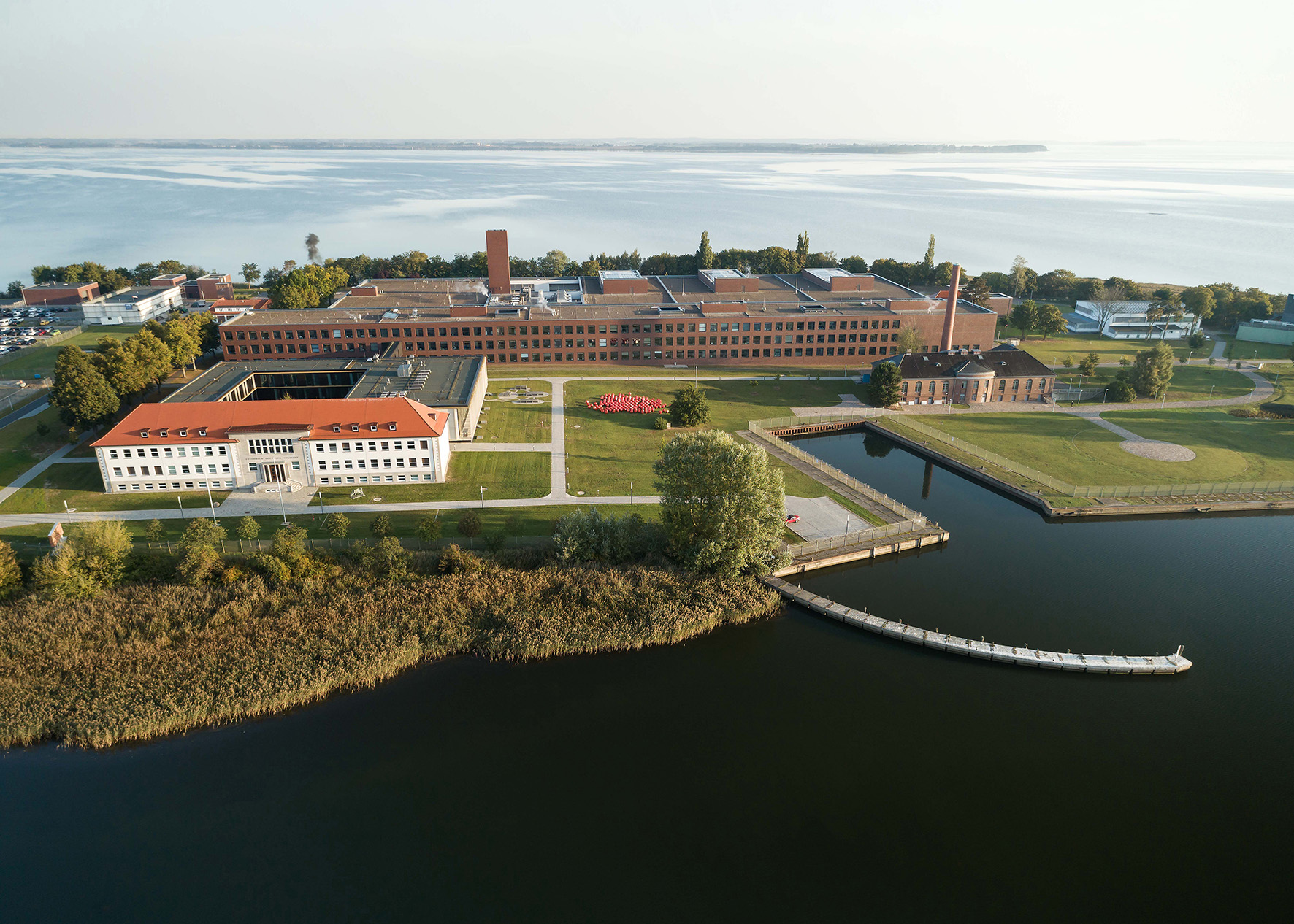
    The site of the Friedrich Loeffler Institute on the Baltic Sea island of Riems. In addition to the institute, there is also a small residential area on the island.

    About the FLI

    The Friedrich Loeffler Institute, Federal Research Institute for Animal Health (FLI), is an independent higher federal authority within the portfolio of the Federal Ministry of Food and Agriculture. In addition to the headquarters on the island of Riems in the Greifswald Bodden, there are four other locations in Braunschweig, Celle, Jena and Mariensee/Mecklenhorst. A total of twelve specialised institutes with around 800 employees are dedicated to both basic and practice-oriented topics.

    Their work centres on the health and welfare of farm animals and the protection of humans from zoonoses, i.e. infections that can be transmitted between animals and humans. To this end, the FLI develops methods for better and faster diagnosis as well as the basis for modern prevention and control strategies. To improve the welfare of farm animals and in the interest of high-quality food of animal origin, animal welfare-orientated husbandry systems are designed and tested at the FLI. Important goals are the preservation of genetic diversity in farm animals and the efficient utilisation of feedstuffs.

    Further information

    Michael Hecker and Bärbel Friedrich: “It’s a German-German success story”

    “It’s a German-German success story”

    He researched for a long time in the GDR, she in the FRG: In their recently published book, microbiologists Michael Hecker and Bärbel Friedrich refute the theory of the colonisation of science in East Germany by the West.

    It was 35 years ago, but many people still remember 9 November 1989. How did you, Professor Friedrich and Professor Hecker, experience the event?
    Friedrich: I was in Berlin and watched the news on television. The next day, I took part in a rally with my working group in front of Schöneberg Town Hall. It was said that what belongs together is now growing together – the atmosphere was moving. We had the feeling that we were right at the centre of history.
    Hecker: I came from Bayreuth, sat on the train to Greifswald and knew nothing about it. It wasn’t until I got home that my wife told me what had happened in Berlin. 

    You were in West Germany on the day the Wall came down. How did that happen?
    Hecker: It really was a strange coincidence. In almost twenty years as a researcher in the GDR, I was only allowed to travel to the West twice to give lectures and meet colleagues. I wasn’t in the party and I wasn’t a travelling cadre. The first time was in Hamburg in the summer of 1989. The second time, colleagues invited me to the University of Bayreuth at the beginning of November. I would never have expected that the Wall would fall just then. 

    How do you remember the days after 9 November?
    Hecker: There was a great deal of excitement and a spirit of optimism in my institute, the situation was heated. Nobody knew what was coming.
    Friedrich: I’ll never forget the Trabi parade on the Kudamm and a cycle tour across the Glienicke Bridge to Potsdam. We thought the Cold War was over and the mood was euphoric.

    Instituts für Fertigungstechnologie an der Universität Erlangen-Nürnberg. © FAU

    @ Peter Binder

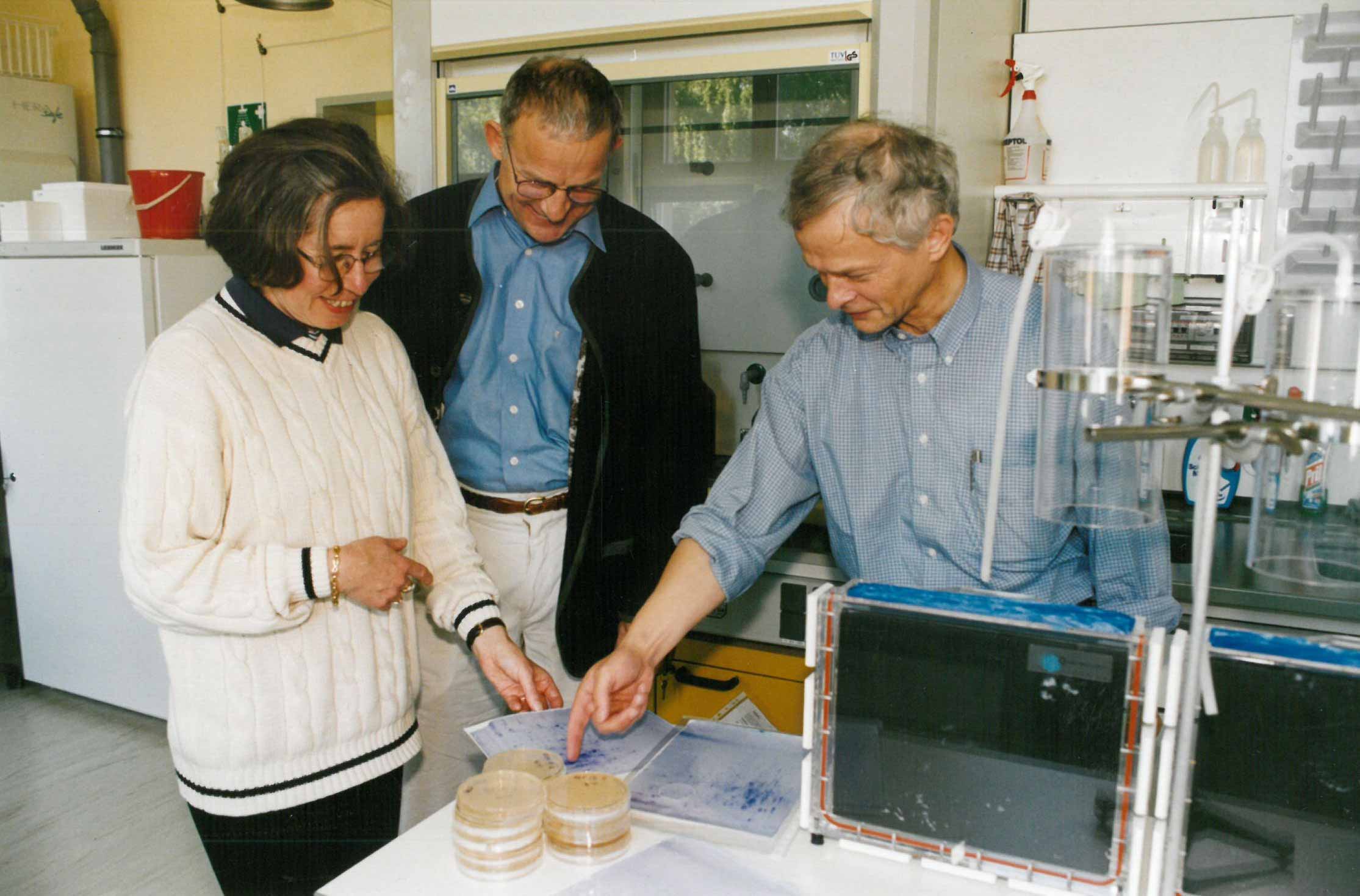
    Visiting Greifswald: In the early 1990s, Bärbel Friedrich and her husband Cornelius Friedrich visited the laboratory of Michael Hecker (right). In conversation, the Greifswald microbiologist explained, among other things, an early method for separating proteins.

    What happened in science?
    Friedrich: We immediately invited our East German colleagues to visit institutes and to the annual conference of the Association for General and Applied Microbiology, VAAM. It happened to take place in Berlin in March 1990.
    Hecker: As the last president of the GDR Society for Microbiology, I was allowed to give a welcoming address at the VAAM conference in question, during which – I was extremely emotionally tense – I lost my voice several times. Just one year later, the two societies merged at the follow-up conference in Freiburg. 

    Much has already been said and written about the turnaround in science. What is special about your new book?
    Hecker: We are focussing on research at universities, especially developments in the life sciences.  Our book describes how the life sciences in East Germany, which had been completely left behind, were brought up to international standards surprisingly quickly. A lot of negative things have been written about the general development since reunification. We present a positive example, a German-German success story. This also deserves to be heard.
    Friedrich: For us, science is a prime example of successful integration between East and West. That is one of the most important statements in our book. The discussion about science at East German universities is currently out of kilter. Our aim is to bring it into balance. 

    Before we come back to this topic, let’s outline the three phases that you describe in detail in your book: the years from 1965 to reunification, the 1990s as a transformation phase and the period of consolidation from 2000 to the present. What was the state of microbiology in the GDR before 1989, Mr Hecker?
    Hecker: We sat behind the Wall and looked enviously to the West, where the great discoveries in biology were being made. We lacked the equipment, the expertise, the whole environment. But we had excellent young people with whom we conducted passionate research despite the poor conditions. There were many interesting, atmospheric conferences that I remember fondly. For example, on the island of Hiddensee. There, in the summer of 1985, we buried the genetic engineering of the GDR in an urn on the beach in the name of the father, the clone and the holy splicer because of the lack of chemicals.
    Friedrich: I am a child of the sixties and lived through the student riots. Back then, Göttingen was the Mecca of German microbiology and a springboard to America. At MIT I learnt the latest methods in molecular biology and experienced an open, yet competitive environment. When I returned to Germany at the end of 1976, I had to fight: there were hardly any positions for young scientists and only limited research funding. The competition was tough.
    Hecker: We didn’t realise that at the time. They were sitting in paradise and we were on the outside – that’s what we thought.
    Friedrich: In the end, I was lucky and decided to take up a professorship at the Free University of Berlin. I started there in 1985 with the establishment of a new science-orientated microbiology department. The students were very motivated, it was a good, exciting time. 

    The transformation phase began with the fall of the Berlin Wall. How did it come about, Mr Hecker, that you became Dean of the Faculty of Mathematics and Natural Sciences in Greifswald?
    Hecker: I was more or less forced into it. I actually wanted to go out into the world to catch up with modern research. Instead, I had to help reorganise our university according to the FRG model. It was an exhausting four years. The majority of professors were not taken on, some for reasons of age, others because of professional deficits or because the findings of the Honours Commission spoke against it. There were many layoffs, particularly in the humanities and social sciences. When it came to subsequent new appointments, the picture in Greifswald was similar to that at most East German universities: around two thirds of the new appointees were East Germans, including habilitated junior academics. There were significantly fewer in the humanities. If we had had more qualified applicants from East Germany, the proportion would probably have been even higher. Nevertheless, it was urgently necessary for colleagues from the West to come to us with their international experience. On balance, there can be no question of the West colonising the East.

    Institut für Quantenoptik und Quanteninformation (IQOQI). © IQOQI/M.R.Knabl

    @ Design: Sabine Schade

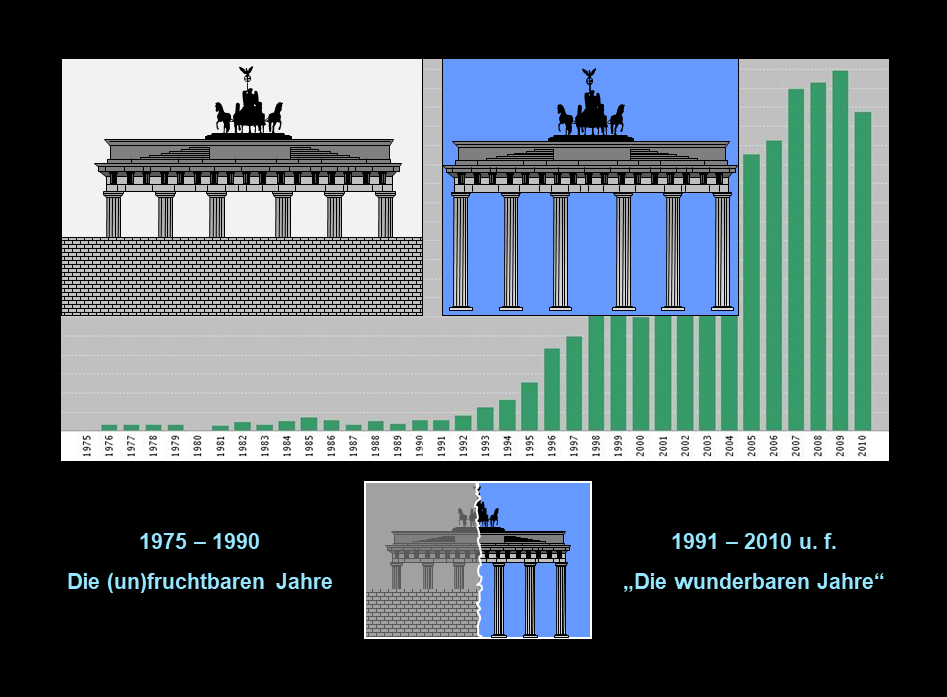
    Growing reputation: After reunification, the research findings of the Hecker working group were increasingly cited in international publications.

    In the bestseller by Leipzig literature professor Dirk Oschmann, “The East: a West German invention”, it sounds quite different.
    Hecker: Mr Oschmann addresses disappointed East Germans with his book, he wants to provoke. But when it comes to the sciences, he doesn’t have an overview. He writes from the perspective of a humanities scholar. The generalised statements do not apply to the life sciences and medicine. He writes, for example, that East Germans can be found among secretaries or technicians, but hardly among professors.  According to the book, he had to deny his East German identity in order to be accepted as a scientist in the West – something like that never happened to me. The claim that the East has been overrun by the West in the field of science is nonsense. On the contrary, the figures from the DFG Funding Atlas show that the amount of funding provided in East Germany is completely in line with the amount spent at West German universities. 

    Mrs Friedrich, you experienced the period of reunification in Berlin, first in the western part of the city, then in the east. How do you remember those years?
    Friedrich: In view of the challenges posed by the unification of the two parts of the city, money was tight and the time pressure was great. There were dramatic cutbacks, and the West Berlin universities also had to cut back. By 2010, around 350 of the 500 professorships at Humboldt University had been filled after being advertised – as many as 220 of the new professors came from the East. 

    It is often said that the academic system in the Federal Republic was transferred one-to-one to the East. Is that true?
    Friedrich: In the beginning it was like that, everything had to happen very quickly. But there was a huge backlog of reforms in the West even before reunification. Reforms finally came in the 1990s, partly as a result of the Bologna Process. Towards the end of the decade, more money flowed into the science system and the DFG was able to develop the forerunners of the Excellence Initiative, the DFG Research Centres, and later the Clusters of Excellence. I was Vice President of the DFG at the time and experienced a great deal of openness towards the universities in Eastern Germany. There was also a great willingness to help East Germany in the Wissenschaftsrat and in federal research committees. Looking back, there were major changes in the German science system as a whole during this phase. 

    Please briefly outline the developments in your fields since 2000, during the consolidation phase.
    Hecker: The young scientists at my institute, who swarmed out into the world immediately after 1990 with funding from the DFG, finally brought the expertise we lacked to Greifswald. With the new knowledge and in good co-operation with microbiologists from all over Europe – including Bärbel Friedrich, Jörg Hacker and many others – we were able to establish a reference laboratory for microbial proteomics.  This enabled the universities in the East, which had been left behind for many years, to work very quickly according to international standards. 
    Friedrich: This collaboration was also extremely fruitful for my research group. We were integrated into large networks for genome research on microorganisms. There were many joint publications. In Greifswald, the Krupp Wissenschaftskolleg actively supported the East-West collaboration. The establishment of the college was initiated by the Essen-based Krupp Foundation in 2000. A special event was the establishment of a doctoral programme together with Israel. 

    The East German universities have caught up considerably in the current competition for excellence. Ten initial applications for clusters of excellence were assessed favourably –- more than ever before. Does it take a generation to keep up in the top league?
    Hecker: That may be the case across the board. But in some places it happened much faster. Dresden has been a scientific beacon since reunification. Jena, with its outstanding non-university institutes, also caught up quickly. Both locations have been doing very well in the competition for excellence for some time now. It should be emphasised that the research projects were initially mostly shaped by newly appointed researchers from the old federal states. In the meantime, however, a new generation has grown up that is unfamiliar with the often overused East-West debate. Many of them have been able to make a name for themselves professionally in renowned laboratories around the world after completing their doctorates. They receive highly attractive job offers and their CVs are similar to those in the West. As a result, the issue of East-West is becoming increasingly blurred with the younger generation.  

    This year sees state elections in Saxony, Thuringia and Brandenburg. The AfD is likely to do well in all three states. What consequences would that have for science?
    Friedrich: It could be catastrophic. A strong influence of the AfD would severely restrict the freedom and internationality of science – and these are the very foundations of successful research. The AfD denies climate change and the coronavirus facts. This is not compatible with a modern, evidence-based scientific world view.
    Hecker: I take a similar view. Banning the party would not achieve much. We have to counter the AfD with arguments and convince people of the necessity and benefits of free science.

    Marion Merklein © FAU

    @ Peter Binder

    Prof. Dr. Michael Hecker
    Marion Merklein © FAU

    @ Vincent Leifer

    Prof. Dr. Bärbel Friedrich

    ABOUT THE PERSONS

    Bärbel Friedrich was born in Göttingen in 1945. After completing her doctorate in microbiology at the university there, she went to the Massachusetts Institute of Technology (MIT) for two years as a postdoctoral researcher and then habilitated in Göttingen. In 1985, she became Professor of Microbiology at the Free University of Berlin; in 1994, she moved to the Humboldt University, where she became Professor Emeritus in 2013. Her research focused on physiological and molecular biological studies of bacteria that grow with hydrogen as an energy source and use carbon dioxide to synthesise cell substance, which is documented in more than 200 original papers. From 2008 to 2018, Bärbel Friedrich was Director of the Alfried Krupp Wissenschaftskolleg, which supports the University of Greifwald and the science region as a whole. She was also Vice President of the Leopoldina (2005 to 2015), Vice President of the German Research Foundation (1997 to 2003) and a member of the Wissenschaftsrat (German Science Council, 1997 to 2003). She has received numerous honours, including the Arthur Burkhardt Prize (2013), the Federal Cross of Merit (2013), the Leopoldina Medal of Merit (2016), membership of the Bavarian Maximilian Order for Science and Art (2021) and an honorary doctorate from the University of Greifswald (2022). Bärbel Friedrich was a member of the GDNÄ board from 2001 to 2004. 

    Michael Hecker was born in Annaberg in the Ore Mountains in 1946. He studied biology at the University of Greifswald, where he gained his doctorate in 1973 with a thesis on the biochemistry of plants. In the years that followed, he devoted himself primarily to researching the proteome, the totality of all proteins in a living organism, tissue or cell. Michael Hecker was Professor of Microbiology from 1986 to 2014 and Director of the Institute of Microbiology there from 1990 to 2013. As Dean, he made a significant contribution to the reorganisation of the Faculty of Mathematics and Natural Sciences from 1990 to 1994. From 1997 to 2001, he was President and Past President of the Association for General and Applied Microbiology, the largest association of microbiologically orientated scientists in the German-speaking world. Michael Hecker has received several science awards and an honorary doctorate from the University of Göttingen in 2023. He is an elected member of several national and international academies, including the American Academy of Microbiology, the European Academy of Microbiology, the German National Academy of Sciences Leopoldina and the Berlin-Brandenburg Academy of Sciences and Humanities.

    Marion Merklein © FAU

    @ mdv

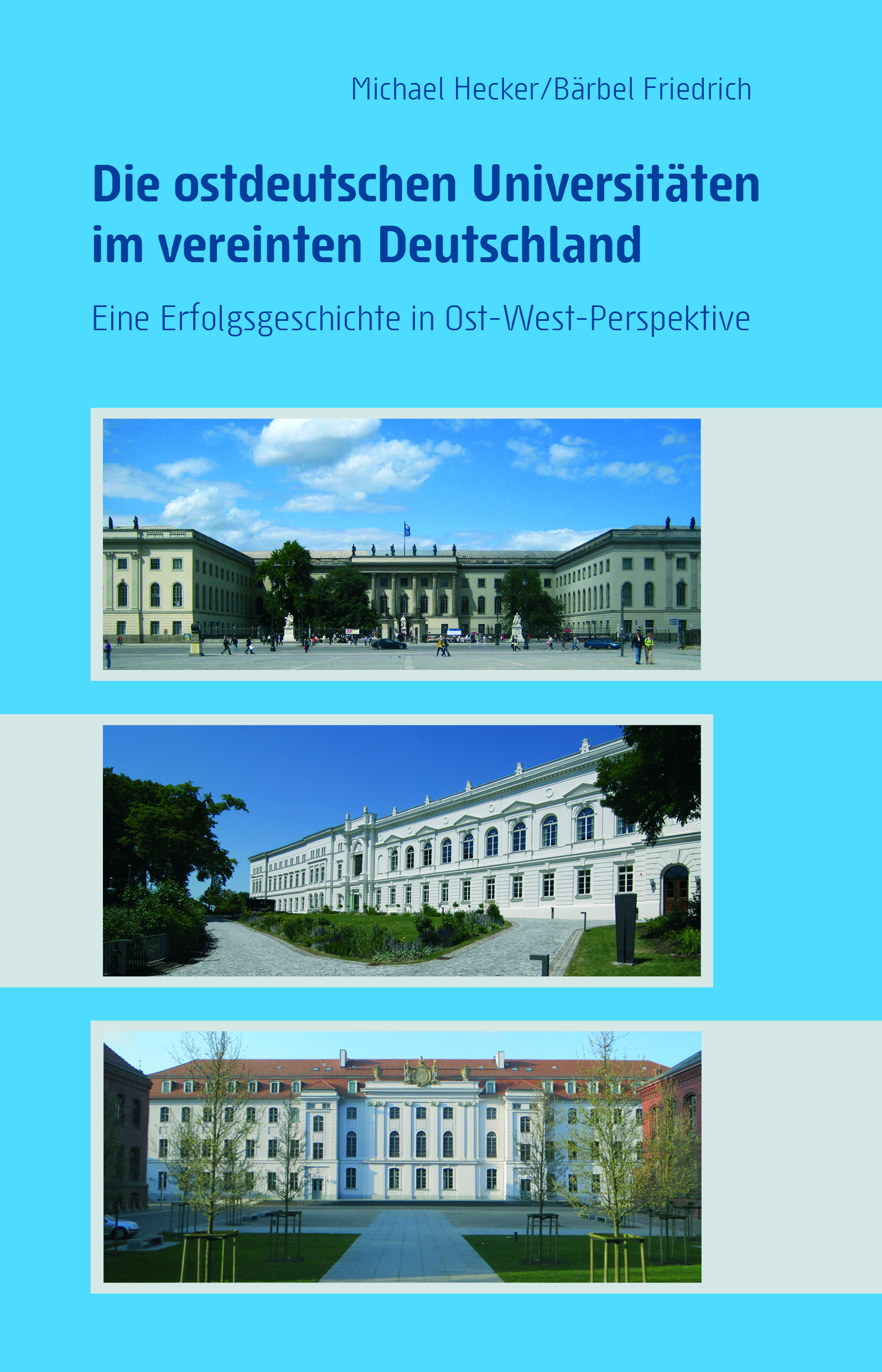
    Title page of the new book “Die ostdeutschen Universitäten im vereinten Deutschland”. Ernst-Ludwig Winnacker, President of the DFG from 1998 to 2006, wrote the foreword and afterword.

    Further information

    Book

    Michael Hecker, Bärbel Friedrich: The East German universities in a united Germany. A success story from an East-West perspective (with foreword and epilogue by Ernst-Ludwig Winnacker), 345 pages, Mitteldeutscher Verlag, Halle (Saale) 2023