x xc

Martin Lohse: “On placebos or therapy with nothing”

On placebos or therapy with nothing

Martin Lohse, professor of pharmacology and vice president of the GDNÄ, on the amazing effects of so-called sham drugs and how they can enrich medicine.

Professor Lohse, at the GDNÄ meeting in Potsdam, you recently gave a lecture on placebos or therapy with nothing. But your profession as a pharmacologist is more about therapy with something. How does that fit together?
At first glance, one might see a contradiction here. But placebo effects also accompany every drug therapy and other medical measures, and that is why they are part of it.

The audience was enthusiastic about your lecture, applauded extensively and had many questions. Why is there so much interest in placebos?
I think that many people are affected by it because they have experienced it themselves or seen it in others and have thought about it. The topic also brings together most diverse schools of thought – from scientific drug therapy to shamanism.

How did you come across the topic?
I have been covering it in my introductory pharmacology lectures for more than twenty years because I think that doctors and pharmacists should know about it. They all work, consciously or unconsciously, with placebo effects. These also include harmful effects, so-called nocebo effects. Over the years, I then delved deeper into the subject because I wanted to know what was actually proven in this field and what was just speculation. Just recently, I have come across many new results and some amazing things.

What has amazed you the most?
That the same brain centers are activated in the mind of the doctor as in the mind of the patient when it comes to placebo effects. This has been studied primarily in the treatment of pain. It seems that the doctor must first empathize with the patient's pain. Then, with this idea, he can activate his own pain-suppressing systems, and that in turn is transferred to the patient. This ability of the doctor correlates closely with his ability to empathize, as can be measured in psychological tests. In my lecture, I went into more detail about the corresponding research results.

Schema der Wechselwirkung zwischen Patienten und Ärzten bei der Schmerzunterdrückung

Placebo effects in pain suppression result from the interaction between patients and doctors. Pain activates so-called pain centers in the brain (yellow star), as shown by functional magnetic resonance imaging. When empathic doctors come together with such patients, they in turn activate the same centers in the brain. However, they can also activate their own pain-suppressing centers in their brain (blue symbol). This is transferred to patients and leads to the activation of pain-suppressing nerves in them, which release endogenous opioids and other transmitters in the body and thus produce the pain-suppressing placebo effect. This effect occurs regardless of whether the drug administered to the patient contains an analgesic active ingredient or whether it is a pure placebo.

What does this mean for medical practice?
Doctors who are able to put themselves in their patients' shoes can achieve a great deal with empathy in the reciprocal relationship. It would be good if we could use such placebo effects more systematically and on a reasoned basis, not just intuitively and based on personal experience. That's why we should increase knowledge in this field and incorporate it more into the training of doctors and pharmacists. 

Can empathy, which obviously plays a major role, be taught and learned at all?
Some things are a matter of talent, but others can be learned. Since empathy is a core skill for therapists, it should be incorporated into the entire training program. The current courses in medical psychology for prospective doctors are a start. 

How far has placebo research come?
Compared to many other areas of medicine, it is still in its infancy. We have only been able to speak of serious, scientifically based placebo research for about three decades. It is an area where medicine, psychology and the new imaging techniques come together. Functional magnetic resonance imaging, in particular, gives us an idea of what is happening in the minds of patients and therapists. So, placebo research is making progress and Germany is playing an important role in it. Four years ago, for example, a national special research area was set up that has already led to a number of interesting results.

Eröffnung der Büros Postplatz 1 © Paul Glaser

© MIKA-fotografie | Berlin

Great interest from the audience: After the lecture, there were many questions and comments on the placebo effect.  

So far, placebos have mainly been used in drug studies to find out whether drugs work compared to them. Do we also learn something from this about how placebos work?
Not really, because in such studies, the placebo arm only serves as a background against which the effect of a drug is to be shown. But treatment with placebos is not neutral. This is shown by studies with open placebos, in which patients know that they are receiving a placebo but still feel a healing effect. There are probably many types of placebo effects – just as there are countless drugs. In the future, we should characterize these in detail and examine their interactions.

A few more words about drug trials: it is rare for a verum to be tested against a placebo alone. If an effective drug already exists, giving a dummy drug is prohibited on ethical grounds. In these cases, the standard treatment plus a placebo is tested against the standard treatment plus a new drug. This makes it more difficult for new drugs to gain market approval: they not only have to work themselves, but also have to provide an additional benefit to standard therapy. 

Let's take a closer look at the placebo effect: what do we know about its psychological and biological basis?
Psychologically, the expectations of patients are important. Both positive and negative expectations have a strong influence on the success of treatment – therapy with nothing, so to speak, is based on our expectations. We still know very little about the biological processes involved. What we do know is that placebos increase the activity of certain brain regions. For example, when it comes to pain suppression, placebos activate precisely those regions and neural pathways in the brain that are responsible for controlling pain perception. 

Do you need pills for the placebo effect or is positive expectation enough?
Pills, with or without active ingredients, or other specific measures such as acupuncture have a placebo effect. The best approach is a good medicine combined with positive expectations. Most studies show that a medicine plus placebo works twice as well as a placebo alone. 

For which illnesses is the placebo effect greatest?
The effect has been well studied for pain, especially for migraine, for functional disorders of the gastrointestinal tract, and in general for disorders with a strong psychosomatic component. Even depression can often be alleviated with placebos. This effect has been convincingly demonstrated and it is what makes studies on antidepressants so difficult. 

For which diseases should the placebo effect not be relied upon?
Whenever you know that there are drugs with a good verum effect, whose ingredients have been shown to help against a specific disease. In this case, you have to use the verum – knowing that its effect will be supplemented by placebo effects. If you don't do that as a doctor, for example in cancer therapy, it becomes dangerous. This is also the strongest criticism of controversial forms of therapy such as homeopathy. 

More than a few patients report amazing healing successes with homeopathic remedies. What is your opinion on this?
Good homeopaths know how to use placebo effects efficiently. The effect of homeopathy is based on this, and not on the almost infinitely diluted medicines that are used. I think it is nonsense to ascribe verum effects to these remedies. 

What is the future of the placebo effect?
I expect to see a lot of new findings soon. And I hope that we will identify and understand very different placebo effects and mechanisms, and that we will be able to draw practical conclusions for training and therapeutic practice.

Heribert Hofer © MIKA-fotografie | Berlin

© MIKA-fotografie | Berlin

Placebo or therapy with nothing: Pharmacologist and GDNÄ Vice President Martin Lohse gave the public Leopoldina Lecture 2024 on this topic.

This is how medicines work: A temporary, self-healing illness causes symptoms such as fever or pain for a while – this describes the bell-shaped outer curve.

This is how medicines work: A temporary, self-healing illness causes symptoms such as fever or pain for a while – this describes the bell-shaped outer curve. If an effective medicine is given at the peak of the symptoms, such as one that reduces fever, the symptoms quickly subside. Two components contribute to this: the placebo effect (blue area) and the effect of the drug, also known as verum (red area).

About the person

Martin Lohse is a professor of pharmacology and toxicology, managing director of the Bavarian research company ISAR Bioscience in Martinsried and vice president of the Society of German Natural Scientists and Physicians (GDNÄ). As their president from 2019 to 2022, he shaped the 200th anniversary of the Society of Natural Scientists in Leipzig with the conference theme “Images in Science” . He is the editor of the commemorative publication “Wenn der Funke überspringt” (When the Spark Leaps Over), published for the occasion. He has received the highest German science award, the Leibniz Prize of the German Research Foundation, and many other honors for his research on G-protein coupled receptors.
Detailed curriculum vitae for download (PDF)

Further information

Welcome to Potsdam

Potsdam

Dear members and friends of the GDNÄ,

Welcome to the 133rd Assembly of the Society of German Natural Scientists and Physicians from 12 to 15 September in Potsdam. Science characterises our lives today and science will continue to have a strong influence on our lives in the future. In Potsdam, the focus will therefore be on "Science for our lives of tomorrow".

Since 1822, our society has been bringing together scientists and those interested in science for interdisciplinary dialogue. The GDNÄ promotes this dialogue between the public and the natural and life sciences, medicine and technology. In times when fake news and populist movements are calling science into question, it is particularly important to allow scientists to have their say.

Direct access to science is particularly important and helpful for young people. Since 2004, we have therefore been inviting students to visit our collections and engage in dialogue with the speakers. Thanks to the generous support of the Wilhelm and Else Heraeus Foundation, the AKB Foundation, the Bayer Foundation and the Family Business Foundation, we are once again able to invite 150 young people. Some of them will be on stage during the sessions this time.

Dealing with the topics at the centre of our conference requires an understanding of the insights of the natural and life sciences and enthusiasm for medicine and technology. We hope that the opportunities and new possibilities of science will be utilised for the well-being of people in the future. We say this with hope and confidence at a time when Russia's unspeakable war of aggression against Ukraine has been going on for more than two years and Israel is fighting in Gaza against Hamas, which has murderously invaded Israel. Both wars bring endless suffering to many people.

In the 202 years since our society was founded, science has helped to improve people's lives in many areas, be it medicine, nutrition, mobility or communication. But science also allows us to understand what mankind has done to planet Earth, the animal and plant world. It shows us what we can do to shape a better future, in the spirit of "responsible" science. We also want to talk about this in Potsdam. We look forward to seeing you.

Heribert Hofer, Präsident der GDNÄ

Heribert Hofer, President of the GDNÄ

Campus Griebnitzsee der Universität Potsdam © K. Fritze

© MIKA-fotografie | Berlin

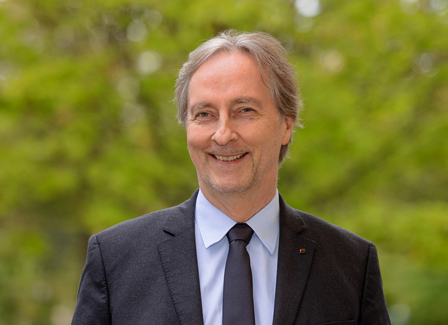
Prof Dr Heribert Hofer, President of the GDNÄ and Director of the Leibniz Institute for Zoo and Wildlife Research in Berlin.

Current program change

The Leopoldina lecture by Professor Liane Benning “The Great Melting” on Saturday, September 14, has unfortunately been canceled. Instead, GDNÄ Vice-President Professor Martin Lohse, Leopoldina member and pharmacologist, will speak about drugs of the future and the impressive power of placebos. All interested parties are cordially invited to the public lecture from 5:30 to 7 pm.

Registration

GDNÄ President Hofer and his team have put together a rich scientific program. Registration for the entire conference or for individual days is easily possible on site at the conference box office.

Photo Journal

Impressions from Potsdam

An illustrated diary of the GDNÄ meeting from 12-15 September 2024.
more >>

Newly elected

Ferdi Schüth

Max Planck Director is now part of the GDNÄ Executive Committee.
mehr >>

Honoured

Eva-Maria Neher

Alexander von Humboldt Medal for her great services to the GDNÄ.
more >>

Young GDNÄ

Anne Marie Bobes

The 18-year-old builds wind turbines for street lamps.
more >>

Media response

Interest aroused

The GDNÄ conference in Potsdam meets with a positive response.
more >>

Potsdam 2024

An initial assessment

Four days of fascinating presentations and discussions.
more >>

Livestream

Be there in real time

Click here for the broadcast of the GDNÄ meeting in Potsdam.
more >>

Young GDNÄ

Paul Scholand

He is 18, a GDNÄ student scholarship holder, and has big plans.
mehr >>

Opening ceremony

The Lord Mayor of the Brandenburg state capital Potsdam, Mike Schubert, and the President of the University of Potsdam, Professor Oliver Günther, Ph.D., will welcome the guests at the beginning of the conference. The greetings from the Ministry of Science, Research and Culture of the State of Brandenburg will be conveyed by Steffen Weber, Head of the Science and Research Department. The meeting will be opened by GDNÄ President Professor Heribert Hofer and Professor Alexander Böker, GDNÄ Managing Director of Economics.

Livestream

If you are unable to travel to Potsdam, you can participate in the meeting via livestream. From September 12, you can access the free livestream via this page.

Campus Griebnitzsee der Universität Potsdam © K. Fritze

© K. Fritze

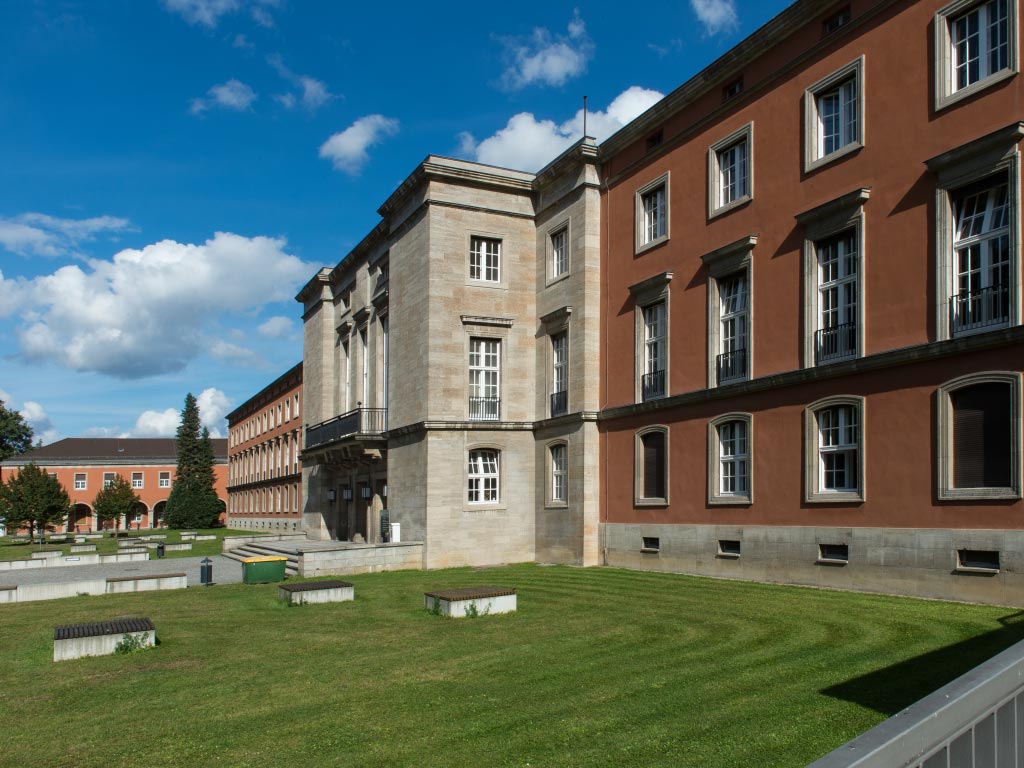
The 133rd GDNÄ Assembly will take place in the main building of the Griebnitzsee campus of the University of Potsdam.

Several interviews on this website provide insights into the preparations for the conference and information on individual presentations:

Please note: The event will be filmed/photographed. It is therefore possible that participants may be recognisable on the film and photo material that is produced. The film material will be used in accordance with the objectives and purpose of the GDNÄ and placed for the purpose of event-related public relations for non-commercial use and for an unlimited duration in all dedicated online media as well as on all video platforms used by the GDNÄ on the Internet with all sharing functionalities provided by the video hosting provider.

GDNÄ Meeting 2024: Young people and established science in personal dialogue

GDNÄ Conference 2024: Young people and established science in personal exchange

More than five hundred participants, including one hundred and fifty school and university students, high-level lectures on current topics in chemistry, biology, computer science, physics, engineering and medicine, plus a lively interdisciplinary, personal exchange – this is how the 2024 conference of the Society of German Natural Scientists and Physicians (GDNÄ) in Potsdam was assessed.

From 12 to 15 September 2024, the Society of German Natural Scientists and Physicians met for its 133rd assembly at the Griebnitzsee Campus of the University of Potsdam. Many who could not be there in person participated via livestream. The conference focused on the topic "Science for Our Tomorrow's Life". The student programme with pupils from the region and university students has been a fixed part of the GDNÄ conferences for years. The establishment of the Young GDNÄ during the conference in Potsdam increases the importance of young people in the 202-year-old research society. At the 133rd meeting, the young people discussed with renowned scientists, including Nobel Prize winner Ben Feringa. 

"I think it's great how we young people are given a platform here. And that we are allowed to participate in the conference free of charge and with great appreciation – in the lecture hall, in panel discussions and in conversations on the side," says Anne Marie Bobes. The 18-year-old high school graduate and future mechanical engineering student won the GDNÄ Science Slam "Science in 5 Minutes". 

Paul Mühlenhoff, the pedagogical director of the GDNÄ student programme, says: "This year, we had a particularly strong sense of cohesion and an enormous amount of enthusiasm in the group. The Young GDNÄ prepared intensively for all the lectures and was more integrated into the programme than ever. Chapeau!" 

GDNÄ President Professor Heribert Hofer says: "The young people, our Young GDNÄ, find excellent science and interdisciplinary work and direct dialogue with the lecturers at our events. That is what makes the GDNÄ conferences so special. And anyone who missed the livestream this time can soon watch all the lectures as videos on our homepage." 

The 134th assembly will take place in Bremen in September 2026.

Professorin Eva-Maria Neher © Universität Göttingen/Peter Heller

© MIKA-fotografie | Berlin

GDNÄ President Professor Heribert Hofer at the opening of the conference at the University of Potsdam.

„Science in 5 minutes“: Four questions for Anne Marie Bobes

Four questions for Anne Marie Bobes

Anne Marie Bobes from the Markgraf-Albrecht-Gymnasium in Osterburg in northern Saxony-Anhalt won the “Science in 5 Minutes” competition with her “Wind2Light” presentation. The 18-year-old recently graduated from high school and will begin studying mechanical engineering at the University of Dresden in October.

You are currently viewing a placeholder content from Default. To access the actual content, click the button below. Please note that doing so will share data with third-party providers.

More Information

Ms. Bobes, please present your project briefly and in as general terms as possible.
I am developing small wind turbines to provide a self-sufficient power supply for street lamps. In summer, this can also be achieved with solar panels, but on dark winter days it becomes difficult to ensure a reliable power supply. My rotors almost always produce enough electricity for the lanterns, even the low wind speeds generated by passing cars are enough. Over the last five years, I have developed small plastic rotors that are 50 centimeters high and 25 centimeters wide, which can be manufactured efficiently, quietly and inexpensively. They produce around five percentage points more electricity than conventional systems and enough to operate street lamps or charging stations for e-bikes.

How did you go about it?
First of all, I took a closer look at turbines that were already on the market, built some of them and tested them in a wind tunnel. I set up test stands in the cellar of our house and in the school cellar. My investigations showed that existing helix systems are not efficient enough for my purposes due to the enormous vortices they create. I then spent hours calculating, developing algorithms and running simulations on the computer – until my hard drive burned out. Fortunately, I was able to quickly buy a new one and design rotors, which I then produced using a 3D printer. I created various models and tested their effectiveness in a range of different basements, as well as at the Technical University of Magdeburg. I applied for a patent for my invention two years ago.

Professorin Eva-Maria Neher © Universität Göttingen/Peter Heller

© GDNÄ

The winners of the GDNÄ “Science in 5 minutes” competition with their certificates (from left): Sebastian Paschen and Moritz Roloff (3rd prize), GDNÄ President Professor Heribert Hofer, Anne Marie Bobes (1st place), Felix Gross (2nd place).

You were only 16 years old at the time. Who helped you?
At the very beginning, it was my grandfather, in whose carpentry workshop I was allowed to build all kinds of things as a child. At school, I received a lot of support from my biology teacher Michael Müller. He gave me my first ideas and made sure that I was able to develop the idea at school. He also gave me a lot of support with the patent application. The association of friends of my school covered the application costs. The Jugend forscht competition, in which I took part for the first time when I was 13, was very important to me. With Jugend forscht, I have already been to London, Los Angeles and Thessaloniki, where I was allowed to take part in international competitions with my turbines and repeatedly came in at the top. I used the prize money to finance the next steps in the project. My first publication will soon appear in the magazine Junge Wissenschaft.

What are your plans now?
In a few weeks I will begin studying and I'm really looking forward to it. I hope that I can test my wind turbines in the field in Dresden and get closer to series production. Extensive tests are absolutely essential to ensure safety and efficiency. I've already received an offer for large-scale production, but I turned it down because the preconditions haven't been met yet. At the same time, I want to advance new ideas. For example, I want to find out why birds fly into wind turbines so often. I am increasingly interested in biophysical questions. Professionally, I could imagine a future in aerospace. That's why it's great that I was offered an internship at the German Aerospace Center during the GDNÄ assembly in Potsdam. I am very happy to accept the offer.

Professorin Eva-Maria Neher © Universität Göttingen/Peter Heller

© Anne Marie Bobes

Anne Marie Bobes from the Markgraf-Albrecht-Gymnasium in Osterburg in northern Saxony-Anhalt won the “Science in 5 Minutes” competition with her “Wind2Light” presentation.

GDNÄ elects Ferdi Schüth as Vice President and future President

GDNÄ elects Ferdi Schüth as Vice President and future President

Professor Ferdi Schüth is the new Vice President of the German Society of Natural Scientists (GDNÄ). The Director at the Max Planck Institute for Coal Research will lead the GDNÄ as President in 2027 and 2028.
The Society of German Natural Scientists and Physicians (GDNÄ) has elected the chemist Prof Dr Ferdi Schüth as 2nd Vice President for the years 2025 and 2026. The election took place at the General Assembly on the occasion of the 133rd meeting of the Society of Natural Scientists, which is taking place in Potsdam until Sunday, 15 September. Ferdi Schüth is Professor of Chemistry and has been Director at the Max Planck Institute for Coal Research in Mülheim an der Ruhr since 1998. As 2nd Vice President of the GDNÄ, he is firmly earmarked for the office of President in 2027 and 2028.

"I am very much looking forward to this office," says Professor Schüth, adding: "The various scientific fields are highly fragmented and separated from one another today. It is therefore particularly important that an integrating organisation such as the GDNÄ attempts to break down disciplinary boundaries in order to tackle overarching problems and provide mutual impetus for their solution."

Professor Anke Kaysser-Pyzalla, Chair of the Executive Board of the German Aerospace Centre and designated GDNÄ President for the years 2025 and 2026, says: "With Ferdi Schüth, an extremely committed and experienced scientist is joining the GDNÄ Executive Committee. As a former Vice President of the Max Planck Society and a member of many scientific organisations, he has an excellent network. I am very much looking forward to working with him."

Professorin Eva-Maria Neher © Universität Göttingen/Peter Heller

© Frank Vinken für MPI für Kohlenforschung

Professor Ferdi Schüth is the new Vice President of the German Society of Natural Scientists (GDNÄ).
About the person

Ferdi Schüth studied chemistry and law in Münster and earned his doctorate in chemistry. He was a postdoc at the Department of Chemical Engineering at the University of Minneapolis in the USA and completed his habilitation in inorganic chemistry in Mainz in 1995. In 1995 he was appointed to a chair in inorganic chemistry in Frankfurt and in 1998 was appointed Director and Scientific Member at the Max Planck Institute for Coal Research in Mülheim. Schüth has been an honorary professor at Ruhr University Bochum since 1999. He was Vice President of the Max Planck Society from 2014 to 2020.

Further information