• DE
  • EN
  • Media response GDNÄ meeting in Potsdam makes headlines

    Media response

    In dialogue: Potsdam 2024

    Whether on the radio or in newspapers, on websites or in social media: the 133rd GDNÄ Assembly at the University of Potsdam arouses the interest of communicators in the Berlin/Brandenburg region and far beyond. On this page we inform you about previous contributions.

    In September 2024

    Acatech – National Academy of Science and Engineering

    Illustrated summary by Marc-Denis Weitze, acatech, initiator and moderator of the Science & Technology Cafés at the GDNÄ assembly in Potsdam

    >> learn more on acatech.de

    rbb24 Brandenburg aktuell 

    News report and interview with Professor Michael Dröscher

    ChemistryViews

    The organ of the scientific network organisation “Chemistry Europe” reports on the award of the Liebig Medal to Professor Katharina Landfester-

    >> learn more on chemistryviews.org

    :Wissenschaftsregion Bonn

    Report on the 133rd meeting focussing on the foundation of the Young GDNÄ.

    >> learn more on wissenschaftsregion-bonn.de

    LinkedIN

    Professor Anke Kaysser-Pyzalla, DLR Director and designated GDNÄ President, on the meeting in Potsdam and plans for her 2025-2026 term of office.

    >> learn more on LinkedIN

    Max-Planck-Institut für Kohlenforschung

    Press release on the election of Professor Ferdi Schüth as GDNÄ Vice President.

    >> learn more on www.kofo.mpg.de

    Bochumer Zeitung

    Detailed presentation of the planned Leopoldina lecture .

    >> learn more in Bochumer Zeitung

    acatech

    “How AI moves us”: Invitation to the Science & Technology Café on 15 September.

    >> learn more on acatech.de

    University of Potsdam

    Detailed news about the GDNÄ meeting.

    >> learn more on www.uni-potsdam.de

    Leopoldina

    Detailed presentation of the planned Leopoldina lecture .

    >> learn more on leopoldina.org

    Helmholtz Centre Potsdam – GFZ German Research Centre for Geosciences

    Detailed presentation of the planned Leopoldina lecture .

    >> learn more on idw-online.de

    In August 2024

    Helmholtz-Gymnasium Bielefeld

    This is about the GDNÄ interview with Paul Scholand, student scholarship holder from the Helmholtz-Gymnasium.

    >> learn more on helmholtz-bi.de

    Aktivoli – FreiwilligenAkademie

    Reference to the 133rd meeting and announcement of an oral report on 24 September 2024 in Hamburg.

    >> learn more on aktivoli-kurse.hamburg

    :Wissenschaftsregion Bonn

    Detailed announcement of the 133rd meeting.

    >> learn more on wissenschaftsregion-bonn.de

    :Wissenschaftsregion Bonn

    Preliminary report on the GDNÄ Conference 2024, focussing on the Young GDNÄ and the lecture “Healthy living and ageing: Facts and myths”.

    >> learn more on wissenschaftsregion-bonn.de

    Meetingpoint Potsdam

    Announcement of the GDNÄ Conference 2024 with details of the lecture “Healthy living and ageing: Facts and myths”.

    >> learn more on meetingpoint-potsdam.de

    Before Summer 2024

    Fraunhofer IAP + Potsdam Science Park

    Report on the appointment of Professor Alexander Böker, Director of the Fraunhofer Institute for Applied Polymer Research IAP in the Potsdam Science Park, as GDNÄ Managing Director for the Business Division.

    >> learn more on www.iap.fraunhofer.de

    >> learn more on potsdam-sciencepark.de

    Impressionen vom Vorbereitungstreffen des Schülerprogramms im Juni 2022 in Leipzig.

    © MIKA-fotografie | Berlin

    Of public interest: high-calibre lectures such as the one given by Nobel Prize winner in Chemistry Ben Feringa at the GDNÄ Assembly 2024 in Potsdam.

    Experience the livestream Conference in Potsdam in real time

    Livestream

    Experience the 2024 Conference in real time

    The Nobel lecture is about tiny molecular machines, the Leopoldina lecture shows how microbes in the Arctic ice are fuelling climate change and the opening ceremony attracts with exciting contributions, music and the awarding of the Alexander von Humboldt Medal. The Young GDNÄ is officially launched in Potsdam and many young people contribute to the success of the conference. Those who attend the 133rd GDNÄ Assembly in Potsdam in person will experience a celebration of science with many highlights.

    But even those who cannot be there are invited to participate in real time, as was the case at the 200th anniversary celebrations in Leipzig in 2022. All lectures in lecture hall H5 at the University of Potsdam, Griebnitzsee campus, will be livestreamed, as will the opening with welcoming speeches on 13 September and the public lectures by Nobel Prize winner in Physics Professor Ben L. Feringa “The art of building small” (Friday, 13 September, 18:00 to 19:30) and Professor Liane G. Benning “The Great Melting – Small Cells, Big Consequences” (Saturday, 14 September, 17:30-19:00).

    The livestream is free of charge; no special technical requirements are necessary. A digital device and a good internet connection are all you need to watch live:

    Note: The video recordings of presentations and other contributions, which will be posted on the GDNÄ’s own video channel after the 133rd Assembly and will also be available free of charge, can be used permanently.

    Campus Griebnitzsee der Universität Potsdam © K. Fritze

    © K. Fritze

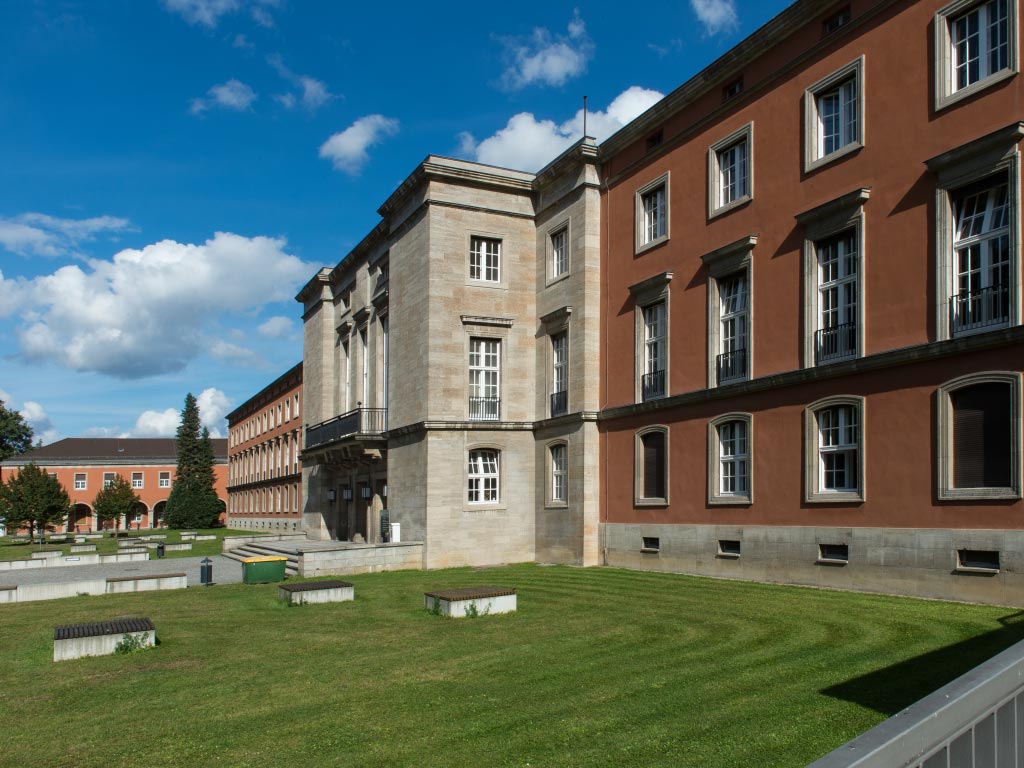
    The 133rd GDNÄ Assembly will take place in the main building of the Griebnitzsee campus of the University of Potsdam.

    Further information:

    Heribert Hofer: „Guests yesterday, partners today“

    „Guests yesterday, partners today“

    GDNÄ President Heribert Hofer on the highlights of the 2024 Assembly, the responsibility of science and a breath of fresh air from the Young GDNÄ.

    Professor Hofer, the 133rd GDNÄ Assembly begins in Potsdam in a few days’ time. As President, you are responsible for the scientific programme – it’s your meeting, so to speak. Are you looking forward to it?
    Absolutely. I am very excited about the presentations, the discussions with the audience and the contributions from the many young people we have invited to the conference. 

     “Science for our lives of tomorrow” is the title of the conference. How did this title come about?
    We, and by that I mean the GDNÄ Executive Board and Board Council, want to show in Potsdam what future developments are already emerging in science today. We are talking about inventions and discoveries that will have an impact on society as a whole – and much faster than was previously the case. 

    What revolutionary changes are these?
    Take gene editing in plants, for example. New molecular genetic methods can be used to introduce desired traits into crops quickly and precisely. For example, resistance to widespread pests. This saves on pesticides and protects the environment. In the past, this was only possible, if at all, through years of breeding. Another example is artificial intelligence. New AI developments are reported practically every day and more and more new applications are coming onto the market. 
    For many people, AI is currently just a glimmer on the horizon, so their everyday lives have not yet changed much. Is that different at your institute in Berlin?
    Yes, we are increasingly utilising the new methods. I don’t know of any research institute in the field of biology that isn’t working or at least experimenting with artificial intelligence. In my field, behavioural ecology, for example, we are trying to improve the observation of wild animals with the help of AI. We are currently validating a pattern recognition programme that should reliably tell us whether individual cheetahs are roaming in Namibia at that moment, whether they are eating or whether they are sleeping. To do this, we have previously equipped the big cats with acceleration sensors and tiny radio antennas. The aim is to automatically classify behaviour around the clock, which would ideally complement on-site observations by researchers. We are very confident that AI will provide us with unimagined insights into the lives of animals in the wild. 

    You have mentioned the advantages of new inventions. There are also downsides. Will these also be discussed in Potsdam?
    Yes, and that is a major concern of mine. If you want to do science responsibly, you have to look at both sides. In Potsdam, we will be presenting the pros and cons of new technologies and weighing them up in dialogue with the audience. The methods of research, i.e. the question of how scientists arrive at their results, will also be discussed.

    Eröffnung der Büros Postplatz 1 © Paul Glaser

    © MIKA-fotografie | Berlin

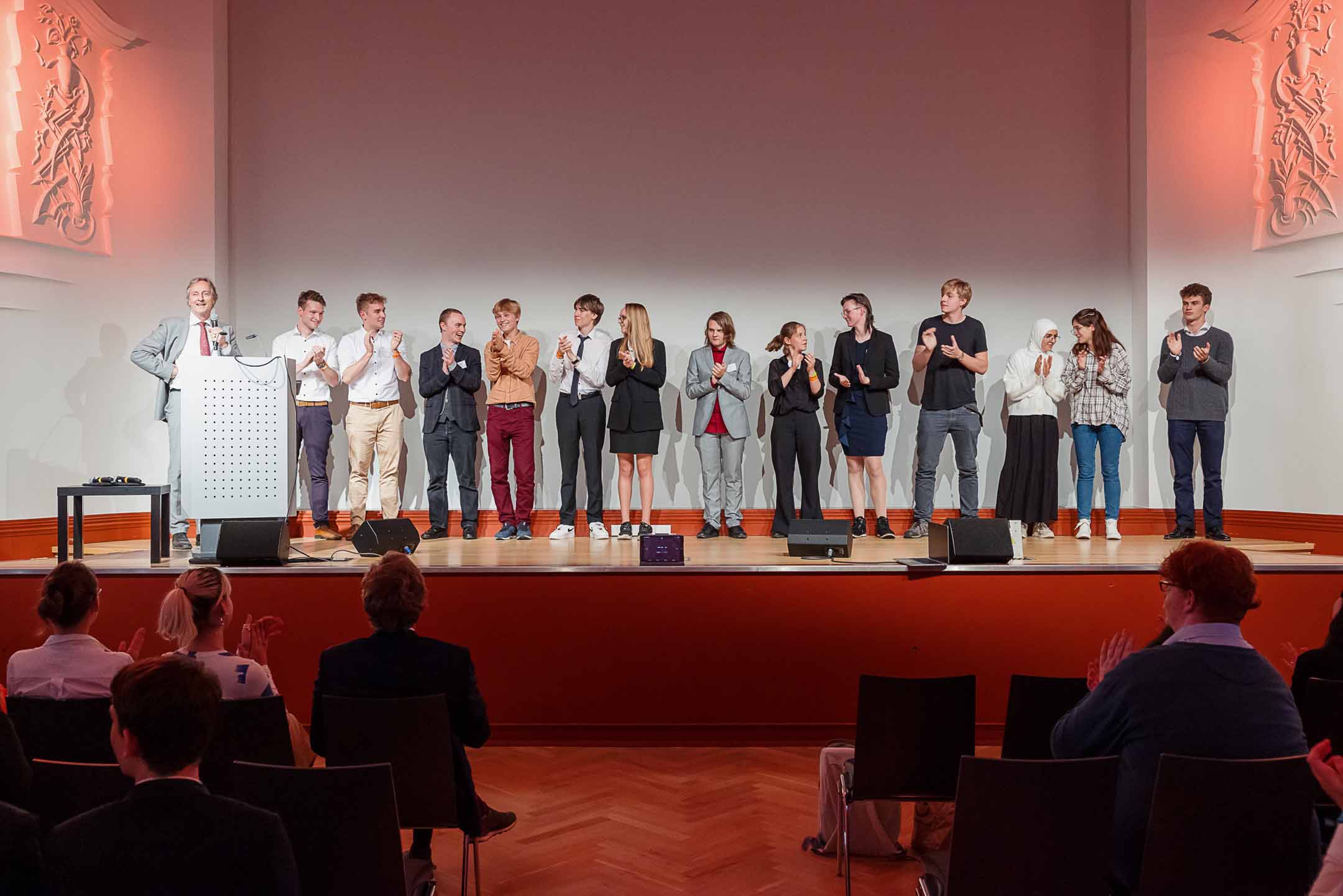
    Well attended as always: The Science Slam “Science in 5 minutes” at the GDNÄ Assembly 2022 in Leipzig. Heribert Hofer (left) supervised the participating students.

    The GDNÄ has had a well-functioning student programme for many years. Now a Young GDNÄ is to be founded. What is the difference?
    The student programme has been running on the side, it was a nice additional programme item. The Young GDNÄ will be our youth organisation, a core element of the GDNÄ – with a wider age range than we know from the student programme. With the Young GDNÄ, we want to accompany selected Students on their way to university and foster dialogue with them. These are great young personalities and we want to say to them: you are welcome here and we look forward to your contribution. To put it in a nutshell: Students used to be our guests, today they are partners. 

    Will this already be visible in Potsdam?
    Yes, there will be a panel discussion after each lecture block, usually with three presentations, in which the speakers, together with two or three representatives of the Young GDNÄ, will debate with each other and with the audience. The young people will take part in two workshops before the meeting to familiarise themselves with the content. The highlighted discussion format is completely new, there has never been anything like it before. The young people will also be given a special stage at the start of the Assembly on Thursday evening, 12 September, when a number of them will compete against each other with short, snappy presentations in the traditional “Science in 5 Minutes” competition.   
    Young people are being courted in many places today. What can the GDNÄ offer them?
    Scientific expertise at a high level, but without technical jargon, and a direct exchange with renowned researchers, among them also Nobel Prize winners. All in German, which generally makes communication easier. Most of the students are wide-eyed and can hardly believe that the luminaries are available to them in person – I have experienced this time and time again for many years. The study counselling provided by experienced scientists at our conferences is also highly appreciated.

    The GDNÄ only meets every two years. What happens to the Young GDNÄ in the meantime?
    We want to talk to the young people about this and we will start in Potsdam. Internally, there is the idea of regional networking with regular meetings and events. A mentoring programme is also being discussed.

    What do you have in mind?
    A nationwide programme with academics who accompany young people on their way through school and university, right up to the first career stages. I hope that we in the GDNÄ can inspire numerous outstanding members for this task.

    Your time as GDNÄ President ends this year. What will happen next with the Young GDNÄ?
    It will remain a core element of the GDNÄ. My successor, mechanical engineering professor and head of the German Aerospace Centre Anke Kaysser-Pyzalla, sees it the same way. We have already worked out our future plans for the GDNÄ over the past two years and will continue to develop them at a strategy meeting in November. The Young GDNÄ will play an important role in this. I am happy to be involved in the implementation of our ideas – also as First Vice President of the GDNÄ, which I will be from 2025 to 2026.

    Finally, a quick question: Who should make the journey to Potsdam in September?
    For anyone who wants to take a look into the future, who wants to talk to impressive scientists, physicians and young talents and who wants to understand current topics from an interdisciplinary perspective. Last but not least: Potsdam is a great conference venue with a still young university that has developed excellently and is a wonderful host.

    Heribert Hofer © MIKA-fotografie | Berlin

    © MIKA-fotografie | Berlin

    Prof Dr Heribert Hofer, President of the GDNÄ (2023-2024) and Director of the Leibniz-Institute for Zoo and Wildlife Research in Berlin.

    All are welcome

    On Friday evening, 13 September, Nobel Prize winner in Physics Ben L. Feringa will present his research on tiny molecular machines. (This is the only lecture at the conference in English.) On Saturday evening, 14 September, Liane G. Benning from the German Research Centre for Geosciences will give the renowned Leopoldina Lecture on her research in the Arctic ice. The interested public is cordially invited to both events. Admission is free.

    Click here fort he complete program of the meeting in Potsdam (PDF)


    About the person

    Professor Heribert Hofer, Director of the Leibniz Institute for Zoo and Wildlife Research (IZW) in Berlin, was elected President by the General Assembly for the two years 2023 and 2024 and is therefore responsible for the scientific organisation of the 133rd Assembly in Potsdam in 2024.

    The internationally renowned zoologist (64) has headed the Leibniz-IZW in Berlin-Friedrichsfelde since 2000 and since then has also been Professor of Interdisciplinary Wildlife Research at the Free University of Berlin. Prior to his time in Berlin, he conducted research at the Max Planck Institute of Behavioural Physiology in Seewiesen, Bavaria, from 1986 to 1999, initially as a postdoctoral researcher and later as an independent scientist. In 1997, he completed his habilitation at the Ludwig Maximilian University of Munich with a thesis on the behaviour of spotted hyenas in the Serengeti savannah. Heribert Hofer began his studies in zoology at Saarland University and graduated with a DPhil from Oxford University.

    Professor Hofer has been closely associated with the GDNÄ for many years. He has been involved in a variety of ways: as an elected subject representative and group chairman for the subject of biology, with speeches at meetings, as Vice President in the preparation of the 200th anniversary celebrations in Leipzig – and since the beginning of 2023 as President of the GDNÄ.


    Weitere Informationen

    Ursula Müller-Werdan: “Healthy ageing is within reach for many of us”

    “Healthy ageing is within reach for many of us”

    Ursula Müller-Werdan, Professor of Geriatrics and Director at Charité, on the best ways to stay younger, active substances against disease-causing zombie cells and very old people in the US election campaign.

    Professor Müller-Werdan, we are conducting this interview in the summer before the presidential elections in the USA. One candidate is 81 years old, the other 78. Is that too old for such a responsible office?
    Not necessarily. Before the last presidential election four years ago, a US study asked the same question and confirmed that Joe Biden would have a statistical life expectancy of a good nine years after his inauguration in 2021 and Donald Trump a good eleven years. After analysing representative data sets, this corresponded to the survival probability of white, academically educated people of their age. At the time, Biden’s healthy lifespan was estimated at 87 years and Trump’s at just over 85 years. These are not individual predictions, but average values, and life expectancy would probably be even better today due to the higher age reached. 

    Life expectancy is one thing, physical and mental fitness is another. How do you rate the candidates in this respect?
    I have to pass. Even if I knew more about their state of health, I wouldn’t allow myself to make a remote diagnosis. But high professional performance is possible even in old age, and there are a number of examples of this. Just think of Konrad Adenauer, who took office as the first Chancellor of the Federal Republic of Germany at the age of 73 and only retired at the age of 87. 

    When someone is so productive in old age, this is often attributed to a particularly good genetic make-up. Is that true?
    Only in part. Around a third of the ageing process is genetically determined, two thirds have to do with personal lifestyle – this is how the scientific studies can be roughly summarised. We are therefore by no means at the mercy of our inherited dispositions but have a great deal of room for manoeuvre. 

    If you want to grow old as healthily as possible, you will receive a lot of advice. Which are the most important?
    The eight recommendations of the American Heart Association are a good guideline. If you follow them, you will be on average about six years younger biologically than your chronological age. The recommendations will sound familiar to many: a healthy diet, sufficient exercise and sleep, no tobacco consumption, no severe obesity and normal values for blood pressure, blood sugar and cholesterol. 

    We have heard all this many times before, but what exactly does it mean?
    Here are three examples: The US Heart Association defines adequate exercise as 150 minutes of moderate physical activity per week, such as walking, or 75 minutes of increased activity, such as jogging. The daily sleeping time should be between seven and nine hours and the body weight should be below the body mass index value of 30. 

    At the GDNÄ meeting in Potsdam, you will be talking about facts and myths on the subject of healthy ageing. Which myth is particularly persistent?
    The one about a healthy glass of red wine. Alcohol is a neurotoxin, even in small quantities – there’s no way around it. However, there is evidence that alcohol is more harmful to us in the first half of life, i.e. up to around forty, than later. Another myth has to do with frailty in old age, which many believe is inevitable. In my presentation, I will explain how it can be prevented and, in some cases, reversed. 

    Unfortunately, it is not yet possible to reverse dementia, another disease of old age.
    But a lot can be done to prevent it. More than a third of cases can be prevented or delayed, as large-scale international studies have shown in recent years. It is particularly important to avoid depression and hearing loss and to acquire education as early as possible. Alcohol, concussions and air pollution have been shown to increase the risk of dementia.

    Eröffnung der Büros Postplatz 1 © Paul Glaser

    © Charité – Universitätsmedizin Berlin

    In the Clinic for Geriatrics and Geriatric Medicine on the Benjamin Franklin Campus of the Charité, patients with acute internal, neurological and orthopaedic diseases are treated in the sense of early geriatric rehabilitation.

    A lot of research is being carried out worldwide on the subject of ageing. Which approaches are particularly promising?
    I find a field of research called geroscience very exciting. It sees ageing as the main risk factor for diseases that are not purely genetically determined, such as cardiovascular diseases and most types of cancer. The idea is to prevent these diseases by slowing down the ageing process at an early stage. So-called senescent cells offer a starting point. These are body cells that have stopped dividing at some point. They no longer function properly but are not completely dead and can damage surrounding cells. The consequences are diseases and frailty. The older the person, the more such zombie cells there are in the tissue. 

    Do we stand a chance against the zombies?
    We can drive them to suicide and thus halt their age-related decline. This is possible with certain active substances, so-called senolytics, as animal experiments have shown. The first clinical trials have now been carried out on patients with diseases such as pulmonary fibrosis, kidney dysfunction or diabetes. The results so far are very encouraging. 

    When will the first drugs be available?
    That depends entirely on the further course of the clinical trials. If nothing comes up, we may have the first drugs in fifteen or twenty years. 

    Is your institute at the Charité involved in this research?
    Yes, one of our research groups is working on this topic as part of translational bio-gerontology. 

    What are the other research groups at the Institute working on?
    We have a lot of interesting topics, but let me pick out two examples. One is the question of the extent to which diet promotes or inhibits inflammation in the body. This is important to know because many diseases and the ageing process itself are associated with inflammation. In collaboration with the German Institute of Human Nutrition in Potsdam-Rehbrücke, employees are currently developing an inflammatory index that can be used to determine the inflammatory potential of food. Another working group is looking at smart home solutions for older people to help them live longer at home. 

    Finally, a myth-or-fact question: can we all live to be 150 years old or older, as is often claimed recently?
    No, I don’t think so. The maximum lifespan of every species is genetically determined. In humans, it is around the age reached by the French woman Jeanne Calment, who died in 1997 at the age of 122. 122 years for women, 118 years for men – we won’t be able to break these records in the future either. But what good are such records if you are ill? I think ageing in good health is something worth striving for.

    Günther Hasinger © Paul Glaser

    © Charité – Universitätsmedizin Berlin

    Prof. Dr. Ursula Müller-Werdan

    About the person

    Prof. Dr Ursula Müller-Werdan has been Director of the Medical Clinic for Geriatrics and Geriatric Medicine at Charité Berlin and Medical Director of the Protestant Geriatric Centre Berlin since 2016. Prior to this, the cardiologist and geriatrician worked at the University Hospital of RWTH Aachen and from 1996 to 2014 at the University Hospital Halle-Wittenberg. Born in Allgäu in 1961, she completed her medical studies and specialist training at Ludwig-Maximilians-Universität München – with scholarships from the Studienstiftung, the Maximilianeum Foundation and the Bayerische Begabtenförderung. Her research focuses on heart disease in old age, sepsis and multi-organ failure as well as multimorbidity in old age. Ursula Müller-Werdan is one of the deputy chairs of the German Society for Internal Medicine and was president of the German Society for Gerontology and Geriatrics.

    Further information

    Studies on initial therapeutic strategies against zombie cells:

    Paul Scholand: “Direct contact with scientists is important to me”

    “Direct contact with scientists is important to me”

    Bielefeld high school graduate Paul Scholand will be attending the GDNÄ Assembly in Potsdam as a student scholarship holder. In the first media interview of his life, he describes his expectations, how he looks back on his time at school and looks ahead.

    Mr Scholand, first of all, congratulations on recently passing your Abitur. Are you happy with the result?
    Yes, very happy. The written and oral exams went well and with the grades I achieved, I can study my favourite subject, medicine. 

    When do you want to start?
    In autumn 2025, but before that I’m doing an FSJ, a voluntary social year, to get a taste of new areas between school and university. 

    The GDNÄ student programme, which you are taking part in September, is also about new experiences. How did you get involved in the programme?
    My biology teacher, Mr Mühlenhoff, approached me in the spring and gave me a programme flyer. I immediately discovered a few lectures in the programme that I was particularly interested in. For example, on the use of artificial intelligence in medicine, the design of biology with light or living materials in the field of physics. 

    What does participating in the student programme mean to you?
    Very much. I see the invitation as an honour and appreciation of my academic achievements and I am full of anticipation when I think about the days in Potsdam. It’s all about current research, which we will hopefully be able to grasp well with the basics that school has given us. 

    What wishes and expectations do you have as a student scholarship holder?
    I want to learn as much as possible and will attend lectures from all subject areas. It is important for me to have direct contact with the scientists, for example at the study counselling, in the Science & Technology Cafés or during the breaks. I’ve never had an opportunity like this before and I’m looking forward to it. 

    You have just completed twelve years at secondary school. What was the most important thing for you during this time?
    We learned to acquire knowledge, to organise ourselves and to persevere when things didn’t go so smoothly. My friends were very important to me: we prepared for exams together and motivated each other. 

    Did that also work during the pandemic?
    It definitely did. At first, we did a lot over the phone, but later we met up in small groups to study together. Not only did we survive the pandemic, we also learnt to discipline ourselves and keep going.

    Eröffnung der Büros Postplatz 1 © Paul Glaser

    © Timo Voss, Studio of Thoughts | Helmholtz-Gymnasium Bielefeld

    Bielefeld’s Helmholtz High School, shown here in an aerial photo, was founded in 1896. Under the motto “A modern high school with tradition”, around 100 teachers now teach around 1000 students.

    With your grades, you can choose the subject you want to study. Why did you choose medicine?
    It was an obvious choice for me because my father and mother are doctors, and biology was one of my favourite subjects at school. What I like is the wide range of careers I have with a medical degree: I can practise as a doctor or go into research, maybe even into business. It’s good that I still have a few years to make my decision. 

    Medicine, information, natural sciences, technology: it is often said that interest in STEM subjects is waning among young people. Can you confirm this?
    It’s different in my environment – science subjects were particularly popular at school. Many opted for advanced courses in maths, physics and computer science. The decisive factor is personal preference: People who enjoy computer games are often also interested in computer science. 

    How would you describe your generation’s attitude to life?
    My generation is very free, it has many options and wants to have fun in life. My friends and I are aware of the problems in the world, we have the climate crisis and the wars on our radar, but that doesn’t paralyse us. Some of us are involved in politics to have more influence on the future course. But most of us have enough to do with ourselves and our future plans after leaving school. 

    You are young, the GDNÄ is a good 200 years old. Can that go together?
    They go together very well. When I look at the GDNÄ website, I see great scientists such as Alexander von Humboldt, Albert Einstein and Max Planck on the homepage. I see this as an incentive for me and my generation. Perhaps we too can change the world with new, revolutionary ideas.

    Günther Hasinger © Paul Glaser

    © Privat

    Paul Scholand, GDNÄ student scholarship holder, will attend the meeting in Potsdam 2024.

    About the person

    Paul Scholand was born in Bielefeld in 2006. He initially attended a bilingual primary school there (English and German). He later went to the Helmholtz-Gymnasium, where he enthusiastically completed a basic biology course with Paul Mühlenhoff, the head of the GDNÄ student programme. In the upper school level, Paul Scholand took advanced courses in history and maths; other exam subjects in the Abitur were Latin and biology. In August 2024, he will begin a voluntary social year at the Bielefeld golf club and will support the staff with youth training, in the office and with course maintenance until July 2025. The 19-year-old then wants to start his medical studies – preferably in a medium-sized German city such as Münster, Tübingen or Freiburg.

    Further information