• DE
  • EN
  • Wolfgang Lubitz: Scientists change the world

    "Scientists change the world“

    A sustainable energy supply for humanity – this is the visionary goal of Max Planck scientist Wolfgang Lubitz's research. He also has big plans for the GDNÄ.

    Professor Lubitz, you are director emeritus at the Max Planck Institute for Chemical Energy Conversion in Mülheim. How can we imagine your everyday life at the moment?
    I'm still often at the institute, but I also work a lot from home at the moment. By and large, it's about gradually completing my research projects. I've been emeritus for almost four years now and want to create more free space for other things. I'm currently making the final corrections to a book chapter.

    What is the topic?
    The book is about chemical energy storage and in one chapter I describe how solar energy is converted and stored in nature through photosynthesis.

    Why is this process so interesting for you?
    It is the great model for sustainable energy storage – even though much of the incident, abundant solar energy is lost. At this point I would like to expand a little to clarify the connections: We owe all our food, all renewable raw materials and fossil fuels on earth to photosynthesis. A central step in photosynthesis is the light-induced splitting of water, whereby oxygen is produced as a waste product. This has led to the formation of our oxygen-rich Earth's atmosphere and also the ozone layer in the stratosphere that protects us, thus creating the prerequisite for the emergence of higher life on our planet. Photosynthesis absorbs enormous amounts of carbon dioxide from the air and converts it into carbohydrates, which ultimately store the sun's energy. Storage in chemical compounds – in fuels – is by far the most efficient form of storage for energy.
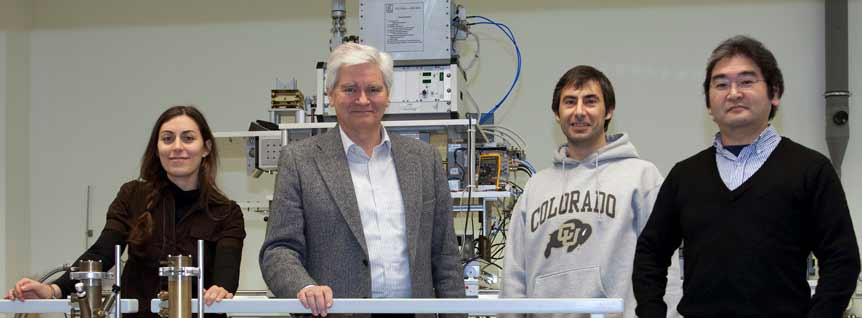
    Saarbrücken 2018 © Robertus Koppies

    Wolfgang Lubitz with young scientists in a laboratory at the Max Planck Institute for Chemical Energy Conversion in Mülheim. In the background you can see superstructures of a high-field EPR machine. EPR techniques have been used to gain important insights into the electronic structure of catalysts. 

    So much for biochemistry. How do we now get to technical use?
    The idea is to use such processes, for example, to store regeneratively generated electricity and transport it over long distances. In principle, sun and wind supply more than enough clean energy to meet global demand, but where they are needed, they are not always available in sufficient quantities. That is why at our institute we are looking for ways to efficiently convert energy into forms that can be stored and used. Artificial photosynthesis is one possibility that is being intensively researched by us and many other working groups.

    What have you already achieved?
    In the meantime, we have a fairly precise idea of how natural photosynthesis works. These findings are important, among other things, to realise an efficient splitting of water into its components oxygen and hydrogen in the laboratory. The necessary catalysts play a key role in this process: In nature, these are the enzymes water oxidase and hydrogenases.  Roughly speaking, photosynthesis is still familiar to many from school lessons, but our research is about the finer details.

    Do you have an example for us?
    Nature uses enzymes for its reactions that contain common and inexpensive metals such as manganese, iron and nickel. For chemical-technical use, however, precious metals such as platinum are almost exclusively used as catalysts today, which work very well, but whose deposits are unfortunately limited. Following nature's example, we are therefore looking for new metal catalysts to make the future large-scale production of hydrogen as efficient as it is environmentally friendly. The goal is therefore the so-called green hydrogen, which not only plays a central role for the energy supply of the future, but also as one of the most important basic materials in industry.

    Are there already results?
    Catalytic water oxidation and hydrogen production are very intensively worked on research areas worldwide, and considerable successes have been achieved in recent years. However, a perfect catalyst that meets all the requirements in terms of efficiency, stability, scalability, eco-friendliness, material availability and price and has proven itself in practice does not yet exist. So there is still a lot of room for good ideas and developments in this hot field of research.

    The entire hydrogen economy is a hot topic at the moment. What chances do you see for it?
    We are now very good at generating regenerative electricity, for example with the help of photovoltaics, which today achieve efficiencies of around 25 percent for silicon cells and more than 45 percent for more complex PV cells. Storage remains a problem. Batteries are widely accepted by society, for example in electromobility, but they are not very efficient and also not environmentally friendly. Hydrogen can store many times more energy and its combustion produces only water.  It is suitable for large-scale use and forms a very good bridge from the fossil to a sustainable energy era.

    Your research in this exciting field is, as you said, gradually running out. Does that mean you will have more time for the GDNÄ in the future?
    Yes, and I am looking forward to that. As a member of the Board of Directors, for example, I'm very happy to contribute to the preparations for the 200th anniversary celebration, which is to take place in Leipzig in 2022. Great ideas are being put together there right now. I don't want to give too much away yet, but the lectures and discussions will take place in the attractive congress centre of the trade fair city and the supporting programme partly in the famous Leipzig Zoo. There will be a student and visitor programme and many highly interesting lectures from different disciplines. For the Nobel Prize lecture we have invited Reinhard Genzel, who discovered the gigantic black hole at the heart of our Milky Way.
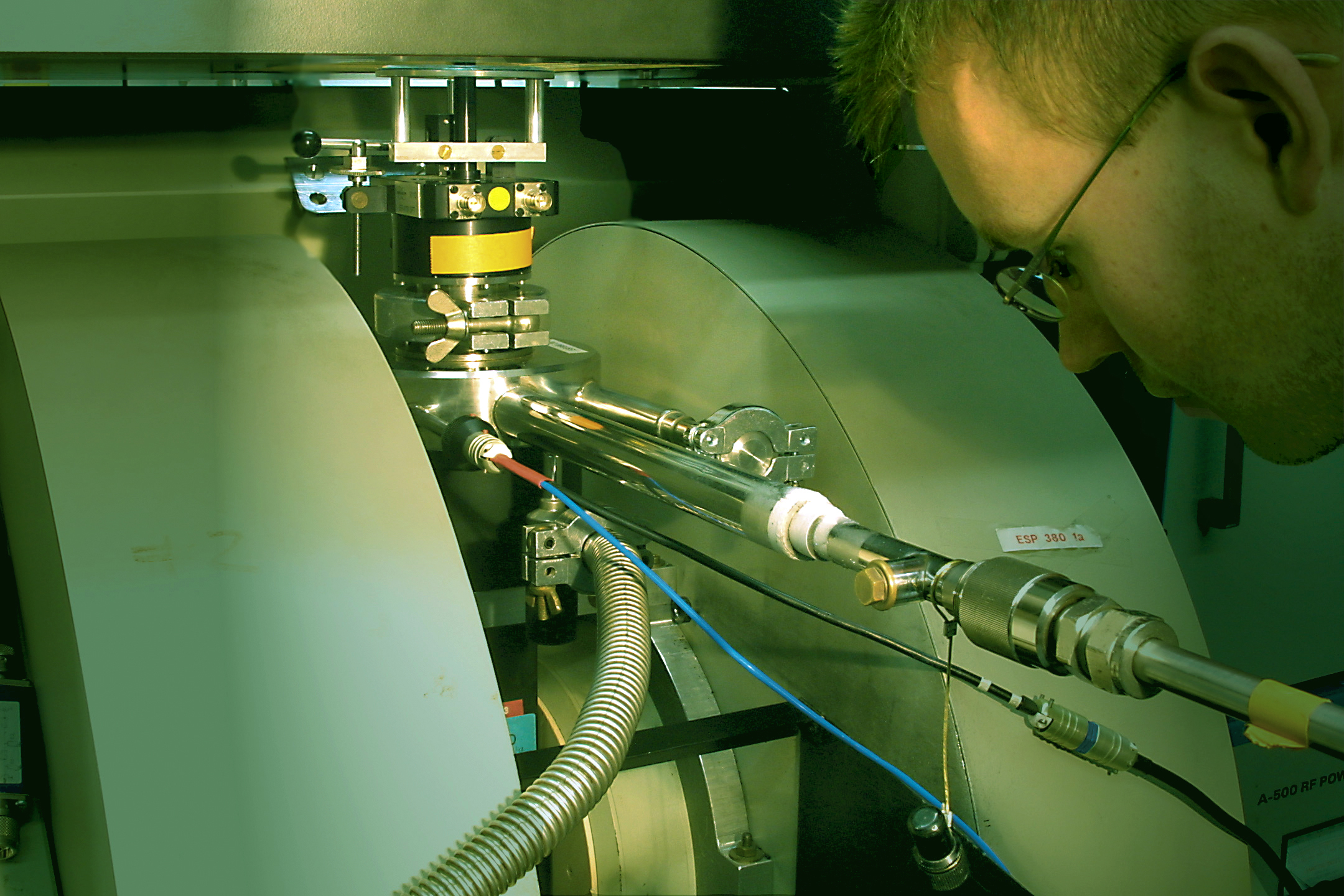
    Investigating samples of photosynthesis in green light using electron paramagnetic resonance (EPR) spectroscopy.

    Founded in Leipzig in 1822, the GDNÄ has a long tradition. What does this scientific society mean to you?
    Very much. The GDNÄ has done great things for German science. At its meetings, important scientific findings were presented and debated; there were many disputes, but also consensus. In the era of industrialization, the GDNÄ made a significant contribution to the public learning about and accepting new  research results. A caesura was the Nazi era. What these years meant for the GDNÄ should, in my opinion, be examined more closely. The anniversary next year would be a suitable occasion for this.

    What future do you see for the GDNÄ?
    There are big tasks waiting. On the one hand, there is the immensely important dialogue with the public, but also the interdisciplinary dialogue between the scientific disciplines should be intensified in Germany. The funding agencies are increasingly demanding this, and the GDNÄ could provide important impulses here.  Another point is the cooperation with schools. In my experience, interest in mathematics, computer science, natural sciences and technology is growing, because many young people realise how important these subjects are for the future. The GDNÄ is already involved here with its students programme. But in cooperation with other scientific societies we could do much more.

    A big programme you are outlining...
    ...Wait, please, I am not finished yet. I would also like the GDNÄ to raise the possible implications of scientific findings. Often these have led to historical upheavals, just think of the discovery of uranium fission and its consequences in the form of the atomic bomb and nuclear power. Our entire modern life is shaped by research and technology – without it, there would be no internet or modern telecommunications, no antibiotics and vaccines, and no insights into environmental and climate protection or renewable energies. So it is not presumptuous to say: scientists change the world. What I also want is more understanding of the methodology of science. Their results develop in carefully planned and executed experiments, which are often error-prone and have to be validated several times until a reliable result is available. None of this works at the push of a button, it takes time. I am happy to contribute to creating awareness and building trust in science – together with the GDNÄ.
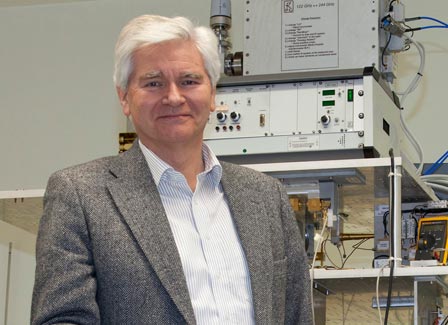
    Saarbrücken 2018 © Robertus Koppies
    Wolfgang Lubitz

    About the Person

    Professor Wolfgang Lubitz (71) is director emeritus of the Max Planck Institute for Chemical Energy Conversion in Mülheim an der Ruhr. He relinquished his leadership position, which he had held since 2000, with his retirement in 2017. Before becoming a Scientific Member of the Max Planck Society, the native Berliner worked as Professor of Physical Chemistry at the Technical University of Berlin from 1991 to 2000, as Professor of Experimental Physics at the University of Stuttgart from 1989 to 1991, and as Professor of Organic Chemistry at the Free University of Berlin from 1986 to 1989, where he also studied chemistry and physics, earned his doctorate and habilitated. From 1983 to 1984, Lubitz did research in biophysics at the University of California San Diego.

    The scientist wrote a very personal review of his life on the occasion of his 65th birthday at the request of the "Journal of Physical Chemistry". In it, he describes his path, which led him from simple circumstances in post-war Berlin to an impressive scientific career, brought him together with many interesting personalities and gave him lifelong friendships (see PDF).

    In his research, Wolfgang Lubitz deals with energy conversion in natural and artificial photosynthesis and water splitting, hydrogen production and utilisation. Another field of research is the development and application of spectroscopic methods, especially magnetic resonance. His results have been published in more than five hundred scientific papers and have been awarded many prizes.

    Wolfgang Lubitz has been a member of the GDNÄ for many years; since 2017 he has been a member of the society's board of directors. In addition, he has been involved in the Council of the Lindau Nobel Laureate Meetings for almost two decades, of which he has been Vice-President since 2014.
    Saarbrücken 2018 © Robertus Koppies

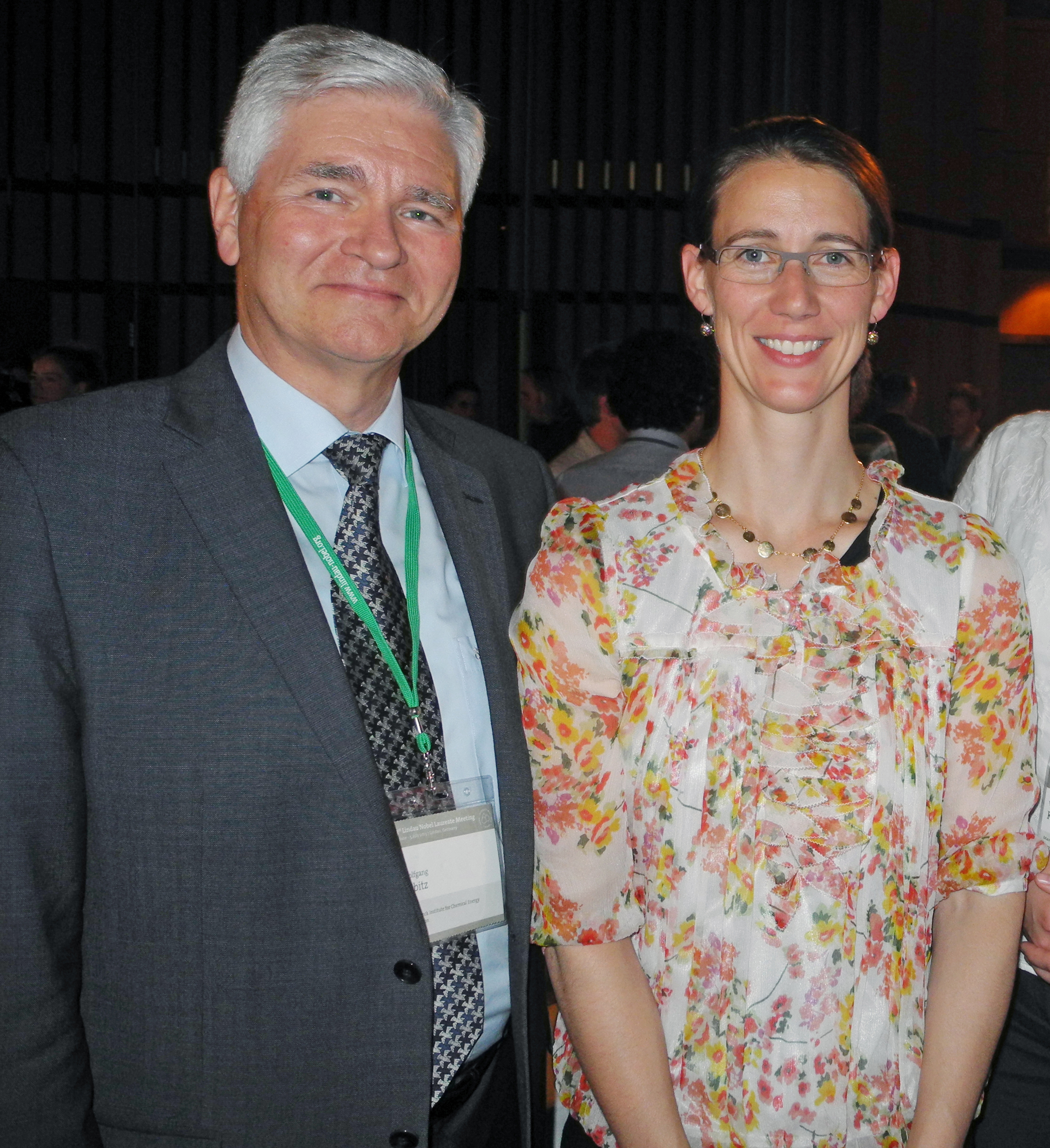
    With the President of the Council of the Lindau Nobel Laureate Meetings, Countess Bettina Bernadotte.

    Weiterführende Links:
    “Clean, free and inexhaustible”

    "Clean, free and inexhaustible"

    Michael Tausch, innovation researcher at the University of Wuppertal, on the enormous potential of solar energy, outdated curricula and his promotion of the chemistry of light

    Professor Tausch, what are you working on right now?
    I'm currently creating material packages for chemistry classes. With these, I want to help teachers create lively, substantive and contemporary lessons in homeschooling as well.

    How can we imagine such a material package?
    The current topic is light – color – energy. For this, I am putting together digital learning paths from texts and videos of experiments and for this I can draw from a large pool. I take a lot from the publicly accessible website "Chemistry with Light" of my research group at the University of Wuppertal, others from my own publications on chemistry didactics. As soon as real experiments are possible again in face-to-face classes, the recorded experiments should be carried out for real – that's the idea.

    How does your package get to the teachers?
    As soon as it is ready, I send it to the various state education servers. There, the materials are integrated and made available to the schools free of charge. This can go quite smoothly, as experience with previous deliveries has shown.

    Are teachers already waiting impatiently for your package of materials?
    Maybe some of them are (laughs). These are the ones who know us and use our materials profitably in the classroom. Others may still be reluctant to accept the offer.

    Why is that?
    Chemistry with light, or photochemistry in technical terms, has not yet made it into the curricula – it is therefore not a compulsory subject. Even during their studies, most of today's teachers had no contact with the subject. Some shy away from it because they consider the subject to be difficult and believe that expensive equipment and toxic reagents are needed for teaching.

    Is this a misconception?
    Yes, chemistry with light can be taught with very simple, harmless and inexpensive chemicals and equipment – not only in lower and upper secondary schools, but sometimes even in kindergarten. There are wonderful, expressive experiments with sunlight, bottles and LED flashlights. Details can be found on the aforementioned website "Chemistry with Light" and in the textbook of the same name, which is aimed at student teachers, teaching staff and interested laypersons. Incidentally, our training courses regularly produce aha experiences: Many teachers then realize how easily photochemistry can be integrated into existing curricula – not only in chemistry lessons, but also in other science subjects.

    In an instructional course, Michael Tausch shows how to build a miniature photogalvanic concentration cell from simple materials and use it to generate electricity.

    How did your enthusiasm for photochemistry come about?
    I became involved with this fascinating subject as a young researcher, at that time still at the Research Institute for Organic Chemistry in Bucharest. After moving to Germany, I worked for twenty years as a teacher of chemistry and mathematics, during which time I developed numerous photochemical experiments to illustrate, for example, the processes of photosynthesis or the formation and decomposition of ozone. Even then, it became apparent that sunlight would be the most important and sustainable form of energy in the 21st century. Since then, a great deal has happened in research and technology – and as a professor, I try to bring this knowledge into teacher training at university and into schools.

    At present, solar radiation makes only a limited contribution to the energy supply. What makes you so optimistic?  
    Among other things, the enormous potential: sunlight is clean, free and virtually inexhaustible. The light irradiation of just one day could be enough to supply all of humanity with energy for a year. Through photovoltaics, solar thermal energy and other processes, we use this resource only to a small extent. What we need are new technologies for converting, storing and efficiently using solar light. Artificial photosynthesis, for example, can be used to produce climate-neutral fuels and basic chemicals. Novel materials, opto-electronic components and new micro- and nanoscopic processes – photochemistry can also contribute to this.

    A grand vision. How can it be realized?
    We would need to capture as much sunlight as possible. A few solar panels on the roof are not enough. In the future, windows and car roofs could also serve as solar cells – corresponding approaches already exist. Flexible platforms in the ocean the size of several soccer fields could also capture sunlight and make it available both photovoltaically and photocatalytically. There are virtually no limits to human creativity – and I want to stimulate it with my work.

    What do you plan to do next?
    Hopefully the pandemic will be over soon. I can't wait to get back out there and give workshops for student teachers and teachers all over the country.

    Saarbrücken 2018 © Robertus Koppies

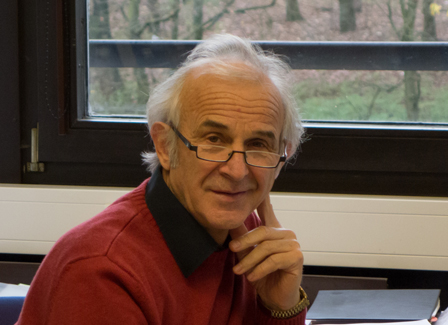
    Professor Tausch in his office at the University of Wuppertal.

    About the person

    Professor Michael W. Tausch (71) is senior professor of Curricular Innovation Research at the University of Wuppertal. There he held the chair of chemistry and its didactics from 2005 to 2018. He previously represented this subject (1996 to 2005) as a C3 professor at Mercator University in Duisburg. From 1976 to 1996, Tausch worked as a subject teacher for chemistry and mathematics at the Kooperative Gesamtschule Weyhe. During this period, he completed his doctorate at the University of Bremen and led teacher training courses for the Society of German Chemists. Michael Tausch comes from Transylvania, Romania, and moved to Germany in 1975 after studying chemistry and working scientifically at the Institute of Organic Chemistry Bucharest. Michael Tausch became a member of the GDNÄ in 2006 at the meeting in Bremen. In 2015, he was the first chemistry didactician to receive the newly established Heinz Schmidkunz Award of the German Chemical Society.

    Workshop "Light Lab Plant": Michael Tausch in front of chemistry teachers in November 2019 in Berlin.

    Further links:

    The GDNÄ mourns the death of its member, Nobel Laureate Paul J. Crutzen

    He discovered the ozone hole

    The GDNÄ mourns the death of its member,
    Nobel Laureate Paul J. Crutzen

    Long-time member of the Society of German Natural Scientists and Physicians (GDNÄ) Professor Paul J. Crutzen passed away on 28 January 2021 at the age of 87. Paul Crutzen received the Nobel Prize in Chemistry in 1995, together with Mario J. Molina and F. Sherwood Rowland, for explaining how nitrogen oxides destroy the ozone layer and the chemical processes that create the ozone hole. 

    "Paul Crutzen was early to focus on the impact of civilisation on the environment, and made important contributions to the study of man-made climate change," says Martin Lohse, President of the GDNÄ. "He was the first to show how human activities damage the ozone layer, laying the groundwork for the global ban on ozone-depleting substances." 

    Paul Crutzen also coined the term Anthropocene to describe the current era in which humans have become one of the most important influencers of atmospheric, biological and geological processes on Earth, shaping the evolution of the planet. He was a great admonisher in the face of increasingly noticeable consequences of interventions in the environment.  In recent years, he worriedly wondered whether humanity would manage to recognise and address climate change as a serious problem soon enough. This was another reason why Crutzen was a convinced mediator between science, politics and society. 

    The GDNÄ will honour Paul J. Crutzen's memory.

    Nobelpreisträger Paul J. Crutzen

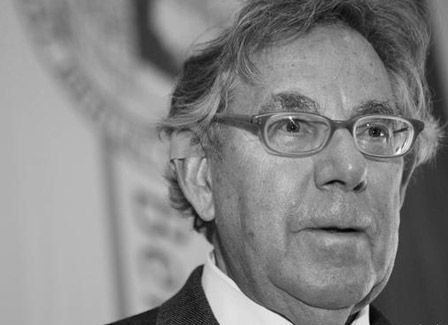
    Nobel Laureate Paul J. Crutzen

    School meets science

    School meets science

    "I’m a Scientist, Get me out of here“ is an online platform in the field of science communication in which researchers, technicians or managers from all fields of science enter into a dialog with schoolchildren.

    The online format, which was developed in Great Britain, has already been used very successfully in schools there for several years. Now the german initiative “Wissenschaft im Dialog” (Science in Dialog) is managing the platform for participation in Germany – a project supported by the GDNÄ. The next round will take place from March 15 to 26, 2021, on the topic of infections. Scientists can still register for it until February 14.

    In the Corona pandemic, in which schools have to organize distance learning and face-to-face teaching in parallel, the new offer can be a welcome change for students and teachers. The free online offering takes place in a protected setting. All participants are registered on the website. Trained moderators accompany the live chats and maintain the question area.

    Experience to date shows that scientists can use the project to improve their communication skills, gain new perspectives on their work and learn more about young people's attitudes to science and research. Participating scientists also stand to win 500 euros in prize money, which they can invest in science communication projects.

    Saarbrücken 2018 © Robertus Koppies
    Logo: "I’m a Scientist, Get me out of here“

    For more information, please visit:

    The GDNÄ mourns the death of its former president Professor Wolfgang Gerok

    In memory

    The GDNÄ mourns the death of its former president Professor Wolfgang Gerok

    The former president of the Society of German Natural Scientists and Physicians (GDNÄ), the medical scientist Professor Wolfgang Gerok, passed away on January 16, 2021 in Freiburg at the age of 94. Wolfgang Gerok was president of the GDNÄ in 1987 to 1988 and 1990 and chaired the 115th Assembly in Freiburg and the 116th Assembly in Berlin. 

    “Wolfgang Gerok was one of the very great physicians of the postwar era”,  says GDNÄ President Professor Martin Lohse. “He knew how to combine clinical medicine with the basic sciences: He lived this and passed it on to his students and friends. With his concepts, Wolfgang Gerok shaped the German scientific landscape – and for the GDNÄ he was an outstanding president.”

    Wolfgang Gerok was born in Tübingen in 1926. After studying medicine in Tübingen and Freiburg, he became an internist specializing in gastroenterology, hepatology, and metabolic diseases. From 1968 to 1994 he held the Chair of Internal Medicine at the Albert Ludwig University of Freiburg and was Medical Director of the Department of Internal Medicine II Medical University Hospital Freiburg. From 1987 to 1995, Wolfgang Gerok was a member of the Senate of the Max Planck Society. As Chairman of the Founding and Planning Committee for the Max Delbrück Center for Molecular Medicine in Berlin-Buch, he laid the foundations for its successful work. Wolfgang Gerok received many awards, including the Grand Federal Cross of Merit with Star, the Cothenius Medal of the Leopoldina and the Ernst Jung Medal for Medicine in Gold, as well as the Order Pour le Mérite for Science and the Arts.

    The GDNÄ will honor the memory of its former president.

    Saarbrücken 2018 © Robertus Koppies

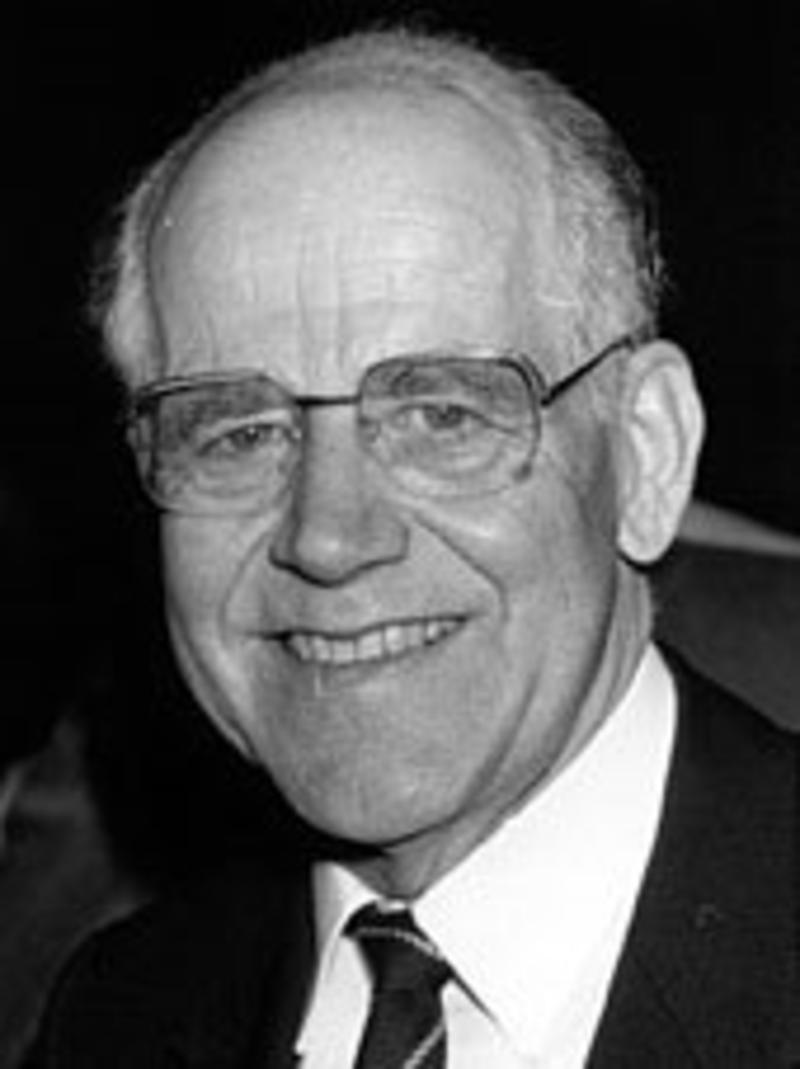
    Wolfgang Gerok