• DE
  • EN
  • Lasker Award for GDNÄ member

    Lasker Award for GDNÄ member

    Professor Dieter Oesterhelt receives high honor for his merits in optogenetics

    A pioneer in optogenetics, longtime GDNÄ member and director emeritus at the Max Planck Institute of Biochemistry, Professor Dieter Oesterhelt, has been awarded the most prestigious biomedical research prize in the United States.

    Oesterhelt will receive the Albert Lasker Award 2021, which is endowed with $250,000, together with his academic student Professor Peter Hegemann of Berlin’s Humboldt University and Professor Karl Deisseroth, who conducts research at Stanford University. The three scientists are being honored for the discovery of light-sensitive proteins in the membrane of unicellular organisms and their use in the further development of optogenetics. With their research, the laureates paved the way for numerous medical applications, including new therapeutic approaches to blindness. Many recipients of the Lasker Prize went on to win the Nobel Prize.

    © Krella, Archiv der Max-Planck-Gesellschaft Berlin

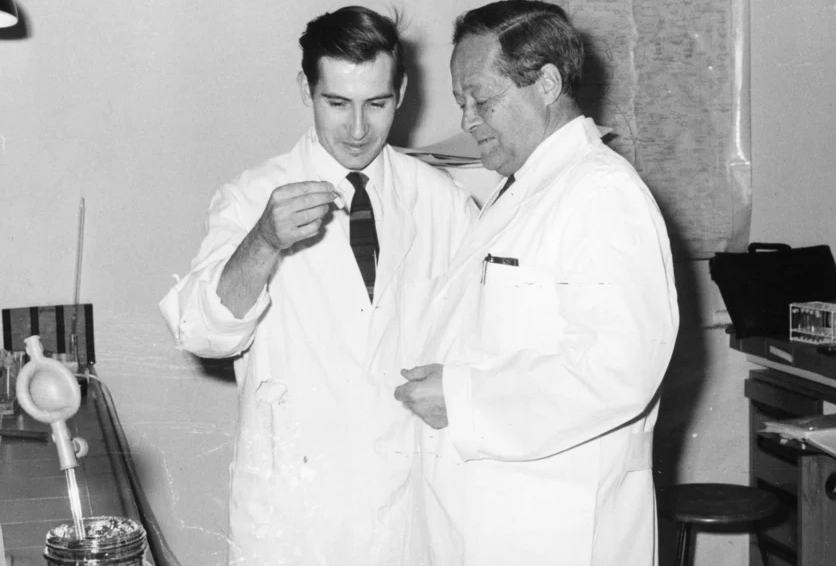
    Dieter Oesterhelt (left) with his doctoral supervisor and Nobel laureate Feodor Lynen, 1967

    Dietrich von Engelhardt – In free speech and friendly solidarity

    “In free speech and friendly solidarity”

    Born in the spirit of awakening, the GDNÄ has always been a forum for great debate and thoughtful analysis. How it has managed this over almost two centuries is described here by the historian of science Dietrich von Engelhardt.

    Professor von Engelhardt, next year the GDNÄ will be 200 years old. Not all science organisations last that long. How do you explain the robustness of the GDNÄ?
    First and foremost with its uniqueness – also in comparison to other scientific societies. Since its foundation in 1822, its core concern has been the interdisciplinary exchange between natural scientists and medical doctors as well as the connection to philosophy and society. In the humanities, this interest in other disciplines is not as pronounced; there is no comparable overarching humanities society. What also stabilised the GDNÄ were the great scientific debates that took place at its meetings and that radiated far into society and culture.

    Which debates are you thinking of?
    For example, the debates on natural science and natural philosophy, on the freedom of research, Darwin’s theory of evolution, mechanism and vitalism, and on popularisation and school education. I am thinking, for example, of Emil du Bois-Reymond’s speech at the 45th Assembly in Leipzig in 1872 on “The Limits of Natural Knowledge”, which dealt with the relationships between force and substance, body and soul, which, in his view, were fundamentally not discernible by natural science. The speech provoked both agreement and opposition ­– just like Ernst Haeckel’s advocacy of Darwin and Darwinism. Rudolf Virchow’s plea for the freedom of science and for the renunciation of the dissemination of the unproven in school lessons and in public also triggered a variety of reactions.

    The GDNÄ as a forum for great debates: can it still do that today?
    Today there are many other platforms for the competition of ideas, the GDNÄ has got strong competition. Its heyday was certainly in the 19th and early 20th centuries. But I also see great opportunities for the GDNÄ in our time, be it in the field of education or in the dialogue between disciplines and in its relationship to society and culture. The response of many meetings has shown this impressively and repeatedly. In this perspective, an important and high-profile topic is also “Image in science”, which will be the focus of the 2022 Assembly in Leipzig.

    © Deutsches Museum, München, Archiv, CD79207

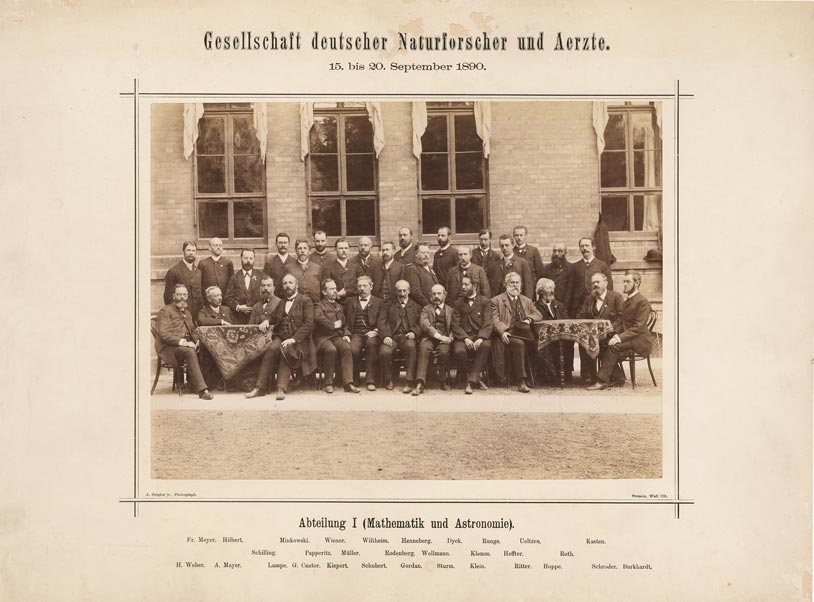
    The Mathematics and Astronomy Section at the 1890 GDNÄ meeting.

    Let us go back to the beginnings. The first meeting of the GDNÄ took place in Leipzig, in the autumn of 1822. What were the founders concerned with?
    The driving force was the natural scientist and natural philosopher Lorenz Oken. He had gathered a group of like-minded people around him, including the romantic natural philosopher, painter and physician Carl Gustav Carus and the chemist and mythologist Johann Salomo Christoph Schweigger. Once a year and always in a different city, hence the epithet Wandergesellschaft, they wanted to inform each other about the state of their own research – in free lecture and friendly solidarity, but also in open discussion. The founders were concerned with lively exchange, also as a counter-design to the rituals of the universities and academies of science that had existed for a long time at that time.

    Did they succeed in this from the beginning?
    As far as can be deduced from the sources, yes. Oken’s call for the Assembly of German Natural Scientists was answered by 13 natural scientists and physicians as members at the first meeting in 1822; a total of 60 people took part in the lectures and discussions. Later it became much more, occasionally 5000 to 7000 visitors came. In the present, the numbers of members and visitors have declined again – younger scientists are setting other priorities for their careers and research. In the early years, the lectures, entirely in the spirit of the romantic philosophy of nature, were about the unity of nature, the connection between nature and spirit, man’s responsibility for nature and also about social commitment. After lively and sometimes controversial discussions, the days came to an end in convivial company with witty table speeches and joint singing.

    Could it be sustained like that?
    Not quite. In 1828, there was a profound structural change and indeed the first crisis. In his speech at the Berlin Assembly, Alexander von Humboldt had strongly advocated the formation of sections in addition to the general sessions, in order to be able to respond appropriately to scientific progress in the individual disciplines and in divergent debate. This initiative was to prove immensely important for the continued existence of the Society, but was initially met with resistance. Some feared a drifting apart of the disciplines, a development that the founding of the GDNÄ had been intended to counteract. Lorenz Oken was also not at all enthusiastic about the division into sections, but it was finally accepted. However, the commonality was by no means completely abolished: the local newspaper wrote about the evening get-together at the 67th meeting in Lübeck in 1895: “One dined I sections and sang together.

    How did Oken react?
    He withdrew somewhat and no longer attended all the meetings. His own activities and commitments took a toll on him in those years. Oken was a committed, pugnacious man who strove for a united Germany, fought for freedom of the press and courageously stood up to his opponents – even if they were sovereigns or named Johann Wolfgang von Goethe. He wrote and published a great deal, campaigned for science education in schools, edited the first interdisciplinary scientific publication “Isis oder Encyclopädische Zeitung” – it appeared from 1819 to 1848 – and finally went to Zurich. There he was appointed the first rector of the university and died in 1851.

    © Deutsches Museum, München, Archiv, CD85577

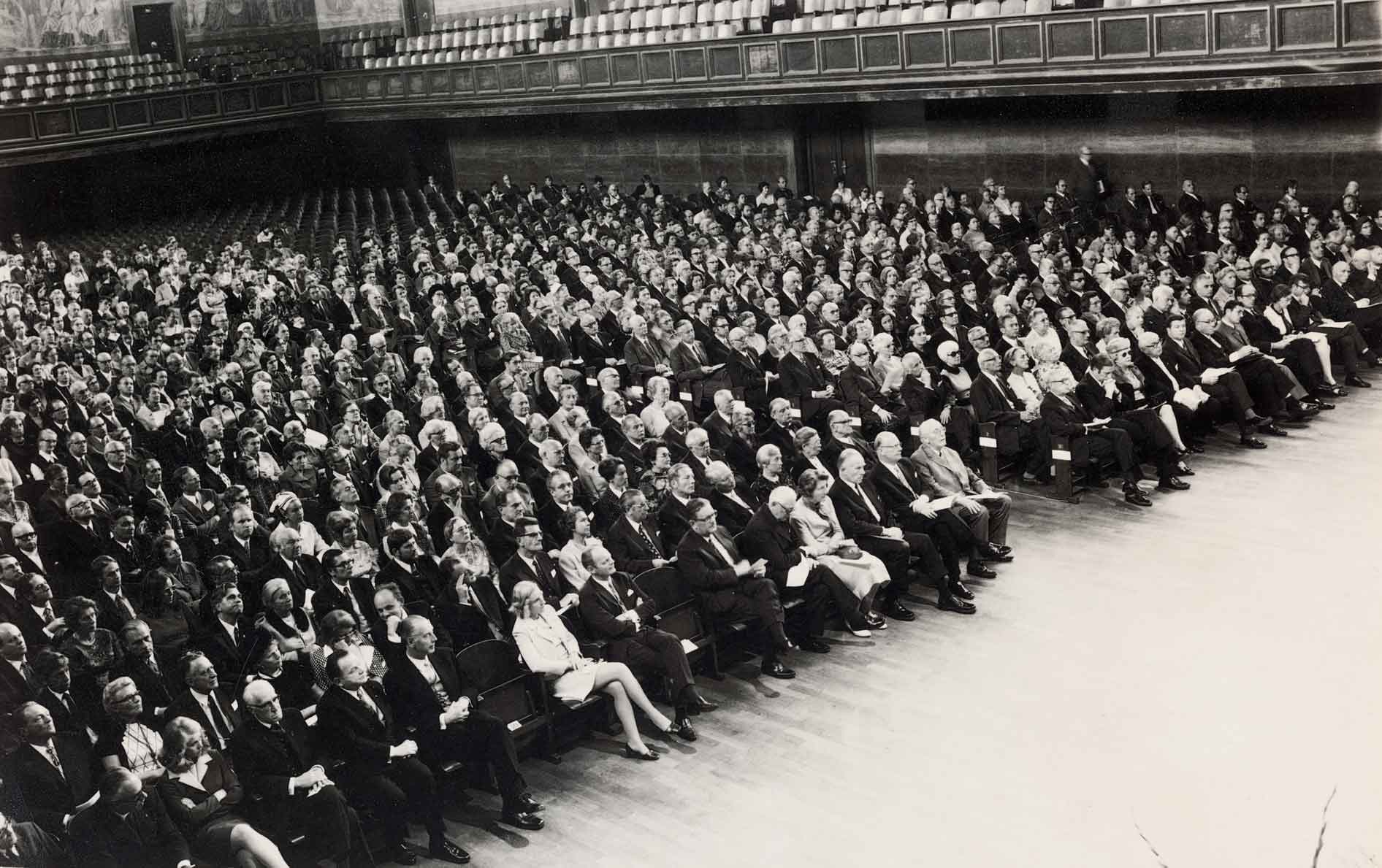
    View of the auditorium at the celebration of the 150th anniversary of the GDNÄ in Munich in October 1972.

    At that time, the GDNÄ was thirty years old. How was it doing?
    The GDNÄ was doing very well. Its meetings were highlights of scientific and it united the scientific and medical elite of Europe. The lectures, which were printed in proceedings, reflected the development of natural sciences and medicine in the 19th century. Researchers from Italy, England, France, Russia and other countries came to the meetings, even if this was not politically safe for some. Inspired by the GDNÄ’s example, similar societies were founded abroad: in 1831 the British Association for the Advancement of Science, two years later the Congrès Scientifiques de France and in 1839 the Italian Riunioni degli Scienziati Italiani. In Germany, numerous scientific and medical societies emerged from the GDNÄ – in physics as well as in chemistry, pharmacy, pathology, gynaecology, surgery and psychiatry. 

    The 20th century was marked by war and reconstruction. How did this affect the GDNÄ?
    During both world wars, meetings were suspended. During the Third Reich, the situation was extremely complex in the three assemblies in 1934 in Hanover, 1936 in Dresden and 1938 in Berlin. In their welcoming speeches, the First Chairmen affirmed the new Nazi era, sometimes with opportunistic rhetoric, sometimes with inner conviction. They dealt with the relationship between German and international research in different emphases, spoke of an orientation towards the national welfare and the benefit for mankind, and at the same time gratefully emphasised the participation of foreign scientists.  The scientific and medical lectures were predominantly free of Nazi ideology, although the lectures on hereditary biology certainly corresponded to the racial ideological discussions of the time. Overarching lectures, such as those by Werner Heisenberg on “Changes in the Foundations of the Exact Sciences in Recent Times” in 1934, by Walter Gerlach on “Theory and Experiment in Exact Science” in 1936 or by Ludwig Aschoff in 1936 on “Pathology and Biology”, were purely scientific and theoretical and explicitly without any connection to the world of politics. The first post-war meeting did not take place again until 1950 in Munich – with a keynote address by the then Federal President Theodor Heuss.

    More than seventy years have passed since then. Is there a defining development in this long period of time that is still noticeable today that you would single out?
    Yes, it has to do with the impetuous optimism about progress that characterised the end of the 19th century and the beginning of the 20th century and which was problematised in the 1970s at the latest. The Heidelberg medical historian Heinrich Schipperges outlined the new attitude in 1972, on the occasion of the 150th anniversary of the GDNÄ, in my opinion very aptly: “At the end of the 20th century, we no longer expect that rational social development is coupled with the progress of scientific discoveries and inventions.” However, he added: “We remain convinced that science is still the most reliable instrument for managing progress.”

    What is the importance of the GDNÄ today? What function can it assume in the spectrum of science organisations?
    The dialogue with the public, which the GDNÄ has always cultivated, is important. In the 19th century, leading naturalists such as the naturalist and natural philosopher Gotthelf Heinrich von Schubert wrote natural science books for school lessons. Today, unfortunately, there is no such thing. In the mid-1990s, an educational commission of the GDNÄ had developed convincing concepts for general science education as, as it put it, “interdisciplinary subject teaching”. However, the implementation in teacher training and everyday school life is still pending. In addition, the GDNÄ as an independent institution is excellently suited to take up central and controversial issues from the natural sciences and medicine for society and culture and to bring them into public discussion. Last but not least, I would like to see it build bridges to the humanities, also to shed light on connections between knowledge of the world and self-knowledge and to address ethical and legal challenges of the present. 

    One question in conclusion: Today, the term “natural researcher” in the GDNÄ name sounds somewhat antiquated. What did people mean by it two hundred years ago?
    If we leave out the natural philosophical dimensions, natural research at that time meant roughly what we understand by natural sciences today. The fact that this term finally prevailed has to do with influences from abroad and the English language. I still consider the term “natural researcher” to be meaningful, attractive and by no means antiquated. In contrast to “natural science” and in agreement with the French “recherche” and English “research”, it emphasises the searching, the questioning, the setting out into the unknown. This is what it is all about, today just as it was when the Society of German Natural Scientists was founded in 1822. 

    Saarbrücken 2018 © Robertus Koppies

    © Institut für Medizingeschichte und Wissenschaftsforschung Lübeck

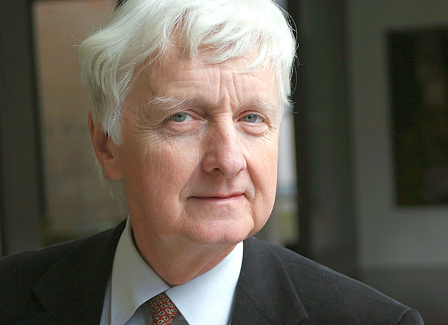
    The science historian Prof. Dr. Dietrich von Engelhardt.

    About the person
    Dietrich von Engelhardt was born in Göttingen in 1941. He studied philosophy, history and Slavic studies in Tübingen, Munich and Heidelberg, received his doctorate in 1969, worked for several years in criminology and criminal therapy and habilitated in 1976 in the Faculty of Natural Sciences and Medicine at the University of Heidelberg. From 1983 to 2007 he was full professor for the history of medicine and general history of science at the University of Lübeck, and from 2008 to 2011 he was acting director of a comparable Institute at the Technical University of Munich (TUM). Dietrich von Engelhardt took on many other responsibilities, including Prorector of the University of Lübeck (1993 to 1996), President of the Academy for Ethics in Medicine (1998 to 2002), Chairman of the Ethics Committee for Medical Research and the Clinical Ethics Committee of the University of Lübeck (2000 to 2007), and Vice-President of the Regional Committee for Ethics in South Tyrol (2001 to 2010). In 1997 he initiated and organised a symposium in Lübeck on the occasion of the 175th anniversary of the GDNÄ.

    Dietrich von Engelhardt has been honoured several times, for example by being admitted to the German Academy of Sciences Leopoldina in 1995 and to other national and international scientific academies. He received the Georg Maurer Medal of the TUM Faculty of Medicine in 2004 and the prize of the Zurich Margrit Egnér Foundation, also in 2004. In 2016, he was awarded the Alexander von Humboldt Medal for his research on the history of the GDNÄ.

    Dietrich von Engelhardt’s scientific focus areas include: Theory of Medicine; Medical Ethics; Medicine in Modern Literature; 16th Century Botany: Natural Philosophy, Natural Science and Medicine in Idealism and Romanticism; History of Psychiatry; Scientific and Medical Journeys in Modern Times; European Scientific Relations; Dealing with Illness by the Sick; Bibliotherapy; Biographies and Pathographies of Natural Scientists, Physicians and Artists.

    Further links:

    Books (Ed. Dietrich von Engelhardt)

    >> Forschung und Fortschritt, Festschrift zum 175-jährigen Jubiläum der Gesellschaft Deutscher Naturforscher und Ärzte, Stuttgart 1997 (anthology with seminal speeches from Lorenz Oken to Hubert Markl; available in antiquarian bookshops)
    >> Zwei Jahrhunderte Wissenschaft und Forschung in Deutschland, Entwicklungen – Perspektiven (Two Centuries of Science and Research in Germany, Developments – Perspectives), Stuttgart 1998 (conference proceedings on the occasion of the 175th anniversary of the GDNÄ; available in antiquarian bookshops)

    © G. C. Wilder / Stadtmuseum Fembo-Haus, Nürnberg

    On the occasion of the 23rd meeting of the „Gentlemen Natural Scientists and Physicians” in 1845, the city of Nuremberg invited to a banquet in the town hall.

    Tina Romeis – Fascinating and beautiful

    „Fascinating and beautiful“

    They provide oxygen and food and create a healthy environment: plants are vital and yet increasingly threatened. Professor Tina Romeis at the Leibniz Institute of Plant Biochemistry (IPB) in Halle is researching how their resistance to drought and other stress factors can be specifically improved.

    Professor Romeis, climate change is affecting plants worldwide. Even in our latitudes, trees, shrubs and many other plants have been affected by the droughts of recent years. Does this concern you in your research?
    Yes, drought stress is a major issue for me and many of my colleagues here at the institute. As basic researchers, we want to understand down to the molecular details what happens in plants during prolonged water shortages. With this knowledge, it should be possible to increase their resistance in a targeted way.

    How are you tackling the problem?
    Our institute specializes in small molecules. We focus on certain metabolites that make a decisive contribution to a plant’s resistance to drought. We determine such metabolites in plants that cope differently well with water shortages. Trees such as beech and oak still have a fairly high drought tolerance, while conifers have major problems. We also identify the small molecules in signaling pathways that spread information about environmental conditions within a plant. The plant also uses these pathways to mobilize its defenses, for example in the event of water shortage.

    Das deutsche Tiefsee-Forschungsschiff „Sonne" © Thomas Walter

    © IPB

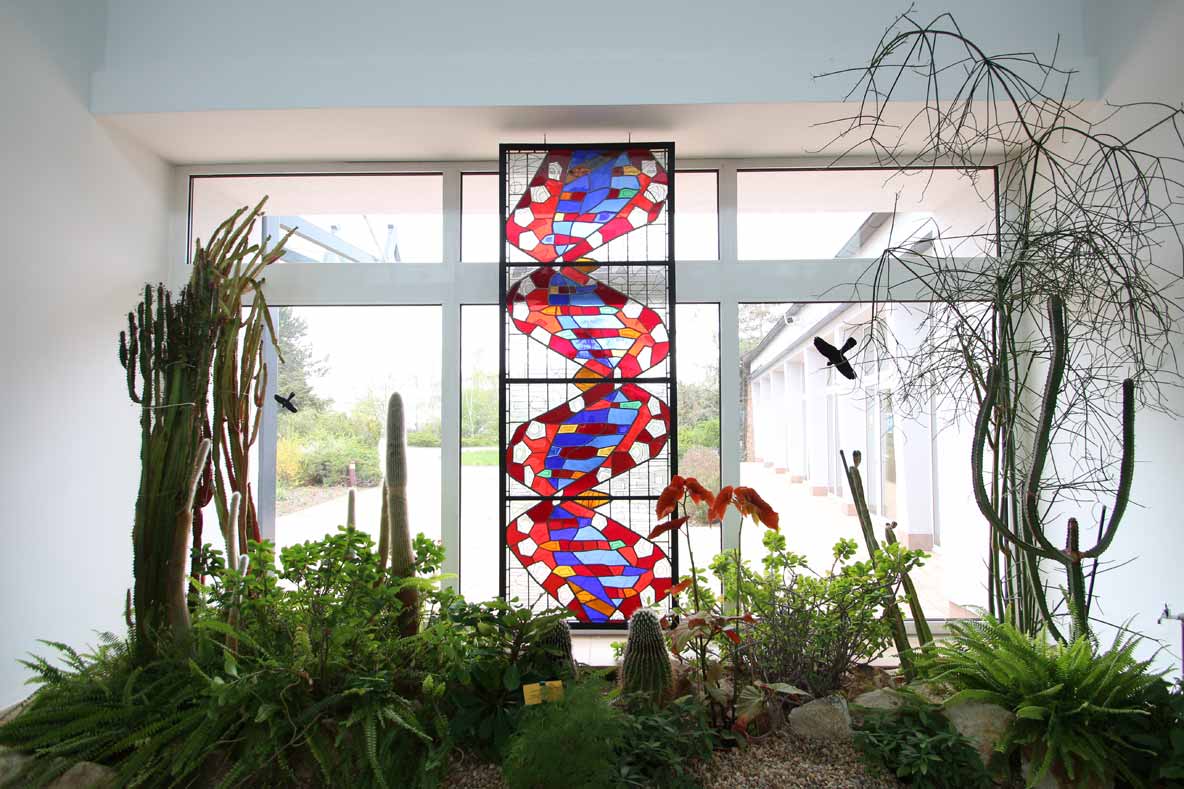
     In the foyer of the Leibniz Institute of Plant Biochemistry (IPB) in Halle.

    How can we imagine plant defenses?
    When plants are attacked, for example by bacteria or feeding insects, they activate defense mechanisms and substances with which they can defend themselves against future attacks. Calcium-dependent protein kinases are involved in this, and I am particularly interested in them in my research. These are enzymes that are not only important for the immune defense of plants, they also shape plant stress tolerance to drought, cold and nutrient deficiency. Interestingly, there are similar calcium-regulated protein kinases in the human brain that are critical for learning and memory.

    Can plants also remember?
    Yes, you can certainly say that. Of course, plants don’t have a brain or nervous system like we humans do. But they do have a kind of molecular memory. My research group is investigating exactly how it works, what information plants store in the short or long term, and what factors regulate the forgetting of information.

    What do you do with findings that could be interesting for application?
    If that’s the case, we turn to the Leibniz Institute of Plant Genetics and Crop Plant Research in nearby Gatersleben. The exchange and cooperation between our institutes works excellently and the division of roles is mutually agreed: We at the IPB are responsible for basic biochemical research, while Gatersleben has species-rich seed banks that are ideally suited for new breeding or targeted genetic modification.

    Such developments are very important for feeding a growing world population under climate change. Does this have an impact on your work?
    Admittedly, we do not carry out plant breeding, so we do not provide directly applicable solutions. But the questions we ask in our basic biochemical research are naturally guided by global challenges such as climate change. The fact that these research questions urgently need to be answered is also evident from the fact that science in our field is booming worldwide. In Germany, we are currently still in a very good position. However, I am somewhat skeptical about the future. Many young people don’t want to do a doctorate after graduation. Among them, I observe a strong interest in nature conservation, environmental management and ecological education – basic research is not their main concern.

    Was that the reason why you moved from Freie Universität Berlin to the Leibniz Research Institute in Halle three years ago?
    I wanted to concentrate on research, and the conditions at the IPB are ideal for that. The equipment we have here is something you can only dream of at most universities. One example is our mass spectrometer, which we use to determine the masses of atoms and molecules in plants, another is the confocal microscope, which makes tiny plant reactions visible. And with the help of so-called FRET microscopy, we can observe biochemical processes in the plant live.

    © IPB

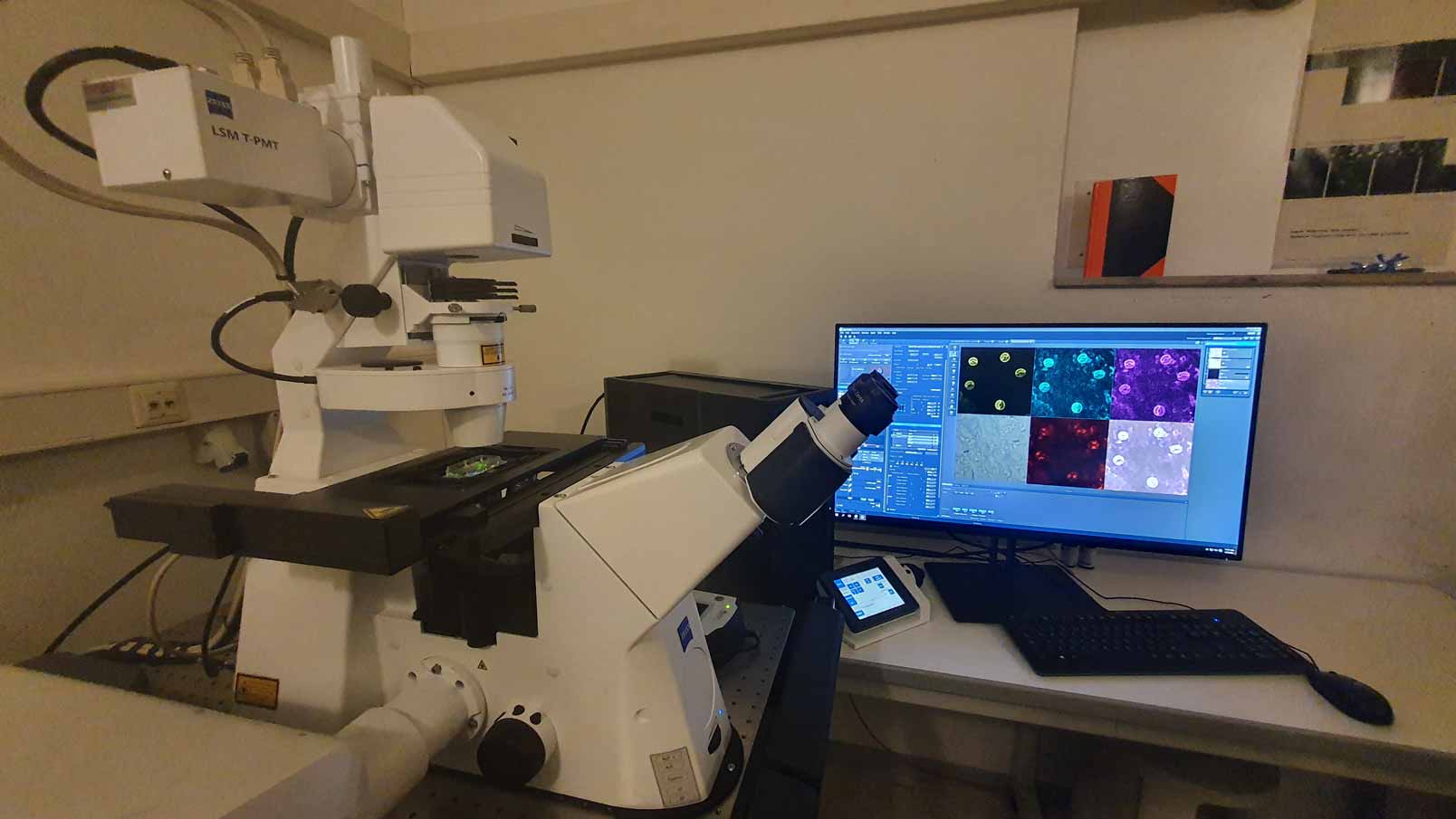
    With this confocal microscope, the scientists led by Professor Romeis study the behaviour of living plants under different conditions, such as severe drought. The image tiles on the screen show the same leaf of the thale cress Arabidopsis thaliana, which is frequently used for research purposes. Individual sphincter cells (stomata) on the underside of a leaf are shown – they control the gas exchange and water balance in the plant. The microscope demonstrates the biochemical processes that lead to the opening of the cells in favourable conditions and to their closing in dry conditions.

    These sound like good prerequisites for success stories.
    And there are always success stories, even across disciplines. Just a few months ago, a spectacular discovery was published to which research at our institute contributed. It was about the trigger of a mysterious neurodegenerative disease in bald eagles, which was identified after years of joint research with American scientists. Since the 1990s, the disease had killed many birds, reptiles and fish in the southern United States. The cause was a toxin produced by cyanobacteria that thrive on certain aquatic plants in the affected areas. The study was published as a cover story in the journal “Science” and brought large reputation to plant research in Halle. My colleagues at the institute have now just succeeded in the total chemical synthesis of this toxin, which is a toxic metabolite.

    The study was also reported in the German media. Was that due to the attractive topic or is public interest in scientific topics generally high?
    It had a lot to do with the particular subject matter. In general, I’m observing an increasing scientific fatigue and a loss of confidence. The many plagiarism scandals have done a lot of damage to the relationship between science and society. We have a lot of catching up to do.

    What role can the GDNÄ play in this? After all, the exchange with society is one of its major concerns.
    I believe that the GDNÄ can achieve a lot here. It is a neutral body and does not represent any specific professional interests. That is a good basis for a trusting dialog with the public.

    In the GDNÄ, you have recently started representing the subject of biology. What would you like to achieve in this function?
    Plants are extremely important for our lives, for energy supply and the entire ecosystem, and they are becoming increasingly important. In addition, plants are beautiful and fascinating. I would like to raise awareness of that and also communicate it to the next generation. The GDNÄ’s programs for students and teachers offer excellent opportunities for this.

    Saarbrücken 2018 © Robertus Koppies

    © IPB

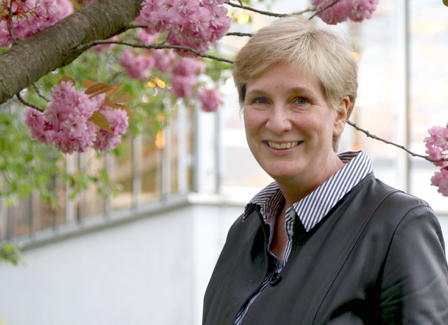
    Prof. Dr. Tina Romeis

    © IPB

    A research facility in green surroundings.

    About the person
    Since 2019, Tina Romeis has headed the “Biochemistry of Plant Interactions” department at the Leibniz Institute of Plant Biochemistry (IPB) in Halle an der Saale. At the same time, the then 54-year-old was appointed professor at Martin Luther University Halle-Wittenberg.  Prior to this, Tina Romeis had headed the Department of Plant Biochemistry at Freie Universität Berlin for 15 years. The call to Berlin was preceded by research activities at the Max Planck Institute for Plant Breeding Research in Cologne, Germany. There she was able to establish herself as an independent group leader thanks to the highly endowed Sofia Kovalevskaja Award of the Alexander von Humboldt Foundation, which she received in 2001. Her habilitation in genetics and molecular phytopathology took place at the Institute of Genetics of the Ludwig-Maximilians-University of Munich. Further milestones in her career were research residencies in Munich and at the John Innes Centre in Norwich, UK, and before that a PhD at the Max Planck Institute for Developmental Biology in Tübingen. In Tübingen, at the Eberhard Karls University, Tina Romeis studied biochemistry, organic chemistry and plant physiology. Born in Würzburg, she grew up in the Steigerwald region of Franconia.

    Professor Romeis’ research interests focus in particular on calcium-dependent protein kinases. These enzymes are not only important for the immune defense of plants, they also shape their stress tolerance to drought, cold and nutrient deficiency. The biochemist wants to make her basic research useful in cooperation with research institutions in the region: both for agriculture and forestry as well as for understanding ecological relationships.

    Further links:

    Thomas Elsässer – Snapshots of twitching molecules

    Snapshots of twitching molecules

    Berlin-based experimental physicist Thomas Elsässer uses ultrashort light pulses to make tiny movements of matter visible. What he and his team are investigating is of great practical use for the development of new materials, for medicine and biology – and for a fast, stable Internet. 

    Professor Elsässer, you head the Max Born Institute for Nonlinear Optics and Short Pulse Spectroscopy.  That sounds pretty complicated. Can you explain it simply?
    We generate ultra-short and ultra-intense light pulses and study their interaction with matter. In this way, we can image and precisely study extremely fast processes in atoms and molecules.

    So you are doing speed imaging in a world that is normally hidden from the human eye?
    Yes, you could put it that way. In fact, it is now possible to follow electron movements in solids, molecular movements in liquids or the processes of chemical reactions in real time. First, the process under investigation is triggered by an ultrashort light pulse, and then, in the next step, a second light pulse is used to determine the current value of an optical measurand, for example the instantaneous reflectance of a molecular sample. Repeated measurements result in a sequence of snapshots that show a sequence of movements, similar to a motion picture film. But it’s not just about observing and imaging: Tailored ultrashort light pulses can also be used to specifically control processes, for example to optimize chemical reactions.

    Ultrashort pulses are obviously the linchpin: What exactly is meant by this?
    We’re talking about light flashes lasting just a few femtoseconds. A femtosecond is one billionth of a millionth of a second. Such unimaginably short light pulses, in which a power of several million megawatts is concentrated for a very short time, are generated in special lasers. This is the only way to study ultrashort processes in matter.

    Das deutsche Tiefsee-Forschungsschiff „Sonne" © Thomas Walter

    © Max-Born-Institut

    An experimental setup for generating intense femtosecond pulses in the infrared range at a wavelength of five micrometers. At the Max Born Institute, the system is used to generate ultrashort hard X-ray pulses.

    Can the findings also be applied in practice?
    Yes, there are already a large number of applications in the technical and medical fields, and new ones are being added all the time. One example is the Internet, whose main strand today consists of fiber optic cables. There, huge amounts of data are transmitted with light pulses in the picosecond range – a picosecond is one millionth of a millionth of a second. Another example comes from materials science: If materials are processed with a femtosecond laser, high-precision holes can be produced without fraying the edges. Very good experience has been made with this in the production of injection nozzles. Or let’s take medicine: Here, research in my field is contributing to ever more precise imaging processes and precisely fitting laser therapies, for example for retinal welding in ophthalmology.

    What are the major trends in your field?
    Currently, there is massive international investment in large-scale machines to detect ultrafast structural changes in matter with ultrashort X-ray pulses. Applications range from physics, chemistry and materials research to biology. Such large-scale machines already exist in Stanford, Hamburg, Rüschlikon and some Asian countries, and further machines are under construction elsewhere. It is already clear that the determination of instantaneous atomic structures together with results from ultrafast spectroscopy can capture the dynamics of matter down to the smallest detail.

    What are the current focal points at your institute?
    In my research group, the main focus is currently on the BIOVIB project, for which I have received a second ERC grant in 2019, associated with funding of 2.5 million euros. With BIOVIB, we are trying to elucidate dynamic electrical interactions in biological macromolecules. The current focus is on transfer RNA, or tRNA for short, which reads information from messenger RNA (mRNA) in the cell like a read head and enables the synthesis of proteins from amino acids. The structure of tRNA is stabilized by electrical interactions with its environment, which we would like to understand in detail. If we find the right starting points here, targeted modifications in the sense of molecular engineering are also conceivable. Other groups at the institute are working, for example, on the dynamics of electrons in the sub-femtosecond time range and ultrafast magnetic processes.

    Today, the Max Born Institute is a vital, renowned research institution. Was this foreseeable in 1993 when you came to the southeast of Berlin?
    I hoped so, of course, but it was not yet apparent at the time. At the beginning of the 1990s, the Adlershof research site was not yet competitive and at times looked like a sandy desert with rather dilapidated buildings. Our institute had emerged from parts of the Central Institute for Optics and Spectroscopy of the Academy of Sciences of the GDR and over the years transformed itself into an internationally competitive research facility. We have received much support along the way, including excellent cooperation with other research institutions in the region. Our basic funding from the federal and state governments, and here primarily from the state of Berlin, is good. As a scientist, I have every freedom. I really can’t complain.

    So you are fully satisfied?
    Not entirely. We are critical of the planned new Higher Education Act for Berlin, which will give the Senate significantly more influence, for example in appointing professors. In general, we have problems with the increasing density of regulations in research and administration. This often takes on Kafkaesque features, delays the allocation of research funds, and thus damages our competitiveness. The shortage of funds at Berlin’s universities is also a major problem for non-university research, because the universities are very important partners for us. Unfortunately, there is a pronounced culture of mistrust in some places in the Berlin administration, quite unlike in other federal states. This is not good for science at all.

    You are committed to science and research far beyond your institute. What drives you?
    I simply enjoy thinking outside the box and contributing my own experience. For example, at the Berlin-Brandenburg Academy of Sciences and Humanities, where I am currently involved in several projects. For example, we are looking at scientific freedom and cancel culture in academia, i.e., the trend toward excluding scientists with dissenting opinions. I also often give school talks in Brandenburg and talk to young people about my research, life as a scientist, and their ideas for the future.

    You have been a member of the GDNÄ for many years and are involved as a representative of the subject of physics. Is there anything you would like to achieve in this role?
    It would be wonderful if we could involve the public and especially young people even more – I would very much like to contribute to that. I was able to experience that the GDNÄ has an excellent image in the scientific community when we invited professional colleagues to give lectures at the 200th anniversary celebration in Leipzig: There were only acceptances. A good idea to strengthen the cohesion of the members between meetings are regional meetings. And we can certainly expand the programs for schoolchildren, which are already excellent. For example, with free Zoom lectures for young people – I would get involved in that right away. For adults, we could put info flyers on the web on relevant, current issues, such as electricity transport from the coasts to the south, climate change, or topics related to the Internet. The GDNÄ has a great deal of expertise in this area.

    Saarbrücken 2018 © Robertus Koppies

    © Max-Born-Institut / Ralf Günther

    Prof. Dr. Thomas Elsässer

    About the person
    Prof. Dr. Thomas Elsässer is Director at the Max Born Institute for Nonlinear Optics and Short Pulse Spectroscopy in Berlin-Adlershof and Professor of Experimental Physics at the Humboldt University (HU). He came to Berlin in 1993, when Adlershof still “looked like a sandy desert with GDR buildings”, reports the native of Tübingen in our interview. He had made a conscious decision to do pioneering work in the southeast of Berlin and turned down calls to the universities of Zurich and Stuttgart.

    In 1991, Thomas Elsässer had habilitated – at the Technical University of Munich, where he had earned his doctorate after completing his physics degree with a thesis in the field of picosecond spectroscopy and had spent several years conducting research. In 1990, he spent time as a postdoc at the famous Bell Labs in New Jersey.

    Now 63, he has received many prizes and awards, including two European Research Council (ERC) Advanced Grants in 2009 and 2019. In 2013, Thomas Elsässer turned down an offer from Stanford.

    He is a member of the Berlin-Brandenburg Academy. He has been involved in the GDNÄ as a physics subject representative since 2014.

    © Max-Born-Institut

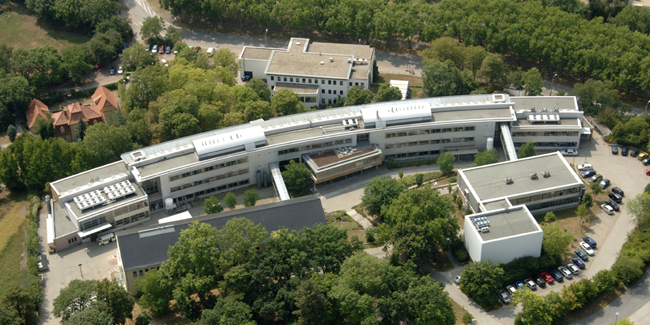
    An important institution on the Adlershof science campus in southeast Berlin: the Max Born Institute, which is housed in several buildings with its offices, laboratories, seminar rooms and a lecture hall.

    The Institut

    The Max Born Institute for Nonlinear Optics and Short Pulse Spectroscopy (MBI) is a scientifically independent research institution. It is part of the Forschungsverbund Berlin e.V. and a member of the Leibniz Association and is institutionally funded in equal parts by the Federal Government and the Länder, in particular by Berlin.

    The MBI maintains close scientific ties with Berlin’s universities. Its directors have each been appointed jointly with one of the Berlin universities. Marc Vrakking is a professor at FU Berlin, Stefan Eisebitt at TU Berlin, and Thomas Elsässer at HU Berlin.

    The institute was founded in late 1991 and has nearly 200 employees, almost half of whom are scientists. The annual budget is about 23 million euros.

    Max Born, the institute’s namesake, is one of the most important pioneers of modern physics. Born (together with Walther Bothe) received the Nobel Prize in Physics in 1954 for his fundamental research in quantum mechanics.

    Wolfgang T. Donner: The GDNÄ bids farewell to its former Secretary General.

    Wolfgang T. Donner

    The GDNÄ bids farewell to its former Secretary General.

    From 1999 to 2004, Dr. Wolfgang Donner was Secretary General of the Society of German Natural Scientists and Physicians (GDNÄ). In this function, the former member of the Executive Board of Bayer AG was responsible for the organisational preparation and implementation of important GDNÄ meetings. On 5 May 2021, Wolfgang Donner died in the circle of his immediate family in Cologne at the age of 86.  

    The President of the GDNÄ, Professor Martin Lohse, says: “Wolfgang Donner led the GDNÄ with great commitment and reliability as Secretary General. The successful meetings of our society in Berlin, Bonn, Halle/Saale and Passau bore his signature. Later, he assisted our Board as  adviser and put his experience and networks at the service of the GDNÄ. We remain bound to him and his family in gratitude and sympathy.” 

    Born in Breslau, Wolfgang Donner came to Hamburg after the war to study physics, where he passed his diploma examination in 1962. He then moved to the University of Frankfurt. There he earned his doctorate and did research for several years as an assistant at the Institute for Theoretical Physics. In 1967, together with his wife, he left for Australia by cargo ship. As a visiting scientist at the University of Perth, Donner began work on the two-volume textbook “Theory of Nuclear Spectra” and expanded his computer science know-how. He was to find his professional home at Bayer AG in Leverkusen, where he joined in 1968 and remained until his retirement in 1997. His field of work shifted more and more towards chemistry during this time, and he was very committed to the digitisation of research. In 1987, he was honoured for this with the Otto Bayer Medal; this was followed in 1990 by his admission to the Bayer Board of Directors. 

    The GDNÄ will honour Wolfgang T. Donner’s memory.

    Nobelpreisträger Paul J. Crutzen

    Wolfgang T. Donner