• DE
  • EN
  • Student Program: Team portraits now on Instagram

    Student Program

    Team portraits now on Instagram

    New on the GDNÄ’s own Instagram channel @gdnae are short video portraits of six student program teams from biology, chemistry, mathematics, medicine, physics and engineering. The young people describe on camera , how they experienced the 200th anniversary of the GDNÄ and what participation in the student program means for their future. On Instagram, the team portraits will be published successively.

    The Instagram posts were produced by a young team from Stuttgart Media University. The team includes Gloria Gamarnik, Lena Dagenbach and Maren Krämer, three students from the Crossmedia Editorial/Public Relations program. During the Leipzig anniversary celebration, they provided the Instagram community with up-to-the-minute impressions of the conference events. The focus of the coverage was the GDNÄ’s student program. The GDNÄ Instagram project is led by Dr. Alexander Mäder, science journalist and professor at the Media University.

    Nobelpreisträger Paul J. Crutzen

    © Webster2703 / Pixabay

    School Programme 2022: A brief portrait of all teams

    You are currently viewing a placeholder content from Default. To access the actual content, click the button below. Please note that doing so will share data with third-party providers.

    More Information
    Student Program 2022: Scholarship holders take stock (only in German).

    You are currently viewing a placeholder content from Default. To access the actual content, click the button below. Please note that doing so will share data with third-party providers.

    More Information
    Student Program 2022: Former scholarship holders report back (only in German).

    You are currently viewing a placeholder content from Default. To access the actual content, click the button below. Please note that doing so will share data with third-party providers.

    More Information
    Student Program 2022: The Biology Team introduces itself (only in German).

    You are currently viewing a placeholder content from Default. To access the actual content, click the button below. Please note that doing so will share data with third-party providers.

    More Information
    Student Program 2022: The Chemistry Team introduces itself (only in German).

    You are currently viewing a placeholder content from Default. To access the actual content, click the button below. Please note that doing so will share data with third-party providers.

    More Information
    Student Program 2022: The Mathematics Team introduces itself (only in German).

    You are currently viewing a placeholder content from Default. To access the actual content, click the button below. Please note that doing so will share data with third-party providers.

    More Information
    Student Program 2022: The Medicine Team introduces itself (only in German).

    You are currently viewing a placeholder content from Default. To access the actual content, click the button below. Please note that doing so will share data with third-party providers.

    More Information
    Student Program 2022: The Physics Team introduces itself (only in German).

    You are currently viewing a placeholder content from Default. To access the actual content, click the button below. Please note that doing so will share data with third-party providers.

    More Information
    Student Program 2022: The Technology Team introduces itself (only in German).

    Anke Kaysser-Pyzalla: A breeding ground for new ideas

    “A breeding ground for new ideas”

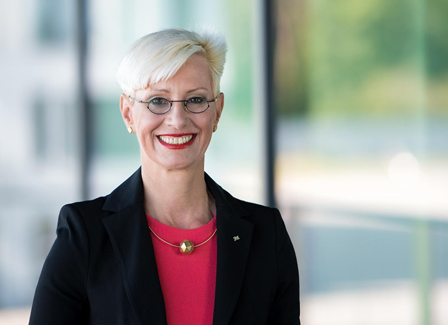
    She is the head of the German Aerospace Center and a new member of the GDNÄ’s Executive Board. In this interview, engineer Anke Kaysser-Pyzalla explains what drives her and what she plans to do.  

    Professor Kaysser-Pyzalla, you have been Vice President of the GDNÄ since the beginning of 2023. Do you already have plans for the new office? Yes I do, and two areas are particularly important to me: on the one hand, the recruitment of young people for professions in the thematic spectrum of the GDNÄ, and on the other hand, the interdisciplinary approach to current challenges such as climate change, energy supply or global health. In these areas, the GDNÄ can achieve a lot. It radiates fascination and enthusiasm for the natural sciences, through which we can attract significantly more people to study in this field. I am thinking not only of high school students, but also of adults with professional experience who can imagine pursuing a second degree. There are so many interesting career paths – in research and development, at universities, in large companies, but also in small and medium-sized companies – I would like to focus more on this. 

    The topic of interdisciplinarity: Why is it so important to you and what role can the GDNÄ play in this?
    We will only be able to overcome the major problems facing humanity through interdisciplinary cooperation, that is the consensus today. The GDNÄ, whose hallmark is interdisciplinarity, can serve as a platform for exchange among experts, a breeding ground for new ideas and a place for public dialogue. 

    You will not suffer from a lack of work as Chairwoman of the Executive Board of the German Aerospace Center. How much time and energy does the main office leave you for voluntary activities, for example on the GDNÄ board?
    My days are indeed scheduled. But I make time for the GDNÄ because I think people in positions like mine should also be committed to society. I also have wonderful colleagues at DLR and in the GDNÄ who support me.

    Institut für Quantenoptik und Quanteninformation (IQOQI). © IQOQI/M.R.Knabl

    © DLR (CC BY-NC-ND 3.0)

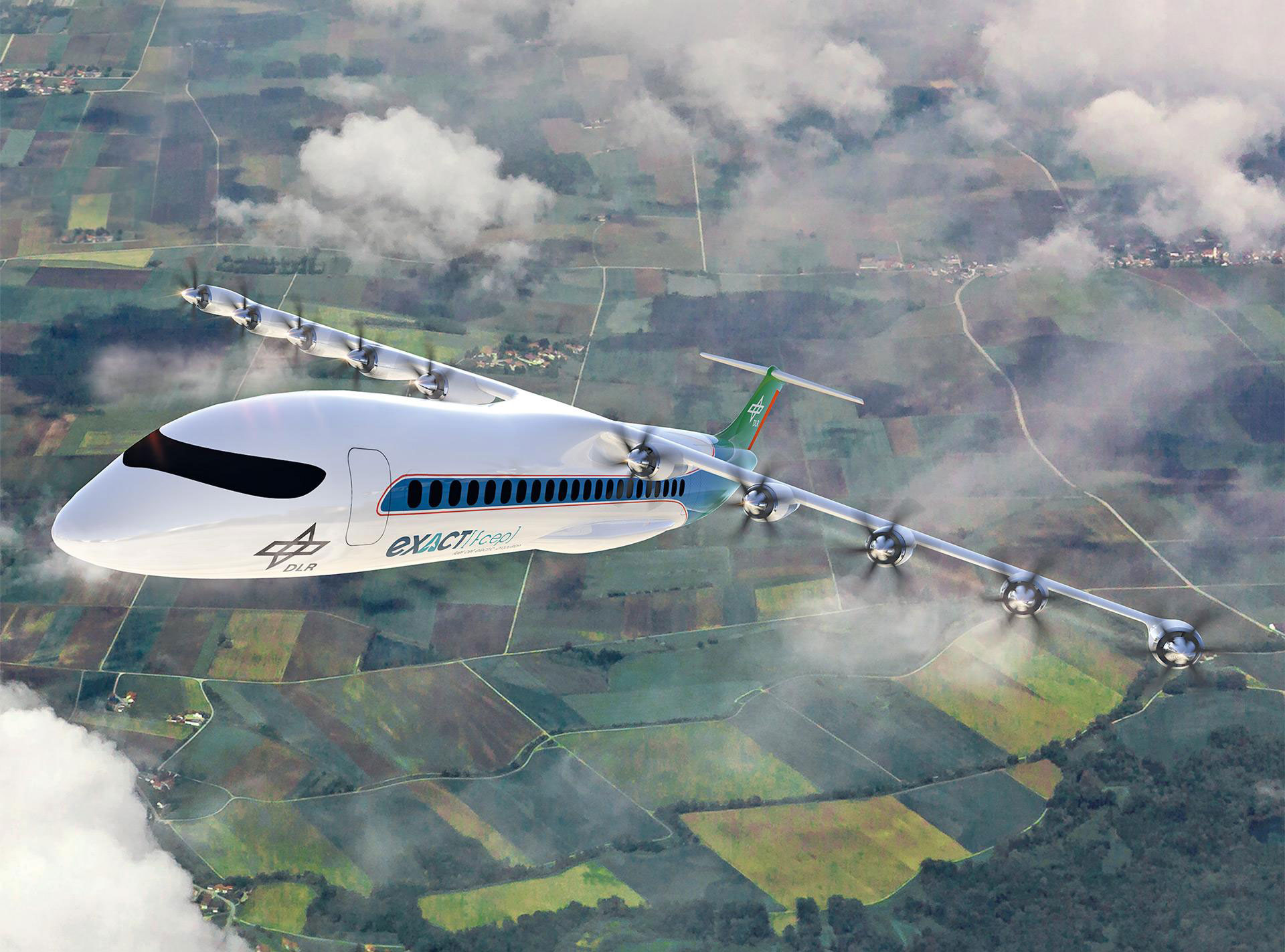
    A regional aircraft with fuel cell propulsion developed at DLR in test operation. With 25 institutes and facilities in aeronautics research, DLR is driving the change towards sustainable, environmentally compatible aviation.

    How can we imagine your day-to-day professional life as head of DLR?
    I spend most of my time in meetings and conferences, most of which are held online in the interest of sustainability and efficiency. Internally, organizational development in the direction of modern forms of work is a big topic for us right now. But I’m also on the road, for example at DLR sites, or for personal discussions with our cooperation partners in Germany and abroad. 

    Who are these partners?
    We work with scientists in academic and industrial research, with large, medium-sized and smaller companies, and with the German armed forces. Abroad, we cooperate closely with research institutions and companies in other European countries, especially France, but also the U.S., Australia, Singapore and Japan – to name just a few countries.   

    China is not one of them?
    Due to the changing geopolitical situation and international tensions, DLR has consistently reduced its collaborations with China, and existing forms of cooperation are coming to an end. 

    Where does DLR stand today and where is it headed?
    With more than ten thousand employees, thirty locations and more than fifty institutes and research facilities, we are the largest research center in the engineering field in Europe. We are concerned with aerospace, energy supply, mobility, but also security and defense research and disaster relief. Our work is application-oriented, which means that our research always has an eye on the way it will be used in industry and society. We fly satellites that are important not only for earth and climate observation, but also for navigation, for example in the future topic of autonomous driving. DLR owns a large fleet of aircraft and conducts intensive research into climate-friendly flying.

    Labor im Innsbrucker Institut für Quantenoptik und Quanteninformation © IQOQI/M.R.Knabl

    © DLR

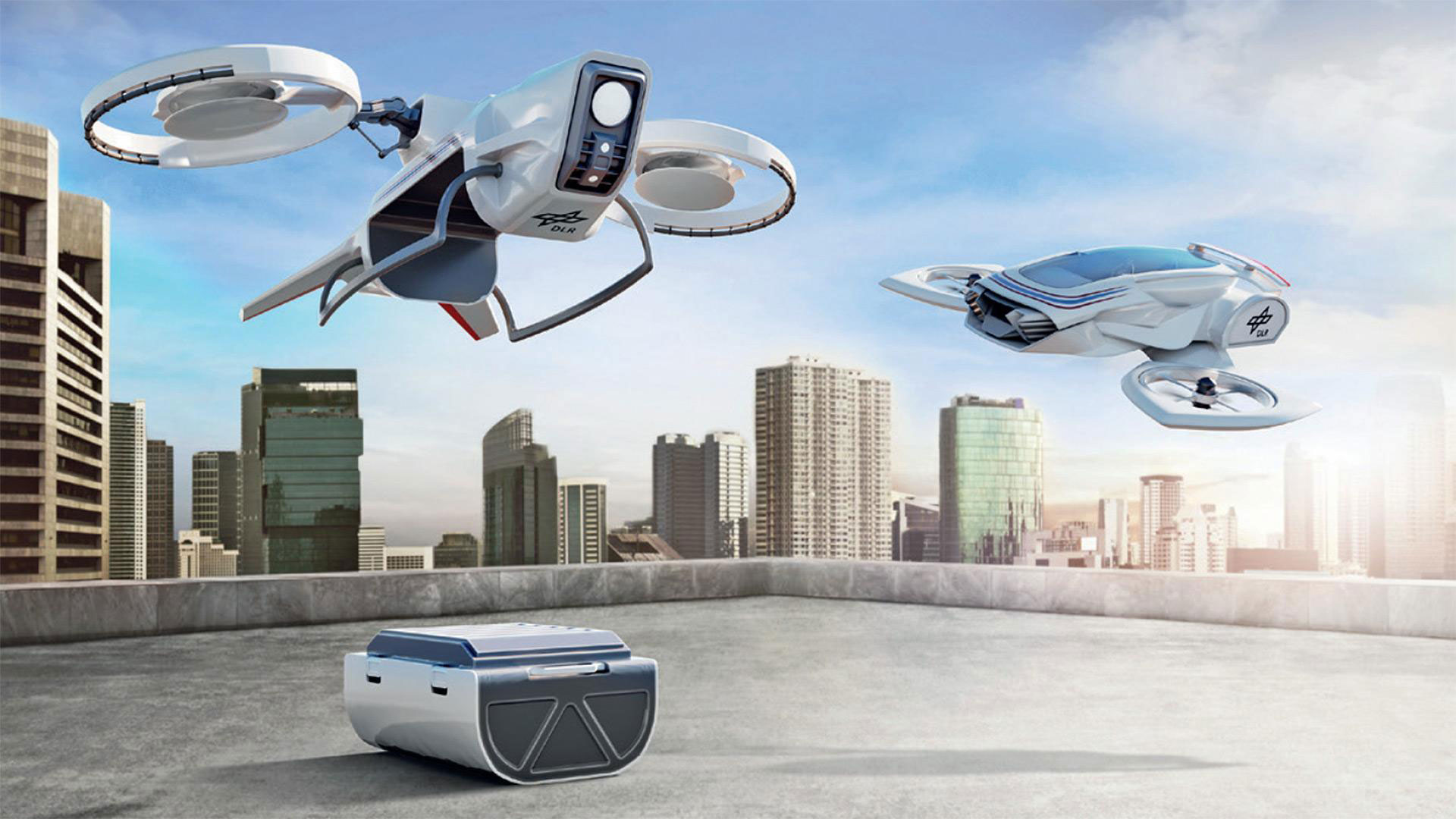
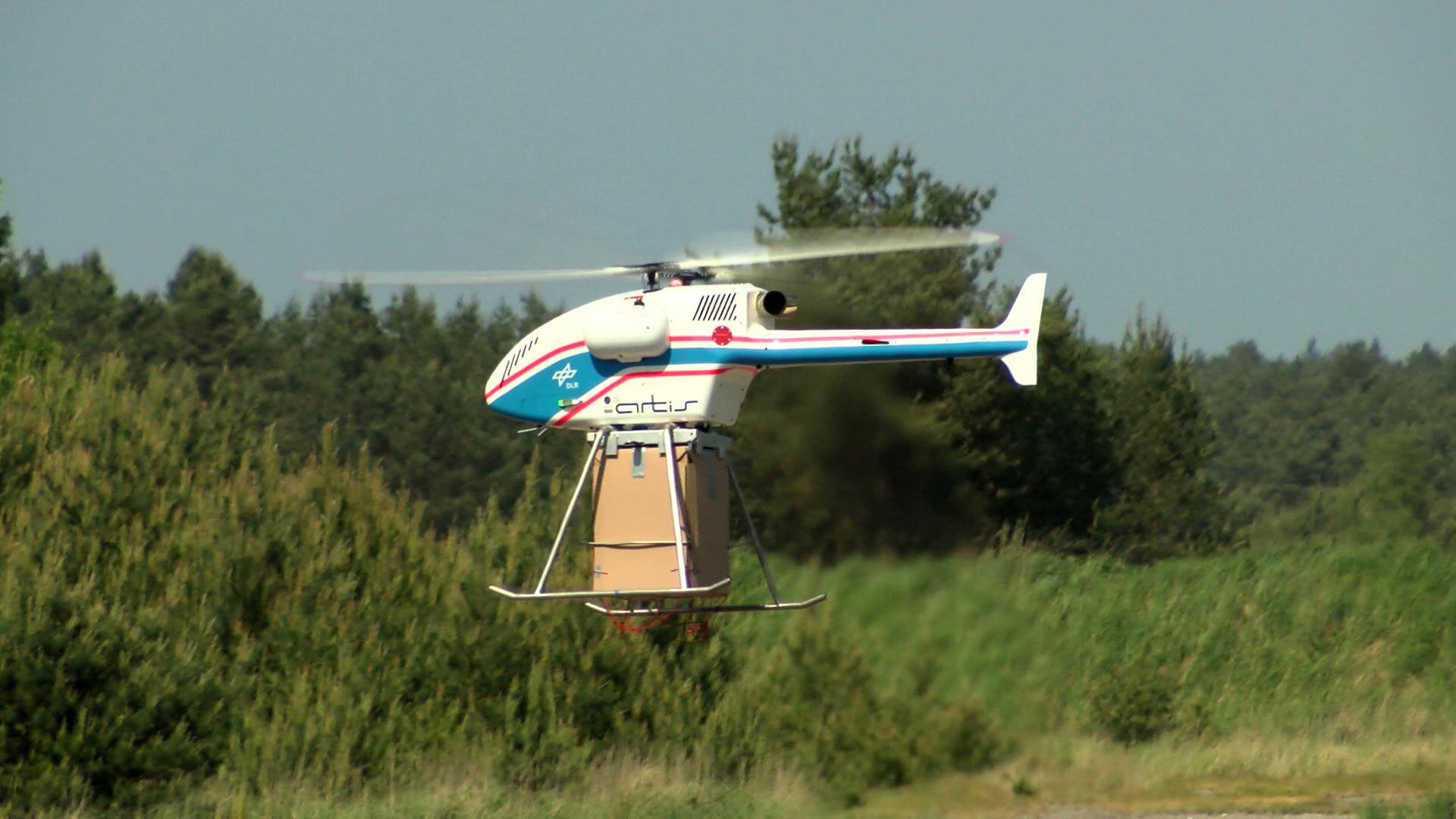
    In Germany, the National Test Centre for Unmanned Aerial Systems at DLR is the driving force behind the development of new unmanned aerial vehicles and their integration into the airspace.

    At present, air traffic accounts for 3.5 percent of climate-relevant emissions worldwide. How can the burden be reduced?
    That depends on passenger numbers and flight distances. Batteries are an option for small aircraft. For short and medium-haul flights, hydrogen-based propulsion systems such as fuel cells are suitable. For long-haul flights, we are thinking about Sustainable Aviation Fuels, or SAF for short, which are produced sustainably from non-fossil raw materials.  We are also looking at the entire aircraft system in order to be able to exploit all technical and technological possibilities on the way to climate-friendly flying. This includes changes in aerodynamic behavior as well as new aircraft configurations or the planning and implementation of climate-friendly flight routes.  

    When do you expect the first applications in regular flight operations?
    SAF is already being used as an admixture to conventional fuel. We are currently trying to make the quantities required in aviation available on an industrial scale in several projects. 

    Let’s take another look at the GDNÄ: After the medical scientist Martin Lohse, a zoologist, Heribert Hofer, has now taken over the GDNÄ presidency. You are a materials scientist and mechanical engineer and will follow in office in 2025. Will the GDNÄ of the future be more technoscientific?
    It will be interdisciplinary and there will perhaps be more synergies between the individual disciplines. That fits well with the GDNÄ and well with DLR, which is active not only in the technical sciences but also in the natural sciences: Let’s just think of the Institute of Aerospace Medicine in Cologne, where physicians and psychologists conduct biomedical research at the highest level.

    Labor im Innsbrucker Institut für Quantenoptik und Quanteninformation © IQOQI/M.R.Knabl

    © DLR

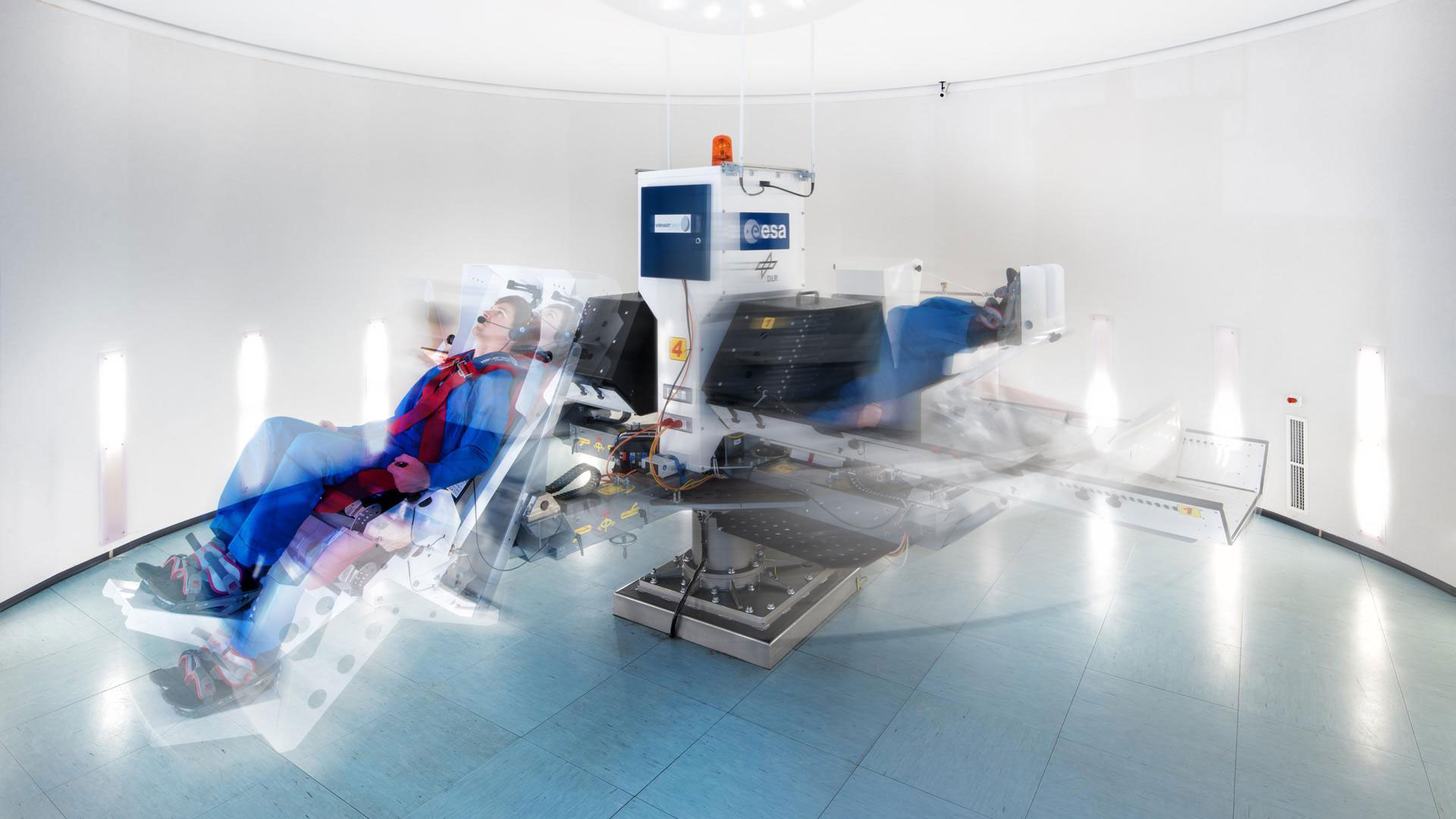
    The ESA short-arm centrifuge in the :envihab of the DLR Institute of Aerospace Medicine in Cologne. The research facility, the only one of its kind in the world, is used to study the effects of environmental conditions such as gravity on fundamental mechanisms of human health, living conditions and performance. In the new short-arm centrifuge, test subjects can be accelerated with up to 4.5 grams at the foot end.

    In its 200-year history, the GDNÄ has had seventy presidents and only two women presidents. Its members are also predominantly male. Is the advancement of women on your agenda?
    Yes, this is a very important topic for the future. In medicine, most of the young scientists are already female, but in the natural sciences and engineering there is a need to catch up. We need to do more to show how much fun these professions are and do more to help people combine family and work. 

    The student program has become a strong pillar of the GDNÄ, as demonstrated by the 2022 anniversary celebration in Leipzig. What significance does this program have for you and do you already have ideas for promoting young talent?
    The student program is a great thing and very important for the GDNÄ. At DLR, we have well-functioning student laboratories, so it may be possible to create synergies. I would also like to show the students how attractive careers in medicine, natural and technical sciences are. Perhaps we will succeed in establishing mentoring relationships between established scientists and young people and in building up a platform with materials for science teaching. I’m sure the members of the GDNÄ have more good ideas – we should collect and evaluate them.

    Labor im Innsbrucker Institut für Quantenoptik und Quanteninformation © IQOQI/M.R.Knabl

    © DLR

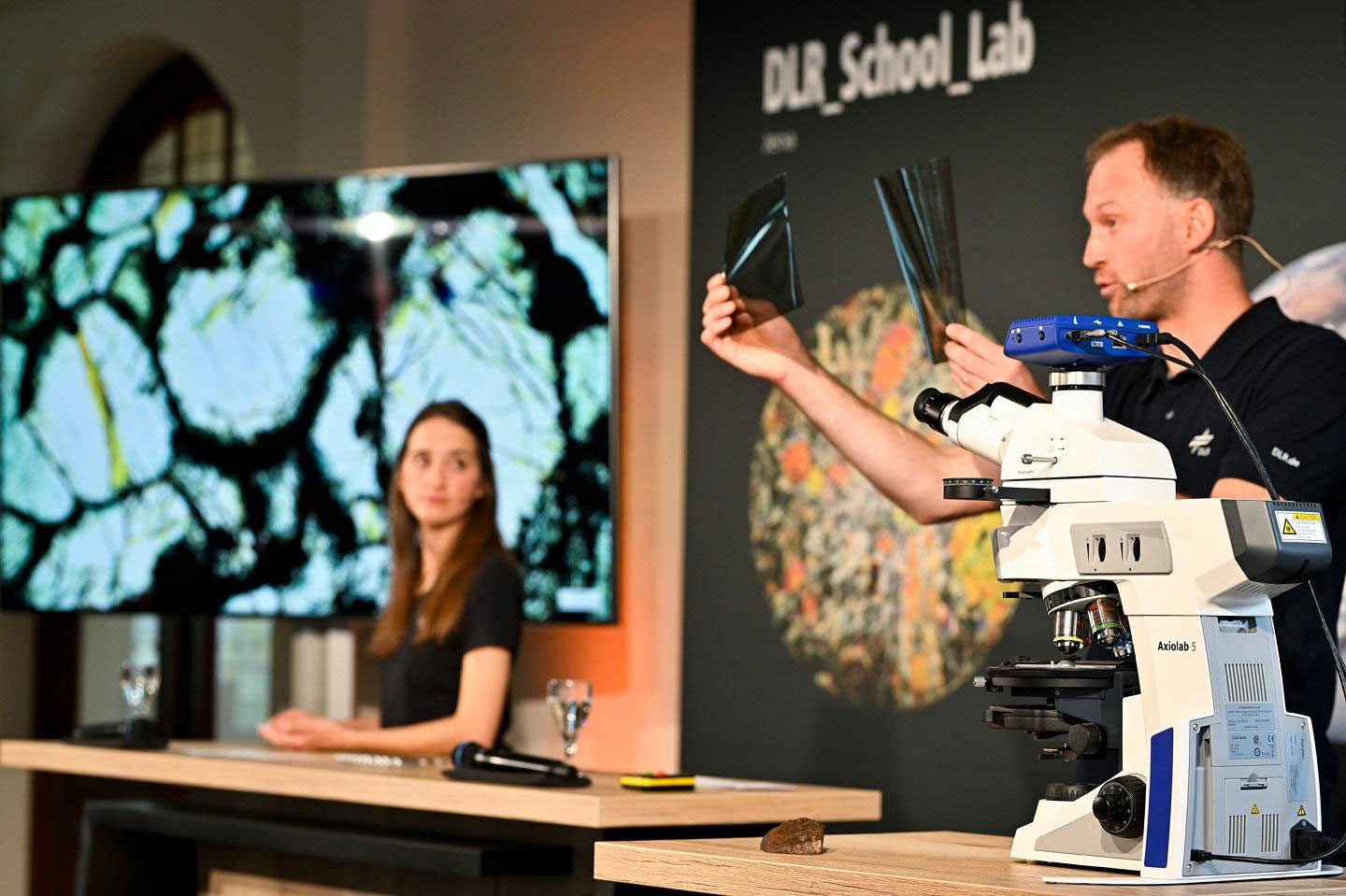
    DLR School Lab: Experiments on stage at the inauguration at the end of September 2022 gave a foretaste of the new opportunities that DLR_School_Lab Jena offers young people.

    Exchange with the public is a strong concern of the GDNÄ. How do you assess the engagement so far? Do you want to deepen the dialogue?
    The GDNÄ is held in high esteem by the public and has made great contributions to the dialogue with society. I would like to continue this work. As scientists, we have a duty to contribute our knowledge to the public discussion. It is important to be able to agree on facts and figures, for example on the validity of scientific laws. We scientists must work more towards this. 

    Finally, a more personal question: How did you come to join the GDNÄ and what does it mean to you?
    I came to the GDNÄ through other members and their enthusiastic descriptions. I am impressed by its great tradition and its openness to future topics. This is what I like to stand up for.

    DLR_Anke_Kaysser-Pyzalla

    © DLR

    Prof. Dr.-Ing. Anke Kaysser-Pyzalla

    About the person

    Prof. Dr. Anke Kaysser-Pyzalla studied mechanical engineering and mechanics in Bochum and Darmstadt. She received her doctorate and habilitation at the Ruhr University in Bochum. After research activities at the Hahn-Meitner-Institut (HMI) and at the Technische Universität Berlin, she researched and taught at the Technische Universität Wien from 2003 to 2005. In 2005, she joined the management of the Max Planck Institute for Iron Research GmbH in Düsseldorf as Scientific Member, Director and Managing Director. In 2008, she was appointed Scientific Director of Helmholtz-Zentrum Berlin für Materialien und Energie GmbH, which was formed under her leadership from the merger of HMI and the Berlin Electron Storage Ring Society for Synchrotron Radiation (BESSY). In 2017, Anke Kaysser-Pyzalla was elected President of the Technical University of Braunschweig. Since 2020, she has been Chairwoman of the Executive Board of the German Aerospace Center (DLR) and, since January 1, 2023, second vice president of the GDNÄ.

    Labor im Innsbrucker Institut für Quantenoptik und Quanteninformation © IQOQI/M.R.Knabl

    © DLR

    Unmanned DLR research helicopter superARTIS with drop-off facility for auxiliary equipment.

    Further Information:

    Change in the Board

    Change in the Board

    Heribert Hofer is the new President of the GDNÄ

    With the internationally renowned wildlife researcher, a committed promoter of young talent takes over the presidency..

    Professor Heribert Hofer, Director of the Leibniz Institute for Zoo and Wildlife Research (IZW) in Berlin, has been at the helm of the German Society of Naturalists and Doctors (GDNÄ) since 1 January 2023. The renowned zoologist was elected to the office of President by the General Assembly and The renowned zoologist was elected to the office of President by the General Assembly for the two years 2023 and 2024 and is thus responsible for the scientific organisation of the 133rd GDNÄ Assembly in 2024 in Potsdam. As President, he replaces pharmacologist Professor Martin Lohse, who moves into the office of 1st Vice President for two years. 

    Heribert Hofer (62) has headed the Leibniz Institute for Zoo and Wildlife Research in Berlin-Friedrichsfelde since 2000. Until 2017, he was also head of the Department of Evolutionary Ecology at his institute. Since 2000, Hofer has also been Professor of Interdisciplinary Wildlife Research at the Free University of Berlin. Before his time in Berlin, he conducted research at the Max Planck Institute for Behavioural Physiology in Seewiesen, Bavaria, from 1986 to 1999, initially as a postdoctoral researcher and later as an independent scientist. In 1997, he habilitated at the Ludwig Maximilians University in Munich with a thesis on the behaviour of spotted hyenas in the Serengeti savannah. Heribert Hofer began his studies in zoology at Saarland University and completed them at Oxford University with a doctorate in “DPhil”. 

    The internationally renowned scientist has been closely associated with the GDNÄ for many years. He has been involved in many ways: as an elected subject representative and group chair for the subject of biology, with speeches at meetings and as 2nd vice-president in the preparation of the 200th anniversary celebration in Leipzig. In addition to the dialogue with the public, Heribert Hofer attaches particular importance to the promotion of young talents within the framework of the GDNÄ student programme.

    Change in the presidency

    Change in the presidency

    Looking back, looking forward

    Dear members of the GDNÄ,

    This year marks the end of my term as President of the GDNÄ. The corona pandemic has forced us to move the meeting originally planned for 2020 in Würzburg first to the following year and finally to merge it with the Leipzig jubilee meeting in September 2022. This has also extended my presidency to an unusual four years.

    The first of these years, 2019, served to prepare the conference on the theme of “Images in Science”, to recruit speakers, to design a framework programme. The second year, 2020, took place practically only online after the federal government decided on the lockdown in March. Even after that, meetings in groups were at times forbidden or inadvisable. In March, an expert group consisting of GDNÄ members, state academies and the Ifo Institute produced a statement on how to deal with the Corona pandemic, which differed from the restrictive course of the Leopoldina. Against the background of our now almost two-year pandemic experience, the proposals for a gradual opening are still interesting and up-to-date.

    With this statement, we opened our new website www.gdnae.de at the beginning of April 2020, which became the essential tool for communication for a long time with the help of news, reports, portraits and interviews. Thanks to all who contributed to this, especially to our editor Lilo Berg.

    In the third year, 2021, vaccines against the SaRS-CoV2 virus became available – surprisingly quickly. Even if some in the population (and also in the GDNÄ) were sceptical about the injections, looking back as well as looking at China today shows that they played a central role in overcoming the pandemic. But progress was too slow to hold a large meeting, and so the Würzburg meeting planned for September had to be cancelled altogether.

    This year, 2022, was marked on the one hand by very high covid case numbers with decreasing disease severity and declining death rates. On the other hand, the crisis of the pandemic was replaced by the crisis caused by the attack on Ukraine. It became clear that we personally and as a society are only partially crisis-proof and resilient – an observation that should concern us. Despite this situation, we have optimistically pursued the production of the commemorative publication “Wenn der Funke überspringt” and the planning of the anniversary conference and have been amply rewarded in both! Take another look back: “Commemorative Publication for the GDNÄ Anniversary” and “200 Years of the GDNÄ – Review of the Anniversary Assembly 2022” .

    I am very grateful for the opportunity to run both and I thank everyone who made it all possible: the many excellent speakers who gave insights into their research, the lecturers who set the student programme on a good path, the board council and the staff of the office as well as the team around our local partner Jörg Junhold from Leipzig Zoo. I would also like to thank everyone who contributed to the commemorative publication, the authors, Lilo Berg for editing and Thomas Liebscher from Passage-Verlag for the design. Without financial support, the conference, the student programme and the commemorative publication would not have been possible: I would like to thank the Wilhelm and Else Heraeus Foundation, the Bayer Foundation, the AKB Foundation and the Klaus Tschira Foundation.

    Martin Lohse 2022 © MIKA-fotografie | Berlin

    © MIKA-fotografie | Berlin

    Pharmacologist Professor Martin Lohse was GDNÄ President from 2019 to 2022. He moves to the office of 1st Vice President on 1 January 2023.

    Now the focus is on the future. At the General Assembly in Leipzig, Anke Kaysser-Pyzalla, Chairwoman of the Executive Board of the German Aerospace Center (DLR), was elected to the office of 2nd Vice-President; she will assume the Presidency in 2025. In accordance with the statutes, Heribert Hofer, Director of the Leibniz Institute for Zoo and Wildlife Research (IZW) in Berlin, will take over as President in 2023/24. I would like to welcome both of them in their new roles and wish them all the best for their tasks. Michael Dröscher will continue as Treasurer and Secretary General; I myself will take on the role of 1st Vice President.

    This year, for the first time, we held the election of the professional representatives electronically. Marion Merklein (Erlangen-Nuremberg) was elected for the engineering sciences, Uwe Hartmann (Saarbrücken) for physics/geology and Peter Liggesmeyer (Kaiserslautern) for mathematics/computer science. I warmly welcome all those who will be newly involved in the GDNÄ.

    There is much to do to prepare the next assembly in 2024 in Potsdam and to make the GDNÄ fit for the future. The involvement of young people has proven its worth, especially within the framework of the student programme. And as announced most recently at the award of the Lorenz Oken Medal to Mai Thi Nguyen-Kim in October, we want to further expand the dialogue with society.

    I have experienced the GDNÄ as a vital society with many energetic members and am grateful for having been able to accompany it on its way into its third century. It has been a rich time!

    I send you my warmest greetings and wish you and yours all the best for the New Year.

    Yours

    Lennart Resch

    Martin Lohse, Präsident der GDNÄ

    Nobelpreisträger Paul J. Crutzen

    © MIKA-fotografie | Berlin

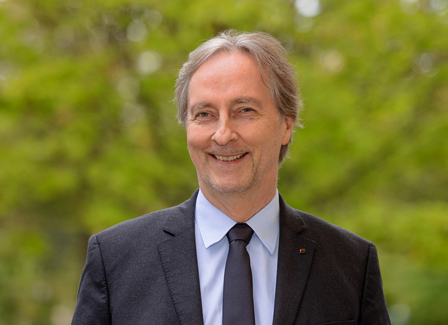
    Zoologist Professor Heribert Hofer was Vice President from 2021 to 2022. He took over the GDNÄ Presidency on 1 January 2023.

    Prof. Dr. Anke Kaysser-Pyzalla © DLR

    © DLR

    The engineer Professorin Anke Kaysser-Pyzalla will take office as 2nd Vice-President of the GDNÄ on 1 January 2023.

    Rainer Blatt: Quantum technology is developing at a rapid pace

    “Quantum technology is developing at a rapid pace”

    For his achievements in the field of quantum physics, Anton Zeilinger will receive the 2022 Nobel Prize in Physics. In this interview, Professor Rainer Blatt describes how Austria became a hotspot for this field of research and how Germany is now trying to catch up. Rainer Blatt is known to many GDNÄ members through his lectures and publications He is known to many GDNÄ members through his lectures and publications and has worked closely with Anton Zeilinger for a long time. 

    Professor Blatt, how many interviews have you given since the beginning of October?
    It must have been five or six. The requests came from national and international news agencies and newspapers. 

    What were the interviews about?
    The occasion was, of course, the Nobel Prize for quantum research, which was awarded to my colleague Anton Zeilinger together with the Frenchman Alain Aspect and the American John Clauser. The spectrum of topics ranged from questions of basic research to my connection with Anton Zeilinger. 

    We are also interested in this: How long have you known Anton Zeilinger and what is the connection between the two of you?
    We have known each other for 35 years and started working together soon after I arrived at the University of Innsbruck in 1995. We are connected by quantum physics research, whereby our approaches differ but complement each other well. Anton Zeilinger is dedicated to the fundamentals of quantum mechanics and works with photons, while I specialise in atoms and ions and focus more on applications. Together with Peter Zoller and other colleagues, we founded the Institute for Quantum Optics and Quantum Information, or IQOQI for short, in Innsbruck in 2003. Our model was the famous JILA, an institute for atomic physics and astrophysics in Boulder, Colorado. Peter Zoller and I had spent wonderful research stays there. Back in Austria, we were able to convince the local Academy of Sciences to set up a similar institution in our country. In the meantime, the IQOQI has developed into a beacon of research, and that can be said without exaggeration.

    Institut für Quantenoptik und Quanteninformation (IQOQI). © IQOQI/M.R.Knabl

    © IQOQI/M.R.Knabl

    Exclusive location in the Tyrolean Alps: the Institute for Quantum Optics and Quantum Information (IQOQI).

    How can we imagine the institute?
    We work at two locations: Here in Innsbruck, more than 200 scientists from over 20 countries are now conducting research; the team around the director Markus Aspelmeyer in Vienna is similarly large and international. Despite different research foci, we work closely together, and our working groups meet regularly to exchange ideas. In the first few years I led the institute as founding director, since then I have acted as scientific director. 

    So, could the IQOQI be described as a nucleus for the Nobel Prize in Quantum Physics in 2022?
    Absolutely. Although much of the work honoured with the prize was done before the institute was founded, the IQOQI has greatly promoted the visibility of quantum physics in Austria. 

    What significance does the award have for your field in Austria?
    The Nobel Prize is also a recognition of the immense development work of the last 25 years. It has led to the creation of a critical mass in quantum information in this country. With its per capita expenditure in this field, Austria is the world leader. Our funding agencies, first and foremost the Austrian Science Fund FWF, the Federal Ministry of Education, Science and Research and the Austrian Academy of Sciences, have ensured this – we owe them our very special thanks. 

    What about the practical application of the research results, for example in the field of quantum computing?
    There are first prototypes that can calculate with a few tens of quantum bits, so-called qubits. That’s a lot, considering that a quantum computer can in principle achieve the performance of a current supercomputer with just fifty qubits. The prerequisite, however, is that the quantum calculations can be continued indefinitely and that no errors occur in the process. We are still a long way from that, but intensive work is currently being done worldwide on error correction and scalability. In general, the field is developing rapidly, the potential is extremely large and many young people with fresh ideas are joining the field.

    Labor im Innsbrucker Institut für Quantenoptik und Quanteninformation © IQOQI/M.R.Knabl

    © IQOQI/M.R.Knabl

    View into a laboratory at the Innsbruck Institute for Quantum Optics and Quantum Information.

    It is often said that quantum computers with gigantic computing power will soon replace classical computers altogether. Is that how you see it?
    No, because quantum computers are particularly well suited for solving special problems, for example for calculating the quantum properties of materials, which is very important in chemistry and for which about half of the world’s computing power is used today. Classical computers need much more storage capacity for such operations than quantum computers. Incidentally, as early as the 1980s, the US Nobel Prize winner Richard Feynman pointed out that it makes much more sense to use computers for such tasks that calculate with quantum properties and thus automatically take quantum behaviour into account than to programme this in a complicated way on a classical computer. Classical computers will continue to perform standard calculations and routine work and have their justification, for example, when it comes to Big Data applications, such as in climate research. Here, the rules of classical mechanics apply; this is not the terrain of quantum computers. 

    The German government is funding the development of quantum computers “Made in Germany” to the tune of two billion euros. Bavaria added another 300 million euros and launched the ambitious project “Munich Quantum Valley” at the beginning of 2022, in which you are also involved. What is happening there right now?
    The Munich Quantum Valley is about developing and operating quantum technology as a whole and competitive quantum computers in Bavaria. The two Munich universities and the University of Erlangen-Nuremberg are participating, as well as the Max Planck Society, the Fraunhofer Society, the German Aerospace Centre and the Bavarian Academy of Sciences. Munich Quantum Valley, with its 350 employees, is where all the threads come together. We are currently building quantum computers on three different platforms. The project is already setting international standards. As an advisor and coordinator, I now devote half of my working time to it. 

    Munich Quantum Valley has set out to inform the public about current topics in quantum research. Is that a good idea?
    I think it’s extremely important. The scientific work and the researchers are paid by society, the research environment is provided by it – so we also have a duty to explain what we are doing and for what. 

    How do you go about doing this? Quantum physics is not exactly easy fare.
    I take people seriously and try to meet them where they are. What I say doesn’t have to sound scientific. It should get to the heart of things as simply as possible, but it must not be wrong. I like to use images, analogies and examples. And sometimes I quote my mother with one of her favourite phrases: “Nothing comes from nothing”. That brings us right to the heart of physics and quickly to my topics.

    Rainer Blatt, Professor für Experimentalphysik an der Universität Innsbruck. © C. Lackner

    © C. Lackner

    Rainer Blatt, Professor of Experimental Physics at the University of Innsbruck.

    About the person

    Rainer Blatt has been Professor of Experimental Physics at the University of Innsbruck since 1995 and Scientific Director at the Institute for Quantum Optics and Quantum Information of the Austrian Academy of Sciences since 2003. Born in Idar-Oberstein in 1952, the researcher studied mathematics and physics in Mainz. His academic career then took him to Berlin, Hamburg and Göttingen. Formative for his work were research stays at the Joint Institute of Laboratory Astrophysics in Boulder/Colorado with John L. Hall, who received the Nobel Prize in Physics in 2005.

    Professor Blatt has received many awards for his achievements in the field of quantum physics, including the International Quantum Communication Award in 2016 and, together with Anton Zeilinger and Peter Zoller, the prize of the Chinese Micius Quantum Foundation in 2019. Since 2021, in addition to his work in Innsbruck, the German-Austrian has coordinated Munich Quantum Valley, an initiative to expand quantum science in Bavaria. In 2021, Rainer Blatt was also appointed honorary professor at the Technical University of Munich as well as an external member of the Max Planck Institute for Quantum Optics in Garching near Munich. Professor Blatt has been associated with the GDNÄ for years as a guest speaker and author.

    For further reading

    For the commemorative publication on the 200th anniversary of the GDNÄ, Rainer Blatt wrote an article on quantum computers (Mit Quanten muss man rechnen). In it, the Innsbruck physics professor describes the current state of research and presents the work of his team at the University of Innsbruck.

    >> „Mit Quanten muss man rechnen“ from the anniversary publication of the GDNÄ (PDF, German only)

    At the 130th GDNÄ conferende in Saarbrücken 2018, Professor Blatt gave a lecture on “Quantum Physics – Arithmetic with Quantum Physics”:

    >> to the lecture of Professor Blatt (German only)

    Further information: