• DE
  • EN
  • Carsten Bolm ‘Without industry contacts, it’s impossible to work in my field.’

    ‘Without industry contacts, it’s impossible to work in my field.’

    Chemistry professor Carsten Bolm, member of the GDNÄ Executive Board, talks about creative research, his seemingly straightforward career path and rewarding prospects for young talent.

    Professor Bolm, you decided early on to pursue a career in chemistry, became a university lecturer and have remained in this field for over thirty years. Would you choose the same path again?
    Yes, it has always been the right choice for me. I can conduct my research at my own discretion and support talented young people in their development: these are advantages I enjoy every day. It is not a nine-to-five job; you are always challenged, and occasionally my team thinks I work too hard. There is a trend among young people to turn their backs on academia and look for a quieter job. I try to counteract this, among other things with my lecture ‘Why you should stay at university’. I will be giving it again soon. 

    What are your main arguments in favour of a career in academia?
    Freedom of thought and the opportunity to do what you like best in your job. 

    What sparked your enthusiasm for research and chemistry in particular?
    There were no role models in my family. But my parents gave me chemistry sets and I was allowed to buy all the chemicals I needed for my experiments at a nearby pharmacy. That wouldn’t be possible today; adults would consider it too risky, but in the 1960s and 1970s it wasn’t a problem. I owe a lot to my biology teacher. She was doing a PhD in microbiology and taught biology with a strong focus on chemistry. Her fascination was contagious, and at some point I realised: I’m going to be a chemist.

     © Carsten Bolm

    Carsten Bolm’s large, internationally diverse working group in front of the institute building.

    It seems that you pursued this plan with determination.
    It may seem that way from the outside. I myself felt quite erratic during that time. I moved eight times, in Germany, Switzerland and the USA, and nowhere did I stay longer than two years. The fact that this led to an academic career has a lot to do with luck, with meeting the right people at the right time. 

    You mentioned the fascination of chemistry. What exactly fascinates you?
    Chemistry requires both brainpower and manual dexterity, a wonderful combination. It is also the only discipline in which new substances are constantly being created – substances that did not exist before. That never ceases to inspire me. 

    You are an organic chemist, but you also work in mechanochemistry. How do the two fit together?
    At the beginning of an academic career, you have to specialise in a few research questions in order to gain a profile and visibility in the professional world. Later, I gradually expanded my spectrum, including in the direction of mechanochemistry. It is often used in the geosciences, for example when it comes to grinding materials energy-efficiently and without solvents using a ball mill. Twenty years ago, this was still uncharted territory in organic synthesis chemistry, but today mechanochemistry is regarded as a significant methodological advancement. In my working group, we use the process to improve existing synthesis methods and to discover new ground in chemistry – the unusual reaction conditions in the ball mills are good for a few surprises.

      © Carsten Bolm

    In the laboratory: Doctoral student Lena Hanek in front of a ball mill, which can be used to grind substances in an energy-efficient and solvent-free manner.

    How do such new approaches emerge at your institute?
    Often through interdisciplinary exchange. When searching for new active substances to combat diseases, for example, I work a lot with medical professionals. Sulphur chemistry plays a central role in this, for example in the development of new tuberculosis inhibitors. Thanks to interdisciplinary cooperation, we have been able to significantly expand the substrate range of sulfoximines, which are particularly suitable for use in medicinal chemistry and plant protection. We also collaborate with engineers, for example in the recently reconfirmed RWTH Excellence Cluster Integrated Fuel & Chemical Science Center, or FSC2 for short. Here, we support the development of environmentally friendly liquid energy sources. Whether at our own university or as part of large EU projects, we always rely on high-calibre, reliable partners. And that suits us very well. 

    What role do contacts with industry play in your work?
    A very important one. I would even say that without industry contacts, it would be impossible to work in my field. My working group, for example, has close contacts with the pharmaceutical industry in order to jointly develop new active substances. A plant protection company is currently testing a new class of compounds discovered in our laboratories. And like many other chemistry institutes at German universities, we benefit greatly from the Chemical Industry Fund in promoting young academics. It awards prizes and grants, which is very important for our young scientists. 

    How do you see Germany’s position as a centre for chemistry? 
    We are concerned that the large chemical companies are offering fewer and fewer jobs for our graduates. But if you look long enough, you will find something – this is especially true for chemists with doctorates. These are often positions in smaller companies. Overall, the industry is suffering from enormous energy costs and many companies are currently considering relocating abroad. Rapid political intervention to reduce costs would be helpful. 

    Almost 30 years ago, you accepted a professorship at RWTH and stayed despite other offers. What kept you in Aachen? 
    The strong location, good research conditions and high quality of life. I come from Braunschweig, did my habilitation in Basel and dreamed of a life in southwestern Germany. But I ended up in Aachen. At the time, I thought that if an offer came from Freiburg, I would sign it blindly. A little later, the call from Freiburg actually came. The RWTH made such a generous counteroffer that I couldn’t say no. Another offer followed – but once again, RWTH was better. And over time, I have come to really appreciate the city, its proximity to Belgium and the Rhineland. 

    How did you come to the GDNÄ?
    Through a phone call a year and a half ago. Michael Dröscher, a chemist like me and long-time secretary general of the GDNÄ, asked me if I would be interested in working with them. I was familiar with the GDNÄ at the time, but I didn’t have a clear picture of its goals. I think that’s the case for many people at universities. I then travelled to the meeting in Potsdam and found it extremely successful. I was impressed by the interaction between the disciplines and the appreciative cooperation between young and old – I had never experienced anything like it before. The GDNÄ’s Young Network was founded in Potsdam and has developed magnificently since then. It immediately gives you lots of new ideas. 

    Such as?
    Perhaps we will be able to organise a series of lectures on topics related to modern chemistry in Aachen, together with representatives of the jGDNÄ. If that works, it could also be a format for other university cities. Another idea would be to send GNDÄ members on lecture tours to German universities in order to put the society and the jGDNÄ in the university spotlight. 

    You were elected to the GDNÄ Executive Board as representative for chemistry. What do you want to achieve in this role? 
    One of my main tasks at the moment is to recruit top-class chemists to give lectures on their research that are as accessible as possible for the 2026 meeting in Bremen. The topics should be current and of interdisciplinary interest. It’s a wonderful position and fits in perfectly with my goal: I want to make chemistry more visible – in science and in the public eye – and the GDNÄ along with it.

      © Stefanie Zimmer

    The laboratory as a place of learning: Dr Renè Hommelsheim (right) answers Christian Keiser’s questions about sulphur chemistry.

    How do such new approaches emerge at your institute?
    Often through interdisciplinary exchange. When searching for new active substances to combat diseases, for example, I work a lot with medical professionals. Sulphur chemistry plays a central role in this, for example in the development of new tuberculosis inhibitors. Thanks to interdisciplinary cooperation, we have been able to significantly expand the substrate range of sulfoximines, which are particularly suitable for use in medicinal chemistry and plant protection. We also collaborate with engineers, for example in the recently reconfirmed RWTH Excellence Cluster Integrated Fuel & Chemical Science Center, or FSC2 for short. Here, we support the development of environmentally friendly liquid energy sources. Whether at our own university or as part of large EU projects, we always rely on high-calibre, reliable partners. And that suits us very well. 

    What role do contacts with industry play in your work?
    A very important one. I would even say that without industry contacts, it would be impossible to work in my field. My working group, for example, has close contacts with the pharmaceutical industry in order to jointly develop new active substances. A plant protection company is currently testing a new class of compounds discovered in our laboratories. And like many other chemistry institutes at German universities, we benefit greatly from the Chemical Industry Fund in promoting young academics. It awards prizes and grants, which is very important for our young scientists. 

    How do you see Germany’s position as a centre for chemistry? 
    We are concerned that the large chemical companies are offering fewer and fewer jobs for our graduates. But if you look long enough, you will find something – this is especially true for chemists with doctorates. These are often positions in smaller companies. Overall, the industry is suffering from enormous energy costs and many companies are currently considering relocating abroad. Rapid political intervention to reduce costs would be helpful. 

    Almost 30 years ago, you accepted a professorship at RWTH and stayed despite other offers. What kept you in Aachen? 
    The strong location, good research conditions and high quality of life. I come from Braunschweig, did my habilitation in Basel and dreamed of a life in southwestern Germany. But I ended up in Aachen. At the time, I thought that if an offer came from Freiburg, I would sign it blindly. A little later, the call from Freiburg actually came. The RWTH made such a generous counteroffer that I couldn’t say no. Another offer followed – but once again, RWTH was better. And over time, I have come to really appreciate the city, its proximity to Belgium and the Rhineland. 

    How did you come to the GDNÄ?
    Through a phone call a year and a half ago. Michael Dröscher, a chemist like me and long-time secretary general of the GDNÄ, asked me if I would be interested in working with them. I was familiar with the GDNÄ at the time, but I didn’t have a clear picture of its goals. I think that’s the case for many people at universities. I then travelled to the meeting in Potsdam and found it extremely successful. I was impressed by the interaction between the disciplines and the appreciative cooperation between young and old – I had never experienced anything like it before. The GDNÄ’s Young Network was founded in Potsdam and has developed magnificently since then. It immediately gives you lots of new ideas. 

    Such as?
    Perhaps we will be able to organise a series of lectures on topics related to modern chemistry in Aachen, together with representatives of the jGDNÄ. If that works, it could also be a format for other university cities. Another idea would be to send GNDÄ members on lecture tours to German universities in order to put the society and the jGDNÄ in the university spotlight. 

    You were elected to the GDNÄ Executive Board as representative for chemistry. What do you want to achieve in this role? 
    One of my main tasks at the moment is to recruit top-class chemists to give lectures on their research that are as accessible as possible for the 2026 meeting in Bremen. The topics should be current and of interdisciplinary interest. It’s a wonderful position and fits in perfectly with my goal: I want to make chemistry more visible – in science and in the public eye – and the GDNÄ along with it.

    Saarbrücken 2018 © Robertus Koppies

    © Martin Braun Fotografie

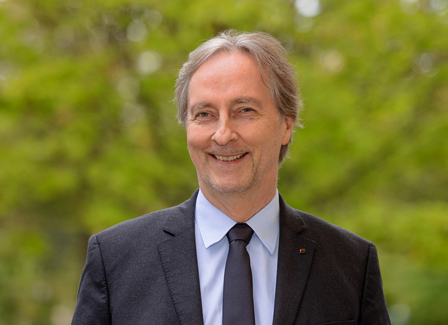
    Prof. Dr. Carsten Bolm, Chair of Organic Chemistry II at RWTH Aachen University.

    About the person

    Professor Carsten Bolm (65) is Managing Director of the Institute of Organic Chemistry at RWTH Aachen University. His research contributions range from basic research in the field of organic synthesis chemistry and mechanochemistry to the development of new bio-based fuels.

    Carsten Bolm grew up in Braunschweig, where he studied chemistry, and also studied at the University of Madison, Wisconsin. He obtained his doctorate in Marburg in 1987 and then completed a postdoctoral fellowship with two-time Nobel Prize winner Barry Sharpless at the Massachusetts Institute of Technology in Boston. In 1993, he habilitated at the University of Basel. In 1996, he accepted a chair in organic chemistry at RWTH Aachen University. The chemist has been named one of Thomson Reuters’ Highly Cited Researchers several times and was appointed a Fellow of the British Royal Society of Chemistry in 2015. In 2022, he was elected to the Academia Europaea. The German Chemical Society awarded him the Adolf von Baeyer Medal for his work in the field of catalysis research. As a representative of the field of chemistry, Professor Bolm has been a member of the GDNÄ Executive Board since 2024.

    © Carsten Bolm

    The RWTH Institute for Organic Chemistry. The relief above the entrance shows the development of chemistry over the centuries. It also depicts the non-metallic solid sulphur, which the Bolm research group is currently investigating. Sulphur was already a basic material in the Middle Ages.

    Further reading

    Ferdi Schüth: “We should involve other disciplines more“

    “We should involve other disciplines more“

    GDNÄ Vice President Ferdi Schüth on the indispensable expertise of economists, failed exams and research with the ball mill.

    Professor Schüth, you are a Max Planck director in your main job, and you also hold numerous honorary positions. Do you know off the top of your head how many there are?
    There are actually quite a few, but I don’t have the exact number at hand. The roles are very different, also in terms of the time required. It ranges from 80 percent of my working hours in the years as Vice President of the Max Planck Society to a two-hour meeting every few years in smaller committees. 

    A few months ago, I took on another role: that of Vice President and incoming President of the GDNÄ. What motivates you to get involved with the GDNÄ? 
    I like the breadth of topics it covers. The GDNÄ shows how different areas of science interact – this is not so clearly visible in other societies. When I was asked whether I would like to take on the role, I only had to think about it briefly before saying yes. The presidency begins gently with two years as vice president and ends just as gently – that makes a lot of things easier.

     © Isabel Schiffhorst für MPI für Kohleforschung

    Main entrance to the Max Planck Institute for Coal Research in Mülheim an der Ruhr.

    How do you intend to proceed as a new member of the presidium? 
    First of all, I will take a close look at everything and support what is going well. One example is the new GDNÄ junior organisation, the jGDNÄ. I think it’s great that it exists now and that it is absolutely in keeping with the times. Similar developments can be seen in other scientific societies – I am thinking, for example, of the young chemists’ forums of the German Chemical Society, which practically every local section now has. What is important is that young members are given the freedom to create something themselves. 

    What priorities would you like to set in the future? 
    The effect of science on society seems to me to be increasingly interesting and important. What do citizens think about science and research, what do they get out of it and what can we scientists offer them? In my opinion, the GDNÄ is a good forum for such questions and for exchanging ideas with the public. 

    How can this be achieved?
    Perhaps in the future we should involve the social sciences, humanities and arts more closely, at least selectively. I am currently experiencing how helpful this can be at the Leopoldina, where I am participating in a focus group on climate and energy. We natural and technical scientists in the group benefit greatly from the expertise of the economists who are also involved. They help us to develop business models for our great ideas. Because if it doesn’t pay off, you can forget it – that’s an important insight that I’ve gained over many years of work. Economic expertise, for example, could also enrich the GDNÄ, for example in individual topics at the meetings. Nevertheless, it would retain its character as a scientific society. 


    © Frank Vinken für MPI für Kohleforschung

    Professors Alois Fürstner, Frank Neese, Tobias Ritter, Benjamin List and Ferdi Schüth (from left to right) together form the Board of Directors of the Max Planck Institute in Mülheim.

    A scientific society that engages in dialogue with the public…
    …yes, and that is strength of the GDNÄ, which we can further expand. There is a great need for communication, because on the one hand science is more important than ever, but on the other hand society trusts it less than it did 20 or 30 years ago. Today there are alternative facts and lateral thinkers with whom a reasonable conversation is hardly possible. As scientists, we have to justify our work more than we used to and explain more precisely what science can and cannot do. The GDNÄ is a very good platform for this. 

    Political issues are currently dominating public discourse. This also includes the anti-scientific behaviour of the Trump administration. Should Germany take the opportunity, as some suggest, to specifically poach US scientists? 
    We should signal our willingness to accept them and show them the options available in Germany. I don’t think it’s the right approach to aggressively encourage American scientists to leave their country.

    Is your institute affected by current US policy?
    Yes, the consequences are noticeable. For decades, we were able to send our postdocs to the US for a few years of research without any problems. This is difficult at present because many US research institutions are uncertain and do not know what will happen tomorrow. “Get back to us in a few months” is often the response to our inquiries now.

    © Frank Vinken / MPG

    The grinding process in a ball mill activates a catalyst in such a way that it mediates the synthesis of ammonia at a much lower temperature and pressure than is necessary in the established Haber-Bosch process.

    Your current research work is about the energy of tomorrow. It is in this context that mechanocatalysis should be seen, and last year you were able to obtain a 2.5 million euro Advanced Grant from the European Research Council (ERC) for research into this area. What are you planning to do with it? 
    We want to understand the fundamental processes in mechanochemistry at the molecular level. We carry out our mechanochemical reactions in ball mills. These reactions take place at room temperature and normal pressure, for which several hundred degrees and hundreds of bar of pressure are otherwise required. The new approach saves resources, time and costs. My research group has already realised exciting projects with this concept, for example the synthesis of ammonia. A detailed understanding of the process could enable the production of completely new materials. However, this is not part of the ERC project, and the clarification of the processes is initially pure basic research. Nevertheless, my department is currently preparing to establish several start-up companies based on the knowledge gained.

     Let’s take a look at your background: you studied chemistry and law, an unusual combination of subjects. How did that come about?
    Most chemists go into industry after graduating, so I thought that an additional law degree wouldn’t be a bad idea. Lawyers think differently, and that interested me. When I failed the first exam three times, I was seized by anger and wanted to prove that I could do it. Anger is a good motivator. My career then took a different path, but my knowledge of law helped me later when I founded our company hte. 

    You are celebrating your 65th birthday this year. For many working people, that’s a turning point in life. How about you?
    I plan to retire at the age of 68, which is the retirement age possible for Max Planck directors without major hurdles. That would be almost two years later than the regular retirement age. By then, we are talking about 2028, the doctoral projects in my field should be completed, and the ERC project will also be running until then – with me spending a few months in my emeritus workplace. I am looking forward to the new freedoms of retirement. I will write books, perhaps starting with a book about energy. And I want to hike across Germany, once from north to south.

    Saarbrücken 2018 © Robertus Koppies

    © Robert Eickelpoth

    Prof. Dr. Ferdi Schüth

    About the person

    Ferdi Schüth, born in 1960, studied chemistry and law at the University of Münster and received his doctorate in chemistry in 1988. After a postdoc stay at the University of Minnesota, he habilitated in inorganic chemistry in Mainz. In 1995, he became a professor at the University of Frankfurt. In 1998, he moved to Mülheim an der Ruhr, where he became director at the Max Planck Institute for Coal Research. Since 1999, he has also been an honorary professor at the Ruhr University Bochum. In the same year, he and six colleagues founded hte GmbH. The company’s business model is based on a process that can be used to quickly and efficiently find optimal catalysts for chemical reactions. Overall, Schüth’s research focuses on catalysis, zeolites, porous materials and energy-related topics. 

    Ferdi Schüth has held and continues to hold numerous positions in scientific societies and committees. Among other things, he was Vice President of the Max Planck Society from 2014 to 2020, with responsibility for the fields of chemistry, physics and technology. He has received many awards for his scientific work, including the Leibniz Prize from the German Research Foundation. As a member of the Leopoldina, he co-chairs the focus group “Climate and Energy” together with Robert Schlögl.

    Further information:

    Katharina Kohse-Höinghaus: “Three alarm clocks often went off in the morning”

    “Three alarm clocks often went off in the morning”

    Katharina Kohse-Höinghaus, Senior Professor of Physical Chemistry and GDNÄ board member, talks about her path as a scientist in a male-dominated discipline, careers with children and why combustion research is indispensable.

    Professor Kohse-Höinghaus, we are taking International Women’s Day on 8 March as an opportunity to talk about your recently published autobiography. In it, you describe your path as a woman in a technical field, as the subtitle says. Do you see yourself as a pioneer?
    Yes, definitely. For a long time, there were hardly any women in physical chemistry and especially in research on combustion processes. When I started at the German Aerospace Center (DLR) in Stuttgart in 1979 as a newly graduated chemist, I was the only woman scientist there. At first, I was eyed sceptically, but then I was accepted. Later, when I applied for professorships, I learned behind closed doors that they were looking for an established man for the position. And not a young mother with a baby and a husband with his own career, as was the case with me. Fortunately, this changed and women were increasingly recognised in my discipline as well. 

    How did that become noticeable?
    To give an example, condescending behaviour towards female colleagues became increasingly rare. For me personally, there were two events that made me feel I had arrived: in 2007, I was the first woman to be appointed chair of the German Bunsen Society, and in 2012, I was the first woman to be elected president of the Combustion Institute, the leading international professional society, for a four-year term. Both of these achievements have also paved the way for other female scientists. 

    Who is your book aimed at?
    Above all, for young people who are pursuing a career in science. I want to show them, using my example, how winding career paths can be and encourage them to follow their own compass. But in principle, anyone who is interested in the development of science and technology over the last fifty years can benefit from the book. It is richly illustrated and I have tried to write in a way that is easy to understand, entertaining and vivid. That’s another reason why I think the volume would make a good gift or prize for special achievements.

     © from the book “Burning for Science”

    Doctorate in 1978, here with supervisor Professor Friedrich Stuhl.

    You wrote the book in English. Why not in German?
    English is the global language of science today and my academic network is international. I want my colleagues around the world to be able to read the book easily. Young people are familiar with English anyway, so I don’t see any problems there. 

    That wasn’t the case when you were young. And it wasn’t foreseeable back then that you would become a professor of physical chemistry.
    That’s right. I grew up in the Ruhr area in a family of teachers, and my parents weren’t thrilled when I wanted to study chemistry. Would you even be able to find a husband with a degree like that? Today it’s hard to imagine, but back then people worried about things like that. It wasn’t easy for me at university either. I came from a grammar school that specialised in modern languages, had deficits in maths and physics and had to catch up on a lot during the first semesters at the University of Bochum. I often set three alarm clocks to make sure I didn’t miss a course. It was exhausting, but also a good time with a lot of freedom. 

    Can you give us an example?
    The first thing that comes to mind is how I built a laser at the end of the 1970s that was important for my doctorate in atmospheric chemistry. A lot was happening in this field of research in the 1970s and there was a great deal of public interest in it. The background to this was the increasing air pollution, especially in the Ruhr area. For my laser, I had to delve deeply into physics, which I really enjoyed. My doctoral supervisor Friedrich Stuhl spent a research semester in the US during that time. When he came back, I was able to hand him my completed dissertation. 

    Now the big wide world of science was open to you. Which stations were decisive for you?
    I got my first permanent position in 1979 at the DLR in Stuttgart. I had already said goodbye to atmospheric chemistry – now I wanted to find out where air pollution actually came from and what could be done about it. So, scientifically, I had switched to combustion research and at the DLR I was able to examine such high-temperature processes in detail using laser spectroscopy.

    © from the book “Burning for Science”

    Farewell poster of the Stuttgart working group 1994.

    A permanent research position at the age of 27 – that’s what many young researchers dream of today.
    I was also very happy to receive the offer from Stuttgart back then. I had good working conditions, great colleagues and a secure income there, but after a while I needed new challenges. In 1987, I then moved to California with my husband Klaus for a good year to do research at Stanford. There I learned a lot about mechanical engineering and molecular spectroscopy, and both opened up new horizons for me in combustion research. During this time, I made many new friends who are still important parts of my professional network today. 

    Many young female scientists are not accompanied by their partners on a year abroad, but the opposite is often the case. How come your husband travelled with you?
    We had already had a long-distance relationship for a few years and didn’t want to repeat that. So my husband, who is a doctor, took unpaid leave from a clinic in Stuttgart and applied for and received a scholarship. We were both kept very busy and in 1988 we returned to our institutes in Stuttgart full of fresh ideas and energy. 

    Two years later, in the summer of 1990, your daughter was born. At that time, there was neither a parental allowance nor the right to a day care place. How did the dual-career couple Kohse-Höinghaus fare during this phase?
    It was a period of upheaval in every respect. I was aiming for a professorship at a university so that I could pursue my own research interests and work more with young people. My husband was looking for a leading position in a clinic, which he eventually found in Oldenburg. In 1992, parallel to my work as a group leader at the DLR, I was able to habilitate at the University of Stuttgart, as the first woman in the faculty. It was a turbulent time, which Klaus and I survived thanks to our solidarity, with moral support from relatives and friends, as well as private childcare and a housekeeper. Since then, Oldenburg has been the centre of our lives. From there, I regularly commuted to the University of Bielefeld, where I had been appointed to the Chair of Physical Chemistry in 1994. My husband and I shared the family work, and our daughter was well looked after. Nevertheless, some people couldn’t stop calling me a bad mother. 

    Do you see yourself as a role model for young women today who want to combine research and family? 
    Yes and no. Today, there is more state support for young families. The climate in terms of equal opportunities has also changed significantly in research funding and appointments. Many universities and research institutions make it easier to combine two careers and a family with dual-career strategies. However, it is still a balancing act that requires a great deal of commitment. In an experimental subject like chemistry, it can help to avoid laboratory-intensive periods when you are pregnant. And it is not only when the children are small that you need a lot of support and preparation for any eventuality – but that applies equally to other professions. However, especially in an international context, I realise that many young women today still face similar difficulties to those I faced more than 30 years ago.

    © from the book “Burning for Science”

    The measurement is running: Combustion research at the French synchrotron SOLEIL near Paris.

    Today you mentor young people. Did you have something like that in your career?
    No, and I missed that very much. That’s why I always tried to support younger generations with advice and practical help. As a senior professor, I still maintain contact with more than a hundred scientists who have worked with me. The teutolab is another example of mentoring in the broader sense. I founded the Bielefeld-based hands-on laboratory as one of the very first such extracurricular learning centres to inspire children and young people to take an interest in the natural sciences. The corresponding federal association, which we helped to establish in Bielefeld, is now 20 years old, and this year we are celebrating the 25th anniversary of the teutolab. 

    You are still active as a senior professor. How can we picture your activities?
    I sit at my desk a lot and I travel a lot. At my desk, I work on lectures, professional articles or scientific statements for academies and scientific organisations. In the last two years, I have been intensively involved in working on my autobiography. As a scientist with an extensive network and long-standing connections abroad, I am often on the road, for example in China. I think it is very important to maintain contacts there despite political tensions, especially with young scientists. Without China, there is no solution to some of the global problems of our time – we have to work together. 

    One of these problems is climate change, which is largely due to the combustion of fossil fuels. Has this not made you doubt your field of expertise?
    Absolutely not. We have to give up burning fossil fuels, but not combustion research. This is because it provides the scientific basis we need to develop climate-neutral fuels for industry and transport. Combustion research also provides us with the tools to better fight major fires, whether in the wild or in cities. With my research, I have been able to contribute to our understanding of the complex chemical reactions that take place in high-temperature processes and to identify ways to avoid pollutants. And that makes me feel good.

    Saarbrücken 2018 © Robertus Koppies

    © Universität Bielefeld / Norma Langohr

    Prof. Dr. Katharina Kohse-Höinghaus.

    The book

    Katharina Kohse-Höinghaus: Burning for Science – A Woman in a Technical Field, GNT Publishing GmbH, Berlin 2025

    The book series

    The autobiographical series “Lives in Chemistry – Lebenswerke in der Chemie” provides insights into the life and thought of outstanding researchers in the mirror of time. In it, successful chemists describe authentically and personally how new ideas are created in the natural sciences. The series is published by the advisory board of the Division of the History of Chemistry of the German Chemical Society.

    The autobiography of another scientific pioneer, chemist Sigrid Peyerimhoff, will be published in this series on 8 March 2025: “Ab initio – A Life for Quantum Chemistry”, GNT Publishing GmbH, Berlin 2025. In 2018, Professor Peyerimhoff received the Alexander von Humboldt Medal for her outstanding contribution to the further development of the GDNÄ.

    © from the book “Burning for Science”

    Habilitation in 1992, expected by husband and daughter.

    About the person

    Katharina Kohse-Höinghaus is a senior professor of physical chemistry at the University of Bielefeld. The 73-year-old scientist is internationally known for her diagnostics of combustion processes using laser spectroscopy and mass spectrometry.

    From 1994 to 2017, she held a chair of physical chemistry at the University of Bielefeld. Prior to that, Kohse-Höinghaus conducted research at various institutions in Germany and abroad. In 1992, she habilitated on a topic in energy technology at the University of Stuttgart.

    At the initiative of Katharina Kohse-Höinghaus, one of the first German hands-on laboratories, teutolab, was founded in 2000. There are now satellite laboratories in the Bielefeld region, in other European countries and in Asia.

    The internationally renowned scientist is a member of several academies, including the Leopoldina and acatech, as well as numerous committees and scientific institutions in Germany and abroad. She has received many awards, including the Federal Cross of Merit on Ribbon, as well as honorary and guest professorships in several countries. In 2007, she was the first woman to be elected president of the German Bunsen Society, and Katharina Kohse-Höinghaus was the first European woman to be president of the International Combustion Institute, serving from 2012 to 2016. She has been a member of the GDNÄ for many years and is one of the people who help shape the scientific conference programmes in the field of engineering sciences.

    Read more:

    © Andreas Brockhinke

    Professor Kohse-Höinghaus in her Bielefeld office in 2011.

    Heribert Hofer: “We welcome young people with open arms”

    “We welcome young people with open arms”

    What has been achieved, what lies ahead? After two years as GDNÄ President, Heribert Hofer looks back – and forward to exciting times with the young GDNÄ. 

    Professor Hofer, your term of office as President of the GDNÄ is coming to an end. How do you look back?
    With a good feeling. I overcame the initial shyness I felt in the face of the GDNÄ’s great history. The positive response at the meeting in Potsdam, whose scientific program was developed during my term of office, contributed to this. Today, more than ever, I am convinced that the GDNÄ is on the right track with its concerns and is filling a gap in the science system. Just think of the unique combination of personal, interdisciplinary exchange that we cultivate at our meetings, or of the programmes to promote young talent. 

    You have been involved in the GDNA’s student programme for many years and have created the popular science slam format “Science in 5 Minutes”. Do you feel that the founding of the Young GDNÄ a few weeks ago in Potsdam was the crowning glory of your term in office?
    “Crowning glory” is perhaps a bit much; I would rather speak of a highlight. With the Young GDNÄ, we are giving young people significantly more of a say and more opportunities to shape our society. This was evident in Potsdam, for example, in the many panel discussions in which young people discussed issues with established scientists on an equal footing. The format was so well received by the audience that we want to keep it in the future.

    Institut für Quantenoptik und Quanteninformation (IQOQI). © IQOQI/M.R.Knabl

    © MIKA-fotografie | Berlin

    Right in the thick of it: Professor Heribert Hofer at the GDNÄ conference 2024 in Potsdam.

    Until now, there was the student program, but now there is almost always talk of the Junge GDNÄ. How are the two related?
    The former student program has been incorporated into the Junge GDNÄ. It includes not only high school students, but also university students and young professionals. The age range is therefore much broader than in the student programme, stretching from 17 to around 32 years of age. The Young GDNÄ are young people with excellent grades in science and medicine who are keen to get involved in the GDNÄ. 

    How do the young talents react to the offer?
    They are incredibly pleased about the interest of established scientists in them. Many of them come to our meetings with the idea that the older ones are not interested in them – a realisation that has amazed me again and again in recent years. With the Young GDNÄ, we welcome the young people with open arms – and they think that’s great. There are already a lot of suggestions and requests. This became clear at a recent strategy meeting, which was attended by three elected representatives of the Young GDNÄ, in addition to the GDNÄ board. 

    What do young women and men want from the GDNÄ?
    For example, interesting offers between the meetings, opportunities for personal exchange at the local level and with established GDNÄ members. 

    What are the next steps?
    A meeting of the Young GDNÄ is planned for next year, when there will be no large GDNÄ meeting. The meeting will serve to promote internal networking and strategic discussion. We also want to establish local groups in which GDNÄ members of all ages can come together to discuss and support each other. The first steps in this direction were taken in 2018 by the then president Wolfgang Wahlster, but understandably this initiative has been dormant during the pandemic years. It is also conceivable that interesting events could be organised, such as guided tours of institutes or companies. We will probably start in a few university towns and expand our network of local groups step by step. The first groups are expected to be up and running in about six months.

    AleutBio-Team © 2022, Thomas Walter, Expedition SO293 AleutBio

    © MIKA-fotografie | Berlin

    “Sharing knowledge means multiplying knowledge” is written on the T-shirt that GDNÄ President Heribert Hofer was presented with by Secretary General Michael Dröscher at the end of the 133rd Assembly in Potsdam.

    You are outlining a cross-generational project. Will the older GDNÄ members play along?
    I am quite confident. The contributions of the young GDNÄ are very well received at the meetings, both by the speakers and the audience. And in many conversations with established members, I have sensed a great willingness to get involved in promoting young talent.

     The project requires a lot of coordination: Who pulls the strings in the GDNÄ?
    As the future vice president, I will take on this task for two years. We have agreed on this in the board. It will be a lot of work, but I am looking forward to it. 

    You may soon have a little more time for such projects.
    That’s right. I will reach retirement age at the end of March 2025, which means that my term of office as director of the Leibniz Institute for Zoo and Wildlife Research will come to an end. My regular professorship in this field at Freie Universität Berlin will also expire at that time. Although I will continue to work at my university as a senior professor, my workload will be significantly reduced. This will give me more time for the GDNÄ. 

    And what about your spectacular hyena research in the Serengeti?
    I will definitely continue with that. Not necessarily on site in Tanzania, as others are now taking over that role, in particular Sarah Benhaiem, to whom I have handed over the project. But in the 37 years of my hyena research, a large amount of data has been collected that is waiting to be evaluated and published. That will easily keep me busy for five years.

    Mit Medaille und Urkunde in der Bielefelder Stadthalle © David Ausserhofer

    © MIKA-fotografie | Berlin

    Berlin zoologist Prof Dr Heribert Hofer, GDNÄ President from 2023 to 2024 and 1st Vice President from the beginning of 2025.

    About the person

    Professor Heribert Hofer, Director of the Leibniz Institute for Zoo and Wildlife Research (IZW) in Berlin, was elected by the General Assembly of the GDNÄ to the office of President for the years 2023 and 2024 and was thus responsible for the scientific organisation of the 133rd Assembly in 2024 in Potsdam.

    The renowned zoologist (64) has been director of the Leibniz-IZW in Berlin-Friedrichsfelde since 2000 and has also been Professor of Interdisciplinary Wildlife Research at the Free University of Berlin since that time. Before coming to Berlin, he conducted research from 1986 to 1999 at the Max Planck Institute for Behavioural Physiology in Seewiesen, Bavaria, initially as a postdoc and later as an independent scientist. In 1997, he habilitated at the Ludwig Maximilian University of Munich with a thesis on the behaviour of spotted hyenas in the Serengeti savannah. Heribert Hofer began his studies in zoology at Saarland University and completed them at the University of Oxford with a doctorate (DPhil).

    The GDNÄ has been closely associated with the internationally renowned scientist for many years. He was involved as an elected representative and group chairman for the subject of biology, with speeches at meetings, as vice president in the preparation of the 200th anniversary celebration in Leipzig, and since the beginning of 2023 as president of the GDNÄ. On 1 January 2025, Professor Hofer will take up the post of 1st Vice President of the Society for Natural Sciences for a period of two years.

    Further information:

    Professor Dietrich von Engelhardt “Goethe also made a great impression as a natural scientist”

    “Goethe also made a great impression as a natural scientist”

    In his new book, Dietrich von Engelhardt, a historian of science and member of the GDNÄ, documents the international response to Johann Wolfgang von Goethe’s scientific writings in the 19th century – and thus fills a gap in research.

    Professor von Engelhardt, your 670-page book “Goethe as a Natural Scientist in the Opinion of 19th Century Scientists and Doctors” was recently published. You are the editor of the book. What inspired you to do this work?
    I have been studying Goethe and his relationship with science and medicine around 1800 for decades. During my research, I noticed that the German and international reception of Goethe as a natural scientist in the natural sciences and medicine of the 19th century was not dealt with in research, with a few exceptions. This prompted me to address this reception and to document it with selected texts, some of which were found in remote locations. The 670 pages are due to the abundance of remarkable essays.

    Who is this volume aimed at?
    The work is aimed at Goethe researchers, historians of science and medicine, and anyone interested in Goethe’s contributions to the natural sciences and medicine.

    What criteria did you use to select the articles?
    The 48 essays by scientists, many of whom were members of the Society of German Natural Scientists and Physicians, are intended to provide a representative international impression of the reception of the natural sciences and medicine in the 19th century. For reasons of space, I had to dispense with extensive monographic presentations, which I mention in the detailed introduction, and which are listed in the complete bibliography of 240 texts.

    The volume contains texts in German, English, French, Italian, Spanish and Dutch. Why did you decide on the original languages?
    I wanted to give an authentic impression in the languages that Goethe also understood. In addition, this approach allows foreign quotations to be cited directly from the texts and referenced bibliographically. Nowadays, anyone who wants translations can easily do so using the appropriate software.

    © SUB Göttingen Cod. Ms. Lichtenberg VI, 44.

    Goethe considered his theory of colors, symbolized in the color wheel, to be his most important work.

    Which texts would you recommend to the reader in a hurry? 
    For readers in a hurry, I would particularly recommend the articles by Carl Gustav Carus (first published in 1843), Hermann von Helmholtz (1853), Rudolf Virchow (1861), Emil Du Bois-Reymond (1882) and Ernst Haeckel (1882) – all of whom were members of the GDNÄ. Among the foreign texts, the remarks of Ernest Faivre (1859), François-Louis Hahn (1883), François-Jules Pictet (1838) and John Tyndall (1880) deserve special attention. The chapter on the English biologist Thomas Henry Huxley is also very impressive – he was awarded an honorary membership of the GDNÄ at the 1877 meeting in Munich. Huxley opened the first issue of the now internationally authoritative science magazine Nature, published in 1869, with Goethe’s Aphorisms on Nature (see margin). 

    Intermaxillary bone, theory of colours, archetypal plant: the naturalist Goethe was involved in an impressive number of scientific topics. How did this come about? 
    Throughout his life, inorganic and organic nature, its phenomena, processes and developments were of great interest to Goethe – as such, but also in connection with science, art and human life. “Experience, observation, conclusions – connected by life events” – this is how he described his method in natural research. For Goethe, colours are not only mathematical and physical phenomena; for him, they also have ethical, psychological and cultural-historical meanings. The phenomenon of metamorphosis applies to plants and animals: “The doctrine of metamorphosis is the key to all signs of nature,” as stated in a posthumous text called Morphology. Goethe also published numerous scientific-theoretical writings, including The Experiment as Mediator between Object and Subject or Inventing and Discovering or Analysing and Discovering. Goethe’s scientific writings comprise eleven volumes in the Leopoldina’s critical scientific edition. 

    Goethe was a poet and a naturalist: did the one influence the other? 
    Despite all the differences, of which Goethe repeatedly reminds us, the connection between the two, or rather the four cultures, was extremely important to him. What is meant here is the cultures of the natural sciences, the humanities, the arts and life. This connection can be seen in both Goethe’s scientific and literary texts, as well as in his autobiographical writings Poetry and Truth or Italian Journey. One literary example is the novel The Elective Affinities, which corresponds with contemporary chemistry in both title and content and interprets the relationships between elements in analogy to the relationships between people. However, Goethe explicitly points out that people have the freedom and responsibility to resist sensual attractions. In his Theory of Colours, Goethe developed numerous ideas about the theory and practice of colours in painting. And the law of the primal plant, as Goethe recognised in Italy, “can be applied to everything that lives”.

    © Frithjof Spangenberg, Illustrationen & Kommunikationsdesign

    The illustration shows a sheep’s skull with a clearly visible intermaxillary bone (front right). This was the subject of a heated dispute between Goethe and the GDNÄ founder Lorenz Oken.

    To what extent was Goethe a child of his time as a natural scientist?
    Goethe was very knowledgeable about the natural sciences and medicine of his time. He was influenced by the state of science, maintained connections with many natural scientists and physicians of the time, but also considered the historical development of the sciences and individual researchers of the past. The Theory of Colours is a prime example: Goethe dedicated an entire book to it, describing its history from antiquity to the present day. 

    How did Goethe’s contemporaries react to his work?
    As can be seen in the present work, the spectrum of reactions among scientists and physicians of his time and up to the present day was diverse and varied according to scientific discipline. The reactions in physics were extremely critical. There was approval in geology, botany and anatomy. According to Nees von Esenbeck, member of the GDNÄ and president of the Leopoldina from 1818 to 1838, Goethe was the first to organise the plant world according to “scientific principles” and to introduce it philosophically. Overall, Goethe the naturalist made a strong impression on his contemporaries. It would be necessary and informative to compare this with the reactions in the humanities and arts from the 19th century to the present day – a task I would like to leave to other researchers. 

    What was Goethe’s relationship with the GDNÄ?
    Goethe took an interested and approving part in the meetings of the Society of German Natural Scientists and Physicians, founded in 1822, and wrote a study of the GDNÄ that was not published in his time but was later printed several times. He particularly welcomed the new research society’s aim of bringing scientists into personal contact, while noting that its members were not the “least bit” like him. In his speech at the Berlin conference in 1828, Alexander von Humboldt referred to Goethe as a “patriarch of patriotic fame”, whose literary creations did not prevent him from “plunging the researcher’s gaze into the depths of natural life”. 

    What was Goethe’s relationship with Lorenz Oken, the founder of the GDNÄ?
    The relationship was ambivalent on both sides. A plagiarism dispute between Goethe and Oken triggered the discovery of the cranial vertebra, which Oken described in a publication in 1807 and also sent to Goethe. He was very impressed by the study. He invited Oken to Weimar and supported his appointment to the University of Jena, for which Oken was extremely grateful. In 1823, Goethe claimed the discovery for himself in the Heften zur Morphologie (notebooks on morphology). He said that he had made the discovery in 1790 on the basis of a sheep skull found on the dunes of the Lido of Venice, and although he did not publish it, he reported on it several times in letters from Italy to Germany. Many scientists participated in the controversy and repeatedly took Oken’s side. In other areas, Goethe and Oken were quite close. Despite differing political views and although he described the ban of Oken’s journal Isis in Thuringia, Goethe called the GDNÄ founder “genius”. 

    Do you still perceive an interest in Goethe as a naturalist today?
    A new interest can be observed in the present, especially in Goethe’s theory of colours. There are attempts to understand Goethe’s research, observations and views in this area in the context of his holistic understanding of nature, which contrasts with the objective or experimental-statistical concept of science in modern times. This is very evident in Goethe’s psychological-cultural interpretation of colours, which is usually neglected by physicists, and in his concept of metamorphosis and morphology in the organic sciences.

    To what extent can Goethe contribute to a growing together of cultures in science and art?
    Goethe’s significance undoubtedly also lies in his contribution to overcoming or, better said, alleviating the separation of the two or four cultures. Goethe was particularly concerned with a mutual connection and communication between these cultures, which is a challenge for natural sciences and medicine. Conversely, however, the arts and humanities would also have to recognise their scientific basis or dependence on nature – arguably an even greater challenge. Goethe describes how worthwhile the effort can be: “It is a pleasant business to explore nature and oneself at the same time, without harming either nature or one’s mind, but rather to balance the two through gentle reciprocal influence.”

    Saarbrücken 2018 © Robertus Koppies

    © Institut für Medizingeschichte und Wissenschaftsforschung Lübeck

    Prof. Dr. Dietrich von Engelhardt

    © J.B. Metzler, Heidelberg 2024

    About the person

    From 1983 to 2007, Dietrich von Engelhardt was a full professor of the history of medicine and the general history of science at the University of Lübeck. His main research interests include natural philosophy, natural sciences, medicine in idealism and romanticism, and European scientific relations. In 1997, Professor Engelhardt organised a major symposium in Lübeck to mark the 175th anniversary of the GDNÄ. He is the editor of the GDNÄ’s anniversary publication Research and Progress and the publication series on the meetings of German natural scientists and physicians. Dietrich von Engelhardt is a member of the German National Academy of Sciences Leopoldina and has been a member of the GDNÄ since 1981. In 2016, he received the GDNÄ’s Alexander von Humboldt Medal.

    © Chris Light

    In 1786, Goethe visited the botanical gardens in Padua. While looking at a fan palm, he had the idea that all plant species could perhaps have originated from one species. The tree, now called the Goethe palm, still stands there today and a plaque attached to the front contains the following inscription in Italian: “Johann Wolfgang Goethe, poet and naturalist, took from it the idea and evidence of his metamorphosis of plants.”

    Thomas Henry Huxley in der Erstausgabe von Nature, 1869

    „It may be, that long after the theories of the philosophers whose achievements are recorded in these pages, are obsolete, the vision of the poet will remain as a truthful and efficient symbol of the wonder and the mystery of Nature.“

    (in: Dietrich von Engelhardt: Goethe als Naturforscher, S. 291)

    Further reading
    Review in the Neue Zürcher Zeitung

    © Stadtmuseum Dresden

    The German polymath and painter Carl Gustav Carus (1789-1869) was closely associated with both Goethe and the GDNÄ.

    Martin Lohse: “On placebos or therapy with nothing”

    On placebos or therapy with nothing

    Martin Lohse, professor of pharmacology and vice president of the GDNÄ, on the amazing effects of so-called sham drugs and how they can enrich medicine.

    Professor Lohse, at the GDNÄ meeting in Potsdam, you recently gave a lecture on placebos or therapy with nothing. But your profession as a pharmacologist is more about therapy with something. How does that fit together?
    At first glance, one might see a contradiction here. But placebo effects also accompany every drug therapy and other medical measures, and that is why they are part of it.

    The audience was enthusiastic about your lecture, applauded extensively and had many questions. Why is there so much interest in placebos?
    I think that many people are affected by it because they have experienced it themselves or seen it in others and have thought about it. The topic also brings together most diverse schools of thought – from scientific drug therapy to shamanism.

    How did you come across the topic?
    I have been covering it in my introductory pharmacology lectures for more than twenty years because I think that doctors and pharmacists should know about it. They all work, consciously or unconsciously, with placebo effects. These also include harmful effects, so-called nocebo effects. Over the years, I then delved deeper into the subject because I wanted to know what was actually proven in this field and what was just speculation. Just recently, I have come across many new results and some amazing things.

    What has amazed you the most?
    That the same brain centers are activated in the mind of the doctor as in the mind of the patient when it comes to placebo effects. This has been studied primarily in the treatment of pain. It seems that the doctor must first empathize with the patient’s pain. Then, with this idea, he can activate his own pain-suppressing systems, and that in turn is transferred to the patient. This ability of the doctor correlates closely with his ability to empathize, as can be measured in psychological tests. In my lecture, I went into more detail about the corresponding research results.

    Schema der Wechselwirkung zwischen Patienten und Ärzten bei der Schmerzunterdrückung

    Placebo effects in pain suppression result from the interaction between patients and doctors. Pain activates so-called pain centers in the brain (yellow star), as shown by functional magnetic resonance imaging. When empathic doctors come together with such patients, they in turn activate the same centers in the brain. However, they can also activate their own pain-suppressing centers in their brain (blue symbol). This is transferred to patients and leads to the activation of pain-suppressing nerves in them, which release endogenous opioids and other transmitters in the body and thus produce the pain-suppressing placebo effect. This effect occurs regardless of whether the drug administered to the patient contains an analgesic active ingredient or whether it is a pure placebo.

    What does this mean for medical practice?
    Doctors who are able to put themselves in their patients’ shoes can achieve a great deal with empathy in the reciprocal relationship. It would be good if we could use such placebo effects more systematically and on a reasoned basis, not just intuitively and based on personal experience. That’s why we should increase knowledge in this field and incorporate it more into the training of doctors and pharmacists. 

    Can empathy, which obviously plays a major role, be taught and learned at all?
    Some things are a matter of talent, but others can be learned. Since empathy is a core skill for therapists, it should be incorporated into the entire training program. The current courses in medical psychology for prospective doctors are a start. 

    How far has placebo research come?
    Compared to many other areas of medicine, it is still in its infancy. We have only been able to speak of serious, scientifically based placebo research for about three decades. It is an area where medicine, psychology and the new imaging techniques come together. Functional magnetic resonance imaging, in particular, gives us an idea of what is happening in the minds of patients and therapists. So, placebo research is making progress and Germany is playing an important role in it. Four years ago, for example, a national special research area was set up that has already led to a number of interesting results.

    Eröffnung der Büros Postplatz 1 © Paul Glaser

    © MIKA-fotografie | Berlin

    Great interest from the audience: After the lecture, there were many questions and comments on the placebo effect.  

    So far, placebos have mainly been used in drug studies to find out whether drugs work compared to them. Do we also learn something from this about how placebos work?
    Not really, because in such studies, the placebo arm only serves as a background against which the effect of a drug is to be shown. But treatment with placebos is not neutral. This is shown by studies with open placebos, in which patients know that they are receiving a placebo but still feel a healing effect. There are probably many types of placebo effects – just as there are countless drugs. In the future, we should characterize these in detail and examine their interactions.

    A few more words about drug trials: it is rare for a verum to be tested against a placebo alone. If an effective drug already exists, giving a dummy drug is prohibited on ethical grounds. In these cases, the standard treatment plus a placebo is tested against the standard treatment plus a new drug. This makes it more difficult for new drugs to gain market approval: they not only have to work themselves, but also have to provide an additional benefit to standard therapy. 

    Let’s take a closer look at the placebo effect: what do we know about its psychological and biological basis?
    Psychologically, the expectations of patients are important. Both positive and negative expectations have a strong influence on the success of treatment – therapy with nothing, so to speak, is based on our expectations. We still know very little about the biological processes involved. What we do know is that placebos increase the activity of certain brain regions. For example, when it comes to pain suppression, placebos activate precisely those regions and neural pathways in the brain that are responsible for controlling pain perception. 

    Do you need pills for the placebo effect or is positive expectation enough?
    Pills, with or without active ingredients, or other specific measures such as acupuncture have a placebo effect. The best approach is a good medicine combined with positive expectations. Most studies show that a medicine plus placebo works twice as well as a placebo alone. 

    For which illnesses is the placebo effect greatest?
    The effect has been well studied for pain, especially for migraine, for functional disorders of the gastrointestinal tract, and in general for disorders with a strong psychosomatic component. Even depression can often be alleviated with placebos. This effect has been convincingly demonstrated and it is what makes studies on antidepressants so difficult. 

    For which diseases should the placebo effect not be relied upon?
    Whenever you know that there are drugs with a good verum effect, whose ingredients have been shown to help against a specific disease. In this case, you have to use the verum – knowing that its effect will be supplemented by placebo effects. If you don’t do that as a doctor, for example in cancer therapy, it becomes dangerous. This is also the strongest criticism of controversial forms of therapy such as homeopathy. 

    More than a few patients report amazing healing successes with homeopathic remedies. What is your opinion on this?
    Good homeopaths know how to use placebo effects efficiently. The effect of homeopathy is based on this, and not on the almost infinitely diluted medicines that are used. I think it is nonsense to ascribe verum effects to these remedies. 

    What is the future of the placebo effect?
    I expect to see a lot of new findings soon. And I hope that we will identify and understand very different placebo effects and mechanisms, and that we will be able to draw practical conclusions for training and therapeutic practice.

    Heribert Hofer © MIKA-fotografie | Berlin

    © MIKA-fotografie | Berlin

    Placebo or therapy with nothing: Pharmacologist and GDNÄ Vice President Martin Lohse gave the public Leopoldina Lecture 2024 on this topic.

    This is how medicines work: A temporary, self-healing illness causes symptoms such as fever or pain for a while – this describes the bell-shaped outer curve.

    This is how medicines work: A temporary, self-healing illness causes symptoms such as fever or pain for a while – this describes the bell-shaped outer curve. If an effective medicine is given at the peak of the symptoms, such as one that reduces fever, the symptoms quickly subside. Two components contribute to this: the placebo effect (blue area) and the effect of the drug, also known as verum (red area).

    About the person

    Martin Lohse is a professor of pharmacology and toxicology, managing director of the Bavarian research company ISAR Bioscience in Martinsried and vice president of the Society of German Natural Scientists and Physicians (GDNÄ). As their president from 2019 to 2022, he shaped the 200th anniversary of the Society of Natural Scientists in Leipzig with the conference theme “Images in Science” . He is the editor of the commemorative publication “Wenn der Funke überspringt” (When the Spark Leaps Over), published for the occasion. He has received the highest German science award, the Leibniz Prize of the German Research Foundation, and many other honors for his research on G-protein coupled receptors.

    Detailed curriculum vitae for download (PDF)

    Further information