• DE
  • EN
  • Ferdi Schüth: Honorary award for GDNÄ Vice President

    Honorary award for GDNÄ Vice President

    Alwin Mittasch Prize 2025 goes to Ferdi Schüth

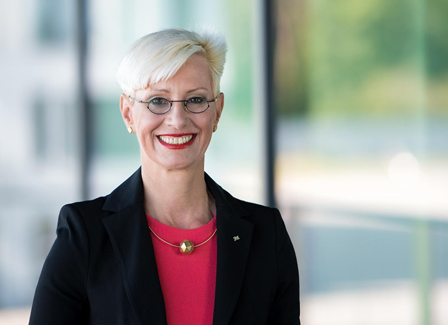
    Professor Ferdi Schüth, Director and Scientific Member at the Max Planck Institute for Coal Research in Mülheim an der Ruhr, is to receive the Alwin Mittasch Prize 2025 for his outstanding work in catalysis research. The German Catalysis Society (GeCatS) is honouring his work as a creative initiator and driving force behind new catalysis concepts, as well as a pioneer in transfer of new findings in catalysis research into commercial applications. Ferdi Schüth is currently vice president of the GDNÄ; in 2027 he will take over the presidency.

    The Alwin Mittasch Prize is awarded for outstanding research work that has led to a deeper understanding or an expansion of the fundamentals of catalysis and its industrial application. The prize, endowed with 10,000 euros, is supported by BASF. The award ceremony will take place on 13 March 2025 during the Annual Meeting of German Catalysis Scientists in Weimar. 

    Ferdi Schüth is an internationally outstanding chemist working in the field of heterogeneous catalysis, in particular in the field of catalysis materials. His work laid the foundation for many groundbreaking discoveries, such as nanostructured catalysts with controlled porosity and targeted placement of functional units for various applications. In the field of mechanocatalysis of gas-phase reactions, Ferdi Schüth was able to synthesise ammonia at room temperature and atmospheric pressure. He was also one of the pioneers of high-throughput experimentation (HTE) using modern methods, which led to the founding of hte GmbH in 1999. In a sense, this was a continuation of the research of Alwin Mittasch, who used “manual” high-throughput approaches to conduct thousands of experiments with various solids. 

    Paul Alwin Mittasch (1869-1953) was a German chemist and historian of science of Sorbian origin. He gained great recognition for his pioneering and systematic research into the development of catalysts for ammonia synthesis using the Haber-Bosch process. The prize named after him has been awarded since 1990. 

    The German Catalysis Society (GeCatS) is the platform for the entire German catalysis community in the field of research and application. It has around a thousand members from industry and academic institutions. GeCatS promotes the exchange between industry, universities, research institutions and research policy organisations and represents the interests of the catalysis community at national and international level.

    Professorin Eva-Maria Neher © Universität Göttingen/Peter Heller

    © Frank Vinken für MPI für Kohlenforschung

    Professor Dr. Ferdi Schüth

    About the person

    Ferdi Schüth studied chemistry and law in Münster and earned his doctorate in chemistry. He was a postdoc at the Department of Chemical Engineering at the University of Minneapolis in the USA and completed his habilitation in inorganic chemistry in Mainz in 1995. In 1995 he was appointed to a chair in inorganic chemistry in Frankfurt and in 1998 was appointed Director and Scientific Member at the Max Planck Institute for Coal Research in Mülheim. Schüth has been an honorary professor at Ruhr University Bochum since 1999. He was Vice President of the Max Planck Society from 2014 to 2020.

    Further information

    Obituary for Dietrich von Engelhardt

    Obituary for Dietrich von Engelhardt

    “We will miss him very much”

    He was closely associated with the GDNÄ for decades: as an organiser of splendid conferences, as an author, interview partner and benevolent, competent advisor: Professor Dietrich Baron von Engelhardt has now passed away in Karlsruhe at the age of 83. In 2016, the renowned historian of science was awarded the Alexander von Humboldt Medal for his outstanding services to the further development of the Society of German Natural Scientists and Physicians.

    According to his family, Dietrich von Engelhardt died on 14 January 2025. “Out of this death of nature, out of this dead shell, a more beautiful nature, the spirit emerges” – this quotation from Hegel introduces the obituary and those who knew Dietrich von Engelhardt will find it extremely fitting.

    “The death of Dietrich von Engelhardt is a bitter loss for the GDNÄ,” says Professor Michael Dröscher, Treasurer and Secretary General of the GDNÄ. He adds: “The fantastic symposium he organized to mark the 175th anniversary of the GDNÄ with many prominent figures from science and politics will remain unforgotten.” As a member of the GDNÄ Education Commission, Professor von Engelhardt was a pioneer of general education through the natural sciences. Michael Dröscher: “Until the end, he was always at our side with his profound historical knowledge in an amiable manner. We will miss him greatly and honour his memory.”

    The commemorative publication marking the 200th anniversary of the GDNÄ contains a four-page interview with Professor von Engelhardt. When asked how he explained the GDNÄ’s resilience, he replied: “Above all, with its uniqueness. Since its foundation in 1822, its core concern has been the interdisciplinary exchange between scientists and physicians, as well as the connection to philosophy and society.” He would like to see a dedicated effort to build bridges with the humanities, not least as a contribution to solving the ethical and legal challenges of the present day.

    In the summer of 2024, Dietrich von Engelhardt published the impressive work “Goethe as a Natural Scientist in the Judgement of 19th Century Science and Medicine”. This comprehensive volume of sources, which fills a gap in research, was produced with the collaboration of his wife Ulrike von Engelhardt. In an interview that can be found on this website, he reported on his decades of work on Goethe and his works on topics in the natural sciences and medicine. He said that his book is dedicated to their reception in the 19th century, but “what would be necessary and revealing now would be a comparison with the reactions in the humanities and arts since the 19th century until today – a work that I would like to leave to other researchers.” Now we understand why he said that.

    DLR_Anke_Kaysser-Pyzalla

    © IMGWF – Lübeck

    Prof. Dr. Dietrich von Engelhardt

    About the person

    Professor von Engelhardt was a full professor of the history of medicine and the general history of science at the University of Lübeck from 1983 to 2007. His main research interests included natural philosophy, natural sciences, medicine in idealism and romanticism, and European scientific relations. In 1997, Professor von Engelhardt organised a major symposium in Lübeck to mark the 175th anniversary of the GDNÄ. He was the editor of the associated commemorative publication “Forschung und Fortschritt” (Research and Progress) and the “Schriftenreihe über die Versammlungen Deutscher Naturforscher und Ärzte” (Publication Series on the Meetings of German Scientists and Physicians). Dietrich von Engelhardt was a member of the German National Academy of Sciences Leopoldina. He had been a member of the GDNÄ since 1981.

    Further links:

    Books (Ed. Dietrich von Engelhardt)

    >> Forschung und Fortschritt, Festschrift zum 175-jährigen Jubiläum der Gesellschaft Deutscher Naturforscher und Ärzte, Stuttgart 1997 (anthology with seminal speeches from Lorenz Oken to Hubert Markl; available in antiquarian bookshops)
    >> Zwei Jahrhunderte Wissenschaft und Forschung in Deutschland, Entwicklungen – Perspektiven (Two Centuries of Science and Research in Germany, Developments – Perspectives), Stuttgart 1998 (conference proceedings on the occasion of the 175th anniversary of the GDNÄ; available in antiquarian bookshops)

    Interview on this website

    Anke Kaysser-Pyzalla: “Intergenerational dialogue is important to me”

    “Intergenerational dialogue is important to me”

    On 1 January 2025, Professor Anke Kaysser-Pyzalla, an engineer and Chair of the Executive Board of the German Aerospace Center (DLR), took over the presidency of the GDNÄ.

    Kaysser-Pyzalla was elected to the office by the members of the GDNÄ for a period of two years. In the more than two-hundred-year history of the Society for Natural Sciences, the engineering scientist is the third woman to hold this office. Her predecessor, the Berlin zoologist Professor Heribert Hofer, will remain associated with the Society for Natural Sciences as First Vice President until the end of 2026.

    As GDNÄ president, Anke Kaysser-Pyzalla is responsible for the scientific programme of the society’s 134th assembly. It will take place in September 2026 in Bremen under the title ‘Knowledge creates benefits – utilising science’. ‘The city offers an outstanding congress infrastructure and, together with Bremerhaven, a wealth of renowned science and research institutions,’ says the new president.

    The GDNÄ conferences have always been forums for personal exchange between scientists and science enthusiasts. ‘In Bremen, we will create even more space for interaction,’ Kaysser-Pyzalla announces. The recently founded youth organisation of the society, initiated by Heribert Hofer, will contribute fresh ideas to the programme. In recent years, new formats for discussion between established scientists and young talents have been developed, which benefit everyone involved, says the trained mechanical engineer: ‘The generations can learn a lot from each other and I will promote this process in the interest of the GDNÄ.’

    With its interdisciplinary orientation, the GDNÄ is ideally suited to discuss the complex challenges of the time in an interdisciplinary way. She believes it is important to show how research leads to innovations and technologies with the aim of benefiting society, says the new president. Kaysser-Pyzalla has been committed to this goal for years, and she will continue to pursue it in her new role.

    In the new president’s view, the GDNÄ should offer as many opportunities as possible to enable citizens to participate in science: ‘This is another way in which we can contribute to the stability of our democracy.’

    ‘I am looking forward to the new task, to working with great colleagues on the board and with the highly efficient staff at the office,’ says Anke Kaysser-Pyzalla.

    DLR_Anke_Kaysser-Pyzalla

    © DLR

    Prof. Dr.-Ing. Anke Kaysser-Pyzalla

    About the Person

    Prof. Dr Anke Kaysser-Pyzalla studied mechanical engineering and mechanics in Bochum and Darmstadt. She completed her doctorate and habilitation at the Ruhr University Bochum. After research activities at the Hahn-Meitner-Institut (HMI) and at the Technical University Berlin, she researched and taught at the Technical University Vienna from 2003 to 2005. In 2005, she joined the management of the Max-Planck-Institut für Eisenforschung GmbH in Düsseldorf as a scientific member, director and managing director. In 2008, she was appointed scientific managing director of the Helmholtz-Zentrum Berlin für Materialien und Energie GmbH, which was formed from the merger of the HMI and the Berliner Elektronenspeicherring-Gesellschaft für Synchrotronstrahlung (BESSY) under her leadership. In 2017, Anke Kaysser-Pyzalla was elected President of the Technical University of Braunschweig. Since 2020, she has been Chair of the Executive Board of the German Aerospace Center (DLR). She has been President of the GDNÄ since 1 January 2025.

    Further information:

    Heribert Hofer: “We welcome young people with open arms”

    “We welcome young people with open arms”

    What has been achieved, what lies ahead? After two years as GDNÄ President, Heribert Hofer looks back – and forward to exciting times with the young GDNÄ. 

    Professor Hofer, your term of office as President of the GDNÄ is coming to an end. How do you look back?
    With a good feeling. I overcame the initial shyness I felt in the face of the GDNÄ’s great history. The positive response at the meeting in Potsdam, whose scientific program was developed during my term of office, contributed to this. Today, more than ever, I am convinced that the GDNÄ is on the right track with its concerns and is filling a gap in the science system. Just think of the unique combination of personal, interdisciplinary exchange that we cultivate at our meetings, or of the programmes to promote young talent. 

    You have been involved in the GDNA’s student programme for many years and have created the popular science slam format “Science in 5 Minutes”. Do you feel that the founding of the Young GDNÄ a few weeks ago in Potsdam was the crowning glory of your term in office?
    “Crowning glory” is perhaps a bit much; I would rather speak of a highlight. With the Young GDNÄ, we are giving young people significantly more of a say and more opportunities to shape our society. This was evident in Potsdam, for example, in the many panel discussions in which young people discussed issues with established scientists on an equal footing. The format was so well received by the audience that we want to keep it in the future.

    Institut für Quantenoptik und Quanteninformation (IQOQI). © IQOQI/M.R.Knabl

    © MIKA-fotografie | Berlin

    Right in the thick of it: Professor Heribert Hofer at the GDNÄ conference 2024 in Potsdam.

    Until now, there was the student program, but now there is almost always talk of the Junge GDNÄ. How are the two related?
    The former student program has been incorporated into the Junge GDNÄ. It includes not only high school students, but also university students and young professionals. The age range is therefore much broader than in the student programme, stretching from 17 to around 32 years of age. The Young GDNÄ are young people with excellent grades in science and medicine who are keen to get involved in the GDNÄ. 

    How do the young talents react to the offer?
    They are incredibly pleased about the interest of established scientists in them. Many of them come to our meetings with the idea that the older ones are not interested in them – a realisation that has amazed me again and again in recent years. With the Young GDNÄ, we welcome the young people with open arms – and they think that’s great. There are already a lot of suggestions and requests. This became clear at a recent strategy meeting, which was attended by three elected representatives of the Young GDNÄ, in addition to the GDNÄ board. 

    What do young women and men want from the GDNÄ?
    For example, interesting offers between the meetings, opportunities for personal exchange at the local level and with established GDNÄ members. 

    What are the next steps?
    A meeting of the Young GDNÄ is planned for next year, when there will be no large GDNÄ meeting. The meeting will serve to promote internal networking and strategic discussion. We also want to establish local groups in which GDNÄ members of all ages can come together to discuss and support each other. The first steps in this direction were taken in 2018 by the then president Wolfgang Wahlster, but understandably this initiative has been dormant during the pandemic years. It is also conceivable that interesting events could be organised, such as guided tours of institutes or companies. We will probably start in a few university towns and expand our network of local groups step by step. The first groups are expected to be up and running in about six months.

    AleutBio-Team © 2022, Thomas Walter, Expedition SO293 AleutBio

    © MIKA-fotografie | Berlin

    “Sharing knowledge means multiplying knowledge” is written on the T-shirt that GDNÄ President Heribert Hofer was presented with by Secretary General Michael Dröscher at the end of the 133rd Assembly in Potsdam.

    You are outlining a cross-generational project. Will the older GDNÄ members play along?
    I am quite confident. The contributions of the young GDNÄ are very well received at the meetings, both by the speakers and the audience. And in many conversations with established members, I have sensed a great willingness to get involved in promoting young talent.

     The project requires a lot of coordination: Who pulls the strings in the GDNÄ?
    As the future vice president, I will take on this task for two years. We have agreed on this in the board. It will be a lot of work, but I am looking forward to it. 

    You may soon have a little more time for such projects.
    That’s right. I will reach retirement age at the end of March 2025, which means that my term of office as director of the Leibniz Institute for Zoo and Wildlife Research will come to an end. My regular professorship in this field at Freie Universität Berlin will also expire at that time. Although I will continue to work at my university as a senior professor, my workload will be significantly reduced. This will give me more time for the GDNÄ. 

    And what about your spectacular hyena research in the Serengeti?
    I will definitely continue with that. Not necessarily on site in Tanzania, as others are now taking over that role, in particular Sarah Benhaiem, to whom I have handed over the project. But in the 37 years of my hyena research, a large amount of data has been collected that is waiting to be evaluated and published. That will easily keep me busy for five years.

    Mit Medaille und Urkunde in der Bielefelder Stadthalle © David Ausserhofer

    © MIKA-fotografie | Berlin

    Berlin zoologist Prof Dr Heribert Hofer, GDNÄ President from 2023 to 2024 and 1st Vice President from the beginning of 2025.

    About the person

    Professor Heribert Hofer, Director of the Leibniz Institute for Zoo and Wildlife Research (IZW) in Berlin, was elected by the General Assembly of the GDNÄ to the office of President for the years 2023 and 2024 and was thus responsible for the scientific organisation of the 133rd Assembly in 2024 in Potsdam.

    The renowned zoologist (64) has been director of the Leibniz-IZW in Berlin-Friedrichsfelde since 2000 and has also been Professor of Interdisciplinary Wildlife Research at the Free University of Berlin since that time. Before coming to Berlin, he conducted research from 1986 to 1999 at the Max Planck Institute for Behavioural Physiology in Seewiesen, Bavaria, initially as a postdoc and later as an independent scientist. In 1997, he habilitated at the Ludwig Maximilian University of Munich with a thesis on the behaviour of spotted hyenas in the Serengeti savannah. Heribert Hofer began his studies in zoology at Saarland University and completed them at the University of Oxford with a doctorate (DPhil).

    The GDNÄ has been closely associated with the internationally renowned scientist for many years. He was involved as an elected representative and group chairman for the subject of biology, with speeches at meetings, as vice president in the preparation of the 200th anniversary celebration in Leipzig, and since the beginning of 2023 as president of the GDNÄ. On 1 January 2025, Professor Hofer will take up the post of 1st Vice President of the Society for Natural Sciences for a period of two years.

    Further information:

    Young GDNÄ “Lively discussions in front of a large audience”

    “Lively discussions in front of a large audience”

    By Professor Michael Dröscher, Treasurer and Secretary General of the GDNÄ

    The program for high school students has become one of the hallmarks of the GDNÄ – alongside the scientific excellence of the lectures and the interdisciplinary exchange. Many of the young people who have participated in the program in recent years have remained members of the GDNÄ and continue to attend the meetings. We want to bind as many of them to the GDNÄ as possible and have therefore founded the Young GDNÄ.

    Thanks to the generous support of the Heraeus Foundation, the AKB Foundation, the Foundation for Family Businesses and the Bayer Foundation, which bore a substantial portion of the costs for young participants, we were able to finance the student program largely from the donations. A total of 138 young people took part, including 98 school students, apprentices, and Jugend forscht award winners, as well as 40 university students, some of whom were former participants in the program in Greifswald, Saarbrücken, and Leipzig. Most of the school students came from Potsdam, Berlin, and the surrounding area in Brandenburg. Twenty-seven young people came from Bielefeld, where the head of our student program, Studienrat Paul Mühlenhoff, works as a high school teacher.

    Approximately 260 schools with a high school level were contacted and asked for nominations. Up to four candidates could be named per school. Unfortunately, the effort to persuade school administrators to participate in the program was extremely high again this year.

    The total number of participants was limited by the number of beds in the youth hostel. Initially, all places could be filled. Unfortunately, some of the students and alumni had to cancel their participation at short notice, so that in the end there were 138 participants.

    All participants received a four-day ticket for public transport in Potsdam.

    As in the last few assemblies, Studienrat Paul Mühlenhoff took over the overall management of the student program. Professor Heribert Hofer, Professor Eva-Maria Neher, Professor Uwe Hartmann, Professor Peter Liggesmeyer, Professor Wolfgang Lubitz and Professor Michael Dröscher, supported by five tutors, accompanied the teams as mentors. The burden of organization was borne by the employees of the office, Sylvia Landeck and Katja Diete.

    © Dima-Juschkow

    The Young GDNÄ at the 2024 Assembly in Potsdam, together with Nobel Laureate Professor Ben Feringa (front row, centre).

    Workshops

    In contrast to the procedure in Leipzig, this time we had scheduled the workshops for the Saturday before the meeting in order to create a closer connection to the lectures. On September 7, 86 participants met at the Mercure Hotel Potsdam from 11:00 a.m. to 5:00 p.m. in the six specialist teams of chemistry, biology, physics, computer science, engineering and medicine to prepare for the conference theme “Science for Our Tomorrow’s Life”. Their task was to explore the fields of work of the speakers, familiarize themselves with the topics of the lectures and develop questions that would be discussed after each session in a panel discussion with the speakers and moderated by the session leaders. On Thursday afternoon, before the assembly began, those who had not been able to attend the pre-workshop were assigned to the teams. The teams selected three to five representatives for the individual expert panels.

    After the preparations were complete, the teams met with the members of the board and the board of directors for a meet-the-prof exchange over snacks and drinks in the foyer.

    This year, the participants also networked in a WhatsApp group, which made communication with each other and with the management much easier.

    Science slam kicks off the assembly

    On the evening before the official opening of the conference, the popular science slam “Wissenschaft in 5 Minuten” (Science in 5 Minutes) took place again – moderated by Professor Heribert Hofer and attended by around 80 percent of the assembly participants. The eight contributions were met with storms of applause. The loudest applause and first prize went to 18-year-old Anne Marie Bobes, who presented her project on the development of small rotors for street lanterns. The rotors can generate enough electricity to operate the lanterns using wind power.

    The titles of the other short presentations were: “Recognising Alzheimer’s through AI”, “Sick systems in search of fair health care”, “Polyme(e)re – a planet full of plastic”, “Seeing without understanding – how AI interprets images”, “Can meat be produced in the laboratory”, “Epoxy resin”, “Ethanol production from starch-rich waste”.

    After the award ceremony, Dr. Stefanie Kaiser was connected via video. The marine biologist fascinated the audience with her report on the AleutBio deep-sea expedition in the Northeast Pacific and then answered many questions from the audience.

    Science for our tomorrow’s life

    In the opening session on Friday morning, President Heribert Hofer welcomed the participants, especially the school and university students. He introduced the Young GDNÄ and proclaimed its founding. After the address by the local managing director, Professor Alexander Böker, and the greetings from the state of Brandenburg, the city of Potsdam and the university, Professor Eva-Maria Neher received the Alexander von Humboldt Medal for her services to the development of the GDNÄ.

    The lecture program began after the opening session. The computer science session focused on the development of software-intensive, cyber-physical systems and large generative language models. This was followed by the first panel session with the Junge GDNÄ in a lively atmosphere.

    Intensive discussions also took place after the technology session with representatives of the Junge GDNÄ on human-centered AI for medical assistance systems and a sustainable transformation of industry.

    A new program item was the doctoral students’ and alumni café during the lunch break.

    The highlight of the day was the public Nobel Lecture. With his introduction to the art of building small, Nobel Laureate in Chemistry Professor Ben Feringa inspired young and old alike.

    The chemistry session opened on Saturday. Topics included nanocapsules as drug carriers and artificial organelles, as well as the “Oscar for best supporting actor: water” and “Fire and Ice” – a lecture in which hydrogen and carbon dioxide were described as molecular interfaces between energy and chemistry. This lecture also led to an intensive discussion on the podium.

    The afternoon was dedicated to biology. The topics were mycorrhizal fungi, which work together with plants, and the contribution of climate change to the loss of biodiversity, especially among birds. The question of whether the CRISPR/Cas gene scissors are devil’s tools or a blessing for agriculture was the subject of a lively discussion on the podium.

    The Leopoldina lecture on “Placebo or Therapy with Nothing” made a big impression, especially on the young participants. It was given by Professor Martin Lohse, GDNÄ President 2019 to 2022, who stepped in after the original lecture was canceled at short notice.

    On Sunday morning, physics was on the program. Topics included how animals orient themselves in the Earth’s magnetic field and the state of development of quantum computers. There was no shortage of material for a lively discussion on the podium here either.

    Medicine provided the final topic. Three fascinating lectures covered the use of AI to gain a better understanding of diseases, healthy aging, and the links between climate change and infectious diseases. Here, too, the Junge GDNÄ was well prepared for the panel discussion, which a large audience followed until the very end.

    After the president’s closing and thank-you remarks, the students received their certificates of participation and were given a warm send-off.

    Further activities in the context of the student program

    Participation in the lecture program

    Whether it was the morning lecture at nine o’clock or the evening lecture at the Nobel or Leopoldina Lecture: the young participants were always in the lecture hall, listening to the lectures with great interest. After the lectures, they often surrounded the speakers for a long time to ask their questions.

    Study advice

    The study advice sessions with experienced scientists in the GDNÄ’s subject areas were again very well received.

    Museum visit

    The students and alumni had the opportunity to visit the Barberini Museum in Berlin on the evening of September 14.

    Saarbrücken 2018 © Robertus Koppies

    © MIKA-fotografie | Berlin.

    Professor Michael Dröscher and members of the Young GDNÄ in the Potsdam conference building.
    Feedback from the Young GDNÄ

    The following quotes are from a short film about the 2024 conference in Potsdam.

    “It’s pretty cool to be here. You have a lot of discussions with other people and many interesting lectures on topics that may be neglected in class because you don’t have time to go into specific topics in the two years of the advanced chemistry course.”

    Johanna Schattenmann, Falkensee

    “What I liked most here was that I could see so much enthusiasm in so many people and also witness the exchange between the older generation and young people at eye level, even though the older generation knows much more than we do and we can ask questions.”

    Melissa Linde, Fürstenwalde

    “Yesterday we saw the 5-minute science lectures. I have a lot of respect for the fact that you can do it in five minutes. I liked it very much, I understood everything.”

    Thiveeka Pooranachandran, Bielefeld

    “I am looking forward to the lectures, which should actually be accessible to everyone. People who are interested in computer science and physics should also see other areas.”

    Wladimir Poljakow, Bielefeld

    Further information on the GDNÄ Conference 2024