Photo Journal
Daily updates from the 2026 GDNÄ Conference
A Nobel Laureate giving a lecture, the jGDNÄ on the podium, discussions during the coffee break, the atmosphere at the Congress Centrum Bremen: you can find daily updates on this page featuring highlights from the 134th Meeting of the Society of German Natural Scientists and Physicians. A picture accompanied by a brief caption – here we report concisely on key topics and interesting moments. A detailed photo report will be published on this website shortly.
© GDNÄ
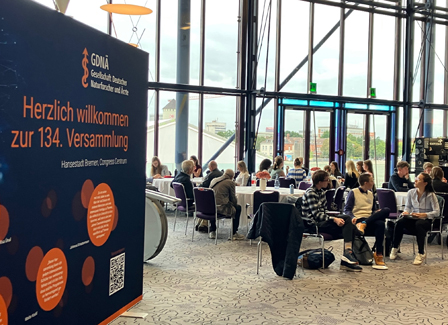
A view of the lobby of the Bremen Congress Center.
Thursday, September 17, 2026
© MIKA-fotografie | Berlin
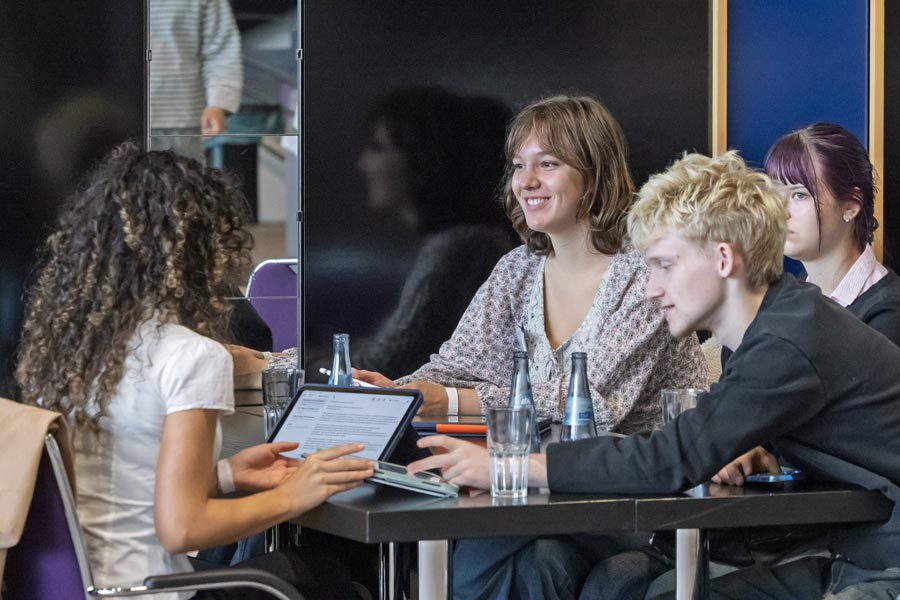
School Programme 2026: Young people preparing for the 2026 Assembly.
© GDNÄ
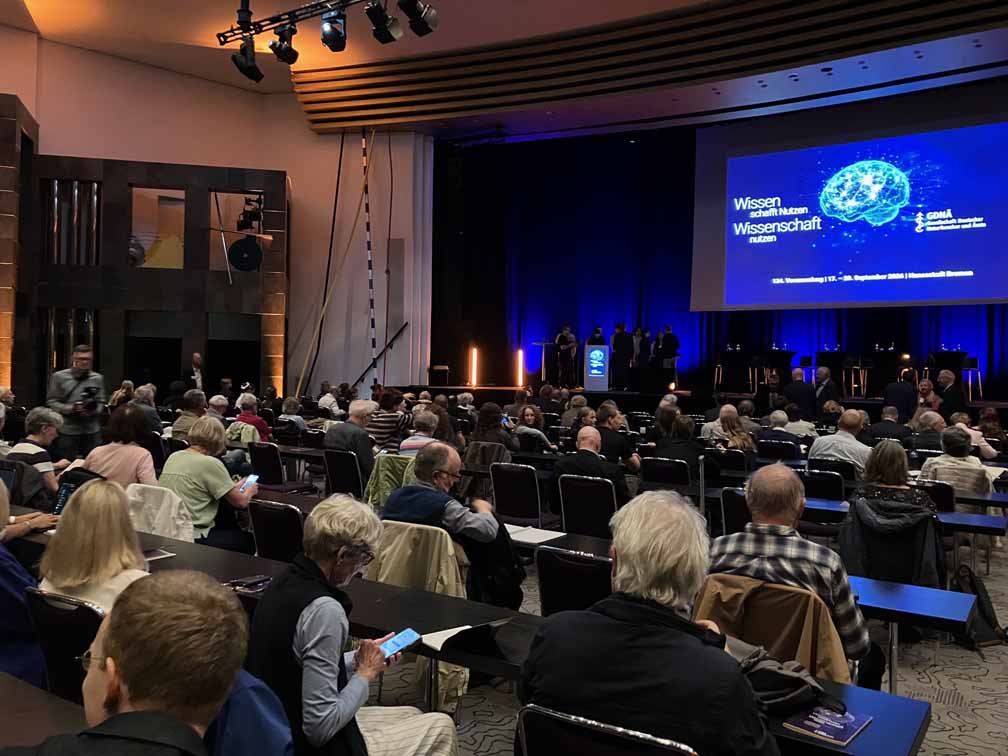
A packed auditorium at the evening event “Science in 5 Minutes.” Around 500 participants are expected at the 134th GDNÄ meeting, including 150 high school and college students. The young people come from the Bremen region and all over Germany.
© GDNÄ
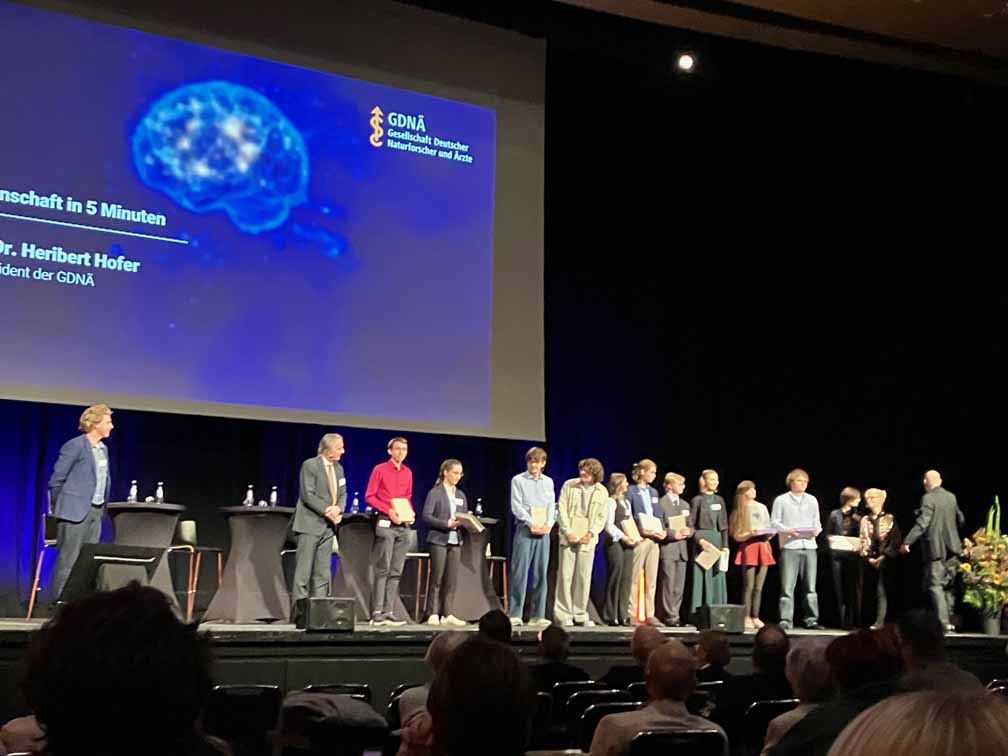
GDNÄ Vice-President Heribert Hofer with the winners of the ‘Science in 5 Minutes’ competition, as determined by the audio assessment. The deciding factor was the intensity of the audience’s applause, which was measured via an app. First place went to Anne Marie Bobes (20), who presented her project on the aerodynamics of birds; standing to her right is Lennard Kleemann, who took second place with his entry “Microfluidics: Bringing the Dead Back to Life.” On the far left: Paul Mühlenhoff, director of the GDNÄ student program; to his right is Professor Heribert Hofer, who plays a decisive role in shaping the student program.
© GDNÄ
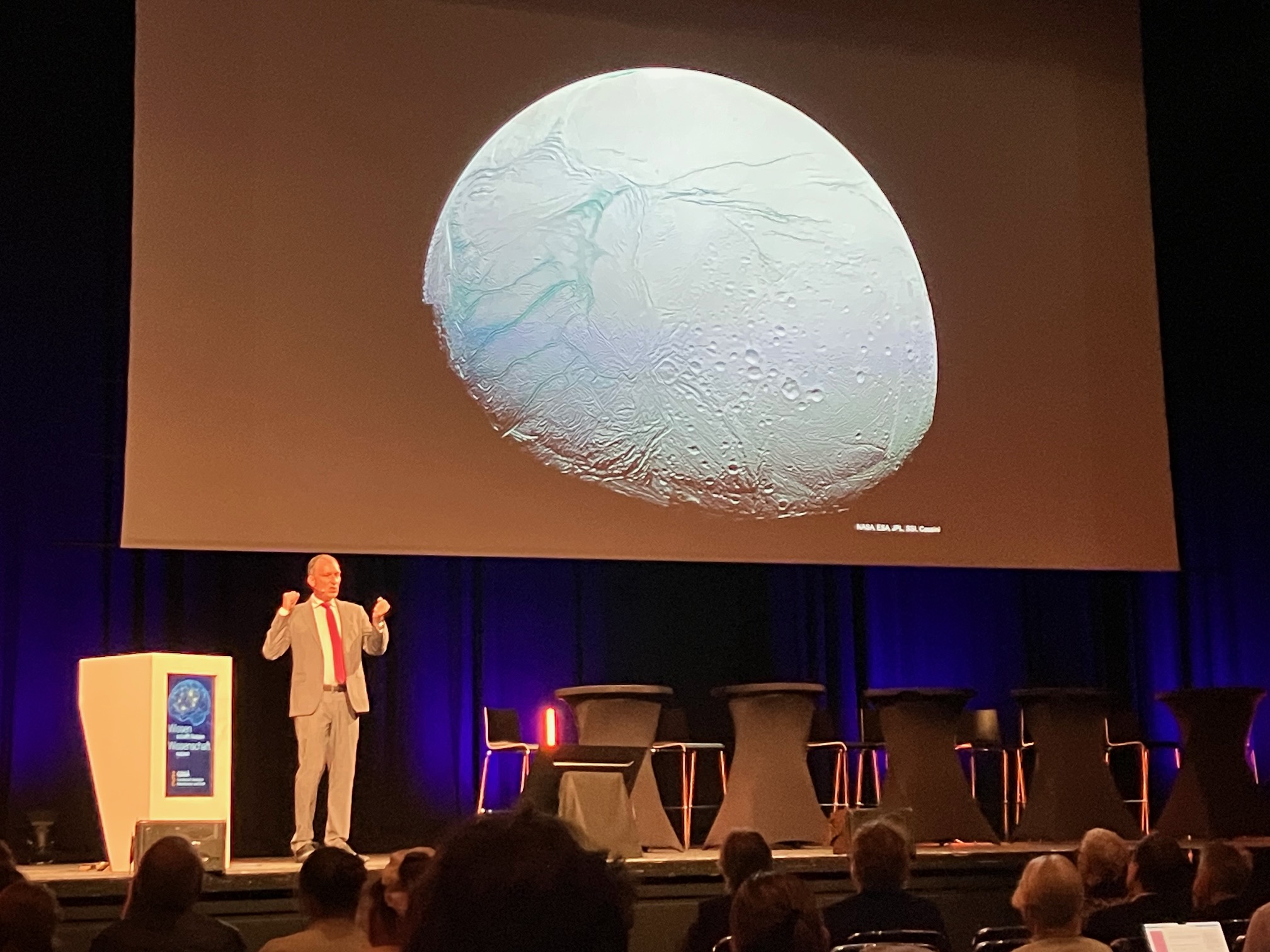
A well-attended conference highlight: Professor Thomas Zurbuchen of ETH Zurich during his public evening lecture, “The Modern Search for Life in Space: From the Drake Equation to Astrobiology.”
© GDNÄ
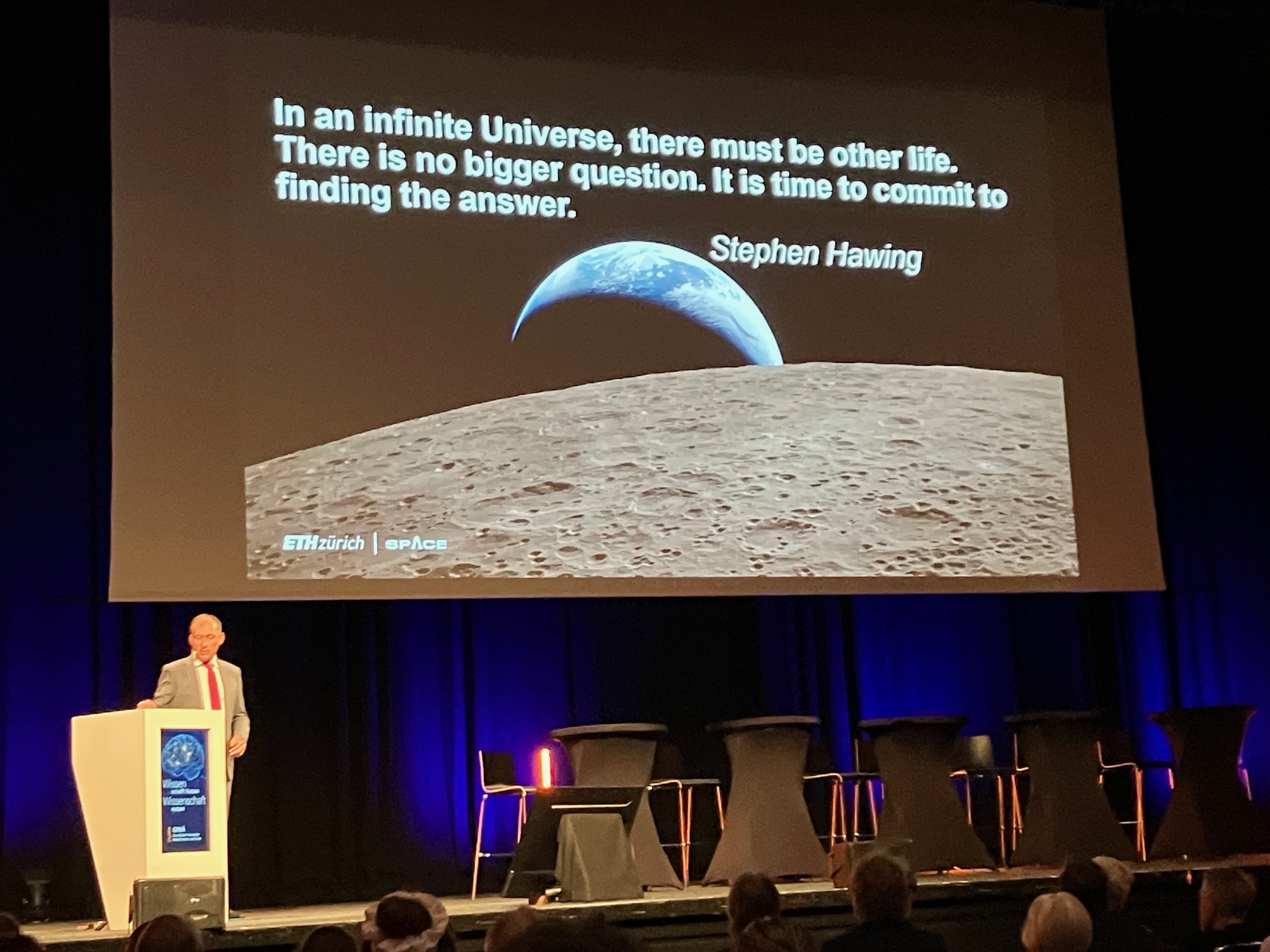
A well-attended conference highlight: Professor Thomas Zurbuchen of ETH Zurich during his public evening lecture, “The Modern Search for Life in Space: From the Drake Equation to Astrobiology.”
© MIKA-fotografie | Berlin
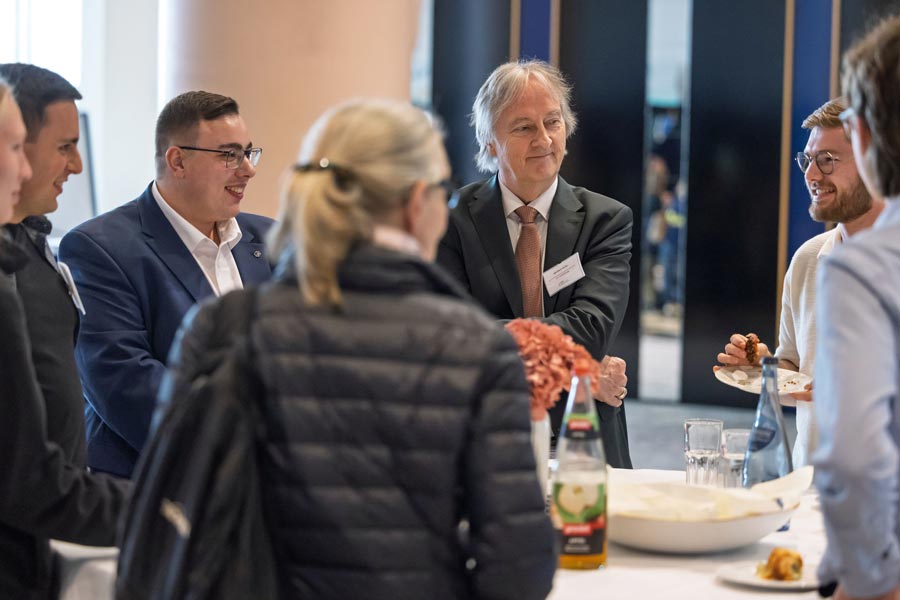
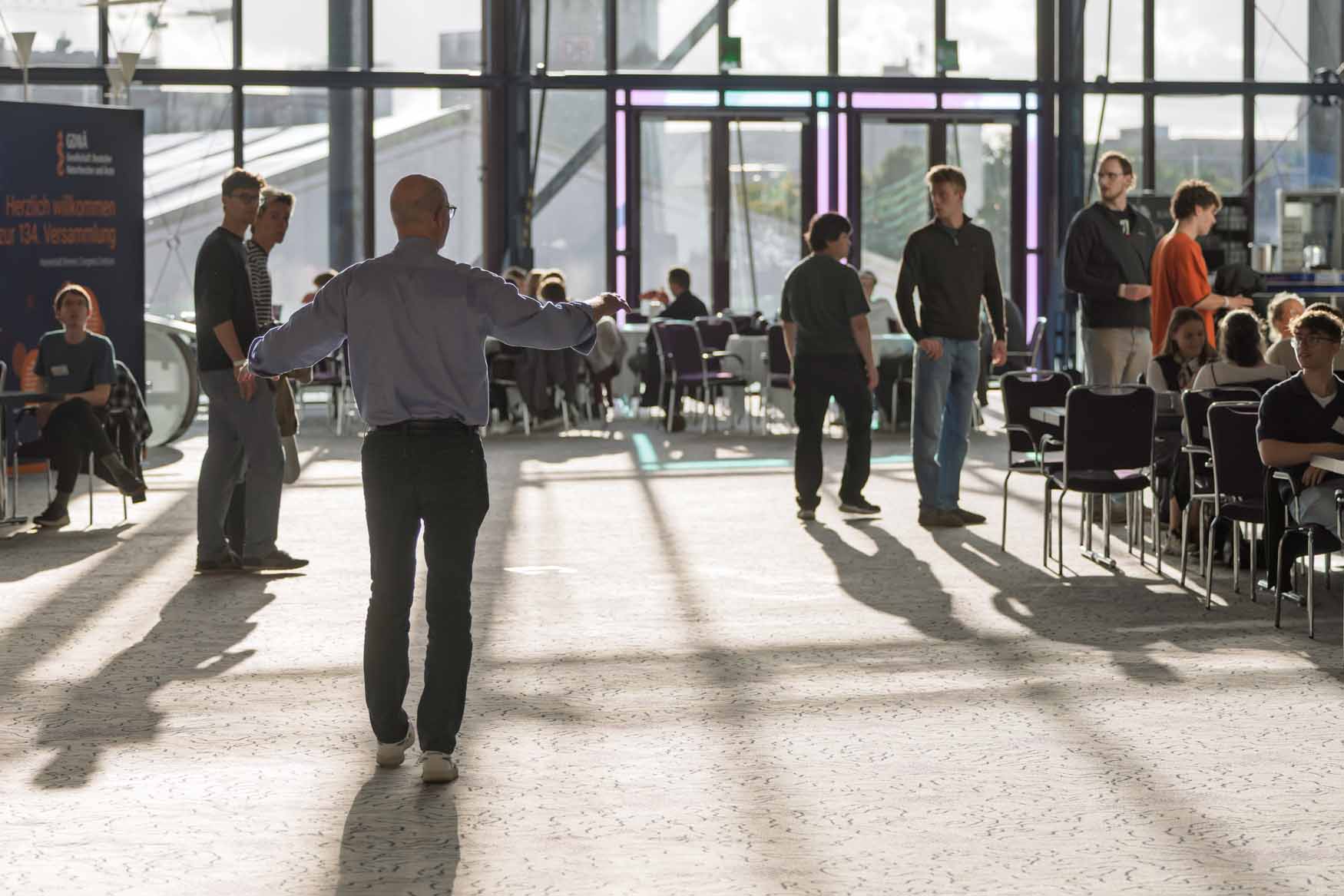
Professor Heribert Hofer talking with young participants at the 2026 conference.
© MIKA-fotografie | Berlin
Professor Michael Dröscher (front left) with participants in the school program.
© GDNÄ
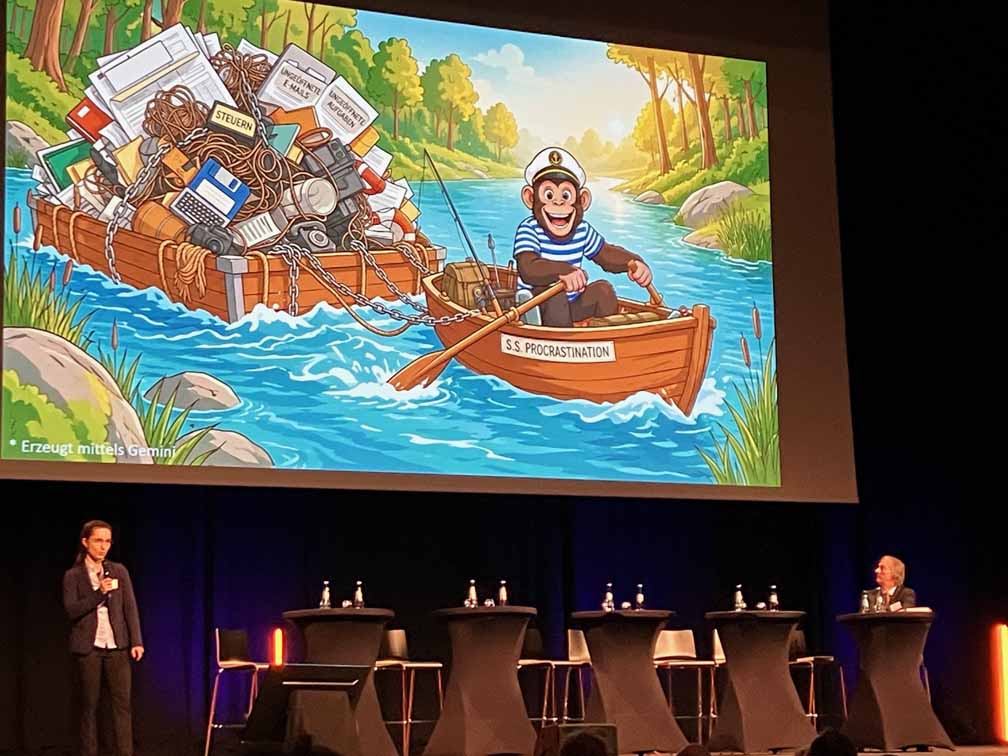
Science in 5 Minutes: In the packed Hanse Hall of the Bremen Congress Center, six high school students and six college students presented their projects to the audience. The topics ranged from a journey into the interior of a black hole to energy generated by microbes from plastic waste, to applications of microfluidics in medicine. GDNÄ Vice President Heribert Hofer moderated the evening event. The photo shows the competition winner giving her presentation. Anne Marie Bobes had already taken first place at the 2024 conference in Potsdam, where her topic was ‘Wind2Light’.
© GDNÄ
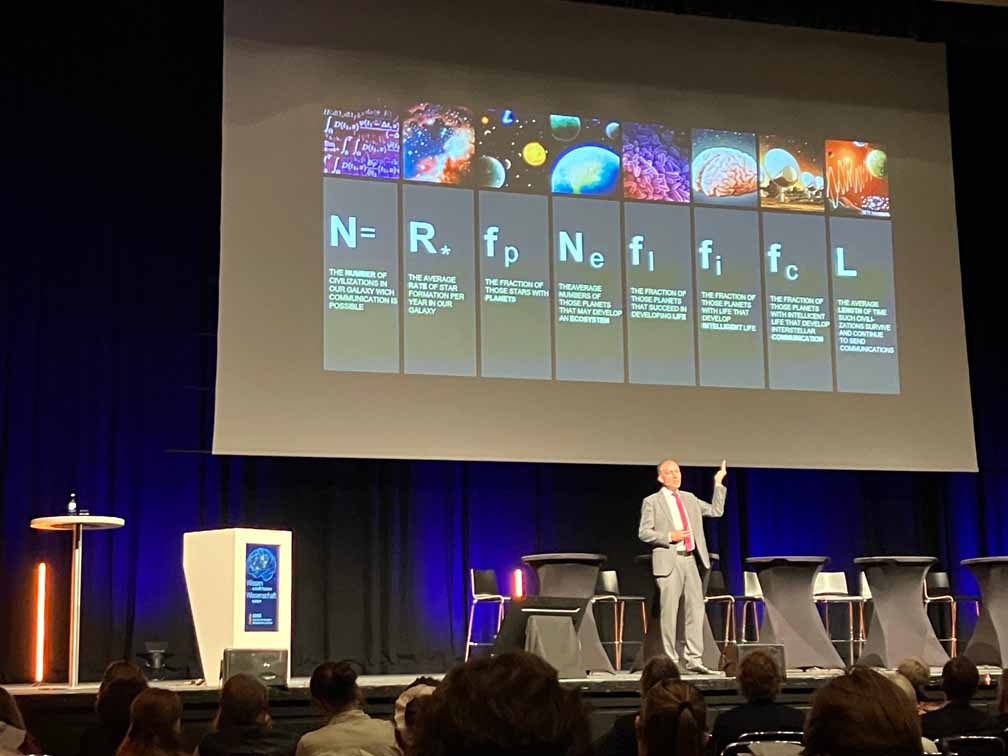
A well-attended conference highlight: Professor Thomas Zurbuchen of ETH Zurich during his public evening lecture, “The Modern Search for Life in Space: From the Drake Equation to Astrobiology.”
© GDNÄ
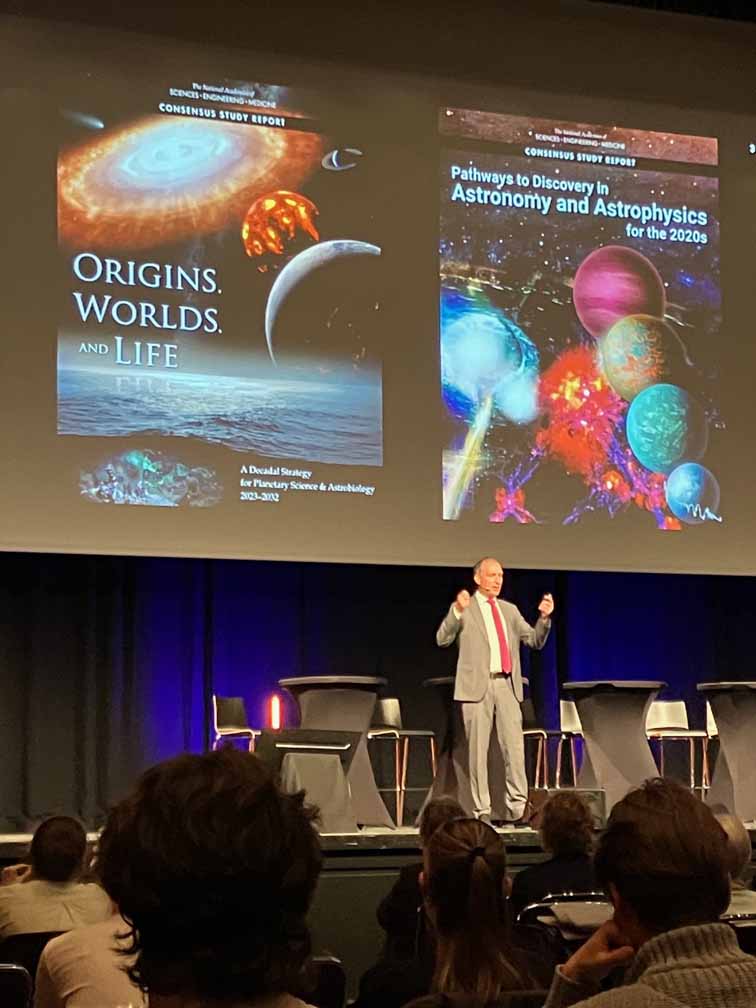
A well-attended conference highlight: Professor Thomas Zurbuchen of ETH Zurich during his public evening lecture, “The Modern Search for Life in Space: From the Drake Equation to Astrobiology.”
Friday, September 18, 2026
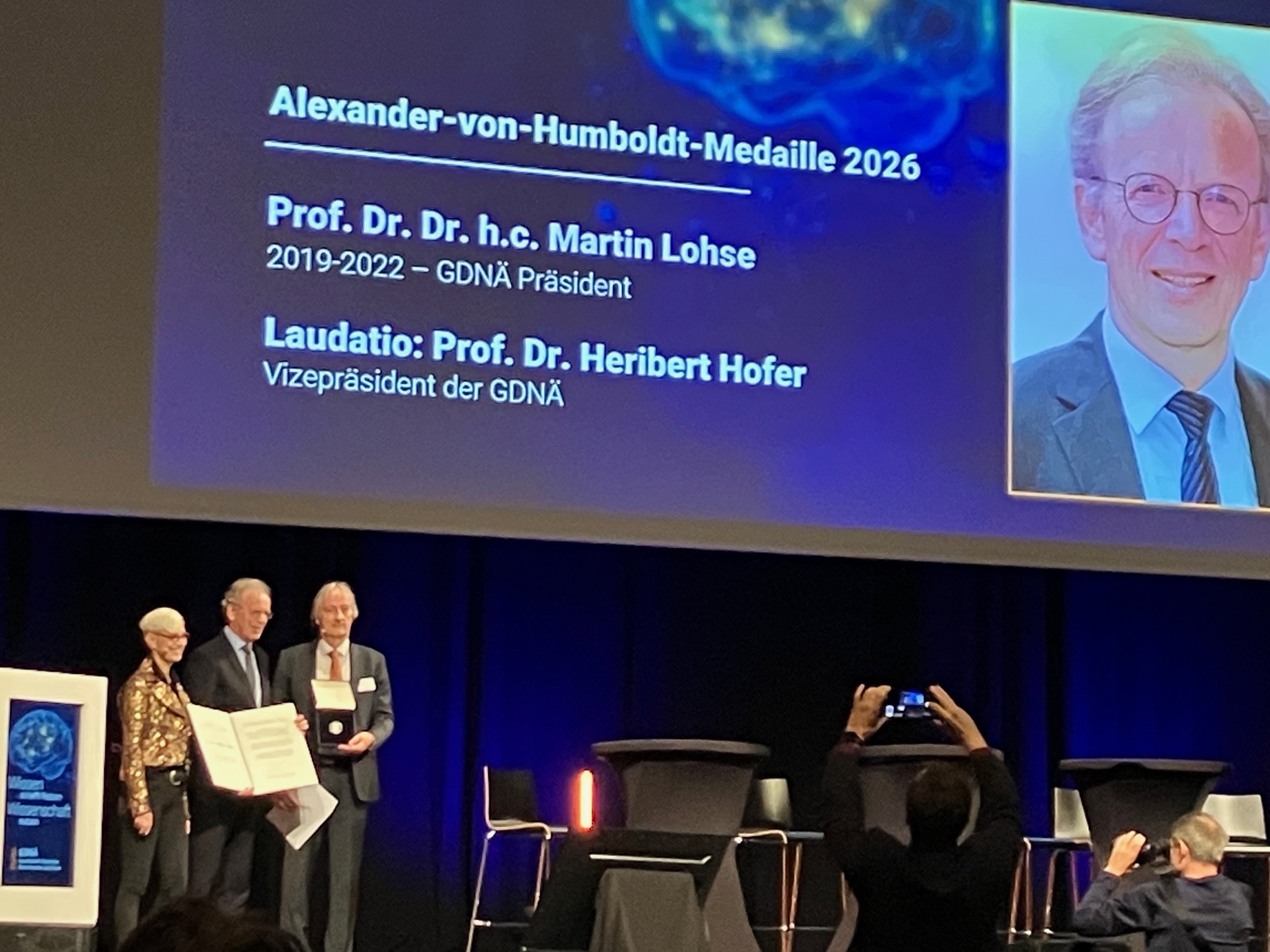
© GDNÄ
Professor Martin Lohse is being honored with the Alexander von Humboldt Medal for her great services to the GDNÄ.
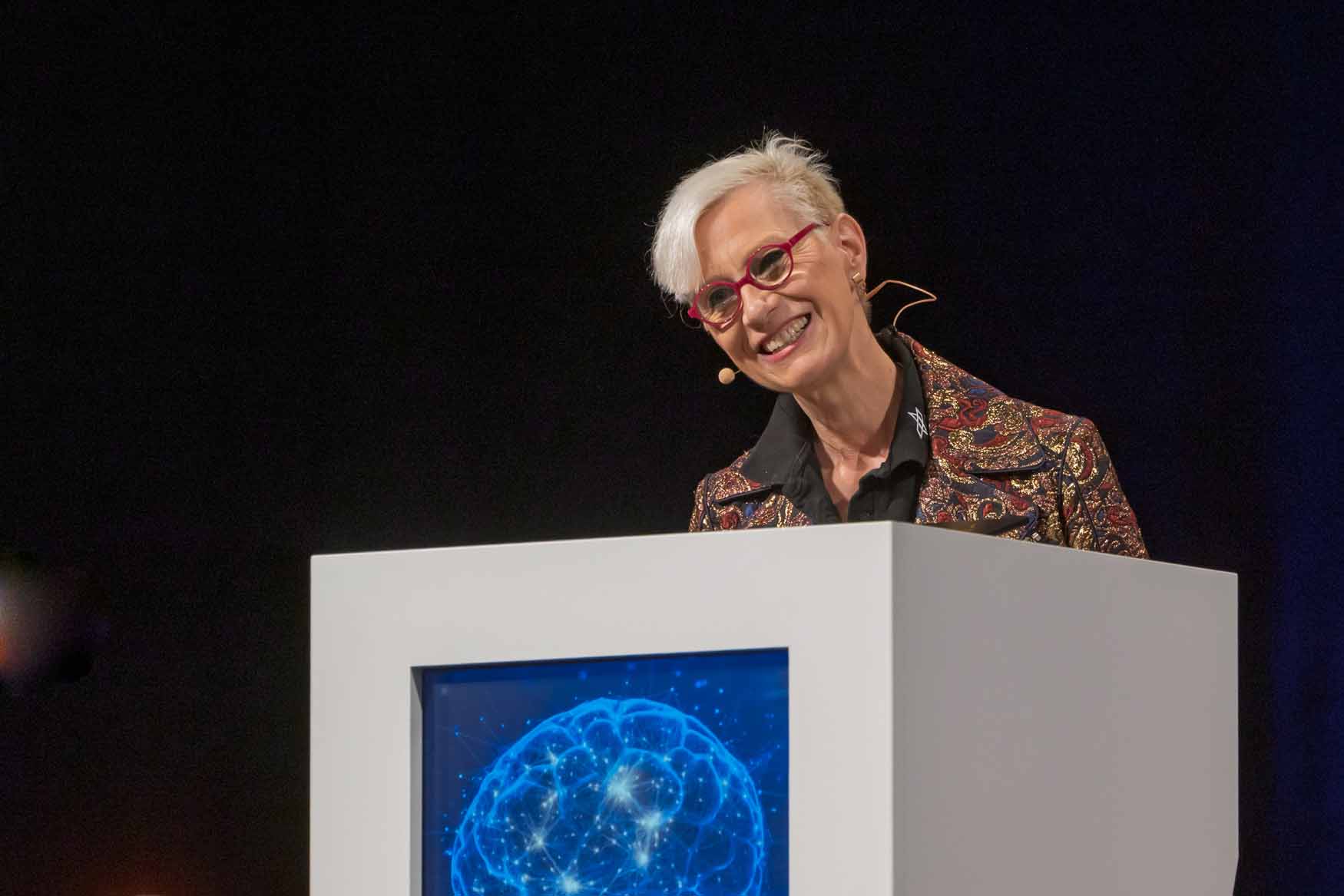
© MIKA-fotografie | Berlin
GDNÄ President Anke Kaysser-Pyzalla welcomes the participants to the 134th Assembly.
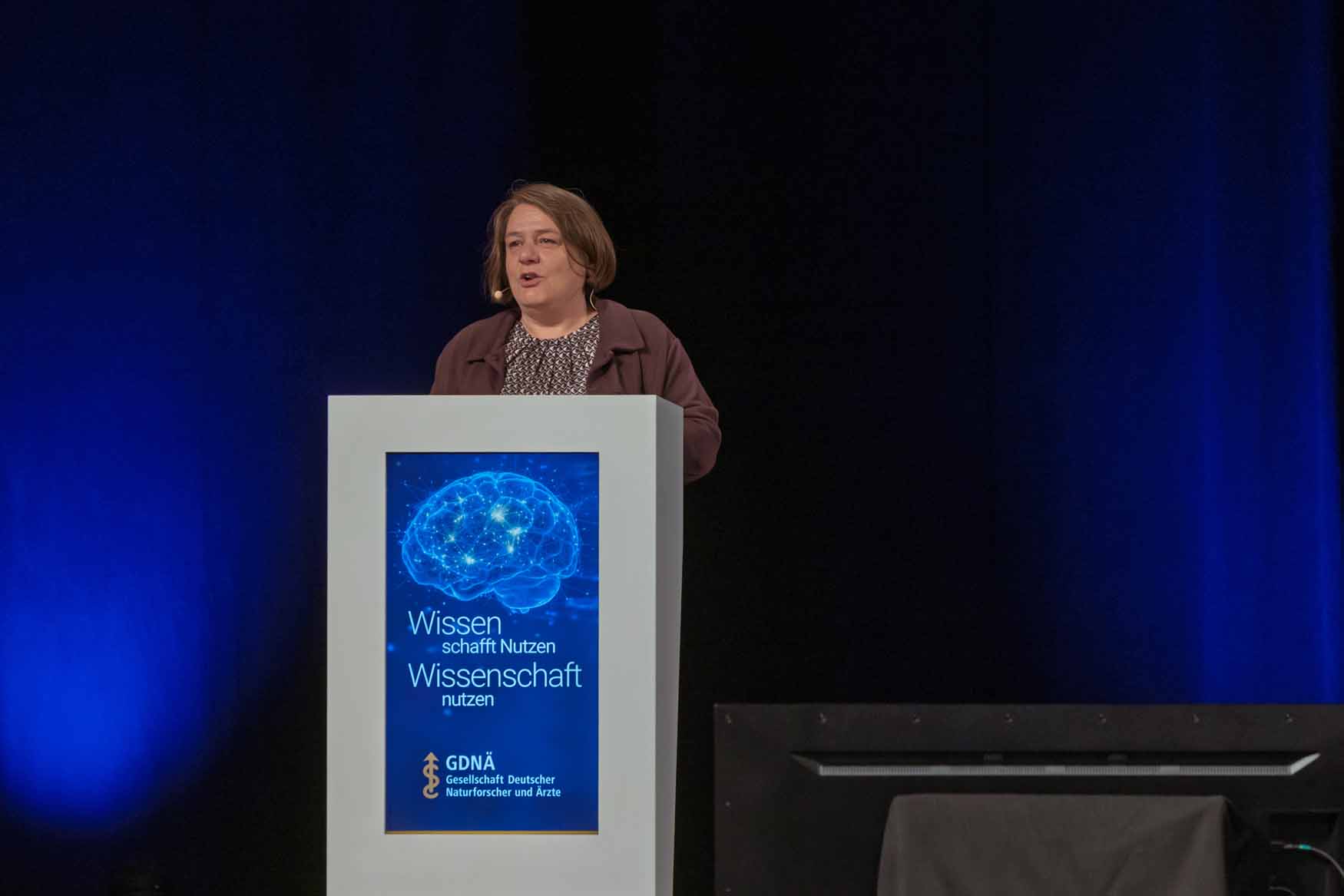
© MIKA-fotografie | Berlin
Opening addresses were given by Dr Henrike Müller, Bremen’s Senator for Science, Dr Kai Brüggemann (company director, President of the Industrie-Club and Managing Director of the 134th Assembly), and Professor Michal Kucera, Scientific Director of the 134th Assembly and Pro-Vice-Chancellor for Research and Transfer at the University of Bremen.
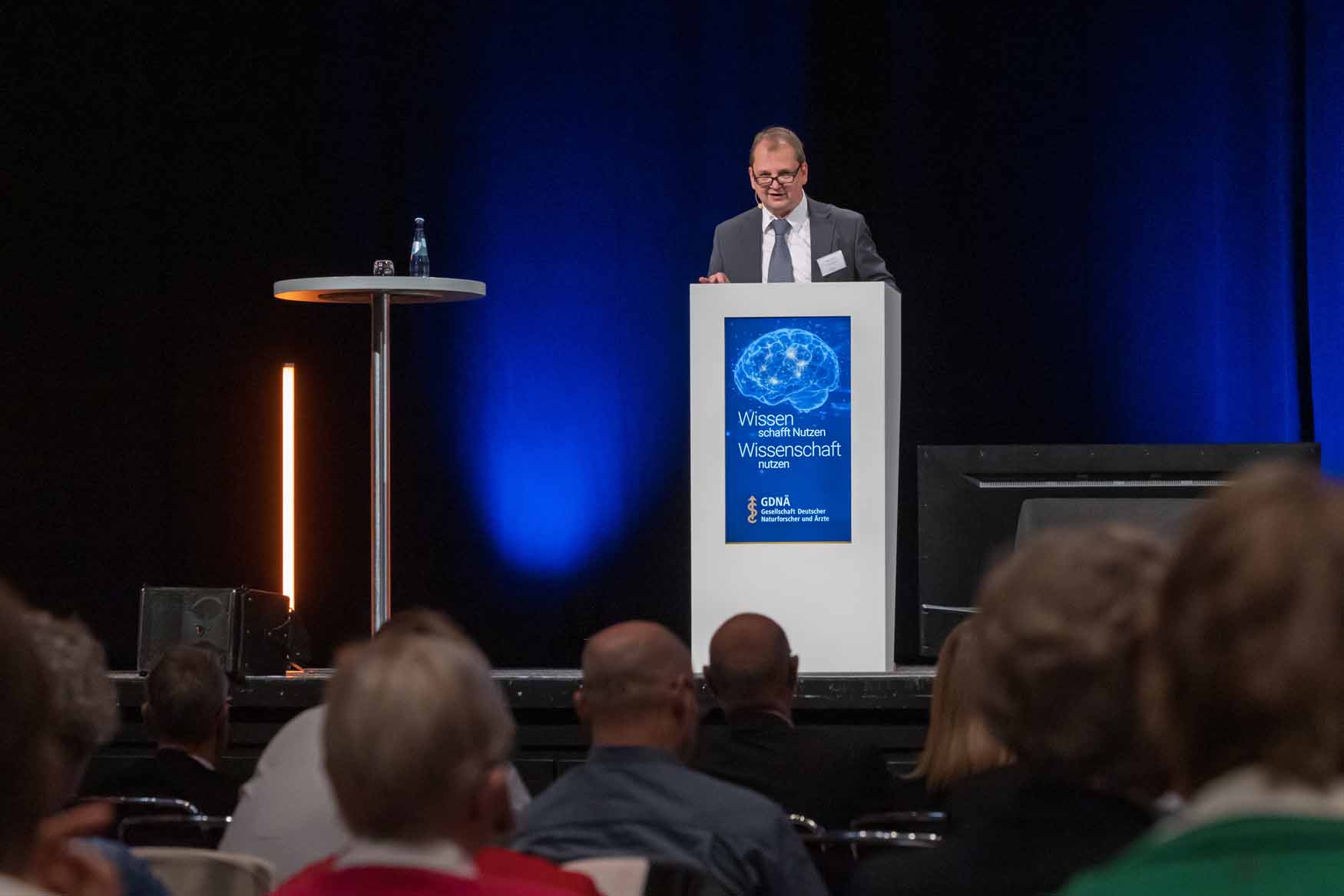
© MIKA-fotografie | Berlin
Opening remarks were given by Dr Henrike Müller, Bremen’s Senator for Science; Dr Kai Brüggemann (company director, President of the Industrie-Club and Managing Director of the 134th Assembly); and Professor Michal Kucera, pictured here, who is the Scientific Director of the 134th Assembly and Vice-Rector for Research and Transfer at the University of Bremen.
© MIKA-fotografie | Berlin
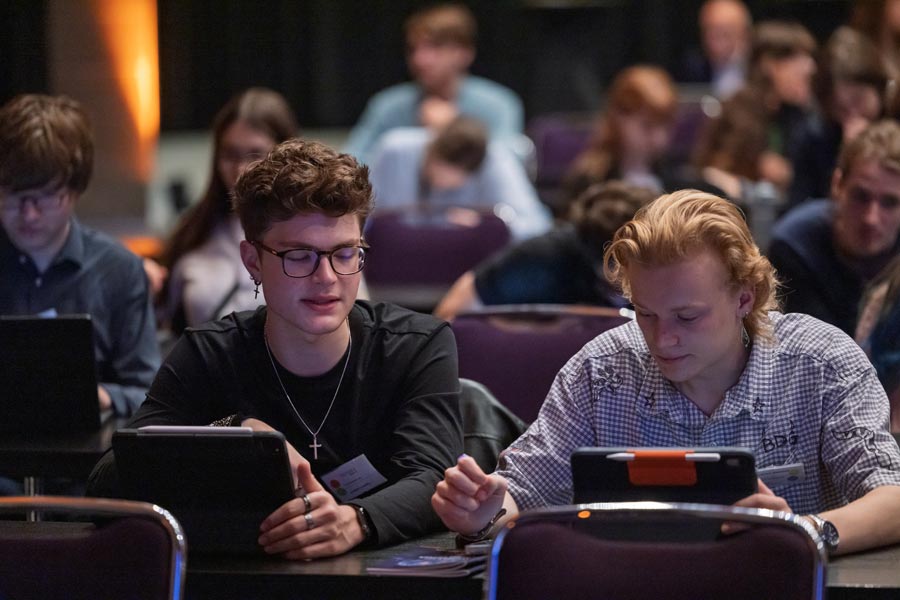
Lively discussions among the audience.
© GDNÄ
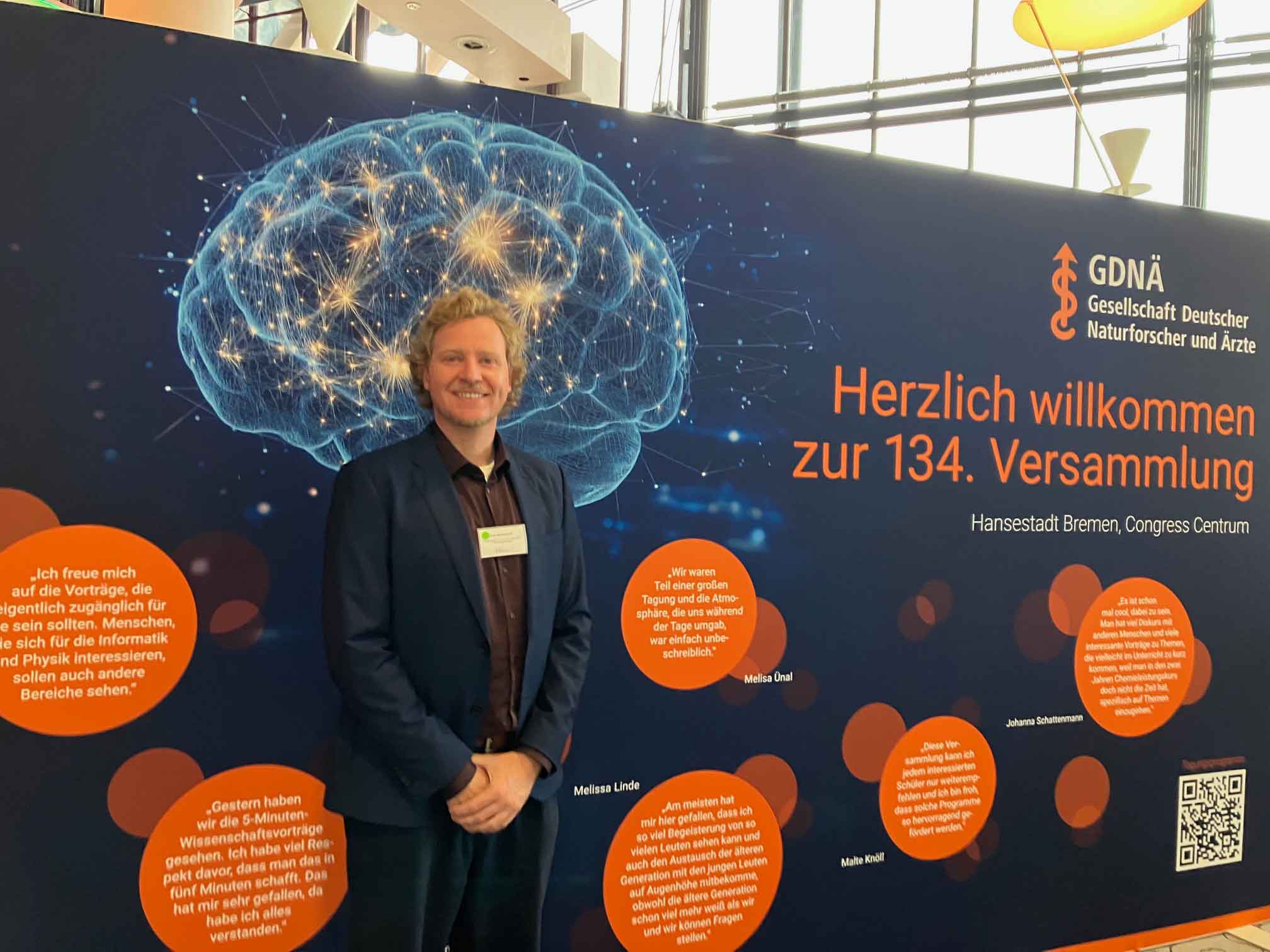
Paul Mühlenhoff has headed the GDNÄ’s Student Program since 2012.
© MIKA-fotografie | Berlin
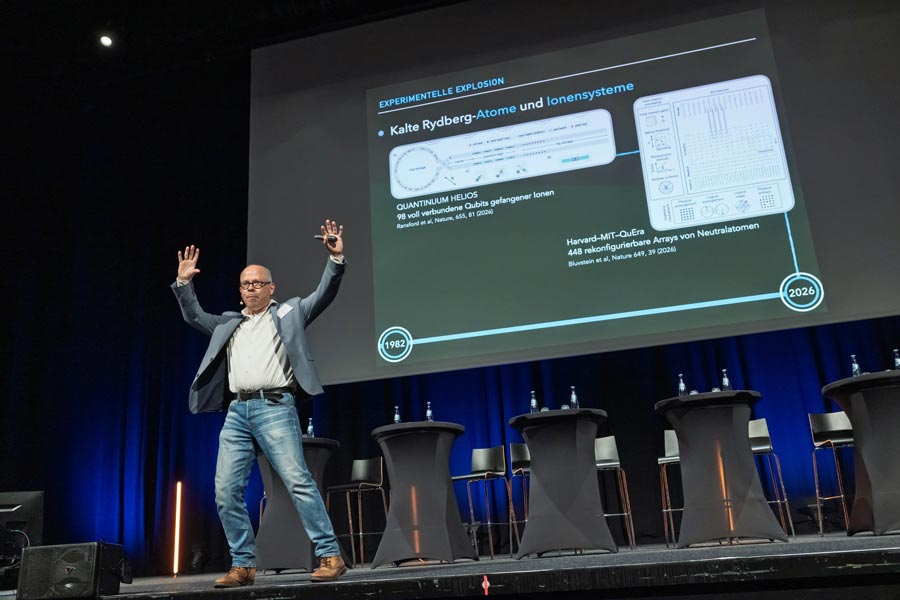
Professor Jens Eisert during his lecture ‘What quantum computers of the future might be capable of – and what they might not’.
© MIKA-fotografie | Berlin
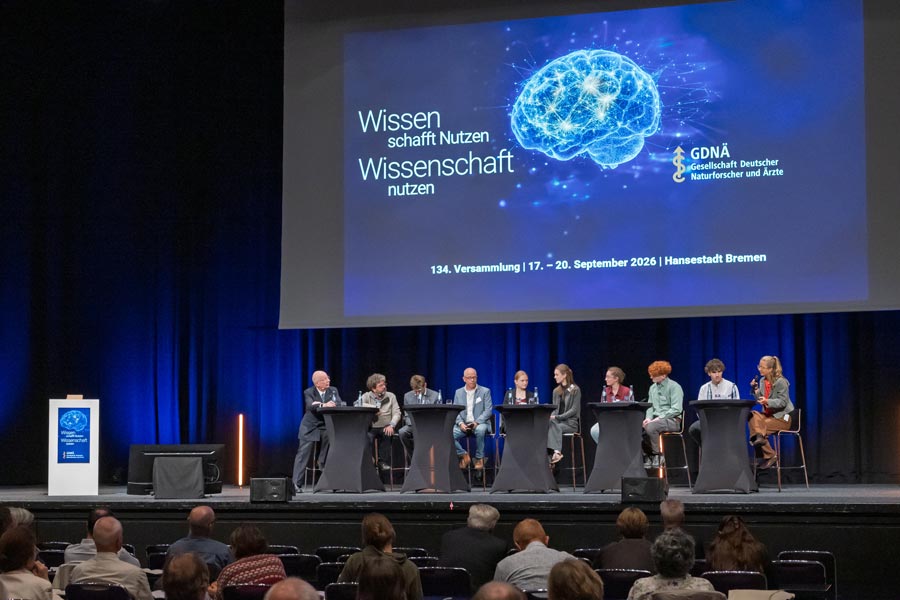
Following the Computer Science/Mathematics session, there was a lively discussion between the professors and representatives of the student program.
© GDNÄ
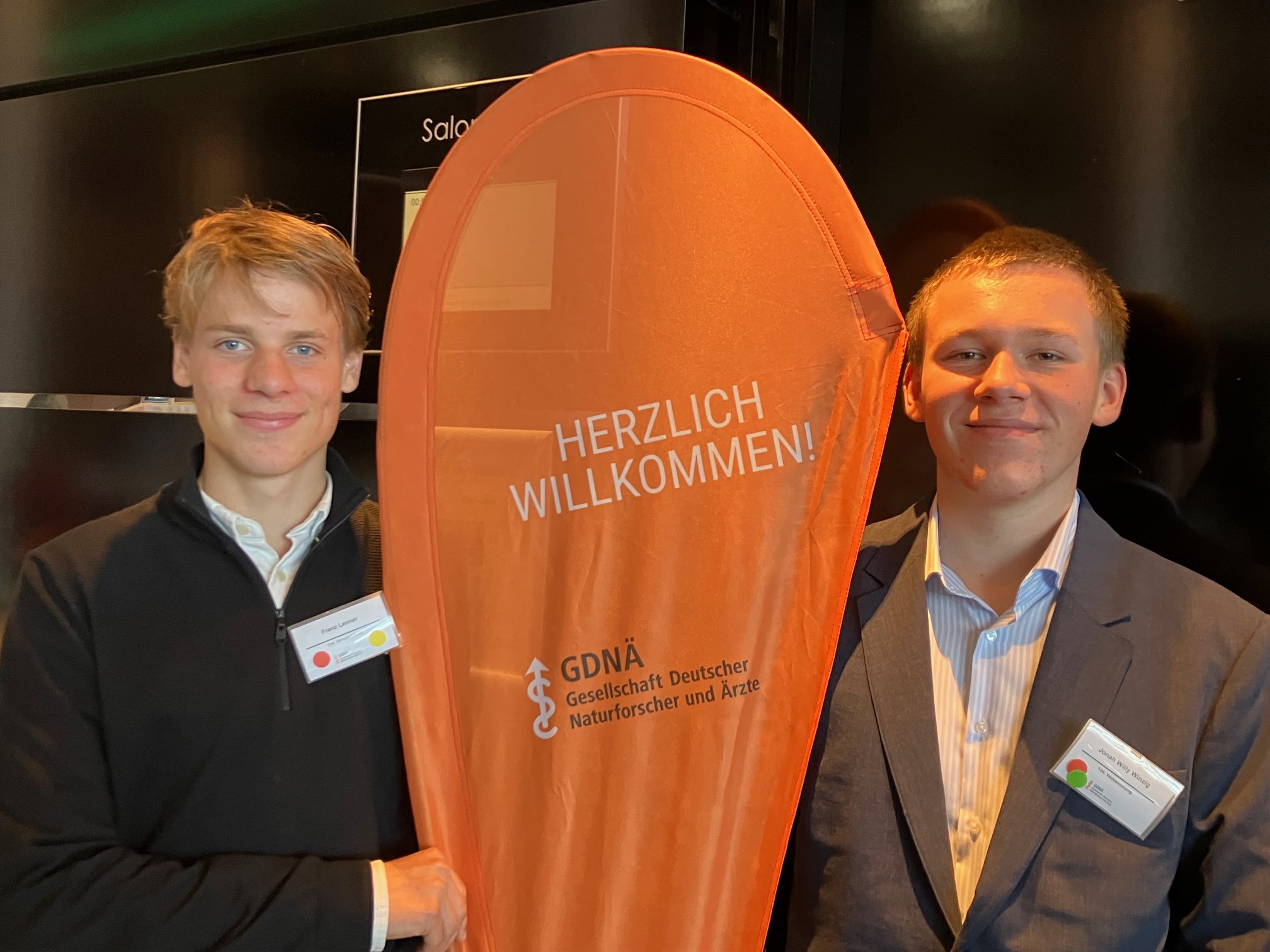
Franz Theodor Lenner (16) and Jonah Willy Winzig (16) travelled to the GDNÄ assembly in Bremen on their own initiative.
© MIKA-fotografie | Berlin
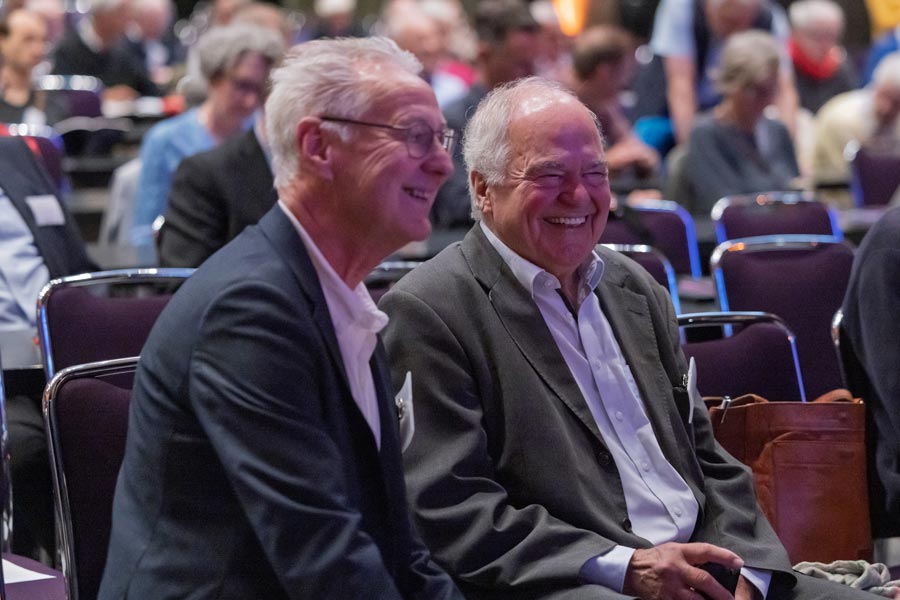
Lively discussions among the audience.
© MIKA-fotografie | Berlin
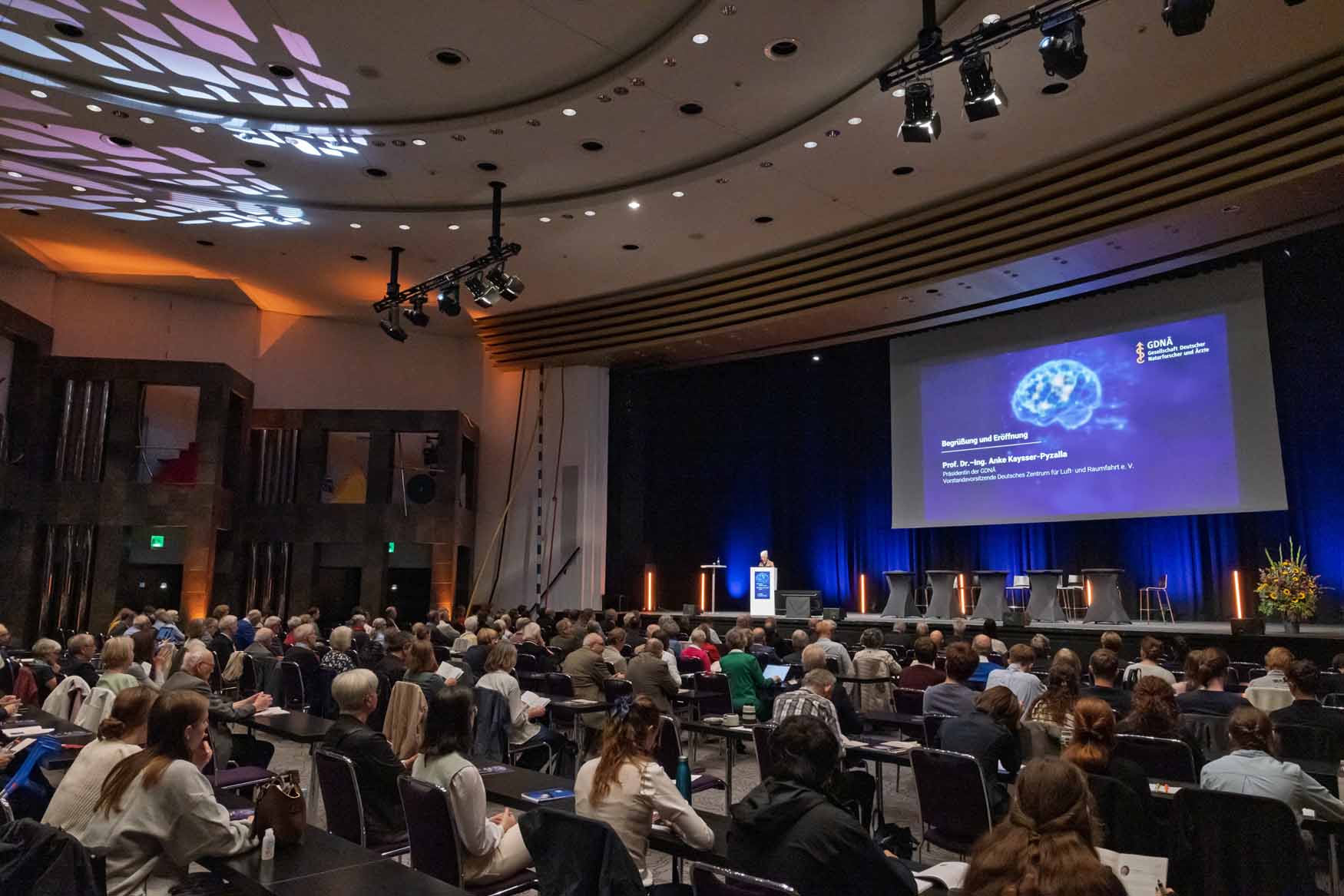
A well-attended opening event in the Hanse Hall at the Bremen Congress Centre.
© MIKA-fotografie | Berlin
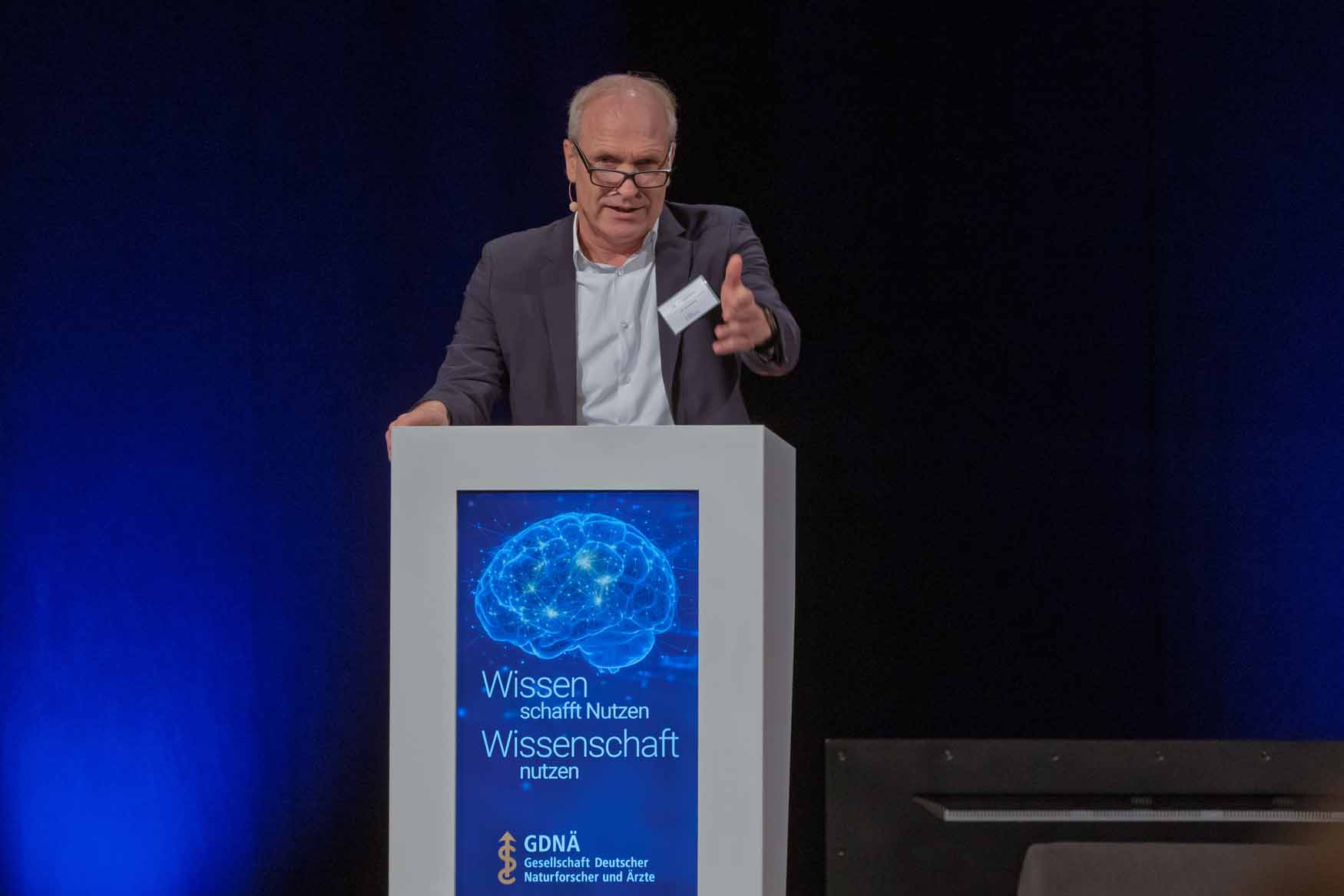
Opening remarks were given by Dr Henrike Müller, Bremen’s Senator for Science, Dr Kai Brüggemann (company director, President of the Industrie-Club and Managing Director of the 134th Assembly – pictured here), and Professor Michal Kucera, Scientific Director of the 134th Assembly and Vice-Rector for Research and Transfer at the University of Bremen.
© MIKA-fotografie | Berlin
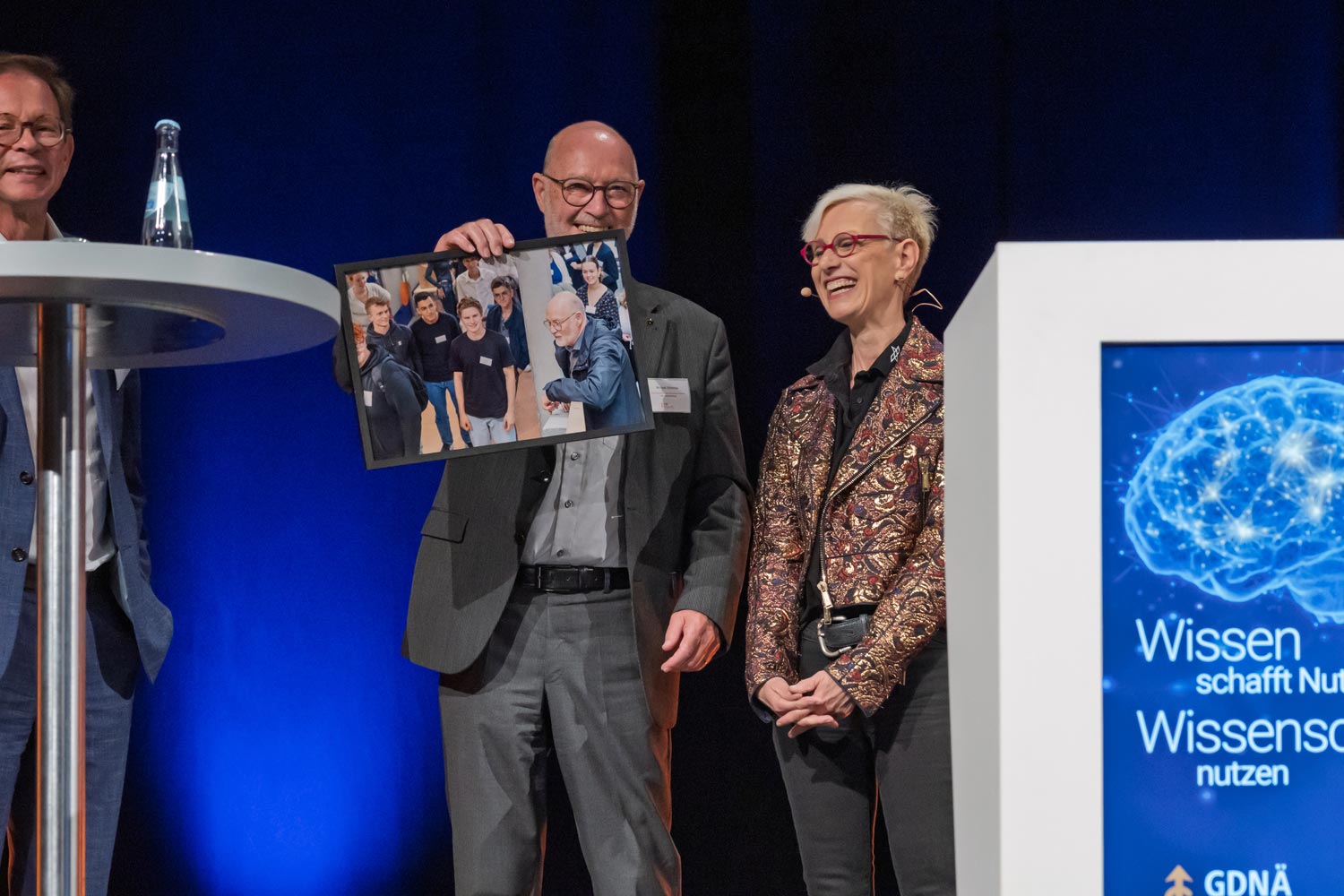
Professor Michael Dröscher with his favourite photograph, printed in large format, which shows him together with young conference participants. GDNÄ President Anke Kaysser-Pyzalla presented it to him in recognition of his services as Secretary-General of the Naturalists’ Society – a post from which Michael Dröscher will step down at the end of 2026. He will remain associated with the GDNÄ in his role as Treasurer.
© MIKA-fotografie | Berlin
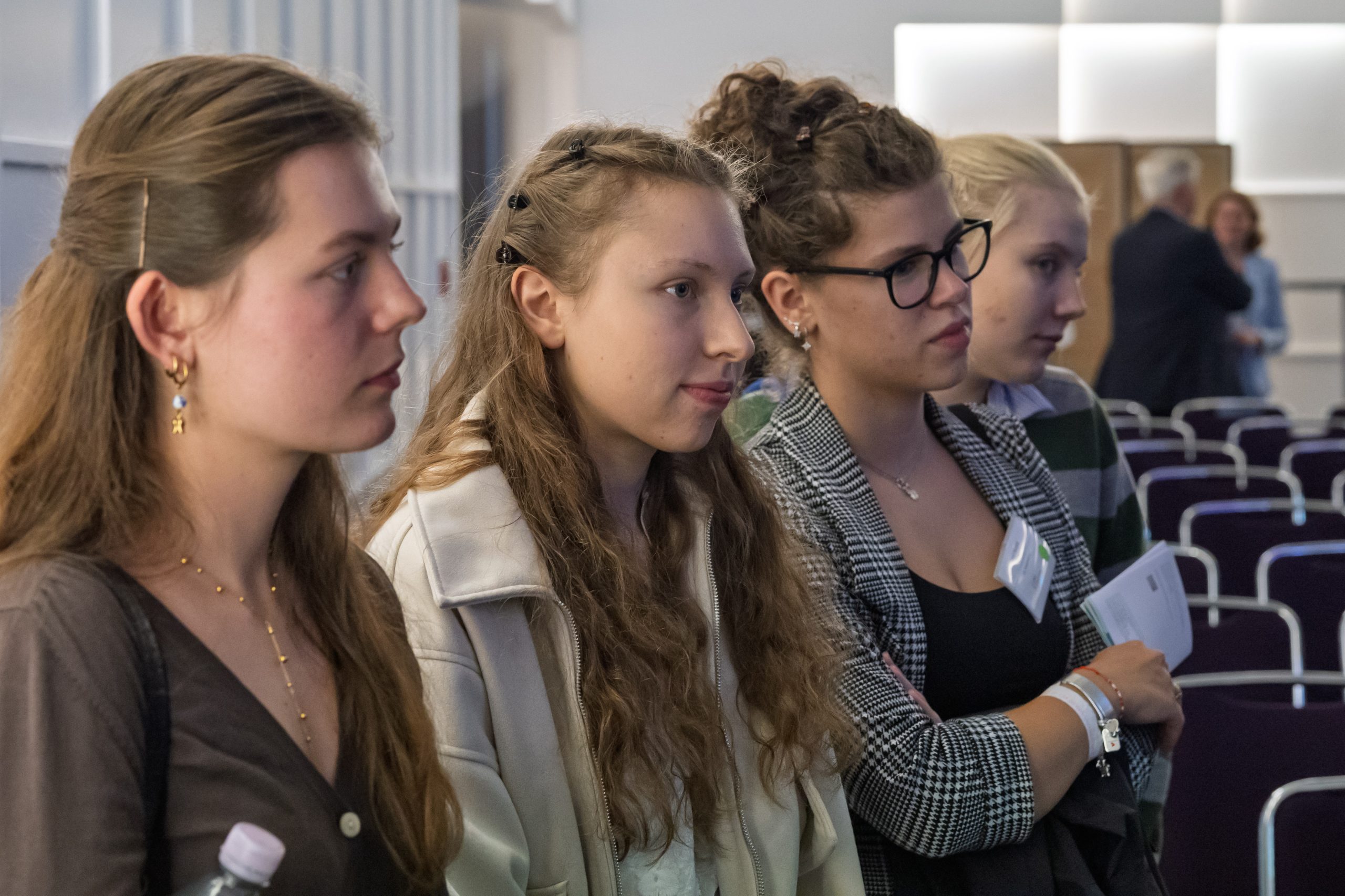
Young women at the 2026 GDNÄ conference in Bremen.
© MIKA-fotografie | Berlin
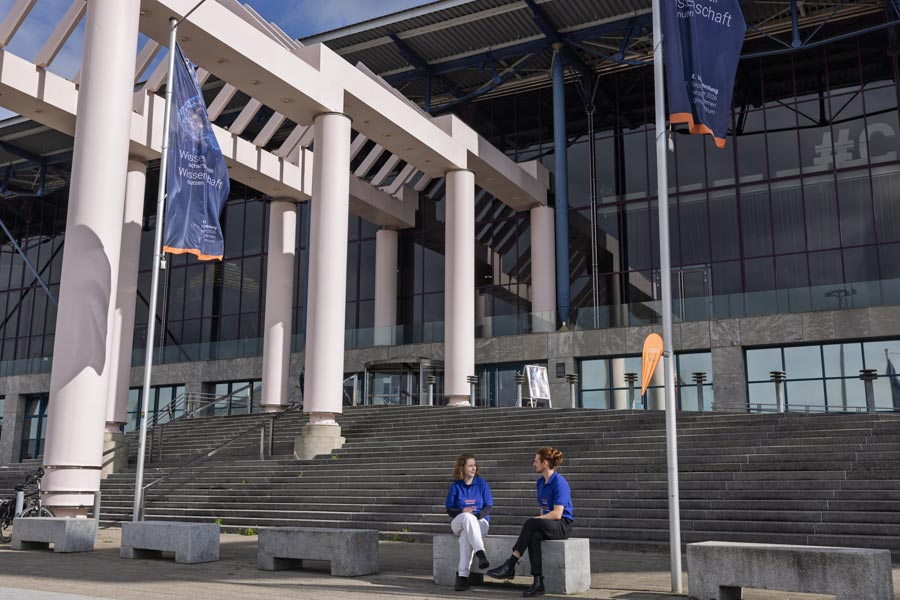
A quick breath of fresh air: members of the support team outside the Bremen Congress Centre.
© MIKA-fotografie | Berlin
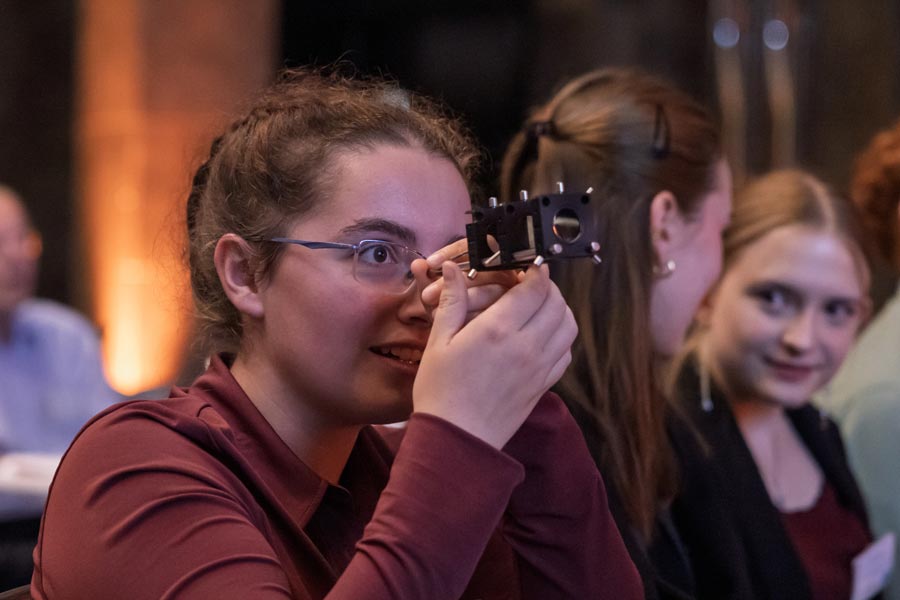
A hands-on session at the acatech Science and Technology Café: Cryptology – from secret messages of antiquity to the future of IT security.
© MIKA-fotografie | Berlin
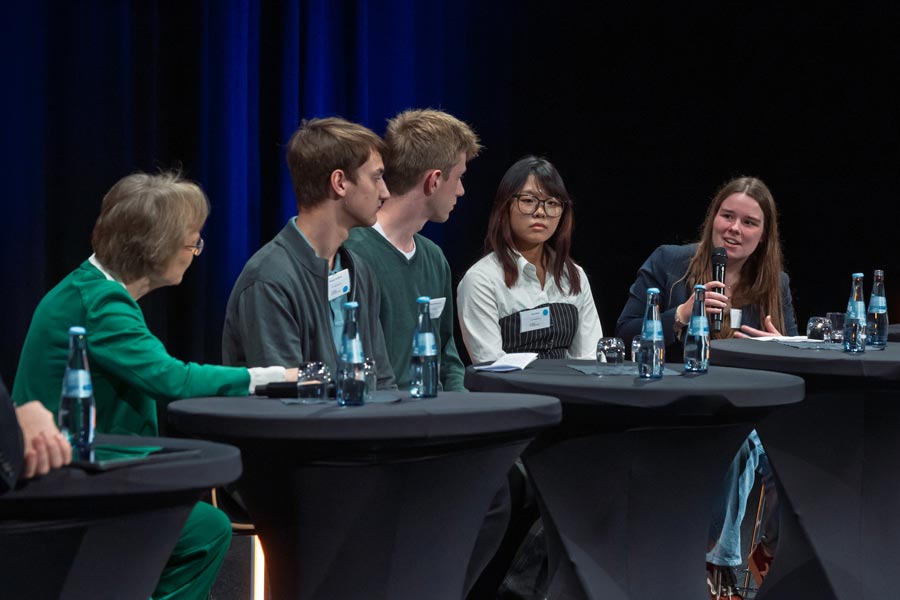
Following the session on technology and engineering, the speakers (on the left: Professor Stefanie Reese) answered questions from the students.
Saturday, September 19, 2026
© MIKA-fotografie | Berlin
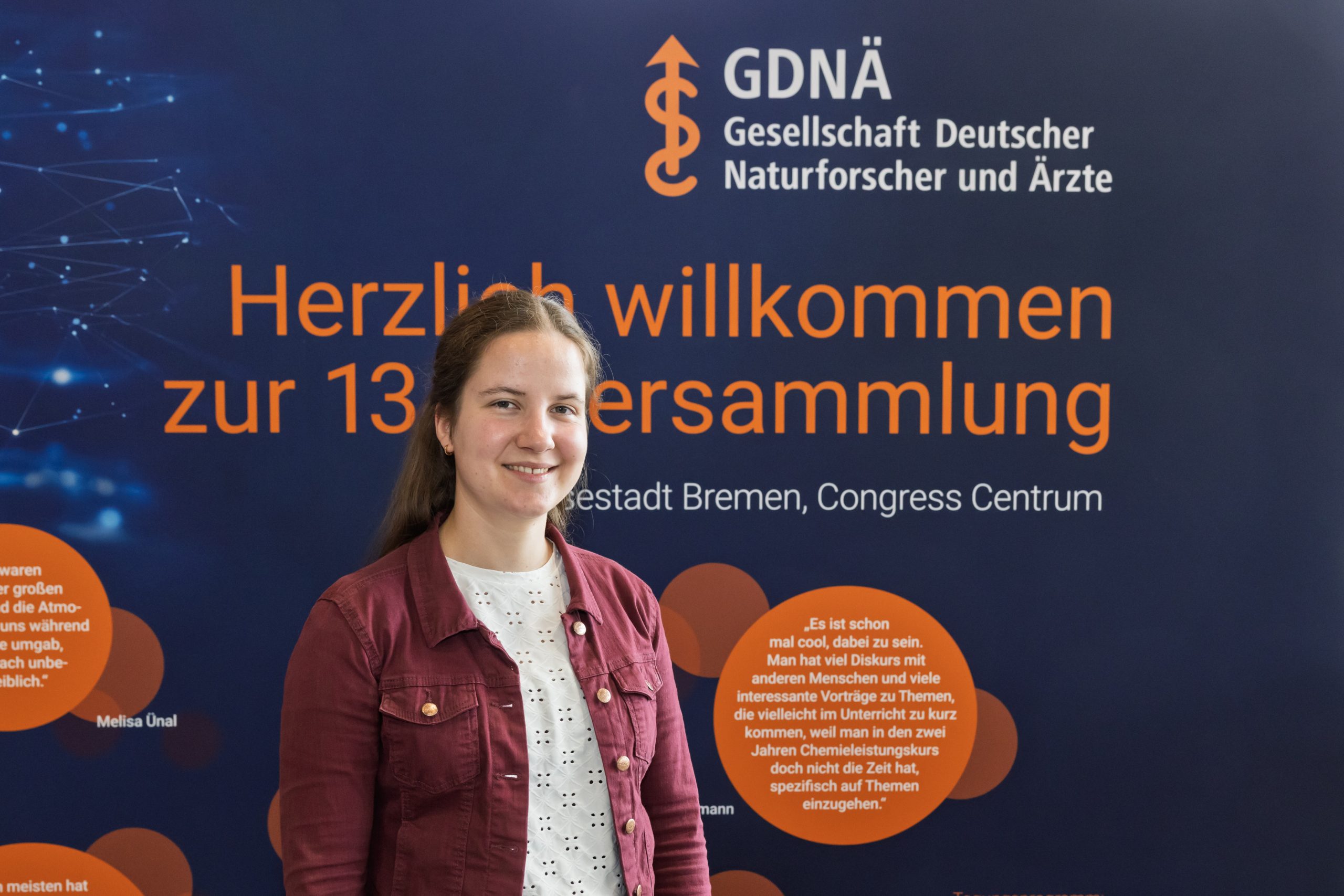
Jeannette Koch, a music therapy student and participant in the ‘Science in 5 Minutes’ competition.
© GDNÄ
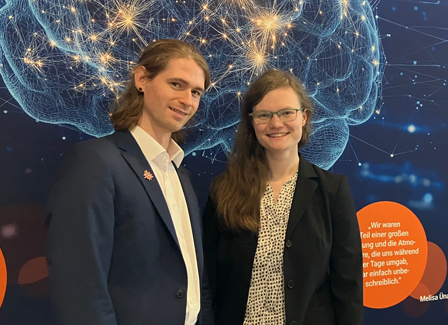
At the first general meeting of the jGDNÄ in Bremen, two spokespersons were elected for the first time: Lennard Kleemann (pictured left), who is studying molecular biotechnology at the University of Heidelberg as well as medicine, and Nina Rack (right) – she is studying medicine at the University of Greifswald.
© MIKA-fotografie | Berlin
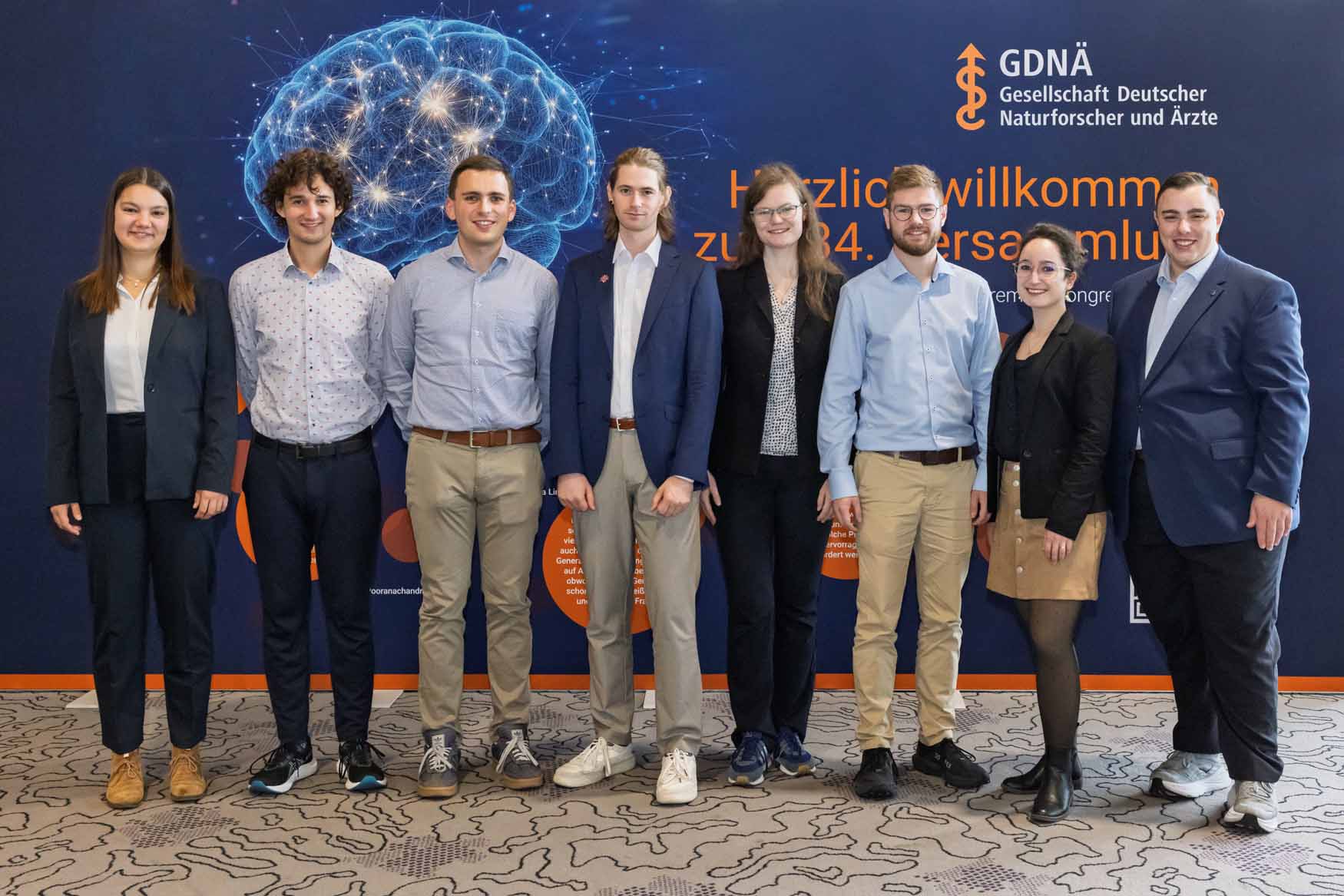
Newly elected: The new eight-member Executive Board of the jGDNÄ.
© MIKA-fotografie | Berlin
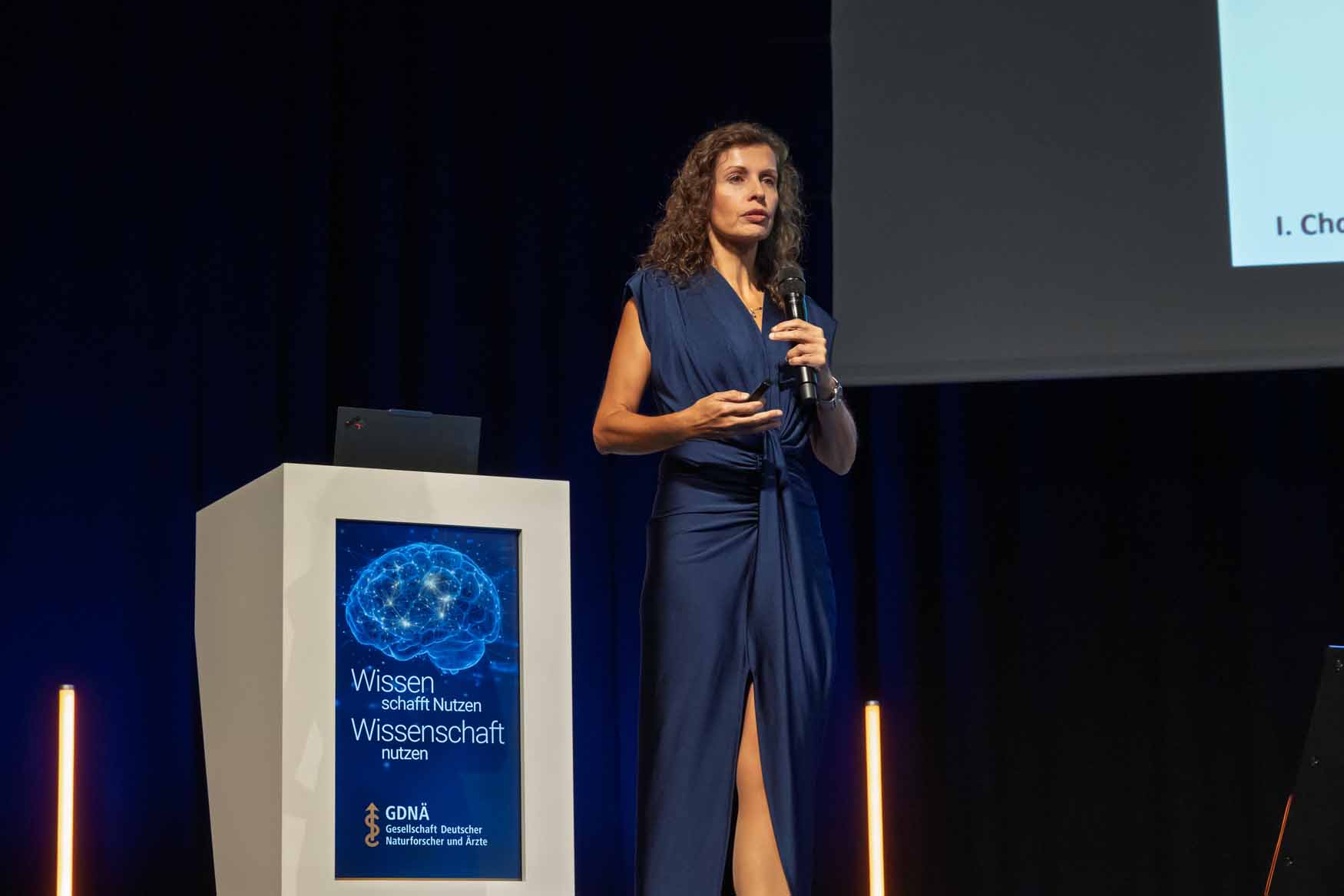
Professor Beatriz Roldán Cuenya from the Fritz Haber Institute of the MPG in Berlin during her lecture ‘Catalysts: More dynamic than previously thought’.
© MIKA-fotografie | Berlin
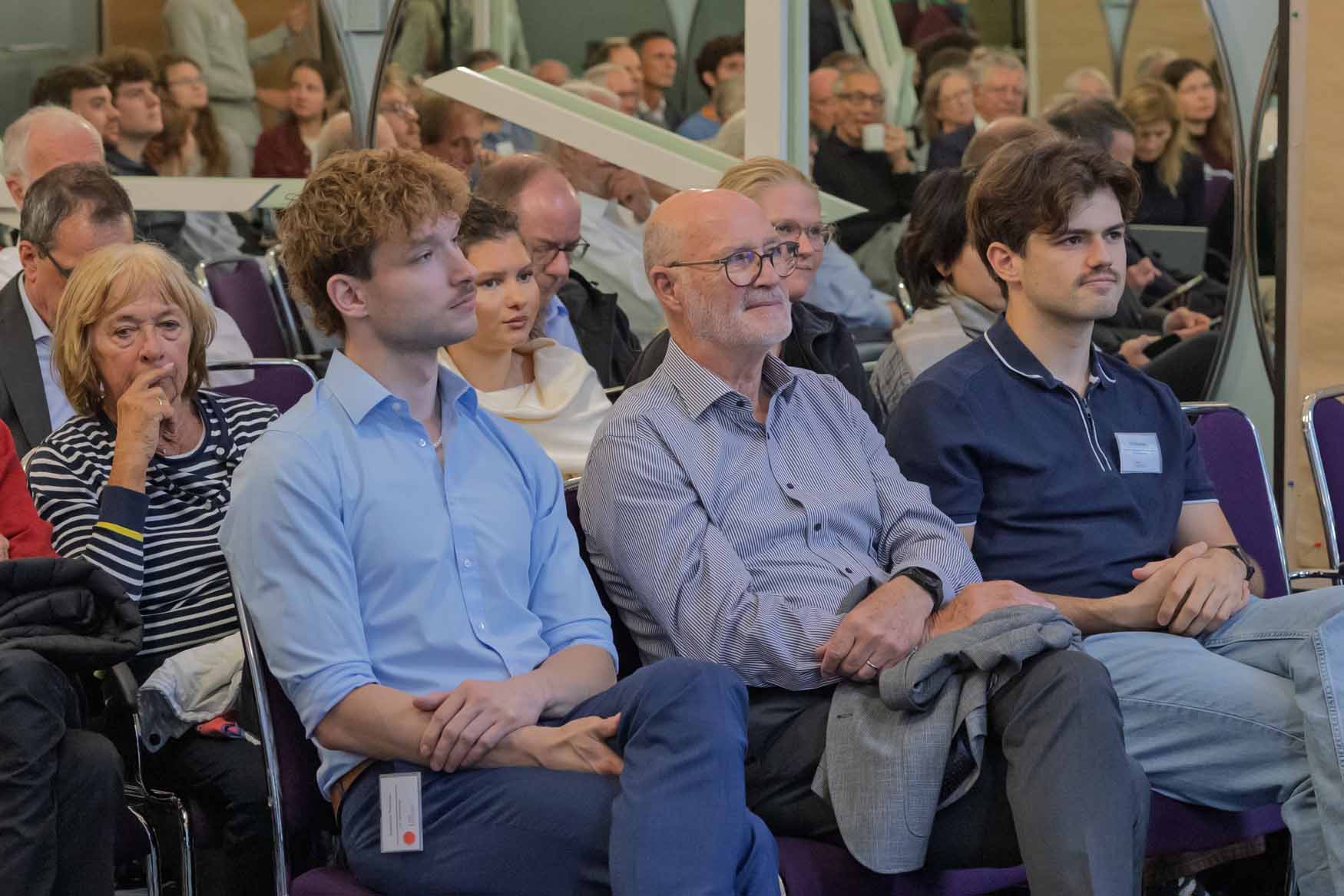
Professor Michael Dröscher (centre) with members of the jGDNÄ.
© MIKA-fotografie | Berlin
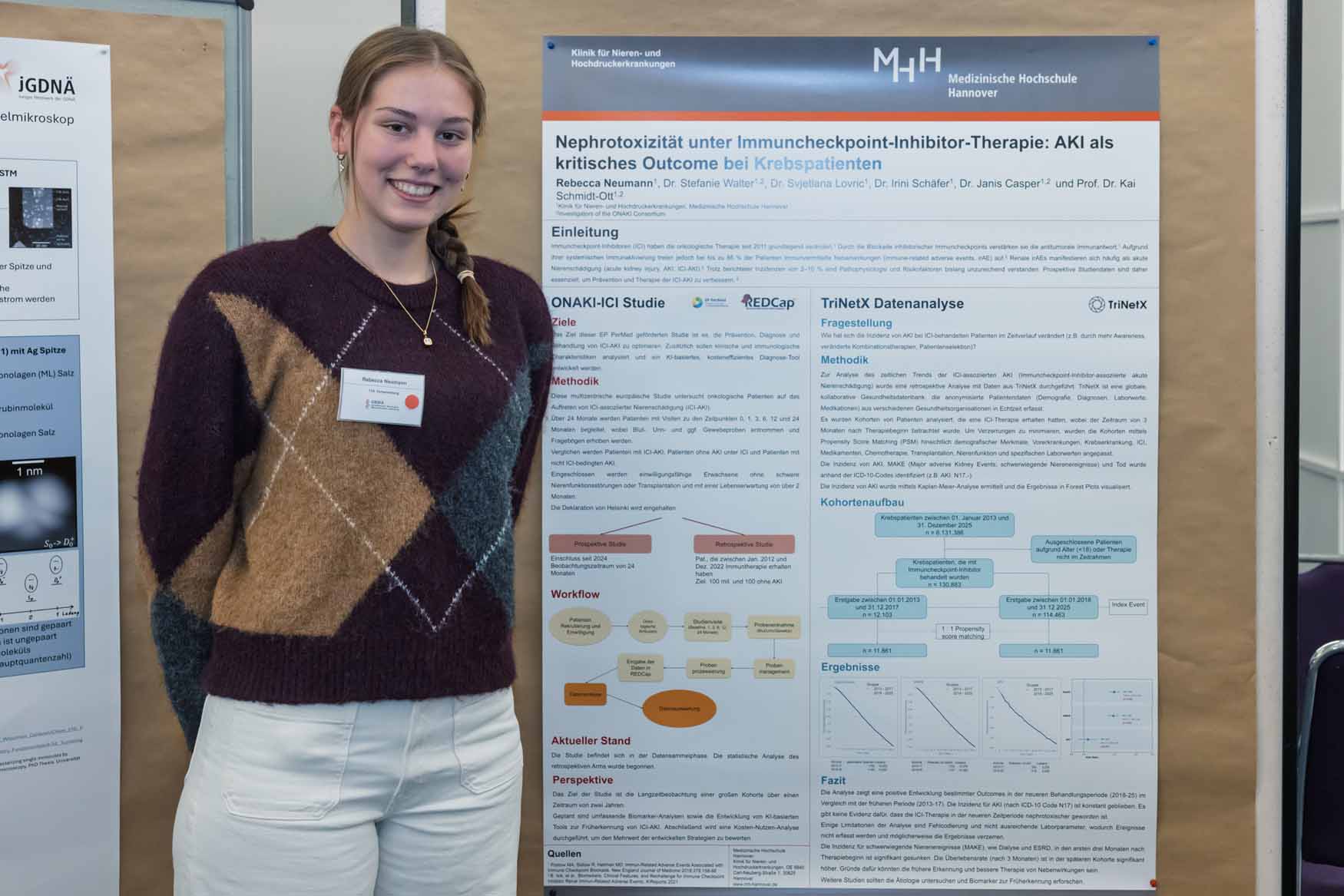
At the poster exhibition.
© MIKA-fotografie | Berlin
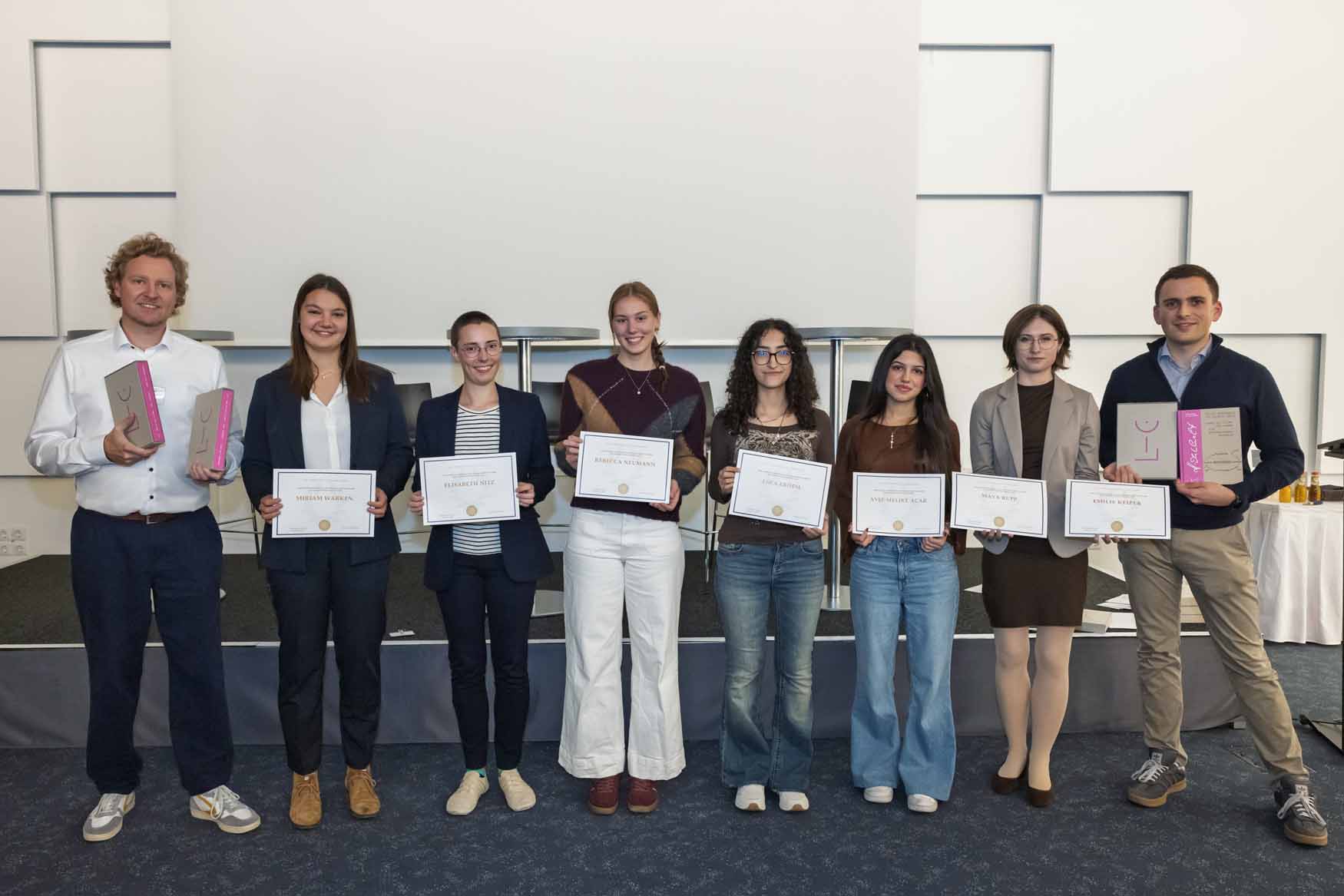
Proud Science Slam participants with their certificates. They are flanked by Paul Mühlhoff (left), head of the GDNÄ school programme.
© GDNÄ
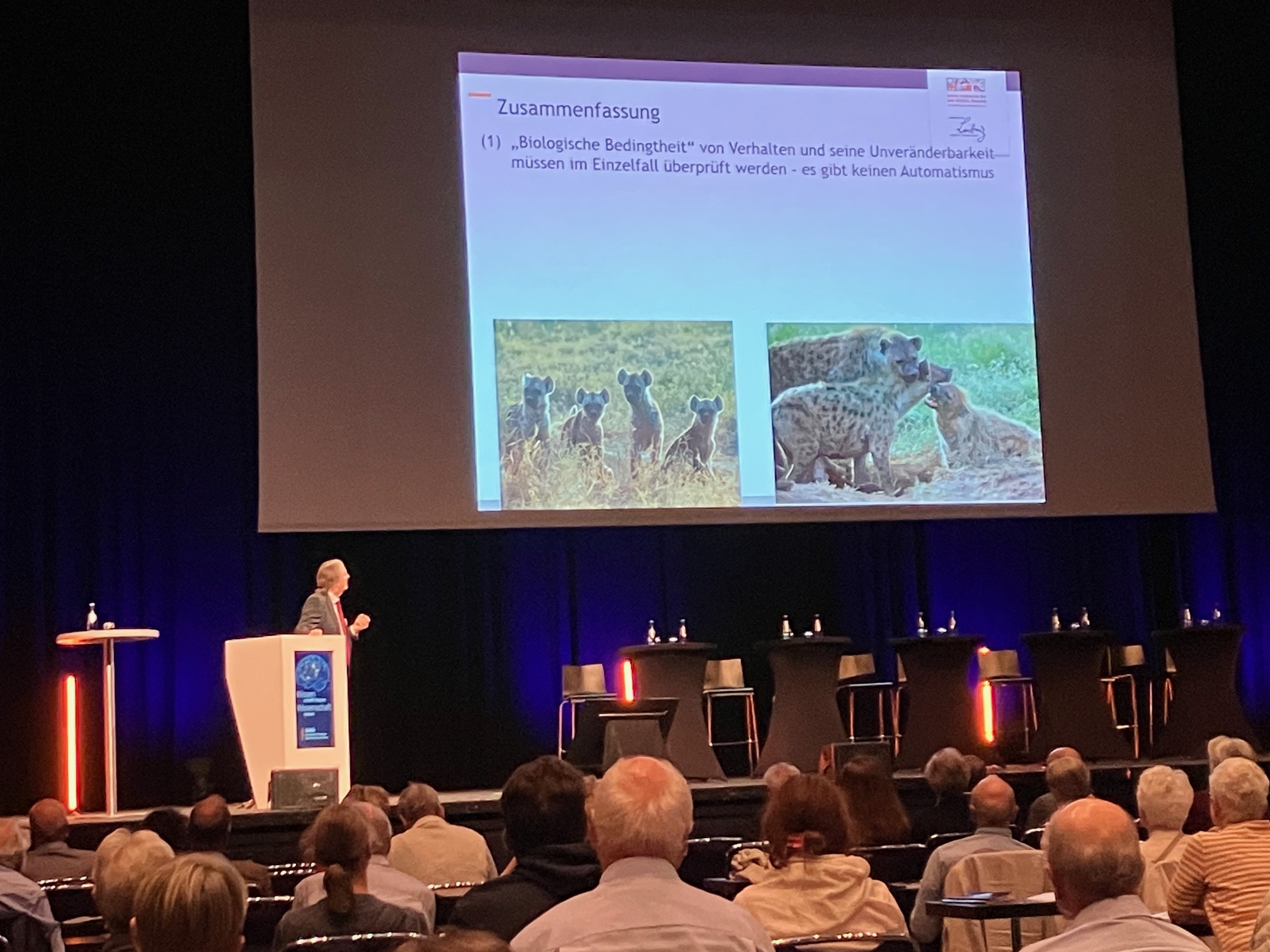
Professor Heribert Hofer spoke about his field research in the Serengeti. His unscheduled lecture focused on the causes of female dominance amongst spotted hyenas.
Anyone who took part in the ‘Science in 5 Minutes’ competition had the chance to learn a great deal about music therapy from Jeannette Koch. The 25-year-old (pictured left) is studying the subject at the private SRH University of Applied Sciences in Heidelberg and is passionate about her field: “Music therapy makes it easier to access emotions and creates a connection with people who are difficult to reach through language alone.” This includes premature babies as well as patients in a coma and people suffering from autism, depression or neurological conditions such as Parkinson’s and dementia. The effects of music therapy are demonstrable, says Jeannette Koch, for example through measurements of stress hormones, memory tests or gait analyses. In receptive music therapy, the patient consciously allows music to have an effect on them, whilst in active music therapy the focus is on making music together. Jeannette Koch explains: “During our degree course, alongside piano, guitar and drums, we also learn psychotherapeutic methods to help our patients connect their feelings and thoughts.” The young woman has been playing the French horn since primary school: “Playing together in an orchestra still makes me happy to this day.” After completing her degree, she sees herself working as a researcher or as a music therapist in a clinic: “Children and young people are particularly close to my heart. I want to support them in finding a good path in life.”
© MIKA-fotografie | Berlin
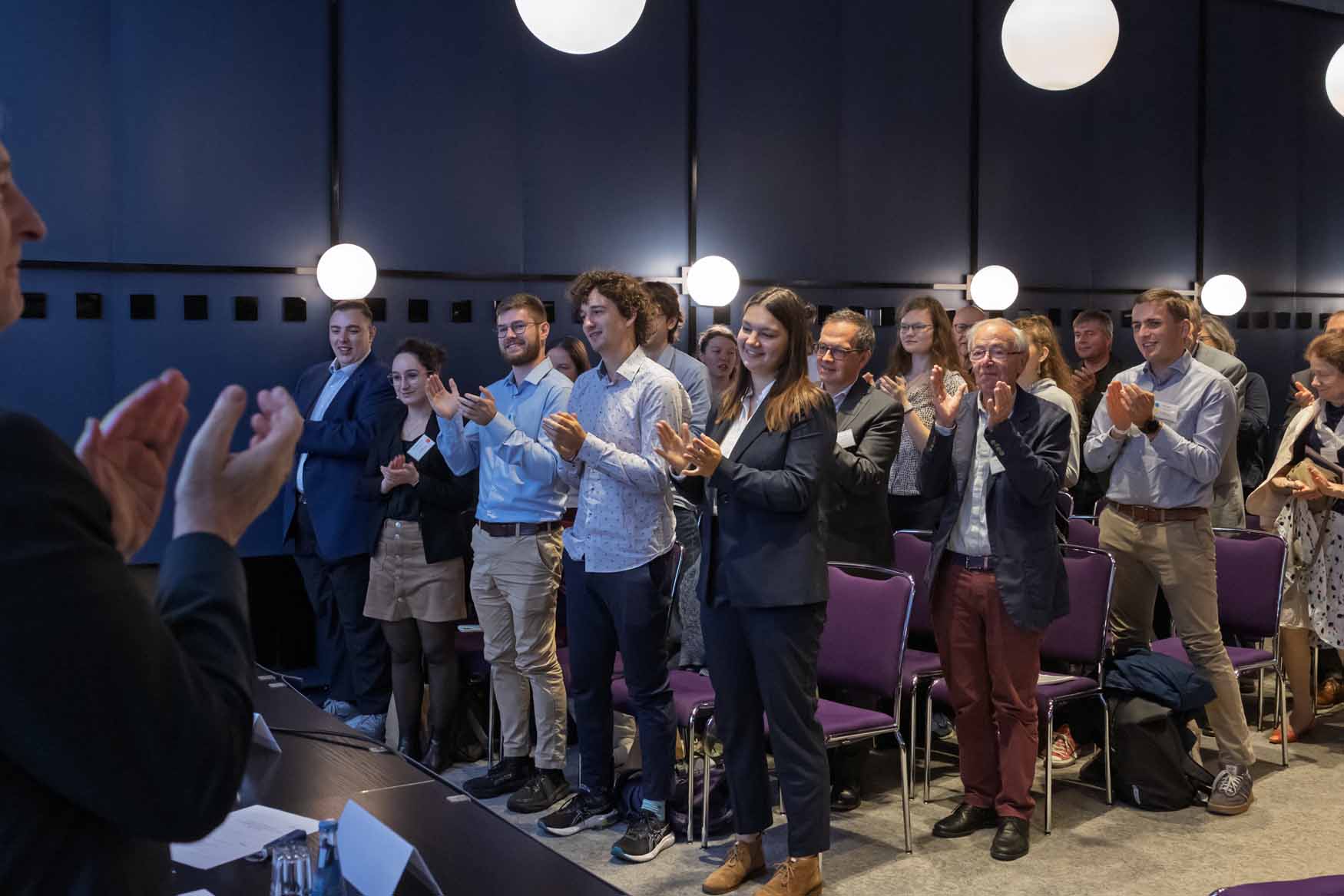
A standing ovation for the organisers of the GDNÄ Science Café ‘NextMed Dialog – Young Perspectives for the Medicine of Tomorrow’.
© MIKA-fotografie | Berlin
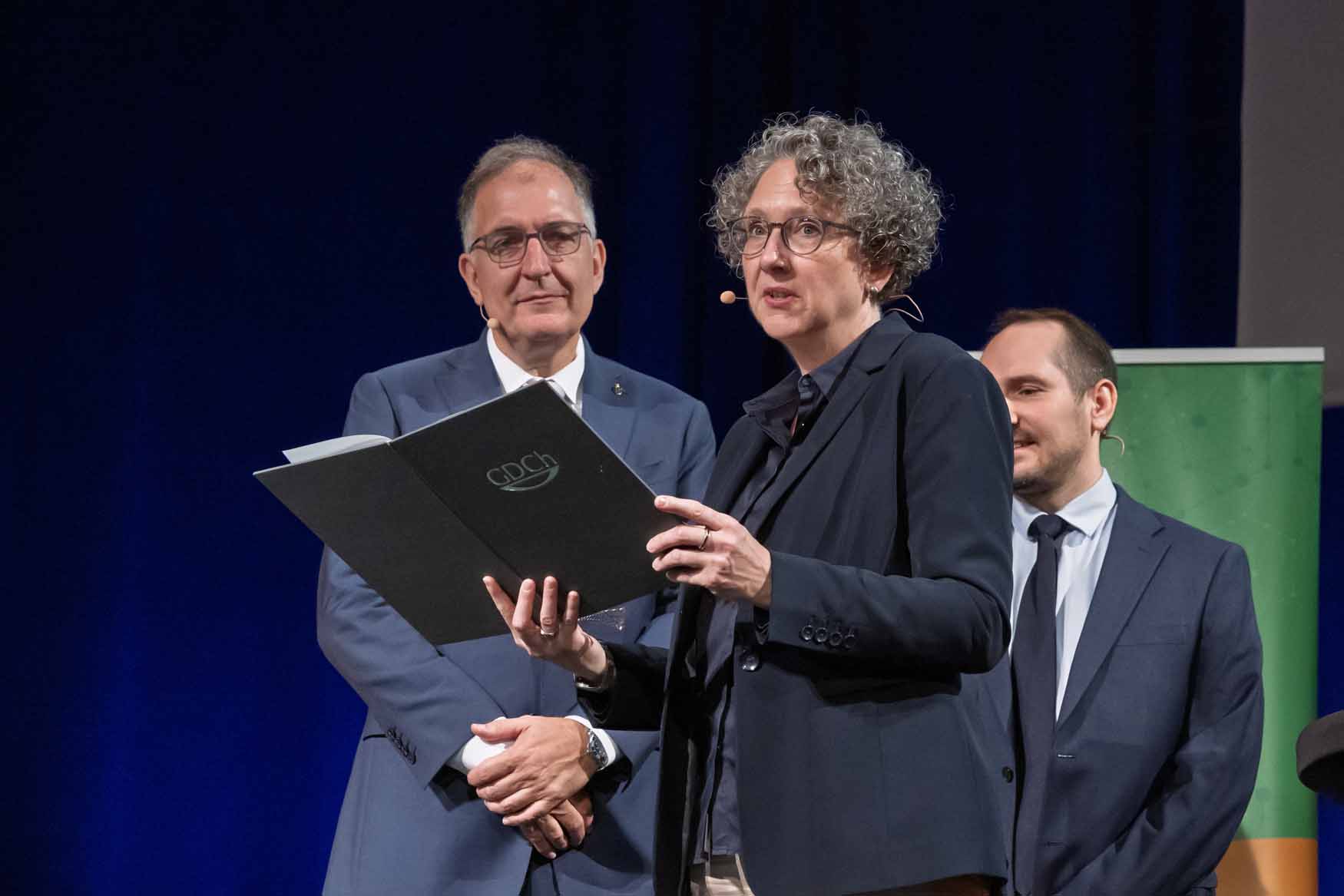
Professor Ruth Bieringer, President of the German Chemical Society, during the ceremony honouring distinguished members.
© MIKA-fotografie | Berlin
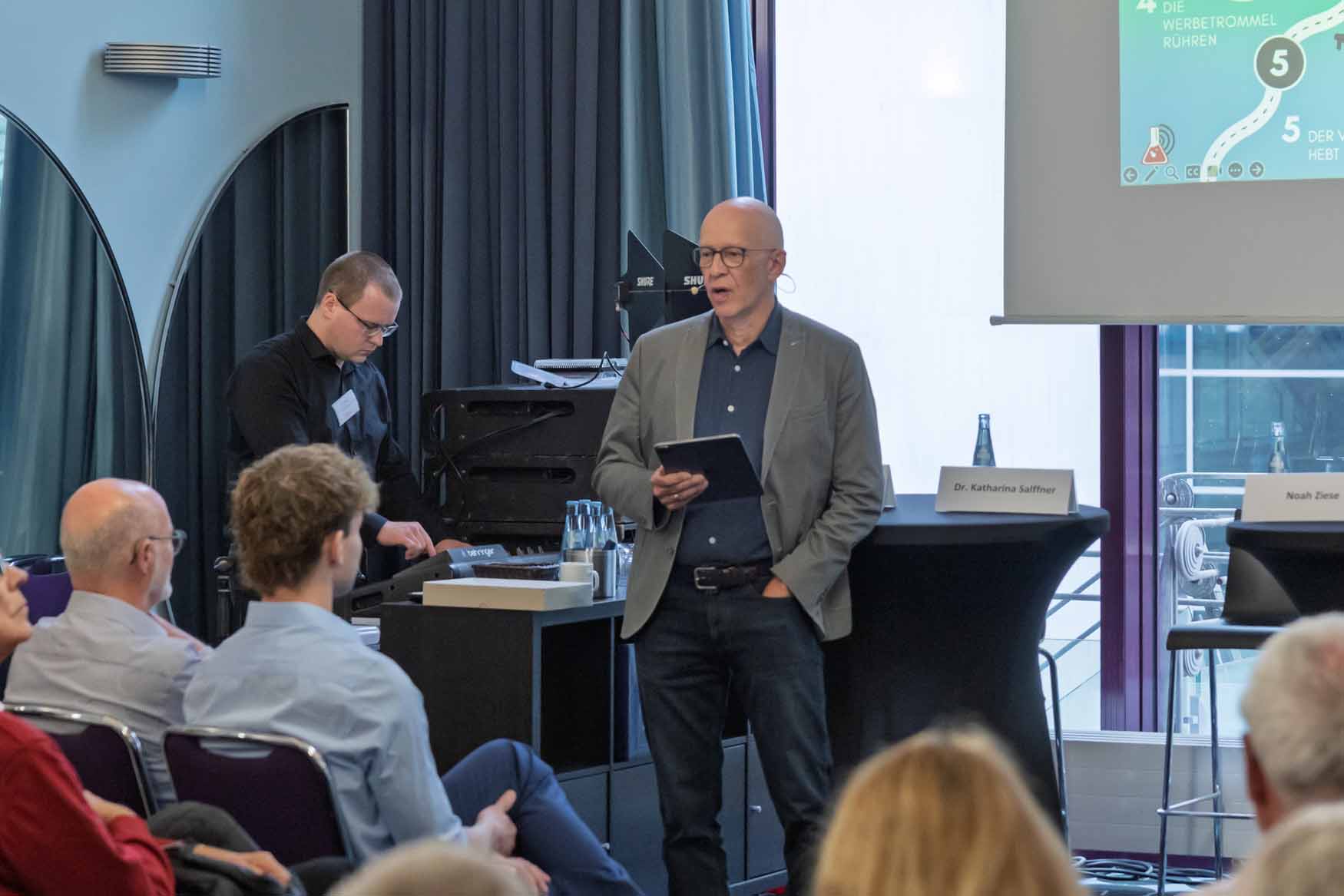
Dr Ekkehard Winter moderated the GDNÄ Science Café ‘NextMed Dialog’.
© MIKA-fotografie | Berlin
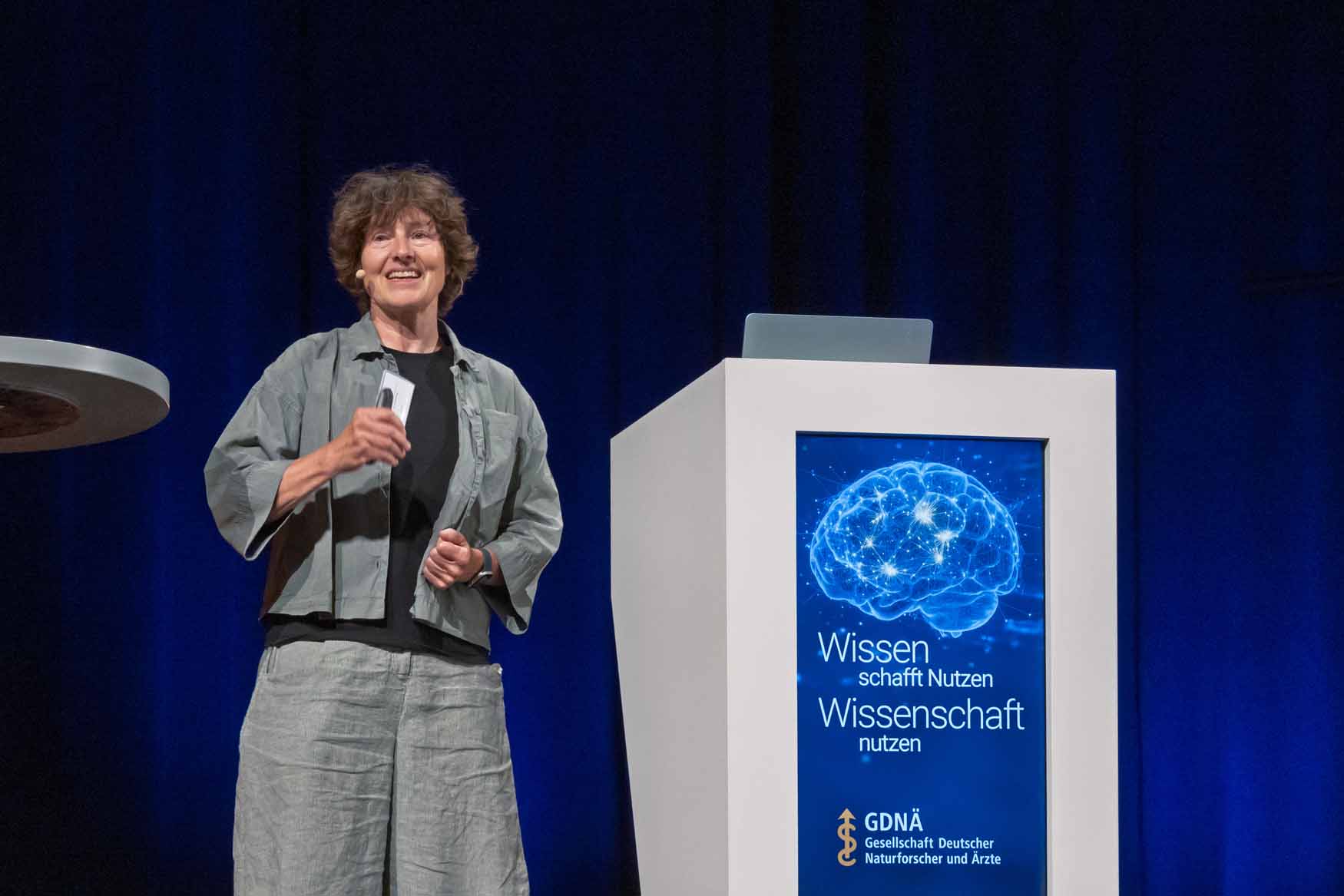
How simple can living systems be? Petra Schwille, a professor from Munich at the Max Planck Institute for Biochemistry, explored this question in her lecture.
© GDNÄ
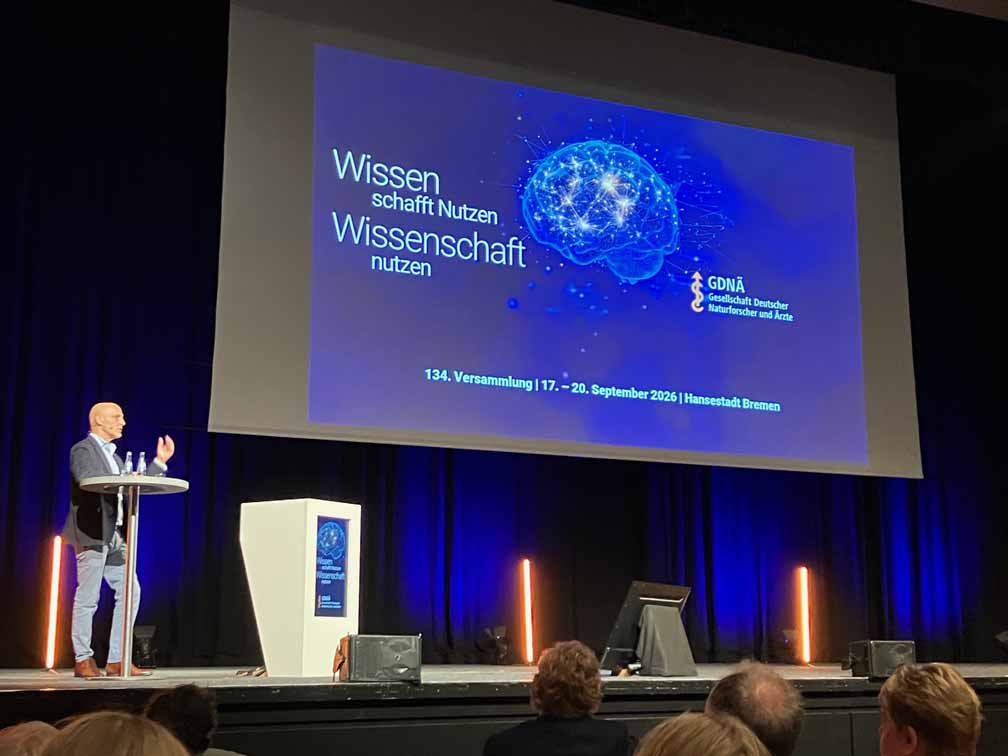
Many guests from the city attended the public lecture by Nobel Prize winner in Chemistry Benjamin List on organocatalysis at the Congress Centrum Bremen.
© GDNÄ
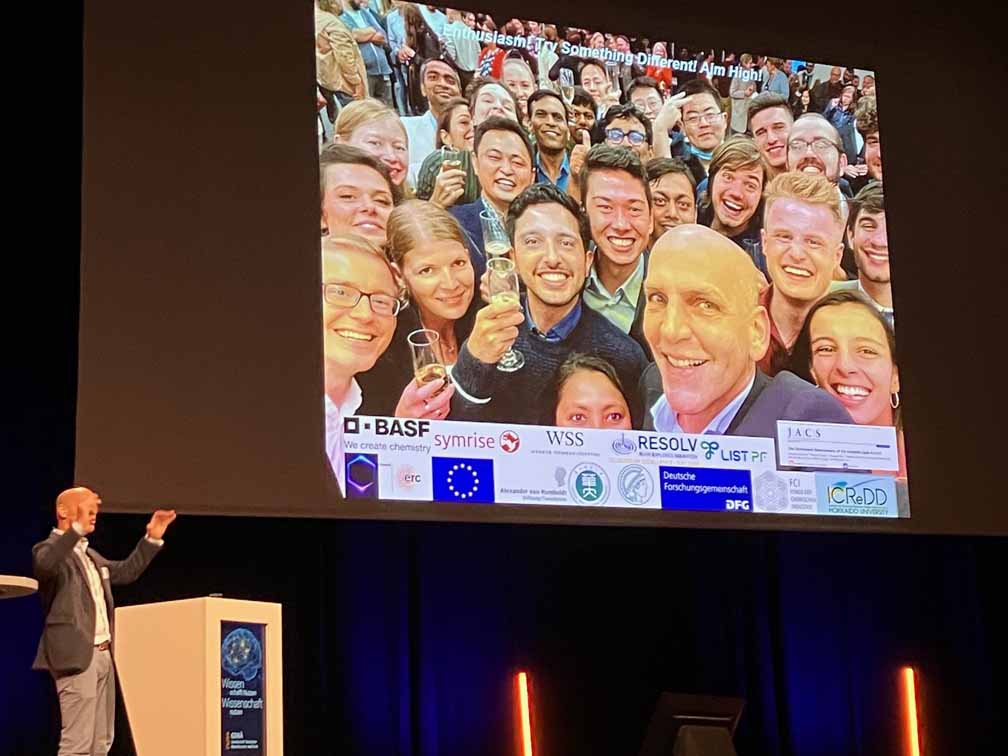
A jubilant institute: Professor Benjamin List showed a photograph of himself surrounded by his colleagues following the announcement of the 2021 Nobel Prize in Chemistry.
© GDNÄ
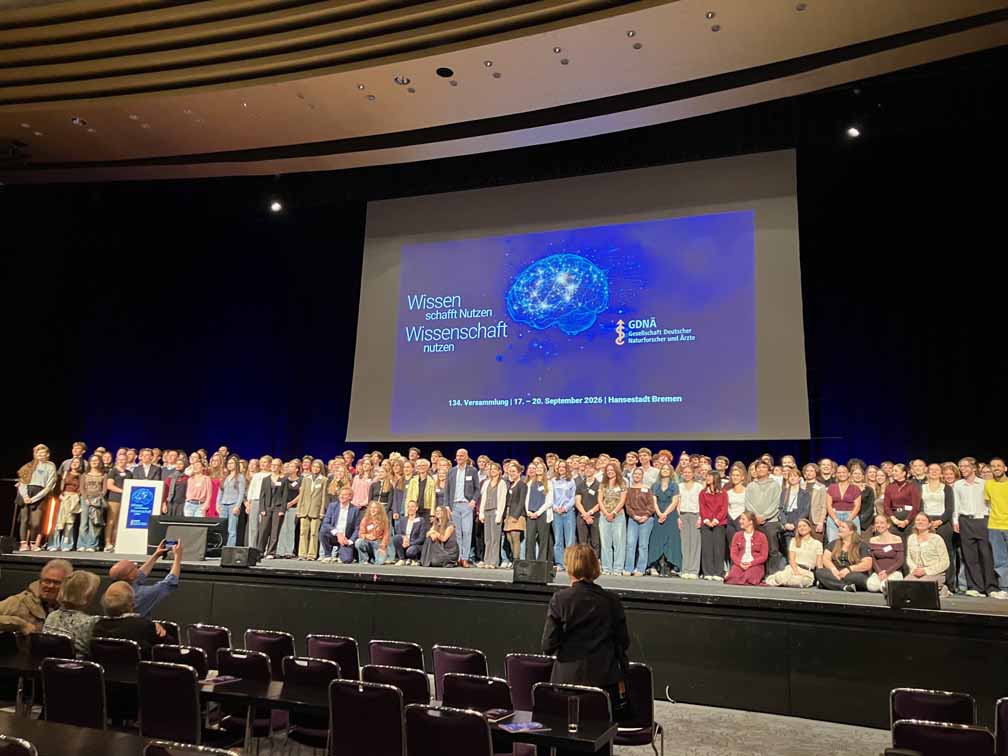
The little ones at the front, the big ones at the back – that was the instruction for the group photo featuring 150 school pupils. And yet the stage at the Congress Centre was almost too small to accommodate everyone.
Sunday, September 20, 2026
© MIKA-fotografie | Berlin
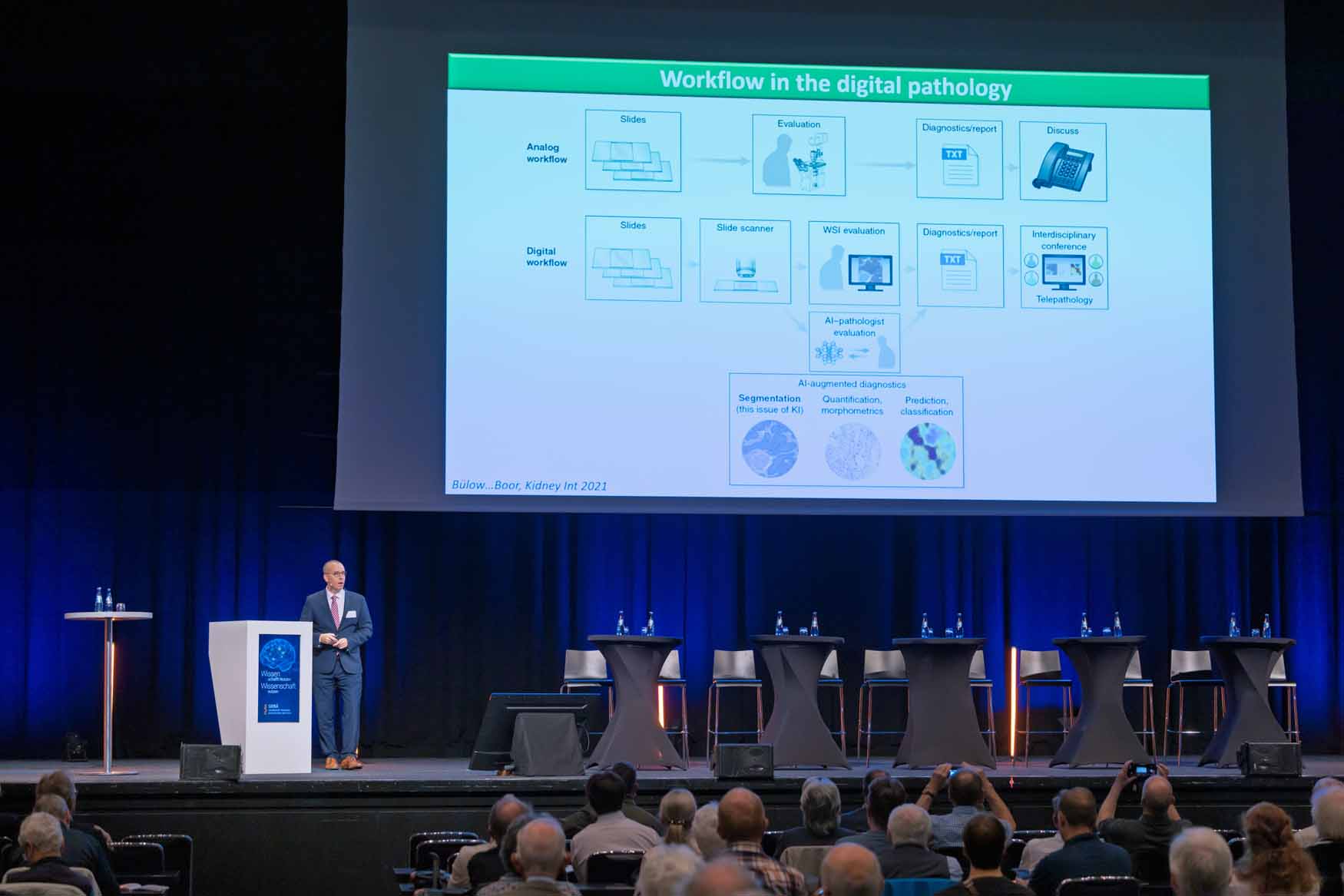
Professor Peter Boor delivering his lecture on ‘AI in pathology’.
© MIKA-fotografie | Berlin
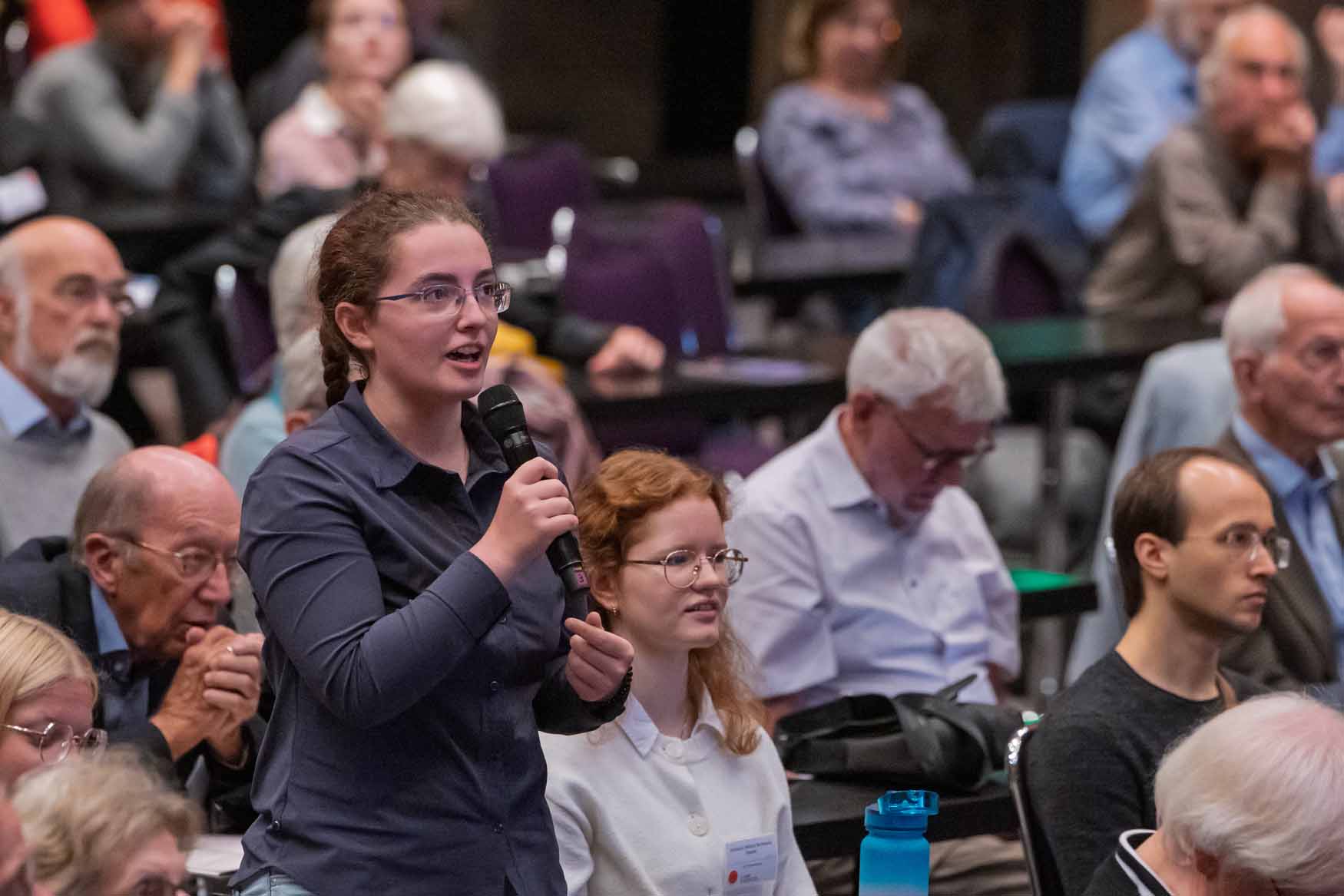
Are there any questions from the audience? Indeed there were, and they were asked with great enthusiasm.
© MIKA-fotografie | Berlin
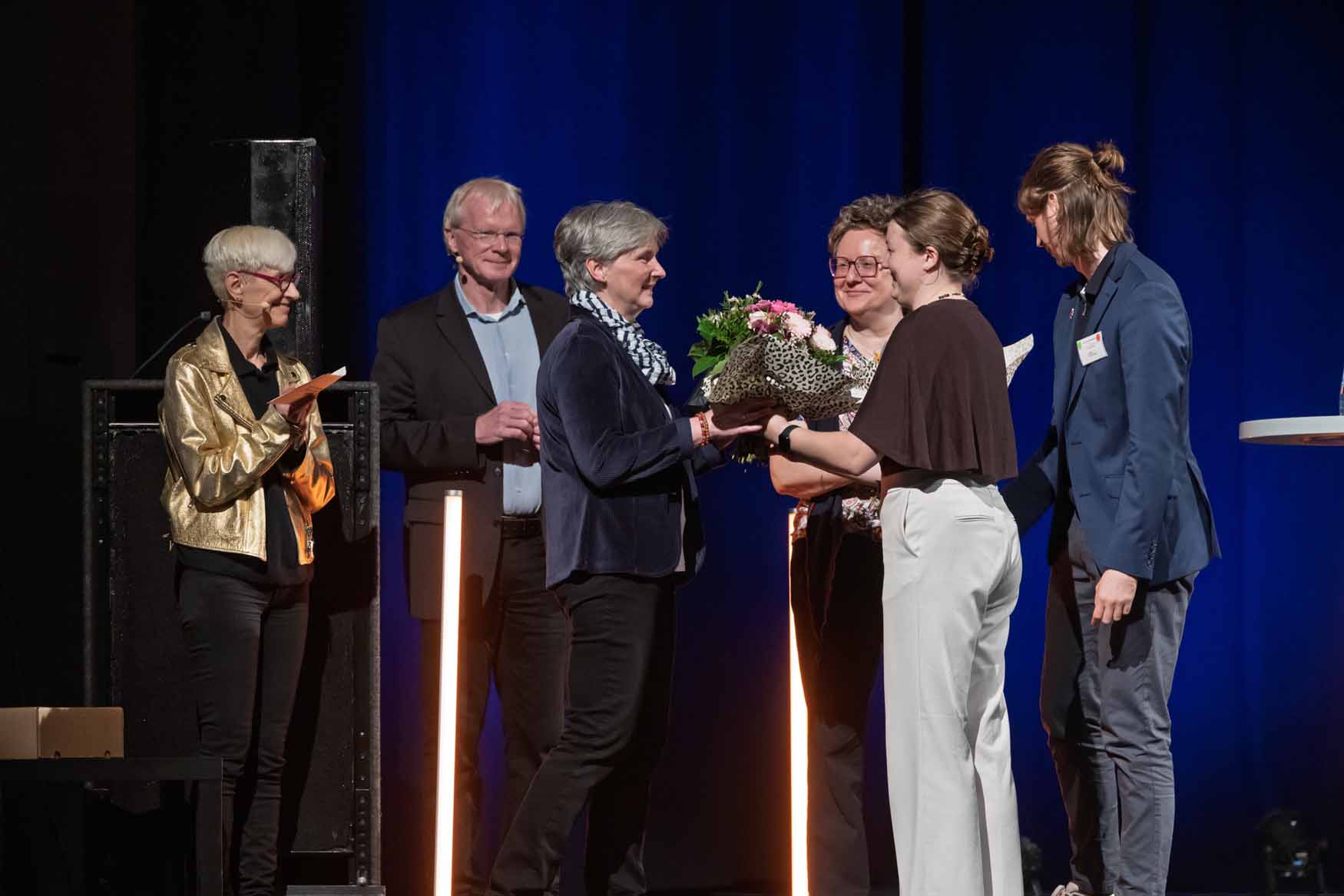
Say it with flowers: on behalf of the jGDNÄ, Marlene Anders and Lennard Kleemann (right) thanked Katja Diete and Sylvia Landeck from the secretariat for their excellent cooperation.
© MIKA-fotografie | Berlin
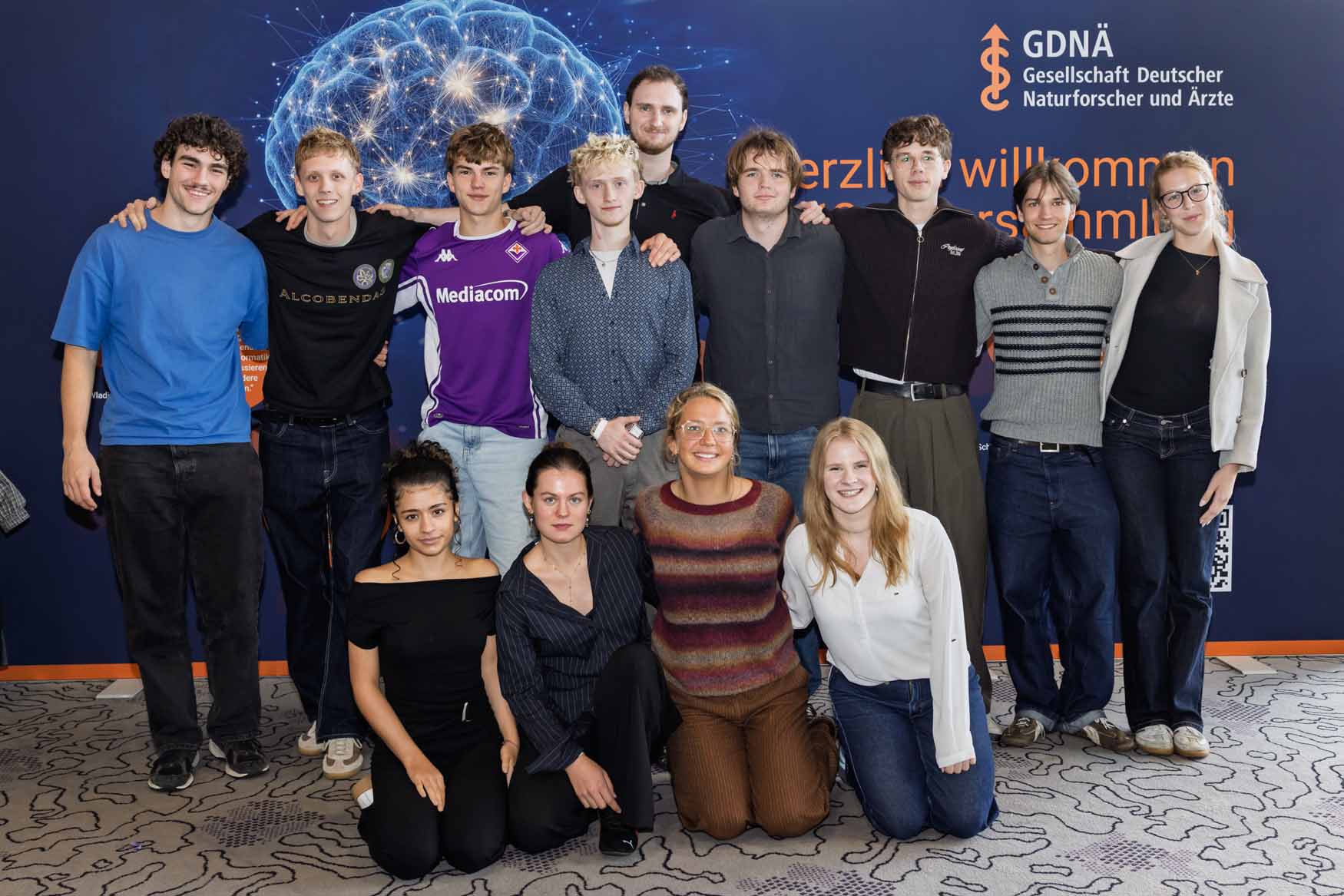
School Programme 2026: During the four days of the conference, many new friendships were formed.
© MIKA-fotografie | Berlin
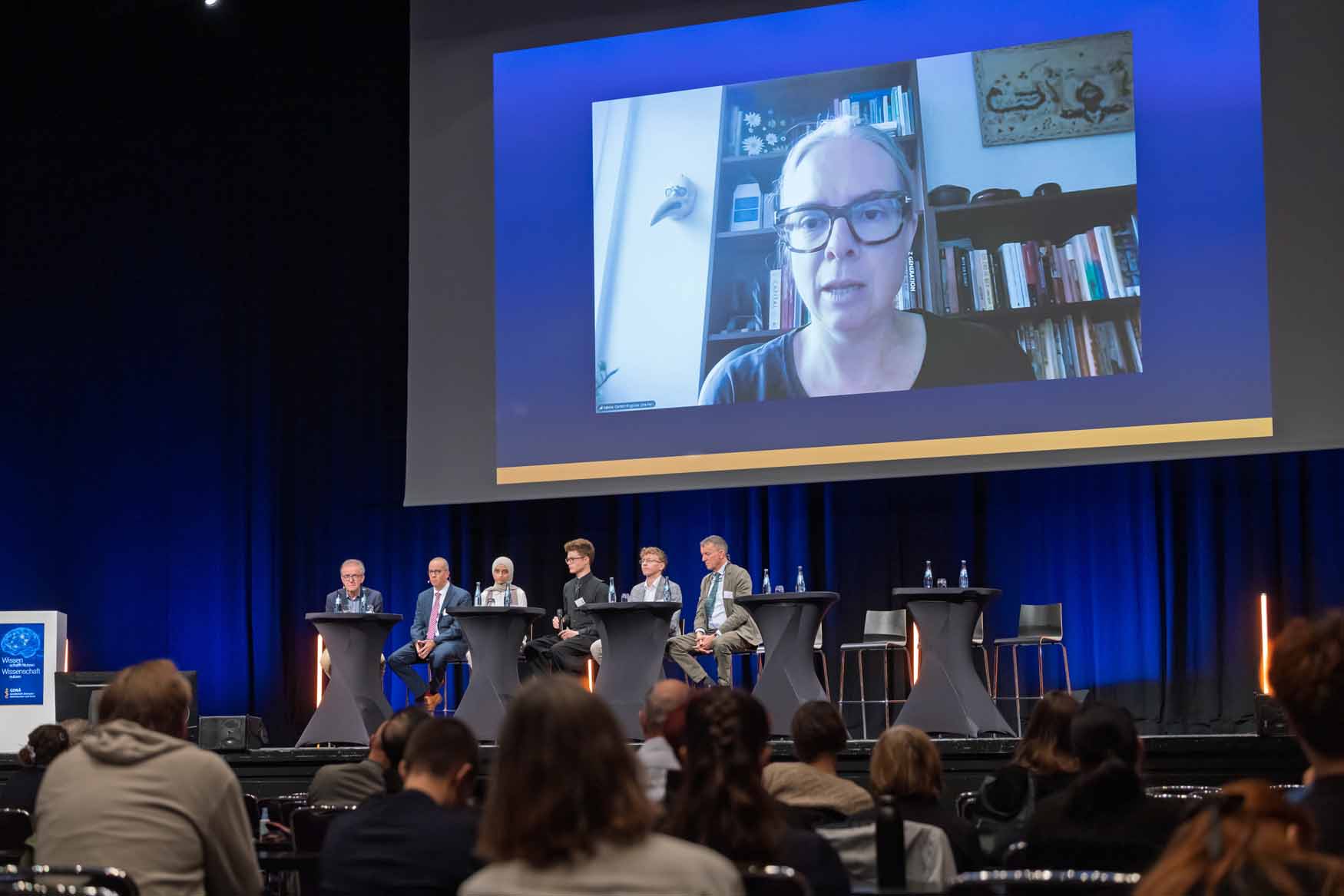
Unfortunately, Professor Sabine Oertelt-Prigione was unable to attend in person. She joined the event online to deliver her lecture ‘The significance of gender in biomedical research’.
© MIKA-fotografie | Berlin
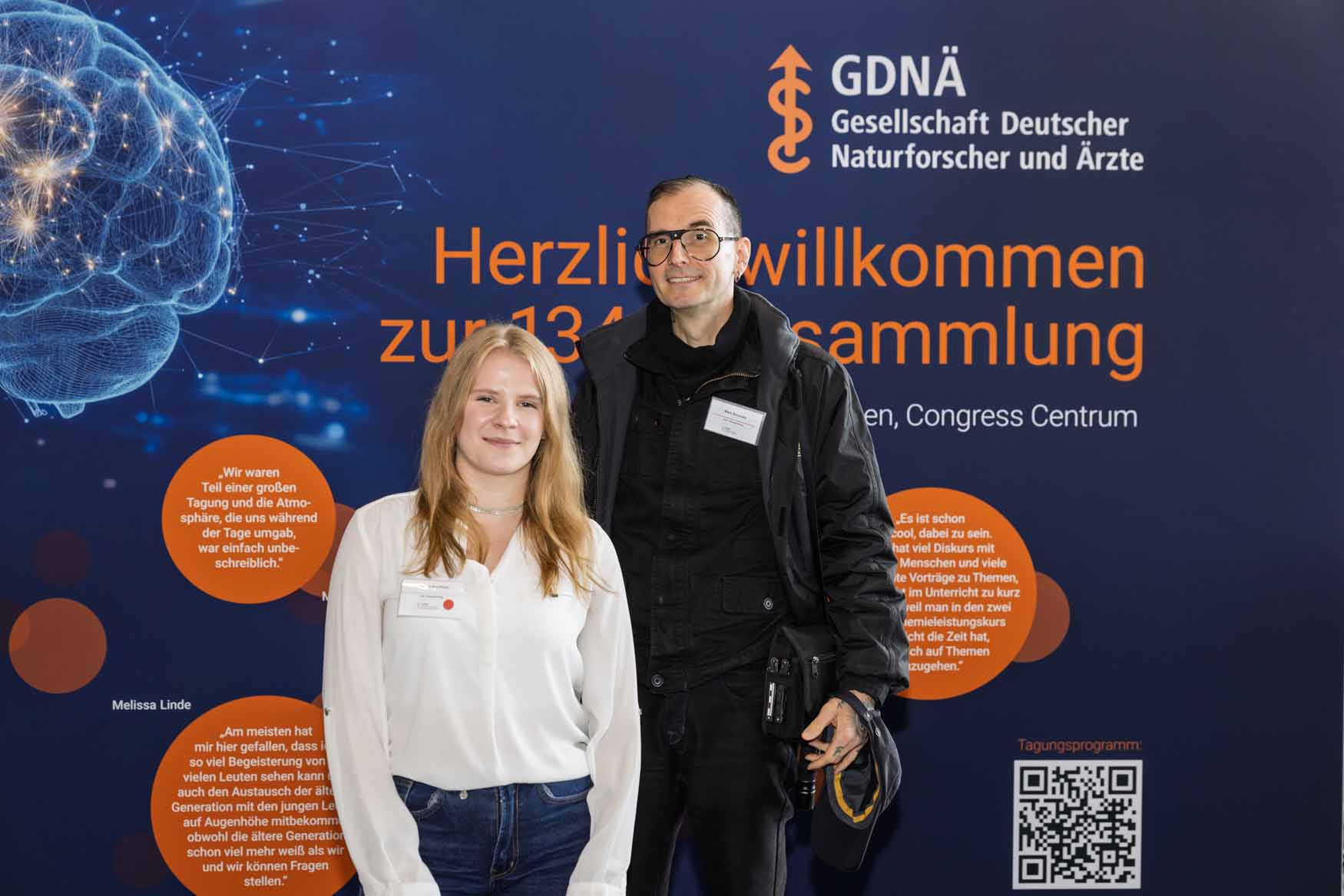
GDNÄ member Mark Benecke with a young conference participant in the foyer of the Congress Centre. Mark Benecke is a forensic biologist in Cologne and gave a talk as part of the school programme at the invitation of the jGDNÄ.
© MIKA-fotografie | Berlin
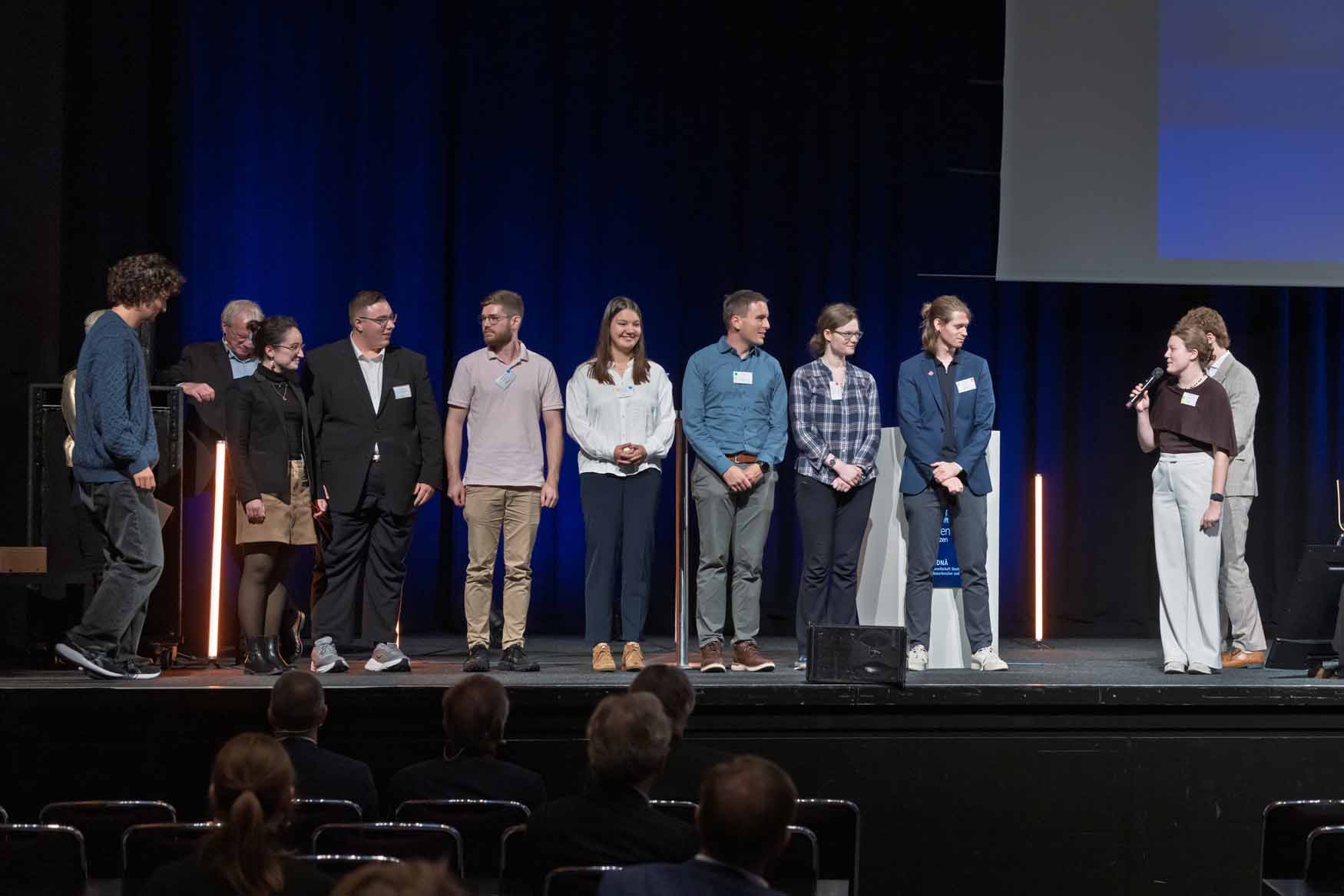
The newly elected eight-member coordination team of the jGDNÄ.
© MIKA-fotografie | Berlin
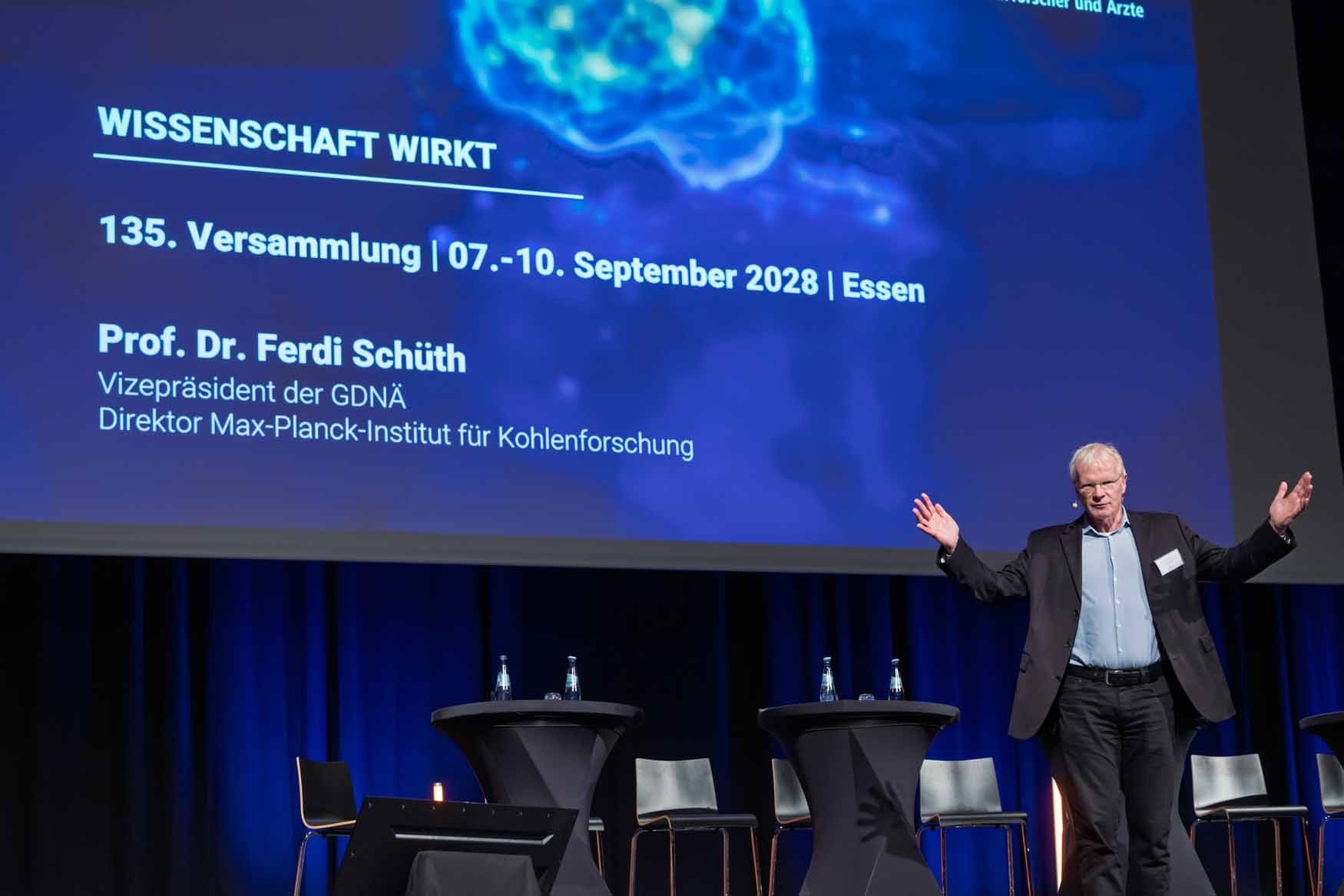
A look ahead to the 2028 meeting: The future GDNÄ President, Professor Ferdi Schüth of the Max Planck Institute for Coal Research, invited all members of the Natural Scientists’ Society to Essen.