x xc

Day 1 of the Festive Assembly in Leipzig: Thursday, September 8, 2022

Day 1: Thursday, 8 September 2022

Student programme: Science is challenged

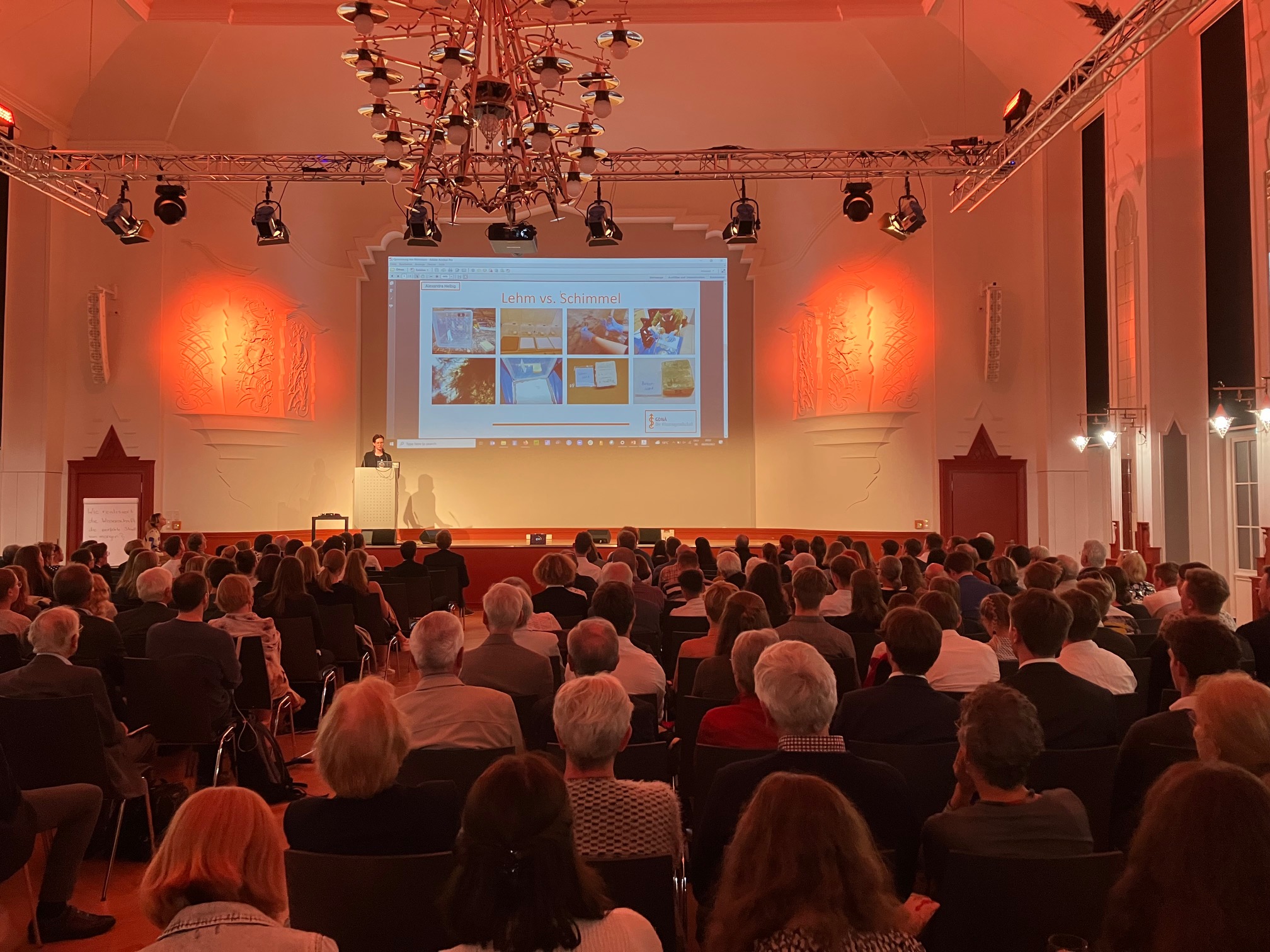
Preparatory meetings since early summer ,intense discussions and finally agreement on three core topics: On the afternoon of the first day of the Assembly, participants of the Students' Programme presented their questions to science, challenging three renowned scientists on the podium: biologist and Director of the Alfred Wegener Institute for Polar and Marine Research, Professor Antje Boetius, structural biologist and President-designate of the Max Planck Society, Patrick Cramer, and civil engineer, science manager and acatech President Jan Wörner.
Tag 1 der Festversammlung in Leipzig: Donnerstag, 8. September 2022

© GDNÄ

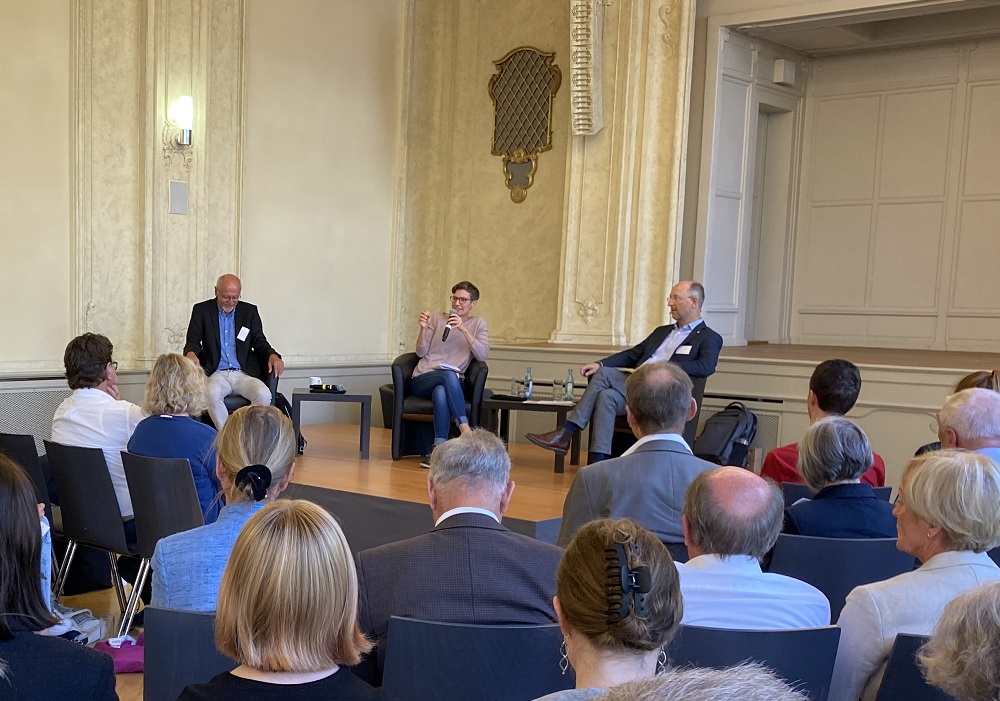
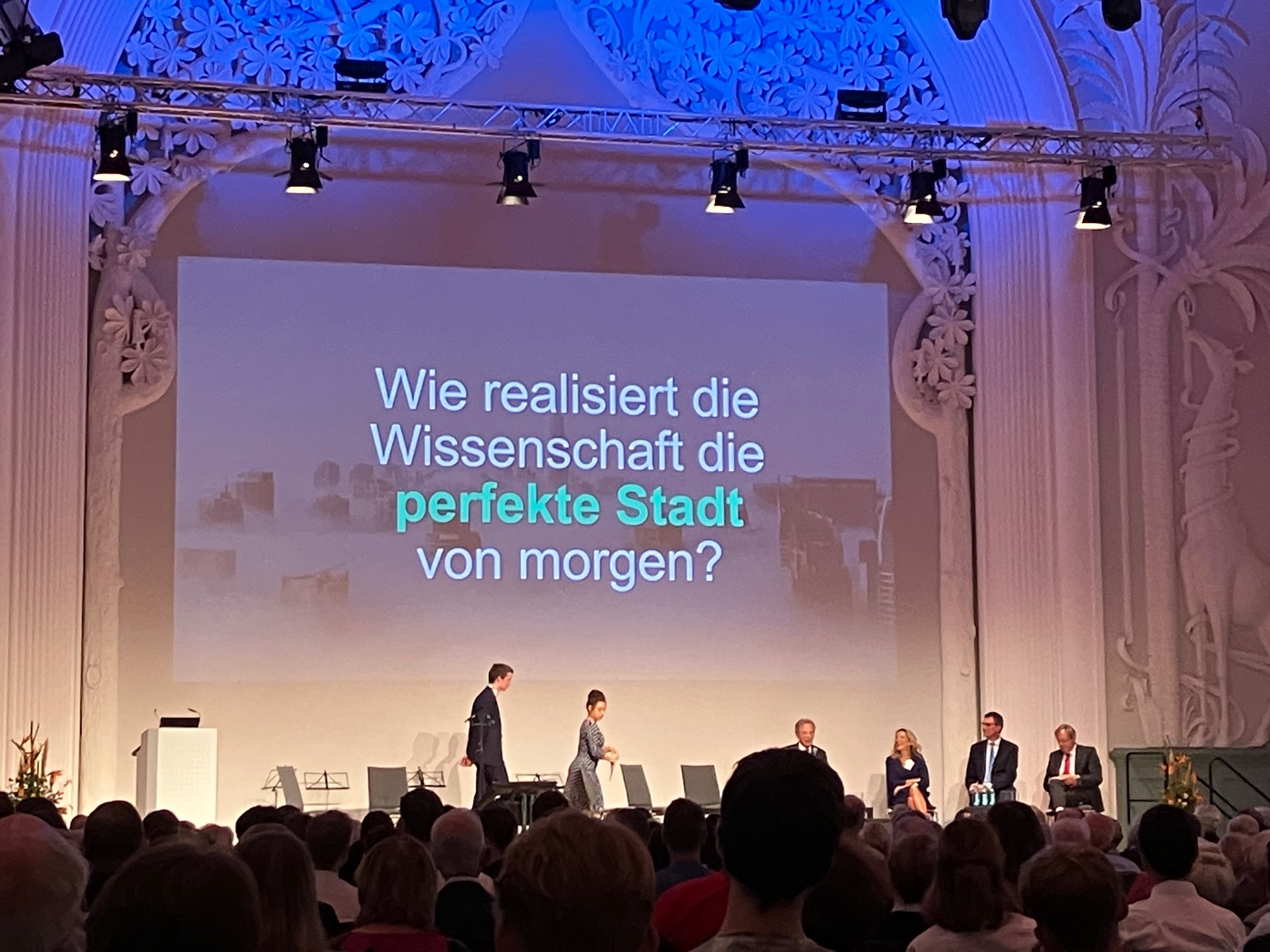
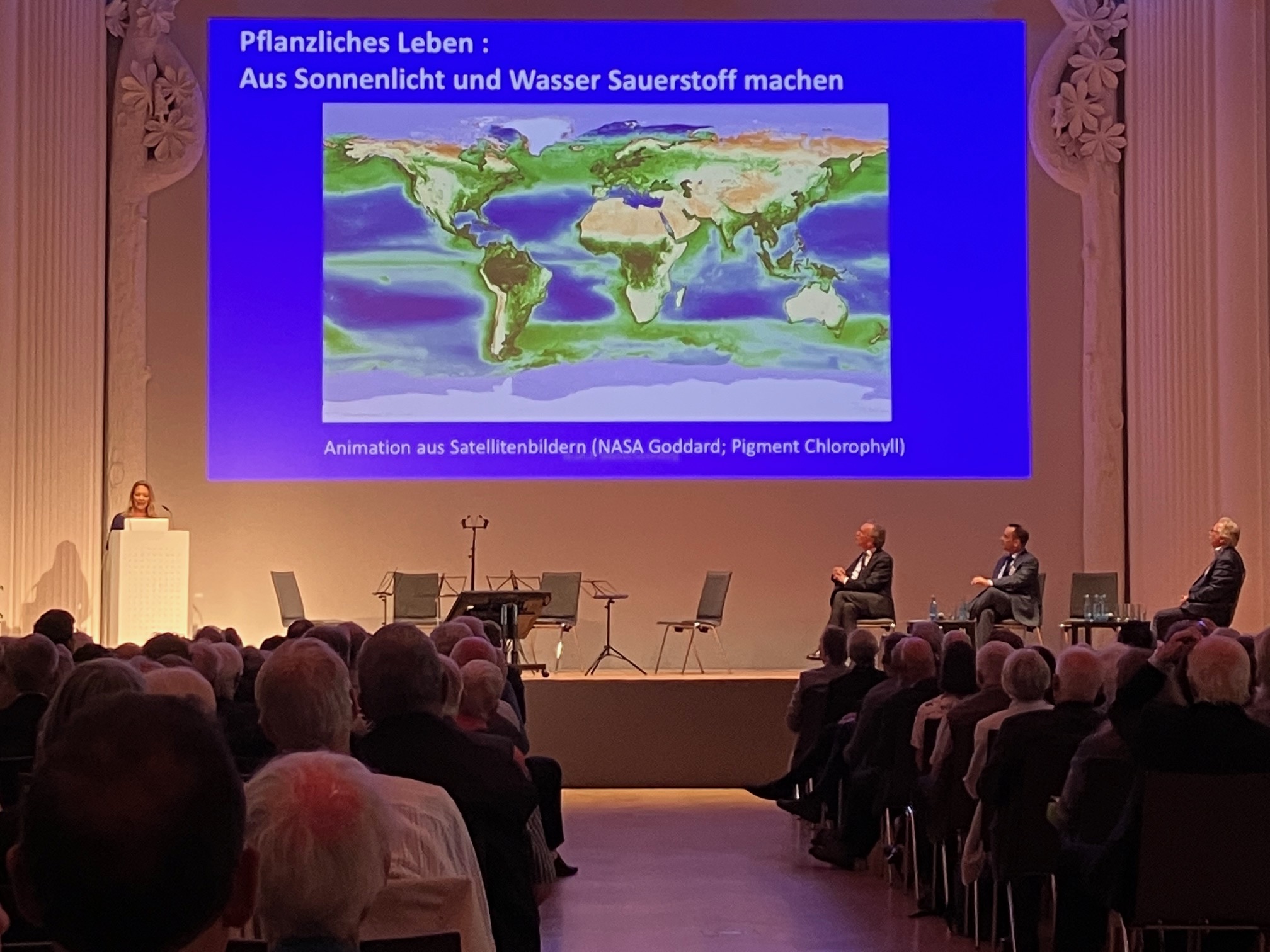
Student presentation at the festive assembly with questions the team of scientists (in the picture on the right: Antje Boetius, Patrick Cramer and Jan Wörner).

Zoe Klee and Julius May, representing the Biology Team, kicked off the day. They wanted to know whether algae can be used to break down atmospheric CO2 and other greenhouse gases such as methane dissolved in seawater – and what methods might be used to optimise algae for this task. A lot of research is being done on this, said Antje Boetius, for example in Munich-Martinsried. However, the enzyme needed for this is not easy to use. "The chances that we can get plants to absorb more of our CO2 are not very high. It would be much better if we emitted less." Patrick Cramer didn't want to raise hopes for quick solutions either: "It's not that simple with algae and their optimisation." After all, he said, biomass is the great unknown in the climate system: "How much carbon is sequestered and where? We still can't predict that in our models."
Museumsinsel Ansicht Herbst © Deutsches Museum

© GDNÄ

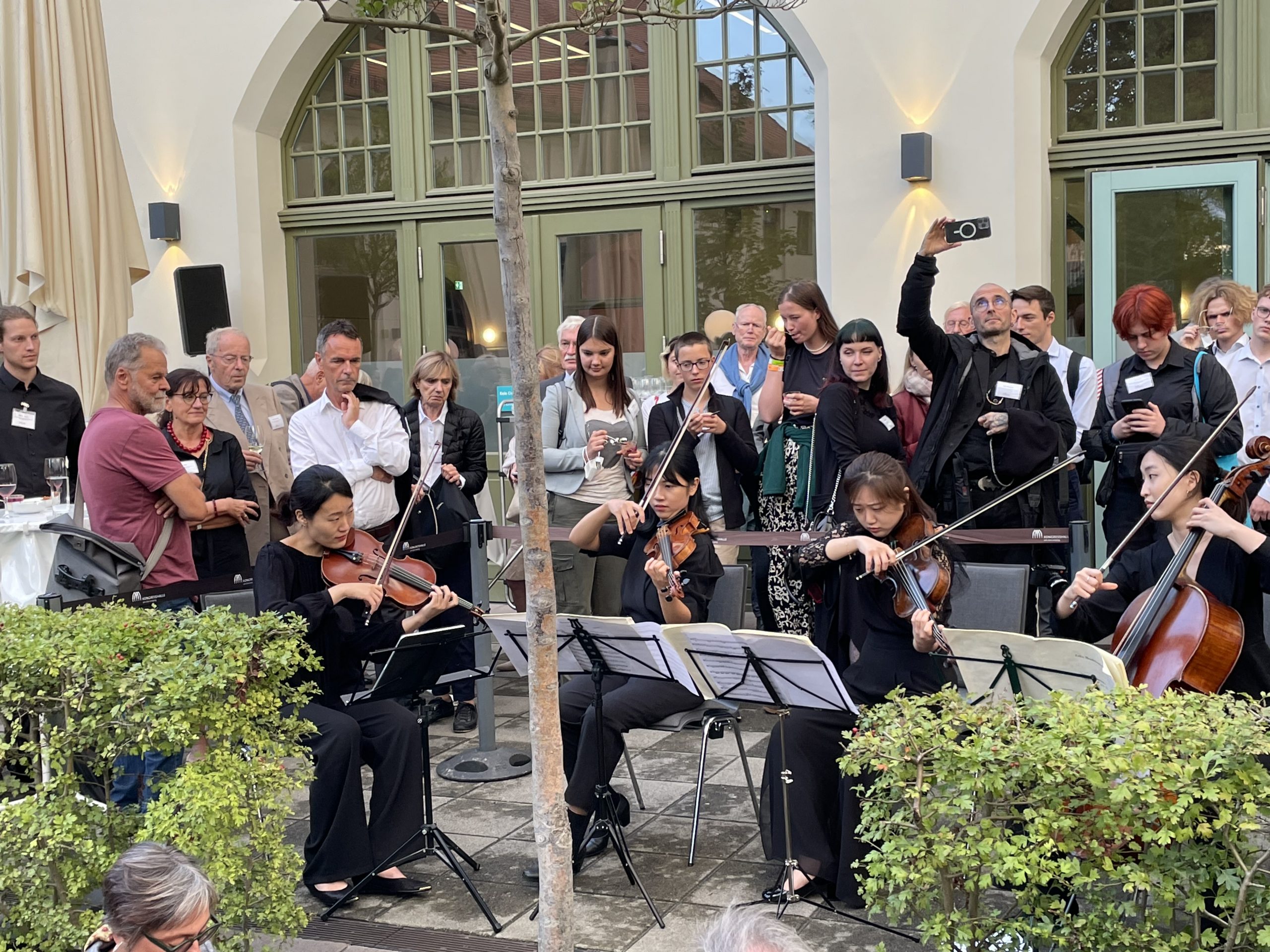
Concert by the Albero Quartet at the evening buffet on the first day of the meeting.

The question posed by the medicine team – Yara Mshinsh and Elias Pantzier – was: "What do you think is necessary to be able to realise individualised medicine for every person in a timely manner?" There is still no truly individualised medicine, said Patrick Cramer: "So far, patients are divided into treatment groups, for example with the active substance Herceptin, which only benefits certain breast cancer patients." The student followed up: "What can Max Planck Institutes contribute to advancing individualised medicine?" "We do basic research," Patrick Cramer answered, "but if we have a technology with benefits for humanity, we like to develop that further, for example within the framework of Max Planck Innovation, a platform for spin-offs from research." One example of success, he says, is a kinase inhibitor for cancer therapy. Cramer: "We are moving forward rapidly and are always discovering new principles that sometimes only benefit patients decades later."
Museumsinsel Ansicht Herbst © Deutsches Museum

© GDNÄ

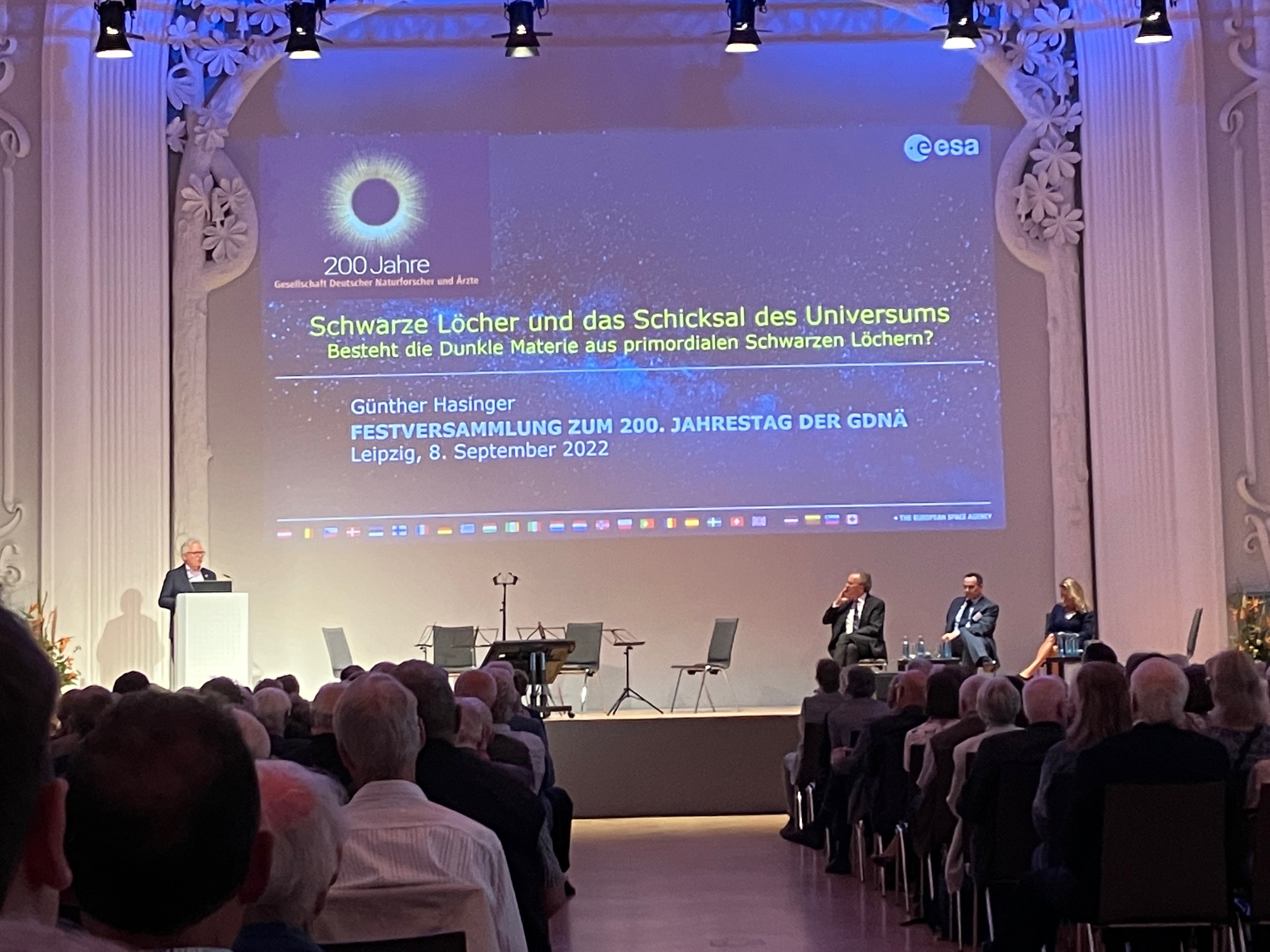
Astrophysicist Günther Hasinger explains his theory on the origin of dark matter.

Patricia Städtler and Janis Hofmann from the Urban Development team made a combative appearance: For the perfect city of tomorrow, they called for price-optimised housing, smooth and emission-free traffic, and an "absolute circular economy" that recycles scarce resources such as sand and concrete. "I warn against looking for the perfect city," said Jan Wörner, recalling the many urban visions that were never realised. Instead of chasing a cloud cuckoo land, the engineer advised enabling the best possible city - "that should be our goal". The city of the future, he said, must be flexible, cost-effective and, last but not least, safe. "The probability of the ceiling falling down here in the congress hall is not zero," Wörner said, earning a laugh. Wood is not the universal solution for climate-friendly building, he stressed, and concrete is by no means dead. "Concrete has many faces, and one of them is nut chocolate: it, too, consists of a filler, chocolate, and an aggregate, nuts." So cement is by no means the only concrete option, Wörner said, adding, "In the future, we'll also be able to build structures from algae." It is important to keep many technologies in mind, he said – "we have to keep an open mind." 

At the end of the lively discussion, entertainingly moderated by GDNÄ President Professor Martin Lohse, Patrick Cramer wooed participants in the student programme: "In science, we need young people like you." – On Friday, 9 September, research will be challenged again: through questions in the Biology session, moderated by the next GDNÄ President, Professor Heribert Hofer.
Matthias Röschner © Deutsches Museum

© GDNAE

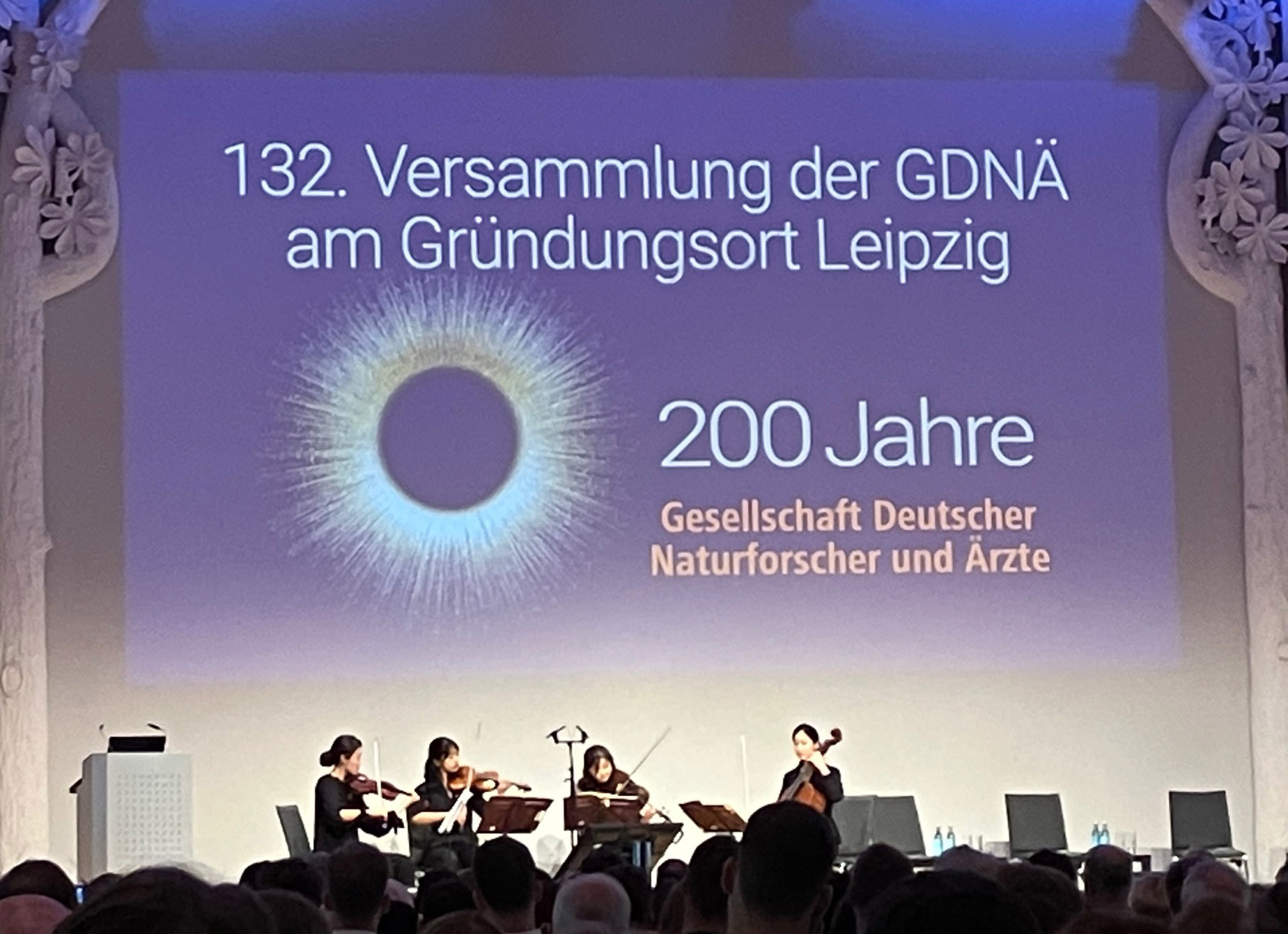
The Albero Quartet from Leipzig.

Greetings

With a view to the current shortage of skilled workers, Federal Research Minister Bettina Stark-Watzinger encouraged the young people at the conference: "Get involved – Germany needs you." Dr Matthias Rößler, President of the Saxon State Parliament, picked up on this thought and thanked the GDNÄ for its commitment to young people. He recalled that the Natural History Society had returned to Saxony time and again throughout its history. Professor Thomas Fabian, Mayor of Leipzig, pointed out the exceptionally dynamic development of his city – with a population increase of one hundred thousand people in just ten years: "Word has spread about our high quality of life, especially among young people."
Matthias Röschner © Deutsches Museum

© GDNÄ

Honours

The Alexander von Humboldt Medal for his special services to the GDNÄ was awarded to the Society's former president (1995-1996), physics professor Joachim Treusch. In her laudatory speech, Professor Eva-Maria Neher said he was one of the "far-sighted people" who had always promoted communication with the Society. "Joachim Treusch is a great reformer of German science, his advice and wisdom are in demand as ever." In his short acceptance speech, Treusch recalled an astonishingly correct prediction on climate change made by the German Physical Society in 1985, which did not lead to the necessary consequences: "My hope is that the youth will learn from our mistakes."

The Lorenz Oken Medal 2022 goes to Dr Mai Thi Nguyen-Kim. The chemist and journalist was in Leipzig via video; she will be presented with the award for her public science communication at the Forum Wissenschaftskommunikation in Hanover in early October. Mai Thi picked up on the motto of the student programme "We only have one world" and encouraged the young people in the hall to fight for a tomorrow worth living: "You are the future of our species and that makes me hopeful."
Matthias Röschner © Deutsches Museum

© GDNAE

At the evening science slam, young people presented their research results in short form.

Assembly hashtag: #gdnae200

Further information:

Media response The 200th anniversary makes headlines

Media response

The 200th anniversary makes headlines

Whether broadcast, newspaper, websites or social media: the GDNÄ’s anniversary meeting is arousing the interest of journalists in the Leipzig region and far beyond. On this page we inform you about current contributions and provide background information.

In autumn 2023

Yearbook 2022 of the Leopoldina

In a 35-page article, Dr Michael Kaasch, scientific editor of the German National Academy of Sciences Leopoldina, reports in detail on the 200th anniversary of the GDNÄ and the Leopoldina lecture by Markus Gross "Computer Science for Hollywood Pictures". The article contains a great deal of detailed information on the joint history of the GDNÄ and the Leopoldina. Concise quotations and extensive references round off the carefully prepared article.

>> Special print "The Society of German Natural Scientists and Physicians and the Leopoldina" (PDF, 1,24 MB)
>> Yearbook 2022 of the Leopoldina

In March 2023

„Leipziger Blätter“

The cultural magazine "Leipziger Blätter" reports in a three-page article („Zurück zu den Wurzeln“) on the 2022 Festversammlung, the history of the Society and its plans for the future. The special relationship of the GDNÄ to its founding city is a recurring theme.. The "Leipziger Blätter" are published by Passage-Verlag, which also published the commemorative publication for the 200th anniversary.

>> Article „Zurück zu den Wurzeln“ (PDF, 249 KB, German only)
>> Current issue of the cultural magazine "Leipziger Blätter", published twice a year

In November 2022

„Naturwissenschaftliche Rundschau“

In two detailed articles, the organ journal of the GDNÄ, the Naturwissenschaftliche Rundschau, reports on the anniversary conference in Leipzig. Dr Klaus Rehfeld, editor and publisher of the journal until 2021, describes his impressions of the glittering opening with ceremonial lectures and discussion rounds. Professor Michael Dröscher, treasurer and secretary general of the GDNÄ, reviews the four-day assembly with all the names, presentations and facets.

>> Professor Michael Dröscher: Ein glanzvolles Fest der Wissenschaften (German only, PDF, 1,79 MB)
>> Dr. Klaus Rehfeld: Wissenschaft im Bild (German only, PDF, 3,73 MB)

In October 2022

Culture blog "Leipzig-Lese

Against the background of a panel discussion on the history of the GDNÄ, this interview is about Schelling's and Hegel's obsession with questions of chemistry. Saxon science journalist Dr Konrad Lindner and science historian and GDNÄ representative Professor Dietrich von Engelhardt exchange views on this.

In September 2022

Physics portal “pro-physik.de”

The leading German-language specialist portal for all areas of physics reports in detail on the anniversary celebration and the history of the GDNÄ.

>> GDNÄ: Offener Austausch für die Wissenschaft (German only)

Website of acatech – German Academy of Science and Engineering

Since 1822, the Society of German Natural Scientists and Physicians (GDNÄ) has brought together scientists, female scientists and those interested in science for interdisciplinary exchange. At the festive meeting marking the 200th anniversary of the society from September 8 to 11 in Leipzig, the focus was on various issues for the future. Acatech experts were also invited and discussed with the participants the possibilities of shaping technology, new forms of participation and the digital transformation in healthcare. (...more)

Impressionen vom Vorbereitungstreffen des Schülerprogramms im Juni 2022 in Leipzig.

© acatech

Armin Grunwald, Karena Kalmbach and MDW (from left to right) at the acatech Science & Technology Café “What kind of world do we want to live in?”

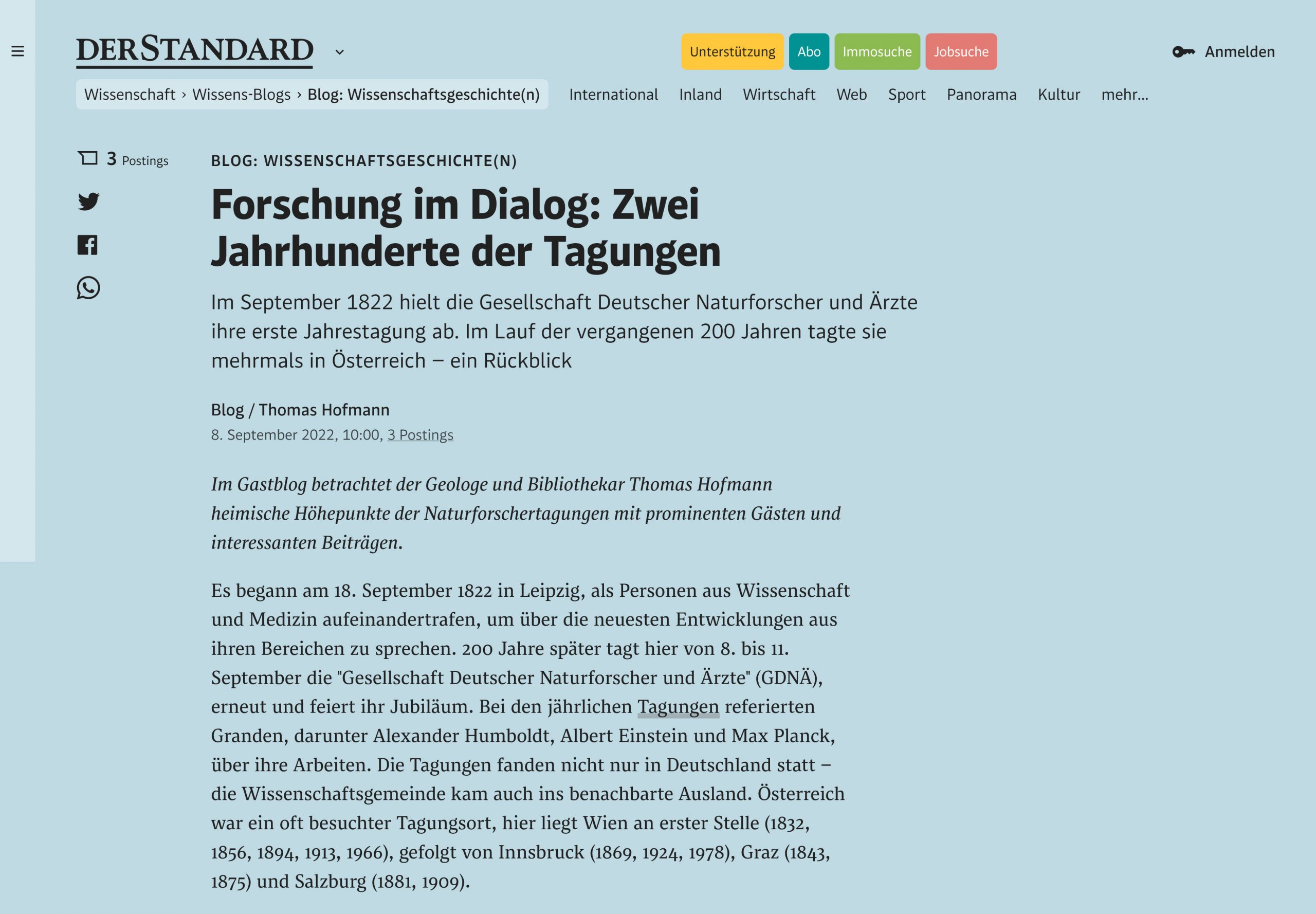
Science blog of the Viennese "Standard"

In a vividly illustrated blog post peppered with many interesting details "Research in dialogue: Two centuries of meetings", Thomas Hofmann highlights highlights of the GDNÄ meetings in Austria. Austria was a frequently visited conference venue, with Vienna in first place (1832, 1856, 1894, 1913, 1966), followed by Innsbruck (1869, 1924, 1978), Graz (1843, 1875) and Salzburg (1881, 1909). For example, Thomas Hofmann writes about the great Vienna Congress in 1913:

"The fourth congress in Vienna attracted more than 5,000 congress participants and congress attendees to the capital in September 1913. The city was all about the sciences. 'One encounters them, now everywhere in the city, the German natural scientists and physicians, and one is pleased to meet them,' wrote the feature writer Paul Zifferer in the Neue Freie Presse."

Thomas Hofmann is head of the library, publishing house and archive of the Austrian Austrian Geological Survey.

Impressionen vom Vorbereitungstreffen des Schülerprogramms im Juni 2022 in Leipzig.

© Wissenschaftsblog des Wiener „Standard“

Screenshot “Research in dialogue: Two centuries of meetings”

Report about the student programme on MDR

In its news programme "Sachsenspiegel", Mitteldeutscher Rundfunk (MDR), will broadcast a report on the GDNÄ students' program on 8 September from 19:00. It shows how students at Leipzig's Goethe Grammar School are preparing for their performance at the opening of the 200th anniversary celebrations. The camera crew also accompanies them to their presentation entitled "We only have one world" in the Congress Hall at Leipzig Zoo. The feature will be available in the media library for a week and also later on request.

© MDR

In its news programme “Sachsenspiegel”, Mitteldeutscher Rundfunk (MDR), will broadcast a report on the GDNÄ students’ program on 8 September from 19:00.
Impressionen vom Vorbereitungstreffen des Schülerprogramms im Juni 2022 in Leipzig.

© GDNÄ

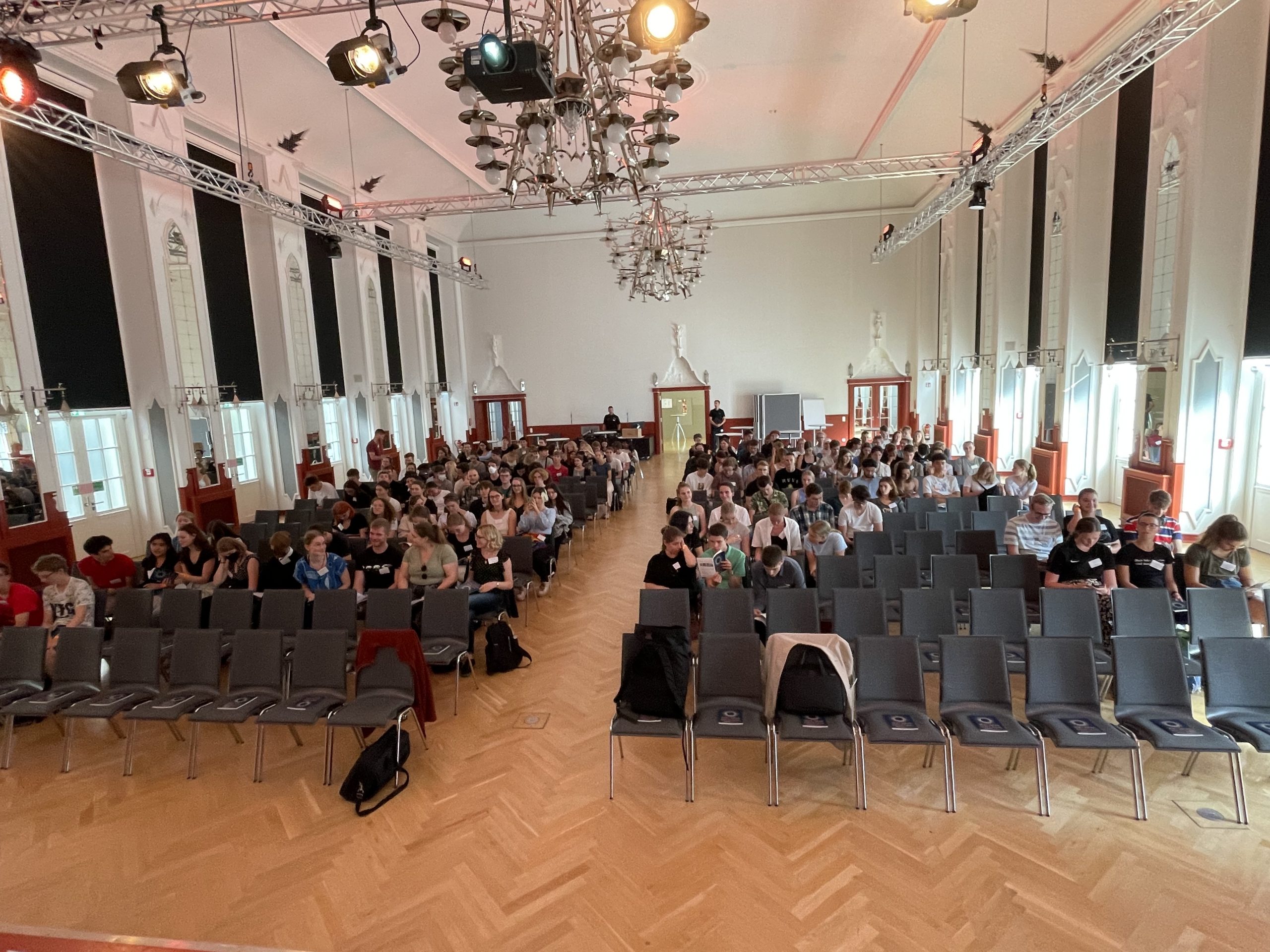
6 September 2022: Students on the day before the presentation “We only have one world” at the Kongresshalle am Zoo Leipzig.

Pictures and texts on Instagram

The GDNÄ's own Instagram channel @gdnae.society provides current impressions of the conference events in Leipzig. The contributions come from a young team from Stuttgart Media University: Gloria Gamarnik, Lena Dagenbach and Maren Krämer, three students from the Crossmedia Editing/Public Relations course. The project is led by Dr. Alexander Mäder, science journalist and professor at the Media University. The focus of the reporting is the GDNÄ's student program.

Assembly hashtag: #gdnae200

In August 2022

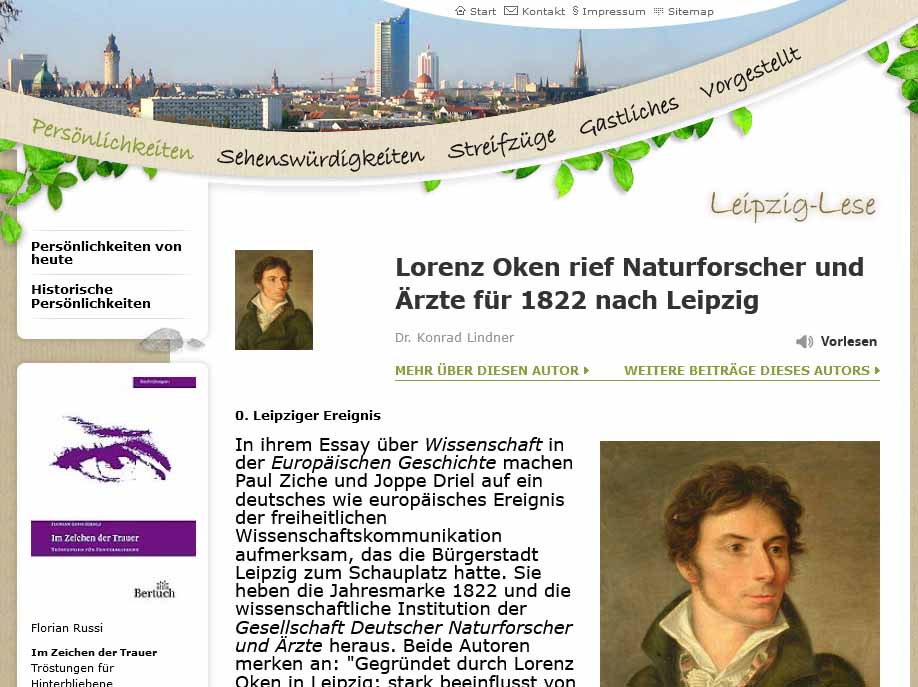
Kulturblog "Leipzig-Lese" on Lorenz Oken and the founding of the GDNÄ

In a detailed article, Saxon science journalist Dr Konrad Lindner deals with the founding history of the GDNÄ and its further development. The text, which appeared on the Leipzig-Lese portal, takes us through the contributions of Schelling, Oken, Oerstedt and Carus to Einstein and Heisenberg and to today's Leipzig philosophers who have expressed their views on idealist-romantic natural philosophy and German idealism.

Impressionen vom Vorbereitungstreffen des Schülerprogramms im Juni 2022 in Leipzig.

© Leipzig-Lese

Screenshot "Lorenz Oken rief Naturforscher und Ärzte für 1822 nach Leipzig"

Impressionen vom Vorbereitungstreffen des Schülerprogramms im Juni 2022 in Leipzig.

© GDNÄ

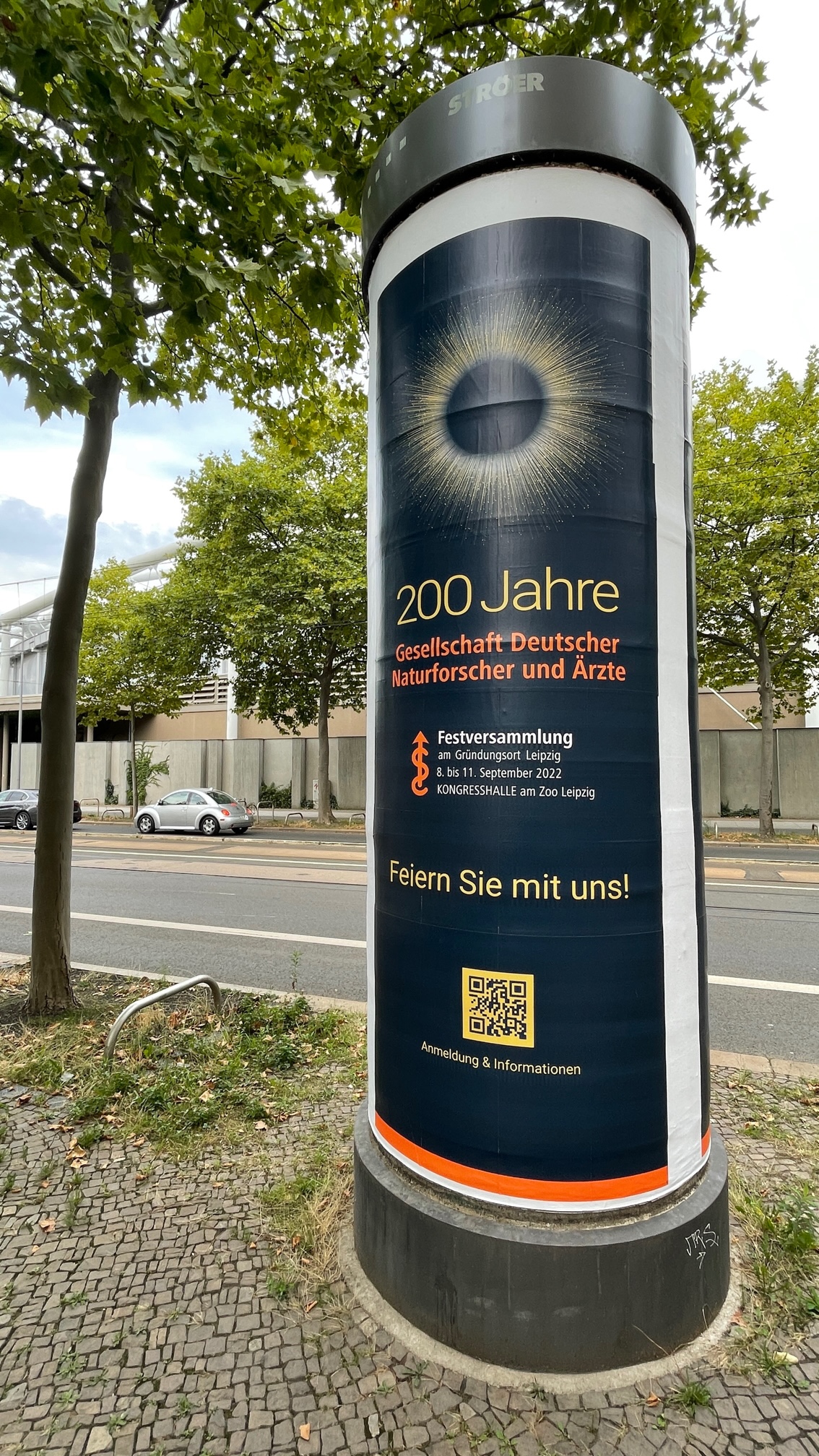
Litfass column in Leipzig: All citizens are cordially invited to attend the GDNÄ meeting.

In September 2022

Article in the Leipziger Volkszeitung

© Leipziger Volkszeitung

Livestream from Leipzig

Livestream from Leipzig

Watch jubilee lectures in real time

The Nobel lecture is about a galactic voyage of discovery, the Leopoldina lecture shows how much computer science is in cinema films today and the grand opening ceremony entices with exciting discussions, music and insights into current research. Those who are present at the GDNÄ's anniversary conference will experience a great celebration of science with many highlights.

But also those who cannot be there are invited – and this is a novelty at GDNÄ meetings – to participate in real time. All lectures in the Great Hall of the Congress Hall at Leipzig Zoo will be livestreamed, as will the entire Festversammlung on Thursday, 8 September 2022 (14:00-18:00), and the public lectures by Nobel Laureate in Physics Professor Reinhard Genzel (Friday, 9 September, 18:30-20:00) and Professor of Computer Science Markus Gross of ETH Zurich "Computer Science for Hollywood Pictures" (Saturday, 10 September, 18:30-20:00).

Livestream use is free of charge; no special technical requirements are necessary. A digital device and a good internet connection are all you need to join the live stream below:

You are currently viewing a placeholder content from Default. To access the actual content, click the button below. Please note that doing so will share data with third-party providers.

More Information

The livestream is intended for the real-time experience and is only available at the same time as the programme in Leipzig. The video recordings of lectures, interviews and summary contributions, which are posted on the GDNÄ's own YouTube channel after the meeting and are available free of charge, can be used permanently.

The GDNÄ mourns the death of its former president Professor Harald Fritsch

Professor Harald Fritzsch

The GDNÄ mourns the death of its former president

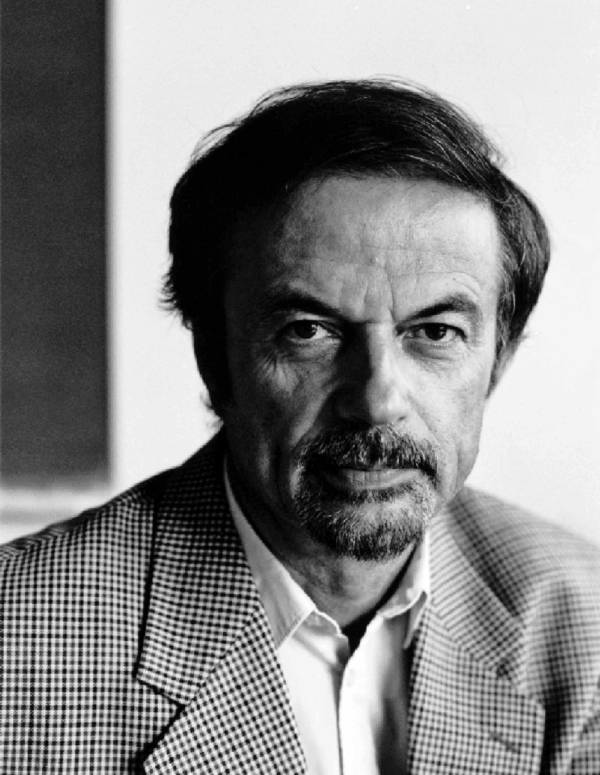
The former President of the Society of German Natural Scientists and Physicians (GDNÄ), the physicist Prof. Dr. Harald Fritzsch, passed away in Munich on 16 August 2022 at the age of 79. Harald Fritzsch was President of the GDNÄ in 2003 to 2004 and chaired the 123rd Assembly in Passau.

"Harald Fritzsch was a theoretical physicist who made important contributions to the theory of quarks", says GDNÄ President Professor Martin Lohse. "He also made a name for himself as an author of popular science books, for example with his book 'Quarks', which appeared in 1981. In his later works, he had scientists from different eras discuss difficult physics topics with each other."

Harald Fritzsch was born in Zwickau in 1943. After graduating from the Gerhart Hauptmann extended secondary school, he was a soldier in the GDR's National People's Army in Kamenz from the summer of 1961, where he trained with the air force. He studied physics in Leipzig from 1963 to 1968. In 1968, he and a friend were the initiators of a risky, extremely high-profile protest action against the demolition of the 700-year-old Paulinerkirche. Fritzsch and his friend managed a daring escape by folding boat across the Black Sea to Turkey. He continued his studies in Munich, where he received his doctorate in 1971 under the guidance of Heinrich Mitter with a thesis "On the algebraic structure of observables in the strong interaction". After his doctorate, he went to the European Research Centre CERN near Geneva for a year. He then moved with Murray Gell-Mann to the California Institute of Technology (Caltech) in Pasadena. From 1977 to 1978 he was a professor at the University of Wuppertal. In 1979 Fritzsch moved to the University of Bern, then in 1980 to the Ludwig Maximilians University of Munich. He became emeritus professor in 2008. Fritzsch was a full member of the Berlin-Brandenburg Academy of Sciences.

The GDNÄ will honour the memory of its former president, the renowned physicist Professor Harald Fritzsch.

Nobelpreisträger Paul J. Crutzen

© Rotary Magazin

Professor Harald Fritzsch

RNA Medicine. Once underestimated, now a beacon of hope

RNA Medicine

Once underestimated, now a beacon of hope

In the Corona pandemic, mRNA vaccines proved their effectiveness and safety. They mark the beginning of a new era in medicine, says Würzburg infection biologist Jörg Vogel. He will describe the triumph of ribonucleic acid in therapy at the GDNÄ Annual Meeting in Leipzig – and here in an interview. 

Professor Vogel, one of the main topics of the anniversary meeting in Leipzig is RNA medicine. What makes this new therapeutic direction so interesting?
The well-founded hope that previously incurable diseases can finally be treated. This was triggered by the great success of mRNA vaccines in the Corona pandemic. Not only could the vaccines be developed very quickly, but they also proved to be highly effective and safe. There is currently an incredible sense of optimism worldwide; some are even talking about a medical revolution. The task now is to transfer the active principle to as many diseases as possible. 

Which diseases could be considered?
There are hardly any limits. Research is currently focusing on cancer and cardiovascular diseases. But other common diseases such as dementia are also possible candidates. And for numerous rare diseases, especially when they are caused by defects in a single gene, RNA medicine could finally bring a breakthrough. Some RNA drugs are already on the market in the EU, and I expect to see many new therapies soon. 

RNA seems to be an all-rounder. How does it manage that?
It has to do with its many capabilities, which have long been overlooked. In the past, almost everything focused on messenger RNA, or mRNA for short, a messenger molecule that carries genetic blueprints from the cell nucleus to the protein factories in the cytosol. In addition to tRNA, which has also been known for some time and which transports amino acids to the protein factories, the ribosomes, and rRNA, which is a component of these protein factories, many other classes of RNA have been discovered in recent years. They have been given names such as miRNA for micro-RNA or siRNA for small interfering RNA. More than a dozen different RNA classes are now known, and new ones are being added all the time. What is clear today is that RNA controls vital processes in cells, and errors in this control can cause disease. Or, to exaggerate a bit: RNA is the real player in our cells and organs.

Impressionen vom Vorbereitungstreffen des Schülerprogramms im Juni 2022 in Leipzig.

© SciGraphix/Sandy Westermann

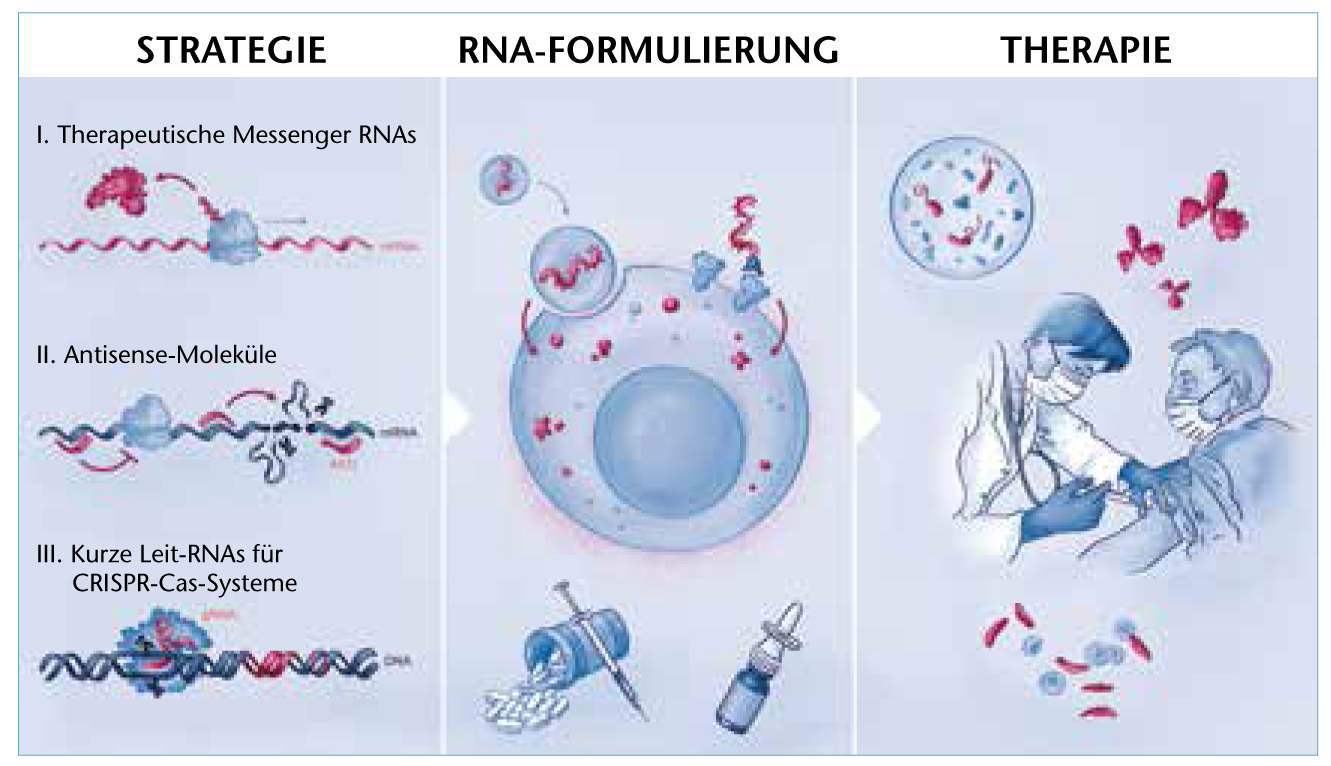
Modern RNA medicine uses therapeutic mRNA, antisense strategies and CRISPR-Cas systems, among others, to treat various diseases.

How can the miracle molecule be used medically?
In two ways: in modified form as a drug and, when it comes to the body's own RNA, as a target for tailored drugs. mRNA vaccines are a good example of the first mode of action. For example, Biontech/Pfizer's Corona vaccine contains a laboratory-generated mRNA variant of the spike protein of SARS-CoV-2. After vaccination, the body generates this spike protein variant, which elicits a strong immune response. The vaccine functions as an antigen that triggers the production of antibodies by the immune system. Similarly, it is hoped to stimulate the immune system to produce antibodies against cancer cells with the help of specifically modified RNA. Several studies are already underway. The lung cells of cystic fibrosis patients could also be modified using the CRISPR-Cas method so that they produce a vital protein in the correct form. It is not yet possible to predict which of these therapies will prevail from a medical and cost perspective. 

Please also explain the second active principle with an example.
In cardiac medicine, for example, research is being carried out to prevent the production of pathogenic proteins by artificially produced siRNA. To do this, RNA snippets are created in the laboratory that have a structure exactly complementary to the sequence of the body's own RNA – so-called antisense molecules. The idea is to couple them to small liposomes and inject them under the skin. These liposomes are to enter the heart to deliver their siRNA cargo into the cells. The cargo, the plan goes, docks with the body's own RNA and paralyzes it. In a similar way, non-coding RNA, which does not make proteins in the body but regulates many processes, could be directed in the desired direction when it malfunctions.  

In short, what can RNA medicine do that conventional drugs cannot?
One major advantage is programmability: active ingredients can be designed exactly as needed. Another advantage is speed. You can design a therapeutic on screen in minutes and then manufacture it quickly if the production capacity is there. Just think about mRNA vaccines, which were available very quickly.

Impressionen vom Vorbereitungstreffen des Schülerprogramms im Juni 2022 in Leipzig.

© RVZ

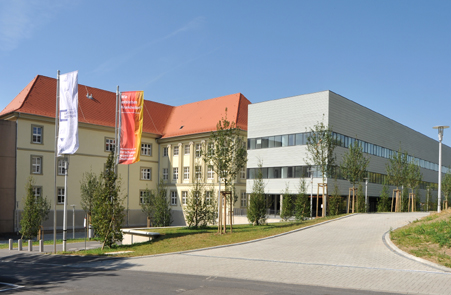
Old and new in aesthetic combination: The converted and expanded former Surgical Clinic of Würzburg University now houses two research centres, the Helmholtz Institute for RNA-based Infection Research and the Rudolf Virchow Centre for Experimental Biomedicine.

But do RNA therapies do exactly what they are supposed to?
They are very specific. Perhaps even more specific than conventional drugs that target proteins. This has to do with the exact base pairing in nucleic acids.

 And if serious side effects occur: Can the RNA be recovered?
We don't know exactly yet. So far, it hasn't been necessary because the mRNA quickly disappears from the body again. But we will have to think about something for the future. So far, it is only a research idea to create depots with replacement proteins in the body. But if this succeeds, we must of course have protective mechanisms ready in case of incompatibilities. However, I do not see a problem in principle, because an antidote could also be designed here. For example, an anti-CRISPR-Cas molecule that is administered on demand. 

Unlike today's drugs, RNA is very unstable. How do you prevent it from rapidly decaying in the body and becoming ineffective?
To do that, you have to change its chemical structure. The mRNA vaccine again provides a fitting example. The fact that it works so well is thanks to biochemist Katalin Karikó. Together with immunologist Drew Weissmann, she incorporated a variant of the base uridine, pseudouridine, into the mRNA well in advance. This not only makes the molecule more stable and efficient, it also reduces the risk of immune system overreactions.  

A pioneering achievement that made the saving vaccines possible in the first place?
Yes, and certainly worthy of a Nobel Prize. If you contrast experiments with non-modified mRNA, it shows that it can't be done without this modification. That's the reason why some other vaccine candidates have failed so far.  

Let's clarify a few technical issues. RNA molecules are large and very negatively charged. How do you get them where you want them in the body?
In the case of mRNA vaccination, this works very well: the vaccine injected into the upper arm muscle is taken up by certain immune cells in the muscle and from there leads directly to an immune response. However, as already mentioned, depots near target organs such as the lungs, liver or kidneys are also being considered. Sprays are also under discussion. Overall, this is a big research topic right now. Compliance is also always important: How well is the therapy accepted by patients and how do they stick to it – all this plays a role.  

Today, RNA molecules are mainly packaged in lipids in order to smuggle them into the cells. Is this the best method?
At present, yes. Nanocages, which can be thought of as cages made of DNA for transporting RNA, are also being tested. The most important thing is to protect the comparatively large RNA molecules from attacks by the immune system and degradation by enzymes – all methods must be measured against these criteria.  

How long does the effect of RNA therapy last?
That depends on the technology. In mRNA therapy, similar to Corona vaccination, the protein is produced for a few days after administration – after which the mRNA is degraded. The protein, in turn, can exist in the body for days to weeks and exert its effect until it is then also degraded. For example, in the treatment of spinal muscular atrophy SMA, the drugs that promote mRNA maturation must be given every two to four months.  

How far along is testing in humans?
Among the most advanced is a CRISPR-Cas trial of an RNA agent to treat the inherited disease beta-thalassemia. Until now, patients have required regular blood transfusions. If the new therapy proves successful, that will no longer be necessary. Then their bodies will produce the missing hemoglobin. New mRNA-based vaccines are also undergoing clinical trials, for example against influenza or malaria.

Impressionen vom Vorbereitungstreffen des Schülerprogramms im Juni 2022 in Leipzig.

© HIRI / Luisa Macharowsky

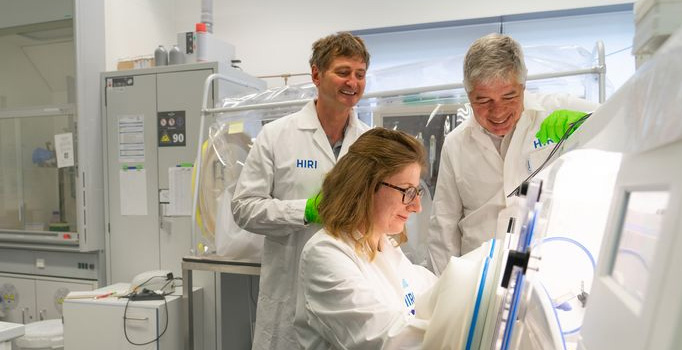
At the anaerobic workbench in the laboratory of the Helmholtz Institute for Infection Research with Professor Jörg Vogel (left).

Why has RNA medicine only now become a big topic?
It took the pandemic to build up pressure. It provided the necessary push and showed that mRNA vaccines and RNA medicine as a whole are effective and safe. 

You are considered a pioneer in RNA medicine. What brought you in this direction?
I studied biochemistry and worked in molecular biology laboratories as a student, including in plant genetics. I then also did my doctorate there, on molecular mechanisms of catalytic RNA molecules in barley chloroplasts.

You have headed the Helmholtz Institute for RNA-based Infection Research for more than five years. Where do you stand today? The institute has developed magnificently, in parallel with the growing importance of RNA research. When we started out, the topic of vaccines was still primarily thought of as proteins as active agents, not RNA. That has changed dramatically in recent years. Today, innovations are expected primarily from RNA research. At our institute, we benefit greatly from high-throughput sequencing: This allows us to look inside the cells as if with a microscope and see which RNA is currently being produced. Meanwhile, we're also pretty good at modifying RNA to make it medically useful.  

Is medical utility a big issue with you?
When it comes to new approaches, yes. But we are basic researchers. Further development is a matter for industry. 

Does your institute work with pharmaceutical companies?
So far, hardly at all, but that is set to change. We are currently preparing the first spin-off. It involves RNA-based diagnostics and tests that can detect many different pathogens simultaneously. 

There is still no cure for the common cold. Will RNA medicine be able to cope with it?
Why not? We already have ideas!  

A shorter version of this interview can be found in the publication for the 200th anniversary of the GDNÄ: Wenn der Funke überspringt, Leipzig 2022, ISBN 978-3-95415-130-1.

Impressionen vom Vorbereitungstreffen des Schülerprogramms im Juni 2022 in Leipzig.

© HIRI

RNA biology is his main research focus: Professor Jörg Vogel

About the person

Jörg Vogel is Professor of Molecular Infection Biology and founding director of the Helmholtz Institute for RNA-based Infection Research (HIRI) in Würzburg. The institute is operated as a site of the Braunschweig Helmholtz Centre for Infection Research together with the University of Würzburg. It is the world's first institute to bring together RNA biology and infection research. In parallel, Jörg Vogel heads the Institute for Molecular Infection Biology at the University of Würzburg. In 2017, he received the Leibniz Prize of the German Research Foundation for his work on RNA biology.

Ribonucleic acid (RNA)

As mRNA, ribonucleic acid (RNA) ensures that the information stored in DNA is converted into the proteins necessary for life. Other RNA classes regulate the activity of genes or have catalytic functions. RNA is similar in structure to DNA. Unlike DNA, it is usually single-stranded, which makes it less stable but also more chemically versatile than DNA. Chemical evolution on earth began with RNA – all organisms probably evolved from it.