• DE
  • EN
  • Robert Dunkelmann: “Dare to use YouTube, Instagram and co. more”

    “Dare to use YouTube, Instagram and co. more”

    Robert Dunkelmann, chemical technician and enthusiastic member of the GDNÄ, on social media and its great potential to get young people interested in science.

    Mr Dunkelmann, you joined the GDNÄ at the age of 22 and have been an active member for twelve years. What can the GDNÄ offer young people like you?
    It has a lot to offer me. At the conferences, I learn about the latest findings from the natural sciences in three days – in a concentrated, understandable way and presented by the best scientists. I always benefit from this. One example: at the meeting in Mainz in 2014, I heard about non-coding RNA for the first time, which was long misjudged as genetic waste. Only in recent years has its importance as a mastermind of gene regulation been discovered. Especially during the coronavirus pandemic, it was frequently mentioned. For most people around me, this was completely new, but I already had an idea of what was going on.  

    The 2014 meeting in Mainz was your second GDNÄ conference. The first time you attended was in Göttingen.
    Yes, that was in 2012, I had just won a special prize in the national Jugend forscht competition and was allowed to present my invention at the meeting. 

    What invention?
    As a student, I had developed a seal that indicates whether frozen products have been kept sufficiently cold on their way to the supermarket. This is important information for consumers. FrozenSignal, as I called the seal, is neither harmful to health nor the environment. It contains two substances separated by a thin layer. If the temperature rises significantly, the upper substance melts and reacts with the lower one. The initially white seal then turns a rusty brown colour. It is immediately obvious that the product has already been defrosted. 

    What happened to the idea?
    I applied for a patent and held initial marketing talks. Initially there was interest from the industry, but this waned when it became clear that trading companies didn’t want something like this. I didn’t pursue the matter any further.
    Institut für Quantenoptik und Quanteninformation (IQOQI). © IQOQI/M.R.Knabl

    @ Robert Kraemer GmbH & Co. KG

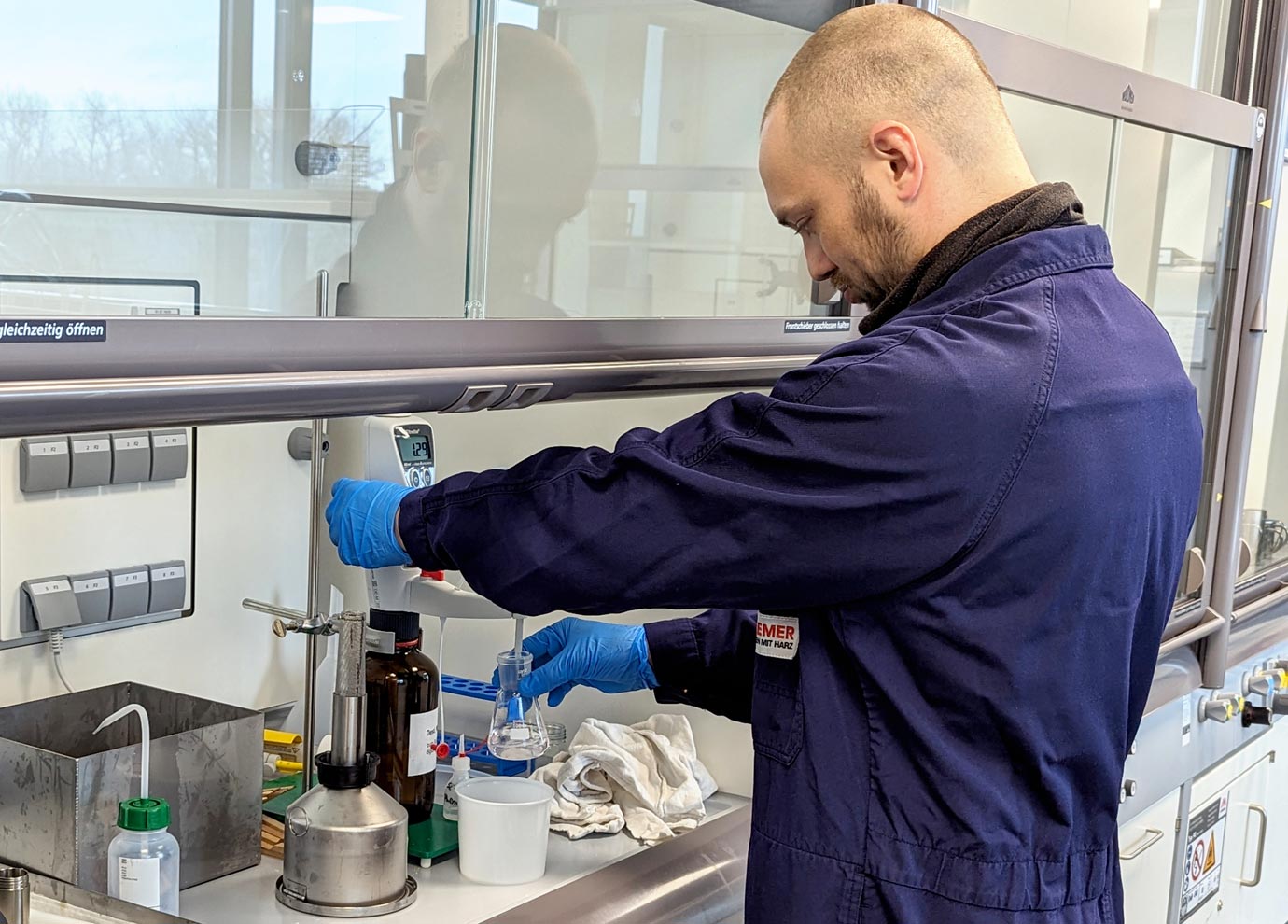
    Product properties such as acidity, viscosity or solubility are determined in the laboratory by titration.

    At the time, you were a student at a specialised secondary school near Bremen and had already completed your training as a chemical-technical assistant. How did your career progress?
    After gaining my university entrance qualification, I worked as a laboratory technician for a few years and took care of incoming goods inspection and wastewater analysis at a company in Bremen. Since 2018, I have been working for another company in Rastede that produces binders based on the natural resin rosin. The intermediate product is needed in the industry for the production of paints, varnishes and adhesives. I work in process-related analytics as well as in production and am aiming for a job as an operator in my company’s new chemical plant. 

    Have you considered going to university in the meantime?
    Yes, I actually thought about studying chemistry from time to time. But over the years I realised that I am a practical person. I focussed on that and that was the right thing to do. In my current company, I have good development opportunities and am listened to when I suggest innovations. Together with my bosses and colleagues, I have already been able to optimise some production processes. 

    You said at the beginning that you would like to contribute more to the GDNÄ. Do you already have concrete ideas?
    Yes, I do. One example: in order to reach young people better, it would be important to communicate more via social media such as YouTube, Instagram, Tiktok, Twitch and the like. I know the GDNÄ started doing this at the 2022 anniversary meeting in Leipzig, but there is still room for improvement. One option would be to get science influencers with a wide reach to cooperate. There are great young people at universities who regularly report on their research, their everyday life in the lab and their life as a scientist. With tens of thousands of followers, they reach a very large audience.    

    An Instagram video lasts a maximum of 60 seconds. Isn’t that too short to convey sophisticated content?
    That’s not much time, no question. But it’s always amazing how much essential information can be conveyed in 60 seconds. And if you want more, you can watch longer programmes on YouTube – they can last 15 minutes or more. The most popular science influencers are active on several platforms. And if you want to reach young people today, you have to use these media. Of course, they are also interesting for older people. 

    What are the advantages?
    You can see what is currently on the minds of many people, learn about the art of the short form and practise using social media. They are a treasure trove for the curious; this is where modern knowledge transfer takes place.
    Instituts für Fertigungstechnologie an der Universität Erlangen-Nürnberg. © FAU

    @ Robert Kraemer GmbH & Co. KG

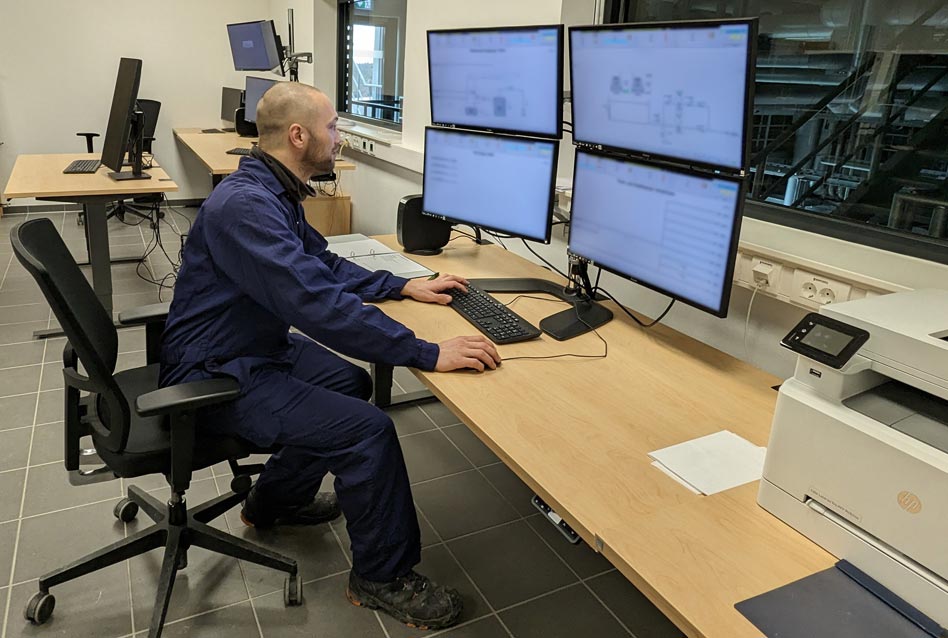
    Process control technology: the company’s systems are controlled in this room. From here, Robert Dunkelmann can, for example, fill reactors, change the temperature and pressure or regulate the thermal waste gas purification.

    On the other hand, social media can easily become a time waster.
    That’s true, it’s easy to get lost and that’s why I’ve greatly reduced my Instagram consumption. I now spend no more than an hour a month on the platform. However, I spend two to three hours a day on YouTube. It’s only partly about science, there’s also a lot of music. On the other hand, I hardly ever listen to the radio and I don’t even watch linear television any more. 

    Doesn’t that quickly put you in a filter bubble? Narrowing your own horizons?
    There is a danger of that. That’s another reason why it’s so important to keep in touch with institutions that provide foresight and an overview. The GDNÄ does exactly that and promotes personal contact. This has been a huge benefit for my career. 

    In what way?
    I’m thinking, for example, of the “Meet the Prof” format at the meetings. In these small discussion groups, young people can ask their questions without fear of embarrassment and discuss them with established academics in a friendly atmosphere. This has given me a lot of inspiration and I am convinced that others will feel the same way if they get the opportunity. If you pick up students or young professionals where they are, you can get many of them interested in science – even if they didn’t manage it at school.  

    Will I see you at the 2024 Assembly in Potsdam?
    I’m definitely planning to come. And I’m already looking forward to meeting people from the past and getting to know new ones.
    Marion Merklein © FAU

    @ Robert Kraemer GmbH & Co. KG

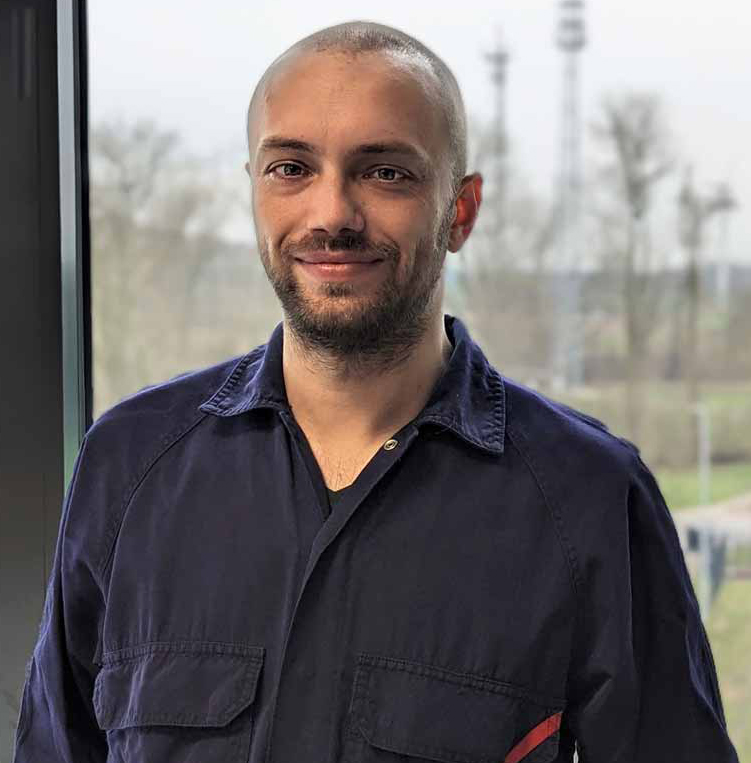
    Robert Dunkelmann, production specialist, Youth Research Prize winner and long-standing GDNÄ member.

    About the person

    Robert Dunkelmann was born in Waren (Müritz) in 1990. He initially went to school in Penzlin in the Müritzer Seenplatte district and from 2000 to 2008 in Ganderkesee in the Bremen-Oldenburg metropolitan region. This was followed by training as a chemical-technical assistant at the Utbremen school centre. Robert Dunkelmann also obtained his technical college entrance qualification there in 2012.

    From 2013 to 2018, he worked as a laboratory technician in the incoming inspection/wastewater analysis department at the waste disposal and recycling company Nehlsen Plump GmbH. Since 2018, he has been working in production at the chemical company Robert Krämer GmbH in Rastede. Together with a group of like-minded people, the 33-year-old reconstructs historical chemical production processes in his spare time. He has been a GDNÄ member since 2012.
    Bohrkern aus dem grönländischen Eisschild mit schwarzen Partikeln, die Algen, Mineralien und Ruß enthalten. Sie verdunkeln die Gletscheroberfläche und beschleunigen im Sommer die Eisschmelze. © Rey Mourot

    @ Robert Kraemer GmbH & Co. KG
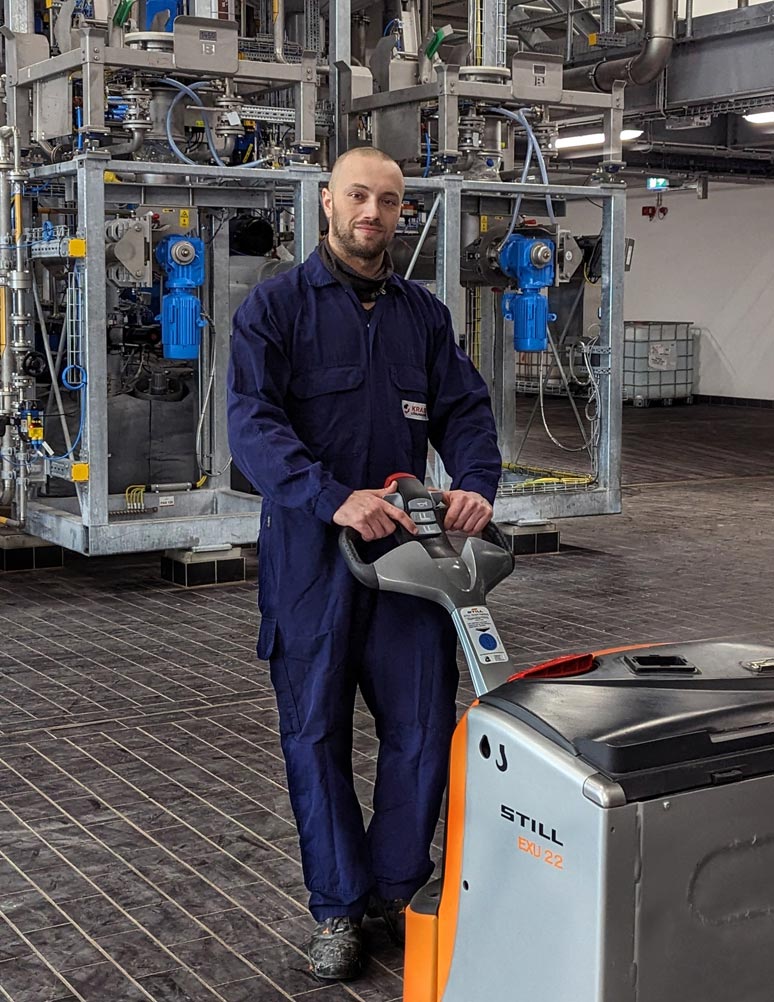
    This is where intermediate containers such as resins, alcohols or organic acids are prepared for subsequent dosing. The dosed raw materials are then fed directly into the reactor by means of a screw conveyor.

    Liane G. Benning: “How algae are fuelling climate change”

    How algae are fuelling climate change

    Liane G. Benning, biogeochemist, on earthshaking interfaces, microbes in the Arctic ice and her El Dorado of research. 

    Professor Benning, at the next meeting of the GDNÄ you will be giving a public evening lecture entitled “The big melt: small cells, big consequences”. Why should people make a note of this date?
    I will be presenting new, previously little-known findings that are important for future climate forecasts. For example, it will be about snow and ice algae and their major influence on the melting of the Greenland ice sheet, which contributes significantly to global sea level rise. So anyone who is interested in current climate research and wants to know what we as scientists in Potsdam and Berlin are contributing to this is cordially invited to my lecture.

    You head the Interface Geochemistry research group at the GFZ Helmholtz Centre Potsdam. What do interfaces have to do with the climate?
    I need to expand a little on that. My research group is concerned with interfacial reactions. This refers to chemical, physical and biological reactions on and in the surfaces of a wide variety of materials that characterise their shape, structure and function. Our planet owes its appearance, both large and small, to such processes, which control the cycle of carbon, nutrients and trace elements. Climate change is also a consequence of interfacial reactions. One example is the reactions between carbon dioxide and the atmosphere. Another, more indirect example is the chain reactions in the Arctic ice.

    Institut für Quantenoptik und Quanteninformation (IQOQI). © IQOQI/M.R.Knabl

    © Katie Sipes

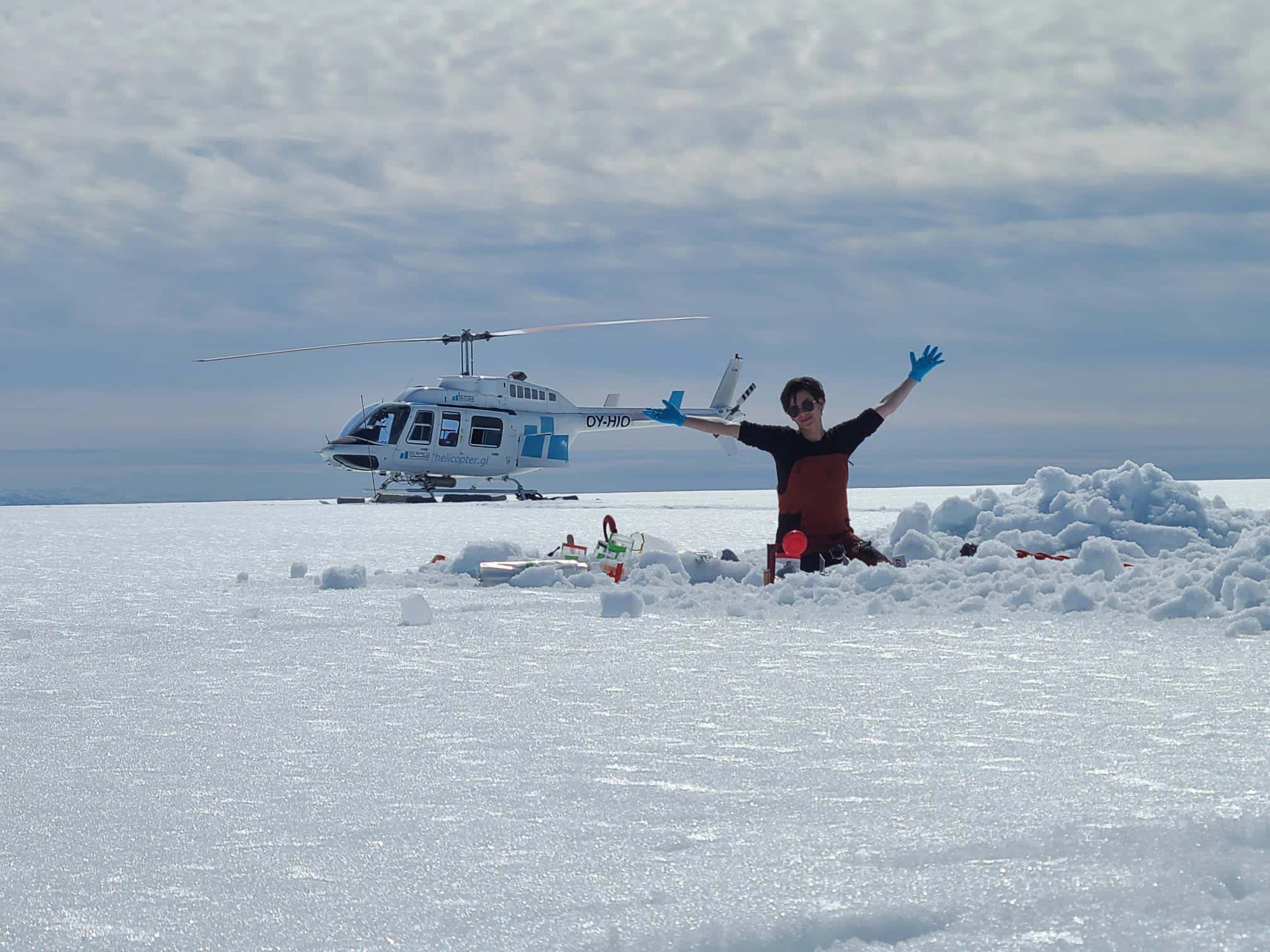
    Field research that’s fun: GFZ doctoral student Rey Mourot collects snow and ice samples in southern Greenland. The helicopter in the background is standing by for safety reasons. The weather can change quickly, in which case the work has to be cancelled immediately. The photo was taken in May 2022.

    How do you record the processes in interfaces?
    We combine experimental approaches and measurements in nature, for example in Greenland, with satellite images, microbial sequencing and high-resolution electron microscopy and spectroscopy imaging techniques that we are constantly developing. In this way, we can observe interactions in interfaces down to the atomic level. The realisation that algae, viruses and bacteria play a key role in climate processes is thanks to this large repertoire of methods. 

    Please explain in more detail how all this is connected.
    Let’s take Greenland as an example. I’m there time and again with my team to take measurements on site and take ice samples, which we analyse when we return to Potsdam. The Greenland ice is still kilometres thick, but on average one metre melts away every year and goes into the oceans. This trend has been accelerating for years. This has to do not only with increasing global warming, but also with dark areas on the ice. They reduce the so-called albedo, i.e. the reflectivity of the surface, and heat it up. For a long time, it was thought that soot or dust particles blown onto the ice were blackening it. However, we now know that naturally occurring snow and ice algae, in combination with other microorganisms, play a significant role in the darkening – and are multiplying rapidly in Greenland. In the south-western part of the island, up to 26 per cent of the albedo reduction is due to ice algae. And as part of the major EU project “Deep Purple”, we are also investigating whether special viruses may control the algal bloom and how the bloom is slowed down by tiny fungi. 

    Can such findings be used to slow down climate change?
    What we are doing is purely basic research. We are not involved in measures to mitigate the effects of climate change. I also believe that bioengineering or geoengineering on the basis of previous research findings is premature because we still know far too little about the overall system. Individual interventions can cause great damage, so we have to be very careful. 

    Is the new knowledge about algae and co. already being incorporated into climate forecasts?
    In the last Intergovernmental Panel on Climate Change report from 2023, the contribution of algae was already mentioned, but bio-albedo is not yet included in the predictions. I am confident that the next assessment report will go into more detail about the effect.

    Instituts für Fertigungstechnologie an der Universität Erlangen-Nürnberg. © FAU

    © Katie Sipes

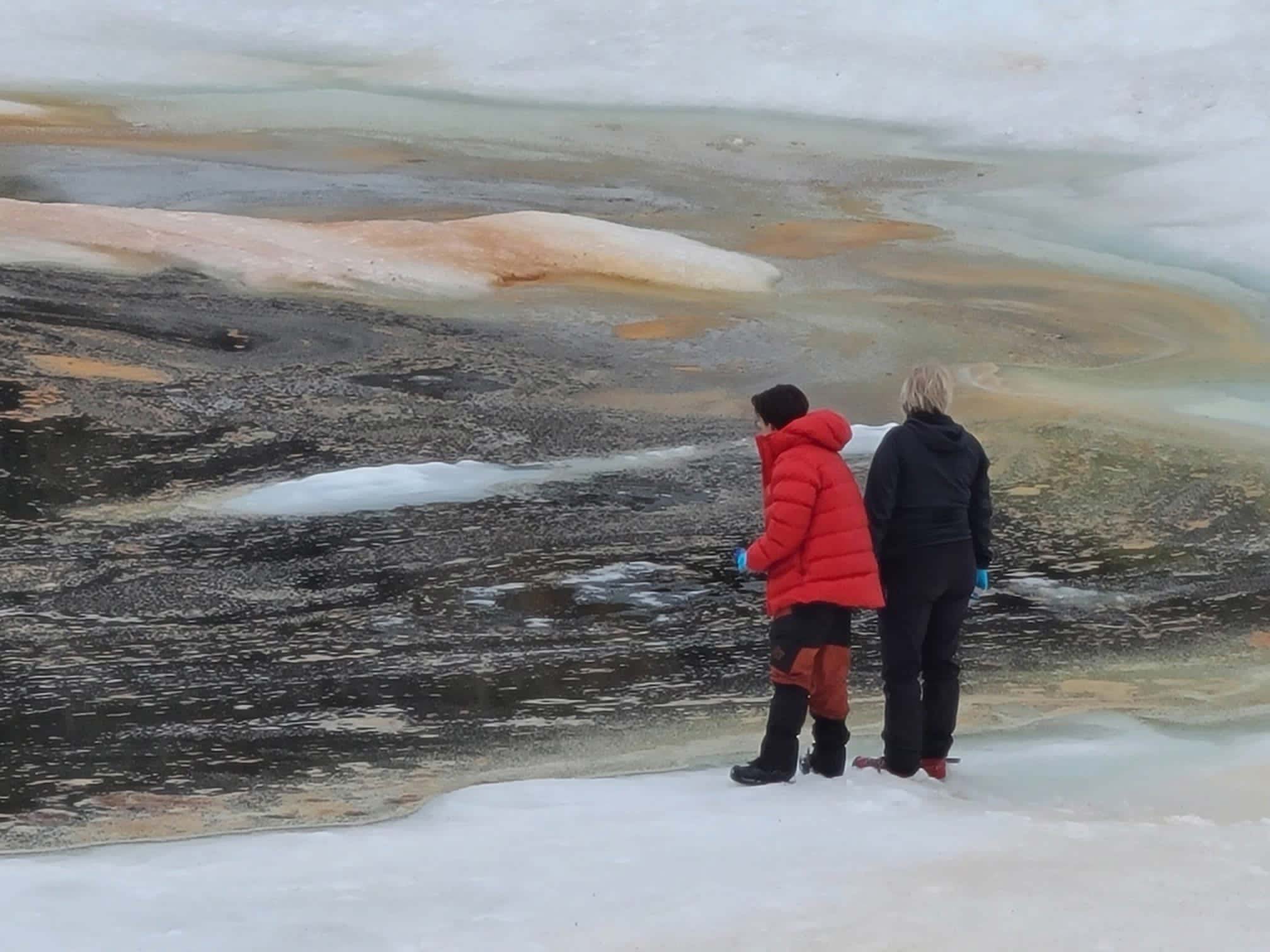
    Liane G Benning and her doctoral student Rey Mourot in front of a snowfield in southern Greenland. You can clearly see how green, yellowish and red snow algae proliferate here.

    You have been working in this specialised field for a long time. How did this come about?
    I’ve actually always been fascinated by processes in the environment. I first studied mineralogy in Kiel and continued my studies at the ETH in Zurich, where I made geochemical reactions the subject of my doctorate. This was followed by academic posts in the USA and the UK, and over time I realised that I couldn’t make any scientific progress without biology. So I familiarised myself with the subject, especially genetics, and eventually I became a biogeochemist. 

    You spent 17 years at the University of Leeds before moving to Potsdam and Berlin. How did you experience the change?
    Coming back to Germany was a bit of a culture shock. In everyday life, I first had to get used to the rustic manners in Berlin and Brandenburg – things are a bit more polite in England. And then there’s the excessive bureaucracy with which the Germans torment themselves and others. The British – especially at universities – often work much more efficiently, so we can learn a lot from them. 

    You’ve now been in the region for ten years and hopefully you’ve discovered some positive things.
    A lot of positive things, in fact. Scientifically, I have fantastic opportunities here. If I need a modern, expensive measuring device for my research, I can almost always find it in the region –  be it at another Helmholtz Institute, at facilities of the Max Planck Society or at the Federal Institute for Materials Testing. And, just as importantly, my colleagues are highly competent, helpful and open to co-operation. For example, the collaboration with Thomas Leya from the Fraunhofer Institute for Cell Therapy and Immunology in Potsdam is brilliant. His biobank contains a wonderful snow algae culture that is ideal for comparisons with our ice algae. We were able to benefit greatly from the expertise of our Fraunhofer colleagues when setting up our culture. All in all, I couldn’t wish for a better environment for my research. 

    Berlin-Brandenburg, an El Dorado for geoscientists?
    I can agree with that. 

    Then you probably have few problems attracting good young people to your team?
    When we advertise a position, we receive applications from all over the world. That was the case again just now for a junior scientist position. But we didn’t find what we were looking for, the applications simply weren’t good enough. For some it was the incomplete documents, for others it was the narrow qualifications that were not sufficient for our interdisciplinary tasks. Some applicants just want to test their chances and are not serious. So it’s not that easy for us. 

    How do you solve the problem?
    In this specific case, we are now re-advertising the position with more precise criteria. I’m also sending the advert to colleagues I know around the world. Personal recommendations are very valuable. I also try to attract good young people from my degree programme at the FU Berlin to the GFZ: for an internship or for their final thesis. If it goes well, it can turn into a job. I also say this to the student interns from Potsdam who have been with us in recent years. My team has been great at dealing with their questions and requests and we are always happy to take on new interns from the region.

    Marion Merklein © FAU

    © Phil Dera

    Prof. Dr. Liane G. Benning.

    About the person

    Liane G. Benning has headed the Interface Geochemistry Department at the Research Centre for Geosciences GFZ, Helmholtz Centre Potsdam since 2014. She is also responsible for the Potsdam Imaging and Spectral Analysis Facility (PISA). She has been a professor at Freie Universität Berlin since 2016.

    Liane G. Benning completed her undergraduate degree in mineralogy at the University of Kiel and her graduate degree in petrology and geochemistry at the Swiss Federal Institute of Technology in Zurich (ETH). She received her doctorate from ETH in 1995. After a postdoctoral stay at Pennsylvania State University, Liane G. Benning moved to the University of Leeds, where she was appointed professor in 2007 and researched and taught until 2017.

    The biogeochemist has received many national and international awards. She has been a member of the German National Academy of Sciences Leopoldina since 2018 and a Geochemistry Fellow of the Geochemical Society and the European Association of Geochemistry since 2020.  At the beginning of 2024, Liane G. Benning was appointed to the German Council of Science and Humanities by Federal President Frank-Walter Steinmeier.

    Bohrkern aus dem grönländischen Eisschild mit schwarzen Partikeln, die Algen, Mineralien und Ruß enthalten. Sie verdunkeln die Gletscheroberfläche und beschleunigen im Sommer die Eisschmelze. © Rey Mourot

    © Rey Mourot

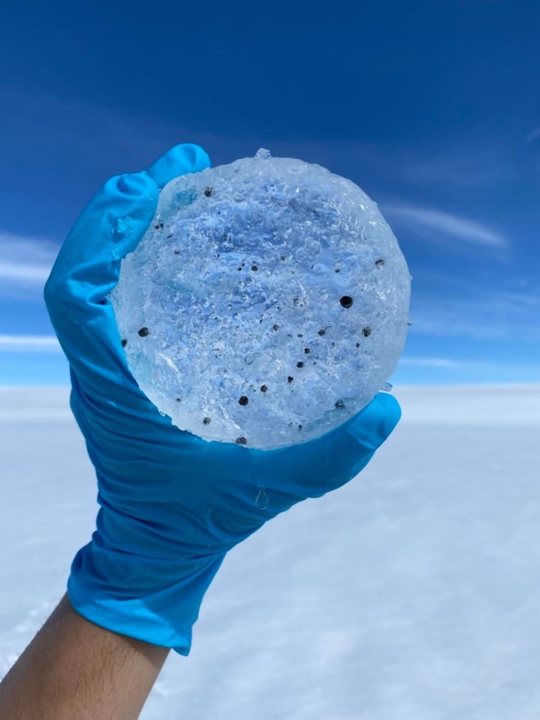
    Drill core from the Greenland ice sheet with black particles containing algae, minerals and soot. They darken the glacier surface and accelerate the melting of the ice in summer.

    Further information

    >> Internship enquiry for high school students: benning@gfz-potsdam.de

    Marion Merklein: “There are bumpy years ahead”

    “There are bumpy years ahead”

    Marion Merklein, engineering scientist, company director and member of the GDNÄ Board, on turning points in mechanical engineering, taster courses and early successes with the hammer drill. 

    Professor Merklein, at your institute at the University of Erlangen-Nuremberg, you develop entire production lines and realise them together with industrial companies. Are the prospects for German mechanical engineering really as bleak as is often said at the moment?
    I’m not one of the pessimists. But there will be a lot of rumbling in the country over the next few years. Mechanical engineering is in the midst of a major transformation that will probably keep us busy until the end of the decade. Only then will things start to pick up again. 

    What transformation are we dealing with in mechanical engineering?
    The pivotal point is the energy transition, which will lead us away from fossil fuels and towards green electricity and hydrogen. At the same time, energy consumption and waste volumes are to be reduced. These alone are colossal challenges for the automotive industry and many other sectors of mechanical engineering. The situation is further exacerbated by the declining order situation against the backdrop of a global economic downturn and a dramatic shortage of skilled labour. We must not underestimate the problem from a social perspective, as one in five jobs in Germany depends on mechanical engineering. 

    How does your research contribute to solving these problems?
    At our university institute, a lot of research centres on the question of how to streamline process chains. For example, in the construction of hydrogen engines. Today, such engines are practically manufactory products with small series such as the °Mirai°: Toyota only produces 30,000 of these saloon cars with fuel cells per year. This is of course uneconomical in the long term. We are therefore currently designing production lines for large-scale production. The aim is to be able to produce millions of hydrogen drives for motor vehicles of all kinds in the future. We are also developing techniques to reduce heat consumption when joining components and chipless cutting techniques, which leads to less waste when cutting workpieces, for example. 

    In addition to your work at the university, you are also the head of a company. What drives you?
    We want to put research results from the university into practice faster than usual. That’s why I took over the management of the company “Neue Materialien Fürth” in 2019. This is a state research institution, 51 per cent of which is owned by the Free State of Bavaria and 49 per cent by several co-owners. I also own a share. The company can be compared to a Fraunhofer Institute, but with a much leaner administration. We have large industrial-scale facilities at our disposal. This enables us to carry out realistic experiments that are not possible at the university.

    Institut für Quantenoptik und Quanteninformation (IQOQI). © IQOQI/M.R.Knabl

    © FAU/Giulia Iannicelli

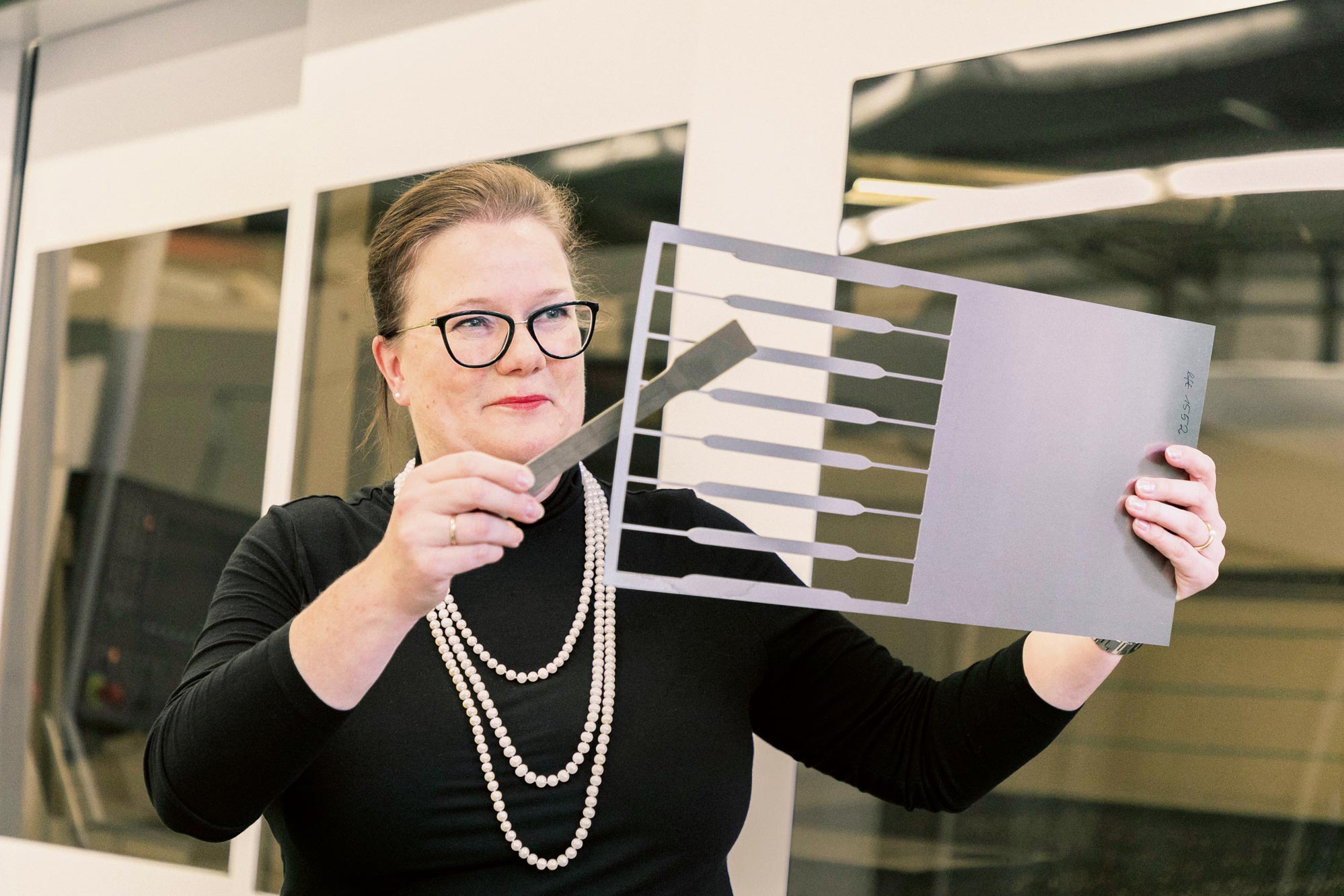
    Marion Merklein with a sheet metal blank from which tensile specimens were cut out for material testing. Input data and material cards are created from the tensile samples in order to simulate production processes.

    Are there already tangible results?
    Yes, there are, and something will soon be added that will advance electrical engineering. It’s about an internal component that I can’t reveal any more about now because the patent process is still ongoing. The development is based on the results of a Transregio funding programme on sheet metal forming and is a good example of successful research transfer. Neue Materialien Fürth also carries out contract research and provides services – the bottom line is that we are in the black. 

    Women are still a minority in mechanical engineering. What is the situation like in your environment?
    When I took up my professorship, I was the only woman in the field far and wide. But a lot has happened over the years. Today, almost a third of professorships in mechanical engineering at FAU are held by women. I definitely see myself as a role model. And in my working groups, I realise time and again that mixed teams achieve the best results. 

    Where does your fascination for the profession come from?
    My father played a big role. I was eight years old when he put a Hilti in my hand to make a wall breakthrough. I really wanted to do it, he trusted me to do it and I managed it. I was very good at physics at school and when it came to studying, I decided in favour of materials science. As time went on, I liked mechanical engineering even better, I switched and did my doctorate in this subject.

    Instituts für Fertigungstechnologie an der Universität Erlangen-Nürnberg. © FAU

    © FAU

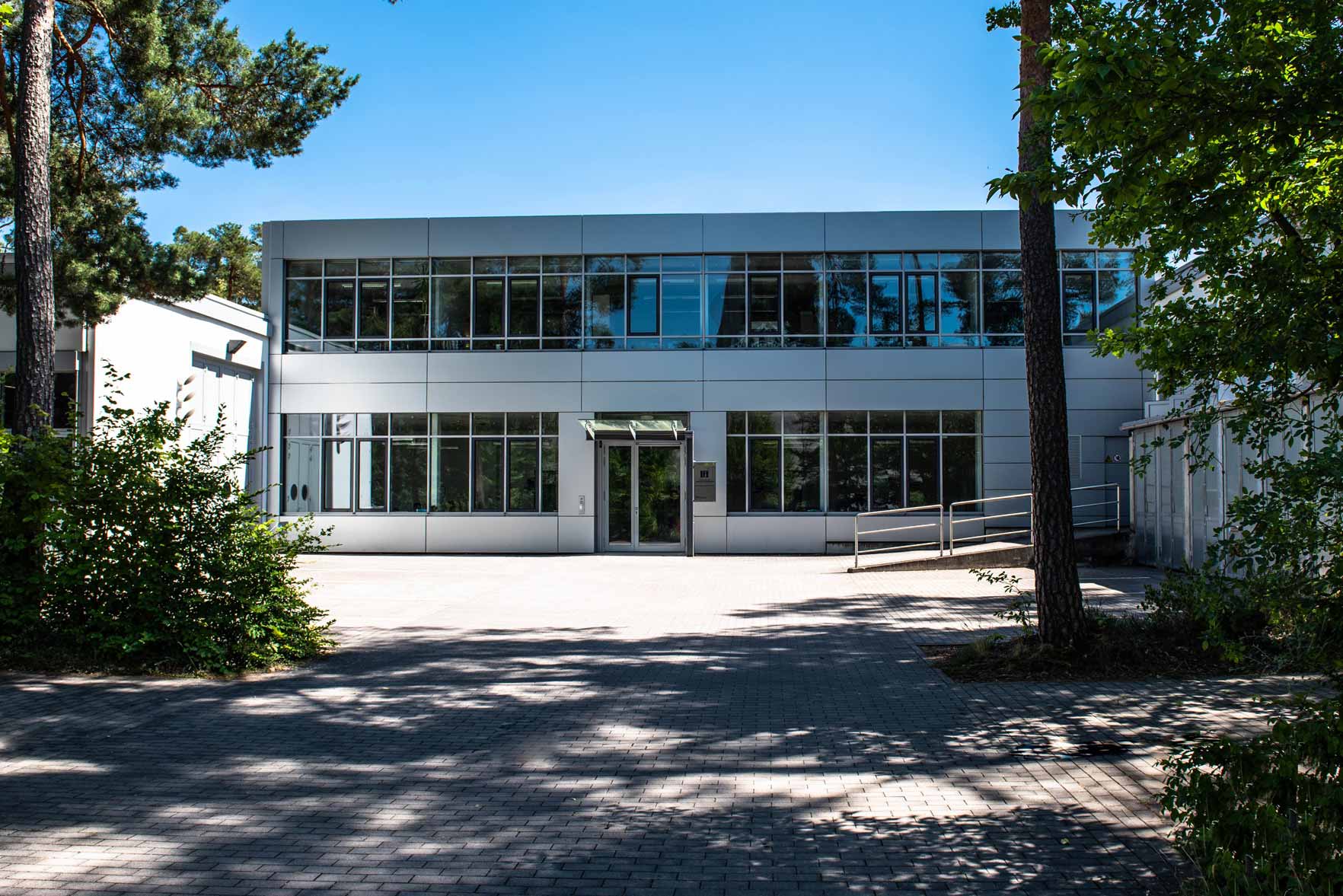
    Exterior view of the Institute of Production Technology at the University of Erlangen-Nuremberg.

    You quickly made a career for yourself and were already a professor at the age of 34. What gave you wings?
    Above all, the reliable support of my doctoral supervisor and mentor, Professor Manfred Geiger. He encouraged me right from the start and took me along to all kinds of events and conferences. This allowed me to grow into management positions. 

    Today, it is up to you to promote the next generation.
    Unfortunately, young talent is rare. Compared to pre-pandemic times, we have up to 40 per cent fewer students and correspondingly fewer young academics. Technical science degree programmes have lost their appeal for young people. If they go in a technical direction at all, many of them tend to do vocational training. Foreign students can only partially compensate for this deficit. We therefore have to come up with something to get young people interested in our subject. 

    What are you doing to achieve this?
    My team and I give talks in schools, offer technology internships and, during the Whitsun holidays, we organise a taster university where students can look over our shoulders for a week. We are currently working on experiments suitable for small children, which we can also take to daycare centres. 

    You are a representative for engineering sciences in the GDNÄ. What motivated you to take on this role?
    I was asked very kindly by the Executive Board and considered the offer an honour. I like the interdisciplinary nature of the GDNÄ, that’s what makes it so special for me and I’m happy to get involved.

    Marion Merklein © FAU

    © FAU

    Prof Dr Marion Merklein heads the Chair of Production Technology at Friedrich-Alexander-Universität Erlangen-Nuremberg.

    About the person

    Prof Dr Marion Merklein’s research career is closely linked to the University of Erlangen-Nuremberg (FAU). There she studied materials science and obtained her doctorate, where she worked as a senior engineer and research group leader and completed her habilitation. At the age of just 34, Merklein received three offers for professorships from Germany and abroad, but once again decided in favour of FAU. Her Chair of Production Engineering is regarded as one of the leading international centres in its field with excellent contacts in science and industry.

    Marion Merklein’s more than 600 research papers cover a wide range of topics, with her main interests being the design and optimisation of lightweight sheet metal constructions, hot sheet metal forming (press hardening) and sheet metal forming. In many cases, Merklein succeeds in bridging the gap between materials science and production technology, often addressing issues relevant to industrial applications.

    The 50-year-old scientist has received numerous awards, including the Leibniz Prize of the German Research Foundation (2013) and the Bavarian Order of Merit (2018). She is a member of the National Academy of Sciences Leopodina, the Berlin-Brandenburg Academy of Sciences and Humanities and the German Academy of Science and Engineering acatech. Marion Merklein also heads a company, Neue Materialien Fürth GmbH, a state research organisation that aims to transfer the findings of basic scientific work to industry.

    Further information:

    Heribert Hofer: “In Potsdam, we present the Young GDNÄ”

    “In Potsdam, we present the Young GDNÄ”

    GDNÄ President Heribert Hofer on highlights of the 2024 Assembly, German as the conference language and his interim period after one year in office.

    Professor Hofer, the 133rd GDNÄ Assembly will take place in Potsdam in September 2024. There are still nine months to go until then. Are you and your team on schedule?
    Yes, the preparations are well advanced. We have a clear idea of the scientific programme, the event rooms have been booked and the supporting programme has largely been finalised. All GDNÄ members will receive more details in the annual letter at the beginning of January.

    There are still three weeks to go until then. Can you give us a few insights in advance?
    It will be a very interdisciplinary conference, even more so than is usual at GDNÄ meetings. For example, we will show how important artificial intelligence already is for different scientific fields and how it is used. Some of the presentations will make you wonder whether this is biology or physics – the methods are now so interlinked. Interdisciplinary thinking and working is becoming increasingly important in almost all subjects, and this trend naturally plays into our hands. The focus also corresponds to the interest of our members, as we know from conversations and letters.

    The meeting is entitled “Science for our lives of tomorrow”. Many people are currently not very optimistic about the future. Can science brighten up the picture?
    Yes, it can and it has often done so in the past. Just think of the coronavirus vaccines, which put an end to the pandemic relatively quickly. As in this case, research results have often been used for the benefit of mankind. But, as we all know, they can also cause harm. My concern is therefore a responsible science that has both potentials in mind. For example, in the field of green genetic engineering, where new genomic tools are used to develop plants. We will be discussing the opportunities and risks in detail in Potsdam. We will also be discussing new trends in ChatGPT and the like, i.e. generative language models and what they mean for the world of tomorrow.

    This topic should be of particular interest to the students present in Potsdam. What role will they play at the 2024 Assembly?
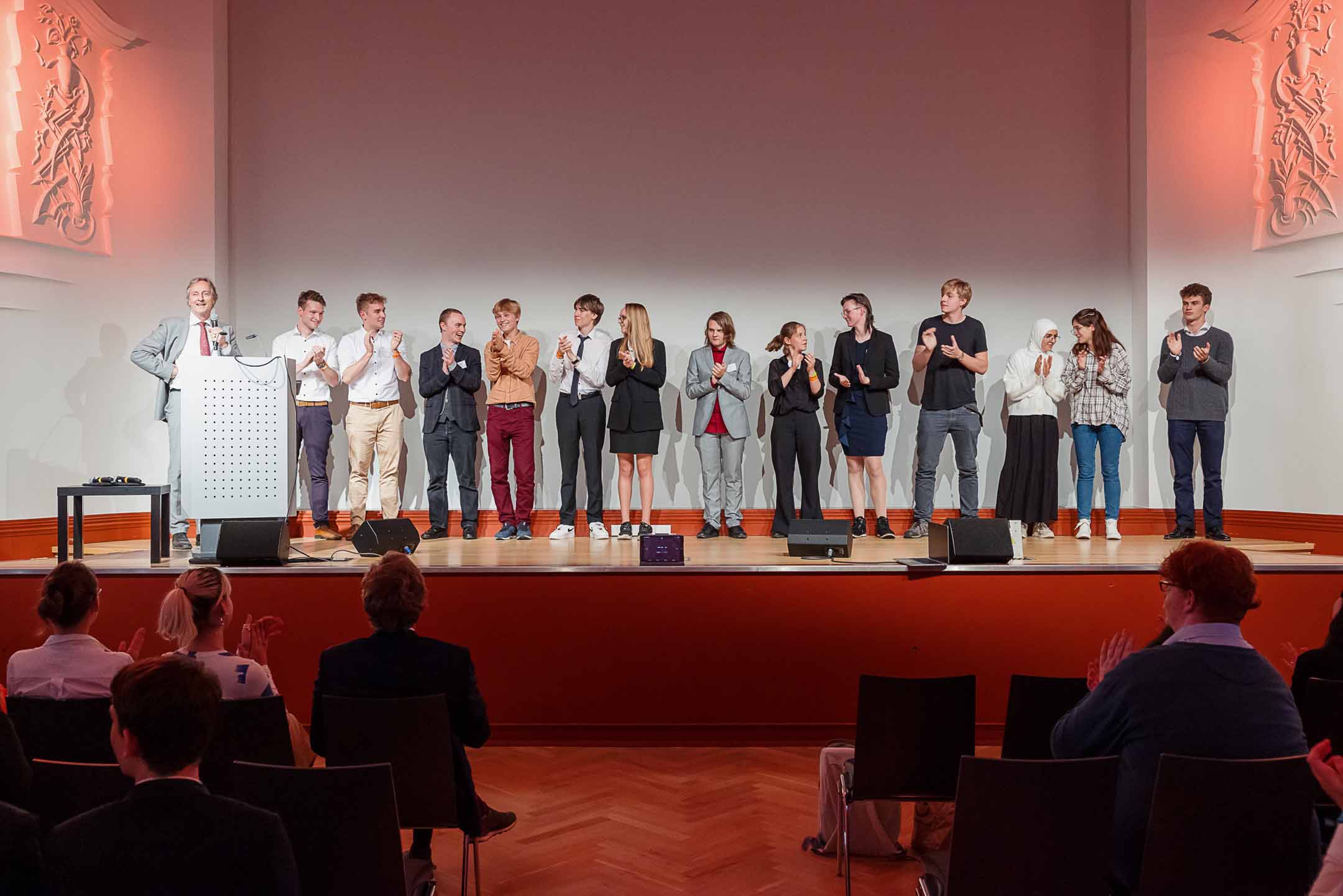
    Their contributions are very important for us. Similar to the 2022 anniversary conference in Leipzig, the young people will be discussing with scientists on the podium. We are organising two workshops in advance so that they can familiarise themselves with the content. In Potsdam, not only selected students from the region will take part, but also former participants of our student programme who are now studying. The aim is to attract talented young people to science – and ideally also to the GDNÄ.

    Institut für Quantenoptik und Quanteninformation (IQOQI). © IQOQI/M.R.Knabl

    © MIKA-fotografie | Berlin

    The Science Slam at the GDNÄ Assembly 2022 in Leipzig was a crowd-puller. Heribert Hofer (left) supervised the participating students.

    Can this be achieved in a three-day meeting?
    As a rule, of course, it takes more time. For this reason, we want to create the Young GDNÄ. The new group should be open to current and former members of the student programme, engage more with the public at meetings and also be active between meetings. How this could look in detail has yet to be discussed. The next strategy meeting between the Executive Board and Board Council in February 2024 will provide an opportunity to discuss funding for the project. Foundations we have spoken to have shown themselves to be open-minded and willing to support the Young GDNÄ. That makes us very happy.

    When will you present the new format to the members?
    In a few months, at the meeting in Potsdam. 

    What kind of response do you expect?
    I am convinced that there will be a lot of approval. I am encouraged by the extremely positive feedback on the extended student programme at the anniversary meeting in Leipzig. The speakers enjoyed the dialogue with the young people and the audience was delighted with the lively discussion. Some of them approached me later and offered to help. It is a matter close to their hearts to introduce the next generations to science. There is a great willingness to get involved, which we want to utilise more in the future. 

    We need more young members, more women, more ethnic diversity: these were the slogans with which you took office a year ago. The Young GDNÄ is making good progress – what about the proportion of women and ethnic diversity?
    We are still focussing on both issues. Today, there are high-calibre female experts in all scientific fields, which makes it easier to find excellent specialist representatives for our meetings. It becomes more difficult with the additional requirements of the GDNÄ: the speakers should be able to present their research as comprehensibly as possible and in German. This reduces the choice – among women, but above all among scientists with foreign roots. Nevertheless, we were able to attract leading minds from both groups for Potsdam 2024.

    German was once the language of science, today it is English. Does the GDNÄ want to stick to German?
    Yes, German will remain the conference language. This also has to do with our interdisciplinary approach. It is intellectually challenging to familiarise with the complex interrelationships from other disciplines at the meetings. If the audience then has to translate the presentation themselves from another language, it can easily lead to fatigue and misunderstandings. The subsequent discussion also becomes more tedious. We want to avoid this and our members encourage us to do so.

    The regional public, who are traditionally invited to GDNÄ meetings, should also benefit from this. What special features are planned for 2024?
    On 13 September, a Friday evening, the Nobel Prize winner in physics Ben L. Feringa will present his research in a generally understandable way, and on the evening of 14 September, Liane G. Benning from the German Research Centre for Geosciences will give the renowned Leopoldina Lecture. Both events are open to all interested parties free of charge. We look forward to many visitors!

    What would a GDNÄ meeting be without a nice accompanying programme: What is planned here?
    Potsdam’s cultural and research landscape is rich and vibrant. We will explore it extensively: at great evening events, guided tours and science-based excursions. A few nice surprises are currently in preparation.

    You have been President of the GDNÄ for almost exactly a year now. What is your interim conclusion?
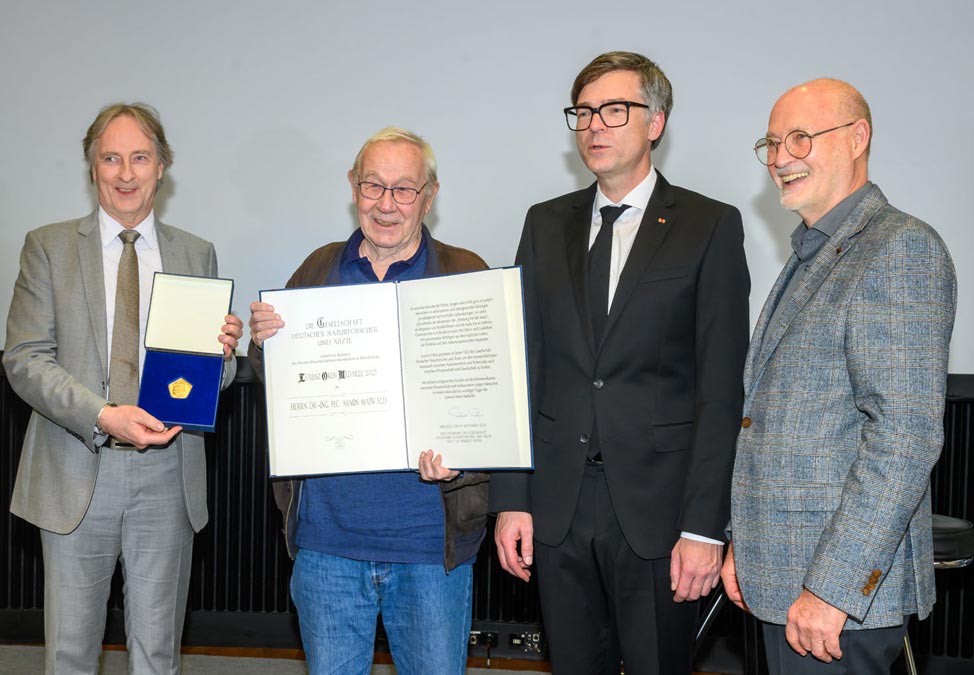
    I am impressed by the dynamism and efficiency with which the GDNÄ tackles and realises new projects. And I am convinced that we can reach the media and the public even better. This was noticeable at the recent award ceremony for the Lorenz Oken Medal to Armin Maiwald, which was attended by almost two hundred science communicators. What inspires me is the great interest shown by our members in their commitment to society and science. This is a treasure that we should all work together to realise.

    AleutBio-Team © 2022, Thomas Walter, Expedition SO293 AleutBio

    © David Ausserhofer / Wissenschaft im Dialog

    GDNÄ President Hofer (left) at the ceremony to award the Lorenz Oken Medal to Armin Maiwald (2nd from left), a pioneer of the “Sendung mit der Maus” program. Right half of the picture: Laudator Ralph Caspers and GDNÄ Secretary General Professor Michael Dröscher.

    Mit Medaille und Urkunde in der Bielefelder Stadthalle © David Ausserhofer

    © Heribert Hofer © MIKA-fotografie | Berlin

    Professor Heribert Hofer, GDNÄ President (2023-2024) and Director of the Leibniz Institute for Zoo and Wildlife Research in Berlin.

    Request from the President

    Dear GDNÄ members, please let us know your e-mail address so that we can network with each other more easily. The best way to do this is to send an email to the office at info@gdnae.de.

    Program leaflet

    About the person

    Professor Heribert Hofer, Director of the Leibniz Institute for Zoo and Wildlife Research (IZW) in Berlin, was elected President by the General Assembly for the two years 2023 and 2024 and is therefore responsible for the scientific organisation of the 133rd Assembly in Potsdam in 2024.

    The renowned zoologist (63) has headed the Leibniz-IZW in Berlin-Friedrichsfelde since 2000 and since then has also been Professor of Interdisciplinary Wildlife Research at the Free University of Berlin. Prior to his time in Berlin, he conducted research at the Max Planck Institute of Behavioural Physiology in Seewiesen, Bavaria, from 1986 to 1999, initially as a postdoctoral researcher and later as an independent scientist. In 1997, he completed his habilitation at the Ludwig Maximilian University of Munich with a thesis on the behaviour of spotted hyenas in the Serengeti savannah. Heribert Hofer began his studies in zoology at Saarland University and graduated with a DPhil from Oxford University.

    The internationally renowned scientist has been closely associated with the GDNÄ for many years. He has been involved in a variety of ways: as an elected subject representative and group chairman for the subject of biology, with speeches at meetings, as Vice President in the preparation of the 200th anniversary celebrations in Leipzig – and since the beginning of 2023 as President of the GDNÄ.

    Further information:

    Honour for Eva-Maria Neher

    Honour for Eva-Maria Neher

    The biochemist and former president of the GDNÄ received the University Medal for her services to the University of Göttingen 

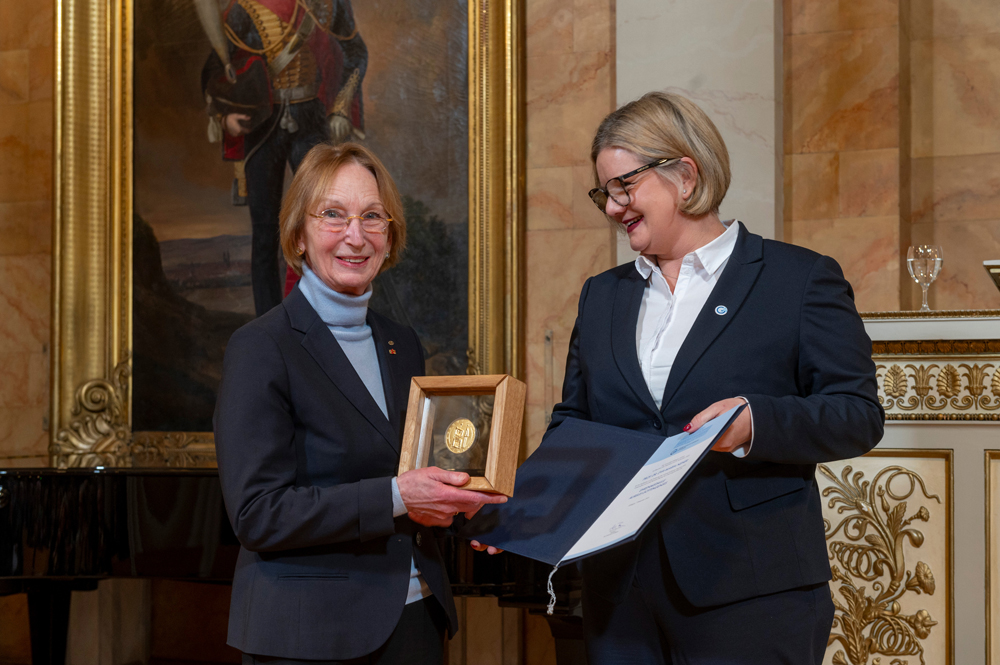
    Professor Eva-Maria Neher, founder and long-standing director of the XLAB – Göttingen Experimental Laboratory for Young People, was honoured for her special commitment at the University of Göttingen’s 2023 Academic Year Celebration.  She received the University Medal Aureus Gottingensis for her services to the promotion of young scientists and equal opportunities. The biochemist was President of the GDNÄ in 2015 and 2016. 

    In her laudatory speech, University Vice President Dr Valérie Schüller particularly highlighted the founding of the XLAB in 2000. With its “hands-on science” concept, the experimental laboratory had inspired numerous young people, young adults and teachers in Göttingen to take an interest in science. “Even 23 years later, we are still convinced of this concept and are proud that the XLAB has now become a permanent fixture within our university structure,” said Schüller. 

    Eva-Maria Neher headed the XLAB until 2018 and has since been Chairwoman of the XLAB Foundation for the Promotion of Natural Sciences, which she founded. The XLAB Science Festival, which has been held in Göttingen since 2004, is also based on her initiative.

    Bei der Akademischen Jahresfeier in der Aula der Universität Göttingen: Professorin Eva-Maria Neher mit Universitätsvizepräsidentin Dr. Valérie Schüller (rechts). © Universität Göttingen/Peter Heller

    © Universität Göttingen/Peter Heller

    At the Annual Academic Celebration in the Göttingen University auditorium: Professor Eva-Maria Neher with University Vice President Dr Valérie Schüller (right).

    The meeting centre and guest house, for which Eva-Maria Neher has been campaigning for years, is now also taking shape. The ensemble with communal areas and offices as well as two residential towers is intended to make it easier for young people from different countries to get to know each other and make contacts. The topping-out ceremony was held on 24 November 2023 and the opening is planned for the end of 2024. Valérie Schüller: “The guest house will be further proof that Göttingen is not only a place of science, but also one that stands for a welcoming culture, hospitality and internationality.”

    Eva-Maria Neher is a “determined project leader and manager who leads things to success with great ambition and tight organisation”, said the laudator. The honouree has shaped, held together and promoted many important things in and for Göttingen. This makes her one of the personalities whom the University would like to thank with the Aureus Gottingensis medal.

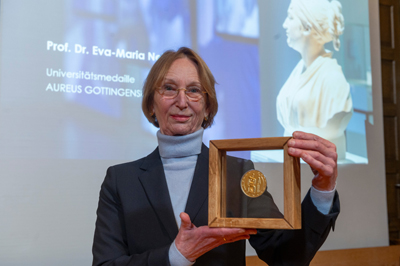
    Professorin Eva-Maria Neher mit der Universitätsmedaille Aureus Gottingensis. © Universität Göttingen/Peter Heller

    © Universität Göttingen/Peter Heller

    Professor Eva-Maria Neher with the University Medal Aureus Gottingensis

    About the person

    As GDNÄ President in 2015 and 2016, Professor Eva-Maria Neher organised the conference in Greifswald on the topic of “Natural Sciences and Medicine”. She gave decisive impetus to the GDNÄ’s student programme and is still involved in the committees of the Society of Natural Scientists today. The biochemist from Mülheim an der Ruhr became internationally recognised as the founder of the XLAB, the Göttingen experimental laboratory for young people.

    From 1969 to 1973, Neher studied biochemistry, organic chemistry and microbiology at the Georg August University in Göttingen. She graduated in 1974 and obtained her doctorate in 1977, after which she worked as a research assistant at renowned research institutes in Göttingen.

    Following a family break, the mother of five led experimental courses in chemistry and biology at the Freie Waldorfschule Göttingen in the 1990s and developed the first concepts for the XLAB. In 2009, she became an honorary professor at the Faculty of Chemistry at the University of Göttingen.

    Eva-Maria Neher has received numerous honours for her commitment to science and society, including the Lower Saxony Order of Merit, the Lower Saxony State Prize and the Cross of Merit 1st Class of the Federal Republic of Germany.

    Weitere Informationen: