• DE
  • EN
  • Lorenz Oken Medal for Jacob Beautemps

    Lorenz-Oken-Medaille für Jacob Beautemps

    On 3 December 2025, the Lorenz Oken Medal was awarded to science YouTuber Dr Jacob Beautemps at the Science Communication Forum in Stuttgart.

    The festive award ceremony was moderated by Professor Michael Dröscher, Secretary General and Treasurer of the GDNÄ. Its Vice President, Professor Heribert Hofer, gave the introduction and presented the medal. 

    This was followed by a laudatory speech given by two representatives of the young target audience, both members of the GDNÄ’s Young Network. Kevin Yuan is in his first semester of medical school, while Eric Andresen has successfully completed his Abitur and plans to study physics. Heribert Hofer: ‘The two did this with great enthusiasm, with a fine sense of humour, very entertaining and yet very informative about the award winner and his activities.’ It was a brilliant performance that also visibly impressed the honouree.

    © Stefan Buchholz

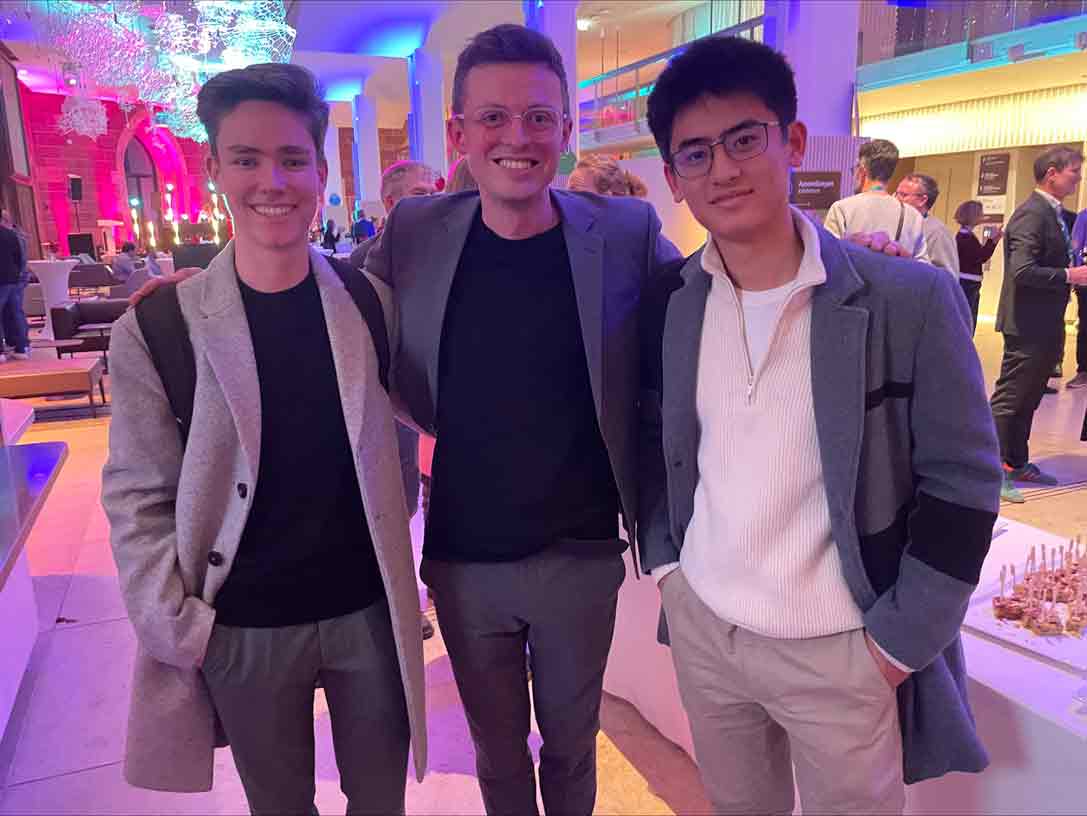
    After the award ceremony: Eric Andresen, Jacob Beautemps and Kevin Yuan (from left to right).

    In his keynote speech, Jacob Beautemps presented some rules for the use of social media. In addition to good visualisation and structure, it is important to focus on the questions of the target group, among other things. 

    ‘The audience was impressed by both the laudatory speech and the keynote address,’ reports Heribert Hofer. After Jacob Beautemps’ speech, there was a highly interesting discussion between the knowledgeable guests and the honouree.

    Lorenz-Oken-Medaille für Jacob Beautemps © Stefan Buchholz

    © Stefan Buchholz

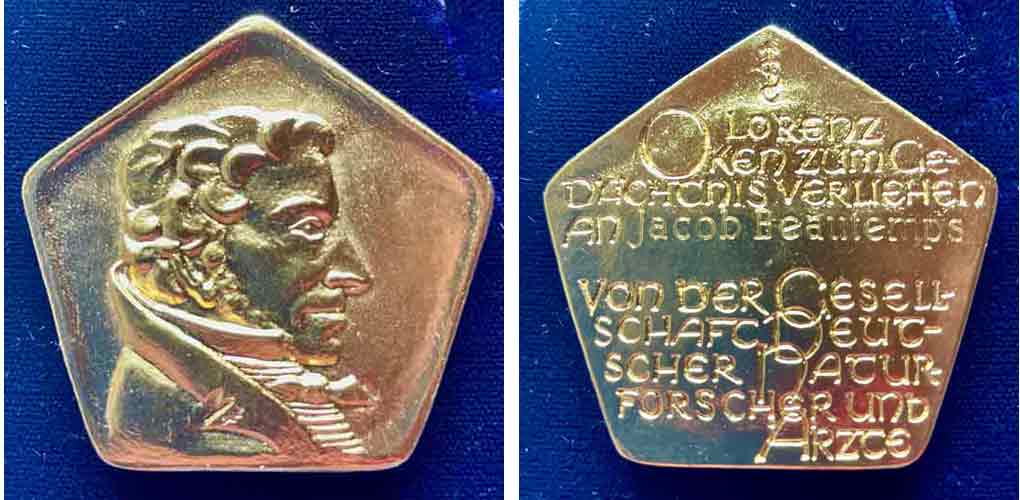
    The Lorenz Oken Medal 2025 for Jacob Beautemps.
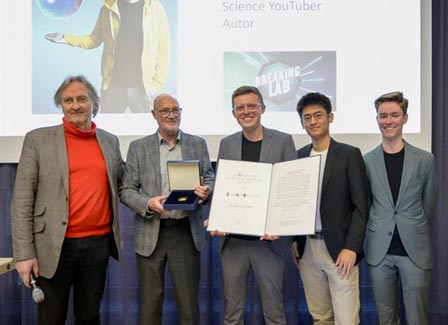
    Mit Urkunde: Die Professoren Heribert Hofer und Michael Dröscher (beide GDNÄ), Preisträger Dr. Jacob Beautemps und die Laudatoren Kevin Yuan und Eric Andresen.

    © Damian Gorczany/WiD

    With certificate: Professors Heribert Hofer and Michael Dröscher (both GDNÄ), award winner Dr Jacob Beautemps and laudators Kevin Yuan and Eric Andresen.

    About the person

    Jacob Beautemps was born in 1993 and grew up in Essen. After graduating from high school, he studied physics and social sciences at the University of Cologne. While studying, he worked part-time at Günter Jauch’s production company i&u TV. His YouTube channel Breaking Lab, founded in 2018, surpassed 500,000 subscribers in June 2022 and had nearly 720,000 subscribers at the end of 2025. In the summer of 2022, Jacob Beautemps received his own documentary format on ARD Mediathek with Science for Future.

    Beautemps regularly appears as a speaker and guest on television programmes. His book Rethinking Our Future, published in 2025, is a bestseller in Germany. In 2024, he received his doctorate from the Institute for Physics Education at the University of Cologne on the question of how adults learn with the help of YouTube videos. Beautemps has received numerous awards for his contributions, including the German Physical Society’s Medal for Science Journalism in 2024. On 3 December 2025, the Society of German Natural Scientists and Physicians honours him with the Lorenz Oken Medal for his excellent communication of scientific topics to a young audience.

    Further information:

    Jacob Beautemps: ‘It’s wonderful to inspire others’

    ‘It’s wonderful to inspire others’

    Jacob Beautemps, science YouTuber and GDNÄ award winner, on the rules of good communication and how he came to not become a teacher.

    Dr Beautemps, you are 32 years old, have already won several awards for your approach to science communication, and on 3 December you will also receive the Lorenz Oken Medal from the GDNÄ. What makes you so successful?
    I don’t know if I’m that successful. But at least I’ve been active on various media channels for eight years now, and so far I haven’t made any major mistakes. As a science YouTuber, I publish two new videos on scientific topics every week – always based on studies and other reputable sources, which I cite transparently, as in a scientific paper. My community likes that, and it has now grown to more than 700,000 people. I also make documentaries for television, such as the series Science for Future on SWR, and contributions to the children’s programme Tigerenten Club on ARD. At the beginning of the year, my first book, entitled Rethinking Our Future, was published. Well, everywhere I try to work as accurately as possible and be transparent with my sources.

    What is your favourite format?
    Definitely YouTube. The medium is uncomplicated, fast and flexible. I have complete freedom in designing the videos; no one interferes. That doesn’t mean I don’t like to learn new things – for example, from the television professionals I work with. I then use this new knowledge for my videos. For the past year, I have also been running an English-language channel for an international audience. Take a look at The German Science Guy.

    @ IdeenExpo

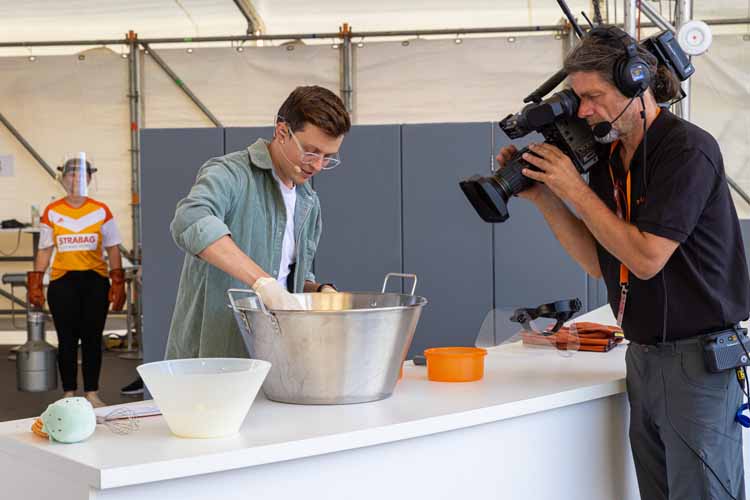
    On stage at IdeenExpo 2024 in Hanover, Jacob Beautemps demonstrates how to make ice using nitrogen. Held every two years since 2007, the event aims to inspire young people to take an interest in science and technology.

    How do you choose your topics?
    I’m particularly interested in topics that will be relevant in the future and topics that are widely discussed but which hardly anyone looks into in any depth. It’s always important to relate them to our lives. One example is the heat pump. There was a lot of debate about it and most people didn’t even know what the principle behind it was. So I did a deep dive that lasted almost 20 minutes, but really explained the principle. In the end, more than 1.2 million people watched the video. 

    Your spectrum ranges from the polio vaccine to noise makers in the jungle to electricity from rain. How do you manage to report competently on all these topics?
    Fortunately, I have a great team that helps me with research and implementation. There are currently five of us in the editorial team. Our goal is always to produce scientifically sound videos based on the latest research. 

    And if a mistake happens?
    That happens, and then it’s important to deal with it transparently. I address the mistake in one of the next videos and set the record straight. That builds trust. 

    How does the audience react to your posts?
    On YouTube, first with click numbers; currently, there are an average of 4.5 million views per month. I am fortunate that I hardly ever have to deal with hostility, and when I do, I don’t argue with people, but refer them to the sources, which I always cite. It’s nice when I can inspire others. I get comments like: Hey, you got me interested in renewable energies, and now I’m studying it. Or: I report on a start-up, visit it again later and meet people there who became aware of the company through me and now work there. 

    There are other successful science YouTubers in Germany. Is that unwelcome competition for you?
    On the contrary, we benefit from each other. For example, people who watch a video by Mai Thi often watch one of mine afterwards – and vice versa. We also have different areas of focus. I mostly deal with innovations, while other science YouTubers may focus more on nutrition or medicine. That’s the beauty of YouTube: you don’t have to fight for airtime like you do on TV, but instead promote each other.

    @ Beautemps

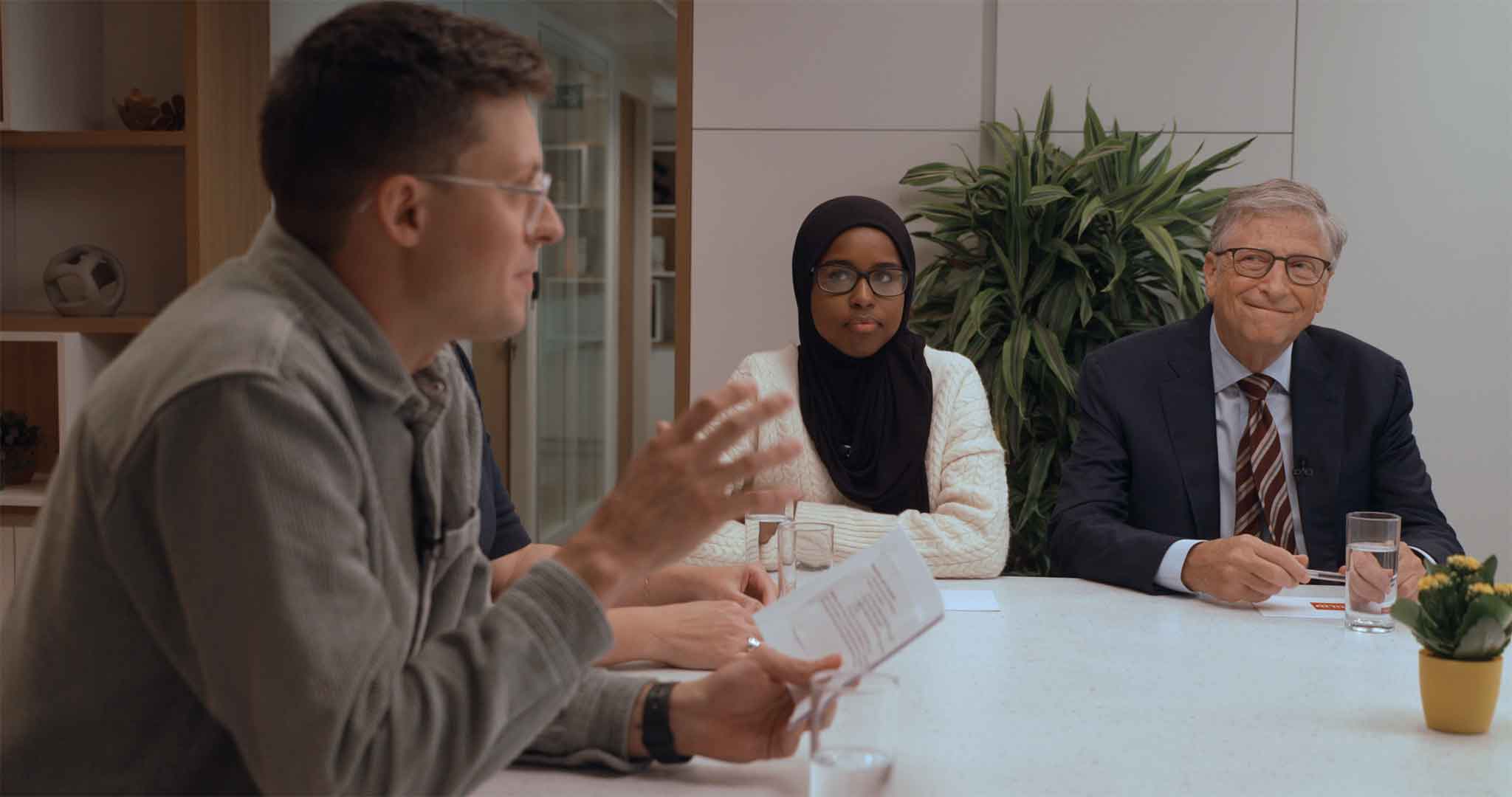
    Jacob Beautemps interviews Bill Gates and polio survivors. The conversation, which took place in 2023, focused on the international polio initiative, which Gates supports significantly.

    At the award ceremony in Stuttgart, you will give a speech and present some rules for successful knowledge transfer. What are they?
    I can give a few examples. We know from research how helpful it is to work with questions. This is not just about arousing curiosity with questions. Experiments have shown that specifically addressing misconceptions is very helpful in dispelling them. Without these questions, the same experiments showed that there is hardly any learning effect. Maximum transparency is another point. This includes introducing yourself and your expertise and explaining where the information you are presenting comes from. This creates trust, which is the be-all and end-all of good communication. Messages become particularly memorable when they are visualised and emotionalised. There are lots of tricks for doing this – I will give a few examples in Stuttgart. 

    How did you actually get into science communication?
    It was a complete coincidence. I actually wanted to become a teacher. While studying physics and social sciences, I worked part-time at Günther Jauch’s production company in Cologne, always behind the camera. When I was asked if I could set up a YouTube channel for the company, I did so, but again behind the camera. At some point, I was asked if I would like to get in front of the camera. At first I said no, not really, but in my mid-twenties I did it anyway. Then one thing led to another. 

    A doctorate is not essential for your profession. Nevertheless, you decided to do it. Why?
    Out of pure curiosity. I was interested in the question of why and how people use educational videos and what makes such videos successful. I conducted a study with around five thousand adults from Germany who frequently watch science videos and came to some interesting conclusions. For example: an important reason for the audience to engage with a topic is the person in front of the camera. This creates a parasocial relationship, the feeling of knowing the other person, even if you have never met them in person. You spend time together, and over time, trust develops. From my findings, I have derived a guide with 17 rules for the best possible production of educational videos. In principle, however, the study can be useful to anyone who wants to communicate competently. The same rules apply when I give a presentation, teach a course or want to explain something that is not entirely trivial. 

    What are your plans for the future?
    I have many plans, but one project is particularly close to my heart: next year, I want to work with colleagues from the field of science communication to launch an award for innovations made in Germany. Germany is a highly innovative country, and we want to show that to a large audience. At the moment, many people here are too pessimistic. There will be awards in various categories, for example for innovations in the fields of medicine, energy and mobility. The Federal Agency for Breakthrough Innovations will help us to identify the most convincing projects from what we hope will be a large number of applications. We will then present them in videos and let our communities vote on the winners. We are currently looking for partners and asking companies and scientific institutions for their support.

    Saarbrücken 2018 © Robertus Koppies

    © Boris Breuer

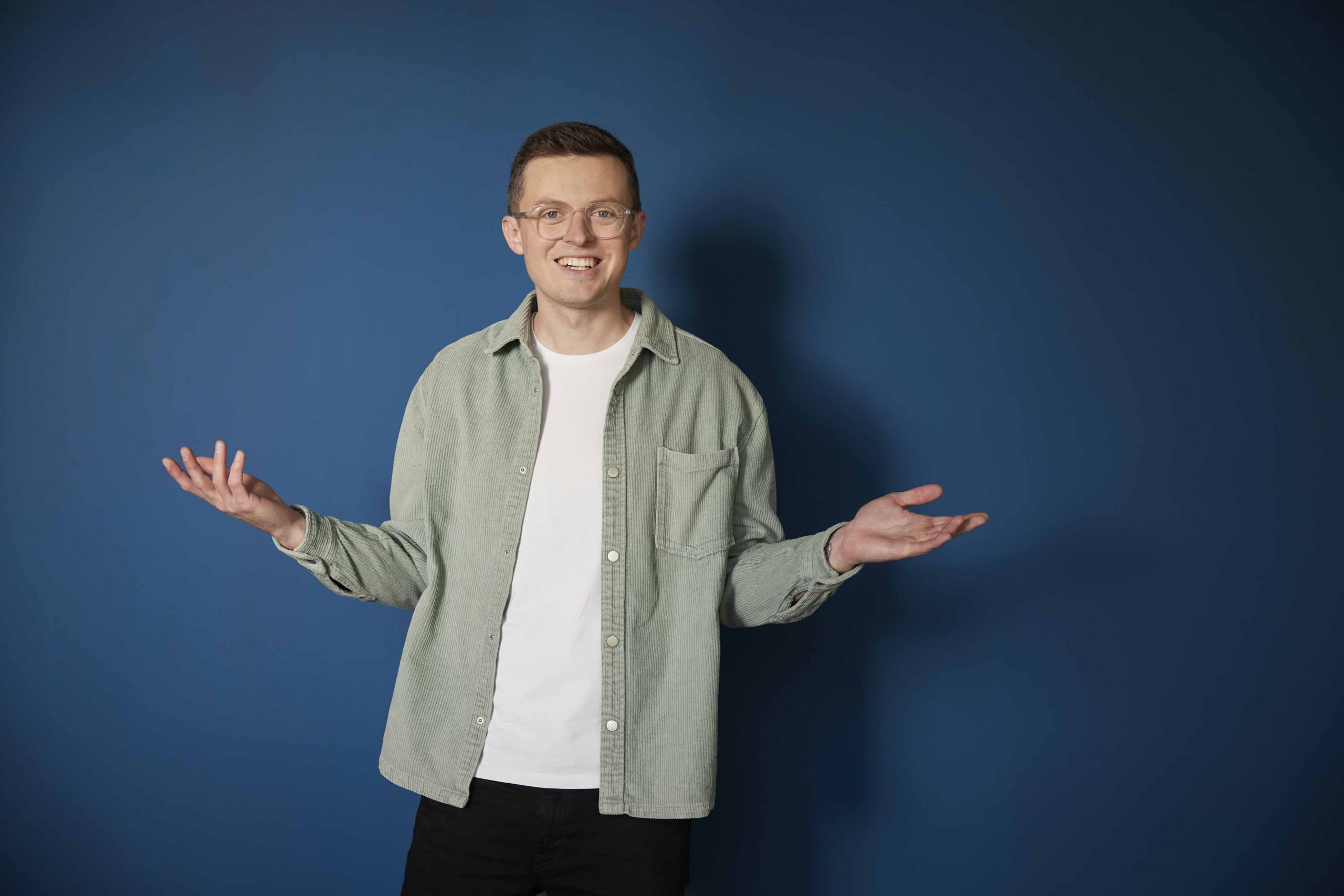
    Dr. Jacob Beautemps

    About the person

    Jacob Beautemps was born in 1993 and grew up in Essen. After graduating from high school, he studied physics and social sciences at the University of Cologne. While studying, he worked part-time at Günter Jauch’s production company i&u TV. His YouTube channel Breaking Lab, founded in 2018, surpassed 500,000 subscribers in June 2022 and had nearly 720,000 subscribers at the end of 2025. In the summer of 2022, Jacob Beautemps received his own documentary format on ARD Mediathek with Science for Future.

    Beautemps regularly appears as a speaker and guest on television programmes. His book Rethinking Our Future, published in 2025, is a bestseller in Germany. In 2024, he received his doctorate from the Institute for Physics Education at the University of Cologne on the question of how adults learn with the help of YouTube videos. Beautemps has received numerous awards for his contributions, including the German Physical Society’s Medal for Science Journalism in 2024. On 3 December 2025, the Society of German Natural Scientists and Physicians honours him with the Lorenz Oken Medal for his excellent communication of scientific topics to a young audience.

    Saarbrücken 2018 © Robertus Koppies

    @ IdeenExpo

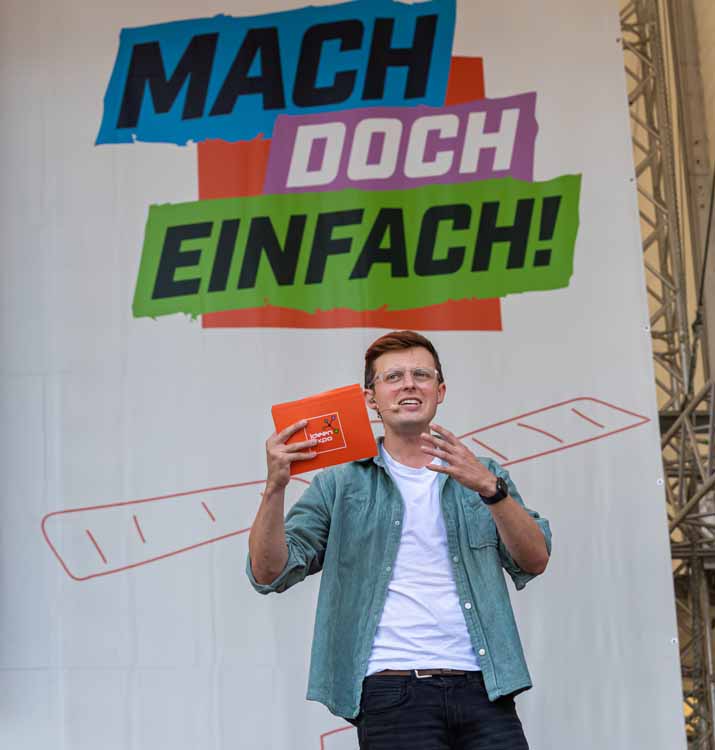
    Presenter Jacob Beautemps at the ‘Wissen live’ show at IdeenExpo 2024.
    Further information:

    Michal Kucera: “Welcome to a proud city of science”

    “Welcome to a proud city of science”

    Professor Michal Kucera, Vice President for Research and Transfer at the University of Bremen, talks about his involvement in the GDNÄ Conference 2026 and science in a city where everything is within easy reach.

    Professor Kucera, you have taken on the role of Scientific Director for the GDNÄ Conference 2026 in Bremen. What attracted you to this role?
    I am familiar with the GDNÄ from my time at the University of Tübingen. I still remember well the meeting organized by Christiane Nüsslein-Volhard, Nobel Prize winner in Medicine and then president of the GDNÄ. With its interdisciplinary lectures and student program, the conference was a model of modern science communication for me. All of this fits in very well with the science city of Bremen, where I have been working for thirteen years. So I was happy to accept when the current president of the GDNÄ asked me to take on the task. 

    How can we imagine your work as scientific director?
    I prepare the stage for the GDNÄ on site and support it with my contacts in Bremen’s science, education, and cultural scene. This involves recruiting speakers, finding good venues for the accompanying program, and establishing contacts with schools and the city administration. I am happy to invest the time and energy required for this. For us, the GDNÄ meeting is a welcome opportunity to demonstrate the strengths of Bremen as a center of science.

      © DHI Bremen

    Professor Michal Kucera presents his university’s AI research at a conference in the Bremen exhibition hall. Next door, in the Congress Centre, the 134th meeting of the GDNÄ will take place.

    What are these strengths?
    In 2005, the Stifterverband named Bremen the first German “City of Science.” This is testament to the rapid development that universities, institutes, and the entire scientific community in Bremen and Bremerhaven have undergone over the past 50 years. I myself have always been impressed by the high density of scientific institutions located around our campus in the technology park, which are closely networked with each other. The university is at the center, surrounded by high-tech companies and non-university institutes. Distances are short, and the cafeteria is often a common meeting place – which promotes cooperation. With our focus on marine research, artificial intelligence, and robotics, but also on the social sciences, we can compete internationally. In addition, Bremen is a great city that has a lot to offer. People here are proud to live in a city of science and enjoy attending lectures, exhibitions, and discussion events. The people of Bremen are aware of the importance and benefits of science for society.

    This fits in with the motto of the 2026 meeting: Knowledge creates benefits – use science.
    Yes, also with regard to the application of research, Bremen is a very suitable venue for the GDNÄ.

    As Vice President for Research and Transfer at the University of Bremen, you are responsible for the application of research. How do you proceed?
    It is important to me to support our researchers in their commitment to transfer and to clearly communicate our appreciation for them. I try to understand what promotes transfer and what hinders it. To this end, I hold many discussions and try to involve colleagues from across the entire spectrum of disciplines at the university. It is also important for us to maintain contact with local players in Bremen, from the cultural scene to business associations such as the Chamber of Commerce and the Industry Club. Close networking is the key to success for the location as a whole.

    You have been in office for three years. What has happened in terms of transfer?
    We have achieved a lot. One example is the Digital Hub INDUSTRY, where we work with small and medium-sized companies in the region to develop tailor-made digital solutions for the industry of tomorrow. Another example is the transfer center for sustainable materials, matena innovate! center, which was founded in December 2024. We were able to prevail in fierce competition and win the Hamburg-based Joachim Herz Foundation for the promotion of our location. Here, research teams from the university and our partner institutes develop new approaches from research to application maturity. The focus is on topics such as stationary energy storage for renewable energies, sustainable feed for aquaculture, and sensor materials for the hydrogen economy. We are benefiting from a change in the overall climate when it comes to transfer: its importance is increasingly recognized by society, and its image has improved significantly in recent years.

    © Volker Diekamp, Universität Bremen

    Expedition MSM 111 in Baffin Bay: In the conference room of the research vessel Maria S. Merian, scientists discuss the initial results of a deep-sea drilling project. Together, they attempt to understand the stratification of the ocean floor. “As it later turned out, our initial interpretations were completely wrong,” says Michal Kucera (center), who was the expedition leader at the time.

    You are Czech, studied in Prague, earned your doctorate in Sweden, and your scientific career has taken you to the US, the UK, and several universities in Germany. How do you assess the German scientific scene in international comparison?
    The freedom of research at German universities is fantastic. They do not have to finance themselves through tuition fees and are therefore less commercially oriented than universities in Anglo-Saxon countries. Teaching is more important there than in Germany, there are many tutorials for students, and the curriculum is more flexible than in Germany. While in Germany it is often a matter of complying with rules, for example with regard to teaching obligations, in the UK teaching is distributed flexibly among the teaching staff according to need. On the other hand, Germany’s great advantages are its excellent research funding and its globally unique research infrastructure. These make the country a major scientific power. I, for example, benefit greatly from access to excellent marine science equipment and state-of-the-art research vessels. 

    Do you still have time for your own research?
    Yes, but unfortunately not as much as I used to. That’s why I’m not starting any new large-scale projects at the moment, but am concentrating on evaluating the results of past expeditions. For example, there are samples from a deep-sea drilling expedition that I led in Baffin Bay in 2022. We expect to gain new insights into the melting behavior of the Greenland ice cap in the past, which is important for our future in a warmer global climate. During this expedition, we also collected sediment cores in southern Greenland that contain valuable information about the climate over the last ten thousand years. They will help us understand why the Vikings left their settlements in Greenland in the 15th century after living there for four hundred years. Incidentally, the MSM 111 expedition with the research vessel Maria S. Merian took place as part of the University of Bremen’s Cluster of Excellence “The Ocean Floor – Earth’s Unexplored Interface,” the continuation of which was recently approved.  

    Let’s take another look at the GDNÄ conference in 2026: What can participants look forward to?
    Fascinating lectures on current topics in the natural sciences and a great accompanying program. For example, a reception is planned at the Bremen Overseas Museum. The museum, with its collection of natural history, ethnology, and trade that is unique in Europe, will celebrate its 130th anniversary in 2026. Another highlight is a visit to Universum Bremen. The popular science center is located directly on the university campus and invites us to participate and experiment during an exclusive guided tour.

    Saarbrücken 2018 © Robertus Koppies

    © Jan Rathke / Universität Bremen

    Prof. Dr. Michal Kucera, Vice President of the University of Bremen and Managing Director of Science for the GDNÄ Conference 2026 in Bremen.

    About the person

    Michal Kucera studied geology in Prague and received his doctorate from the University of Gothenburg in Sweden. This was followed by stays in Santa Barbara, California, London, and Tübingen, before he moved to Bremen in 2012 to join the Department of Geosciences and MARUM – Center for Marine Environmental Sciences at the University of Bremen as Professor of Micropaleontology / Paleoceanography. In his research, Michal Kucera investigates the influence of climate change in the older and more recent past on the marine environment and its inhabitants. In addition to his role on the board of the Cluster of Excellence “The Ocean Floor – Earth’s Unexplored Interface,” he was spokesperson for the German-Canadian Research Training Group ArcTrain and a member of the Senate Commission for Earth System Research of the German Research Foundation.

    Since September 2022, he has been Vice President for Research and Transfer at the University of Bremen. In 2025, he was elected president of the Wittheit zu Bremen, a traditional scientific society of the Free Hanseatic City of Bremen. And since 2024, Michal Kucera has been a member of the GDNÄ and managing director of science for the 134th meeting of the Natural Scientists’ Society in Bremen in 2026.

    Saarbrücken 2018 © Robertus Koppies

    @ Raphael Morard

    During the MSM 111 expedition, Michal Kucera and a colleague monitor the extraction of a sediment core on the working deck of the research vessel.
    Further reading

    Stefan Buchholz: ‘We must not miss out on this development’

    ‘We must not miss out on this development’

    Stefan Buchholz, member of the GDNÄ Executive Board and its designated Secretary General, talks about his career in the chemical industry, artificial intelligence and plans for the future.

    Professor Buchholz, you have been a member of the GDNÄ for a long time. How long exactly?
    Actually, for more than a quarter of a century. I was brought in by Professor Heribert Offermanns, a gifted chemist and member of the Degussa Executive Board. I worked for him for several years as an executive assistant, writing speeches for him, for example. Mr Offermanns was my mentor – he convinced me of the qualities of the GDNÄ.

    What particularly appealed to you?
    The wide range of topics and the interdisciplinary approach to the natural sciences. Even as a child, I was interested in nature in all its diversity and fascinated by the infinity of the universe. When it came to choosing a degree course, I found it difficult to decide between chemistry, biology and physics. In the end, I chose chemistry, which in retrospect was the right choice for me.

     In what way?
    Because chemistry has many links to other disciplines. The most exciting time in my professional career was the years I spent in biotechnology, where I was able to work with biologists, physicists and engineers, among others. These were wonderful interdisciplinary teams that achieved great results. I am thinking, for example, of fermentatively produced amino acids that replace amino acids obtained from animal material. During the BSE crisis, this was an important and profitable innovation for the company.

     © Evonik

    Chemical engineer Kai Boldt enters process control data into a large fermenter at the Biotechnology Project House.

    You started at what was then Degussa and remained loyal to the company and its successor companies, now Evonik, until your retirement. Were you not tempted by an academic career?
    Yes, basically, that was my original goal, but based on my assessment during my studies, I felt that chemistry had been relatively well researched and the basic molecules were already known. Of course, you can still produce an infinite number of new molecules, but that wasn’t my path. I was more interested in innovation, in using knowledge for new processes and products. I also found the practical transfer of research results into large-scale production exciting. It’s difficult, but it succeeds time and again. One example is the very skin-friendly, nature-identical and biodegradable biosurfactants that one of my project teams developed over the last decade: today, they are used in dishwashing detergents and skin care products, for example. As a biotech manager who worked exclusively with biologists and engineers for several years, I felt very much at home in the chemical industry. 

    The German chemical industry is not doing well at the moment. Is there a lack of innovation?
    Yes, but not only in terms of new chemical products. We already have a lot of good products. The chemical industry is a mature industry that is undergoing a gigantic transformation. Energy and raw materials are expensive, cheap competition and weak demand are squeezing margins. Consolidation is inevitable; the chemical industry will shrink. At the same time, it is urgently needed, not least to combat climate change and better protect the environment. However, radically new approaches are required. I see opportunities in the combination of chemistry and artificial intelligence, which will give the field a major boost. And we must not miss out on this development.

     © Evonik

    In the biotechnology project house, project manager Dr Stefan Verseck takes a sample from a steel container.

    That sounds like a good topic for the next GDNÄ meeting in Bremen in 2026.
    Yes, a contribution on this topic is indeed planned. Lectures on industrial biotechnology and the electrocatalytic production of green hydrogen are also planned. The Nobel Lecture will be given by Benjamin List from the Max Planck Institute for Coal Research in Mülheim. He will report on his research into organocatalysis, for which he received the Nobel Prize in Chemistry in 2021. 

    In the GDNÄ, you are not only group chairman for chemistry, but also designated secretary general. At the beginning of 2027, you will take over the honorary position from Michael Dröscher. What motivates you?
    The GDNÄ suits me and my interest in fundamental and interdisciplinary issues. That is what the GDNÄ has stood for for two hundred years. I find that impressive and important, and I am happy to contribute to its future development. 

    Do you already have any ideas?
    In my studies at the University of the Third Age at Goethe University Frankfurt, I am currently focusing intensively on natural philosophy. This also involves our ability to understand nature and its limits. We are learning a great deal about scientific theories and the history of science and are engaged in lively discussions on these topics. I could also imagine such a range of topics being offered at the GDNÄ. The great popularity of my course shows that there is interest in such fundamental questions.

    Saarbrücken 2018 © Robertus Koppies

    © Privat

    Prof. Dr. Stefan Buchholz, chemist, designated Secretary General of the GDNÄ.

    About the person

    Professor Stefan Buchholz studied chemistry in Marburg and completed his doctorate at the Max Planck Institute for Polymer Research in Mainz with a thesis on monomolecular layers. Buchholz then went on to do postdoctoral research at Harvard University in Boston. He has been an honorary professor at the University of Stuttgart since 2011. The 63-year-old began his professional career at Degussa in 1993 in the industrial and fine chemicals division in Frankfurt. From 1995 to 1998, he headed the company’s research planning and coordination and was assistant to the board of directors. From 1998 to 2000, the chemist worked as an operations assistant at the Degussa site in Antwerp. In 2000, he took over as head of the Biotechnology Project House, a research group focusing on biocatalysis. Stefan Buchholz then spent four years as head of Innovation Management C4 Chemistry, among other roles, before taking over as head of the strategic research and development unit Creavis in 2012 and later the Nutrition and Care division. In 2023, he took early retirement. Professor Buchholz has received numerous awards, most recently the Degussa Innovation Prize for the development of new fermentation processes in pharmaceutical production. He has been and continues to be a member of numerous committees and professional associations, has published extensively and holds more than twenty patents.

    Ferdi Schüth is the new Vice-President of the Leopoldina

    Ferdi Schüth is the new Vice-President of the Leopoldina

    Award for the chemist, catalysis researcher and future President of the GDNÄ

    At the annual meeting of the National Academy of Sciences Leopoldina in Halle, Professor Ferdi Schüth was newly elected to the Academy’s Presidium. The chemist and catalysis researcher is Director at the Max Planck Institute for Coal Research in Mülheim. As the current Vice-President of the Society of German Natural Scientists and Physicians, he will take over the presidency of the GDNÄ in January 2027. The thematic focus of the Leopoldina Annual Meeting 2025 was artificial intelligence. 

    In addition to Ferdi Schüth, Professors Thomas Lengauer and immunobiologist Thomas Boehm were also elected Vice-Presidents at the Leopoldina Annual Meeting on 25 and 26 September. Mathematician and computer scientist Lengauer gave the Leopoldina Lecture at the GDNÄ Annual Meeting 2018 in Saarbrücken on the topic of statistical data analysis in the age of big data. 

    Ferdi Schüth’s research focuses on hydrogen storage, among other topics. He has developed innovative storage solutions and materials that enable the safe and efficient storage of hydrogen, thereby supporting the use of fuel cells and renewable energies. 

    The Leopoldina is managed by an Executive Board and a Presidium. The Presidium meets at least four times a year and prepares all important decisions of the Academy. The members of the Presidium are elected by the Senate and serve a five-year term. They may be re-elected once. The Executive Board consists of the President and the Vice-Presidents. They are elected for a term of five years. They may be re-elected once. 

    DLR_Anke_Kaysser-Pyzalla

    © Frank Vinken für MPI für Kohlenforschung

    Professor Dr. Ferdi Schüth
    Further reading: