• DE
  • EN
  • Konrad Zuse Medal for Wolfgang Wahlster

    Konrad Zuse Medal for Wolfgang Wahlster

    Former president of the GDNÄ honoured for outstanding contributions to AI research.

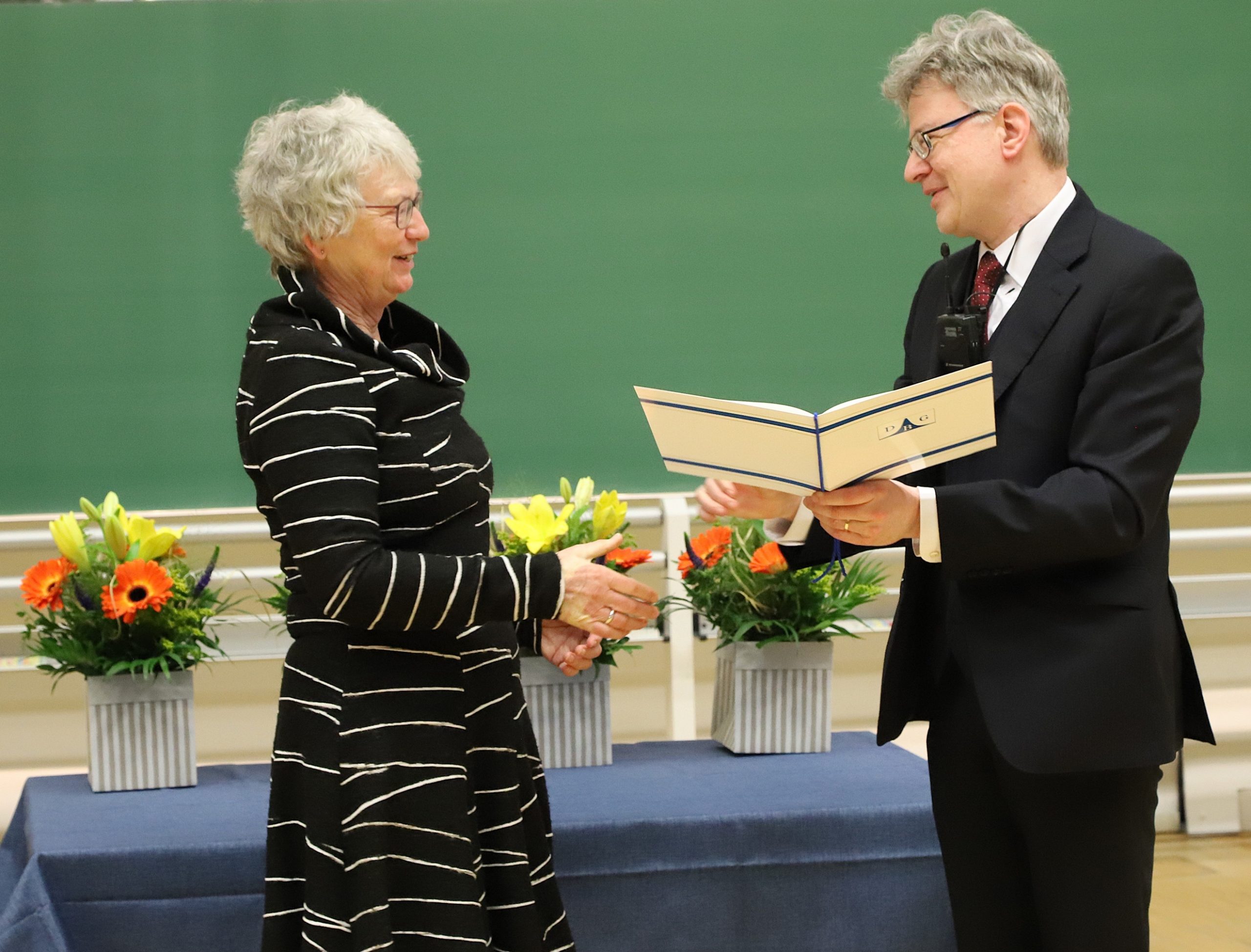
    The German Informatics Society (GI) awarded Professor Wolfgang Wahlster, former president of the Society of German Natural Scientists and Physicians (GDNÄ) and long-standing chairman of the management board of the German Research Centre for Artificial Intelligence (DFKI), the prestigious Konrad Zuse Medal for services to computer science. With this award, the GI honours the outstanding scientific achievements and extraordinary commitment of a researcher who has had a lasting impact on AI research in Germany and Europe. The award ceremony took place on 17 September 2025 in Potsdam.

    Wolfgang Wahlster’s scientific life’s work ranges from groundbreaking basic research to successful transfer into industrial practice. He gained international recognition for his pioneering work in the fields of speech dialogue systems, multimodal human-machine interaction and interpreting systems for spontaneous speech, among other things.

    Wolfgang Wahlster has shaped DFKI since its foundation and, during his time as Chairman of the Executive Board from 1997 to 2019, developed it into one of the world’s largest and most renowned AI research centres. Under his leadership, DFKI developed into a strong cooperation partner for industry. Wahlster initiated numerous flagship projects, promoted the transfer of research into commercial applications and represented Germany internationally as an AI thought leader. As chief advisor, he remains closely associated with DFKI.

    GI President Christine Regitz says: ‘Wolfgang Wahlster is not only an extraordinarily influential scientist, but also a very successful university lecturer and science manager who has had a significant impact on European AI research. In addition, he contributes his expertise to political and social debates and takes a clear stance on issues such as data ethics.’

    Wolfgang Wahlster says: “Receiving the GI’s highest award is also a great pleasure for me because it gives artificial intelligence – my field of research in computer science for 50 years now – the appropriate status and recognition it deserves. I had the privilege of having several lengthy technical discussions with Konrad Zuse, one of the fathers of the computer. I was also fortunate to be able to help shape the birth of AI in Germany, and published my first research results on speech dialogue systems, as they are widely known today through Chat-GPT, back in 1975. After phases of scepticism and some setbacks, it is a pleasure for me to now witness the greatest heyday of AI to date.”

    As president of the GDNÄ, Wolfgang Wahlster chaired the 130th meeting of the Society of Natural Scientists in Saarbrücken in 2018. After his time on the executive committee, he continued to support the GDNÄ as a member of the board of directors.

    Wolfgang Wahlster is active in numerous renowned scientific institutions. In addition to the GDNÄ, these include the Academy of Sciences and Literature in Mainz, the Royal Swedish Nobel Academy in Stockholm, the National Academy Leopoldina, the German Academy of Science and Engineering (acatech) and the Berlin-Brandenburg Academy of Sciences. As a doctoral supervisor, Professor Wahlster has supervised 77 dissertations; 22 of his former doctoral students are now professors themselves.

    Award for outstanding science communication

    Award for outstanding science communication

    The 2025 Lorenz Oken Medal goes to YouTuber and author Jacob Beautemps

    On 3 December 2025, the Society of German Natural Scientists and Physicians (GDNÄ) will award its Lorenz Oken Medal at the Science Communication Forum in Stuttgart. The award goes to YouTuber, presenter and author Jacob Beautemps for his outstanding contributions to science communication.

    With his channel ‘Breaking Lab’, Dr Jacob Beautemps is one of the most successful science YouTubers with more than 700,000 followers in Germany, according to the award citation. Beautemps also reaches a wide audience on linear television. In his book ‘Rethinking Our Future’, he shows how science can shape the future. ‘He communicates complex topics in an understandable and innovative way, thereby reaching young people in particular,’ says the selection committee.

    In his keynote speech ‘The Most Important Skill of the 21st Century’ in Stuttgart, Jacob Beautemps will explain why this skill is learning. Knowledge is the most valuable thing we possess, says the 32-year-old, and the transfer of knowledge is essential for our progress. However, communicating knowledge is often neglected in education. In his lecture, Beautemps will present six rules for successful knowledge transfer. According to Beautemps, those who take these rules to heart will be listened to by their audience and their message will be remembered.

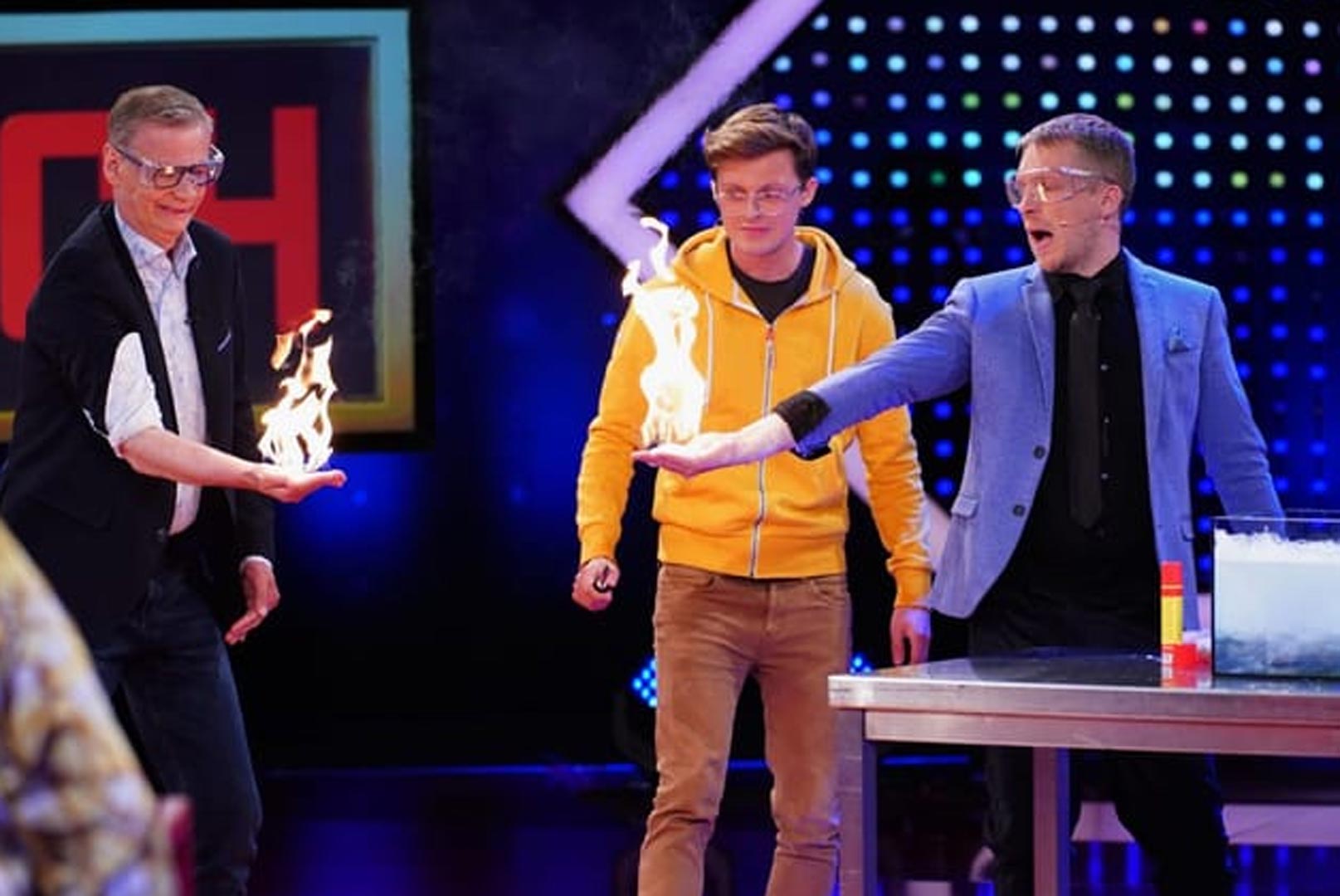
    © ‘5 gegen Jauch’ (RTL)

    Science communicator Jacob Beautemps in action: the designated recipient of the 2025 Lorenz Oken Medal reaches a wide audience, including many young people.

    The medal commemorates Lorenz Oken, who founded the GDNÄ in 1822 – also with the aim of promoting exchange between science and society. The award is presented every two years. Previous winners include presenter and director Armin Maiwald (‘Sendung mit der Maus’), television presenter and YouTuber Mai thi Nguyen-Kim, and television presenter Gert Scobel (‘scobel’).

    Science Communication Forum 2025

    The Science Communication Forum 2025 will focus on the topic of ‘Algorithms, platforms and AI: science communication in the digital transformation’. It will take place on 3 and 4 December at the Liederhalle Stuttgart. The Science Communication Forum is the largest specialist conference for science communication in the German-speaking world. It has been organised annually since 2008 by Wissenschaft im Dialog (WiD), the joint organisation of German science for science communication. The GDNÄ has been a member from the very beginning.

    DLR_Anke_Kaysser-Pyzalla

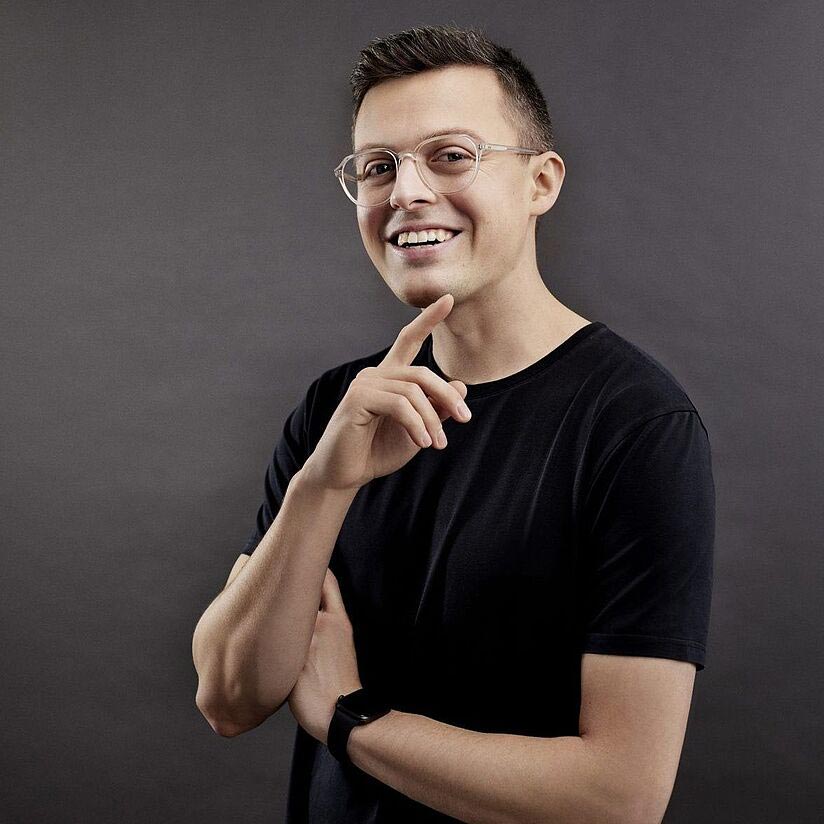
    © Boris Breuer

    Dr Jacob Beautemps, physics educator, science YouTuber, author, speaker and presenter.

    About the person

    Jacob Beautemps was born in Essen in 1993. After completing his Master of Education in Physics and Social Sciences, he received his doctorate in 2024 from the Institute for Physics Education at the University of Cologne on the question of how students learn with YouTube videos. Since 2018, the 32-year-old has been reaching a wide audience through his YouTube channel Breaking Lab, which he produces in collaboration with i&u TV. The focus is on scientific and technical topics. Jacob Beautemps also appears as a speaker and guest on television programmes. He already has received several awards, including the 2024 Prize for Science Journalism from the German Physical Society.

    Award ceremony

    The ceremonial presentation of the 2025 Lorenz Oken Medal is a fixed item on the programme of the 2025 Science Communication Forum. The event will take place from 4:15 to 5:45 p.m. in the Liederhalle Stuttgart and will be moderated by Professor Michael Dröscher, Secretary General and Treasurer of the GDNÄ. The welcome and award presentation will be given by GDNÄ Vice President Professor Heribert Hofer, and the laudatory speeches will be given by Kevin J. Yuan and Eric Andresen from the GDNÄ’s Young Network. Dr Jacob Beautemps will then address the audience with a keynote speech.

    Professor Wolfgang Wahlster awarded the Rudolf Diesel Medal 2025

    Professor Wolfgang Wahlster awarded the Rudolf Diesel Medal 2025

    The former president of the Society of German Natural Scientists and Physicians (GDNÄ), Professor Wolfgang Wahlster, has been awarded the prestigious Rudolf Diesel Medal 2025 in the category ‘Best Promotion of Innovation’. The award was presented on 10 July 2025 during a festive gala dinner in Augsburg. As long-standing scientific director of the German Research Centre for Artificial Intelligence, Wolfgang Wahlster now serves as its chief advisor.

    Europe’s oldest innovation award was presented by the spokesperson of the Rudolf Diesel Board of Trustees, Professor Alexander Wurzer, in the presence of around one hundred invited guests from science, business and politics. The Diesel Board of Trustees, which acts as the selection committee, consists of around sixty technology executives from world-leading, medium-sized technology companies. 

    With this year’s award, the German Institute for Inventions honours the life’s work of Professor Dr. Dr. h.c. mult. Wolfgang Wahlster, who has been a pioneer and bridge builder between AI research and industrial application for more than four decades. Wahlster was appointed to Germany’s first chair of artificial intelligence at Saarland University in 1982 at the age of just 29. His work on speech understanding, translation systems and dialogue technologies laid the foundation for today’s voice assistants and chatbots at an early stage. As a thought leader in Industry 4.0, he not only coined the term in 2010, but also designed central concepts for the fourth industrial revolution – with global impact. 

    In her laudatory speech, Dr Diana Taubert, Managing Director of ETL IP Patentanwaltsgesellschaft mbH, praised Wahlster’s extraordinary role in the German innovation landscape: ‘You are not only a pioneer of artificial intelligence – you are also an architect of innovation structures, a bridge builder between research and application, a facilitator in the best sense of the word.’ She emphasised that Prof. Wahlster has not only played a key role in shaping technological developments, but also ethical and normative standards – in ethics commissions, standardisation committees and public debates. 

    Since its introduction in 1953, the Rudolf Diesel Medal has been awarded to outstanding personalities from the IT world such as Konrad Zuse, Wolfgang Giloi, Andreas Grünberg, Hasso Plattner, Renate Pilz and August-Wilhelm Scheer. With Wolfgang Wahlster, one of the most influential personalities in European AI research joins this circle. 

    As President of the GDNÄ (2017-2018), Professor Wahlster organised the 130th meeting of the Society of Natural Scientists in Saarbrücken, entitled ‘Digitalisation of the Sciences’. He later served on the GDNÄ’s Executive Board for several years. 

    Saarbrücken 2018 © Robertus Koppies

    © Dominik Wagner, Eichmeister Kreativagentur GmbH

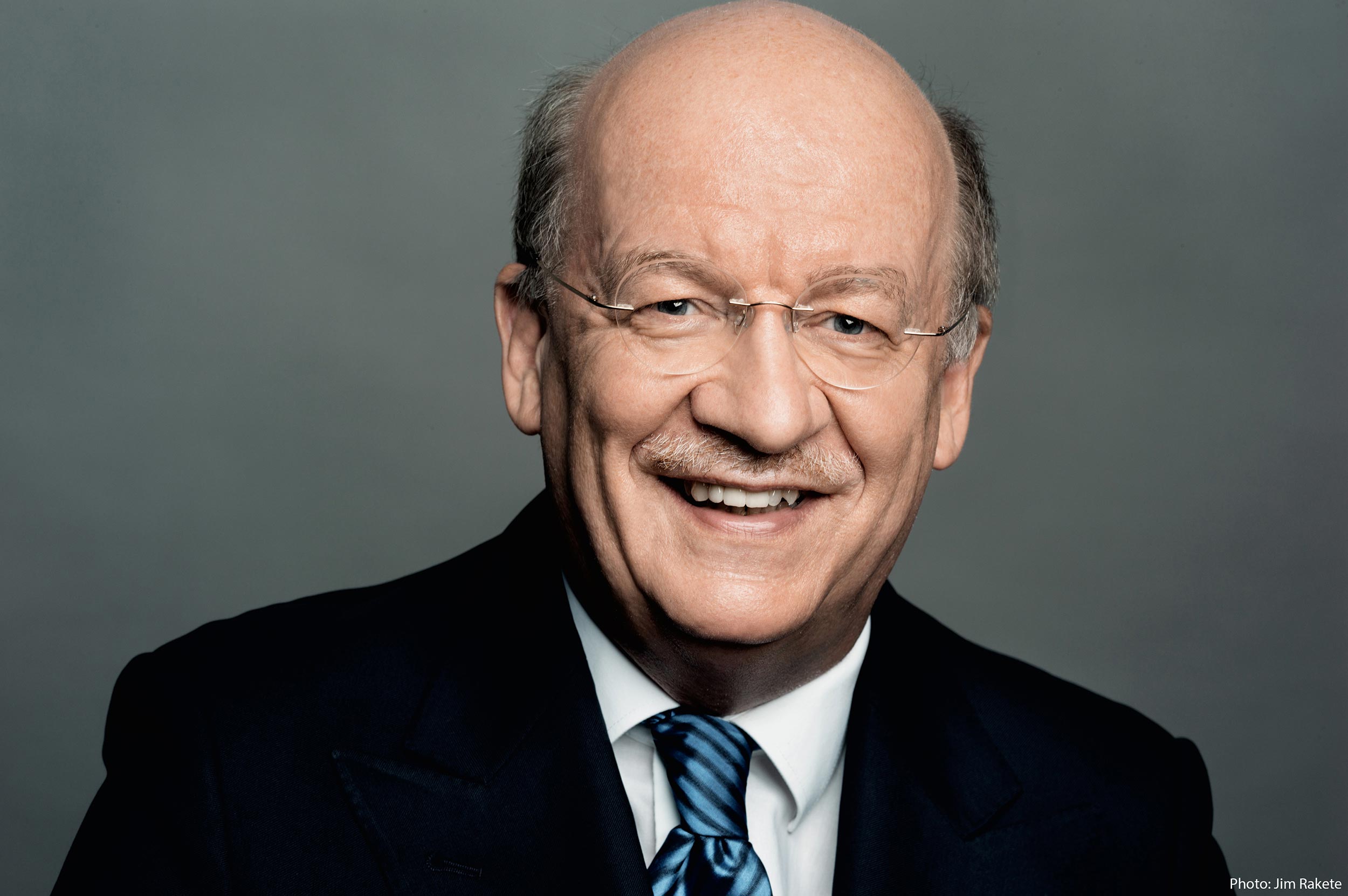
    Prof. Dr Dr h.c. mult. Wolfgang Wahlster, President of the GDNÄ in 2017 and 2018.

    High honors: “For services to chemistry in China”

    For services to chemistry in China

    Two members of the GDNÄ management team receive high honors

    The Chinese Chemical Society (CCS) has named two leading members of the GDNÄ as honorary members. GDNÄ Vice President Professor Ferdi Schüth and Professor Katharina Kohse-Höinghaus, a member of the GDNÄ Board of Directors, received the honor for their contributions to Chinese chemistry and to the exchange between the Chinese Chemical Society and international organizations, according to a CCS statement. 

    The CCS is the counterpart to the German Chemical Society. The scientific society was founded in Nanjing in 1932 and has around 120,000 personal and more than 180 institutional members. “Honorary Fellow of the Chinese Chemical Society” is the highest status awarded by the CCS to international scientists in the field of chemistry. The society’s website currently lists 103 honorary fellows worldwide, including eleven Germans. 

    Professor Katharina Kohse-Höinghaus has advanced combustion diagnostics using laser-induced fluorescence, cavity ring-down spectroscopy and emission spectroscopy, according to a CCS statement, which continues: “She has led groundbreaking research on the combustion of biofuels, uncovered mechanisms of combustion reactions and pollutant formation, and developed novel low-temperature combustion techniques.” She has, writes the CCS, established long-term partnerships with Chinese institutions, trained academic leaders in combustion research, and advised China on science and innovation policy. Furthermore, Katharina Kohse-Höinghaus is a foreign member of the Chinese Academy of Sciences. 

    Professor Dr. Ferdi Schüth has made significant contributions to the development of new catalytic materials, the conversion of biomass, and the production and storage of hydrogen, writes the CCS. He is doing pioneering work in mechanochemical approaches to catalyst production and is committed to more environmentally friendly, energy-efficient chemical technologies. Professor Schüth has actively promoted academic exchange with China. “His long-standing cooperation and frequent visits to Chinese universities and research institutes have enabled numerous joint projects and initiatives to develop talent,” writes the CCS.

    Saarbrücken 2018 © Robertus Koppies

    © Universität Bielefeld / Norma Langohr

    Prof. Dr. Katharina Kohse-Höinghaus.
    Saarbrücken 2018 © Robertus Koppies

    © Robert Eickelpoth

    Prof. Dr. Ferdi Schüth

    Zum Weiterlesen:

    Ferdi Schüth: Honorary award for GDNÄ Vice President

    Honorary award for GDNÄ Vice President

    Alwin Mittasch Prize 2025 goes to Ferdi Schüth

    Professor Ferdi Schüth, Director and Scientific Member at the Max Planck Institute for Coal Research in Mülheim an der Ruhr, is to receive the Alwin Mittasch Prize 2025 for his outstanding work in catalysis research. The German Catalysis Society (GeCatS) is honouring his work as a creative initiator and driving force behind new catalysis concepts, as well as a pioneer in transfer of new findings in catalysis research into commercial applications. Ferdi Schüth is currently vice president of the GDNÄ; in 2027 he will take over the presidency.

    The Alwin Mittasch Prize is awarded for outstanding research work that has led to a deeper understanding or an expansion of the fundamentals of catalysis and its industrial application. The prize, endowed with 10,000 euros, is supported by BASF. The award ceremony will take place on 13 March 2025 during the Annual Meeting of German Catalysis Scientists in Weimar. 

    Ferdi Schüth is an internationally outstanding chemist working in the field of heterogeneous catalysis, in particular in the field of catalysis materials. His work laid the foundation for many groundbreaking discoveries, such as nanostructured catalysts with controlled porosity and targeted placement of functional units for various applications. In the field of mechanocatalysis of gas-phase reactions, Ferdi Schüth was able to synthesise ammonia at room temperature and atmospheric pressure. He was also one of the pioneers of high-throughput experimentation (HTE) using modern methods, which led to the founding of hte GmbH in 1999. In a sense, this was a continuation of the research of Alwin Mittasch, who used “manual” high-throughput approaches to conduct thousands of experiments with various solids. 

    Paul Alwin Mittasch (1869-1953) was a German chemist and historian of science of Sorbian origin. He gained great recognition for his pioneering and systematic research into the development of catalysts for ammonia synthesis using the Haber-Bosch process. The prize named after him has been awarded since 1990. 

    The German Catalysis Society (GeCatS) is the platform for the entire German catalysis community in the field of research and application. It has around a thousand members from industry and academic institutions. GeCatS promotes the exchange between industry, universities, research institutions and research policy organisations and represents the interests of the catalysis community at national and international level.

    Professorin Eva-Maria Neher © Universität Göttingen/Peter Heller

    © Frank Vinken für MPI für Kohlenforschung

    Professor Dr. Ferdi Schüth

    About the person

    Ferdi Schüth studied chemistry and law in Münster and earned his doctorate in chemistry. He was a postdoc at the Department of Chemical Engineering at the University of Minneapolis in the USA and completed his habilitation in inorganic chemistry in Mainz in 1995. In 1995 he was appointed to a chair in inorganic chemistry in Frankfurt and in 1998 was appointed Director and Scientific Member at the Max Planck Institute for Coal Research in Mülheim. Schüth has been an honorary professor at Ruhr University Bochum since 1999. He was Vice President of the Max Planck Society from 2014 to 2020.

    Further information

    Honour for Eva-Maria Neher

    Honour for Eva-Maria Neher

    The biochemist and former president of the GDNÄ received the University Medal for her services to the University of Göttingen 

    Professor Eva-Maria Neher, founder and long-standing director of the XLAB – Göttingen Experimental Laboratory for Young People, was honoured for her special commitment at the University of Göttingen’s 2023 Academic Year Celebration.  She received the University Medal Aureus Gottingensis for her services to the promotion of young scientists and equal opportunities. The biochemist was President of the GDNÄ in 2015 and 2016. 

    In her laudatory speech, University Vice President Dr Valérie Schüller particularly highlighted the founding of the XLAB in 2000. With its “hands-on science” concept, the experimental laboratory had inspired numerous young people, young adults and teachers in Göttingen to take an interest in science. “Even 23 years later, we are still convinced of this concept and are proud that the XLAB has now become a permanent fixture within our university structure,” said Schüller. 

    Eva-Maria Neher headed the XLAB until 2018 and has since been Chairwoman of the XLAB Foundation for the Promotion of Natural Sciences, which she founded. The XLAB Science Festival, which has been held in Göttingen since 2004, is also based on her initiative.

    Bei der Akademischen Jahresfeier in der Aula der Universität Göttingen: Professorin Eva-Maria Neher mit Universitätsvizepräsidentin Dr. Valérie Schüller (rechts). © Universität Göttingen/Peter Heller

    © Universität Göttingen/Peter Heller

    At the Annual Academic Celebration in the Göttingen University auditorium: Professor Eva-Maria Neher with University Vice President Dr Valérie Schüller (right).

    The meeting centre and guest house, for which Eva-Maria Neher has been campaigning for years, is now also taking shape. The ensemble with communal areas and offices as well as two residential towers is intended to make it easier for young people from different countries to get to know each other and make contacts. The topping-out ceremony was held on 24 November 2023 and the opening is planned for the end of 2024. Valérie Schüller: “The guest house will be further proof that Göttingen is not only a place of science, but also one that stands for a welcoming culture, hospitality and internationality.”

    Eva-Maria Neher is a “determined project leader and manager who leads things to success with great ambition and tight organisation”, said the laudator. The honouree has shaped, held together and promoted many important things in and for Göttingen. This makes her one of the personalities whom the University would like to thank with the Aureus Gottingensis medal.

    Professorin Eva-Maria Neher mit der Universitätsmedaille Aureus Gottingensis. © Universität Göttingen/Peter Heller

    © Universität Göttingen/Peter Heller

    Professor Eva-Maria Neher with the University Medal Aureus Gottingensis

    About the person

    As GDNÄ President in 2015 and 2016, Professor Eva-Maria Neher organised the conference in Greifswald on the topic of “Natural Sciences and Medicine”. She gave decisive impetus to the GDNÄ’s student programme and is still involved in the committees of the Society of Natural Scientists today. The biochemist from Mülheim an der Ruhr became internationally recognised as the founder of the XLAB, the Göttingen experimental laboratory for young people.

    From 1969 to 1973, Neher studied biochemistry, organic chemistry and microbiology at the Georg August University in Göttingen. She graduated in 1974 and obtained her doctorate in 1977, after which she worked as a research assistant at renowned research institutes in Göttingen.

    Following a family break, the mother of five led experimental courses in chemistry and biology at the Freie Waldorfschule Göttingen in the 1990s and developed the first concepts for the XLAB. In 2009, she became an honorary professor at the Faculty of Chemistry at the University of Göttingen.

    Eva-Maria Neher has received numerous honours for her commitment to science and society, including the Lower Saxony Order of Merit, the Lower Saxony State Prize and the Cross of Merit 1st Class of the Federal Republic of Germany.

    Weitere Informationen: