x xc

Obituary Professor Michael P. Manns

OBITUARY MICHAEL P. MANNS

Outstanding scientist, doctor with a warm heart

The Society of German Natural Scientists and Physicians (GDNÄ) mourns the loss of its long-standing member Professor Michael P. Manns. The internationally renowned gastroenterologist was 73 years old.

‘He lived wholeheartedly for his patients and his colleagues,’ reads an obituary published by the Hannover Medical School (MHH) on the death of its former president, Professor Michael P. Manns. According to the university, the renowned liver disease specialist succumbed to cancer in mid-August. Although ravaged by the disease, he continued to work at the MHH until the very end. Michael P. Manns was 73 years old. 

‘Michael Manns was a loyal member of the GDNÄ for many years. With his passing, we have lost a highly respected scientist who worked tirelessly and with visionary energy for the good of humanity,’ said Professor Anke Kaysser-Pyzalla, President of the Society of German Natural Scientists and Physicians. 

‘Science has lost one of its best,’ said MHH President Professor Denise Hilfiker-Kleiner, adding: ‘I mourn the loss of a friend.’ Mann's legacy will live on and continue to save many lives in the future. 

‘Michael Manns was my mentor, and I am eternally grateful to him,’ says Professor Heiner Wedemeyer, Director of the MHH Clinic for Gastroenterology, Hepatology, Infectiology and Endocrinology. ‘Chief physicians and doctors throughout Germany have benefited from his expertise, his encouragement and, above all, his immense personal support.’ 

According to the university, Manns shaped the MHH for decades. From 1991 to 2020, he headed the MHH Clinic for Gastroenterology, Hepatology and Endocrinology; from 2019 to the end of 2024, he was at the helm of the university. His tenure as president coincided with the coronavirus pandemic, a generational change at many levels and plans for the new MHH building. At the beginning of 2025, Michael Manns took up a senior professorship at the Centre for Individualised Infection Medicine (CiiM), which he co-founded and which is a joint initiative of the Helmholtz Centre for Infection Research (HZI) in Braunschweig and the MHH. 

Manns' research focused on viral hepatitis, autoimmune diseases of the liver, hepatocellular carcinoma and transplant medicine. He was involved in clinical trials for new standard therapies and founded the National Competence Network for Hepatitis, which later became the German Liver Foundation. 

Manns received numerous honours for his services. He was one of the world's most cited scientists and held the chair of several renowned societies, including the German Society for Digestive and Metabolic Diseases (DGVS), the German Working Group for the Study of the Liver (GASL), the German Society for Internal Medicine (DGIM) and United European Gastroenterology (UEG). In April 2025, the then Minister President Stephan Weil (SPD) awarded him the Grand Cross of Merit of the State of Lower Saxony.

DLR_Anke_Kaysser-Pyzalla

© Medizinische Hochschule Hannover

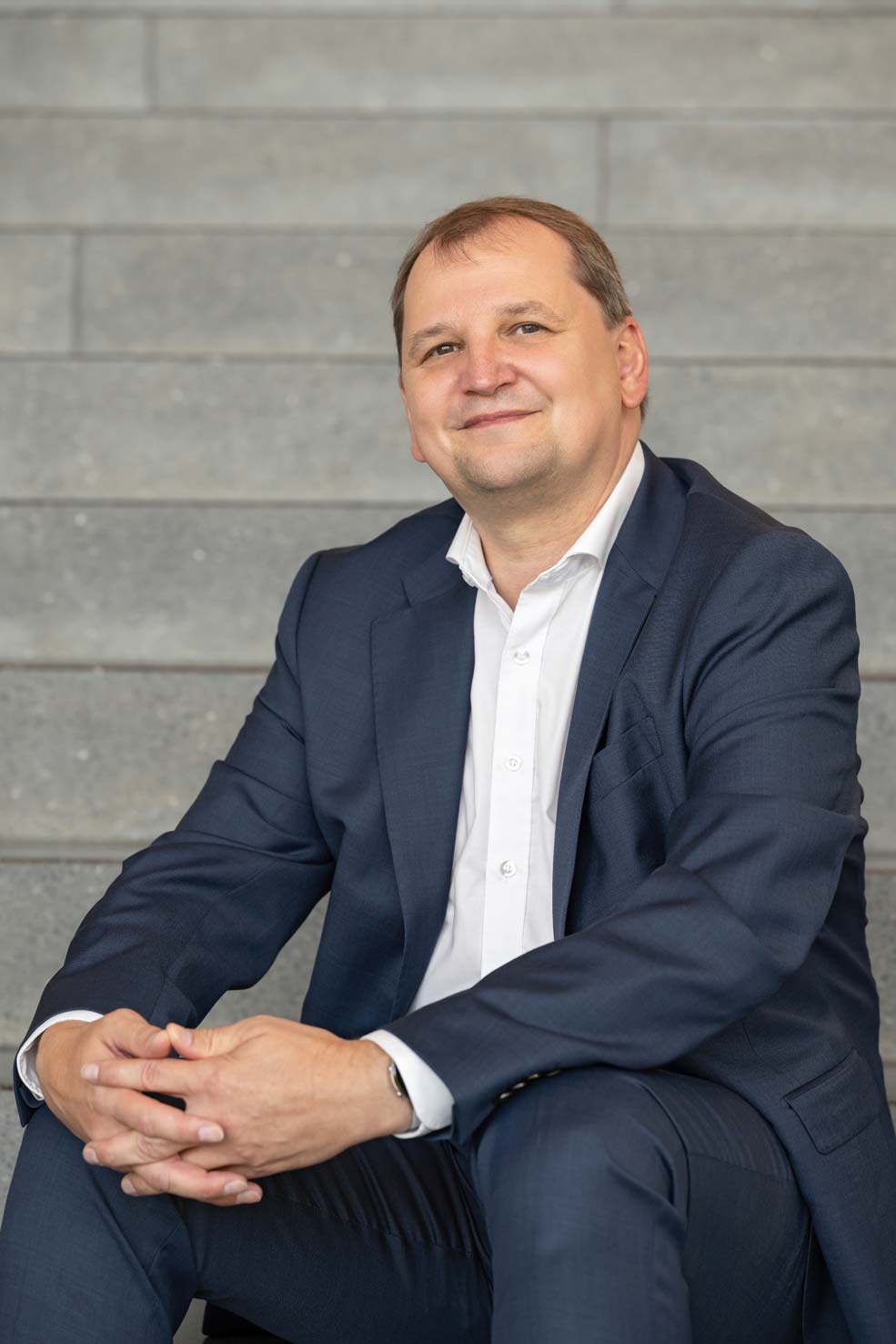
Professor Michael P. Manns (16.11.1951 – 15.08.2025).
About

Professor Michael P. Manns was an internationally recognised expert in the field of liver diseases and infectiology. He was one of the leading researchers in hepatitis C, developed new standard therapies for patients with chronic hepatitis and worked on alternatives to liver transplants. From 1991 to 1 April 2020, Michael Manns headed the Department of Gastroenterology, Hepatology and Endocrinology at Hannover Medical School (MHH); from 2019 to 2024, he was President of the MHH. From 2015 to 2019, he also served as Clinical Director of the Helmholtz Centre for Infection Research in Braunschweig and Founding Director of the Centre for Individualised Infection Medicine (CiiM). Before joining the MHH, the physician, born in 1951, researched and taught in Berlin, San Diego and Mainz. Michael P. Manns became a member of the GDNÄ in 2000. He passed away on 15 August 2025.

Further information:

Carsten Bolm ‘Without industry contacts, it’s impossible to work in my field.’

‘Without industry contacts, it's impossible to work in my field.’

Chemistry professor Carsten Bolm, member of the GDNÄ Executive Board, talks about creative research, his seemingly straightforward career path and rewarding prospects for young talent.

Professor Bolm, you decided early on to pursue a career in chemistry, became a university lecturer and have remained in this field for over thirty years. Would you choose the same path again?
Yes, it has always been the right choice for me. I can conduct my research at my own discretion and support talented young people in their development: these are advantages I enjoy every day. It is not a nine-to-five job; you are always challenged, and occasionally my team thinks I work too hard. There is a trend among young people to turn their backs on academia and look for a quieter job. I try to counteract this, among other things with my lecture ‘Why you should stay at university’. I will be giving it again soon. 

What are your main arguments in favour of a career in academia?
Freedom of thought and the opportunity to do what you like best in your job. 

What sparked your enthusiasm for research and chemistry in particular?
There were no role models in my family. But my parents gave me chemistry sets and I was allowed to buy all the chemicals I needed for my experiments at a nearby pharmacy. That wouldn't be possible today; adults would consider it too risky, but in the 1960s and 1970s it wasn't a problem. I owe a lot to my biology teacher. She was doing a PhD in microbiology and taught biology with a strong focus on chemistry. Her fascination was contagious, and at some point I realised: I'm going to be a chemist.

 © Carsten Bolm

Carsten Bolm's large, internationally diverse working group in front of the institute building.

It seems that you pursued this plan with determination.
It may seem that way from the outside. I myself felt quite erratic during that time. I moved eight times, in Germany, Switzerland and the USA, and nowhere did I stay longer than two years. The fact that this led to an academic career has a lot to do with luck, with meeting the right people at the right time. 

You mentioned the fascination of chemistry. What exactly fascinates you?
Chemistry requires both brainpower and manual dexterity, a wonderful combination. It is also the only discipline in which new substances are constantly being created – substances that did not exist before. That never ceases to inspire me. 

You are an organic chemist, but you also work in mechanochemistry. How do the two fit together?
At the beginning of an academic career, you have to specialise in a few research questions in order to gain a profile and visibility in the professional world. Later, I gradually expanded my spectrum, including in the direction of mechanochemistry. It is often used in the geosciences, for example when it comes to grinding materials energy-efficiently and without solvents using a ball mill. Twenty years ago, this was still uncharted territory in organic synthesis chemistry, but today mechanochemistry is regarded as a significant methodological advancement. In my working group, we use the process to improve existing synthesis methods and to discover new ground in chemistry – the unusual reaction conditions in the ball mills are good for a few surprises.

  © Carsten Bolm

In the laboratory: Doctoral student Lena Hanek in front of a ball mill, which can be used to grind substances in an energy-efficient and solvent-free manner.

How do such new approaches emerge at your institute?
Often through interdisciplinary exchange. When searching for new active substances to combat diseases, for example, I work a lot with medical professionals. Sulphur chemistry plays a central role in this, for example in the development of new tuberculosis inhibitors. Thanks to interdisciplinary cooperation, we have been able to significantly expand the substrate range of sulfoximines, which are particularly suitable for use in medicinal chemistry and plant protection. We also collaborate with engineers, for example in the recently reconfirmed RWTH Excellence Cluster Integrated Fuel & Chemical Science Center, or FSC2 for short. Here, we support the development of environmentally friendly liquid energy sources. Whether at our own university or as part of large EU projects, we always rely on high-calibre, reliable partners. And that suits us very well. 

What role do contacts with industry play in your work?
A very important one. I would even say that without industry contacts, it would be impossible to work in my field. My working group, for example, has close contacts with the pharmaceutical industry in order to jointly develop new active substances. A plant protection company is currently testing a new class of compounds discovered in our laboratories. And like many other chemistry institutes at German universities, we benefit greatly from the Chemical Industry Fund in promoting young academics. It awards prizes and grants, which is very important for our young scientists. 

How do you see Germany's position as a centre for chemistry? 
We are concerned that the large chemical companies are offering fewer and fewer jobs for our graduates. But if you look long enough, you will find something – this is especially true for chemists with doctorates. These are often positions in smaller companies. Overall, the industry is suffering from enormous energy costs and many companies are currently considering relocating abroad. Rapid political intervention to reduce costs would be helpful. 

Almost 30 years ago, you accepted a professorship at RWTH and stayed despite other offers. What kept you in Aachen? 
The strong location, good research conditions and high quality of life. I come from Braunschweig, did my habilitation in Basel and dreamed of a life in southwestern Germany. But I ended up in Aachen. At the time, I thought that if an offer came from Freiburg, I would sign it blindly. A little later, the call from Freiburg actually came. The RWTH made such a generous counteroffer that I couldn't say no. Another offer followed – but once again, RWTH was better. And over time, I have come to really appreciate the city, its proximity to Belgium and the Rhineland. 

How did you come to the GDNÄ?
Through a phone call a year and a half ago. Michael Dröscher, a chemist like me and long-time secretary general of the GDNÄ, asked me if I would be interested in working with them. I was familiar with the GDNÄ at the time, but I didn't have a clear picture of its goals. I think that's the case for many people at universities. I then travelled to the meeting in Potsdam and found it extremely successful. I was impressed by the interaction between the disciplines and the appreciative cooperation between young and old – I had never experienced anything like it before. The GDNÄ's Young Network was founded in Potsdam and has developed magnificently since then. It immediately gives you lots of new ideas. 

Such as?
Perhaps we will be able to organise a series of lectures on topics related to modern chemistry in Aachen, together with representatives of the jGDNÄ. If that works, it could also be a format for other university cities. Another idea would be to send GNDÄ members on lecture tours to German universities in order to put the society and the jGDNÄ in the university spotlight. 

You were elected to the GDNÄ Executive Board as representative for chemistry. What do you want to achieve in this role? 
One of my main tasks at the moment is to recruit top-class chemists to give lectures on their research that are as accessible as possible for the 2026 meeting in Bremen. The topics should be current and of interdisciplinary interest. It's a wonderful position and fits in perfectly with my goal: I want to make chemistry more visible – in science and in the public eye – and the GDNÄ along with it.

  © Stefanie Zimmer

The laboratory as a place of learning: Dr Renè Hommelsheim (right) answers Christian Keiser's questions about sulphur chemistry.

How do such new approaches emerge at your institute?
Often through interdisciplinary exchange. When searching for new active substances to combat diseases, for example, I work a lot with medical professionals. Sulphur chemistry plays a central role in this, for example in the development of new tuberculosis inhibitors. Thanks to interdisciplinary cooperation, we have been able to significantly expand the substrate range of sulfoximines, which are particularly suitable for use in medicinal chemistry and plant protection. We also collaborate with engineers, for example in the recently reconfirmed RWTH Excellence Cluster Integrated Fuel & Chemical Science Center, or FSC2 for short. Here, we support the development of environmentally friendly liquid energy sources. Whether at our own university or as part of large EU projects, we always rely on high-calibre, reliable partners. And that suits us very well. 

What role do contacts with industry play in your work?
A very important one. I would even say that without industry contacts, it would be impossible to work in my field. My working group, for example, has close contacts with the pharmaceutical industry in order to jointly develop new active substances. A plant protection company is currently testing a new class of compounds discovered in our laboratories. And like many other chemistry institutes at German universities, we benefit greatly from the Chemical Industry Fund in promoting young academics. It awards prizes and grants, which is very important for our young scientists. 

How do you see Germany's position as a centre for chemistry? 
We are concerned that the large chemical companies are offering fewer and fewer jobs for our graduates. But if you look long enough, you will find something – this is especially true for chemists with doctorates. These are often positions in smaller companies. Overall, the industry is suffering from enormous energy costs and many companies are currently considering relocating abroad. Rapid political intervention to reduce costs would be helpful. 

Almost 30 years ago, you accepted a professorship at RWTH and stayed despite other offers. What kept you in Aachen? 
The strong location, good research conditions and high quality of life. I come from Braunschweig, did my habilitation in Basel and dreamed of a life in southwestern Germany. But I ended up in Aachen. At the time, I thought that if an offer came from Freiburg, I would sign it blindly. A little later, the call from Freiburg actually came. The RWTH made such a generous counteroffer that I couldn't say no. Another offer followed – but once again, RWTH was better. And over time, I have come to really appreciate the city, its proximity to Belgium and the Rhineland. 

How did you come to the GDNÄ?
Through a phone call a year and a half ago. Michael Dröscher, a chemist like me and long-time secretary general of the GDNÄ, asked me if I would be interested in working with them. I was familiar with the GDNÄ at the time, but I didn't have a clear picture of its goals. I think that's the case for many people at universities. I then travelled to the meeting in Potsdam and found it extremely successful. I was impressed by the interaction between the disciplines and the appreciative cooperation between young and old – I had never experienced anything like it before. The GDNÄ's Young Network was founded in Potsdam and has developed magnificently since then. It immediately gives you lots of new ideas. 

Such as?
Perhaps we will be able to organise a series of lectures on topics related to modern chemistry in Aachen, together with representatives of the jGDNÄ. If that works, it could also be a format for other university cities. Another idea would be to send GNDÄ members on lecture tours to German universities in order to put the society and the jGDNÄ in the university spotlight. 

You were elected to the GDNÄ Executive Board as representative for chemistry. What do you want to achieve in this role? 
One of my main tasks at the moment is to recruit top-class chemists to give lectures on their research that are as accessible as possible for the 2026 meeting in Bremen. The topics should be current and of interdisciplinary interest. It's a wonderful position and fits in perfectly with my goal: I want to make chemistry more visible – in science and in the public eye – and the GDNÄ along with it.

Saarbrücken 2018 © Robertus Koppies

© Martin Braun Fotografie

Prof. Dr. Carsten Bolm, Chair of Organic Chemistry II at RWTH Aachen University.

About the person

Professor Carsten Bolm (65) is Managing Director of the Institute of Organic Chemistry at RWTH Aachen University. His research contributions range from basic research in the field of organic synthesis chemistry and mechanochemistry to the development of new bio-based fuels.

Carsten Bolm grew up in Braunschweig, where he studied chemistry, and also studied at the University of Madison, Wisconsin. He obtained his doctorate in Marburg in 1987 and then completed a postdoctoral fellowship with two-time Nobel Prize winner Barry Sharpless at the Massachusetts Institute of Technology in Boston. In 1993, he habilitated at the University of Basel. In 1996, he accepted a chair in organic chemistry at RWTH Aachen University. The chemist has been named one of Thomson Reuters' Highly Cited Researchers several times and was appointed a Fellow of the British Royal Society of Chemistry in 2015. In 2022, he was elected to the Academia Europaea. The German Chemical Society awarded him the Adolf von Baeyer Medal for his work in the field of catalysis research. As a representative of the field of chemistry, Professor Bolm has been a member of the GDNÄ Executive Board since 2024.

© Carsten Bolm

The RWTH Institute for Organic Chemistry. The relief above the entrance shows the development of chemistry over the centuries. It also depicts the non-metallic solid sulphur, which the Bolm research group is currently investigating. Sulphur was already a basic material in the Middle Ages.

Further reading

Professor Wolfgang Wahlster awarded the Rudolf Diesel Medal 2025

Professor Wolfgang Wahlster awarded the Rudolf Diesel Medal 2025

The former president of the Society of German Natural Scientists and Physicians (GDNÄ), Professor Wolfgang Wahlster, has been awarded the prestigious Rudolf Diesel Medal 2025 in the category ‘Best Promotion of Innovation’. The award was presented on 10 July 2025 during a festive gala dinner in Augsburg. As long-standing scientific director of the German Research Centre for Artificial Intelligence, Wolfgang Wahlster now serves as its chief advisor.

Europe's oldest innovation award was presented by the spokesperson of the Rudolf Diesel Board of Trustees, Professor Alexander Wurzer, in the presence of around one hundred invited guests from science, business and politics. The Diesel Board of Trustees, which acts as the selection committee, consists of around sixty technology executives from world-leading, medium-sized technology companies. 

With this year's award, the German Institute for Inventions honours the life's work of Professor Dr. Dr. h.c. mult. Wolfgang Wahlster, who has been a pioneer and bridge builder between AI research and industrial application for more than four decades. Wahlster was appointed to Germany's first chair of artificial intelligence at Saarland University in 1982 at the age of just 29. His work on speech understanding, translation systems and dialogue technologies laid the foundation for today's voice assistants and chatbots at an early stage. As a thought leader in Industry 4.0, he not only coined the term in 2010, but also designed central concepts for the fourth industrial revolution – with global impact. 

In her laudatory speech, Dr Diana Taubert, Managing Director of ETL IP Patentanwaltsgesellschaft mbH, praised Wahlster's extraordinary role in the German innovation landscape: ‘You are not only a pioneer of artificial intelligence – you are also an architect of innovation structures, a bridge builder between research and application, a facilitator in the best sense of the word.’ She emphasised that Prof. Wahlster has not only played a key role in shaping technological developments, but also ethical and normative standards – in ethics commissions, standardisation committees and public debates. 

Since its introduction in 1953, the Rudolf Diesel Medal has been awarded to outstanding personalities from the IT world such as Konrad Zuse, Wolfgang Giloi, Andreas Grünberg, Hasso Plattner, Renate Pilz and August-Wilhelm Scheer. With Wolfgang Wahlster, one of the most influential personalities in European AI research joins this circle. 

As President of the GDNÄ (2017-2018), Professor Wahlster organised the 130th meeting of the Society of Natural Scientists in Saarbrücken, entitled ‘Digitalisation of the Sciences’. He later served on the GDNÄ's Executive Board for several years. 

Saarbrücken 2018 © Robertus Koppies

© Dominik Wagner, Eichmeister Kreativagentur GmbH

Prof. Dr Dr h.c. mult. Wolfgang Wahlster, President of the GDNÄ in 2017 and 2018.

jGDNÄ: ‘Heidelberg gave us a lot of momentum’

‘Heidelberg gave us a lot of momentum’

A practical programme and an informal atmosphere: initial feedback from the organising team of the jGDNÄ conference held from 27 to 29 June 2025.

Ms Anders, Mr Kleemann, Mr Paschen, the first conference organised independently by the jGDNÄ is now behind you. How would you sum it up in one sentence?
Sebastian Paschen:
I thought the days were a complete success. We had a lot of fun and exchanged ideas – we can build on this foundation to develop further.
Marlene Anders: It was a fantastic first congress, which will hopefully be followed by many more.
Lennard Kleemann: Despite the short preparation time of four months, we managed to put together a scientifically high-quality and thematically diverse congress with the help of renowned institutions in Heidelberg.

How many young people accepted your invitation?
Sebastian Paschen:
There were 35 participants in total. The number fluctuated occasionally because not everyone attended all programme items. There were parallel events and some had to leave a little earlier.

How would you describe the participants?
Marlene Anders:
They were members of the jGDNÄ aged between 16 and 32: upper secondary school pupils, students, doctoral candidates and young researchers from industry. Some came from the Heidelberg area, others from further afield across Germany. The subjects covered ranged from engineering and physics to computer science and life sciences such as biology and medicine. Most of the participants have been part of our network for some time, but some were there for the first time.

 © Robert Hammann

During a guided tour of Heidelberg's old town on the first day of the conference.

How did you decide on Heidelberg as the first location for the conference?
Marlene Anders:
We simply looked at where most of us live, and that's in this area. Heidelberg has a wealth of great scientific institutions, so it was a good fit.
Sebastian Paschen: And when Lennard Kleemann agreed to take over the organisation on site, the decision was made.

Mr Kleemann, you are currently doing your master's degree in molecular biotechnology at Heidelberg University, which requires you to complete several internships, and on top of that you had to prepare for the conference. That's quite a lot to do at once.
Lennard Kleemann:
Yes, that's true. But I felt confident that I could handle the organisation because I am quite familiar with the research scene in Heidelberg. This has to do with my diverse field of study and with internships, for example at the University Hospital or the Max Planck Institute for Medical Research. I also know other institutes from my school days – fortunately, Heidelberg's research institutions are also open to school students.

Have you ever organised a conference before?
Lennard Kleemann:
No, this was my first time. And some things didn't go as smoothly as I had imagined at the beginning. But luckily I wasn't alone; there were seven of us in the organising team and the staff at the GDNÄ office supported us at all times and answered all our questions. Without this help, the conference would not have been possible. We at jGDNÄ wanted to do a good job, not least to justify the huge vote of confidence placed in us by the GDNÄ. And in the end, I think it turned out well.

 © Marlene Anders

A visit to the observatory was part of the tour of Heidelberg's House of Astronomy.

When you think of a science conference, you think of lectures, poster sessions and panel discussions. Did you stick to the classic format?
Marlene Anders:
No, we took a different approach from the outset. We wanted to get to know each other in an informal atmosphere, and long sessions in a conference hall are not really suitable for that. Instead, we focused on practical programme items. One example is the tour of the ion beam therapy centre, where our member Celine Karle is doing her doctoral thesis and was able to give us exciting insights into her research.
Lennard Kleemann: The tours of EMBL, the European Molecular Biology Laboratory, the House of Astronomy and INSEAM, the Institute for Molecular Systems Engineering and Advanced Materials, were also very good. There we were able to spontaneously attend a lecture by Professor Inkyu Park on innovative biosensors. Professor Park teaches mechanical engineering at KAIST University in South Korea. There were many experts in the audience, and the presentation was in English – our group was thrilled.
Sebastian Paschen: There was a very lively atmosphere, even during informal programme items such as the tour of the old town, the mountain railway ride and the Neckarwiesen meeting on the last evening. There was a lot of discussion and the younger ones peppered the older ones with questions. The questions often concerned very basic things, such as everyday life at university, and topics that you tend to discuss with people of a similar age.

Can you already say what impact the congress had?
Marlene Anders:
Heidelberg gave us a lot of momentum, which we will now use for future activities. The verbal feedback from the participants was very positive. Now we are waiting for the results of our online survey and are really excited to see them.
Lennard Kleemann: The Heidelberg regional group came together at the conference – a very welcome development, I think.
Sebastian Paschen: There was a nice spontaneous effect: during our visit to the House of Astronomy, a bachelor's student gave us a tour of the observatory. She is passionate about her subject and is excellent at explaining astronomical concepts. She is a great fit for us, so we approached her – and now she is a member of jGDNÄ.

A conference like this costs a lot of money. Where does it come from?
Sebastian Paschen:
The GDNÄ provides us with generous support, and the German Chemical Industry Association also contributes a substantial donation. This covers travel expenses, accommodation for participants in a simple hotel, meals in the canteen and the supporting programme. Institute tours and organisation are free of charge. The budget is tight, but it's enough. For the next conference, we will start fundraising earlier and then approach other institutions.

 © Robert Hammann

With a view: conference participants on the Königstuhl.

What else is in the pipeline at jGDNÄ?
Marlene Anders:
We already have a lot of ideas that we will discuss at our next big online meeting at the end of August.
Sebastian Paschen: One goal is to set up a buddy programme that brings school pupils together with students on the one hand and jGDNÄ members with established GDNÄ members on the other. We want to work closely with the GDNÄ on this and hope to be able to present the first results around the turn of the year. We are also currently seeking exchanges with other young talent organisations of scientific societies and have been very successful so far.

You have all already participated in GDNÄ strategy meetings. What was your impression?
Sebastian Paschen: We were given an incredibly warm welcome. Our suggestions for the conference programme in Bremen were well received, as were our suggestions for the next Lorenz Oken Award. We also learned a lot for planning our programme for the 2026 meeting.
Lennard Kleemann: I am impressed by the diversity of the GDNÄ and am very grateful for the support and trust placed in the jGDNÄ. We can learn a lot from the GDNÄ's organisation. I am thinking, for example, of the division and representation of the specialist areas and the structure of the regional groups.
Marlene Anders: I learned a lot about planning conferences. At the GDNÄ, you can learn these things in a gentle yet memorable way. This will be very useful for us at our next conferences.

Saarbrücken 2018 © Robertus Koppies

© Fotostudio Henrich, Landstuhl

Marlene Anders

Marlene Anders

After completing a master's degree at the Technical University of Kaiserslautern-Landau, the 24-year-old is currently completing her teaching internship for secondary schools in the subjects of biology and geography. Marlene Anders got to know the GDNÄ as a student scholarship holder at the 2018 meeting in Saarbrücken. She also attended the meetings in Leipzig and Potsdam, where she supported the student programme as a tutor.

© Foto-May,-Wiesloch

Lennard Kleemann

Lennard Kleemann

The 25-year-old is currently completing his master's degree in molecular biotechnology at the University of Heidelberg. His enthusiasm for the subject was sparked by attending a biotechnology high school in Heidelberg and by taking introductory courses at research institutes as a teenager. Lennard Kleemann has participated twice as a student scholarship holder at GDNÄ meetings: in 2018 in Saarbrücken and in 2024 in Potsdam. There, he took part in the ‘Science in 5 Minutes’ competition with a topic from malaria research.

© Maria Herzog, Greifswald

Sebastian Paschen

Sebastian Paschen

The 24-year-old is in his tenth semester of studying medicine and biomedical science at the University of Greifswald and works in the Department of Health Services Research at the Institute for Diversity Medicine at the Ruhr University Bochum. Sebastian Paschen is also the founder of acadim – Academy for Diversity and Individual Medicine and a member of several scientific committees and societies. He got to know the GDNÄ at the anniversary meeting in Leipzig in 2022.

Downloads:

Am Abschiedsabend auf der Heidelberger Neckarwiese.

© Marlene-Anders

More reading material on the jGDNÄ:

High honors: “For services to chemistry in China”

For services to chemistry in China

Two members of the GDNÄ management team receive high honors

The Chinese Chemical Society (CCS) has named two leading members of the GDNÄ as honorary members. GDNÄ Vice President Professor Ferdi Schüth and Professor Katharina Kohse-Höinghaus, a member of the GDNÄ Board of Directors, received the honor for their contributions to Chinese chemistry and to the exchange between the Chinese Chemical Society and international organizations, according to a CCS statement. 

The CCS is the counterpart to the German Chemical Society. The scientific society was founded in Nanjing in 1932 and has around 120,000 personal and more than 180 institutional members. “Honorary Fellow of the Chinese Chemical Society” is the highest status awarded by the CCS to international scientists in the field of chemistry. The society's website currently lists 103 honorary fellows worldwide, including eleven Germans. 

Professor Katharina Kohse-Höinghaus has advanced combustion diagnostics using laser-induced fluorescence, cavity ring-down spectroscopy and emission spectroscopy, according to a CCS statement, which continues: “She has led groundbreaking research on the combustion of biofuels, uncovered mechanisms of combustion reactions and pollutant formation, and developed novel low-temperature combustion techniques.” She has, writes the CCS, established long-term partnerships with Chinese institutions, trained academic leaders in combustion research, and advised China on science and innovation policy. Furthermore, Katharina Kohse-Höinghaus is a foreign member of the Chinese Academy of Sciences. 

Professor Dr. Ferdi Schüth has made significant contributions to the development of new catalytic materials, the conversion of biomass, and the production and storage of hydrogen, writes the CCS. He is doing pioneering work in mechanochemical approaches to catalyst production and is committed to more environmentally friendly, energy-efficient chemical technologies. Professor Schüth has actively promoted academic exchange with China. “His long-standing cooperation and frequent visits to Chinese universities and research institutes have enabled numerous joint projects and initiatives to develop talent,” writes the CCS.

Saarbrücken 2018 © Robertus Koppies

© Universität Bielefeld / Norma Langohr

Prof. Dr. Katharina Kohse-Höinghaus.
Saarbrücken 2018 © Robertus Koppies

© Robert Eickelpoth

Prof. Dr. Ferdi Schüth

Zum Weiterlesen: