“There is considerable interest in the GDNÄ”
He is a company director, president of the Industry Club and managing director of the 134th Conference: Kai Brüggemann on Bremen as a business location and why his company plans to start manufacturing in India in the future.
Dr Brüggemann, you have taken on the role of Executive Director for Economic Affairs for the next GDNÄ conference in Bremen in 2026. What appeals to you about this role?
I am impressed by the magnificent history of the Society of German Naturalists and Physicians. It has existed for more than two hundred years and brings together the crème de la crème of the scientific world. What I also like is the interdisciplinary focus and the motto of this year’s conference: ‘Knowledge creates benefits, utilising science’. Science and business should be brought together – that is something Germany urgently needs right now.
What responsibilities does your GDNÄ role entail?
I would like to raise the profile of this wonderful society a little. Many have never heard of it and are thrilled when they learn about its history and current activities. I noticed this again when I announced the GDNÄ meeting at the Bremen Industry Club. There was great interest and I’m sure quite a few members will be there in the autumn. We could perhaps deepen engagement by holding an information event beforehand, to which the GDNÄ could contribute with a lecture by a renowned scientist on a topical subject. Experience shows that such events attract many members.
@ Industrie-Club Bremen
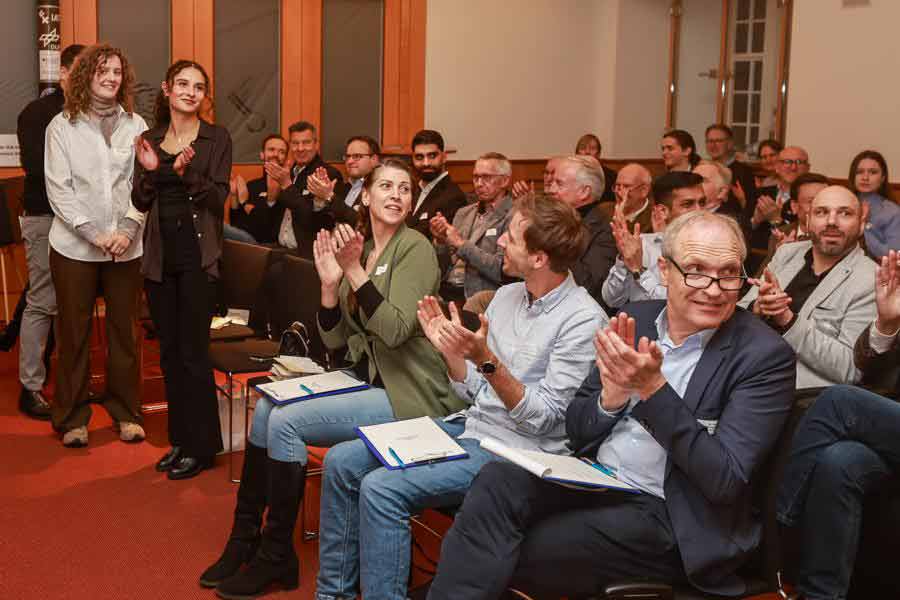
With the Industry 4.0 Future Workshop, the Industrie-Club Bremen is organising an ideas competition in which young people from Bremen’s universities present their ideas in three-minute pitches. A cash prize will be awarded for the best pitch. All participants will benefit from feedback from experienced entrepreneurs and executives based in Bremen.
You have been President of the Bremen Industry Club since 2019. Could you please give us a brief introduction to it?
We bring together people who are active in Bremen’s business community: entrepreneurs, managers, as well as commercial lawyers and other service providers. We organise events, many of which sell out quickly. Popular formats include training courses such as ‘AI for Executives’, lectures by experts from politics and academia, and the ‘ICB on tour’ series, which takes us to members’ companies. As representatives of the manufacturing sector in Bremen and the surrounding area, we occasionally comment cautiously on political issues.
How is the Bremen economy faring in these turbulent political times?
As a strongly export-oriented, globally networked economy, it is suffering from US tariffs and supply chain disruptions resulting from armed conflicts. This affects practically all key sectors: automotive, aerospace, ports and logistics, and Bremen’s long-established food industry – just think of the coffee roasters. Fundamentally, however, we have a stable economic base here with hidden champions in the SME sector, an increasingly digital focus and interesting start-ups.
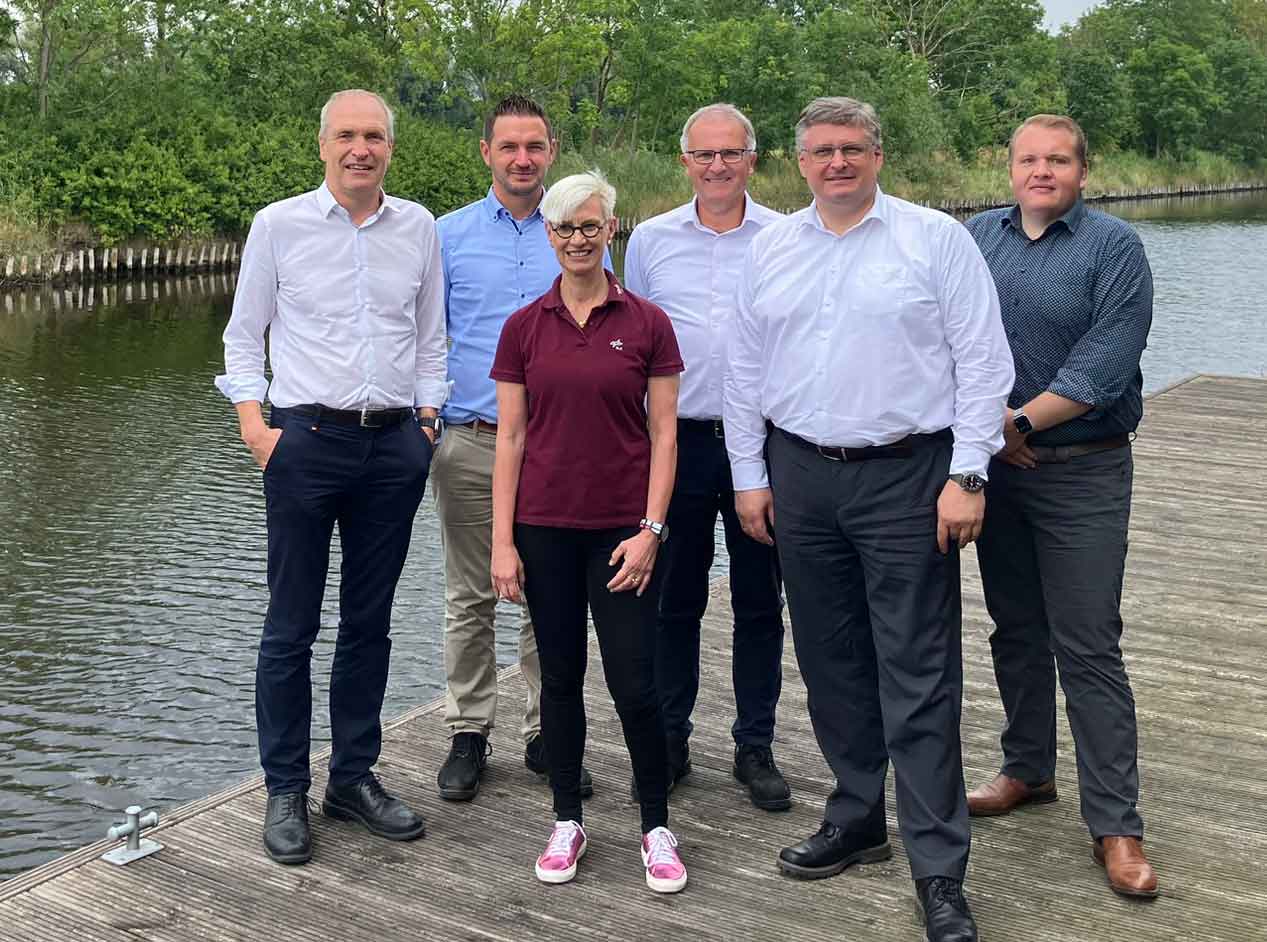
You are the managing director of Deharde GmbH, a supplier to the aerospace industry in the Bremen region. How is your company faring?
We plan to expand our existing partnership with a company in India’s Silicon Valley, in Bangalore, and to explore further opportunities for collaboration. In Germany, we can no longer produce high-tech components for customers like Airbus cost-effectively and are suffering from a shortage of skilled workers. That’s not an issue in India. Some of the country’s universities have reached world-class standards and are training large numbers of outstanding engineers. In Germany, by contrast, interest in STEM subjects has been declining for years – that’s going to cause us problems.
You’ve worked in Austria, Switzerland and various places in Germany, but have always kept your home base in Bremen. How did that come about?
It has to do with the family. My wife and children have always said: ‘You can work wherever you want, we’re staying here.’
@ Deharde GmbH
In September, many GDNÄ members will be coming to the meeting in Bremen. What can visitors look forward to?
A city where business and science work well together. A world-class scientific landscape with three renowned universities and the German Research Centre for Artificial Intelligence, the Max Planck Institute for Marine Microbiology and several Fraunhofer Institutes. We are also proud of our free-fall tower for experiments in weightlessness at the Centre for Applied Space Technology and Microgravity at the University of Bremen – the only one of its kind in Europe. Speaking of the university: anyone who still has the image of a red ‘cadet factory’ with questionable scientific standing in mind will be surprised. Our university was first designated a ‘University of Excellence’ in 2012 and is currently reapplying for the title. The science city of Bremen has so many attractions and we look forward to showing them to the GDNÄ.
© Privat
About the person
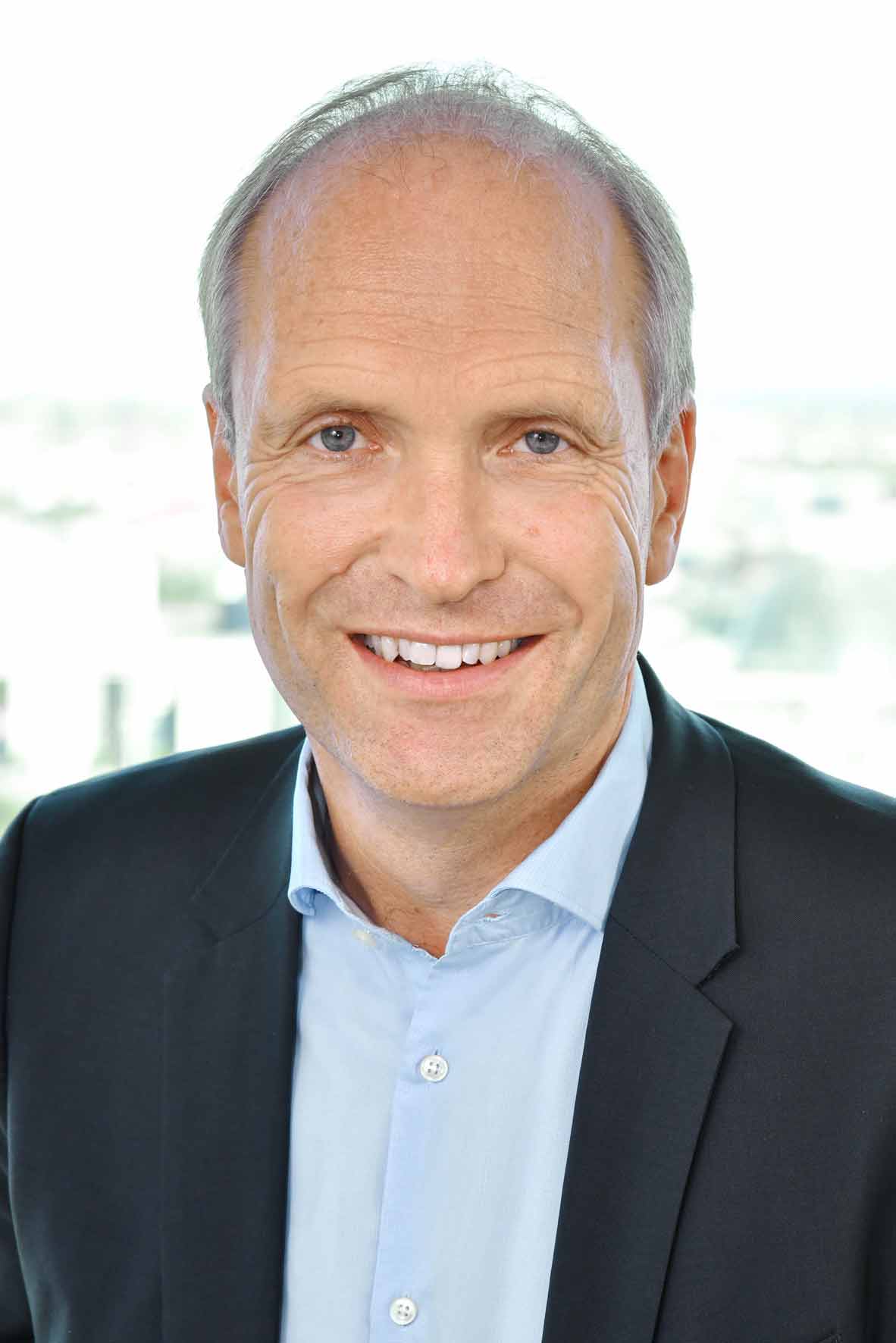
Dr Kai Brüggemann studied industrial engineering and obtained his doctorate in mechanical engineering. Before taking up his current position as Chairman of the Management Board at Deharde GmbH in Varel, he served as a member of the Executive Board at DB Fernverkehr AG in Frankfurt am Main and as Managing Director of ÖBB Technische Services in Vienna. Prior to that, he spent a total of almost twenty years in senior positions at Airbus in Bremen and Hamburg, interrupted by a two-year stint at the Swiss company RUAG Aerospace. Kai Brüggemann has been a board member of the Industrie-Club Bremen since 2012 and its president since 2019. He will hold the GDNÄ post of Managing Director for Economic Affairs until the 134th meeting of the Natural History Society from 17–20 September 2026.
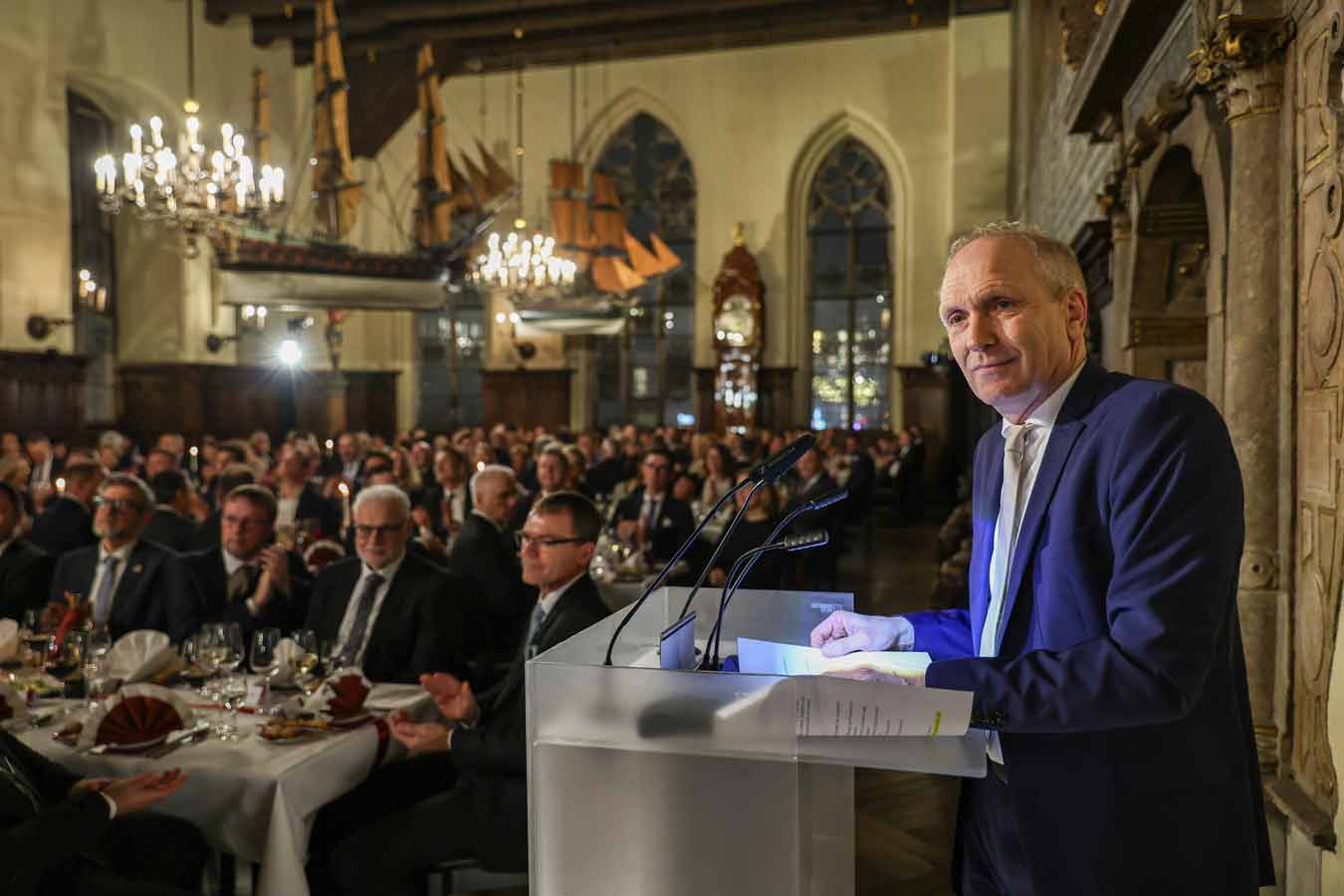
@ Industrie-Club Bremen
>> Deharde GmbH