“Understanding the basic principles of life“
Petra Schwille is a star in the field of synthetic biology. At the GDNÄ meeting in Bremen, she will report on her search for the essence of life.
Professor Schwille, you will be explaining to your audience at the GDNÄ meeting in Bremen how simple living systems can be. The topic is probably not quite that simple. How much prior knowledge is needed to understand it?
Anyone who has a rough idea of how a cell works and is familiar with the term “protein” will understand the lecture well. In it, I will describe my research and report on the latest results from my laboratory.
Where are you currently in your search for the minimal biological system?
We, that is, my team and I at the Max Planck Institute of Biochemistry, have created a functioning artificial system for cell division. Of course, cell division is only one aspect of life – we are not yet able to replicate metabolism, growth, reproduction, evolution and other characteristic life processes. The only system known today that encompasses all these processes is the cell. Rudolf Virchow defined it in the 19th century as the smallest unit of life from which all living systems arise. That is the paradigm on which our work is based. We still find it very helpful, even if it ultimately leads to a dead end, because somehow the very first cell must have come into being at some point.
© MPI für Biochemie/ Susanne Vondenbusch
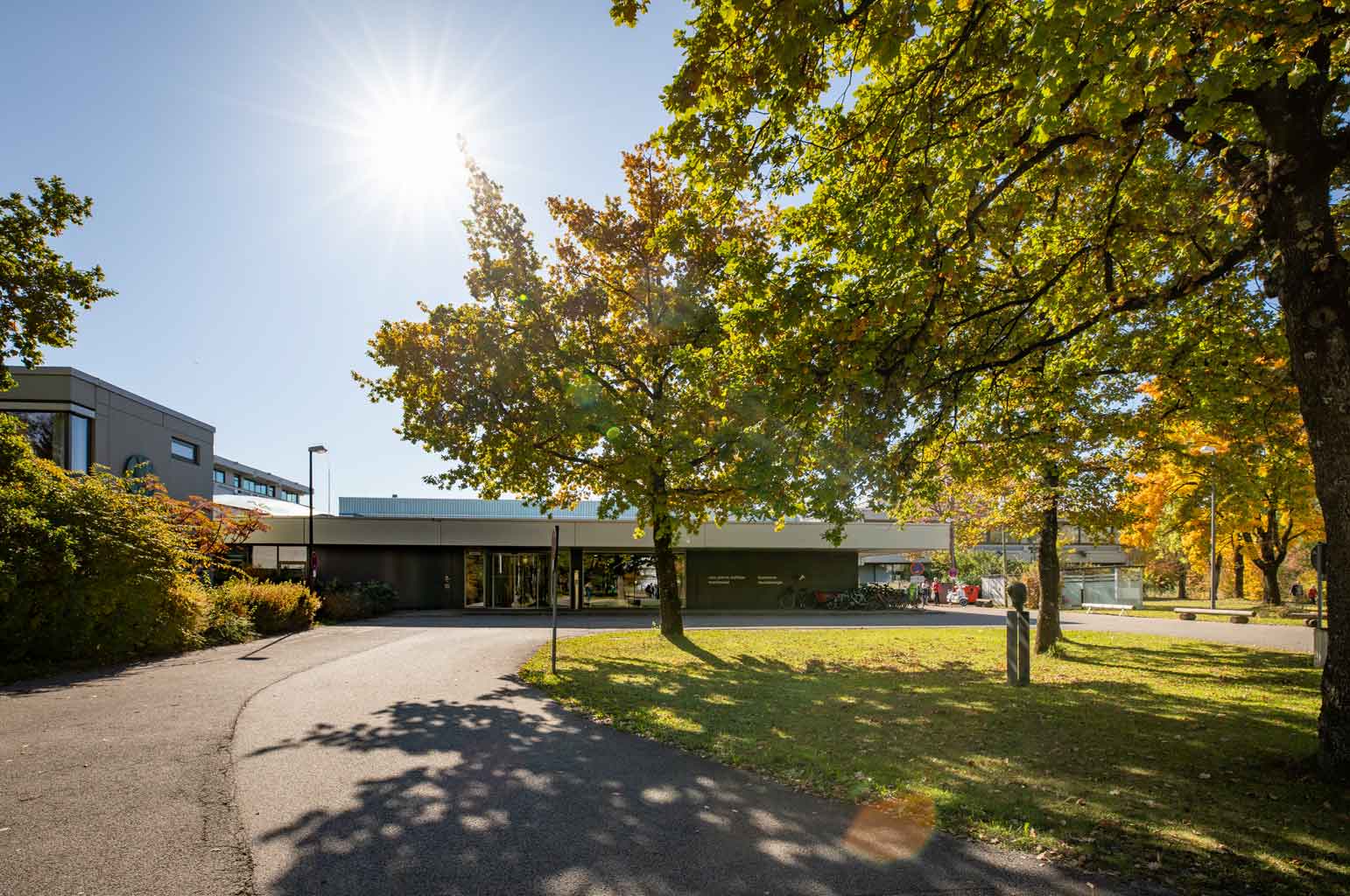
The Max Planck Institute of Biochemistry is located on the Martinsried campus. Within walking distance are the Max Planck Institute for Biological Intelligence, facilities belonging to Ludwig Maximilian University of Munich, and the Biotechnology Innovation and Start-up Centre.
How can we imagine your artificial system?
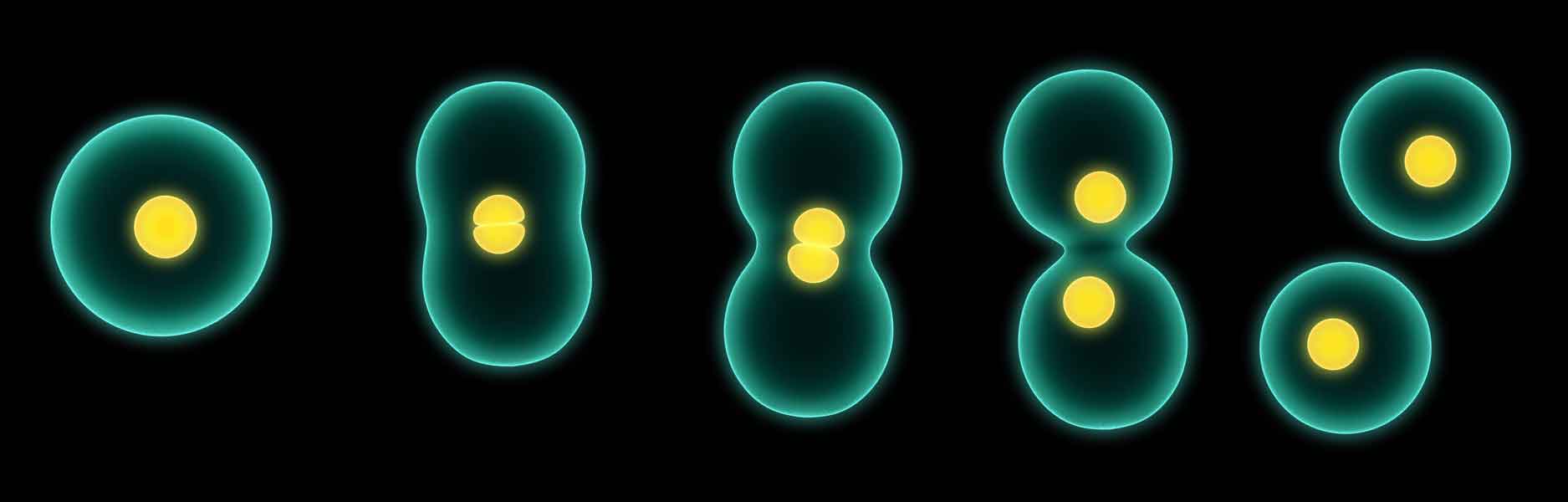
It consists of an artificial cell envelope and currently five bacterial proteins and the externally supplied energy source adenosine triphosphate, or ATP for short. The cell envelope is of great importance here – a membrane that delimits the cell to the outside and is involved in many cellular processes inside. It is composed of various lipids and proteins. The fuel for every cell is ATP, which stores energy chemically and also ensures autonomous processes in our body cells. These are processes that do not require light, heat or other external energy sources. In our laboratory, bacterial proteins cause the membrane vesicle to divide. They accumulate at the equator of the cell and contract like a belt – so tightly that two vesicles are eventually formed.
What are the next steps on the way to a bonsai cell?
Next, we want to get our model system to produce ATP independently and maintain its own metabolism. We also want to introduce DNA and thus achieve the transfer of information during cell division. The aim is to use inanimate components such as proteins and biological membranes to create an artificial cell that is clearly visible under the microscope and exhibits more and more aspects of life. We are pursuing this goal together with a team led by biochemist Bert Poolman from the University of Groningen in the MetaDivide project. To this end, we were able to secure an ERC Synergy Grant from the European Research Council at the end of 2024 – with funding of five million euros. MetaDivide aims to provide us with a new understanding of the basic principles of life.
© Adobe Stock
The motto of the 2026 GDNÄ meeting is ‘Knowledge creates benefits – utilising science’. So, the question is: what are the benefits of your research?
It serves to gain knowledge. Perhaps it will help us better understand how life on Earth began, or perhaps it will give us a key to finding extraterrestrial life. If one day we understand in detail how the simplest cells produce energy, it could mean an abundance of renewable energy. It is also conceivable that it could provide impetus for medicine and materials science. But this is all still speculation, and what happens in our laboratory is pure basic research.
What fascinates you about it?
Even as a child, I wondered where life came from and how all living things are connected. I then studied physics and philosophy as a minor, but basically lost sight of my original questions during my studies. My interest was reawakened during my doctorate with Manfred Eigen, the Nobel Prize winner in chemistry from Göttingen, who was intensively engaged with questions about the evolution of life at the time. He had an interesting project on single-molecule detection that needed to be assigned in order to better understand and quantify the incredibly complex processes in biological systems. To this end, I was able to develop a method that is still in use today. Even back then, in the mid-1990s, I dreamed of a living system that was not so complex, that had only the truly essential properties – and was perhaps even capable of evolution. That would be the breakthrough.
Is the homunculus, the artificially created human being, appearing on the horizon? How do you deal with the philosophical questions raised by your research?
I am glad and happy that I am free to explore what life is and what it is not. I am interested in scientific explanations. And ultimately also in humility towards inanimate nature. The difference between animate and inanimate nature is not that fundamental. We should not morally exaggerate life, give it a halo.
Your husband is a Protestant pastor. What does he say about this?
He is interested in social and human issues and cares about relationships between people and their relationship with God. We have a clear division of labour in this regard.
Is God important to you?
Not in the sense of a particular religion. It’s more a feeling that there is a driving force behind everything that develops in time and space – from the universe to human life. And one day I would like to understand this force better and perhaps even be able to quantify it.
© MPI für Biochemie/ Krause Schneitz
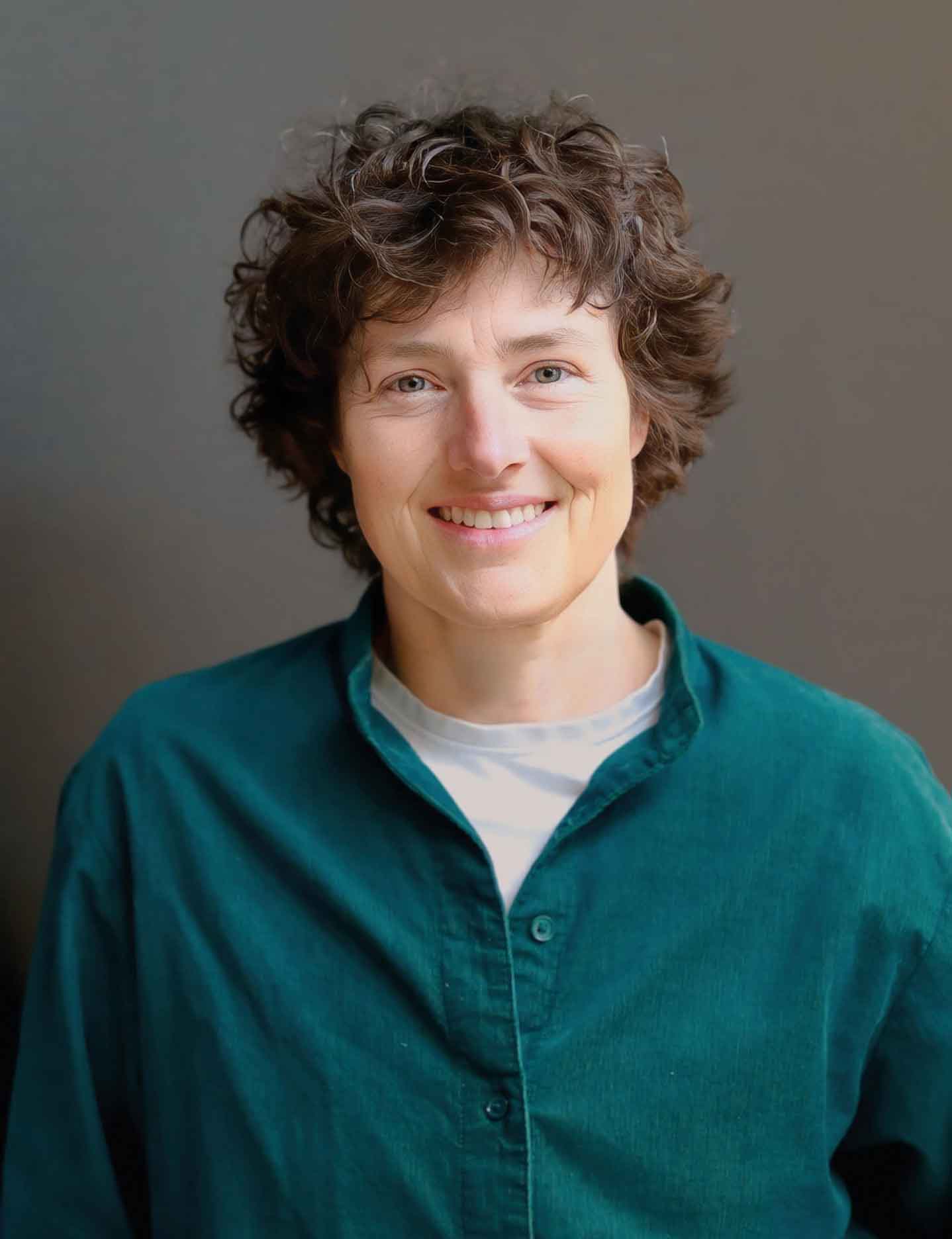
Prof. Dr. Petra Schwille, physicist and director of the Max Planck Institute of Biochemistry.
About the person
Petra Schwille was born in Sindelfingen in 1968 and grew up in Heilbronn. She studied physics and philosophy at the Universities of Stuttgart and Göttingen and received her doctorate under Nobel Prize winner Manfred Eigen at the MPI for Biophysical Chemistry in Göttingen. After a postdoctoral fellowship at Cornell University, she returned from the USA in 1999 to the MPI for Biophysical Chemistry, where she headed her own junior research group. In 2002, she accepted a position as Chair of Biophysics at the Biotechnology Centre of the Technical University of Dresden. Since 2011, Petra Schwille has been Director at the MPI for Biochemistry in Munich-Martinsried, where she heads the research department ‘Cellular and Molecular Biophysics’. In 2012, she also became an honorary professor at the Faculty of Physics at Ludwig Maximilian University in Munich. Petra Schwille has received many awards, including the Gottfried Wilhelm Leibniz Prize from the German Research Foundation in 2010, the Otto Warburg Medal in 2022 and the Manfred Eigen Prize in 2023. She is a recipient of the Bavarian Maximilian Order and the Cross of Merit First Class of the Federal Republic of Germany. In addition to her scientific activities, Petra Schwille speaks at cultural events on scientific, philosophical and social issues and is involved in mentoring young scientists.