
“I expect a breakthrough very soon”
The Swiss astrophysicist Thomas Zurbuchen spent many years leading major NASA space missions. At the GDNÄ conference in Bremen, he will speak about the search for extraterrestrial life and present the latest methods used in this cosmic quest.
Professor Zurbuchen, how far have we got in the search for life in space?
If we take the Drake equation from 1961 as our starting point, we are well on the way. The formula devised by the US astrophysicist Frank Drake remains a valid guide to this day for estimating the number of intelligent civilisations in our Milky Way. Of the seven factors in the equation, Drake was only able to estimate the first one – the star formation rate – at the time. All the other variables remained a mystery because precise data were lacking. Thanks to modern telescopes on Earth and in space, we have made further progress today. New techniques for modelling the origins of life on the early Earth are also very helpful. They show us what to look out for when searching for extraterrestrial life. We are no longer gazing half-blindly into space, but can focus our attention specifically on promising targets.
Where are we now on this journey?
We have not yet discovered any extraterrestrial life. But when the first exoplanets – that is, planets outside our solar system – were found in the 1990s, it was a huge step forward. Today, we know of more than six thousand exoplanets. Some of them could harbour life, and that is where we are pointing our space telescopes: currently the James Webb Telescope and, in a few years’ time, presumably its successor, the Habitable World Observatory.
When do you expect a breakthrough?
If life really is widespread, as we suspect today, we should find it within our solar system in ten to twenty years. Perhaps we will also find convincing evidence of this in the atmospheres of exoplanets. Of course, we're talking here about simple bacterial life – so-called microbial biosignatures – not intelligent aliens.
© NASA/Aubrey Gemignani
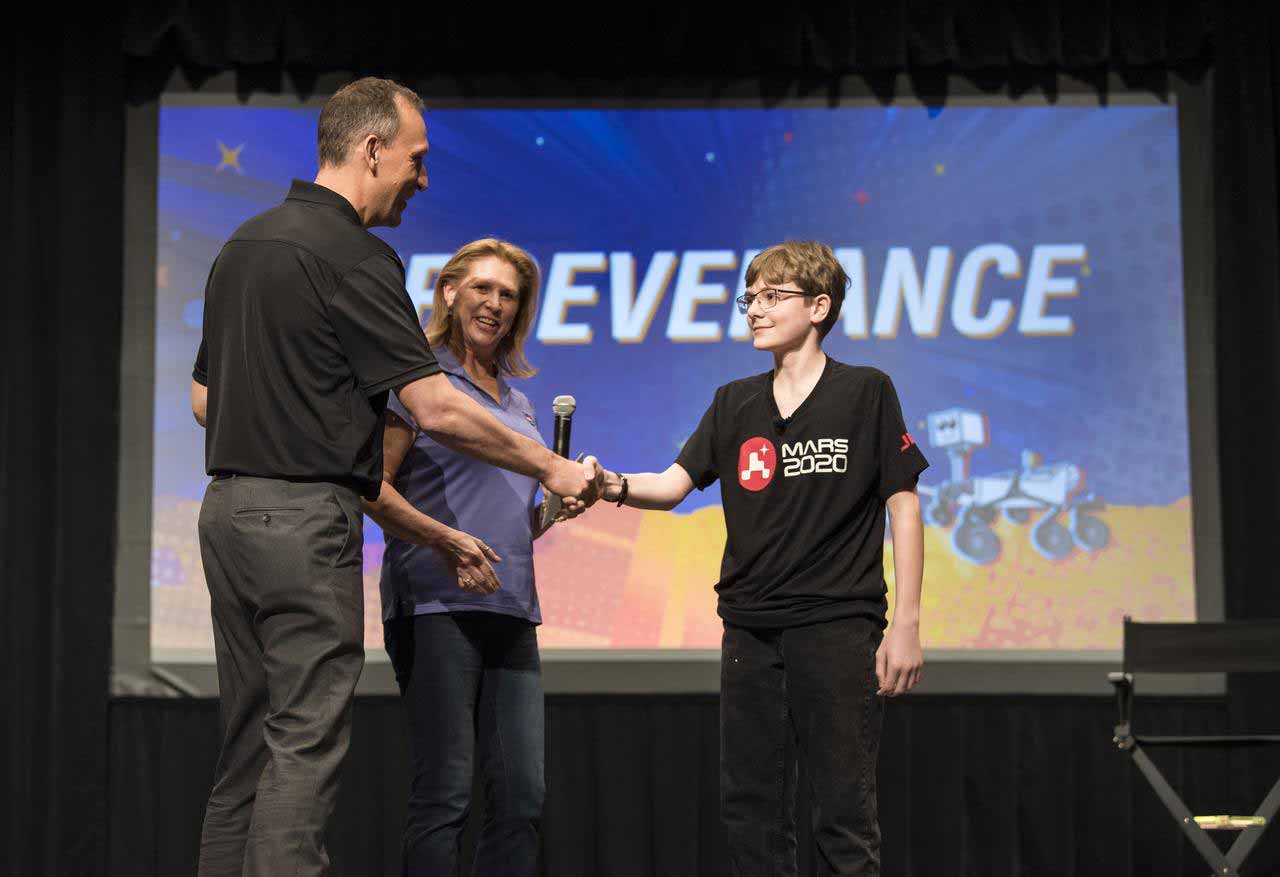
Thomas Zurbuchen congratulates Alex Mather on his victory in a school contest. The U.S. student had suggested the name “Perseverance” for a NASA mission to the Sun. His idea was selected from among 28,000 submissions. Perseverance landed on the Red Planet on February 18, 2021, and has been collecting soil and atmospheric samples there ever since.
The search for extraterrestrial life was a key focus during your time as NASA’s Director of Science. What were your experiences there?
NASA remains a leader in many fields, even though competitors such as China and from other regions are growing ever stronger. One of the reasons NASA is so good is that it collaborates with fantastic companies. And because it brings people together in outstanding teams. The expertise and cohesion of the group are crucial in determining whether a mission succeeds or fails – I experienced this often as Director of Science. However, large and long-established organisations like NASA also have their weaknesses, including a bureaucracy that can sometimes get out of hand.
What were the highlights of your time at NASA?
The biggest and most important project was the James Webb Space Telescope. It was launched in 2021 as an infrared astronomy mission into space and has already provided astonishing insights into the history of the universe. Next up is what we’re doing on Mars: collecting samples with the Perseverance rover and bringing them back in a joint mission with the Europeans. I launched the Perseverance mission – it has yielded some truly spectacular and fascinating samples. Thirdly, there’s the Parker Solar Probe, a mission that has been exploring the Sun from a closer distance than ever before since 2018. Fourthly, the many Earth-observing missions, through which we monitor our planet from above, are very important.
What highlights are you expecting in the coming years?
The James Webb Telescope is delivering highly interesting data from which we can learn a great deal about the universe. I’m looking forward to the samples that will hopefully be brought back from Mars. In four or five years’ time, two missions will arrive at Jupiter to observe its fascinating moons: the European Juice mission and the US Europa Clipper mission. And then there’s the US robotic Dragonfly mission to Saturn’s moon Titan: It is due to launch in 2028 and will explore the moon’s surface by flying over it with a quadcopter.
During your time at NASA, you worked with Elon Musk. His space company, SpaceX, recently had a successful stock market flotation. What is your assessment of Musk?
He is one of the most talented and successful entrepreneurs of all time and has achieved an incredible amount. He is not a scientist, but he is very interested in research. As a person, he is complicated: I found him to be thin-skinned, determined and very courageous. Here’s an example: initially, he only had enough money for four rockets. The first three exploded; many others would have given up at that point. Musk carried on, had the fourth rocket launched too, and that one worked. Following this success, and because his rockets are much cheaper than standard models on the market, NASA began collaborating with him. During my years as NASA’s Director of Science, we launched 37 rockets into space, around 30 of which were from SpaceX.
How did it come about that you returned to Switzerland in 2023 after 27 years in the USA?
I want to give something back to my home country. I come from a modest background; at home, there wasn’t much money left over for schoolbooks and university fees. Swiss taxpayers covered those costs; I owe my education to them. Two weeks after completing my PhD, I went to the US, where I was able to make my own way. So far, there are hardly any programmes in Switzerland aimed at reaching space. I’d like to change that – with my team at ETH and many others across the country.
© NASA/Bill Ingalls
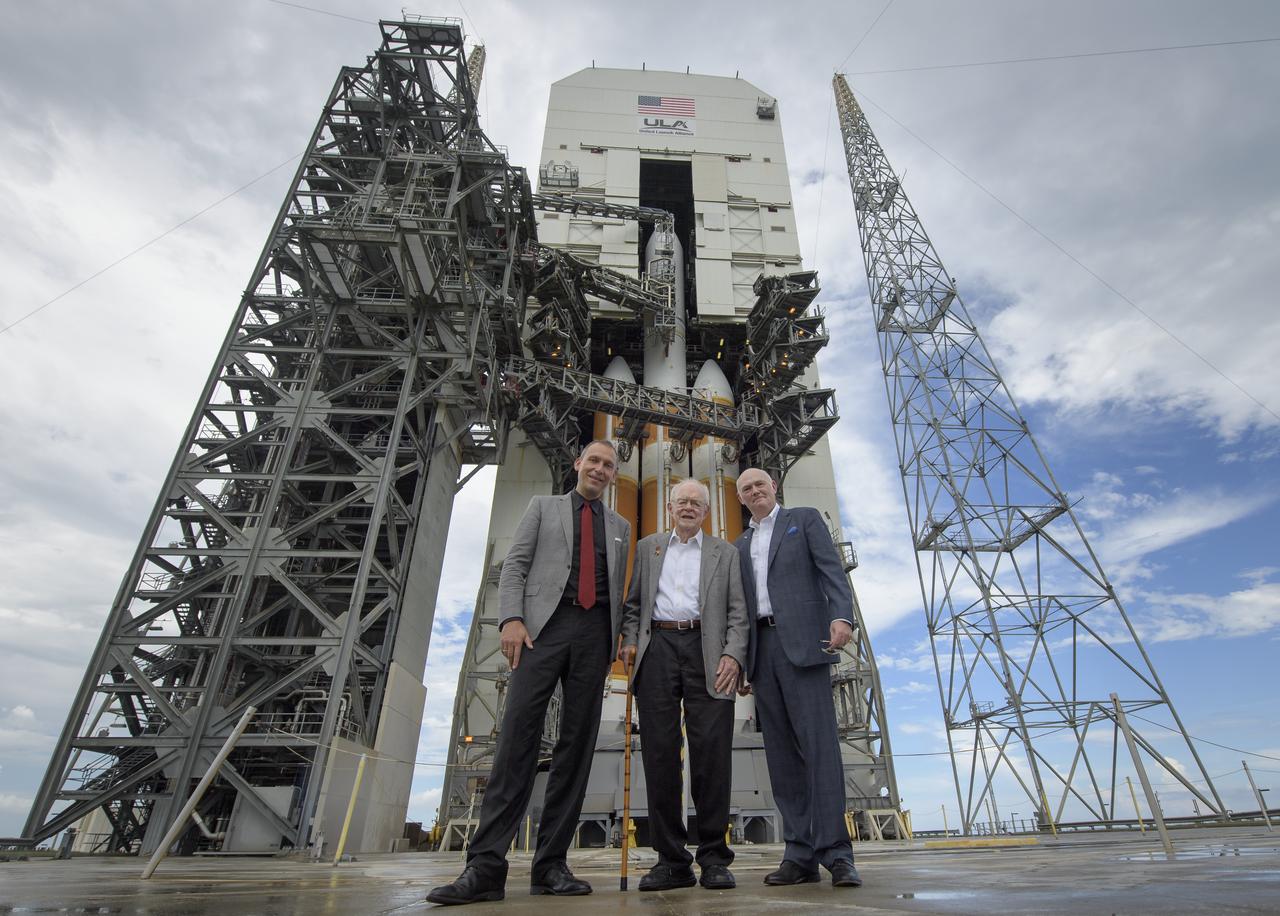
In front of the ULA “Delta IV Heavy” rocket carrying the Parker Solar Probe (from left): Thomas Zurbuchen with solar astrophysicist Eugene Parker (the mission was named after him) and Tory Bruno, President and CEO of the United Launch Alliance. The “Parker Solar Probe” is humanity’s first mission into a part of the Sun’s atmosphere known as the corona. There, it will study solar processes that are crucial for understanding and predicting space weather events and that can affect life on Earth.
You’re leading the ETH Zurich Space initiative. How far have you got, and what are your plans?
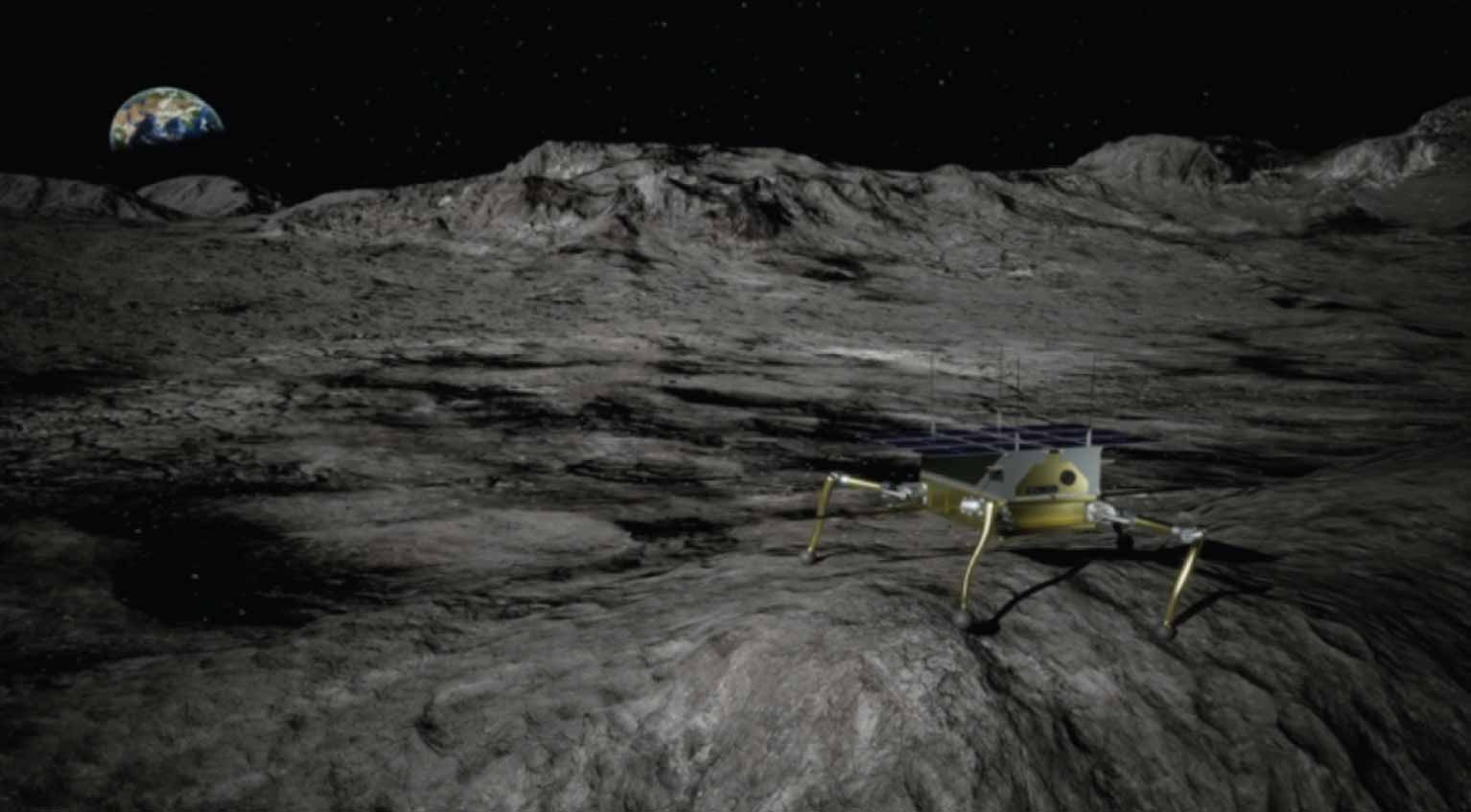
ETH Zurich Space is a space research programme that we’ve been developing over the past three years in collaboration with commercial enterprises. One project is called Life Mission; it’s about the search for signs of life in space. At the same time, we’re trying to model the very early Earth in order to understand the incredibly rapid emergence of life on a cosmic scale – in other words, the transition from chemistry and physics to biology. Another project is developing robots for lunar exploration. Our prototype, called LunarLeaper, could serve as a sort of robotic dog for astronauts and help them with their work. We aim to have the development completed by 2030. LunarLeaper would then be ready to fly on a future Artemis mission. Just as important are the training programmes we have developed, in particular the Master’s programme in Space Systems.
Many countries have established space programmes in recent years. What is behind this boom?
I see three reasons for this: a desire for knowledge, but also economic and military interests. We humans want to know whether there are other forms of life in space – that would be the primary motivation. Economic and military applications are often closely linked; just think of satellites for mobile communications or for Earth observation. At present, the economic use of space is growing by up to ten per cent a year – a rate achieved by very few other sectors.
© ETH Zürich
Together with his team at ETH Zurich, Thomas Zurbuchen is developing “LunarLeaper,” an exploration robot for lunar missions (shown here in an artist’s rendering). The 15-kilogram walking robot is expected to be operational around 2030. It is designed to help astronauts explore the structures beneath the Moon’s surface.
Is there anything you would recommend to Germany as a spacefaring nation?
Germany’s strengths lie, amongst other things, in the fields of Earth observation, robotics and biomedical microgravity research – three areas that are becoming increasingly important. The country has incredibly talented engineers and scientists. I see particularly positive developments in Bavaria, for example with ISAR Aerospace, but also in other German regions. However, because international competition is fierce, we need to improve – not just in Germany, but across the whole of Europe. A major shortcoming is the lack of rocket launch sites. The existing bases in French Guiana and northern Sweden will not be sufficient for the future. The security of Germany and Europe also depends on the necessary expansion.
What specific course of action do you propose?
It is important that we accelerate our development work. On the one hand, this means more funding for research and development in the space sector: The US spends almost six times as much on this as Europe. Secondly, we must become more agile and cut back on bureaucracy. Thirdly, it is important that we support our start-ups and actually buy their products and services. That is how the US took the lead, often with the help of top talent from Europe.
One last question: in the space community, you’re also known as Dr Z. How did you come by that nickname?
Americans find it difficult to pronounce my surname. At some point, someone came up with the abbreviation ‘Dr Z’. It quickly caught on and everyone knows who is meant. I think that’s, to put it in good Swiss terms, tipptopp.
© NASA
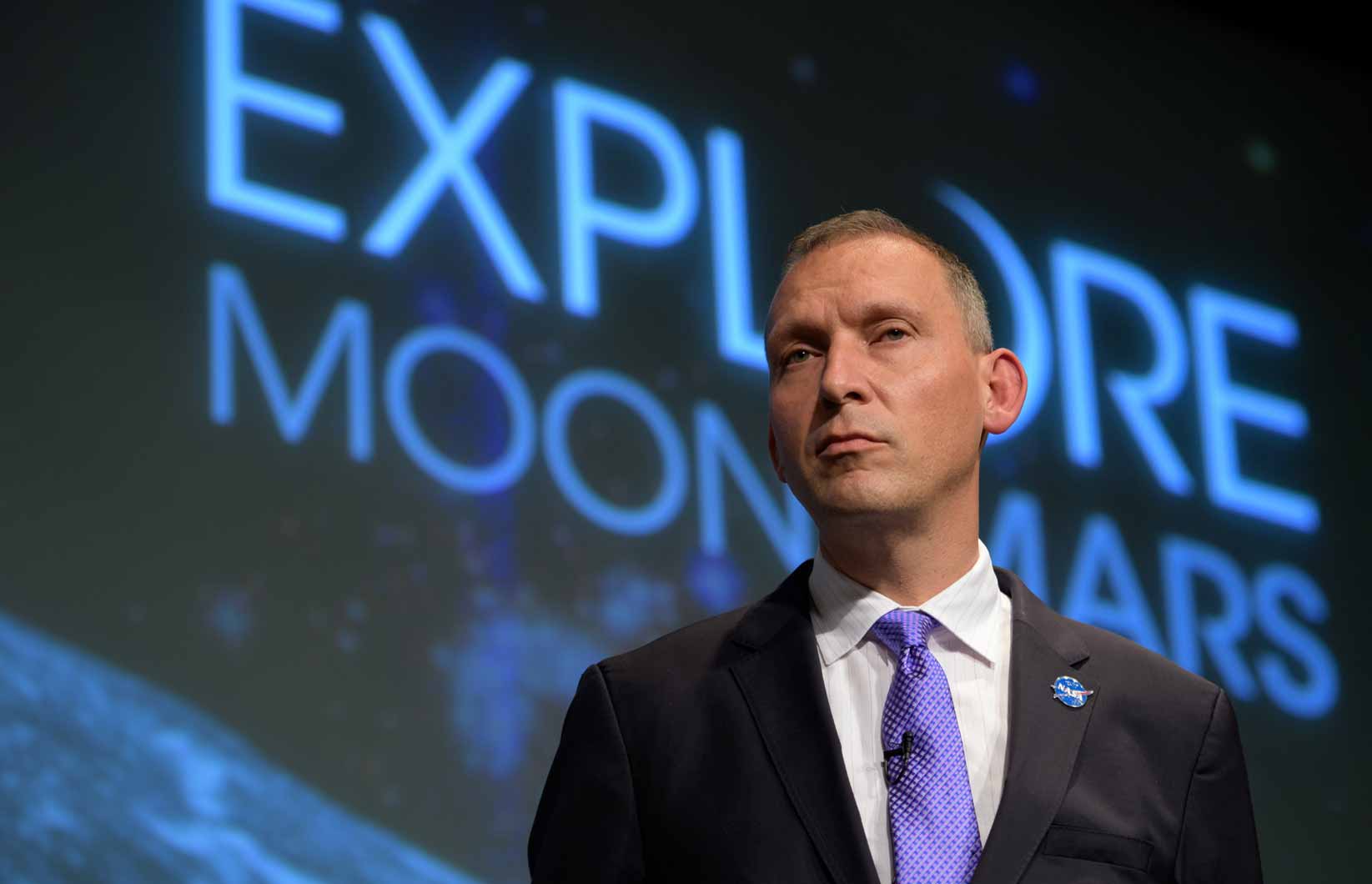
Professor Dr. Thomas H. Zurbuchen is a professor of space science and technology at ETH Zurich and heads the ETH Zurich Space initiative.
About the person
Prof. Dr Thomas Zurbuchen is a Swiss-American astrophysicist. He was born in 1968 in a small mountain village in the canton of Bern and studied physics and mathematics at the University of Bern. He was awarded a PhD in astrophysics there in 1996. Immediately afterwards, he moved to the University of Michigan, where he worked his way up from research assistant to professor of space sciences and aerospace engineering. He is a co-founder of the Michigan Centre for Entrepreneurship, one of the world’s leading centres for entrepreneurship and innovation education. From 2016 to 2022, Thomas Zurbuchen served as Chief Scientist at the US space agency NASA. In this role, he led pioneering missions such as the James Webb Space Telescope and the Mars probes. Since 2023, he has been a Professor of Space Science and Technology at ETH Zurich, where he heads the ETH Zurich Space initiative.
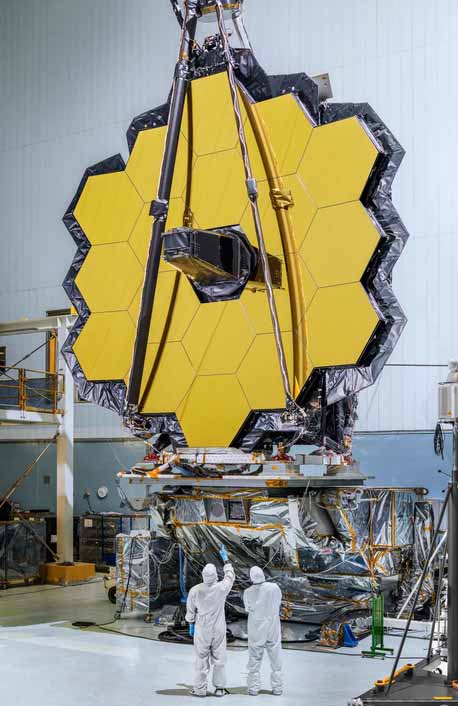
© NASA/Chris Gunn
Engineers look at the primary mirror of the James Webb Space Telescope, which launched on Dec. 25, 2021.
Further information

Holding a sample tube containing core samples from the Martian surface: Thomas Zurbuchen at a press conference on February 17, 2021, shortly before the landing of NASA’s Mars rover “Perseverance” on the Red Planet. A key goal of the mission is to search for signs of ancient microbial life.©